Project Management Report: House Renovation Planning and Control
VerifiedAdded on 2022/09/11
|17
|4241
|12
Report
AI Summary
This report examines a house renovation project, addressing key project management aspects. Part 1 focuses on planning and control, utilizing a network diagram and critical path analysis to prioritize activities and manage constraints. Part 2 delves into risk management, identifying and analyzing potential risks, proposing mitigation strategies, and exploring opportunities. Part 3 assesses the impact of leadership and motivation, reviewing relevant theories and providing examples to motivate employees. The report emphasizes the importance of effective planning, risk mitigation, and leadership in achieving project goals within budget and time constraints. The analysis includes discussions on critical path method, risk scoring, and opportunity identification, offering practical strategies for successful project execution.
Running head: Planning and Control for House Renovation Project
Planning and Control for House Renovation Project
Name of the Student
Name of the University
Author note
Planning and Control for House Renovation Project
Name of the Student
Name of the University
Author note

Paraphrase This Document
Need a fresh take? Get an instant paraphrase of this document with our AI Paraphraser
1PLANNING AND CONTROL FOR HOUSE RENOVATION PROJECT
Executive Summary
The impact of project management within the construction industry forms a major impact over
various organization. This case describes the scenario of renovation of a house in which the
various aspects of project management are covered. There is a definition of critical path analysis
over the project, which helps in understanding for a realistic project. Hence, the part one of the
discussion focuses over the prioritization of different project activities based on the use of
network diagram and critical path. The next part of the discussion focuses on the impact of risk
management strategies, strategies, opportunities and description of the different categories in
order to reduce the chances of project based risks. The last part of the discussion focuses on the
impact of leadership and motivation that are highly important for employees. These are widely
taken under consideration based on the identification of essential goals within the estimated
budget and limited time period.
Executive Summary
The impact of project management within the construction industry forms a major impact over
various organization. This case describes the scenario of renovation of a house in which the
various aspects of project management are covered. There is a definition of critical path analysis
over the project, which helps in understanding for a realistic project. Hence, the part one of the
discussion focuses over the prioritization of different project activities based on the use of
network diagram and critical path. The next part of the discussion focuses on the impact of risk
management strategies, strategies, opportunities and description of the different categories in
order to reduce the chances of project based risks. The last part of the discussion focuses on the
impact of leadership and motivation that are highly important for employees. These are widely
taken under consideration based on the identification of essential goals within the estimated
budget and limited time period.
2PLANNING AND CONTROL FOR HOUSE RENOVATION PROJECT
Table of Contents
Part 1................................................................................................................................................3
A. Network Diagram...................................................................................................................3
B. Critical path discussion...........................................................................................................4
C. Discussion of 2 workers/6 weeks constraint...........................................................................5
Part 2................................................................................................................................................6
A. Risk Analysis..........................................................................................................................6
B. Risk Score Discussion.............................................................................................................7
C. Opportunities Discussion........................................................................................................8
Part 3..............................................................................................................................................10
A. Review of theory relating to leadership and motivation.......................................................10
B. Examples...............................................................................................................................11
C. Conclusion on ways to motivate Kevin................................................................................12
References......................................................................................................................................14
Table of Contents
Part 1................................................................................................................................................3
A. Network Diagram...................................................................................................................3
B. Critical path discussion...........................................................................................................4
C. Discussion of 2 workers/6 weeks constraint...........................................................................5
Part 2................................................................................................................................................6
A. Risk Analysis..........................................................................................................................6
B. Risk Score Discussion.............................................................................................................7
C. Opportunities Discussion........................................................................................................8
Part 3..............................................................................................................................................10
A. Review of theory relating to leadership and motivation.......................................................10
B. Examples...............................................................................................................................11
C. Conclusion on ways to motivate Kevin................................................................................12
References......................................................................................................................................14
⊘ This is a preview!⊘
Do you want full access?
Subscribe today to unlock all pages.

Trusted by 1+ million students worldwide
3PLANNING AND CONTROL FOR HOUSE RENOVATION PROJECT
Part 1
A. Network Diagram
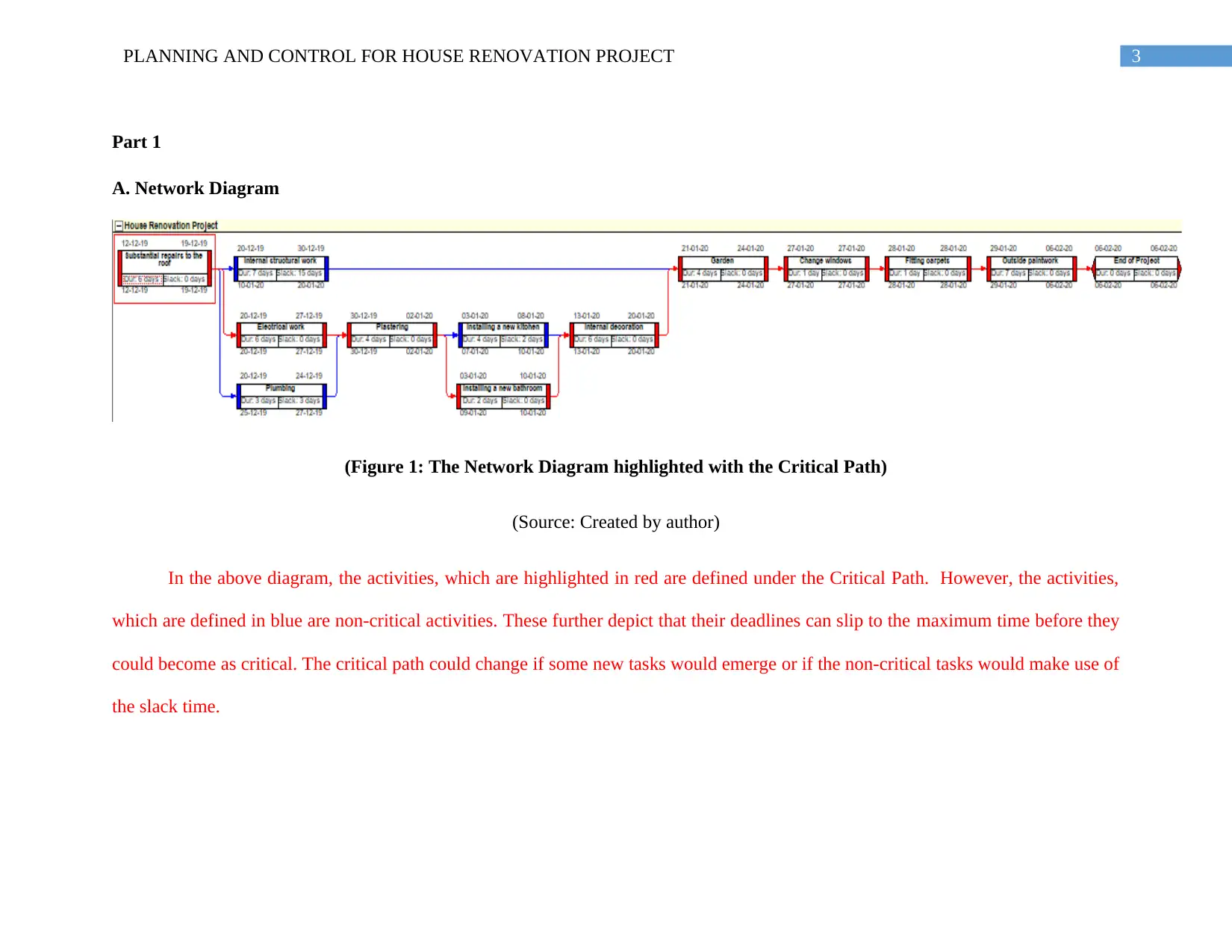
(Figure 1: The Network Diagram highlighted with the Critical Path)
(Source: Created by author)
In the above diagram, the activities, which are highlighted in red are defined under the Critical Path. However, the activities,
which are defined in blue are non-critical activities. These further depict that their deadlines can slip to the maximum time before they
could become as critical. The critical path could change if some new tasks would emerge or if the non-critical tasks would make use of
the slack time.
Part 1
A. Network Diagram
(Figure 1: The Network Diagram highlighted with the Critical Path)
(Source: Created by author)
In the above diagram, the activities, which are highlighted in red are defined under the Critical Path. However, the activities,
which are defined in blue are non-critical activities. These further depict that their deadlines can slip to the maximum time before they
could become as critical. The critical path could change if some new tasks would emerge or if the non-critical tasks would make use of
the slack time.
Paraphrase This Document
Need a fresh take? Get an instant paraphrase of this document with our AI Paraphraser
4PLANNING AND CONTROL FOR HOUSE RENOVATION PROJECT
B. Critical path discussion
The Critical Path Method (CPM) is defined as a useful activity that would be mainly used
for the purpose of planning and scheduling within any form of project management approaches
for construction works. The use and analysis of a CPM would vary from one user to another. The
critical path that is used within projects is defined as the sequence of different kind of scheduled
activities that would be helpful for the determination over the duration for a project (Golini,
Kalchschmidt and Landoni 2015). Thus, it is also defined as the longest chin of activities that are
included within the project management plan necessary for the project.
The activities defined under the critical path should be completed in proper time in order
to meet with the deadline. Delay in any kind of activities present within the critical path would
lead to further delay over the entire project. The CPM is defined as a technique of project
management based on a step-by-step approach and progress over the future activities occurring
within the project (Abirami and Dinagar 2015). It can also be defined as an approach towards
project scheduling that would decompose the project into several forms of work tasks. These
would be further be composed within a flow chart and thus the entire duration for the project
could be easily calculated.
In the case of the renovation project, the advantages of the property developer in making
use of the critical path analysis for planning over the project are:
1. The use of critical path analysis helps in making the dependencies within the project to
be visible in nature (Hornstein 2015). This can be further done by the construction of precedence
diagrams and project network diagrams.
B. Critical path discussion
The Critical Path Method (CPM) is defined as a useful activity that would be mainly used
for the purpose of planning and scheduling within any form of project management approaches
for construction works. The use and analysis of a CPM would vary from one user to another. The
critical path that is used within projects is defined as the sequence of different kind of scheduled
activities that would be helpful for the determination over the duration for a project (Golini,
Kalchschmidt and Landoni 2015). Thus, it is also defined as the longest chin of activities that are
included within the project management plan necessary for the project.
The activities defined under the critical path should be completed in proper time in order
to meet with the deadline. Delay in any kind of activities present within the critical path would
lead to further delay over the entire project. The CPM is defined as a technique of project
management based on a step-by-step approach and progress over the future activities occurring
within the project (Abirami and Dinagar 2015). It can also be defined as an approach towards
project scheduling that would decompose the project into several forms of work tasks. These
would be further be composed within a flow chart and thus the entire duration for the project
could be easily calculated.
In the case of the renovation project, the advantages of the property developer in making
use of the critical path analysis for planning over the project are:
1. The use of critical path analysis helps in making the dependencies within the project to
be visible in nature (Hornstein 2015). This can be further done by the construction of precedence
diagrams and project network diagrams.
5PLANNING AND CONTROL FOR HOUSE RENOVATION PROJECT
2. The CPM also helps in organizing of complex and large scale projects. It further
allows for progressing with a systematic approach towards planning over projects and scheduling
of the individual activities (Hazır 2015). The critical path analysis also helps in the further
execution over the project and management of risk scenarios that might occur within the
renovation works.
3. Based on the use of compression techniques for optimizing the critical path, it would
be helpful for the property developer to reduce the entire duration of a project.
4. The critical path analysis also help in increasing the entire visibility over the impact
made during revisions to the schedule (Ke 2014). These majorly happens when the major
milestones involved within a project are missed or there are risks of missing of crucial deadlines
for projects.
5. The critical path analysis also helps the property developer to optimize the efficiency
within the project. This could further be made based on allocation of resources in an appropriate
manner. Hence, the overall costs made incurred for a project could be reduced.
C. Discussion of 2 workers/6 weeks constraint
After the review over the CPM and the review over the individual activities, it can be
discussed that the use of two workers would be realistic for the concerned renovation project.
From the analysis of the Network Diagram, it can be understood that two workers who would
start work over the different project activities at the same time and they would work alternatively
over the different defined project activities (Meredith, Mantel Jr and Shafer 2017). Thus, it can
be considered as realistic and feasible.
2. The CPM also helps in organizing of complex and large scale projects. It further
allows for progressing with a systematic approach towards planning over projects and scheduling
of the individual activities (Hazır 2015). The critical path analysis also helps in the further
execution over the project and management of risk scenarios that might occur within the
renovation works.
3. Based on the use of compression techniques for optimizing the critical path, it would
be helpful for the property developer to reduce the entire duration of a project.
4. The critical path analysis also help in increasing the entire visibility over the impact
made during revisions to the schedule (Ke 2014). These majorly happens when the major
milestones involved within a project are missed or there are risks of missing of crucial deadlines
for projects.
5. The critical path analysis also helps the property developer to optimize the efficiency
within the project. This could further be made based on allocation of resources in an appropriate
manner. Hence, the overall costs made incurred for a project could be reduced.
C. Discussion of 2 workers/6 weeks constraint
After the review over the CPM and the review over the individual activities, it can be
discussed that the use of two workers would be realistic for the concerned renovation project.
From the analysis of the Network Diagram, it can be understood that two workers who would
start work over the different project activities at the same time and they would work alternatively
over the different defined project activities (Meredith, Mantel Jr and Shafer 2017). Thus, it can
be considered as realistic and feasible.
⊘ This is a preview!⊘
Do you want full access?
Subscribe today to unlock all pages.
Trusted by 1+ million students worldwide
6PLANNING AND CONTROL FOR HOUSE RENOVATION PROJECT
Part 2
A. Risk Analysis
There are some risks that are relevant to the renovation project over the house. These
risks needs to be identified, analysed, monitored, handled and controlled. The negligence over
the risks could lead to failure over the project. Some of the defined risks could be based on
recruitment over unqualified employees, missing of deadlines and budget and unsatisfactory
work made by stakeholders involved within the project (Marcelino-Sádaba et al. 2014). Some of
the risks that could affect the renovation over the house could be categorized as follows: defining
of resources, planning over the project, missing of schedules, supply based risks and future
maintenance risks over the project.
The risk table is defined based on the purpose of risk management and measuring the
outcome for the risks occurring over the project. The categorization over the risks based on
controlling them could be implemented based on the mitigation of the risks.
Risks Outcome from Risks Proposed Action to be taken Target date
Planning
over the
project
Insufficient requirements
within the project would lead
to rejection of the entire
project from the property
developer (Dziadosz and
Rejment 2015).
The property developer
should prepare for a backup
plan over the defining over
the project plan (Harrison and
Lock 2017).
3 weeks
Missing of
schedules
The tasks or activities
involved within the project
might take longer for
completion and hence lead to
missing of deadlines and
schedules.
There would be a need for
identification of critical path
involved within the project
(Ghaffari, Sheikhahmadi and
Safakish 2014).
2 weeks
Defining of
resources
There might be a failure
towards the securing of
sufficient resources such as
budget or workers for the
There should be a proper
recruitment process based on
selection of qualified workers.
These resources should be
1 week
Part 2
A. Risk Analysis
There are some risks that are relevant to the renovation project over the house. These
risks needs to be identified, analysed, monitored, handled and controlled. The negligence over
the risks could lead to failure over the project. Some of the defined risks could be based on
recruitment over unqualified employees, missing of deadlines and budget and unsatisfactory
work made by stakeholders involved within the project (Marcelino-Sádaba et al. 2014). Some of
the risks that could affect the renovation over the house could be categorized as follows: defining
of resources, planning over the project, missing of schedules, supply based risks and future
maintenance risks over the project.
The risk table is defined based on the purpose of risk management and measuring the
outcome for the risks occurring over the project. The categorization over the risks based on
controlling them could be implemented based on the mitigation of the risks.
Risks Outcome from Risks Proposed Action to be taken Target date
Planning
over the
project
Insufficient requirements
within the project would lead
to rejection of the entire
project from the property
developer (Dziadosz and
Rejment 2015).
The property developer
should prepare for a backup
plan over the defining over
the project plan (Harrison and
Lock 2017).
3 weeks
Missing of
schedules
The tasks or activities
involved within the project
might take longer for
completion and hence lead to
missing of deadlines and
schedules.
There would be a need for
identification of critical path
involved within the project
(Ghaffari, Sheikhahmadi and
Safakish 2014).
2 weeks
Defining of
resources
There might be a failure
towards the securing of
sufficient resources such as
budget or workers for the
There should be a proper
recruitment process based on
selection of qualified workers.
These resources should be
1 week
Paraphrase This Document
Need a fresh take? Get an instant paraphrase of this document with our AI Paraphraser
7PLANNING AND CONTROL FOR HOUSE RENOVATION PROJECT
project (Guo et al. 2014). acquired within a limited
budget and within the proper
fixed time.
Future
maintenance
actions
Failures during the setting of
equipment would lead to risks
based on maintenance of the
house in the future times
(Taroun 2014).
There should be a proper
process based on regular
maintenance of equipment. A
backup should also be sought
in terms of procuring of
materials that would be
needed for maintenance over
the project.
5 weeks
Supply of
materials
During the renovation works
over the project, lack of
certain materials would lead
to stoppage over the project
work (Vanhoucke 2015).
The property developer
should prepare a list of
materials that needs to be
procured for the project
(Moradi, Mousavi and
Vahdani 2017). A bulk order
should also be placed based
on procurement of materials
before the initiation of the
project.
3 weeks
B. Risk Score Discussion
The aspect of risk management could be defined as challenging in terms of managing
from the perspective of a project. There are many significant aspects in terms of identification,
analysis and treatment of risks affecting towards the project. These are based on disregarding the
risks due to which the project could be leading towards failure (Burtonshaw-Gunn 2017). Hence,
the process of risk control could be defined as a type of risk management technique that would
involve the process of implementation of procedures, mechanizations and policies for the
reduction of risks. The risk control mechanism could be used by Risk Management techniques
and it is one such method based on the treatment over the identified risks.
project (Guo et al. 2014). acquired within a limited
budget and within the proper
fixed time.
Future
maintenance
actions
Failures during the setting of
equipment would lead to risks
based on maintenance of the
house in the future times
(Taroun 2014).
There should be a proper
process based on regular
maintenance of equipment. A
backup should also be sought
in terms of procuring of
materials that would be
needed for maintenance over
the project.
5 weeks
Supply of
materials
During the renovation works
over the project, lack of
certain materials would lead
to stoppage over the project
work (Vanhoucke 2015).
The property developer
should prepare a list of
materials that needs to be
procured for the project
(Moradi, Mousavi and
Vahdani 2017). A bulk order
should also be placed based
on procurement of materials
before the initiation of the
project.
3 weeks
B. Risk Score Discussion
The aspect of risk management could be defined as challenging in terms of managing
from the perspective of a project. There are many significant aspects in terms of identification,
analysis and treatment of risks affecting towards the project. These are based on disregarding the
risks due to which the project could be leading towards failure (Burtonshaw-Gunn 2017). Hence,
the process of risk control could be defined as a type of risk management technique that would
involve the process of implementation of procedures, mechanizations and policies for the
reduction of risks. The risk control mechanism could be used by Risk Management techniques
and it is one such method based on the treatment over the identified risks.
8PLANNING AND CONTROL FOR HOUSE RENOVATION PROJECT
There is a major need for the defining of risks that would affect the impact over the
project. One of the most challenging aspect in terms of performing an analysis based on
qualitative risks is to define the rating scales based on the management of project risks in a
timely and effective manner. Recognising the impact over probability can be defined as a proper
standard based on categorizing and prioritizing of risks (Hwang, Zhao and Toh 2014). However,
the level of impact of risks over the project objective might defer. It can thus be considered that
some risks might have a high form of impact over the project scenario while other form of risks
might have some form of moderate impact. There might also be some form of risks that could
occur on a frequent basis while others might occur occasionally.
There are some qualitative methods based on the assessment of risks, which can be done
using an easy method. This method could be quickly practiced and thus it would be performed in
an effective manner without a proper level of analysis made over the project schedule. The
qualitative risks could not be defined as an accurate or exact estimation over the risks. It would
thus provide with an expressive result based on the gathering of sufficient information based on
the processes of planning (Chien, Wu and Huang 2014). The risk score is defined with a specific
formula, Risk Score = Probability * Impact. One of the most critical aspect based on the
performing over the qualitative risks is for defining the rating scales. This would further help in
management of the project in an effective and timely manner. The risk categories that are defined
for the renovation project might have high weight as compared to others. This would also depend
on the importance of risks as suitable for the project.
C. Opportunities Discussion
After the identification of risks incurred within a project, it would be defined as highly
critical for the identification of different kind of opportunities available for a project. There are
There is a major need for the defining of risks that would affect the impact over the
project. One of the most challenging aspect in terms of performing an analysis based on
qualitative risks is to define the rating scales based on the management of project risks in a
timely and effective manner. Recognising the impact over probability can be defined as a proper
standard based on categorizing and prioritizing of risks (Hwang, Zhao and Toh 2014). However,
the level of impact of risks over the project objective might defer. It can thus be considered that
some risks might have a high form of impact over the project scenario while other form of risks
might have some form of moderate impact. There might also be some form of risks that could
occur on a frequent basis while others might occur occasionally.
There are some qualitative methods based on the assessment of risks, which can be done
using an easy method. This method could be quickly practiced and thus it would be performed in
an effective manner without a proper level of analysis made over the project schedule. The
qualitative risks could not be defined as an accurate or exact estimation over the risks. It would
thus provide with an expressive result based on the gathering of sufficient information based on
the processes of planning (Chien, Wu and Huang 2014). The risk score is defined with a specific
formula, Risk Score = Probability * Impact. One of the most critical aspect based on the
performing over the qualitative risks is for defining the rating scales. This would further help in
management of the project in an effective and timely manner. The risk categories that are defined
for the renovation project might have high weight as compared to others. This would also depend
on the importance of risks as suitable for the project.
C. Opportunities Discussion
After the identification of risks incurred within a project, it would be defined as highly
critical for the identification of different kind of opportunities available for a project. There are
⊘ This is a preview!⊘
Do you want full access?
Subscribe today to unlock all pages.
Trusted by 1+ million students worldwide
9PLANNING AND CONTROL FOR HOUSE RENOVATION PROJECT
indefinite opportunities available for a project and which could have a major impact over the
project and the included objectives. These would further help in saving of costs and other
resources that are included within the project. There should also be a proper form of ability for
the identification and management of risk scenarios incurring over the renovation project. Taking
the appropriate form of action can be classified under the positive risk response strategies. There
are highly qualified project managers who would ignore the opportunities based on Project Risk
Response as they would majorly concentrate over the threats and risks, which would not be
considered as a viable option (Serrador and Turner 2015). Hence, there is a major need for
providing an equal importance over the threats or risks and the included opportunities that
underlie the various projects.
There are various kind of opportunities based on developing strategies for project risk
management. There are four different kind of strategies that would be able to deal with the
several opportunities. However, there are only three available strategies that could be applicable
for the project that is being considered. These are: Enhance, Exploit and Accept. The three
strategies are defined as follows:
1. Enhance Strategy – The enhance strategy would mainly be used in order to increase
the chances or probability and further help in reducing the impact or uncertainty or both that are
in association with the positive form of risk event. This project could be implemented within the
house renovation project based on training of staff and improve the work conditions. The aspect
of quality would be crucial for the project.
2. Exploit Strategy – The exploit based strategy is defined as a process of exploring new
forms of technology that are developed on a daily basis. The process of exploring is mainly
indefinite opportunities available for a project and which could have a major impact over the
project and the included objectives. These would further help in saving of costs and other
resources that are included within the project. There should also be a proper form of ability for
the identification and management of risk scenarios incurring over the renovation project. Taking
the appropriate form of action can be classified under the positive risk response strategies. There
are highly qualified project managers who would ignore the opportunities based on Project Risk
Response as they would majorly concentrate over the threats and risks, which would not be
considered as a viable option (Serrador and Turner 2015). Hence, there is a major need for
providing an equal importance over the threats or risks and the included opportunities that
underlie the various projects.
There are various kind of opportunities based on developing strategies for project risk
management. There are four different kind of strategies that would be able to deal with the
several opportunities. However, there are only three available strategies that could be applicable
for the project that is being considered. These are: Enhance, Exploit and Accept. The three
strategies are defined as follows:
1. Enhance Strategy – The enhance strategy would mainly be used in order to increase
the chances or probability and further help in reducing the impact or uncertainty or both that are
in association with the positive form of risk event. This project could be implemented within the
house renovation project based on training of staff and improve the work conditions. The aspect
of quality would be crucial for the project.
2. Exploit Strategy – The exploit based strategy is defined as a process of exploring new
forms of technology that are developed on a daily basis. The process of exploring is mainly
Paraphrase This Document
Need a fresh take? Get an instant paraphrase of this document with our AI Paraphraser
10PLANNING AND CONTROL FOR HOUSE RENOVATION PROJECT
defined for achieving the opportunities within a project and thus accepting the strategy. Hence,
the opportunities within the project are further understood accordingly.
3. Accept Strategy – This strategy is defined as the process of listing the risks within a
risk register and further perform a brief evaluation of risks. These risks would be further
evaluated occasionally based on determining the strength of their risks and critical nature. The
accept strategy can be discussed as to be useful in the case of the concerned Renovation project
(Costantino, Di Gravio and Nonino 2015). This is due to the reason that with the help of this
strategy within the project plan, the plan would not be changed. There would also be no further
changes that would affect the Impact or Probability of any positive event of risks.
4. Share Strategy – This strategy is defined as the ways that could be utilized by the
Project Manager based on sharing of resources, costs and knowledge that would be linked with
an outside organization in order to make benefits from the opportunity. In the case of the
concerned project, it can be defined that there would be no need for the implementation of share
strategy based on the identification of opportunities within the project (Razzak and Ahmed
2014). The concerned project is based on a single project and no other company would be
involved within the project.
Part 3
A. Review of theory relating to leadership and motivation
Leadership can be defined as an action that would be inspiring, leading and motivating
for a group that would be able to perform and bring in the involvement of project managers and
other leaders within the project. The motivation that could be provided for employees could be
defined as a major key and which forms a major influence towards the project (Dinh et al. 2014).
defined for achieving the opportunities within a project and thus accepting the strategy. Hence,
the opportunities within the project are further understood accordingly.
3. Accept Strategy – This strategy is defined as the process of listing the risks within a
risk register and further perform a brief evaluation of risks. These risks would be further
evaluated occasionally based on determining the strength of their risks and critical nature. The
accept strategy can be discussed as to be useful in the case of the concerned Renovation project
(Costantino, Di Gravio and Nonino 2015). This is due to the reason that with the help of this
strategy within the project plan, the plan would not be changed. There would also be no further
changes that would affect the Impact or Probability of any positive event of risks.
4. Share Strategy – This strategy is defined as the ways that could be utilized by the
Project Manager based on sharing of resources, costs and knowledge that would be linked with
an outside organization in order to make benefits from the opportunity. In the case of the
concerned project, it can be defined that there would be no need for the implementation of share
strategy based on the identification of opportunities within the project (Razzak and Ahmed
2014). The concerned project is based on a single project and no other company would be
involved within the project.
Part 3
A. Review of theory relating to leadership and motivation
Leadership can be defined as an action that would be inspiring, leading and motivating
for a group that would be able to perform and bring in the involvement of project managers and
other leaders within the project. The motivation that could be provided for employees could be
defined as a major key and which forms a major influence towards the project (Dinh et al. 2014).
11PLANNING AND CONTROL FOR HOUSE RENOVATION PROJECT
The communication with different employees has some form of unlimited consequence over the
activities formed over the project.
Early modes of recognition of project conditions could be defined as threatening symbol
for Kevin, which should be addressed with an immediate action (DeRue and Myers 2014). There
can be some causes that lead to demotivation for employees, which include short-term
objectives, type of project contract, feeling of underestimation, no opportunities for future
development, no well-settle career vision, conflict, lack of flexibility and unrealistic workload
conditions.
B. Examples
Based on the case study of Kevin, it has been presented that there is an identification for a
demotivated staff. The level of demotivation could be overstated based on different level of
needs. Motivation is a much needed aspect in the workplace and there is a major need for
providing motivation for an employee in order to achieve the high rates of success for projects.
Some theories and basic categories of needs that should be accepted generally in order to
motivate the employees and which should be properly implemented within the workplace are:
1. Maslow’s Hierarchy of Needs – According to this theory, the employees working
within an organization would be motivated based on the satisfaction of five basic form of needs
(Bedi, Alpaslan and Green 2016). This theory can be defined as a simple level of motivation for
managers who would need to understand and properly apply them at specific positions.
2. Hertzberg’s Two-Factor Theory – The concerned theory states that there are certain
major factors that should be implemented within the workplace that could lead to a satisfied
employee within the workplace. A certain separate set of factors could lead to the major cause of
The communication with different employees has some form of unlimited consequence over the
activities formed over the project.
Early modes of recognition of project conditions could be defined as threatening symbol
for Kevin, which should be addressed with an immediate action (DeRue and Myers 2014). There
can be some causes that lead to demotivation for employees, which include short-term
objectives, type of project contract, feeling of underestimation, no opportunities for future
development, no well-settle career vision, conflict, lack of flexibility and unrealistic workload
conditions.
B. Examples
Based on the case study of Kevin, it has been presented that there is an identification for a
demotivated staff. The level of demotivation could be overstated based on different level of
needs. Motivation is a much needed aspect in the workplace and there is a major need for
providing motivation for an employee in order to achieve the high rates of success for projects.
Some theories and basic categories of needs that should be accepted generally in order to
motivate the employees and which should be properly implemented within the workplace are:
1. Maslow’s Hierarchy of Needs – According to this theory, the employees working
within an organization would be motivated based on the satisfaction of five basic form of needs
(Bedi, Alpaslan and Green 2016). This theory can be defined as a simple level of motivation for
managers who would need to understand and properly apply them at specific positions.
2. Hertzberg’s Two-Factor Theory – The concerned theory states that there are certain
major factors that should be implemented within the workplace that could lead to a satisfied
employee within the workplace. A certain separate set of factors could lead to the major cause of
⊘ This is a preview!⊘
Do you want full access?
Subscribe today to unlock all pages.
Trusted by 1+ million students worldwide

1 out of 17


Related Documents


Your All-in-One AI-Powered Toolkit for Academic Success.
+13062052269
info@desklib.com
Available 24*7 on WhatsApp / Email
![[object Object]](/_next/static/media/star-bottom.7253800d.svg)
Unlock your academic potential
Copyright © 2020–2026 A2Z Services. All Rights Reserved. Developed and managed by ZUCOL.