Dissertation: Evaluating Project Scope Change on Omantel Projects
VerifiedAdded on 2019/10/31
|31
|8166
|38
Thesis and Dissertation
AI Summary
This dissertation investigates the effects of project scope changes on project objectives at Omantel Company, an internet and telecommunications service provider in Oman. The research explores the causes of scope changes, the company's scope change management processes, and the challenges faced in managing these changes. It also examines the influence of information technology on project scope management. The study utilizes a deductive approach, drawing from existing literature and employing a qualitative research design to analyze the relationship between project scope changes and project objectives. The research aims to provide insights into how scope changes impact Omantel's ability to meet its project goals, considering the evolving telecommunications landscape and the company's strategic partnerships. The study also highlights the significance of scope change management for Omantel and offers recommendations for future research and practice within the telecommunications sector.

DISSERTATION
Evaluating the effect of project scope change on project objectives at Omantel Company
Student’s name:
Name of the University:
Author’s note:
Evaluating the effect of project scope change on project objectives at Omantel Company
Student’s name:
Name of the University:
Author’s note:

Paraphrase This Document
Need a fresh take? Get an instant paraphrase of this document with our AI Paraphraser
1DISSERTATION
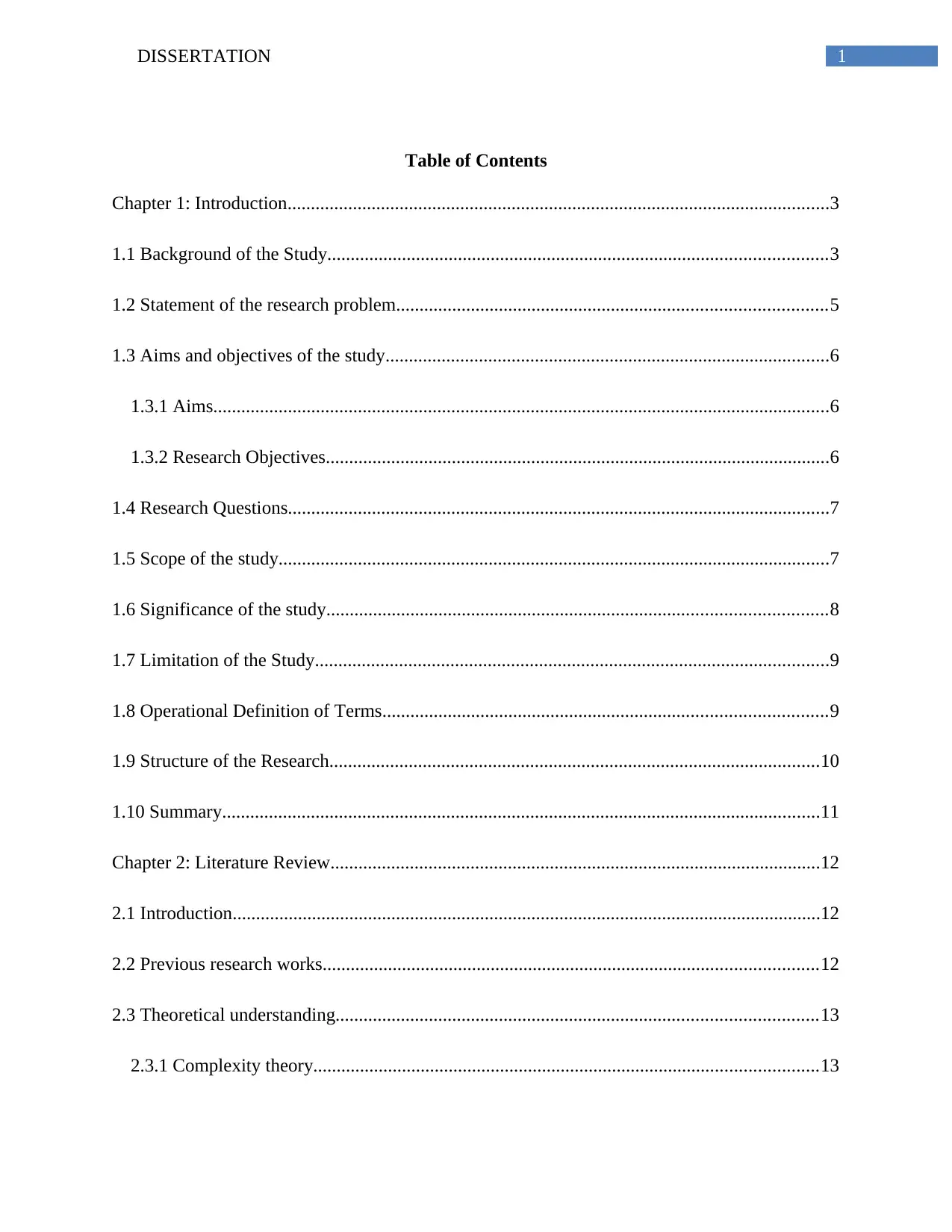
Table of Contents
Chapter 1: Introduction....................................................................................................................3
1.1 Background of the Study...........................................................................................................3
1.2 Statement of the research problem............................................................................................5
1.3 Aims and objectives of the study...............................................................................................6
1.3.1 Aims....................................................................................................................................6
1.3.2 Research Objectives............................................................................................................6
1.4 Research Questions....................................................................................................................7
1.5 Scope of the study......................................................................................................................7
1.6 Significance of the study...........................................................................................................8
1.7 Limitation of the Study..............................................................................................................9
1.8 Operational Definition of Terms...............................................................................................9
1.9 Structure of the Research.........................................................................................................10
1.10 Summary................................................................................................................................11
Chapter 2: Literature Review.........................................................................................................12
2.1 Introduction..............................................................................................................................12
2.2 Previous research works..........................................................................................................12
2.3 Theoretical understanding.......................................................................................................13
2.3.1 Complexity theory............................................................................................................13
Table of Contents
Chapter 1: Introduction....................................................................................................................3
1.1 Background of the Study...........................................................................................................3
1.2 Statement of the research problem............................................................................................5
1.3 Aims and objectives of the study...............................................................................................6
1.3.1 Aims....................................................................................................................................6
1.3.2 Research Objectives............................................................................................................6
1.4 Research Questions....................................................................................................................7
1.5 Scope of the study......................................................................................................................7
1.6 Significance of the study...........................................................................................................8
1.7 Limitation of the Study..............................................................................................................9
1.8 Operational Definition of Terms...............................................................................................9
1.9 Structure of the Research.........................................................................................................10
1.10 Summary................................................................................................................................11
Chapter 2: Literature Review.........................................................................................................12
2.1 Introduction..............................................................................................................................12
2.2 Previous research works..........................................................................................................12
2.3 Theoretical understanding.......................................................................................................13
2.3.1 Complexity theory............................................................................................................13
2DISSERTATION
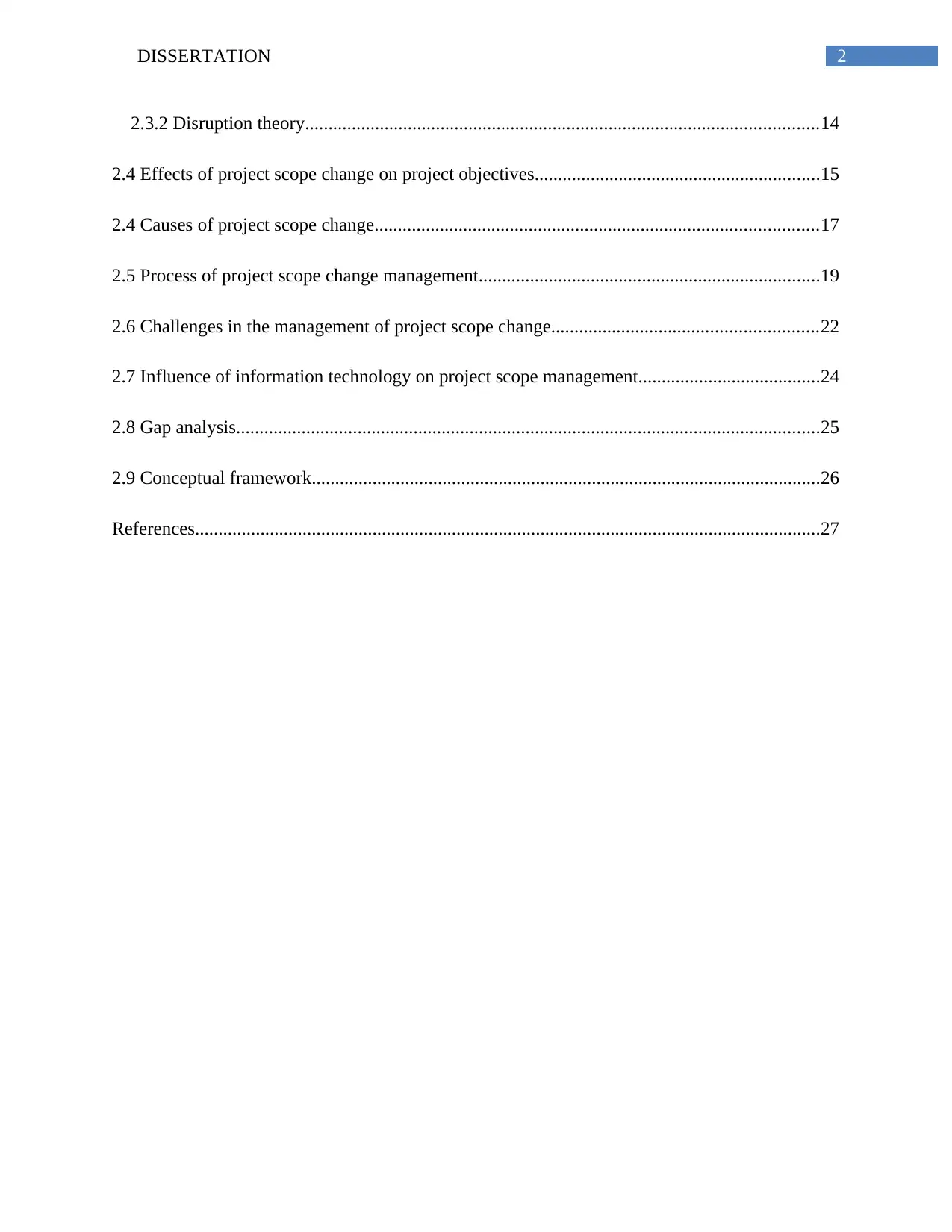
2.3.2 Disruption theory..............................................................................................................14
2.4 Effects of project scope change on project objectives.............................................................15
2.4 Causes of project scope change...............................................................................................17
2.5 Process of project scope change management.........................................................................19
2.6 Challenges in the management of project scope change.........................................................22
2.7 Influence of information technology on project scope management.......................................24
2.8 Gap analysis.............................................................................................................................25
2.9 Conceptual framework.............................................................................................................26
References......................................................................................................................................27
2.3.2 Disruption theory..............................................................................................................14
2.4 Effects of project scope change on project objectives.............................................................15
2.4 Causes of project scope change...............................................................................................17
2.5 Process of project scope change management.........................................................................19
2.6 Challenges in the management of project scope change.........................................................22
2.7 Influence of information technology on project scope management.......................................24
2.8 Gap analysis.............................................................................................................................25
2.9 Conceptual framework.............................................................................................................26
References......................................................................................................................................27
⊘ This is a preview!⊘
Do you want full access?
Subscribe today to unlock all pages.

Trusted by 1+ million students worldwide
3DISSERTATION
Chapter 1: Introduction
In this chapter, the main focus is to highlight research background, aim, objectives,
questions and most importantly the problem statement. In the end of this chapter, the structure of
the research and limitation of the study has been prescribed.
1.1 Background of the Study
In any project management framework, the ultimate objective is to have the right results
at the end of the project. Moreover, result must be achieved through maintaining and fulfilling
the scope. In completing the project, there are mainly two types of constraints, budget and
deadlines. In failing the project, these two principles are responsible. As stated by Larson and
Gray (2013), implementing the project process and requirements of the project are a feasible
approach to create a project management scope. Projects must be managed through observing the
success and success of any project is depended on the schedule, cost, budget, framework and
appropriate methodology of the project. However, most importantly, stakeholders of the projects
look at the completion of specific goals and outcomes. Finishing the project on time requires
framing the requirement for the project. Planning is a significant part of the project in setting the
scope of the project and after the planning; it is needed to agree with the delivering of the
intended outcomes. Including the project, the scope must be followed throughout the lifecycle of
the project. (Kerzner 2013) agreed about this maintaining project scope is the process of
managing all the steps and work that are required to finish the project on time, successfully.
Moreover, project scope can be defined as the project planning that is associated with a list of
project objectives, features, deliverables, tasks and functions. In specific, project scope is the
ultimate needs of the project that should be achieved in delivering the project.
Chapter 1: Introduction
In this chapter, the main focus is to highlight research background, aim, objectives,
questions and most importantly the problem statement. In the end of this chapter, the structure of
the research and limitation of the study has been prescribed.
1.1 Background of the Study
In any project management framework, the ultimate objective is to have the right results
at the end of the project. Moreover, result must be achieved through maintaining and fulfilling
the scope. In completing the project, there are mainly two types of constraints, budget and
deadlines. In failing the project, these two principles are responsible. As stated by Larson and
Gray (2013), implementing the project process and requirements of the project are a feasible
approach to create a project management scope. Projects must be managed through observing the
success and success of any project is depended on the schedule, cost, budget, framework and
appropriate methodology of the project. However, most importantly, stakeholders of the projects
look at the completion of specific goals and outcomes. Finishing the project on time requires
framing the requirement for the project. Planning is a significant part of the project in setting the
scope of the project and after the planning; it is needed to agree with the delivering of the
intended outcomes. Including the project, the scope must be followed throughout the lifecycle of
the project. (Kerzner 2013) agreed about this maintaining project scope is the process of
managing all the steps and work that are required to finish the project on time, successfully.
Moreover, project scope can be defined as the project planning that is associated with a list of
project objectives, features, deliverables, tasks and functions. In specific, project scope is the
ultimate needs of the project that should be achieved in delivering the project.
Paraphrase This Document
Need a fresh take? Get an instant paraphrase of this document with our AI Paraphraser
4DISSERTATION
Scope change is the decision that is taken by the project manager and stakeholders of the
project. This change is all about reducing or expands the project tenure or the budget of the
project. As opined by Schwalbe (2015), project scope is basically involved with cost, features,
timeline and budget of a project. On the contrary, scope creep is associated with the concept of
setting a scope of building a product or managing a project slowly grows out of the project as it
was originally defined in the scope of the project. However, Project scope concept is related to
the objectives of the project as the objectives have to be changed in case scope is changed. As
mentioned by Fleming and Koppelman (2016), project goals are set by the experienced project
managers in achieving the overall context and the project is trying to obtain those goals at the
end. Moreover, the stakeholders should know about the goal, on the other side, project objectives
are related to the lower level statement in describing the tangible products or specific
deliverables that are going to gain at the last level of the project.
The scope is significant as all the allocation and planning of resources is done according
to the project. In any case, project scope changes, objectives and outcomes of the project are
changed also. The change occurs in two reasons, external factors, market situation, industry
analysis and government regulations, in addition, internal factors are stakeholders' demand,
insight issues. Controlling the scope change is necessary as it provides management of risks and
objectives of the project. Without maintaining the change control, moving project can fail and
objectives cannot be met. These are done through following the performance of project manager.
Oman Telecommunications Company (Omantel) is an internet service provider in Oman
and it is the first telecommunication company in Oman. This company has its share of 65% of
WorldCall Pakistan in the year 2008. Omantel Company was established in the year 1998 and
headquarter is in Muscat, Oman (Omantel.com 2017). Oman government owns 51% share of this
Scope change is the decision that is taken by the project manager and stakeholders of the
project. This change is all about reducing or expands the project tenure or the budget of the
project. As opined by Schwalbe (2015), project scope is basically involved with cost, features,
timeline and budget of a project. On the contrary, scope creep is associated with the concept of
setting a scope of building a product or managing a project slowly grows out of the project as it
was originally defined in the scope of the project. However, Project scope concept is related to
the objectives of the project as the objectives have to be changed in case scope is changed. As
mentioned by Fleming and Koppelman (2016), project goals are set by the experienced project
managers in achieving the overall context and the project is trying to obtain those goals at the
end. Moreover, the stakeholders should know about the goal, on the other side, project objectives
are related to the lower level statement in describing the tangible products or specific
deliverables that are going to gain at the last level of the project.
The scope is significant as all the allocation and planning of resources is done according
to the project. In any case, project scope changes, objectives and outcomes of the project are
changed also. The change occurs in two reasons, external factors, market situation, industry
analysis and government regulations, in addition, internal factors are stakeholders' demand,
insight issues. Controlling the scope change is necessary as it provides management of risks and
objectives of the project. Without maintaining the change control, moving project can fail and
objectives cannot be met. These are done through following the performance of project manager.
Oman Telecommunications Company (Omantel) is an internet service provider in Oman
and it is the first telecommunication company in Oman. This company has its share of 65% of
WorldCall Pakistan in the year 2008. Omantel Company was established in the year 1998 and
headquarter is in Muscat, Oman (Omantel.com 2017). Oman government owns 51% share of this
5DISSERTATION
company. Current CEO of the organisation is Talat Said Mathoon. Net income of the
organisation in 2016 was $126 million. Omantel has 10 submarine cables in Oman and this
organisation has announced to implement FTTH technology service in Oman. Omantel provides
the facility of the rewards programme, broadband, postpaid, prepaid and SmartTV services.
1.2 Statement of the research problem
Omantel Company, they provide the services of wireless telephony, wireline telephone
services and internet services. In addition, their services range to Integrated Services Digital
Network (ISDN), SMS, Voice Mail and high-speed broadband services. Recently, Oman
telecommunication industry had to go within a change as the telecommunication market has been
liberalised by the Government as the country's business entered WTO (World Trade
Organisation) (Prakash and Mathew 2015). This contract of entering into WTO, it is specified
that organisations of telecommunication industry have to face competitive challenges by the
market rivalries. Now, the wireless and broadband internet services are open up for all
companies in Oman, as of now, all the telecommunication companies of Oman have to revise the
strategies in order to accelerate the deploying services and products in the market with
competitive prices (Al Jabri et al. 2017).
In this condition, Omantel Company has to bridge the gap between organisational
strategies and project management. There are two types of project management; first one is
traditional project management and organisational project management. In case of traditional
project management is project oriented, and project methodologies follow the corporate process.
On the other side, organisational project management is organisation oriented and it follows life
cycle integrated corporate process. However, in the previous time, the organisation has its own
company. Current CEO of the organisation is Talat Said Mathoon. Net income of the
organisation in 2016 was $126 million. Omantel has 10 submarine cables in Oman and this
organisation has announced to implement FTTH technology service in Oman. Omantel provides
the facility of the rewards programme, broadband, postpaid, prepaid and SmartTV services.
1.2 Statement of the research problem
Omantel Company, they provide the services of wireless telephony, wireline telephone
services and internet services. In addition, their services range to Integrated Services Digital
Network (ISDN), SMS, Voice Mail and high-speed broadband services. Recently, Oman
telecommunication industry had to go within a change as the telecommunication market has been
liberalised by the Government as the country's business entered WTO (World Trade
Organisation) (Prakash and Mathew 2015). This contract of entering into WTO, it is specified
that organisations of telecommunication industry have to face competitive challenges by the
market rivalries. Now, the wireless and broadband internet services are open up for all
companies in Oman, as of now, all the telecommunication companies of Oman have to revise the
strategies in order to accelerate the deploying services and products in the market with
competitive prices (Al Jabri et al. 2017).
In this condition, Omantel Company has to bridge the gap between organisational
strategies and project management. There are two types of project management; first one is
traditional project management and organisational project management. In case of traditional
project management is project oriented, and project methodologies follow the corporate process.
On the other side, organisational project management is organisation oriented and it follows life
cycle integrated corporate process. However, in the previous time, the organisation has its own
⊘ This is a preview!⊘
Do you want full access?
Subscribe today to unlock all pages.
Trusted by 1+ million students worldwide
6DISSERTATION
objectives and scope of business, now, the organisation has to set the project scope change and
that will definitely pose issues in meeting the objectives of the projects. Omantel Company has
to make up the time with logic sequences. As stated by Walker (2015), project management is a
field that can provide surety in producing the products and services of organisation on time.
Moreover, the government has its share in Omantel Company; however, Telecommunication
Company has been going through the phase of privatisation. The organisation now follows the
demand of ‘lean and mean’ structure and this might be the requirement in project management.
In recent changes in Oman telecommunication rules and regulations, the existent projects of
Omantel Telecommunication Company will be in trouble and may end up doing more work than
the original agreed to and budget of the projects may get higher. Omantel Telecommunication
has been trying to implement ERP (Enterprise Resource Planning) project to gain the
competitive advantage with stopping the reasons of project failure. Moreover, Omantel is one of
the leading telecommunication providers to oil and gas sector. Recently, Omantel has made a
strategic partnership with BP Oman in order to make up comprehensive telecommunication
services. This project can also be hampered through WTO agreement and project scope change
can lead to change the objectives of the project.
1.3 Aims and objectives of the study
1.3.1 Aims
The aim of the research to is to explore the impact of project scope change on project
objectives, in light of Omantel Telecommunication Company.
1.3.2 Research Objectives
The research objectives are as follows:
objectives and scope of business, now, the organisation has to set the project scope change and
that will definitely pose issues in meeting the objectives of the projects. Omantel Company has
to make up the time with logic sequences. As stated by Walker (2015), project management is a
field that can provide surety in producing the products and services of organisation on time.
Moreover, the government has its share in Omantel Company; however, Telecommunication
Company has been going through the phase of privatisation. The organisation now follows the
demand of ‘lean and mean’ structure and this might be the requirement in project management.
In recent changes in Oman telecommunication rules and regulations, the existent projects of
Omantel Telecommunication Company will be in trouble and may end up doing more work than
the original agreed to and budget of the projects may get higher. Omantel Telecommunication
has been trying to implement ERP (Enterprise Resource Planning) project to gain the
competitive advantage with stopping the reasons of project failure. Moreover, Omantel is one of
the leading telecommunication providers to oil and gas sector. Recently, Omantel has made a
strategic partnership with BP Oman in order to make up comprehensive telecommunication
services. This project can also be hampered through WTO agreement and project scope change
can lead to change the objectives of the project.
1.3 Aims and objectives of the study
1.3.1 Aims
The aim of the research to is to explore the impact of project scope change on project
objectives, in light of Omantel Telecommunication Company.
1.3.2 Research Objectives
The research objectives are as follows:
Paraphrase This Document
Need a fresh take? Get an instant paraphrase of this document with our AI Paraphraser
7DISSERTATION
1. To evaluate the effect of project scope change on project objectives at Omantel Company
2. To determine the causes of project scope change
3. To understand project scope change management process of Omantel Company
4. To analyse the challenges in the management of project scope change at Omantel company
5. To determine the influence of information technology on project scope management at
Omantel Company
1.4 Research Questions
The following are the research questions:
1. What are the effects of project scope change on project objectives at Omantel Company?
2. What are the causes of project scope change?
3. What is the process of project scope change management at Omantel Company?
4. What are the challenges in the management of project scope change at Omantel Company?
5. What are the influences of information technology on project scope change management at
Omantel Company?
1.5 Scope of the study
The scope of the study is to get first-hand knowledge about project scope change and its
impact on project objectives. It was focused mainly on the scope change management and its
impact on project objectives and its role on Omantel Company. The research is carried on the
1. To evaluate the effect of project scope change on project objectives at Omantel Company
2. To determine the causes of project scope change
3. To understand project scope change management process of Omantel Company
4. To analyse the challenges in the management of project scope change at Omantel company
5. To determine the influence of information technology on project scope management at
Omantel Company
1.4 Research Questions
The following are the research questions:
1. What are the effects of project scope change on project objectives at Omantel Company?
2. What are the causes of project scope change?
3. What is the process of project scope change management at Omantel Company?
4. What are the challenges in the management of project scope change at Omantel Company?
5. What are the influences of information technology on project scope change management at
Omantel Company?
1.5 Scope of the study
The scope of the study is to get first-hand knowledge about project scope change and its
impact on project objectives. It was focused mainly on the scope change management and its
impact on project objectives and its role on Omantel Company. The research is carried on the
8DISSERTATION
relationship between project scope change and project objectives. These are the two variables
and it is mainly focused on the Omantel Company’s project change management that can
influence on project objectives. Project scope change can generate the improved benefits and
organisation can allow. This study strives to find out the relationship between project objectives
and project scope change management. This study has been done using the deductive approach
as it helps to continue a study of existing literature and the researcher can take information from
existing theories. Moreover, qualitative research design is used in this project as qualitative
design helps to gather and analyse the data in an observational way. A Clear understanding of the
topic about scope change and project objectives can be achieved through qualitative analysis.
1.6 Significance of the study
This study will give benefits to the project management study in understanding the
variables of project scope management and objectives of the project. The interest of this study
mainly focuses on social, academic, personal scientific and government. For Omantel Company,
this research paper can work as a secondary document to improve their project management
scope in order to intact their objectives. This study will help the future researchers to have
information about project scope change and brief idea about telecommunication sector of Oman.
Project managers of telecommunication field can have benefited from this study to analyse the
project scope change process in case any challenges faced. Recent project change issues of
Omantel and project objectives of Omantel can be understood through this. The readers of the
study will understand from theoretical perspectives to meet the requirements of the project. This
paper can be used as a reference material in project scope change management in
telecommunication sector.
relationship between project scope change and project objectives. These are the two variables
and it is mainly focused on the Omantel Company’s project change management that can
influence on project objectives. Project scope change can generate the improved benefits and
organisation can allow. This study strives to find out the relationship between project objectives
and project scope change management. This study has been done using the deductive approach
as it helps to continue a study of existing literature and the researcher can take information from
existing theories. Moreover, qualitative research design is used in this project as qualitative
design helps to gather and analyse the data in an observational way. A Clear understanding of the
topic about scope change and project objectives can be achieved through qualitative analysis.
1.6 Significance of the study
This study will give benefits to the project management study in understanding the
variables of project scope management and objectives of the project. The interest of this study
mainly focuses on social, academic, personal scientific and government. For Omantel Company,
this research paper can work as a secondary document to improve their project management
scope in order to intact their objectives. This study will help the future researchers to have
information about project scope change and brief idea about telecommunication sector of Oman.
Project managers of telecommunication field can have benefited from this study to analyse the
project scope change process in case any challenges faced. Recent project change issues of
Omantel and project objectives of Omantel can be understood through this. The readers of the
study will understand from theoretical perspectives to meet the requirements of the project. This
paper can be used as a reference material in project scope change management in
telecommunication sector.
⊘ This is a preview!⊘
Do you want full access?
Subscribe today to unlock all pages.
Trusted by 1+ million students worldwide
9DISSERTATION
1.7 Limitation of the Study
The core limitation of the study to secure the data and primary data is used in order to
conduct the study. The researcher prepared the questionnaire in order to collect the primary data
and framing of open-ended questions was a tough job for the researcher. The researcher had to
review the questionnaire and documents in order to interview the project managers. In taking the
face-to-face interviews of project managers, the researcher has tackled confidence issue. The
sample of the study had to keep small as the respondents did not want to reveal about project
scope change. If the researcher had had more time to continue the research, he could have
accesses more data and sample size of the research would be higher. In accessing of the
confidential organisation based information was hard to deal. The researcher faced limitation in
handling a large amount of data. Moreover, time constraint as the researcher did not have enough
time to generate the data as well as analyse them. The researcher has faced the issues of
budgetary constraint.
1.8 Operational Definition of Terms
Project management: It is the specific application of skills, knowledge and tools to meet the
stakeholders’ need.
Project scope: It is the work that should be accomplished with functions and features when the
projects get completed (Kerzner 2013).
WBS: Work Breakdown Structure. It is about the steps to follow to complete a project.
Project scope change: It is the process of tracking and making the changes that are done to the
initial project scope (Fleming and Koppelman 2016).
1.7 Limitation of the Study
The core limitation of the study to secure the data and primary data is used in order to
conduct the study. The researcher prepared the questionnaire in order to collect the primary data
and framing of open-ended questions was a tough job for the researcher. The researcher had to
review the questionnaire and documents in order to interview the project managers. In taking the
face-to-face interviews of project managers, the researcher has tackled confidence issue. The
sample of the study had to keep small as the respondents did not want to reveal about project
scope change. If the researcher had had more time to continue the research, he could have
accesses more data and sample size of the research would be higher. In accessing of the
confidential organisation based information was hard to deal. The researcher faced limitation in
handling a large amount of data. Moreover, time constraint as the researcher did not have enough
time to generate the data as well as analyse them. The researcher has faced the issues of
budgetary constraint.
1.8 Operational Definition of Terms
Project management: It is the specific application of skills, knowledge and tools to meet the
stakeholders’ need.
Project scope: It is the work that should be accomplished with functions and features when the
projects get completed (Kerzner 2013).
WBS: Work Breakdown Structure. It is about the steps to follow to complete a project.
Project scope change: It is the process of tracking and making the changes that are done to the
initial project scope (Fleming and Koppelman 2016).
Paraphrase This Document
Need a fresh take? Get an instant paraphrase of this document with our AI Paraphraser
10DISSERTATION
Project objectives: It describes the tangible product and specific deliverables of the project
(Larson and Gray 2013).
Critical path: It is a sequence of activities to complete the project on schedule. It helps in not to
make delay on the project (Prakash and Mathew 2015).
Gantt chart: This is bar chart to depict activities to demonstrate the beginning and end-date of
the project (Al Jabri et al. 2017).
Lifecycle: This is the process in building deliverables of the project.
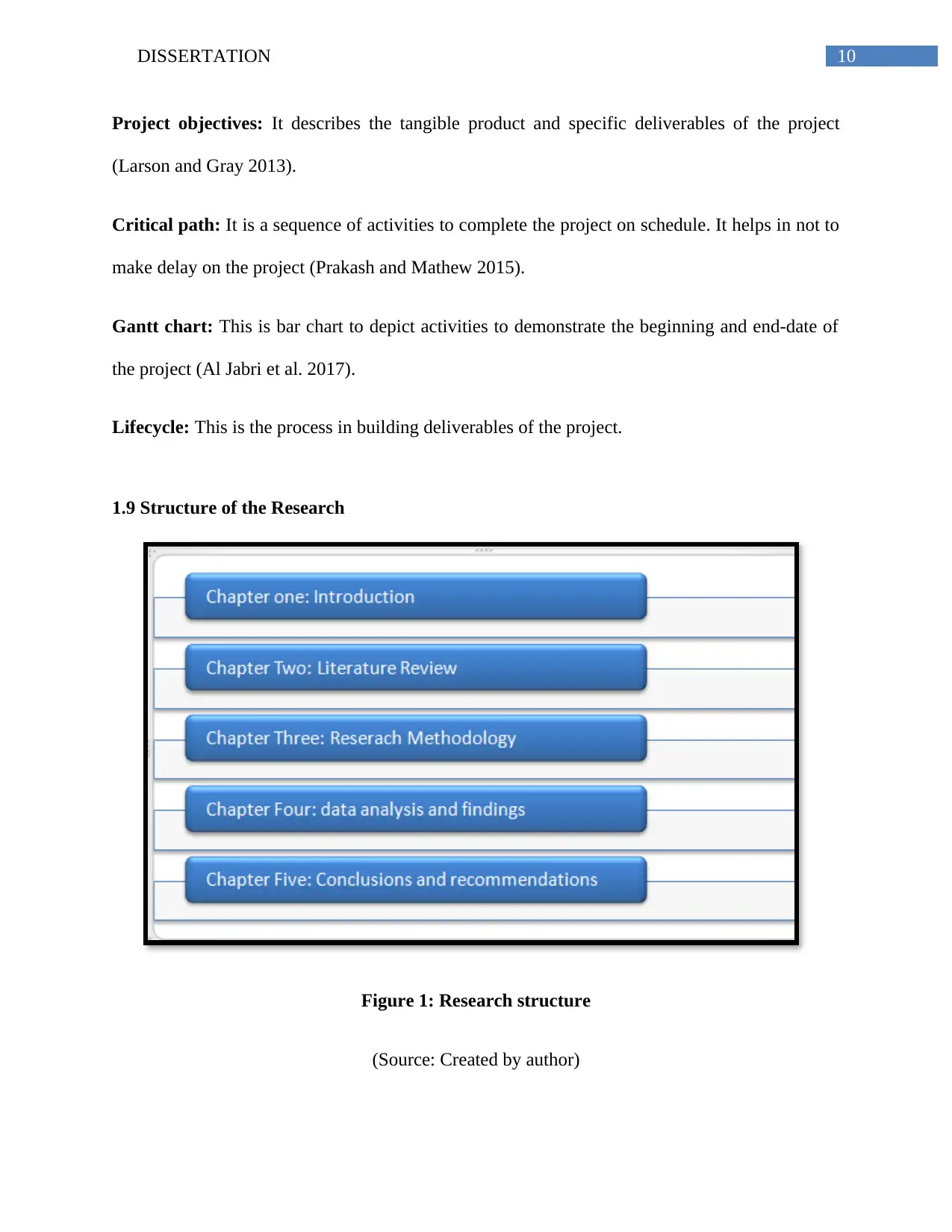
1.9 Structure of the Research
Figure 1: Research structure
(Source: Created by author)
Project objectives: It describes the tangible product and specific deliverables of the project
(Larson and Gray 2013).
Critical path: It is a sequence of activities to complete the project on schedule. It helps in not to
make delay on the project (Prakash and Mathew 2015).
Gantt chart: This is bar chart to depict activities to demonstrate the beginning and end-date of
the project (Al Jabri et al. 2017).
Lifecycle: This is the process in building deliverables of the project.
1.9 Structure of the Research
Figure 1: Research structure
(Source: Created by author)
11DISSERTATION
Chapter 1: In chapter one, problem statement of the study has been described with setting aim,
objectives and questions of the research.
Chapter 2: In the literature review section, theoretical analysis of the study has been done. In
this chapter scholarly paper has been reviewed.
Chapter 3: In the methodology section, the process of collection of data has been revealed. The
process of data collection and data analysis mainly pointed out in this chapter.
Chapter 4: In data findings and data analysis section, the findings of data collection have been
produced with analysis making a link with theoretical perspectives.
Chapter 5: In the conclusion and recommendations section, the conclusion has been drawn on
analysis and recommendations have been given based on the analysis. Objectives have been
linked with analysis whether they are met or not.
1.10 Summary
In this chapter, the aim, objectives, questions and limitations of the project have been
explained. Moreover, the possible outcomes of the research have been outlined. Background
information of Omantel Company has been specified with highlighting the problems facing by
the organisation in managing the project scope. The structure of the researcher has been made to
proceed with this study.
Chapter 1: In chapter one, problem statement of the study has been described with setting aim,
objectives and questions of the research.
Chapter 2: In the literature review section, theoretical analysis of the study has been done. In
this chapter scholarly paper has been reviewed.
Chapter 3: In the methodology section, the process of collection of data has been revealed. The
process of data collection and data analysis mainly pointed out in this chapter.
Chapter 4: In data findings and data analysis section, the findings of data collection have been
produced with analysis making a link with theoretical perspectives.
Chapter 5: In the conclusion and recommendations section, the conclusion has been drawn on
analysis and recommendations have been given based on the analysis. Objectives have been
linked with analysis whether they are met or not.
1.10 Summary
In this chapter, the aim, objectives, questions and limitations of the project have been
explained. Moreover, the possible outcomes of the research have been outlined. Background
information of Omantel Company has been specified with highlighting the problems facing by
the organisation in managing the project scope. The structure of the researcher has been made to
proceed with this study.
⊘ This is a preview!⊘
Do you want full access?
Subscribe today to unlock all pages.
Trusted by 1+ million students worldwide

1 out of 31


Related Documents


Your All-in-One AI-Powered Toolkit for Academic Success.
+13062052269
info@desklib.com
Available 24*7 on WhatsApp / Email
![[object Object]](/_next/static/media/star-bottom.7253800d.svg)
Unlock your academic potential
Copyright © 2020–2026 A2Z Services. All Rights Reserved. Developed and managed by ZUCOL.