Property Economics Report: Sunshine Coast Development Analysis 2019
VerifiedAdded on 2022/09/16
|20
|3464
|18
Report
AI Summary
This report examines property economics and urban development in the Sunshine Coast, Australia, focusing on a major development project. It provides an executive summary outlining the key issues, including the consideration of both contemporary micro and macro property economic factors such as social, environmental, political, and financial factors. The report delves into the short, medium, and long-term impacts of the project, discussing employment opportunities, income generation, infrastructure development, and enhanced living standards. It analyzes socio-economic, environmental, and political factors, alongside macroeconomic factors like GDP, inflation, and unemployment, and microeconomic considerations such as supply stability and market competition. The report highlights the project's implications for urban regional growth and development, emphasizing its potential to boost the national economy through job creation and increased property values. The report also uses figures and tables to support the analysis of various economic indicators such as the Gross Regional Product and unemployment rates, and provides references to the sources used in the analysis.
Economics 1
Property Economics
By [Name]
Institution
Date
2019
Property Economics
Property Economics
By [Name]
Institution
Date
2019
Property Economics

Paraphrase This Document
Need a fresh take? Get an instant paraphrase of this document with our AI Paraphraser
Economics 2
EXECUTIVE SUMMARY
Urban development is a major concern for national development in Australia. However, both
contemporary micro and macro property economic factors such as social, environmental,
political, and financial factors must be taken in to consideration. The Sunshine Coast is a peri-
urban area located within Queensland, Australia with its economic growth approximated to be
greater than most of developing economies. To improve its property development, construction
of new buildings within the region must comply with regulation set by the sunshine coast
regional council. As this is the backbone of the property development in most developed
economies. Factors affecting macro property development in the Sunshine Coast were found to
be entirely related to an economic situation in the country. These included unemployment,
economic growth rate, gross domestic product, and inflation. Sunshine Coast Region was found
to be hosting 0.91 percent of GRP for Australia thus its property development is directly related
to the national economic performance in terms of job creation, inflation performance, and
property prices. On the other hand, microeconomic factors such as supply stability, market
competition, customer base, and media coverage were also found to play a major role in the
major economic development of the Sunshine Coast both in short and long term goal.
EXECUTIVE SUMMARY
Urban development is a major concern for national development in Australia. However, both
contemporary micro and macro property economic factors such as social, environmental,
political, and financial factors must be taken in to consideration. The Sunshine Coast is a peri-
urban area located within Queensland, Australia with its economic growth approximated to be
greater than most of developing economies. To improve its property development, construction
of new buildings within the region must comply with regulation set by the sunshine coast
regional council. As this is the backbone of the property development in most developed
economies. Factors affecting macro property development in the Sunshine Coast were found to
be entirely related to an economic situation in the country. These included unemployment,
economic growth rate, gross domestic product, and inflation. Sunshine Coast Region was found
to be hosting 0.91 percent of GRP for Australia thus its property development is directly related
to the national economic performance in terms of job creation, inflation performance, and
property prices. On the other hand, microeconomic factors such as supply stability, market
competition, customer base, and media coverage were also found to play a major role in the
major economic development of the Sunshine Coast both in short and long term goal.
Economics 3
Table of Content
EXECUTIVE SUMMARY.............................................................................................................2
1.0. INTRODUCTION................................................................................................................5
1.1. Short Term Impacts..............................................................................................................6
1.1.1. Employment opportunity...............................................................................................6
1.1.2. Income Generation........................................................................................................8
1.1.3. Green Cover..................................................................................................................8
1.1.4. Traffic Congestion.........................................................................................................8
1.2. Medium Term Impacts.........................................................................................................9
1.2.1. School Construction......................................................................................................9
1.2.2. Rehabilitation parks.......................................................................................................9
1.2.3. Road networks...............................................................................................................9
1.3. Long term Impacts..............................................................................................................10
1.3.1. Innovation Hub............................................................................................................10
1.3.2. Enhanced living standards...........................................................................................10
1.3.3. Permanent ad Part-time Job Creation..........................................................................11
1.4. Socio-Economic, Environmental, and Political Factors.....................................................11
1.4.1. Social issues................................................................................................................11
1.4.2. Economic issues..........................................................................................................11
1.4.3. Environmental issues...................................................................................................12
Table of Content
EXECUTIVE SUMMARY.............................................................................................................2
1.0. INTRODUCTION................................................................................................................5
1.1. Short Term Impacts..............................................................................................................6
1.1.1. Employment opportunity...............................................................................................6
1.1.2. Income Generation........................................................................................................8
1.1.3. Green Cover..................................................................................................................8
1.1.4. Traffic Congestion.........................................................................................................8
1.2. Medium Term Impacts.........................................................................................................9
1.2.1. School Construction......................................................................................................9
1.2.2. Rehabilitation parks.......................................................................................................9
1.2.3. Road networks...............................................................................................................9
1.3. Long term Impacts..............................................................................................................10
1.3.1. Innovation Hub............................................................................................................10
1.3.2. Enhanced living standards...........................................................................................10
1.3.3. Permanent ad Part-time Job Creation..........................................................................11
1.4. Socio-Economic, Environmental, and Political Factors.....................................................11
1.4.1. Social issues................................................................................................................11
1.4.2. Economic issues..........................................................................................................11
1.4.3. Environmental issues...................................................................................................12
⊘ This is a preview!⊘
Do you want full access?
Subscribe today to unlock all pages.

Trusted by 1+ million students worldwide
Economics 4
1.4.4. Political issues.............................................................................................................12
1.5. Macro and Micro Economic Factors..................................................................................12
1.5.1.1. Gross Domestic Product..........................................................................................13
1.5.1.2. Inflation Rate...........................................................................................................14
1.5.1.3. Political Stability.....................................................................................................14
1.5.1.4. Unemployment Rates...............................................................................................15
1.5.1.5. Interest Rates...........................................................................................................15
1.5.1.6. Fiscal & Monetary Policy........................................................................................16
1.5.2. Micro Economic Factors.................................................................................................16
1.5.2.1. Environment and Social Costs.................................................................................16
1.5.2.2. Property Rights........................................................................................................17
1.6. Conclusion..........................................................................................................................17
References......................................................................................................................................18
1.4.4. Political issues.............................................................................................................12
1.5. Macro and Micro Economic Factors..................................................................................12
1.5.1.1. Gross Domestic Product..........................................................................................13
1.5.1.2. Inflation Rate...........................................................................................................14
1.5.1.3. Political Stability.....................................................................................................14
1.5.1.4. Unemployment Rates...............................................................................................15
1.5.1.5. Interest Rates...........................................................................................................15
1.5.1.6. Fiscal & Monetary Policy........................................................................................16
1.5.2. Micro Economic Factors.................................................................................................16
1.5.2.1. Environment and Social Costs.................................................................................16
1.5.2.2. Property Rights........................................................................................................17
1.6. Conclusion..........................................................................................................................17
References......................................................................................................................................18
Paraphrase This Document
Need a fresh take? Get an instant paraphrase of this document with our AI Paraphraser
Economics 5
1.0. INTRODUCTION
Major micro and macro property economic development projects are coming up in Sunshine
Coast peri-urban area, including development of the Australia’s only Greenfield City Centre,
expansion of Sunshine Coast airport, Health infrastructure sector, and new residential and
commercial centre developments (Weller and Bolleter, 2013). These developments are intended
to provide housing to 50,000 people with expected average per accommodation estimated at 2.47
persons per dwelling, provide economic benefits and increased jobs (Profile.id.com.au, 2019).
According to Real Institute of Queensland, Sunshine Coast property market has been the
best performing industry in the state. It has defied the trends observed in the Southern States of
the Capital of Queensland which has been the best property market for decades (Yigitcanlar et
al., 2018). As a result, this study will carry out a research in form of a report known as the
Caloudra Centre with an approximated coast of five billion dollars. Upon its completion, the
project is estimated to be the home of more than 50,000 people in the Sunshine Coast area. As a
result, the projected is regarded to be one of the major developments within the city since it will
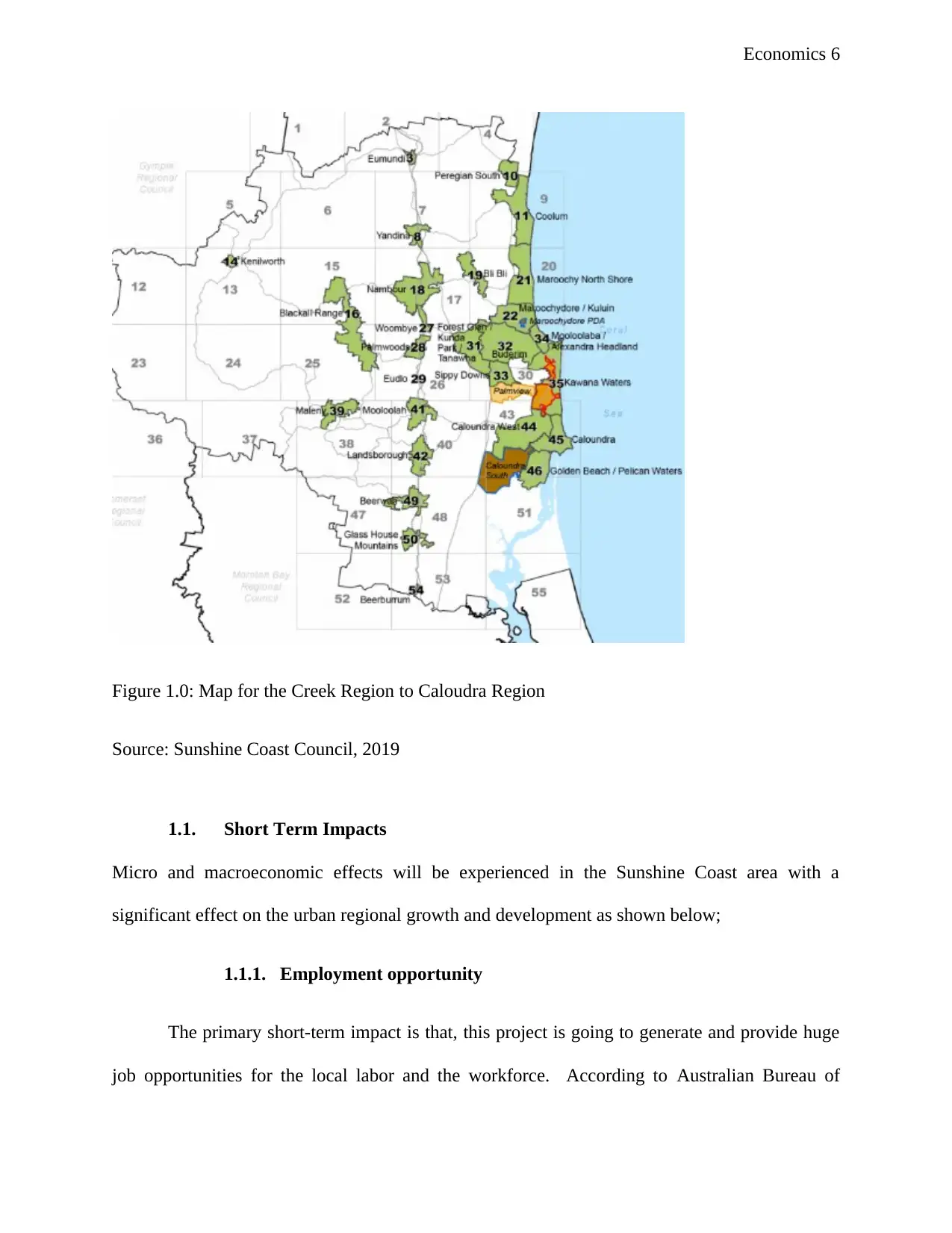
go along the way from Creek region to Caloudra South as shown in the map below;
1.0. INTRODUCTION
Major micro and macro property economic development projects are coming up in Sunshine
Coast peri-urban area, including development of the Australia’s only Greenfield City Centre,
expansion of Sunshine Coast airport, Health infrastructure sector, and new residential and
commercial centre developments (Weller and Bolleter, 2013). These developments are intended
to provide housing to 50,000 people with expected average per accommodation estimated at 2.47
persons per dwelling, provide economic benefits and increased jobs (Profile.id.com.au, 2019).
According to Real Institute of Queensland, Sunshine Coast property market has been the
best performing industry in the state. It has defied the trends observed in the Southern States of
the Capital of Queensland which has been the best property market for decades (Yigitcanlar et
al., 2018). As a result, this study will carry out a research in form of a report known as the
Caloudra Centre with an approximated coast of five billion dollars. Upon its completion, the
project is estimated to be the home of more than 50,000 people in the Sunshine Coast area. As a
result, the projected is regarded to be one of the major developments within the city since it will
go along the way from Creek region to Caloudra South as shown in the map below;
Economics 6
Figure 1.0: Map for the Creek Region to Caloudra Region
Source: Sunshine Coast Council, 2019
1.1. Short Term Impacts
Micro and macroeconomic effects will be experienced in the Sunshine Coast area with a
significant effect on the urban regional growth and development as shown below;
1.1.1. Employment opportunity
The primary short-term impact is that, this project is going to generate and provide huge
job opportunities for the local labor and the workforce. According to Australian Bureau of
Figure 1.0: Map for the Creek Region to Caloudra Region
Source: Sunshine Coast Council, 2019
1.1. Short Term Impacts
Micro and macroeconomic effects will be experienced in the Sunshine Coast area with a
significant effect on the urban regional growth and development as shown below;
1.1.1. Employment opportunity
The primary short-term impact is that, this project is going to generate and provide huge
job opportunities for the local labor and the workforce. According to Australian Bureau of
⊘ This is a preview!⊘
Do you want full access?
Subscribe today to unlock all pages.
Trusted by 1+ million students worldwide
Economics 7
Statistics (2015), Sunshine Coast had 341,054 people with 57 percent of the total population
permanently employed while 42 percent of the total population having part-time job by 2015. As
a result, the introduction of the Caloudra Project will help to boast socio-economic status of the
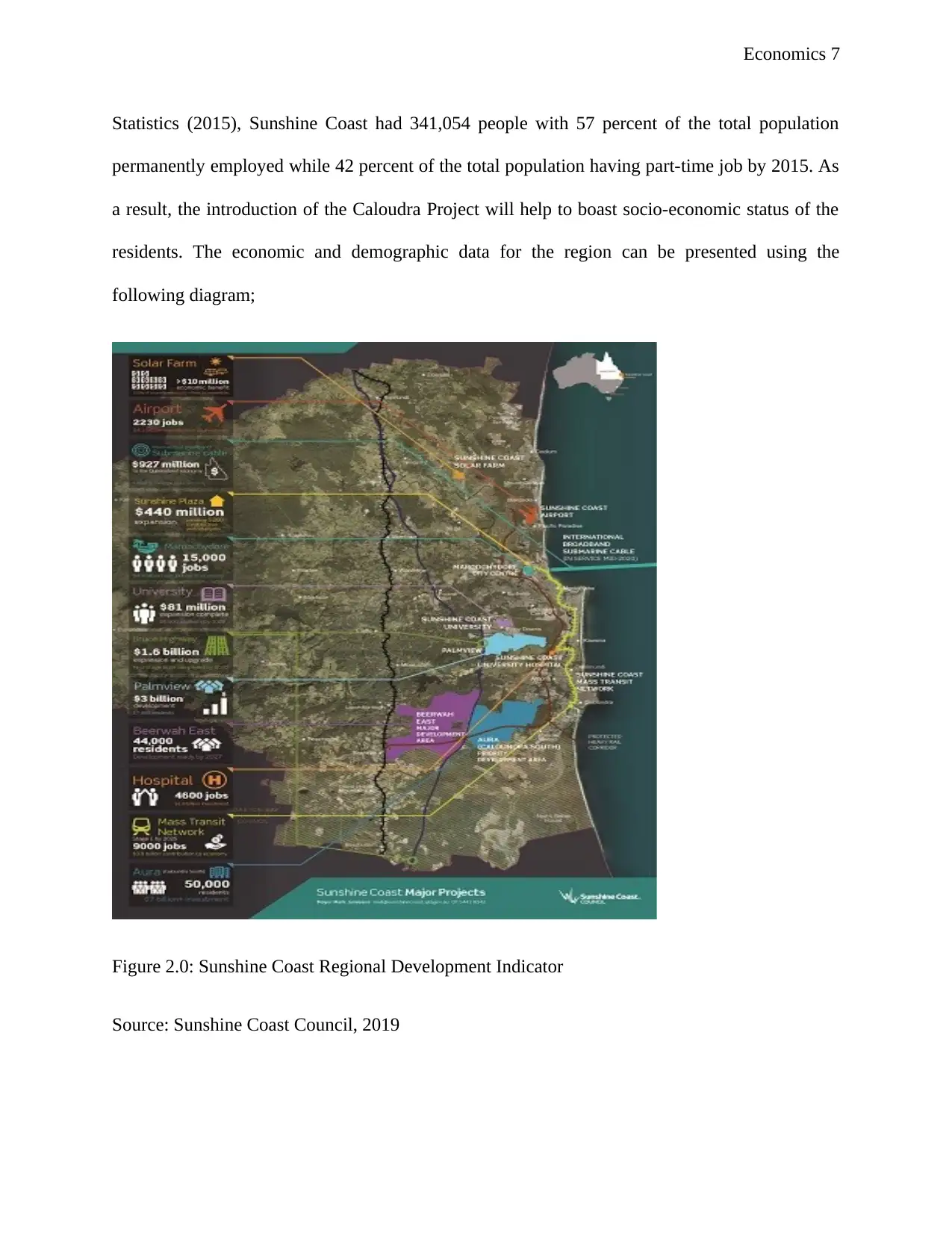
residents. The economic and demographic data for the region can be presented using the
following diagram;
Figure 2.0: Sunshine Coast Regional Development Indicator
Source: Sunshine Coast Council, 2019
Statistics (2015), Sunshine Coast had 341,054 people with 57 percent of the total population
permanently employed while 42 percent of the total population having part-time job by 2015. As
a result, the introduction of the Caloudra Project will help to boast socio-economic status of the
residents. The economic and demographic data for the region can be presented using the
following diagram;
Figure 2.0: Sunshine Coast Regional Development Indicator
Source: Sunshine Coast Council, 2019
Paraphrase This Document
Need a fresh take? Get an instant paraphrase of this document with our AI Paraphraser
Economics 8
1.1.2. Income Generation
Introduction of the Caloudra Project will enhance the infrastructural development of the
Sunshine Coast. As a result, most residents will be able to undertake businesses without
structural obstacles thus increasing the income generation. Increase in the infrastructural
development boost national economy in terms of easy passage of goods through the terminals
along the Sunshine Coast port (McLennan et a., 2015).
1.1.3. Green Cover
Another short term impact would be the increase in the green cover of the urban region.
To increase the green cover of the area, the project is expected to encourage plantation of at least
two million trees within the Sunshine Coast area with a rain water of at least 1,200 gallons from
1600 square foot roof expected to be harvested (Coombes, 2012).
1.1.4. Traffic Congestion
Given that the project will be build within the centre of the Sunshine Coast area, it is
expected to give rise in the traffic congestion during the first phase of the construction and
dissipate afterwards. This is because most of the pass way roads will be affected by the
construction thus forcing diversion to other areas.
1.1.2. Income Generation
Introduction of the Caloudra Project will enhance the infrastructural development of the
Sunshine Coast. As a result, most residents will be able to undertake businesses without
structural obstacles thus increasing the income generation. Increase in the infrastructural
development boost national economy in terms of easy passage of goods through the terminals
along the Sunshine Coast port (McLennan et a., 2015).
1.1.3. Green Cover
Another short term impact would be the increase in the green cover of the urban region.
To increase the green cover of the area, the project is expected to encourage plantation of at least
two million trees within the Sunshine Coast area with a rain water of at least 1,200 gallons from
1600 square foot roof expected to be harvested (Coombes, 2012).
1.1.4. Traffic Congestion
Given that the project will be build within the centre of the Sunshine Coast area, it is
expected to give rise in the traffic congestion during the first phase of the construction and
dissipate afterwards. This is because most of the pass way roads will be affected by the
construction thus forcing diversion to other areas.
Economics 9
1.2. Medium Term Impacts
Medium micro and macroeconomic effects will be experienced in the Sunshine Coast
area with a significant effect on the urban regional growth and development experienced as
shown below;
1.2.1. School Construction
The second phase of the construction would see the development of 20 schools along
with other educational institute, which would generate employment opportunity for teachers and
other professionals.
1.2.2. Rehabilitation parks
Another important impact on the region’s growth would be the establishment of the
rehabilitation parks in the centre that would focus more on the mental and the physical health of
the local residents of the area.
1.2.3. Road networks
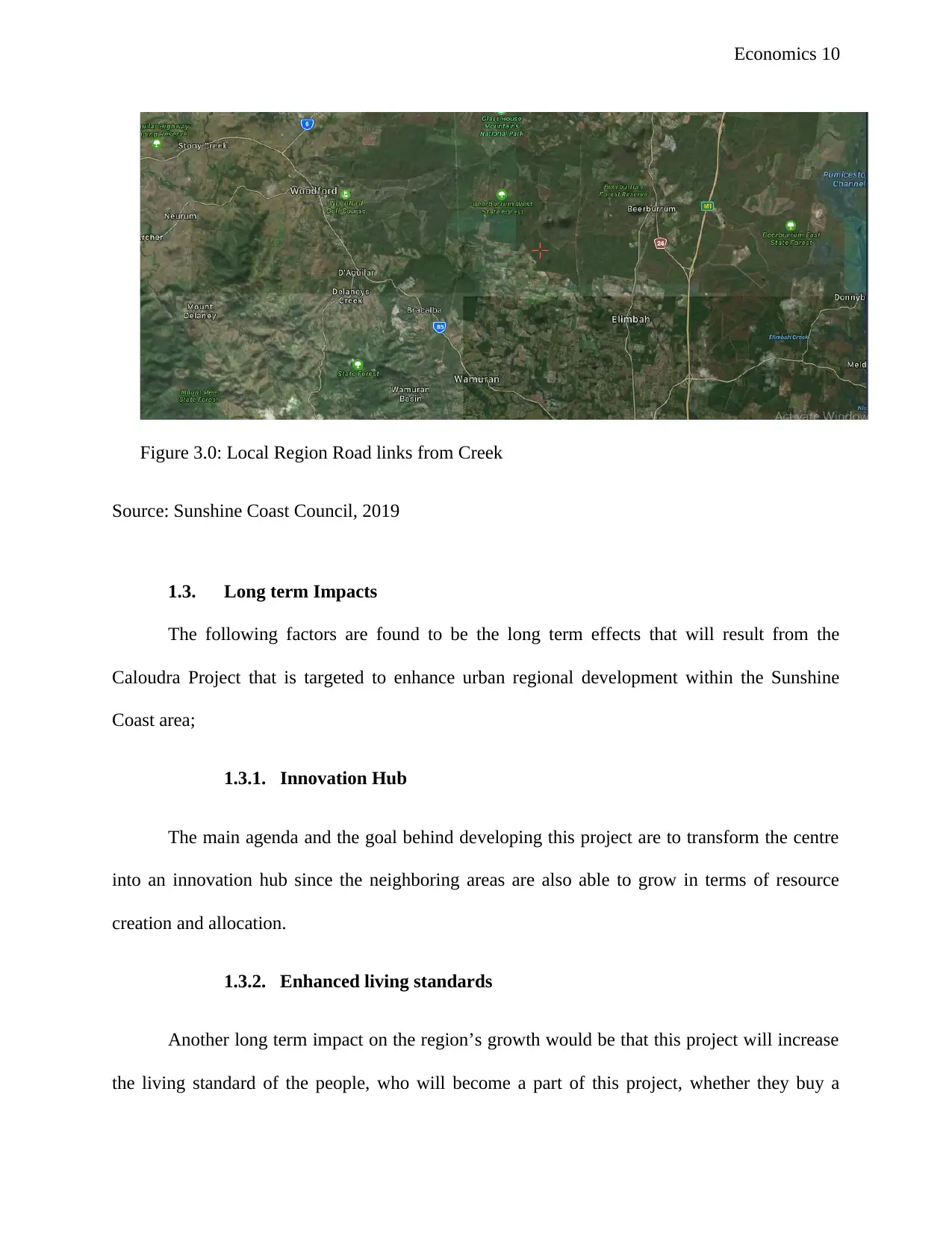
There will be development of the road networks in the area which would connect the local
area with all the major intersections cutting through Strathine, North Lakes, Burpengary,
Morayfield to Beerburrum as shown in the map below;
1.2. Medium Term Impacts
Medium micro and macroeconomic effects will be experienced in the Sunshine Coast
area with a significant effect on the urban regional growth and development experienced as
shown below;
1.2.1. School Construction
The second phase of the construction would see the development of 20 schools along
with other educational institute, which would generate employment opportunity for teachers and
other professionals.
1.2.2. Rehabilitation parks
Another important impact on the region’s growth would be the establishment of the
rehabilitation parks in the centre that would focus more on the mental and the physical health of
the local residents of the area.
1.2.3. Road networks
There will be development of the road networks in the area which would connect the local
area with all the major intersections cutting through Strathine, North Lakes, Burpengary,
Morayfield to Beerburrum as shown in the map below;
⊘ This is a preview!⊘
Do you want full access?
Subscribe today to unlock all pages.
Trusted by 1+ million students worldwide
Economics 10
Figure 3.0: Local Region Road links from Creek
Source: Sunshine Coast Council, 2019
1.3. Long term Impacts
The following factors are found to be the long term effects that will result from the
Caloudra Project that is targeted to enhance urban regional development within the Sunshine
Coast area;
1.3.1. Innovation Hub
The main agenda and the goal behind developing this project are to transform the centre
into an innovation hub since the neighboring areas are also able to grow in terms of resource
creation and allocation.
1.3.2. Enhanced living standards
Another long term impact on the region’s growth would be that this project will increase
the living standard of the people, who will become a part of this project, whether they buy a
Figure 3.0: Local Region Road links from Creek
Source: Sunshine Coast Council, 2019
1.3. Long term Impacts
The following factors are found to be the long term effects that will result from the
Caloudra Project that is targeted to enhance urban regional development within the Sunshine
Coast area;
1.3.1. Innovation Hub
The main agenda and the goal behind developing this project are to transform the centre
into an innovation hub since the neighboring areas are also able to grow in terms of resource
creation and allocation.
1.3.2. Enhanced living standards
Another long term impact on the region’s growth would be that this project will increase
the living standard of the people, who will become a part of this project, whether they buy a
Paraphrase This Document
Need a fresh take? Get an instant paraphrase of this document with our AI Paraphraser
Economics 11
residential or a commercial space in the centre. This will be through the rental income received
from the housings and the boost businesses that will be experienced as a result of effective
infrastructural development.
1.3.3. Permanent ad Part-time Job Creation
The project is expected to generate 20,000 permanent jobs with 1700 jobs being created
during the first phase of the project (Boyd, 2019).
1.4. Socio-Economic, Environmental, and Political Factors
Redeveloping a new urban area needs both the developers and the city officials to agree
on the following three primary concerns. First, the most important cost benefit analysis concern
should be how the Project will be financed, and the resulting economic benefits it brings. The
second concern should be the urban infrastructural and environmental impact with a proper
sustainability. The last concern should be how to gain the support of the community in order to
help in implementing the project (Roiko et al., 2012). Socio-economic, Environmental, and
political dimension of the Caloudra must be considered at all cost given the impact they have on
the citizens. As a result, the following factors will be considered;
1.4.1. Social issues
The size of community concerned, availability of various stakeholders of that
community, scale of sustainable development, relevant acquisitions for future requirements are
various social issues faced by community assets (Ansari et al., 2012).
1.4.2. Economic issues
residential or a commercial space in the centre. This will be through the rental income received
from the housings and the boost businesses that will be experienced as a result of effective
infrastructural development.
1.3.3. Permanent ad Part-time Job Creation
The project is expected to generate 20,000 permanent jobs with 1700 jobs being created
during the first phase of the project (Boyd, 2019).
1.4. Socio-Economic, Environmental, and Political Factors
Redeveloping a new urban area needs both the developers and the city officials to agree
on the following three primary concerns. First, the most important cost benefit analysis concern
should be how the Project will be financed, and the resulting economic benefits it brings. The
second concern should be the urban infrastructural and environmental impact with a proper
sustainability. The last concern should be how to gain the support of the community in order to
help in implementing the project (Roiko et al., 2012). Socio-economic, Environmental, and
political dimension of the Caloudra must be considered at all cost given the impact they have on
the citizens. As a result, the following factors will be considered;
1.4.1. Social issues
The size of community concerned, availability of various stakeholders of that
community, scale of sustainable development, relevant acquisitions for future requirements are
various social issues faced by community assets (Ansari et al., 2012).
1.4.2. Economic issues
Economics 12
Financial speculations, efficient service delivery, prioritizing services based on fund
availability and community requirements, ensuring sustainable affordability of services are some
of the economic issues being faced by a community asset.
1.4.3. Environmental issues
Sustainable integration of community asset with environmental asset, integrating natural
and built environment, working towards reducing environmental hazards such as green house
gases and meeting coordinated sustainability targets are various environmental issues of
community assets (Schäffler and Swilling, 2013).
1.4.4. Political issues
Lack of leadership, accountability mechanisms, poor communication within community
members, lack of qualified staffs and budgets related restrictions are some of the political issues
that must be scrutinized before a new urban development project is undertaken (Flinn, 2016).
1.5. Macro and Micro Economic Factors
1.5.1. Macroeconomic Factors
Analyzing macroeconomic factors that determines urban economic development should
be clearly defined due to their influence on the level of economic development. As a result,
GDP, inflation, political behavior, and the unemployment rate are going to be used as the
macroeconomic factors. The Gross Domestic Product will cover the consumers’ behavior, the
government expenditure, terms of trade, and private investment while inflation will help to
determine the goods’ price stability level (Weale, et al., 2015). Political temperature is a very
significant factor in determining the urban development in terms of legislatives and national
Financial speculations, efficient service delivery, prioritizing services based on fund
availability and community requirements, ensuring sustainable affordability of services are some
of the economic issues being faced by a community asset.
1.4.3. Environmental issues
Sustainable integration of community asset with environmental asset, integrating natural
and built environment, working towards reducing environmental hazards such as green house
gases and meeting coordinated sustainability targets are various environmental issues of
community assets (Schäffler and Swilling, 2013).
1.4.4. Political issues
Lack of leadership, accountability mechanisms, poor communication within community
members, lack of qualified staffs and budgets related restrictions are some of the political issues
that must be scrutinized before a new urban development project is undertaken (Flinn, 2016).
1.5. Macro and Micro Economic Factors
1.5.1. Macroeconomic Factors
Analyzing macroeconomic factors that determines urban economic development should
be clearly defined due to their influence on the level of economic development. As a result,
GDP, inflation, political behavior, and the unemployment rate are going to be used as the
macroeconomic factors. The Gross Domestic Product will cover the consumers’ behavior, the
government expenditure, terms of trade, and private investment while inflation will help to
determine the goods’ price stability level (Weale, et al., 2015). Political temperature is a very
significant factor in determining the urban development in terms of legislatives and national
⊘ This is a preview!⊘
Do you want full access?
Subscribe today to unlock all pages.
Trusted by 1+ million students worldwide

1 out of 20


Related Documents


Your All-in-One AI-Powered Toolkit for Academic Success.
+13062052269
info@desklib.com
Available 24*7 on WhatsApp / Email
![[object Object]](/_next/static/media/star-bottom.7253800d.svg)
Unlock your academic potential
Copyright © 2020–2026 A2Z Services. All Rights Reserved. Developed and managed by ZUCOL.