The Psychology of Altruism in Sexual Selection: A Detailed Report
VerifiedAdded on 2019/09/16
|5
|995
|518
Report
AI Summary
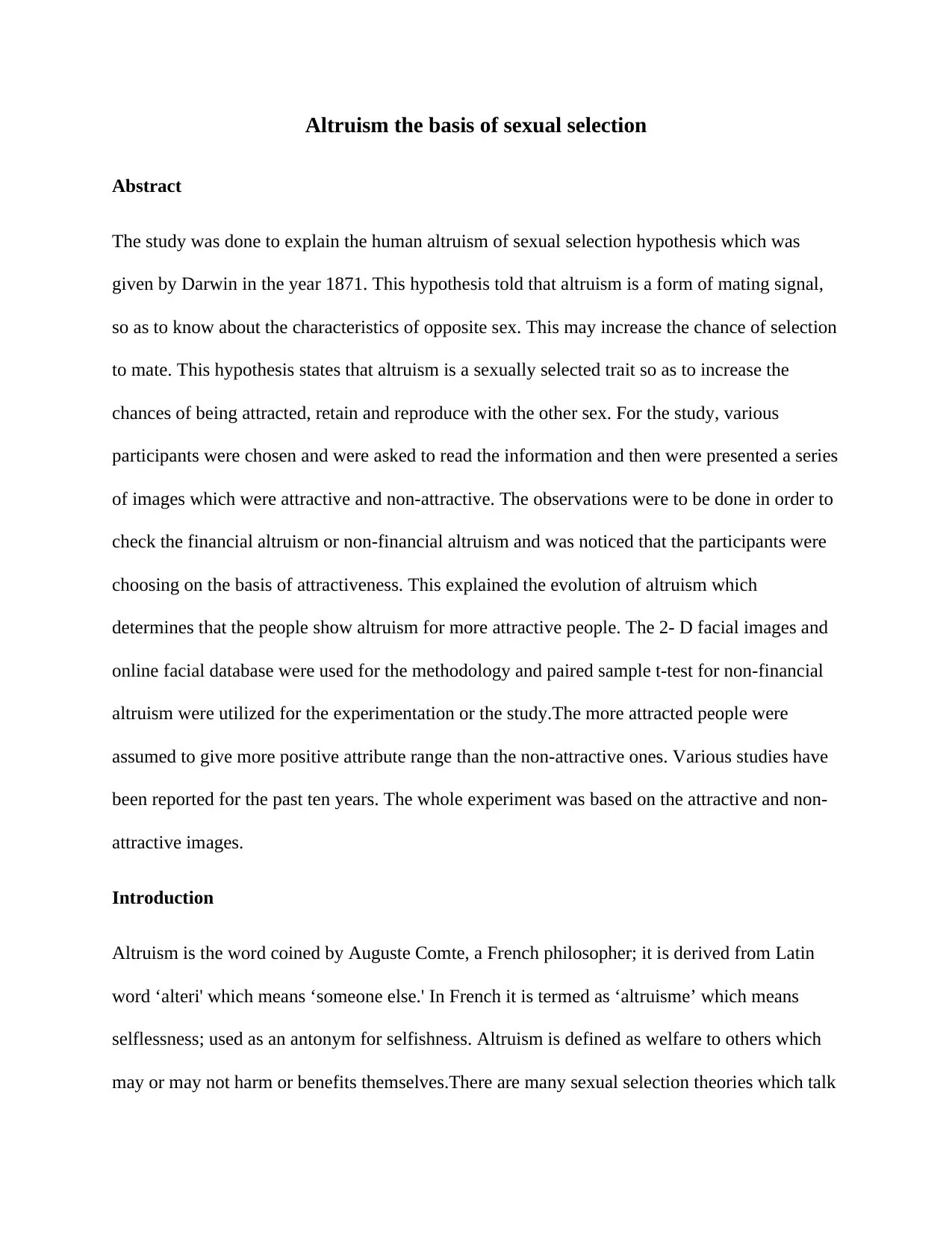
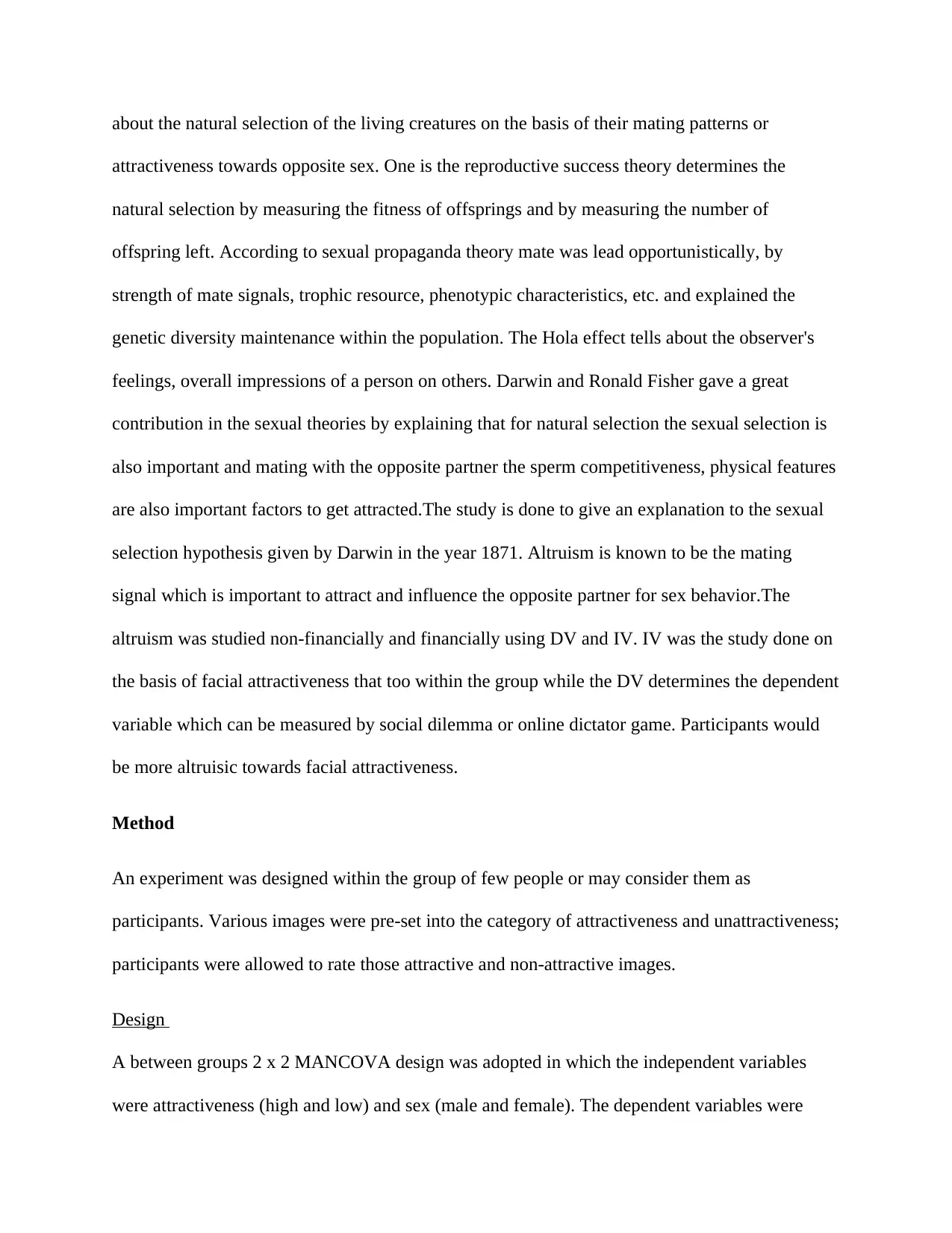
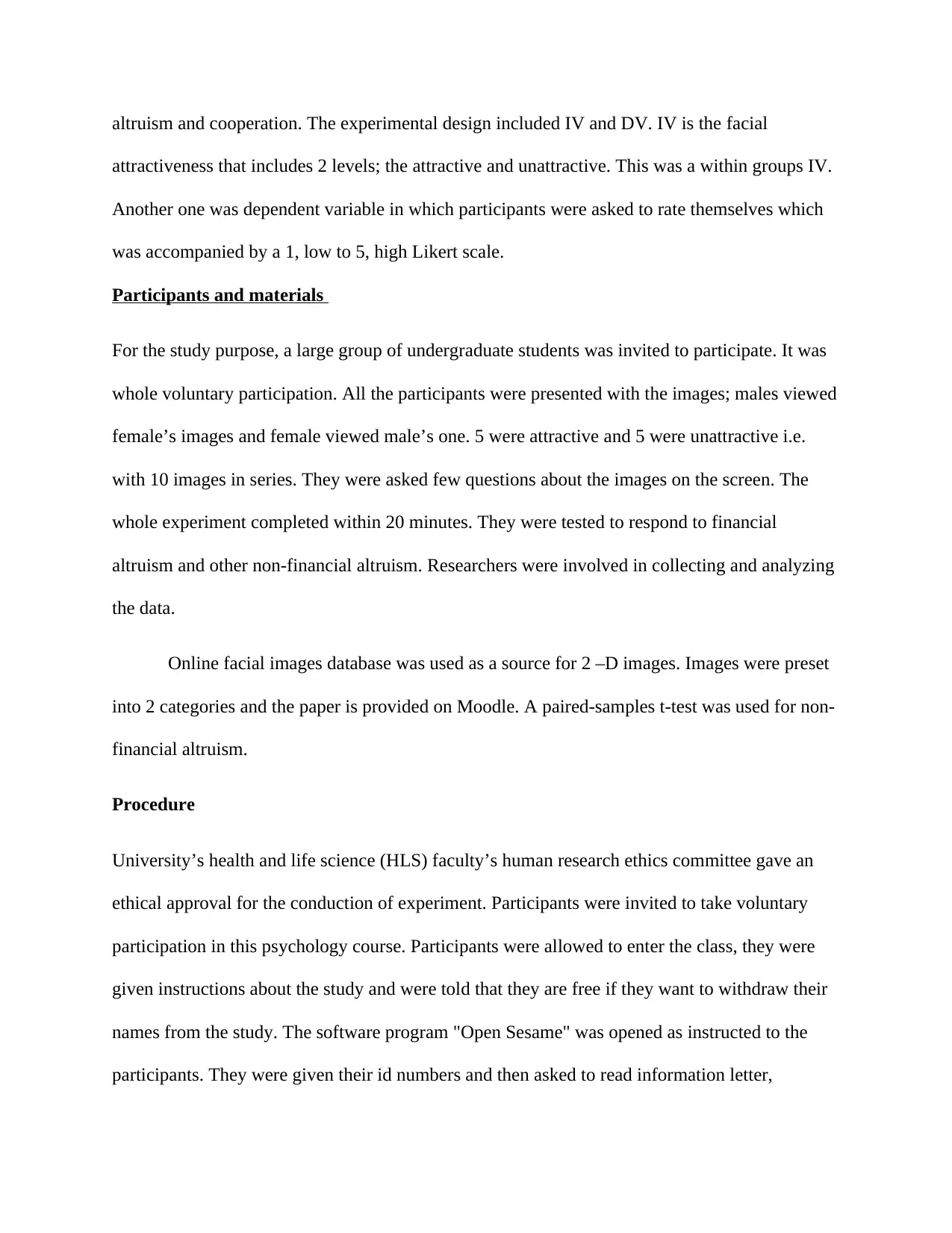
This report delves into the concept of altruism within the framework of sexual selection, primarily based on Darwin's hypothesis from 1871, which posits that altruism functions as a mating signal. The study explores how altruistic behaviors influence the selection of mates, focusing on facial attractiveness as a key factor. The methodology involves presenting participants with images of both attractive and unattractive individuals and assessing their responses in terms of financial and non-financial altruism. The experiment employs a 2x2 MANCOVA design, utilizing a within-groups independent variable of facial attractiveness and dependent variables measuring altruism and cooperation. Participants, primarily undergraduate students, were asked to rate images and answer questions related to their choices. The findings suggest that individuals exhibit greater altruism towards those perceived as more attractive, supporting the idea that altruism has evolved to enhance mating prospects. This study uses online facial databases and paired-samples t-tests for non-financial altruism to analyze the relationship between attractiveness and altruistic behavior.



1 out of 5


Your All-in-One AI-Powered Toolkit for Academic Success.
+13062052269
info@desklib.com
Available 24*7 on WhatsApp / Email
![[object Object]](/_next/static/media/star-bottom.7253800d.svg)
Copyright © 2020–2026 A2Z Services. All Rights Reserved. Developed and managed by ZUCOL.