Assessing Skanska's Performance: PWC Value Framework Analysis Report
VerifiedAdded on 2020/04/07
|28
|3845
|68
Report
AI Summary
This report provides an in-depth analysis of Skanska's performance, utilizing the PWC value framework to evaluate various aspects of the company's operations. The study examines Skanska's annual report from 2016, assessing its strategic elements, business model, governance, and risk management strategies. The report delves into the company's resources and relationships, including financial assets, customer relations, and employee culture. Furthermore, the analysis covers Skanska's economic, operating, social, and environmental performance, along with a segmental performance review. The report highlights the comprehensiveness and accessibility of the information disclosed in the annual report, aligning it with the PWC integrated reporting framework. The conclusion summarizes the key findings, emphasizing the quality and transparency of Skanska's reporting practices.
Running head: MANAGERIAL ACCOUNTING
Managerial Accounting
Name of the Student
Name of the University
Authors Note
Course ID
Managerial Accounting
Name of the Student
Name of the University
Authors Note
Course ID

Paraphrase This Document
Need a fresh take? Get an instant paraphrase of this document with our AI Paraphraser
1MANAGERIAL ACCOUNTING
Executive summary:
The value framework of the PWC offers the internal and the external decision making that
often demands a complete and related set of information to derive sustainable value creation
and enable decision making concerning the present performance of the organization and its
future prospects. The current study offers assessment of the nature and quality of the Skanska
performance in the areas of the organizational health and organizational performance as
defined under value framework of the PWC. In order to analyse the performance of the
Skanska the annual report of 2016 is considered to determine each elements of the framework
to measure the qualitative and quantitative performance. The report will also measure the
comprehensiveness along with the accessibility of the disclosure that is made in the report.
The outcome of the study provides in depth and breadth disclosure in consistent with the
framework of the PWC. Performance has been discussed in the areas of;
Strategic Elements
a. Strategy
b. Business models
c. Governance
d. Risk
Performance Elements
a. Economic
b. Segmental
Alignment to the PWC integrated reporting framework
The study also aligns with the PWC integration-reporting framework from the annual report
of 2016, which is incompliance with the organizational health and performance elements.
Executive summary:
The value framework of the PWC offers the internal and the external decision making that
often demands a complete and related set of information to derive sustainable value creation
and enable decision making concerning the present performance of the organization and its
future prospects. The current study offers assessment of the nature and quality of the Skanska
performance in the areas of the organizational health and organizational performance as
defined under value framework of the PWC. In order to analyse the performance of the
Skanska the annual report of 2016 is considered to determine each elements of the framework
to measure the qualitative and quantitative performance. The report will also measure the
comprehensiveness along with the accessibility of the disclosure that is made in the report.
The outcome of the study provides in depth and breadth disclosure in consistent with the
framework of the PWC. Performance has been discussed in the areas of;
Strategic Elements
a. Strategy
b. Business models
c. Governance
d. Risk
Performance Elements
a. Economic
b. Segmental
Alignment to the PWC integrated reporting framework
The study also aligns with the PWC integration-reporting framework from the annual report
of 2016, which is incompliance with the organizational health and performance elements.
2MANAGERIAL ACCOUNTING
Table of Contents
Introduction:...............................................................................................................................4
Value Framework Elements: Strategy and Objectives:.............................................................4
Strategy Business Model:...........................................................................................................6
Strategic Governance:................................................................................................................7
Strategy: Risk management:......................................................................................................8
Strategy Remuneration:............................................................................................................10
Resources and relationships: Financial Assets:........................................................................11
Resource and Relationships: Value framework elements: Customers:...................................13
Resource and relationship: People and Culture:......................................................................14
Resources and relationships: Innovation..................................................................................15
Resources and Relationships: Brands and intellectual assets..................................................17
Resources and Relationships: Internal Process and Supply Chain:.........................................17
Performance: Economic Performance:....................................................................................18
Performance: Operating Performance:.....................................................................................20
Performance: Social performance:...........................................................................................21
Performance: Environmental Performance..............................................................................22
Performance: Performance of Segment:..................................................................................23
Conclusion:..............................................................................................................................25
Reference List:.........................................................................................................................26
Table of Contents
Introduction:...............................................................................................................................4
Value Framework Elements: Strategy and Objectives:.............................................................4
Strategy Business Model:...........................................................................................................6
Strategic Governance:................................................................................................................7
Strategy: Risk management:......................................................................................................8
Strategy Remuneration:............................................................................................................10
Resources and relationships: Financial Assets:........................................................................11
Resource and Relationships: Value framework elements: Customers:...................................13
Resource and relationship: People and Culture:......................................................................14
Resources and relationships: Innovation..................................................................................15
Resources and Relationships: Brands and intellectual assets..................................................17
Resources and Relationships: Internal Process and Supply Chain:.........................................17
Performance: Economic Performance:....................................................................................18
Performance: Operating Performance:.....................................................................................20
Performance: Social performance:...........................................................................................21
Performance: Environmental Performance..............................................................................22
Performance: Performance of Segment:..................................................................................23
Conclusion:..............................................................................................................................25
Reference List:.........................................................................................................................26
⊘ This is a preview!⊘
Do you want full access?
Subscribe today to unlock all pages.

Trusted by 1+ million students worldwide
3MANAGERIAL ACCOUNTING
Introduction:
The current report is based on the assessment of the PWC value framework of
Skanska. The report will examine the annual report of the company based on the areas of
external drivers, strategy, resources and relationships and performance. The report will also
provide the in depth of the organizational health along with the current performance of the
organization. The report will highlight that performance information forms the vital factors
and elements to support the decision making structure of the organization with appropriate
accountability.
Value Framework Elements: Strategy and Objectives:
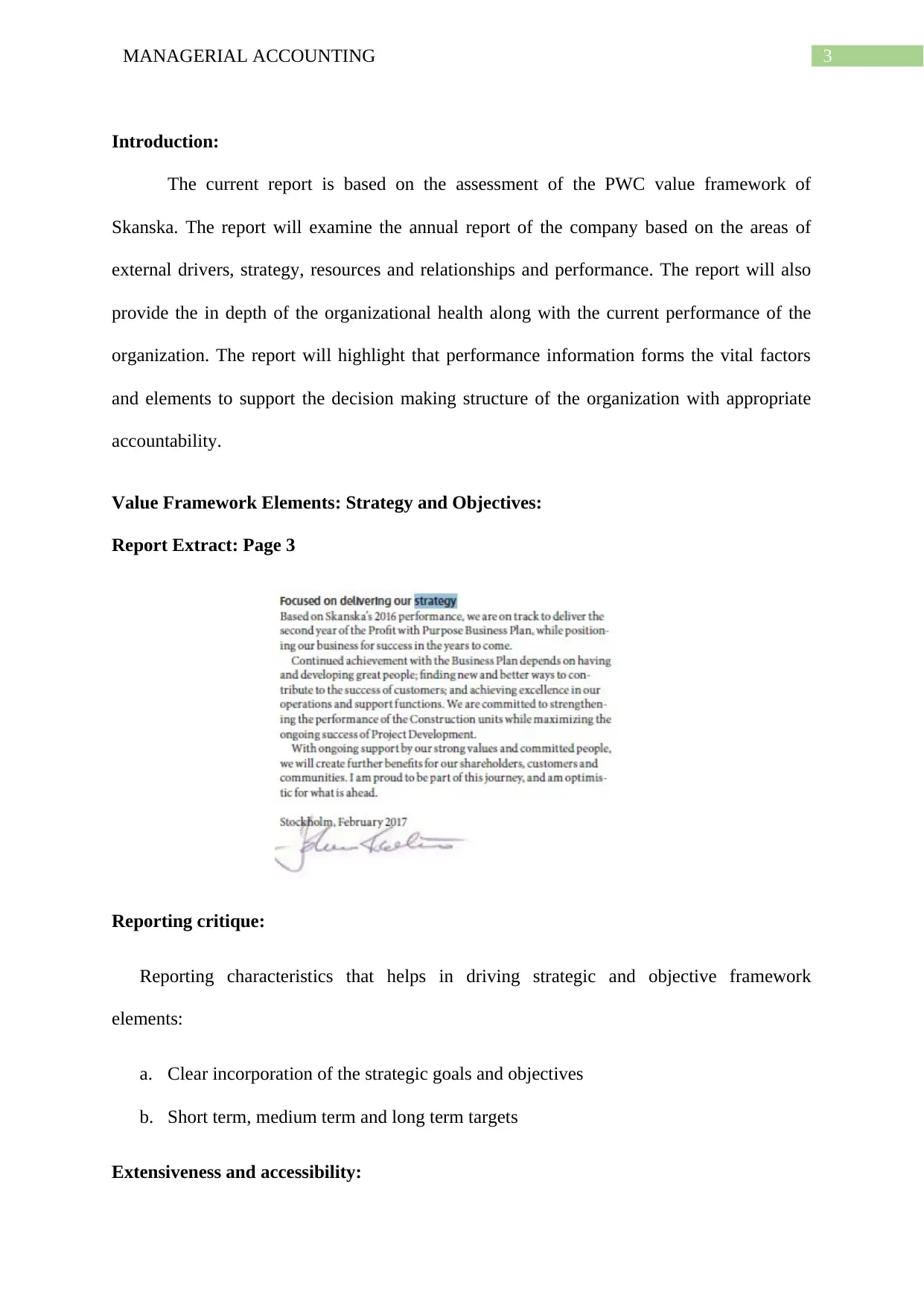
Report Extract: Page 3
Reporting critique:
Reporting characteristics that helps in driving strategic and objective framework
elements:
a. Clear incorporation of the strategic goals and objectives
b. Short term, medium term and long term targets
Extensiveness and accessibility:
Introduction:
The current report is based on the assessment of the PWC value framework of
Skanska. The report will examine the annual report of the company based on the areas of
external drivers, strategy, resources and relationships and performance. The report will also
provide the in depth of the organizational health along with the current performance of the
organization. The report will highlight that performance information forms the vital factors
and elements to support the decision making structure of the organization with appropriate
accountability.
Value Framework Elements: Strategy and Objectives:
Report Extract: Page 3
Reporting critique:
Reporting characteristics that helps in driving strategic and objective framework
elements:
a. Clear incorporation of the strategic goals and objectives
b. Short term, medium term and long term targets
Extensiveness and accessibility:
Paraphrase This Document
Need a fresh take? Get an instant paraphrase of this document with our AI Paraphraser
4MANAGERIAL ACCOUNTING
Skanska strategy is on track of delivering higher performance each year with the
objective of business plan by positioning its business for success in the upcoming years. The
objective of Skanska can be accessed systematically and it is has been communicated in
terms of both qualitative and quantitative approach in the financial statements of 2016
(Skanska.com, 2017).
Furthermore, the chief executive officer of Skanska has provided a detailed analysis
of the strategy in page number 3 under the section of CEO strategic review and the strategy
of the firm is linked with the strong values and committed people for rendering excellence in
the business operations.
Comprehensiveness:
The CEO strategic review is associated with the growth strategy, shareholders growth and
financial model by reporting in the areas of
a. Macro-economic market overview
b. Customer value creation
c. Continued focus on the working capital
d. Operational efficiency
Apart from emphasising on the preceding year performance, the CEO also provides
qualitative outlook of the controlled business growth. The CEO also provides systematic
environmental management regarding the certifications of the operations to the international
management standard.
Overall conclusion:
The annual report of Skanska for the year 2016 evidently provides the descriptions of
the organizations strategic goals and objectives through appropriately formatted and
Skanska strategy is on track of delivering higher performance each year with the
objective of business plan by positioning its business for success in the upcoming years. The
objective of Skanska can be accessed systematically and it is has been communicated in
terms of both qualitative and quantitative approach in the financial statements of 2016
(Skanska.com, 2017).
Furthermore, the chief executive officer of Skanska has provided a detailed analysis
of the strategy in page number 3 under the section of CEO strategic review and the strategy
of the firm is linked with the strong values and committed people for rendering excellence in
the business operations.
Comprehensiveness:
The CEO strategic review is associated with the growth strategy, shareholders growth and
financial model by reporting in the areas of
a. Macro-economic market overview
b. Customer value creation
c. Continued focus on the working capital
d. Operational efficiency
Apart from emphasising on the preceding year performance, the CEO also provides
qualitative outlook of the controlled business growth. The CEO also provides systematic
environmental management regarding the certifications of the operations to the international
management standard.
Overall conclusion:
The annual report of Skanska for the year 2016 evidently provides the descriptions of
the organizations strategic goals and objectives through appropriately formatted and
5MANAGERIAL ACCOUNTING
straightforwardly understandable reporting. It can be stated that the qualitative and
quantitative information provides a correlation with the business objectives and the overall
presentation of the information is considered to be good.
Strategy Business Model:
Report extract: Page 7
Report Critique:
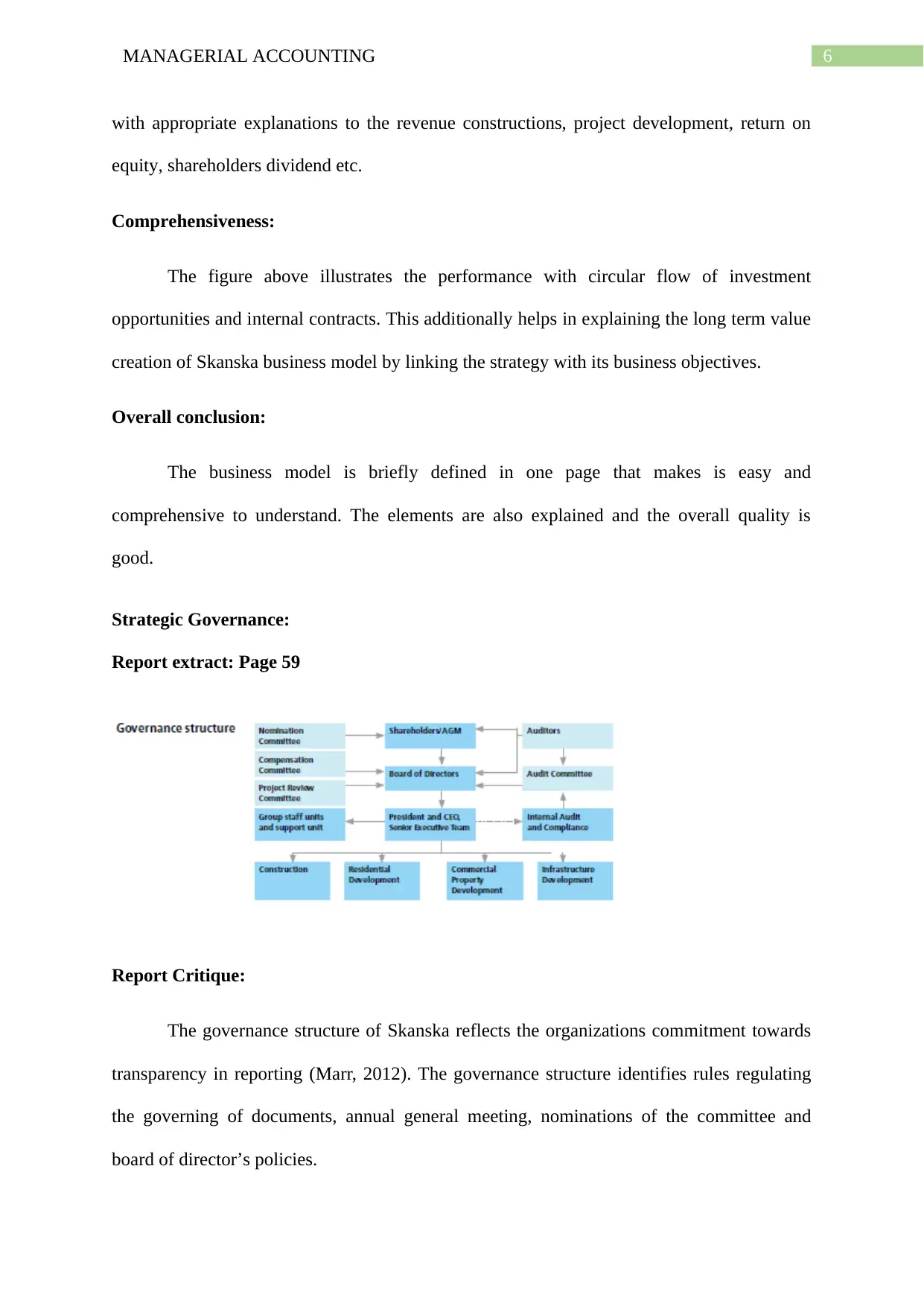
The business of the company reflects the method through which it creates value and
factors that are interrelated with the construction of revenue and project development (Smith,
2015).
Accessibility:
The Skanska business model relating to the performance information is found in one
page under the heads of Business Model at the beginning of the 2016 annual report
(Skanska.com, 2017). Therefore, the information to the business model can be accessed with
the help of the contents under the heads of “Business Model”. The model is clearly formatted
straightforwardly understandable reporting. It can be stated that the qualitative and
quantitative information provides a correlation with the business objectives and the overall
presentation of the information is considered to be good.
Strategy Business Model:
Report extract: Page 7
Report Critique:
The business of the company reflects the method through which it creates value and
factors that are interrelated with the construction of revenue and project development (Smith,
2015).
Accessibility:
The Skanska business model relating to the performance information is found in one
page under the heads of Business Model at the beginning of the 2016 annual report
(Skanska.com, 2017). Therefore, the information to the business model can be accessed with
the help of the contents under the heads of “Business Model”. The model is clearly formatted
⊘ This is a preview!⊘
Do you want full access?
Subscribe today to unlock all pages.
Trusted by 1+ million students worldwide
6MANAGERIAL ACCOUNTING
with appropriate explanations to the revenue constructions, project development, return on
equity, shareholders dividend etc.
Comprehensiveness:
The figure above illustrates the performance with circular flow of investment
opportunities and internal contracts. This additionally helps in explaining the long term value
creation of Skanska business model by linking the strategy with its business objectives.
Overall conclusion:
The business model is briefly defined in one page that makes is easy and
comprehensive to understand. The elements are also explained and the overall quality is
good.
Strategic Governance:
Report extract: Page 59
Report Critique:
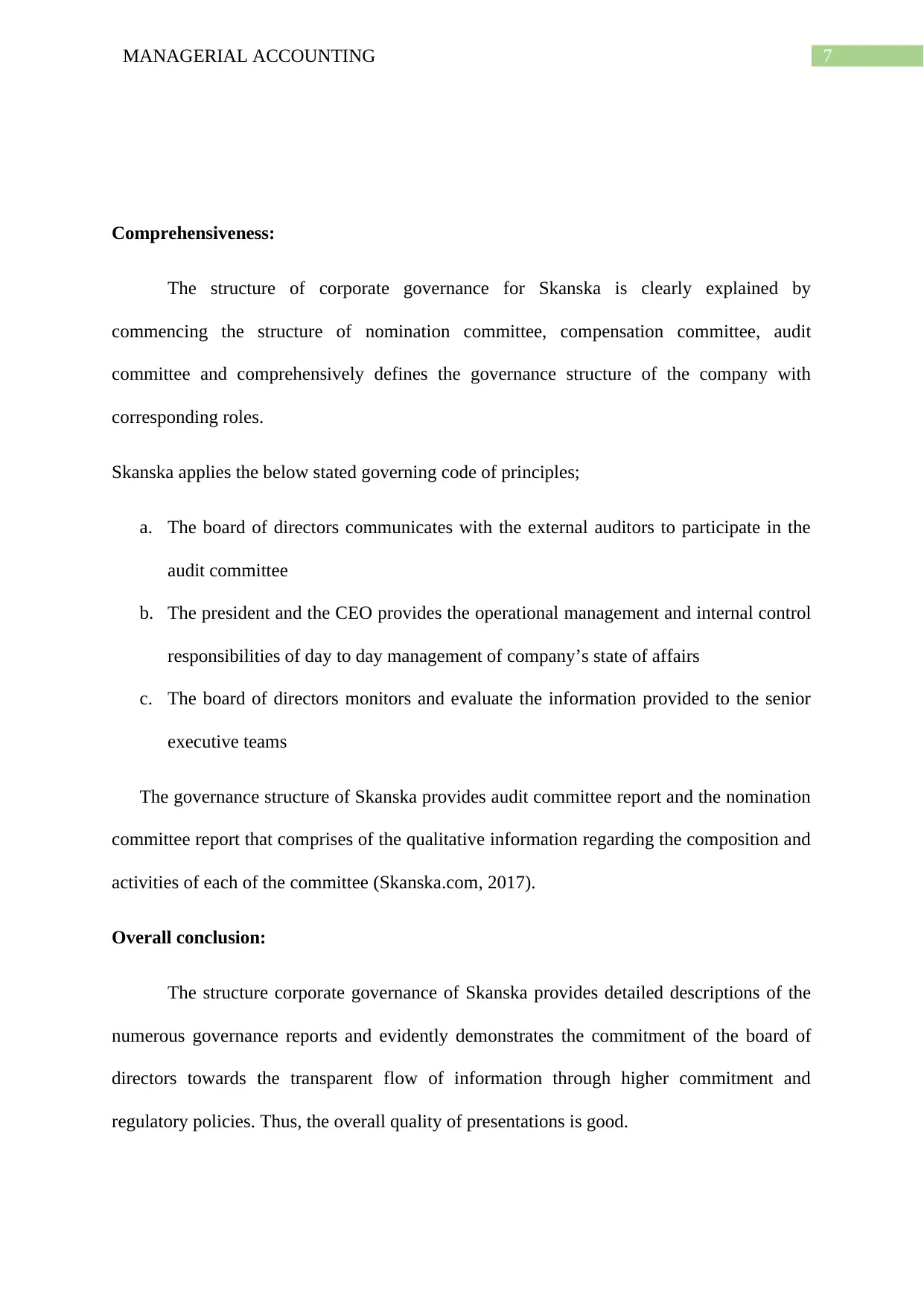
The governance structure of Skanska reflects the organizations commitment towards
transparency in reporting (Marr, 2012). The governance structure identifies rules regulating
the governing of documents, annual general meeting, nominations of the committee and
board of director’s policies.
with appropriate explanations to the revenue constructions, project development, return on
equity, shareholders dividend etc.
Comprehensiveness:
The figure above illustrates the performance with circular flow of investment
opportunities and internal contracts. This additionally helps in explaining the long term value
creation of Skanska business model by linking the strategy with its business objectives.
Overall conclusion:
The business model is briefly defined in one page that makes is easy and
comprehensive to understand. The elements are also explained and the overall quality is
good.
Strategic Governance:
Report extract: Page 59
Report Critique:
The governance structure of Skanska reflects the organizations commitment towards
transparency in reporting (Marr, 2012). The governance structure identifies rules regulating
the governing of documents, annual general meeting, nominations of the committee and
board of director’s policies.
Paraphrase This Document
Need a fresh take? Get an instant paraphrase of this document with our AI Paraphraser
7MANAGERIAL ACCOUNTING
Comprehensiveness:
The structure of corporate governance for Skanska is clearly explained by
commencing the structure of nomination committee, compensation committee, audit
committee and comprehensively defines the governance structure of the company with
corresponding roles.
Skanska applies the below stated governing code of principles;
a. The board of directors communicates with the external auditors to participate in the
audit committee
b. The president and the CEO provides the operational management and internal control
responsibilities of day to day management of company’s state of affairs
c. The board of directors monitors and evaluate the information provided to the senior
executive teams
The governance structure of Skanska provides audit committee report and the nomination
committee report that comprises of the qualitative information regarding the composition and
activities of each of the committee (Skanska.com, 2017).
Overall conclusion:
The structure corporate governance of Skanska provides detailed descriptions of the
numerous governance reports and evidently demonstrates the commitment of the board of
directors towards the transparent flow of information through higher commitment and
regulatory policies. Thus, the overall quality of presentations is good.
Comprehensiveness:
The structure of corporate governance for Skanska is clearly explained by
commencing the structure of nomination committee, compensation committee, audit
committee and comprehensively defines the governance structure of the company with
corresponding roles.
Skanska applies the below stated governing code of principles;
a. The board of directors communicates with the external auditors to participate in the
audit committee
b. The president and the CEO provides the operational management and internal control
responsibilities of day to day management of company’s state of affairs
c. The board of directors monitors and evaluate the information provided to the senior
executive teams
The governance structure of Skanska provides audit committee report and the nomination
committee report that comprises of the qualitative information regarding the composition and
activities of each of the committee (Skanska.com, 2017).
Overall conclusion:
The structure corporate governance of Skanska provides detailed descriptions of the
numerous governance reports and evidently demonstrates the commitment of the board of
directors towards the transparent flow of information through higher commitment and
regulatory policies. Thus, the overall quality of presentations is good.
8MANAGERIAL ACCOUNTING
Strategy: Risk management:
Report Extract: page 16
:
Report Critique:
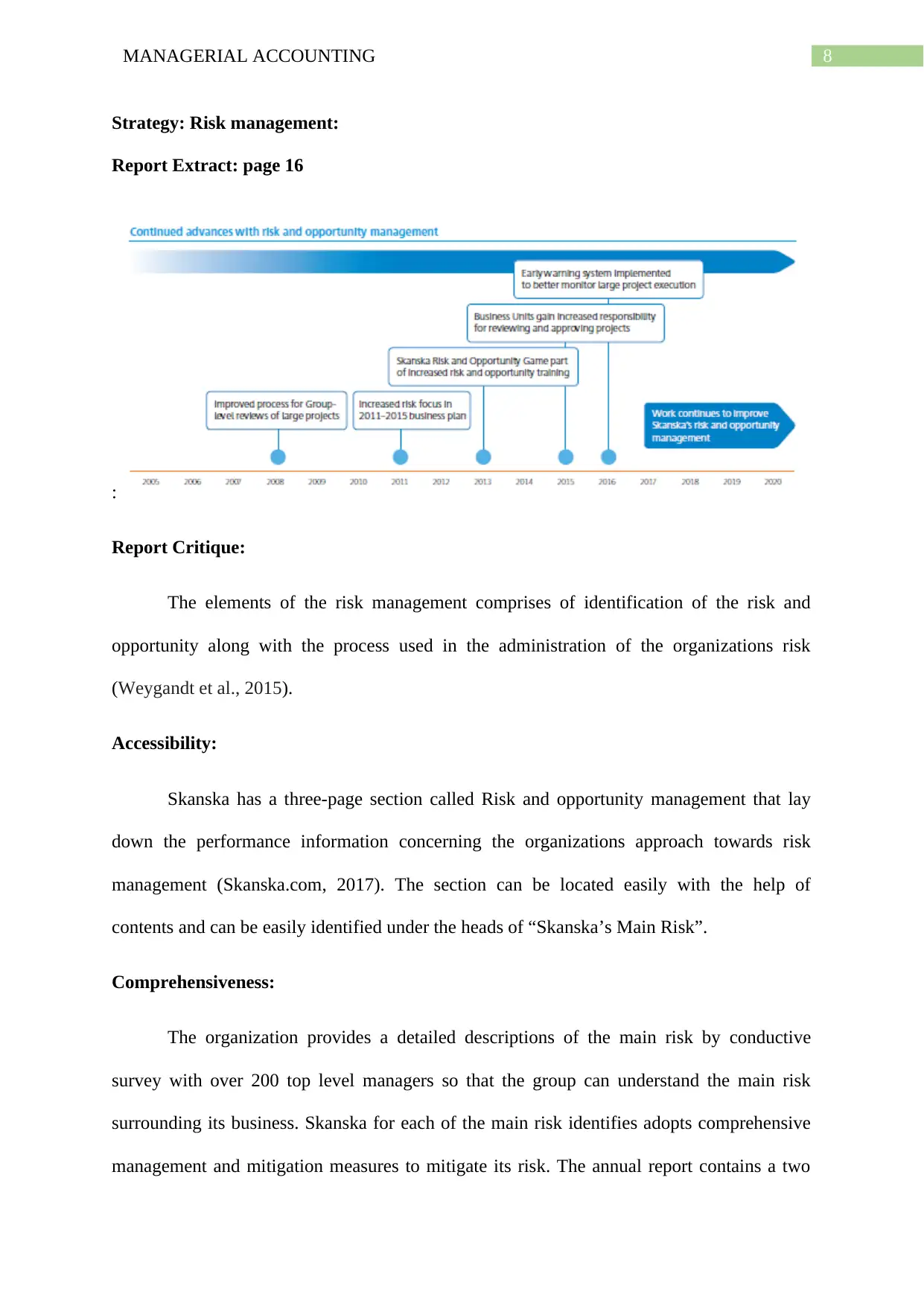
The elements of the risk management comprises of identification of the risk and
opportunity along with the process used in the administration of the organizations risk
(Weygandt et al., 2015).
Accessibility:
Skanska has a three-page section called Risk and opportunity management that lay
down the performance information concerning the organizations approach towards risk
management (Skanska.com, 2017). The section can be located easily with the help of
contents and can be easily identified under the heads of “Skanska’s Main Risk”.
Comprehensiveness:
The organization provides a detailed descriptions of the main risk by conductive
survey with over 200 top level managers so that the group can understand the main risk
surrounding its business. Skanska for each of the main risk identifies adopts comprehensive
management and mitigation measures to mitigate its risk. The annual report contains a two
Strategy: Risk management:
Report Extract: page 16
:
Report Critique:
The elements of the risk management comprises of identification of the risk and
opportunity along with the process used in the administration of the organizations risk
(Weygandt et al., 2015).
Accessibility:
Skanska has a three-page section called Risk and opportunity management that lay
down the performance information concerning the organizations approach towards risk
management (Skanska.com, 2017). The section can be located easily with the help of
contents and can be easily identified under the heads of “Skanska’s Main Risk”.
Comprehensiveness:
The organization provides a detailed descriptions of the main risk by conductive
survey with over 200 top level managers so that the group can understand the main risk
surrounding its business. Skanska for each of the main risk identifies adopts comprehensive
management and mitigation measures to mitigate its risk. The annual report contains a two
⊘ This is a preview!⊘
Do you want full access?
Subscribe today to unlock all pages.
Trusted by 1+ million students worldwide
9MANAGERIAL ACCOUNTING
page detailed report describing the potential risk faced by the business and the process
adopted to monitor.
Overall conclusion:
Skanska group dedicates a detailed discussion and explanation of the their strategies
to manage risk. The section of the risk report is clearly formatted with the help of headings
and graphs that makes it easy to understand and allows the readers to understand the
transparency of the report. The quality is overall very good.
Strategy Remuneration:
Report Extract: Page 133
Report critique:
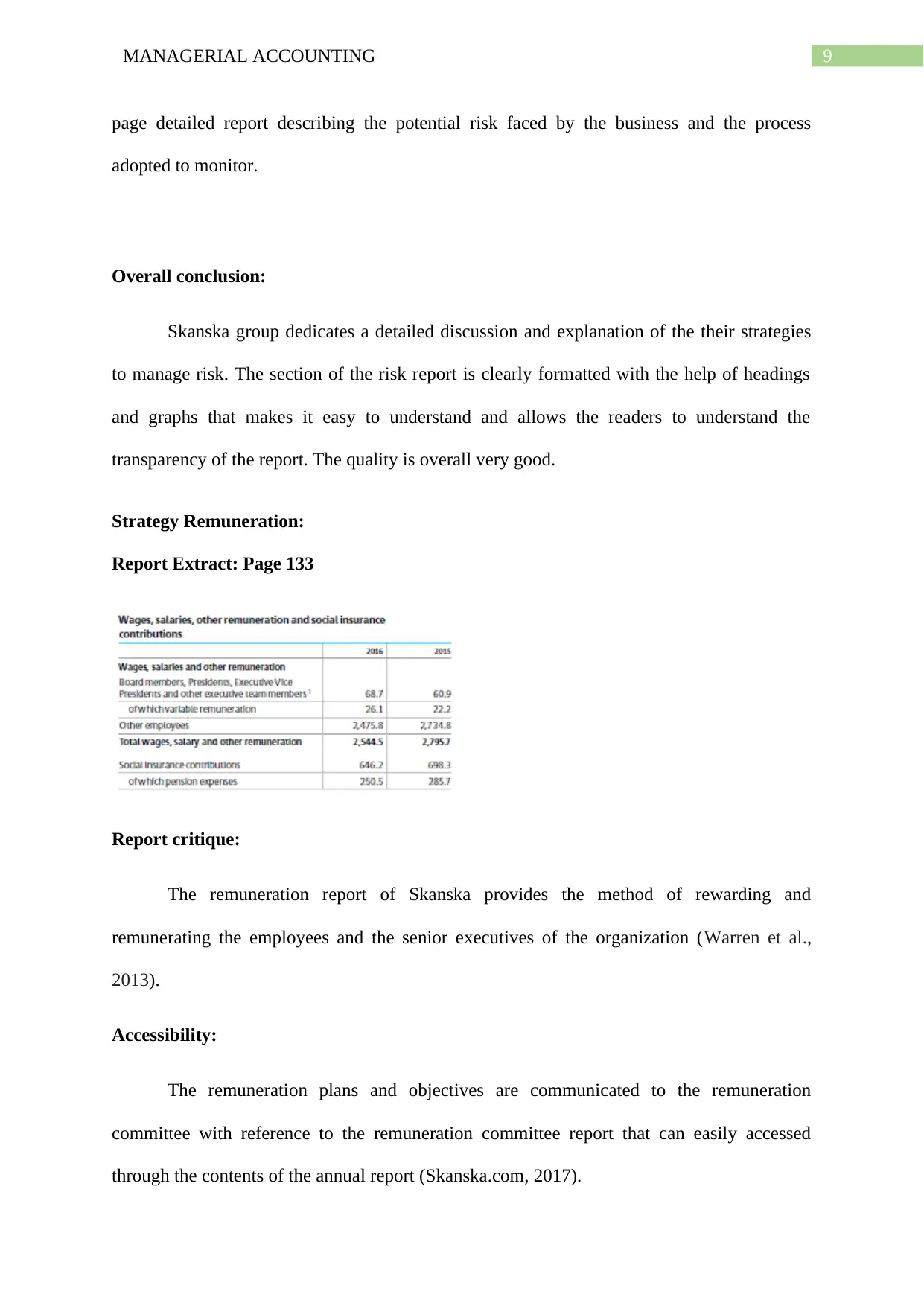
The remuneration report of Skanska provides the method of rewarding and
remunerating the employees and the senior executives of the organization (Warren et al.,
2013).
Accessibility:
The remuneration plans and objectives are communicated to the remuneration
committee with reference to the remuneration committee report that can easily accessed
through the contents of the annual report (Skanska.com, 2017).
page detailed report describing the potential risk faced by the business and the process
adopted to monitor.
Overall conclusion:
Skanska group dedicates a detailed discussion and explanation of the their strategies
to manage risk. The section of the risk report is clearly formatted with the help of headings
and graphs that makes it easy to understand and allows the readers to understand the
transparency of the report. The quality is overall very good.
Strategy Remuneration:
Report Extract: Page 133
Report critique:
The remuneration report of Skanska provides the method of rewarding and
remunerating the employees and the senior executives of the organization (Warren et al.,
2013).
Accessibility:
The remuneration plans and objectives are communicated to the remuneration
committee with reference to the remuneration committee report that can easily accessed
through the contents of the annual report (Skanska.com, 2017).
Paraphrase This Document
Need a fresh take? Get an instant paraphrase of this document with our AI Paraphraser
10MANAGERIAL ACCOUNTING
Comprehensiveness:
The remuneration report of Skanks is in compliance with the value of the PWC
remuneration criteria. The remuneration report comprise of the following;
a. Description of salary and the yearly process of review
b. Benefits provided in the form of insurance, such as social insurance contributions
c. Pension plans
d. Plans relating to share
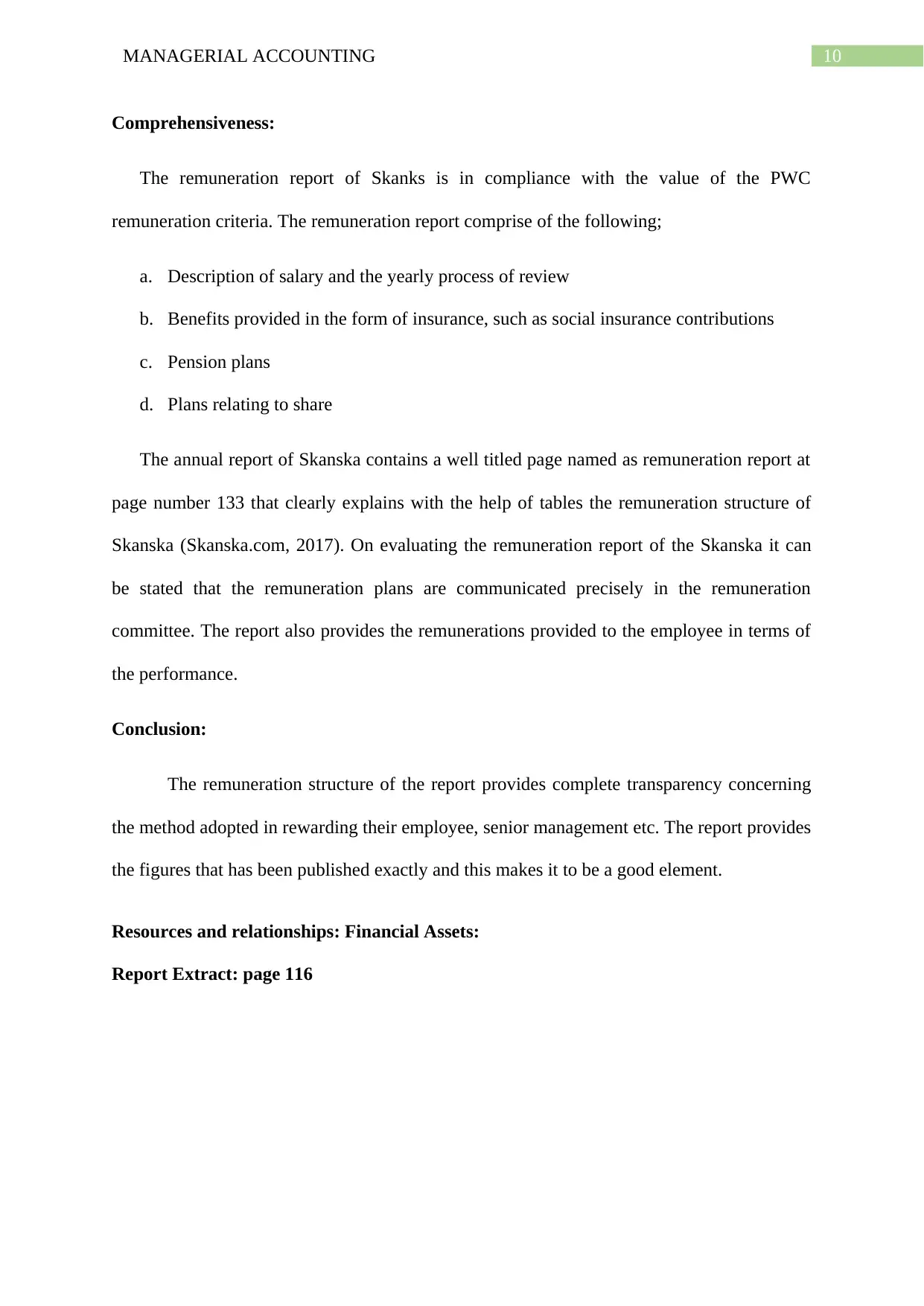
The annual report of Skanska contains a well titled page named as remuneration report at
page number 133 that clearly explains with the help of tables the remuneration structure of
Skanska (Skanska.com, 2017). On evaluating the remuneration report of the Skanska it can
be stated that the remuneration plans are communicated precisely in the remuneration
committee. The report also provides the remunerations provided to the employee in terms of
the performance.
Conclusion:
The remuneration structure of the report provides complete transparency concerning
the method adopted in rewarding their employee, senior management etc. The report provides
the figures that has been published exactly and this makes it to be a good element.
Resources and relationships: Financial Assets:
Report Extract: page 116
Comprehensiveness:
The remuneration report of Skanks is in compliance with the value of the PWC
remuneration criteria. The remuneration report comprise of the following;
a. Description of salary and the yearly process of review
b. Benefits provided in the form of insurance, such as social insurance contributions
c. Pension plans
d. Plans relating to share
The annual report of Skanska contains a well titled page named as remuneration report at
page number 133 that clearly explains with the help of tables the remuneration structure of
Skanska (Skanska.com, 2017). On evaluating the remuneration report of the Skanska it can
be stated that the remuneration plans are communicated precisely in the remuneration
committee. The report also provides the remunerations provided to the employee in terms of
the performance.
Conclusion:
The remuneration structure of the report provides complete transparency concerning
the method adopted in rewarding their employee, senior management etc. The report provides
the figures that has been published exactly and this makes it to be a good element.
Resources and relationships: Financial Assets:
Report Extract: page 116
11MANAGERIAL ACCOUNTING
Report critique:
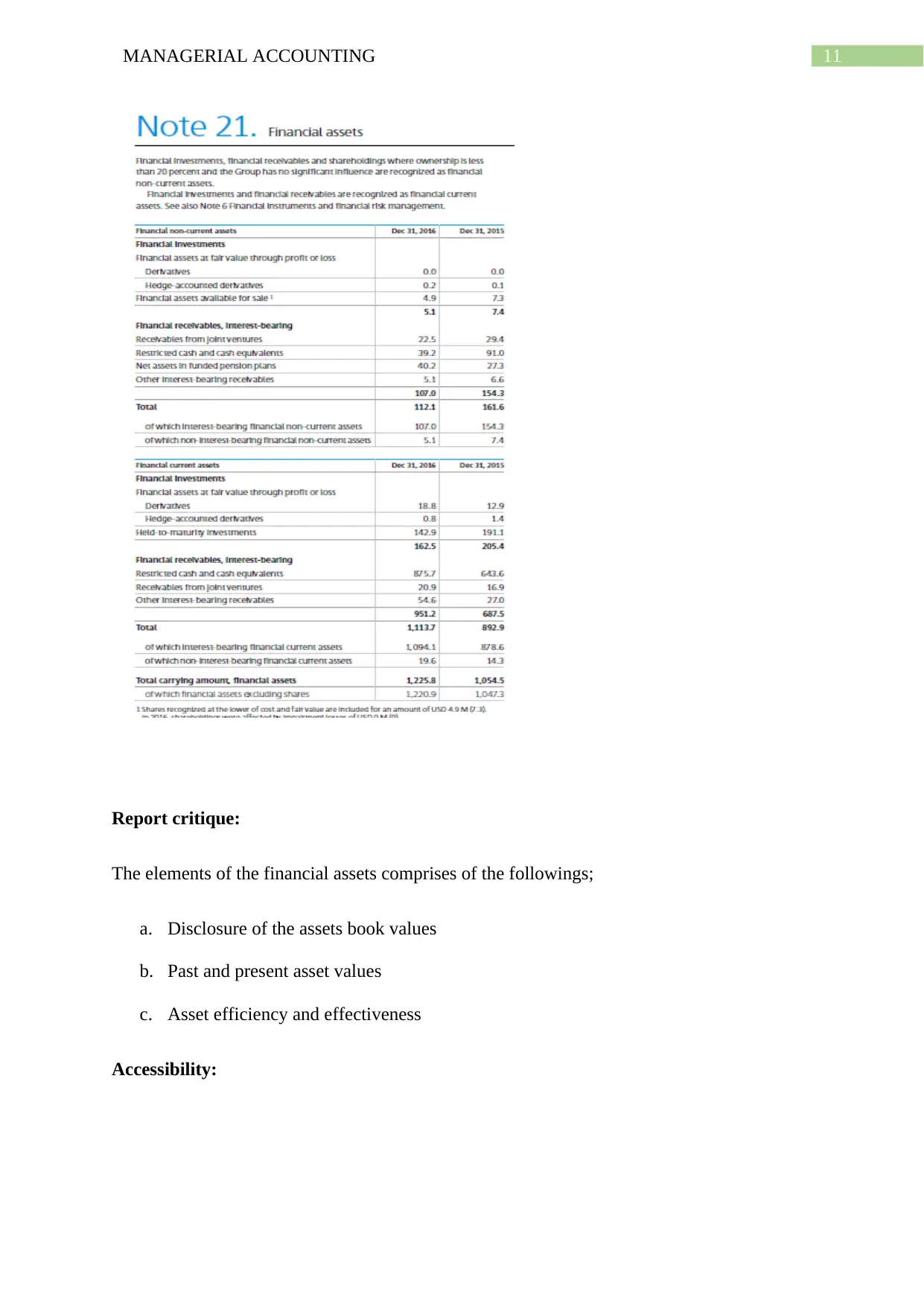
The elements of the financial assets comprises of the followings;
a. Disclosure of the assets book values
b. Past and present asset values
c. Asset efficiency and effectiveness
Accessibility:
Report critique:
The elements of the financial assets comprises of the followings;
a. Disclosure of the assets book values
b. Past and present asset values
c. Asset efficiency and effectiveness
Accessibility:
⊘ This is a preview!⊘
Do you want full access?
Subscribe today to unlock all pages.
Trusted by 1+ million students worldwide

1 out of 28


Related Documents


Your All-in-One AI-Powered Toolkit for Academic Success.
+13062052269
info@desklib.com
Available 24*7 on WhatsApp / Email
![[object Object]](/_next/static/media/star-bottom.7253800d.svg)
Unlock your academic potential
Copyright © 2020–2026 A2Z Services. All Rights Reserved. Developed and managed by ZUCOL.