SBM4104 - IT Infrastructure Management Case Study: Qantas Airways
VerifiedAdded on 2023/04/06
|13
|2533
|138
Case Study
AI Summary
This case study analyzes the IT infrastructure management at Qantas Airways, a major Australian airline. It details the types of data used by Qantas, including company, personal, and behavioral data, and explains how staff access this data through collection, preparation, input, processing, interpretation, and storage. The report discusses two IT infrastructure solutions: cloud computing and application platforms, for storing and accessing data. Furthermore, it identifies and describes the functions of network devices such as repeaters, hubs, bridges, switches, and routers, essential for daily operations. The study also specifies the use of CRM application software for data communication between client and server across departments and explains how the seven layers of the OSI model facilitate data movement when accessing the organizational website. The analysis highlights the importance of IT infrastructure in supporting Qantas Airways' business operations and customer service.
Running head: IT INFRASTRUCTURE MANAGEMENT
IT Infrastructure Management: Qantas Airways
Name of the Student
Name of the University
Author’s Note:
IT Infrastructure Management: Qantas Airways
Name of the Student
Name of the University
Author’s Note:

Paraphrase This Document
Need a fresh take? Get an instant paraphrase of this document with our AI Paraphraser
1
IT INFRASTRUCTURE MANAGEMENT
Table of Contents
1. Introduction............................................................................................................................2
2. Types of Data used by Qantas and Process of Staff Accessing these Data with Two IT
Infrastructure Solutions for Storing and Accessing Data at Database.......................................2
3. Identification and Discussion of Network Devices Required for Achieving Day to Day
Activities with Function of Each Device...................................................................................5
4. Specification of the type of Application Software needed for Data Communication
between Client and Server for each Department........................................................................6
5. Utilization of Seven Layers OSI Model for Explaining the process of Data being moved
between Layers while opening of Home Page in Organizational Website................................7
6. Conclusion..............................................................................................................................9
7. References............................................................................................................................10
IT INFRASTRUCTURE MANAGEMENT
Table of Contents
1. Introduction............................................................................................................................2
2. Types of Data used by Qantas and Process of Staff Accessing these Data with Two IT
Infrastructure Solutions for Storing and Accessing Data at Database.......................................2
3. Identification and Discussion of Network Devices Required for Achieving Day to Day
Activities with Function of Each Device...................................................................................5
4. Specification of the type of Application Software needed for Data Communication
between Client and Server for each Department........................................................................6
5. Utilization of Seven Layers OSI Model for Explaining the process of Data being moved
between Layers while opening of Home Page in Organizational Website................................7
6. Conclusion..............................................................................................................................9
7. References............................................................................................................................10
2
IT INFRASTRUCTURE MANAGEMENT
1. Introduction
The main purpose of information technology infrastructure management would be
providing control and structuring of functions, which are solely responsible to enhance
diversified technical operation (Kabir, Sadiq and Tesfamariam 2014). Qantas Airways is one
of the most popular and the largest airline organizations in Australia that provide flight
services for both domestic and international destinations. The airline brands are operating in
regional, domestic and international services and they have been using information
technology in their business for each and every department. They have been providing IS
services to their customers and staff like database, webpage and email (Qantas.com. 2019).
The following report outlines a brief discussion on IT infrastructure management in Qantas
Airways.
2. Types of Data used by Qantas and Process of Staff Accessing these Data with Two IT
Infrastructure Solutions for Storing and Accessing Data at Database
Qantas Airways has been using various types of data in their business for better
management of business operations and processes. The constant data stream comprises of the
core capacity of transforming their entire process of business. They have access to the
unprecedented amount of information regarding clients, prospects as well as the competitors
(Maurer, Brandic and Sakellariou 2013). The three distinct types of data are being used by
them and they are as follows:
i) Company Data: The first and the foremost type of data that is being used by this
particular organization of Qantas Airways is company data. Since, they are included in B2B
market, is extremely important for them to keep up to date with the major developments in
Australian airline industry. Being a part of this airline industry, Qantas need to track the latest
news and live tracking of the flight details (Manvi and Shyam 2014).
IT INFRASTRUCTURE MANAGEMENT
1. Introduction
The main purpose of information technology infrastructure management would be
providing control and structuring of functions, which are solely responsible to enhance
diversified technical operation (Kabir, Sadiq and Tesfamariam 2014). Qantas Airways is one
of the most popular and the largest airline organizations in Australia that provide flight
services for both domestic and international destinations. The airline brands are operating in
regional, domestic and international services and they have been using information
technology in their business for each and every department. They have been providing IS
services to their customers and staff like database, webpage and email (Qantas.com. 2019).
The following report outlines a brief discussion on IT infrastructure management in Qantas
Airways.
2. Types of Data used by Qantas and Process of Staff Accessing these Data with Two IT
Infrastructure Solutions for Storing and Accessing Data at Database
Qantas Airways has been using various types of data in their business for better
management of business operations and processes. The constant data stream comprises of the
core capacity of transforming their entire process of business. They have access to the
unprecedented amount of information regarding clients, prospects as well as the competitors
(Maurer, Brandic and Sakellariou 2013). The three distinct types of data are being used by
them and they are as follows:
i) Company Data: The first and the foremost type of data that is being used by this
particular organization of Qantas Airways is company data. Since, they are included in B2B
market, is extremely important for them to keep up to date with the major developments in
Australian airline industry. Being a part of this airline industry, Qantas need to track the latest
news and live tracking of the flight details (Manvi and Shyam 2014).
⊘ This is a preview!⊘
Do you want full access?
Subscribe today to unlock all pages.

Trusted by 1+ million students worldwide
3
IT INFRASTRUCTURE MANAGEMENT
ii) Personal Data: The second significant and distinctive type of data that is utilized
by Qantas Airways is personal data. It refers to the factor that finding some of the most vital
personal data for building the buyer persona. With this specific persona, it is evident that the
responsibilities and challenges of all the staff in this organization are being evaluated
properly (Iden and Eikebrokk 2013). Personal data on the prospects have helped the staff of
Qantas to build a proper relation with the customers. As Qantas is an airline company, they
have integrated with the social updates and company news from the prospect lists. Moreover,
they also consider their marketing and sales data.
iii) Behavioural and Online Data: The third type of data that Qantas Airways is using
their business is the behavioural and online data. With a clearer understanding of the online
behaviour of numerous potential customers for visiting to the website and interaction with the
Internet advertisements (Moss and Marvin 2016). They gather data through online activities,
interactions and behaviours within real time and after proper involvement of data processing
tools.
The process of data access by staff in Qantas is as follows:
i) Collection of Data: The first and the foremost step of data access process by staff of
Qantas is collection of data. This data collection is important for the organization by several
means and after consideration of the information collected.
ii) Preparation of Data: Once the data is being collected, the second step is data
preparation. In this stage, raw data is cleaned up as well as organized (Hernantes, Gallardo
and Serrano 2015). While data preparation, the staff diligently checks the raw data for any
type of errors. The main purpose of this specific step is to eradicate the redundant as well as
incomplete data for better data management.
IT INFRASTRUCTURE MANAGEMENT
ii) Personal Data: The second significant and distinctive type of data that is utilized
by Qantas Airways is personal data. It refers to the factor that finding some of the most vital
personal data for building the buyer persona. With this specific persona, it is evident that the
responsibilities and challenges of all the staff in this organization are being evaluated
properly (Iden and Eikebrokk 2013). Personal data on the prospects have helped the staff of
Qantas to build a proper relation with the customers. As Qantas is an airline company, they
have integrated with the social updates and company news from the prospect lists. Moreover,
they also consider their marketing and sales data.
iii) Behavioural and Online Data: The third type of data that Qantas Airways is using
their business is the behavioural and online data. With a clearer understanding of the online
behaviour of numerous potential customers for visiting to the website and interaction with the
Internet advertisements (Moss and Marvin 2016). They gather data through online activities,
interactions and behaviours within real time and after proper involvement of data processing
tools.
The process of data access by staff in Qantas is as follows:
i) Collection of Data: The first and the foremost step of data access process by staff of
Qantas is collection of data. This data collection is important for the organization by several
means and after consideration of the information collected.
ii) Preparation of Data: Once the data is being collected, the second step is data
preparation. In this stage, raw data is cleaned up as well as organized (Hernantes, Gallardo
and Serrano 2015). While data preparation, the staff diligently checks the raw data for any
type of errors. The main purpose of this specific step is to eradicate the redundant as well as
incomplete data for better data management.
Paraphrase This Document
Need a fresh take? Get an instant paraphrase of this document with our AI Paraphraser
4
IT INFRASTRUCTURE MANAGEMENT
iii) Data Input: The third step is inputting data. The respective data is entered within
destination for translating it to a language for better understanding. The data input is the step,
where raw data starts in taking form of usable information.
iv) Data Processing: The next step that the staff of Qantas use for data access is
processing. The data that is inputted is properly handled for better interpretation (Benitez-
Amado, Llorens-Montes and Fernandez-Perez 2013).
v) Interpretation and Output of Data: The fifth stage is data output and
interpretation. Here is finally operational for the non-data scientists. This is being translated
as well as readable within the subsequent form of plain text message, video and image.
vi) Data Storage: Finally, the sixth stage is data storage. As soon as the data is being
processed, this is being stored and secured for future utilization by the staff of Qantas. Since,
they store the data effectively, it is quickly as well as easily accessed by them irrespective of
time.
Two IT infrastructure solutions for storing and accessing data at the database via
networking in Qantas are as follows:
i) Cloud Computing: It is the most effective IT infrastructure solution for data storage
and access (Alsabawy, Cater-Steel and Soar 2013). Cloud is termed as the most efficient
network equipment as it helps in safe and secured data storage and accessing. Qantas will be
gaining major advantages from implementation of cloud technology such as SaaS, IaaS and
PaaS. Moreover, the higher flexibility and automated updates on the software are also
responsible to bring out subsequent changes in the business operations of Qantas.
ii) Application Platforms: The next significant IT infrastructure solution for data
storage and access is application platform. It is quite effective for Qantas as they have to deal
IT INFRASTRUCTURE MANAGEMENT
iii) Data Input: The third step is inputting data. The respective data is entered within
destination for translating it to a language for better understanding. The data input is the step,
where raw data starts in taking form of usable information.
iv) Data Processing: The next step that the staff of Qantas use for data access is
processing. The data that is inputted is properly handled for better interpretation (Benitez-
Amado, Llorens-Montes and Fernandez-Perez 2013).
v) Interpretation and Output of Data: The fifth stage is data output and
interpretation. Here is finally operational for the non-data scientists. This is being translated
as well as readable within the subsequent form of plain text message, video and image.
vi) Data Storage: Finally, the sixth stage is data storage. As soon as the data is being
processed, this is being stored and secured for future utilization by the staff of Qantas. Since,
they store the data effectively, it is quickly as well as easily accessed by them irrespective of
time.
Two IT infrastructure solutions for storing and accessing data at the database via
networking in Qantas are as follows:
i) Cloud Computing: It is the most effective IT infrastructure solution for data storage
and access (Alsabawy, Cater-Steel and Soar 2013). Cloud is termed as the most efficient
network equipment as it helps in safe and secured data storage and accessing. Qantas will be
gaining major advantages from implementation of cloud technology such as SaaS, IaaS and
PaaS. Moreover, the higher flexibility and automated updates on the software are also
responsible to bring out subsequent changes in the business operations of Qantas.
ii) Application Platforms: The next significant IT infrastructure solution for data
storage and access is application platform. It is quite effective for Qantas as they have to deal
5
IT INFRASTRUCTURE MANAGEMENT
with live tracking data for their customers. Qantas will be gaining best performances due to
optimization and underlying technologies like CSS, JavaScript and HTML5.
3. Identification and Discussion of Network Devices Required for Achieving Day to Day
Activities with Function of Each Device
The various network devices required for achieving day to day activities in Qantas
with their functions are as follows:
i) Repeater: It operates at the physical layer. The main function of a repeater is to
generate the signal on a same network even before this signal is becoming extremely weak as
well as corrupted and hence extending the length until which this signal could be
communicated over the similar networks.
ii) Hub: The hub is a multi port repeater that eventually links several wires that come
from various branches (Ajamieh et al. 2016). Hub cannot filter the data and hence data
packets are being sent to every connected device. The collision domain of each host that is
linked via hubs remains single. The main function of hub in daily business operations is
finding out of the best path for the data packets that lead in wastage and inefficiencies.
iii) Bridge: The third type of network device is bridge. It operates within the data link
layer and it works as a repeater with a core function to filter out the content by simply reading
every MAC address of destination and source. The main function of bridge is to interconnect
between two local area networks working.
iv) Switch: This switch is the multiport bridge with a design and buffer, which could
boost the inefficiency as well as performance (Soomro, Shah and Ahmed 2016). It is present
in the data link layer and it performs error checking even before forwarding of data, which
makes it quite efficient since it never forwards packets, which have errors. Switch then
forwards good packet selectively for correcting port.
IT INFRASTRUCTURE MANAGEMENT
with live tracking data for their customers. Qantas will be gaining best performances due to
optimization and underlying technologies like CSS, JavaScript and HTML5.
3. Identification and Discussion of Network Devices Required for Achieving Day to Day
Activities with Function of Each Device
The various network devices required for achieving day to day activities in Qantas
with their functions are as follows:
i) Repeater: It operates at the physical layer. The main function of a repeater is to
generate the signal on a same network even before this signal is becoming extremely weak as
well as corrupted and hence extending the length until which this signal could be
communicated over the similar networks.
ii) Hub: The hub is a multi port repeater that eventually links several wires that come
from various branches (Ajamieh et al. 2016). Hub cannot filter the data and hence data
packets are being sent to every connected device. The collision domain of each host that is
linked via hubs remains single. The main function of hub in daily business operations is
finding out of the best path for the data packets that lead in wastage and inefficiencies.
iii) Bridge: The third type of network device is bridge. It operates within the data link
layer and it works as a repeater with a core function to filter out the content by simply reading
every MAC address of destination and source. The main function of bridge is to interconnect
between two local area networks working.
iv) Switch: This switch is the multiport bridge with a design and buffer, which could
boost the inefficiency as well as performance (Soomro, Shah and Ahmed 2016). It is present
in the data link layer and it performs error checking even before forwarding of data, which
makes it quite efficient since it never forwards packets, which have errors. Switch then
forwards good packet selectively for correcting port.
⊘ This is a preview!⊘
Do you want full access?
Subscribe today to unlock all pages.
Trusted by 1+ million students worldwide
6
IT INFRASTRUCTURE MANAGEMENT
v) Routers: Routers can be referred to as a device, which is responsible for routing
data packets on the basis of IP addresses. It is majorly termed as a network layer device and it
usually connect the WANs and LANs together and helps in updating the routing tables (Pang,
Lee and DeLone 2014). The main function of router is to divide broadcast the host domains
that are connected to it.
4. Specification of the type of Application Software needed for Data Communication
between Client and Server for each Department
The type of application software that is being needed for communication of data
between the client and server for every department in Qantas Airways is CRM or customer
relationship management. CRM helps in a bundle of integrated applications for the core
purpose of soliciting, reviewing, storing as well as analysis of customer data and even for
managing the customer interactions and facilitation of sales procedure and partner
relationships (Lin et al. 2015).
This software is extremely helpful in covering a broader set of applications that are
designed for helping the businesses in managing several business processes in each and every
department like customer data, customer interactions, automating of sales and even accessing
business information. Customer support and vendor support or knowledge and training are
also enhanced by this type of application software. The staff of Qantas use CRM for hosting
and accessing through secured services. Marketing, sales and finance departments of Qantas
are using this particular software for dealing with their customers and maintaining effective
communication. Data communication is majorly affected by this software and the information
management is highly improvised without much complexity. This particular feature is being
used by customer care for resolving issues related to customer and hence maintaining better
communication. It even makes it quite conceivable for every employee in Qantas to give the
similar service level after having better access to customer data and information (Laan 2013).
IT INFRASTRUCTURE MANAGEMENT
v) Routers: Routers can be referred to as a device, which is responsible for routing
data packets on the basis of IP addresses. It is majorly termed as a network layer device and it
usually connect the WANs and LANs together and helps in updating the routing tables (Pang,
Lee and DeLone 2014). The main function of router is to divide broadcast the host domains
that are connected to it.
4. Specification of the type of Application Software needed for Data Communication
between Client and Server for each Department
The type of application software that is being needed for communication of data
between the client and server for every department in Qantas Airways is CRM or customer
relationship management. CRM helps in a bundle of integrated applications for the core
purpose of soliciting, reviewing, storing as well as analysis of customer data and even for
managing the customer interactions and facilitation of sales procedure and partner
relationships (Lin et al. 2015).
This software is extremely helpful in covering a broader set of applications that are
designed for helping the businesses in managing several business processes in each and every
department like customer data, customer interactions, automating of sales and even accessing
business information. Customer support and vendor support or knowledge and training are
also enhanced by this type of application software. The staff of Qantas use CRM for hosting
and accessing through secured services. Marketing, sales and finance departments of Qantas
are using this particular software for dealing with their customers and maintaining effective
communication. Data communication is majorly affected by this software and the information
management is highly improvised without much complexity. This particular feature is being
used by customer care for resolving issues related to customer and hence maintaining better
communication. It even makes it quite conceivable for every employee in Qantas to give the
similar service level after having better access to customer data and information (Laan 2013).
Paraphrase This Document
Need a fresh take? Get an instant paraphrase of this document with our AI Paraphraser
7
IT INFRASTRUCTURE MANAGEMENT
Moreover, the ticketing section is enhanced by this feature with high security and the
customers do not face any issue. The customers thus have a single and important point of
contact for getting better data access.
5. Utilization of Seven Layers OSI Model for Explaining the process of Data being
moved between Layers while opening of Home Page in Organizational Website
The seven distinct layers of the OSI model are physical, data-link, network, transport,
session, presentation and application (Laudon and Laudon 2016). The major objective of this
model is the respective interoperability of diversified communication systems with the
standard protocols. Qantas is using this model by standardizing their data networking
protocols for allowing effective communication within every networking device and by
creation of a common platform for the software developers for encouraging network product
creation.
There is a significant flow of data between these above mentioned seven layers as
soon as an employee of Qantas opens the home page of their organizational website and the
process is as follows:
i) As soon as any employee opens the website of Qantas, the application layer places
an encapsulation field, which comprises of information like screen size before passing it to
the presentation layer.
ii) This presentation layer then places layer 6 header data as well as it passes the new
data to the session layer.
iii) In the third step, session layer adds layer 5 header data and then passes these data
to transport layer.
IT INFRASTRUCTURE MANAGEMENT
Moreover, the ticketing section is enhanced by this feature with high security and the
customers do not face any issue. The customers thus have a single and important point of
contact for getting better data access.
5. Utilization of Seven Layers OSI Model for Explaining the process of Data being
moved between Layers while opening of Home Page in Organizational Website
The seven distinct layers of the OSI model are physical, data-link, network, transport,
session, presentation and application (Laudon and Laudon 2016). The major objective of this
model is the respective interoperability of diversified communication systems with the
standard protocols. Qantas is using this model by standardizing their data networking
protocols for allowing effective communication within every networking device and by
creation of a common platform for the software developers for encouraging network product
creation.
There is a significant flow of data between these above mentioned seven layers as
soon as an employee of Qantas opens the home page of their organizational website and the
process is as follows:
i) As soon as any employee opens the website of Qantas, the application layer places
an encapsulation field, which comprises of information like screen size before passing it to
the presentation layer.
ii) This presentation layer then places layer 6 header data as well as it passes the new
data to the session layer.
iii) In the third step, session layer adds layer 5 header data and then passes these data
to transport layer.
8
IT INFRASTRUCTURE MANAGEMENT
iv) The transport layer places layer four data and then passes it to network layer
(Willcocks 2013).
v) This network layer then places layer 3 header data and it determines the best
delivery path for packets before passing the data to Data link layer.
vi) This data link layer next places layer two header as well as trailer data for ensuring
that the information is not corrupted before passing it to the physical layer for better
transmission in the media.
vii) In the final step, this bit stream is being transmitted as zeroes and ones within the
physical layer. This is done for ensuring bit synchronization and hence use data getting
assembled in correct order.
After completion of these above-mentioned steps, the specific employee Qantas will
be able to view the details of organizational website.
IT INFRASTRUCTURE MANAGEMENT
iv) The transport layer places layer four data and then passes it to network layer
(Willcocks 2013).
v) This network layer then places layer 3 header data and it determines the best
delivery path for packets before passing the data to Data link layer.
vi) This data link layer next places layer two header as well as trailer data for ensuring
that the information is not corrupted before passing it to the physical layer for better
transmission in the media.
vii) In the final step, this bit stream is being transmitted as zeroes and ones within the
physical layer. This is done for ensuring bit synchronization and hence use data getting
assembled in correct order.
After completion of these above-mentioned steps, the specific employee Qantas will
be able to view the details of organizational website.
⊘ This is a preview!⊘
Do you want full access?
Subscribe today to unlock all pages.
Trusted by 1+ million students worldwide
9
IT INFRASTRUCTURE MANAGEMENT
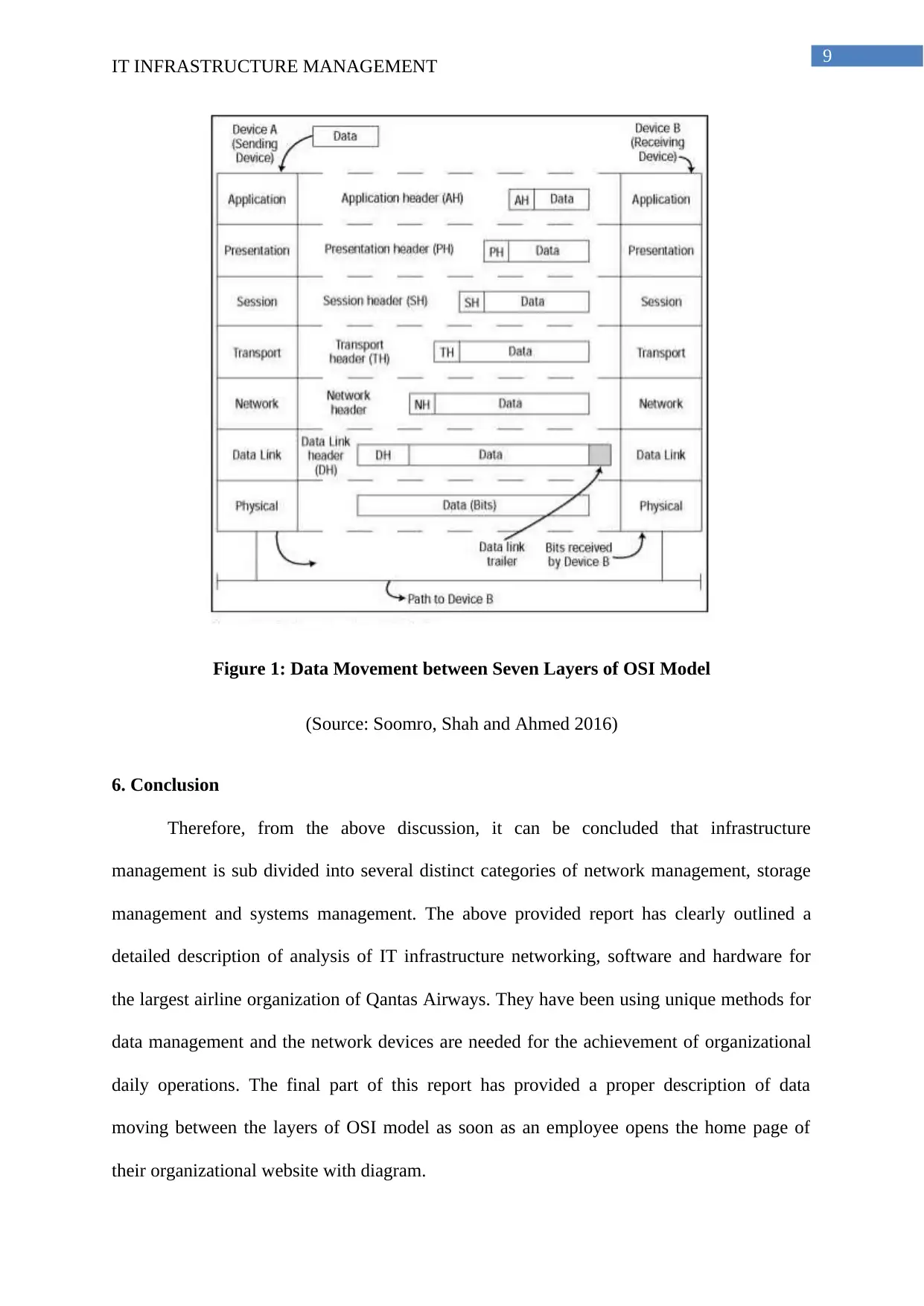
Figure 1: Data Movement between Seven Layers of OSI Model
(Source: Soomro, Shah and Ahmed 2016)
6. Conclusion
Therefore, from the above discussion, it can be concluded that infrastructure
management is sub divided into several distinct categories of network management, storage
management and systems management. The above provided report has clearly outlined a
detailed description of analysis of IT infrastructure networking, software and hardware for
the largest airline organization of Qantas Airways. They have been using unique methods for
data management and the network devices are needed for the achievement of organizational
daily operations. The final part of this report has provided a proper description of data
moving between the layers of OSI model as soon as an employee opens the home page of
their organizational website with diagram.
IT INFRASTRUCTURE MANAGEMENT
Figure 1: Data Movement between Seven Layers of OSI Model
(Source: Soomro, Shah and Ahmed 2016)
6. Conclusion
Therefore, from the above discussion, it can be concluded that infrastructure
management is sub divided into several distinct categories of network management, storage
management and systems management. The above provided report has clearly outlined a
detailed description of analysis of IT infrastructure networking, software and hardware for
the largest airline organization of Qantas Airways. They have been using unique methods for
data management and the network devices are needed for the achievement of organizational
daily operations. The final part of this report has provided a proper description of data
moving between the layers of OSI model as soon as an employee opens the home page of
their organizational website with diagram.
Paraphrase This Document
Need a fresh take? Get an instant paraphrase of this document with our AI Paraphraser
10
IT INFRASTRUCTURE MANAGEMENT
IT INFRASTRUCTURE MANAGEMENT
11
IT INFRASTRUCTURE MANAGEMENT
7. References
Ajamieh, A., Benitez, J., Braojos, J. and Gelhard, C., 2016. IT infrastructure and competitive
aggressiveness in explaining and predicting performance. Journal of business
research, 69(10), pp.4667-4674.
Alsabawy, A.Y., Cater-Steel, A. and Soar, J., 2013. IT infrastructure services as a
requirement for e-learning system success. Computers & Education, 69, pp.431-451.
Benitez-Amado, J., Llorens-Montes, F.J. and Fernandez-Perez, V., 2013. The relationship
between IT infrastructure leveraging, talent management and operational sustainability, and
their effects on the business value of the operations strategy.
Hernantes, J., Gallardo, G. and Serrano, N., 2015. IT infrastructure-monitoring tools. IEEE
Software, 32(4), pp.88-93.
Iden, J. and Eikebrokk, T.R., 2013. Implementing IT Service Management: A systematic
literature review. International Journal of Information Management, 33(3), pp.512-523.
Kabir, G., Sadiq, R. and Tesfamariam, S., 2014. A review of multi-criteria decision-making
methods for infrastructure management. Structure and Infrastructure Engineering, 10(9),
pp.1176-1210.
Laan, S., 2013. It infrastructure architecture-infrastructure building blocks and concepts
second edition. Sjaak Laan.
Laudon, K.C. and Laudon, J.P., 2016. Management information system. Pearson Education
India.
Lin, J., Ravichandiran, R., Bannazadeh, H. and Leon-Garcia, A., 2015, May. Monitoring and
measurement in software-defined infrastructure. In 2015 IFIP/IEEE International
Symposium on Integrated Network Management (IM) (pp. 742-745). IEEE.
IT INFRASTRUCTURE MANAGEMENT
7. References
Ajamieh, A., Benitez, J., Braojos, J. and Gelhard, C., 2016. IT infrastructure and competitive
aggressiveness in explaining and predicting performance. Journal of business
research, 69(10), pp.4667-4674.
Alsabawy, A.Y., Cater-Steel, A. and Soar, J., 2013. IT infrastructure services as a
requirement for e-learning system success. Computers & Education, 69, pp.431-451.
Benitez-Amado, J., Llorens-Montes, F.J. and Fernandez-Perez, V., 2013. The relationship
between IT infrastructure leveraging, talent management and operational sustainability, and
their effects on the business value of the operations strategy.
Hernantes, J., Gallardo, G. and Serrano, N., 2015. IT infrastructure-monitoring tools. IEEE
Software, 32(4), pp.88-93.
Iden, J. and Eikebrokk, T.R., 2013. Implementing IT Service Management: A systematic
literature review. International Journal of Information Management, 33(3), pp.512-523.
Kabir, G., Sadiq, R. and Tesfamariam, S., 2014. A review of multi-criteria decision-making
methods for infrastructure management. Structure and Infrastructure Engineering, 10(9),
pp.1176-1210.
Laan, S., 2013. It infrastructure architecture-infrastructure building blocks and concepts
second edition. Sjaak Laan.
Laudon, K.C. and Laudon, J.P., 2016. Management information system. Pearson Education
India.
Lin, J., Ravichandiran, R., Bannazadeh, H. and Leon-Garcia, A., 2015, May. Monitoring and
measurement in software-defined infrastructure. In 2015 IFIP/IEEE International
Symposium on Integrated Network Management (IM) (pp. 742-745). IEEE.
⊘ This is a preview!⊘
Do you want full access?
Subscribe today to unlock all pages.
Trusted by 1+ million students worldwide

1 out of 13


Related Documents


Your All-in-One AI-Powered Toolkit for Academic Success.
+13062052269
info@desklib.com
Available 24*7 on WhatsApp / Email
![[object Object]](/_next/static/media/star-bottom.7253800d.svg)
Unlock your academic potential
Copyright © 2020–2026 A2Z Services. All Rights Reserved. Developed and managed by ZUCOL.