Dissertation: Asset Management of Railway Infrastructure Project
VerifiedAdded on 2022/09/28
|20
|5812
|19
Project
AI Summary
This dissertation proposal examines the critical aspects of asset management within railway infrastructure. It begins with an extensive literature review, exploring the concept of asset management, identifying key stakeholders such as technical employees and external entities, and detailing various railway assets. The review also analyzes the benefits and barriers associated with technologies like Artificial Intelligence, Virtual Reality, and smart technologies in asset management. The proposal further outlines the research aim and objectives, research background, problem statement, and research gap. It details the proposed methodology, expected outcomes and benefits, and required resources for the research project. The proposal includes a research plan and references to support the proposed study. The project aims to provide a comprehensive understanding of the challenges and opportunities in railway asset management.

DISSERTATIONPRESENTATIONPROPOSAL
Name of the student
Name of University
Student ID
Word Count: 4000
Name of the student
Name of University
Student ID
Word Count: 4000

Paraphrase This Document
Need a fresh take? Get an instant paraphrase of this document with our AI Paraphraser
DISSERTATION PRESENTATION PROPOSAL
Table of Contents
Part 1.A: Literature review.........................................................................................................2
2.1 Introduction......................................................................................................................2
2.2 Asset management............................................................................................................2
2.3 Identification of stakeholders...........................................................................................3
2.4 Railway assets..................................................................................................................4
2.5 Barriers and benefits of technologies of asset management.............................................6
2.6 Summary...........................................................................................................................9
Part 1.B: Research proposal.....................................................................................................10
Research Aim and Objectives..............................................................................................10
Research background............................................................................................................10
Problem statement................................................................................................................11
Research gap.........................................................................................................................12
Research methodology.........................................................................................................12
Benefits and outcomes for research......................................................................................13
Required resources...............................................................................................................13
References................................................................................................................................13
Part 1.C: Research plan............................................................................................................17
1
Table of Contents
Part 1.A: Literature review.........................................................................................................2
2.1 Introduction......................................................................................................................2
2.2 Asset management............................................................................................................2
2.3 Identification of stakeholders...........................................................................................3
2.4 Railway assets..................................................................................................................4
2.5 Barriers and benefits of technologies of asset management.............................................6
2.6 Summary...........................................................................................................................9
Part 1.B: Research proposal.....................................................................................................10
Research Aim and Objectives..............................................................................................10
Research background............................................................................................................10
Problem statement................................................................................................................11
Research gap.........................................................................................................................12
Research methodology.........................................................................................................12
Benefits and outcomes for research......................................................................................13
Required resources...............................................................................................................13
References................................................................................................................................13
Part 1.C: Research plan............................................................................................................17
1
DISSERTATION PRESENTATION PROPOSAL
Part 1.A: Literature review
2.1 Introduction
Asset management can be categorised into corporate finance, and advisory services. In
accordance with the advisory services, a company related to the financial services or the
financial advisor assists an organisation associated with the financial portfolio such as taxes,
insurance, accounts, budget and investment. In relation to corporate finance, asset
management is considered as a process that is utilised to ensure that organisations intangible
and tangible assets are accounted, maintained for the best and highest use. In this study, the
researcher will study the asset management, different stakeholders those are associated with
the asset management of the railway infrastructure. The study will also focus on the different
asset related to the railways, further will also identify the different benefits and barrier in the
context of the technologies of asset management. The technologies related to asset
management includes Robots, Artificial Intelligence, Virtual Reality and Smart
technologies.
2.2 Asset management
Asset management is considered as a management of the investment of a particular
organisation by some third party. Managing the available asset of the organisation is an
important aspect of the growth of the business. Asset management actively investing and
monitor the fund of the client within the financial markets through a brokerage and
investment banker. The services offered by the financial institutions in the context of the
asset management can be done through both traditional approach and modern approaches
such as brokerage services, money market fund accounts, debit cards and credit cards
(Woodhouse, 2019). Through Asset Under Management (AUM), an institution related to the
financial services can not only manage the assets of an organisation, but it also manages the
risk that is associated with a particular organisation. The client, those who consider asset
management can be institutional investors or individual investors. Asset management has a
different type of importance, such as:
Helps the firms to keep a track about all the assets: This process helps every
organisation keep a track record of all the assets an organisation is having and its also
helps the organisation to identify whether the asset is fixed or liquid. The management
of the organisation can keep records regarding the location of the asset of how those
assets are being used in the organisation (Woodhouse, 2019).
2
Part 1.A: Literature review
2.1 Introduction
Asset management can be categorised into corporate finance, and advisory services. In
accordance with the advisory services, a company related to the financial services or the
financial advisor assists an organisation associated with the financial portfolio such as taxes,
insurance, accounts, budget and investment. In relation to corporate finance, asset
management is considered as a process that is utilised to ensure that organisations intangible
and tangible assets are accounted, maintained for the best and highest use. In this study, the
researcher will study the asset management, different stakeholders those are associated with
the asset management of the railway infrastructure. The study will also focus on the different
asset related to the railways, further will also identify the different benefits and barrier in the
context of the technologies of asset management. The technologies related to asset
management includes Robots, Artificial Intelligence, Virtual Reality and Smart
technologies.
2.2 Asset management
Asset management is considered as a management of the investment of a particular
organisation by some third party. Managing the available asset of the organisation is an
important aspect of the growth of the business. Asset management actively investing and
monitor the fund of the client within the financial markets through a brokerage and
investment banker. The services offered by the financial institutions in the context of the
asset management can be done through both traditional approach and modern approaches
such as brokerage services, money market fund accounts, debit cards and credit cards
(Woodhouse, 2019). Through Asset Under Management (AUM), an institution related to the
financial services can not only manage the assets of an organisation, but it also manages the
risk that is associated with a particular organisation. The client, those who consider asset
management can be institutional investors or individual investors. Asset management has a
different type of importance, such as:
Helps the firms to keep a track about all the assets: This process helps every
organisation keep a track record of all the assets an organisation is having and its also
helps the organisation to identify whether the asset is fixed or liquid. The management
of the organisation can keep records regarding the location of the asset of how those
assets are being used in the organisation (Woodhouse, 2019).
2
⊘ This is a preview!⊘
Do you want full access?
Subscribe today to unlock all pages.

Trusted by 1+ million students worldwide
DISSERTATION PRESENTATION PROPOSAL
Helps guarantee the accuracy of amortisation rates: The regular track keeping
methods helps the organisation to stay updated in the context of rates related to the
assets that the organisation is acquiring.
Helps in managing and identification of risk: Asset management helps to identify
the risk that is associated with the ownership and utilisation of a particular asset. In
this way, a business will always be prepared with the upcoming risk associated with
the assets.
Helps to update the records: The utilisation of proper asset management plan will
help to omit the record related to the stolen, damaged and lost assets. The asset
management helps the owner of the firm to be aware of that asset which has been lost
and those need to be removed from the records for the future assessment of the assets.
2.3 Identification of stakeholders
Stakeholders are the most important factor for an organisation to run. The stakeholders in
case of railways are of different types such as Technical Employees, Mid-Level Manager,
Executives, Agency Head and External Stakeholders. These stakeholders can further be
identified into Maintenance Crew, District/State Engineers, Chief Engineers, and Secretary
of Transport (Srinivasan and Parlikad, 2017).
External Stakeholders: It can be defined as an organisation, individual or group who
does no belongs to the organisation such as governor from the government. External
stakeholders take cares of the resources that are associated with the asset and uses the
funds in the best way possible. These stakeholders help to improve the reliability,
performance and condition of an asset. It also helps in the formal management of risk
and safety of the asset. External stakeholders help to maintain the quality of the raw
material so that the unexpected risk can be recovered faster. Governor as a
stakeholder can provide political benefits to the organisation (Mangopa Malik, 2017).
Agency Heads & Executives: This type of stakeholders includes the secretary of the
transportation and the chief Engineer and the help in the cost-saving plans of the
organisation. Transportation is one of the biggest expenses of an organisation, so the
secretary of transportation always checks the budgets related to the transportation and
budget in accordance with that. These stakeholders help to prioritised and optimised
the need in the context of the investment, and it also helps to improve the performance
of the asset and reliability related to the service. These stakeholders facilitate to
3
Helps guarantee the accuracy of amortisation rates: The regular track keeping
methods helps the organisation to stay updated in the context of rates related to the
assets that the organisation is acquiring.
Helps in managing and identification of risk: Asset management helps to identify
the risk that is associated with the ownership and utilisation of a particular asset. In
this way, a business will always be prepared with the upcoming risk associated with
the assets.
Helps to update the records: The utilisation of proper asset management plan will
help to omit the record related to the stolen, damaged and lost assets. The asset
management helps the owner of the firm to be aware of that asset which has been lost
and those need to be removed from the records for the future assessment of the assets.
2.3 Identification of stakeholders
Stakeholders are the most important factor for an organisation to run. The stakeholders in
case of railways are of different types such as Technical Employees, Mid-Level Manager,
Executives, Agency Head and External Stakeholders. These stakeholders can further be
identified into Maintenance Crew, District/State Engineers, Chief Engineers, and Secretary
of Transport (Srinivasan and Parlikad, 2017).
External Stakeholders: It can be defined as an organisation, individual or group who
does no belongs to the organisation such as governor from the government. External
stakeholders take cares of the resources that are associated with the asset and uses the
funds in the best way possible. These stakeholders help to improve the reliability,
performance and condition of an asset. It also helps in the formal management of risk
and safety of the asset. External stakeholders help to maintain the quality of the raw
material so that the unexpected risk can be recovered faster. Governor as a
stakeholder can provide political benefits to the organisation (Mangopa Malik, 2017).
Agency Heads & Executives: This type of stakeholders includes the secretary of the
transportation and the chief Engineer and the help in the cost-saving plans of the
organisation. Transportation is one of the biggest expenses of an organisation, so the
secretary of transportation always checks the budgets related to the transportation and
budget in accordance with that. These stakeholders help to prioritised and optimised
the need in the context of the investment, and it also helps to improve the performance
of the asset and reliability related to the service. These stakeholders facilitate to
3
Paraphrase This Document
Need a fresh take? Get an instant paraphrase of this document with our AI Paraphraser
DISSERTATION PRESENTATION PROPOSAL
improve transparency among resource performance and allocation. It also clears the
communication related to the external stakeholders and decision-makers of the
organisation.
Mid-level management: the understand the different level of funding and concept of
deferred invest within the organisation. These stakeholders identify the optimal
performance and reduce the level of maintenance where it is not needed. They
facilitate the organisation to reduce the annual costs related to the rehabilitation and
maintenance of the product.
Technical employees: This stakeholder understands the concept of the asset portfolio
of an organisation. They can help the organisation to select a strategy which can
effectively rehabilitate and maintain the asset of an organisation, and they help in
good utilisation of the human resource. Technical employees help to improv4e the
communication in between the decision making and other departments.
2.4 Railway assets
As opined by Vitez (2019), the activities involving asset management is involved with the
railway sector. In respect of the asset management, several co-ordinated activities are
associated in order to fulfil the business objectives. However, the asset management
comprises all procedures and systems for maximising the arability of asset, thereby removing
the risk in an industry. In the railways sector, the asset management focuses on covering the
lifecycle of the entire asset by covering the steps of design, operation and construction. In this
way, the asset management help to develop safety, thereby supporting financial growth and
multiple social opportunities. Moreover, it is noted by Vitez (2019), the assets involving with
the railway's sector help in respect of effective planning, thereby collecting reliable
information. For example, Network Rail in the United Kingdom develops its strategic
planning process and project delivery, thereby associating the process of asset management.
The introduction of asset management provides adequate help by securing better quality
services related to the railway’s vehicles. In this aspect, the reliable infrastructure is essential
for ensuring smooth operation in respect of public rail transport in the United Kingdom. It is
also essential in respect of procurement and investment and purchasing to know about the
technical condition of the assets. In this aspect, the financing is essential in terms of asset
management in the railway sector in the UK. However, it is assessed by Vitez, (2019), the
asset management helps in the task of repairing, construction, modernization and
4
improve transparency among resource performance and allocation. It also clears the
communication related to the external stakeholders and decision-makers of the
organisation.
Mid-level management: the understand the different level of funding and concept of
deferred invest within the organisation. These stakeholders identify the optimal
performance and reduce the level of maintenance where it is not needed. They
facilitate the organisation to reduce the annual costs related to the rehabilitation and
maintenance of the product.
Technical employees: This stakeholder understands the concept of the asset portfolio
of an organisation. They can help the organisation to select a strategy which can
effectively rehabilitate and maintain the asset of an organisation, and they help in
good utilisation of the human resource. Technical employees help to improv4e the
communication in between the decision making and other departments.
2.4 Railway assets
As opined by Vitez (2019), the activities involving asset management is involved with the
railway sector. In respect of the asset management, several co-ordinated activities are
associated in order to fulfil the business objectives. However, the asset management
comprises all procedures and systems for maximising the arability of asset, thereby removing
the risk in an industry. In the railways sector, the asset management focuses on covering the
lifecycle of the entire asset by covering the steps of design, operation and construction. In this
way, the asset management help to develop safety, thereby supporting financial growth and
multiple social opportunities. Moreover, it is noted by Vitez (2019), the assets involving with
the railway's sector help in respect of effective planning, thereby collecting reliable
information. For example, Network Rail in the United Kingdom develops its strategic
planning process and project delivery, thereby associating the process of asset management.
The introduction of asset management provides adequate help by securing better quality
services related to the railway’s vehicles. In this aspect, the reliable infrastructure is essential
for ensuring smooth operation in respect of public rail transport in the United Kingdom. It is
also essential in respect of procurement and investment and purchasing to know about the
technical condition of the assets. In this aspect, the financing is essential in terms of asset
management in the railway sector in the UK. However, it is assessed by Vitez, (2019), the
asset management helps in the task of repairing, construction, modernization and
4
DISSERTATION PRESENTATION PROPOSAL
maintenance in the industry. In this process, an organization or authority intend to gain the
maximum safety in respect of rail assets, thereby protecting from the claims of warranty. The
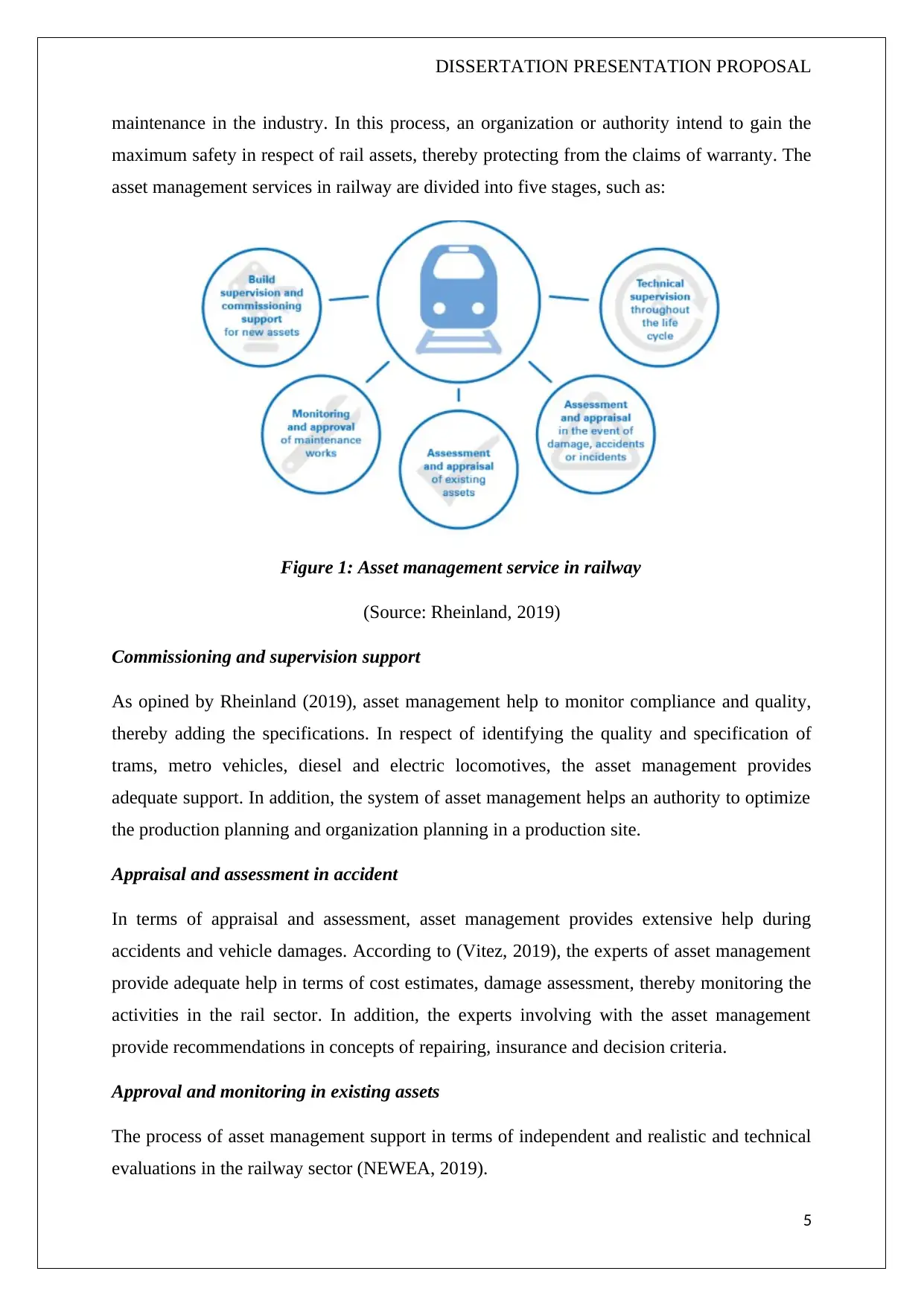
asset management services in railway are divided into five stages, such as:
Figure 1: Asset management service in railway
(Source: Rheinland, 2019)
Commissioning and supervision support
As opined by Rheinland (2019), asset management help to monitor compliance and quality,
thereby adding the specifications. In respect of identifying the quality and specification of
trams, metro vehicles, diesel and electric locomotives, the asset management provides
adequate support. In addition, the system of asset management helps an authority to optimize
the production planning and organization planning in a production site.
Appraisal and assessment in accident
In terms of appraisal and assessment, asset management provides extensive help during
accidents and vehicle damages. According to (Vitez, 2019), the experts of asset management
provide adequate help in terms of cost estimates, damage assessment, thereby monitoring the
activities in the rail sector. In addition, the experts involving with the asset management
provide recommendations in concepts of repairing, insurance and decision criteria.
Approval and monitoring in existing assets
The process of asset management support in terms of independent and realistic and technical
evaluations in the railway sector (NEWEA, 2019).
5
maintenance in the industry. In this process, an organization or authority intend to gain the
maximum safety in respect of rail assets, thereby protecting from the claims of warranty. The
asset management services in railway are divided into five stages, such as:
Figure 1: Asset management service in railway
(Source: Rheinland, 2019)
Commissioning and supervision support
As opined by Rheinland (2019), asset management help to monitor compliance and quality,
thereby adding the specifications. In respect of identifying the quality and specification of
trams, metro vehicles, diesel and electric locomotives, the asset management provides
adequate support. In addition, the system of asset management helps an authority to optimize
the production planning and organization planning in a production site.
Appraisal and assessment in accident
In terms of appraisal and assessment, asset management provides extensive help during
accidents and vehicle damages. According to (Vitez, 2019), the experts of asset management
provide adequate help in terms of cost estimates, damage assessment, thereby monitoring the
activities in the rail sector. In addition, the experts involving with the asset management
provide recommendations in concepts of repairing, insurance and decision criteria.
Approval and monitoring in existing assets
The process of asset management support in terms of independent and realistic and technical
evaluations in the railway sector (NEWEA, 2019).
5
⊘ This is a preview!⊘
Do you want full access?
Subscribe today to unlock all pages.
Trusted by 1+ million students worldwide
DISSERTATION PRESENTATION PROPOSAL
Technical supervision
In the time of accepting the vehicle in the service, the value and condition have to be checked
and determined in regular intervals. In this aspect, the asset management advice is thereby
defining the targeted controlling intervals and KPIs in order to implement documentation and
information system. In term of identifying the complexities during the process, the
professionals of the asset management define the remedial measure by developing
optimization potential.
Maintenance monitoring
In respect of the railway, the asset management professionals assume the entire project
management for general inspections by providing suitable support.
2.5 Barriers and benefits of technologies of asset management
In recent time the introduction of technologies enhances the effectiveness of asset
management, thereby handling the wealth of the clients. The technical intervention also helps
several firms in respect of resolving the targeted risks, thereby maximising the profitability.
In respect of a railway, asset management brings multiple benefits, thereby associating the
targeted technologies. On the other hand, it is mentioned by Das et al., (2015), several
disadvantages occur with respect to the association of technologies in asset management. The
technologies involving in asset management such as Virtual Reality (VR), Artificial
Intelligence (AI), Robots and other smart technologies.
Smart technologies
As opined by Emmanuel and Rayudu (2016), the smart technologies in the asset management
work are thereby associating Internet of Things (IoT), Advanced analytics and Big Data in
respect of reducing the complexities in an industry. In respect of the railway industry, asset
management is used to reduce the operating cost and the mistakes related to the streamline
operations. Due to the introduction of smart technologies in the effectiveness of asset
management is increased, thereby associating the remote monitoring devices. In this aspect,
the remote monitoring devices help to organise the industry process, thereby mitigating the
targeted issues. In addition, the smart technologies help with respect to data storage,
collection, decision making and analysis in the asset management. The intelligent
maintenance system is associated with the smart technologies that process the targeted data,
6
Technical supervision
In the time of accepting the vehicle in the service, the value and condition have to be checked
and determined in regular intervals. In this aspect, the asset management advice is thereby
defining the targeted controlling intervals and KPIs in order to implement documentation and
information system. In term of identifying the complexities during the process, the
professionals of the asset management define the remedial measure by developing
optimization potential.
Maintenance monitoring
In respect of the railway, the asset management professionals assume the entire project
management for general inspections by providing suitable support.
2.5 Barriers and benefits of technologies of asset management
In recent time the introduction of technologies enhances the effectiveness of asset
management, thereby handling the wealth of the clients. The technical intervention also helps
several firms in respect of resolving the targeted risks, thereby maximising the profitability.
In respect of a railway, asset management brings multiple benefits, thereby associating the
targeted technologies. On the other hand, it is mentioned by Das et al., (2015), several
disadvantages occur with respect to the association of technologies in asset management. The
technologies involving in asset management such as Virtual Reality (VR), Artificial
Intelligence (AI), Robots and other smart technologies.
Smart technologies
As opined by Emmanuel and Rayudu (2016), the smart technologies in the asset management
work are thereby associating Internet of Things (IoT), Advanced analytics and Big Data in
respect of reducing the complexities in an industry. In respect of the railway industry, asset
management is used to reduce the operating cost and the mistakes related to the streamline
operations. Due to the introduction of smart technologies in the effectiveness of asset
management is increased, thereby associating the remote monitoring devices. In this aspect,
the remote monitoring devices help to organise the industry process, thereby mitigating the
targeted issues. In addition, the smart technologies help with respect to data storage,
collection, decision making and analysis in the asset management. The intelligent
maintenance system is associated with the smart technologies that process the targeted data,
6
Paraphrase This Document
Need a fresh take? Get an instant paraphrase of this document with our AI Paraphraser
DISSERTATION PRESENTATION PROPOSAL
thereby providing instructions in respect of preventive maintenance. On the contrary, it is
noted by Zhou, Fu and Yang (2016) the application of smart technologies creates multiple
obstacles, thereby decreasing the effectiveness in the process of asset management. The
absence of a skilled worker in an industry creates several obstacles in maintaining the tools
related to asset management.
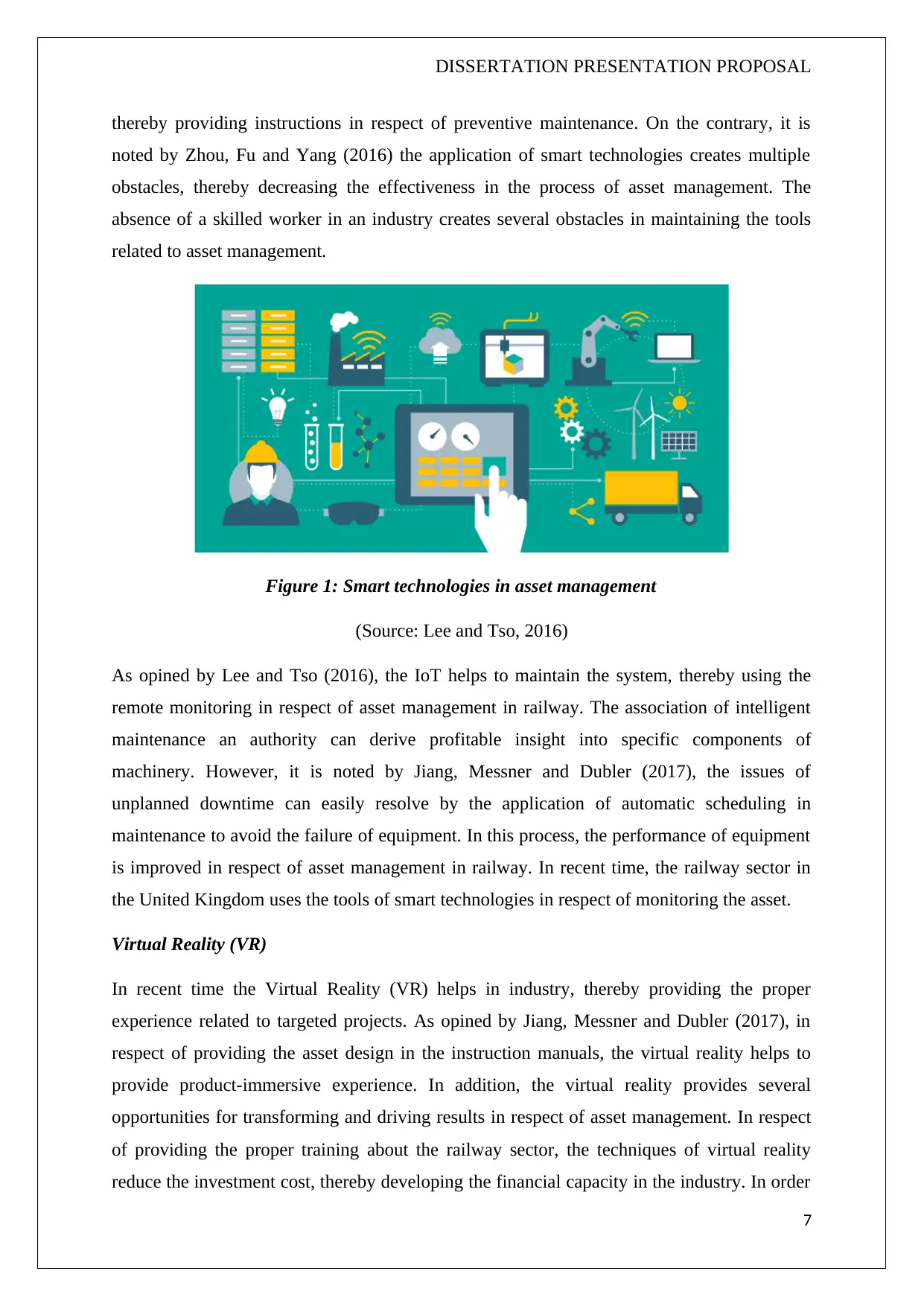
Figure 1: Smart technologies in asset management
(Source: Lee and Tso, 2016)
As opined by Lee and Tso (2016), the IoT helps to maintain the system, thereby using the
remote monitoring in respect of asset management in railway. The association of intelligent
maintenance an authority can derive profitable insight into specific components of
machinery. However, it is noted by Jiang, Messner and Dubler (2017), the issues of
unplanned downtime can easily resolve by the application of automatic scheduling in
maintenance to avoid the failure of equipment. In this process, the performance of equipment
is improved in respect of asset management in railway. In recent time, the railway sector in
the United Kingdom uses the tools of smart technologies in respect of monitoring the asset.
Virtual Reality (VR)
In recent time the Virtual Reality (VR) helps in industry, thereby providing the proper
experience related to targeted projects. As opined by Jiang, Messner and Dubler (2017), in
respect of providing the asset design in the instruction manuals, the virtual reality helps to
provide product-immersive experience. In addition, the virtual reality provides several
opportunities for transforming and driving results in respect of asset management. In respect
of providing the proper training about the railway sector, the techniques of virtual reality
reduce the investment cost, thereby developing the financial capacity in the industry. In order
7
thereby providing instructions in respect of preventive maintenance. On the contrary, it is
noted by Zhou, Fu and Yang (2016) the application of smart technologies creates multiple
obstacles, thereby decreasing the effectiveness in the process of asset management. The
absence of a skilled worker in an industry creates several obstacles in maintaining the tools
related to asset management.
Figure 1: Smart technologies in asset management
(Source: Lee and Tso, 2016)
As opined by Lee and Tso (2016), the IoT helps to maintain the system, thereby using the
remote monitoring in respect of asset management in railway. The association of intelligent
maintenance an authority can derive profitable insight into specific components of
machinery. However, it is noted by Jiang, Messner and Dubler (2017), the issues of
unplanned downtime can easily resolve by the application of automatic scheduling in
maintenance to avoid the failure of equipment. In this process, the performance of equipment
is improved in respect of asset management in railway. In recent time, the railway sector in
the United Kingdom uses the tools of smart technologies in respect of monitoring the asset.
Virtual Reality (VR)
In recent time the Virtual Reality (VR) helps in industry, thereby providing the proper
experience related to targeted projects. As opined by Jiang, Messner and Dubler (2017), in
respect of providing the asset design in the instruction manuals, the virtual reality helps to
provide product-immersive experience. In addition, the virtual reality provides several
opportunities for transforming and driving results in respect of asset management. In respect
of providing the proper training about the railway sector, the techniques of virtual reality
reduce the investment cost, thereby developing the financial capacity in the industry. In order
7
DISSERTATION PRESENTATION PROPOSAL
to provide the skills related to asset maintenance, the system of VR provides several distinct
advantages. Moreover, the virtual reality uses in the railway sector to eliminate the risk
associated with asset management.
The experiences associated with the VR helps to develop extreme situations and
environment, thereby allowing the users for learning and testing. In this process, the virtual
reality prohibits for being severe consequences in an industry. In the UK, the railway sector
introduces safety measures, thereby using the system of VR to train the worker. On the other
hand, it is noted by Roberts et al., (2018), the technologies involving with the virtual reality
affect the health condition of worker in the asset management. Industry report indicates, the
process of virtual reality always trapped the human mind in an almost robotic manner. In this
way, several psychological disorders have created that focus on decreasing the effectiveness
of the industry.
Artificial Intelligence (AI)
The Artificial Intelligence (AI) is compared as the simulation of human intelligence
procedure, thereby using the machine. By using the computer system, the process of artificial
intelligence is controlled in respect of asset management. As mentioned by Jiang, Messner
and Dubler (2017), the application of artificial intelligence brings better importance in respect
of asset management, thereby introducing the value chain. In addition, the association of
artificial intelligence potentially develops the marketing interaction and client services
depending on the price transparency. In respect of the asset management, the system of
artificial intelligence helps thereby providing day to day applications. Artificial Intelligence
has the potentiality to decrease the complexities related to an industry, thereby providing
digital assistance. The association of digital assistance help to decrease human resources,
thereby reducing the operating cost. On the contrary, it is mentioned by Roberts et al., (2018),
the mishandling of the system of AI intends to bring negative results in the industry, thereby
decreasing the production capacity.
Robots
In term of asset management, the technologies involving robotics brings multiple advantages
in the railway sector. The Robotic Process Automation (RPA) provides targeted solutions for
the back-office staffs in respect of asset management. In recent time, the asset managers have
to handle a huge capacity of calculations in the railway sector. In this aspect, the automated
technologies reduce the work of asset managers, thereby systematically running the process.
8
to provide the skills related to asset maintenance, the system of VR provides several distinct
advantages. Moreover, the virtual reality uses in the railway sector to eliminate the risk
associated with asset management.
The experiences associated with the VR helps to develop extreme situations and
environment, thereby allowing the users for learning and testing. In this process, the virtual
reality prohibits for being severe consequences in an industry. In the UK, the railway sector
introduces safety measures, thereby using the system of VR to train the worker. On the other
hand, it is noted by Roberts et al., (2018), the technologies involving with the virtual reality
affect the health condition of worker in the asset management. Industry report indicates, the
process of virtual reality always trapped the human mind in an almost robotic manner. In this
way, several psychological disorders have created that focus on decreasing the effectiveness
of the industry.
Artificial Intelligence (AI)
The Artificial Intelligence (AI) is compared as the simulation of human intelligence
procedure, thereby using the machine. By using the computer system, the process of artificial
intelligence is controlled in respect of asset management. As mentioned by Jiang, Messner
and Dubler (2017), the application of artificial intelligence brings better importance in respect
of asset management, thereby introducing the value chain. In addition, the association of
artificial intelligence potentially develops the marketing interaction and client services
depending on the price transparency. In respect of the asset management, the system of
artificial intelligence helps thereby providing day to day applications. Artificial Intelligence
has the potentiality to decrease the complexities related to an industry, thereby providing
digital assistance. The association of digital assistance help to decrease human resources,
thereby reducing the operating cost. On the contrary, it is mentioned by Roberts et al., (2018),
the mishandling of the system of AI intends to bring negative results in the industry, thereby
decreasing the production capacity.
Robots
In term of asset management, the technologies involving robotics brings multiple advantages
in the railway sector. The Robotic Process Automation (RPA) provides targeted solutions for
the back-office staffs in respect of asset management. In recent time, the asset managers have
to handle a huge capacity of calculations in the railway sector. In this aspect, the automated
technologies reduce the work of asset managers, thereby systematically running the process.
8
⊘ This is a preview!⊘
Do you want full access?
Subscribe today to unlock all pages.
Trusted by 1+ million students worldwide
DISSERTATION PRESENTATION PROPOSAL
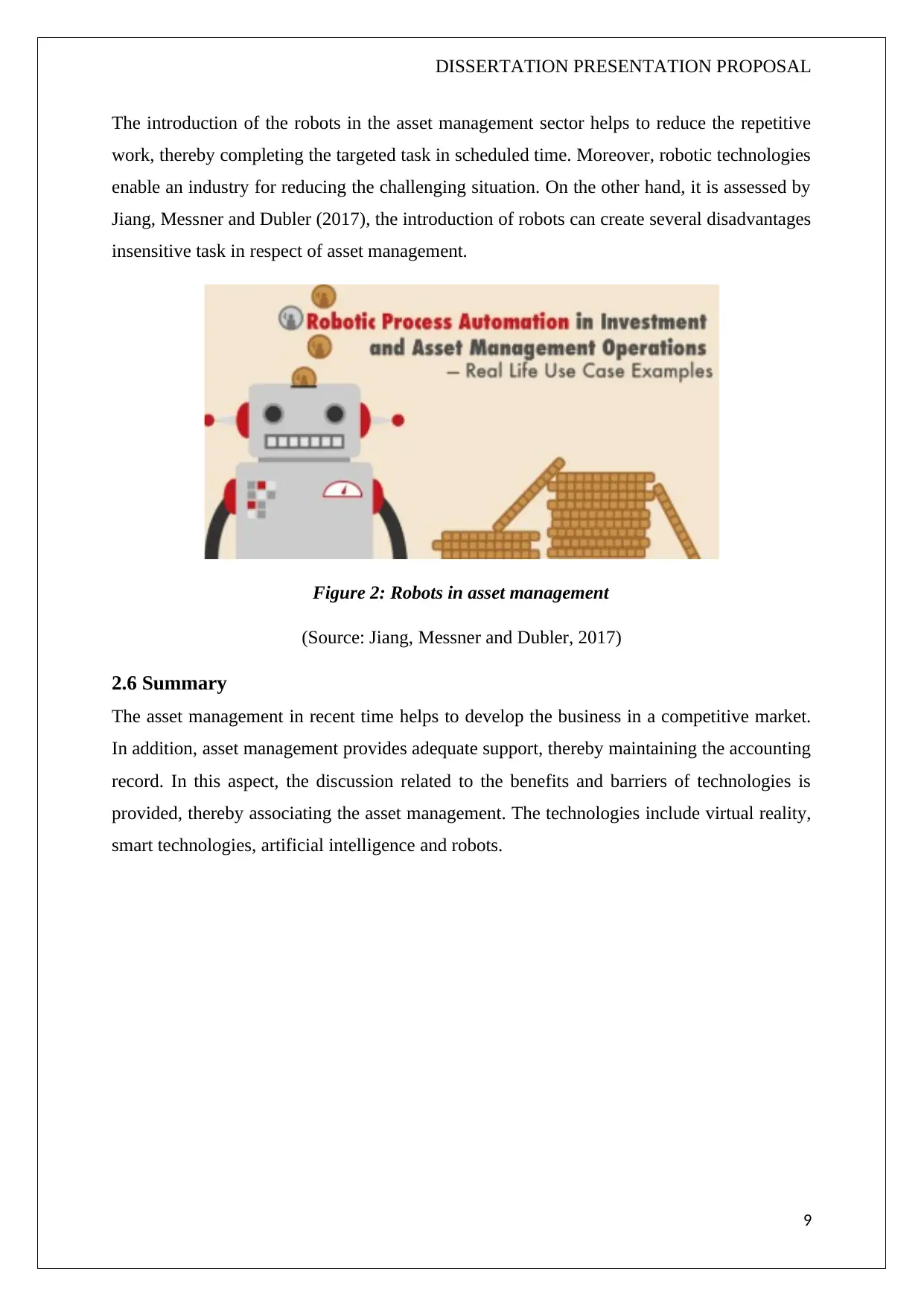
The introduction of the robots in the asset management sector helps to reduce the repetitive
work, thereby completing the targeted task in scheduled time. Moreover, robotic technologies
enable an industry for reducing the challenging situation. On the other hand, it is assessed by
Jiang, Messner and Dubler (2017), the introduction of robots can create several disadvantages
insensitive task in respect of asset management.
Figure 2: Robots in asset management
(Source: Jiang, Messner and Dubler, 2017)
2.6 Summary
The asset management in recent time helps to develop the business in a competitive market.
In addition, asset management provides adequate support, thereby maintaining the accounting
record. In this aspect, the discussion related to the benefits and barriers of technologies is
provided, thereby associating the asset management. The technologies include virtual reality,
smart technologies, artificial intelligence and robots.
9
The introduction of the robots in the asset management sector helps to reduce the repetitive
work, thereby completing the targeted task in scheduled time. Moreover, robotic technologies
enable an industry for reducing the challenging situation. On the other hand, it is assessed by
Jiang, Messner and Dubler (2017), the introduction of robots can create several disadvantages
insensitive task in respect of asset management.
Figure 2: Robots in asset management
(Source: Jiang, Messner and Dubler, 2017)
2.6 Summary
The asset management in recent time helps to develop the business in a competitive market.
In addition, asset management provides adequate support, thereby maintaining the accounting
record. In this aspect, the discussion related to the benefits and barriers of technologies is
provided, thereby associating the asset management. The technologies include virtual reality,
smart technologies, artificial intelligence and robots.
9
Paraphrase This Document
Need a fresh take? Get an instant paraphrase of this document with our AI Paraphraser
DISSERTATION PRESENTATION PROPOSAL
Part 1.B: Research proposal
Research Aim and Objectives
Aim
The study aims to describe the importance of asset management with respect to developing
the infrastructure in the context of the United Kingdom. In addition, the study focusses on the
railway assets, thereby including several technical assistances. The benefits of technologies in
asset management are discussed, thereby providing the examples of virtual reality, artificial
intelligence and robots. The study explores the disadvantages related to the above-mentioned
technologies in terms of asset management.
Objectives
To identify the benefits of asset management
To describe the railway asset in term of performance
To explore the usage of smart technologies to manage railway assets
To explore the status of the railway asset management
To understand the importance of asset management in maintaining the railway assets
in the UK
Research background
The asset management depends on registering the asset, maintenance system, resource
management, condition assessment, inventory control and risk assessment by establishing
alternative options in the industry. In respect of developing the long-term prediction of cash
flow, the asset management provides adequate help in an industry. However, the asset
management works, thereby assisting the risk management, predictive modelling and
decision-making techniques. In addition, the process is also applicable in the railway sector
with respect to prohibiting the risk related to the inventory and other financial activities. It
can be assessed, the asset management works, thereby involving multiple systematic
processes. Moreover, asset management is used in an industry as a better business practice
with respect to developing better decisions (Milne, 2019).
The process of asset management help to align the management of railway infrastructure with
the strategic direction. Such kind of activities also supports in respect to achieving long-term
success in the railway project. Apart from that, the introduction of the asset management
minimizes the risk, thereby helping in emergency repairs, consumer relations problems and
10
Part 1.B: Research proposal
Research Aim and Objectives
Aim
The study aims to describe the importance of asset management with respect to developing
the infrastructure in the context of the United Kingdom. In addition, the study focusses on the
railway assets, thereby including several technical assistances. The benefits of technologies in
asset management are discussed, thereby providing the examples of virtual reality, artificial
intelligence and robots. The study explores the disadvantages related to the above-mentioned
technologies in terms of asset management.
Objectives
To identify the benefits of asset management
To describe the railway asset in term of performance
To explore the usage of smart technologies to manage railway assets
To explore the status of the railway asset management
To understand the importance of asset management in maintaining the railway assets
in the UK
Research background
The asset management depends on registering the asset, maintenance system, resource
management, condition assessment, inventory control and risk assessment by establishing
alternative options in the industry. In respect of developing the long-term prediction of cash
flow, the asset management provides adequate help in an industry. However, the asset
management works, thereby assisting the risk management, predictive modelling and
decision-making techniques. In addition, the process is also applicable in the railway sector
with respect to prohibiting the risk related to the inventory and other financial activities. It
can be assessed, the asset management works, thereby involving multiple systematic
processes. Moreover, asset management is used in an industry as a better business practice
with respect to developing better decisions (Milne, 2019).
The process of asset management help to align the management of railway infrastructure with
the strategic direction. Such kind of activities also supports in respect to achieving long-term
success in the railway project. Apart from that, the introduction of the asset management
minimizes the risk, thereby helping in emergency repairs, consumer relations problems and
10
DISSERTATION PRESENTATION PROPOSAL
costly lawsuits in the railway sector. The system involving the asset management help to
decrease the operation cost in the industry. By maintaining the infrastructure in an industry,
the asset management help to develop reliable conditions, thereby minimizing processing
cost. In this process, asset management able to maintain capital expenses in the railway
sector. In term of risk management, the process also helps, thereby focusing on reducing
overall issues in the industry. Moreover, the asset management help for updating the record
with respect to the secure information in the railway sector (UIC, 2019).
In recent time the asset management is performed in the railway sector, thereby associating
the technical assistance. The technical assistance includes smart technologies, virtual reality,
robots and artificial intelligence. As opined by Patil (2019), smart technologies focus on
developing the effectiveness of asset management, thereby involving the Internet of Things,
Big Data and Advanced analytics. In this aspect, the IoT related smart monitoring solutions
help in developing wireless communication in asset management in order to minimize the
risk. The system related to the IoT can be applied, thereby developing the connectivity in
enormous scalability in the railway sector. In addition, smart asset management offers
targeted insights into machine data, thereby helping in predictive maintenance in the railway.
In respect of developing the automated workflow, the IoT provides real-time visibility in
every essential aspect with the stakeholders.
According to Patil (2019), the robotic and AI or Artificial Intelligence focus on developing
effectiveness. In respect of the railway sector, the technologies involving with the robotics
help in official and manufacturing tasks. In the railway sector, most of the official task is
completed in the manual process that consumes an excess of time. The introduction of
robotics and artificial intelligence helps to reduce repetitive work. The introduction of such
technical assistance not only reduces the time but also saves the processing cost. In recent
time the robotics technologies also provide targeted support for the industry for completing
the spreadsheets and other records.
Problem statement
The introduction of robotics and other technical assistance creates several obstacles in respect
of the railway sector. The mishandling of the robotics system can hamper secure information
related to asset management. In order to control the system of robotics, an organization
requires the skilled workers Patil (2019). The absence of such employees in an industry
decreases the effectiveness of the asset management process. In respect of maintaining the
11
costly lawsuits in the railway sector. The system involving the asset management help to
decrease the operation cost in the industry. By maintaining the infrastructure in an industry,
the asset management help to develop reliable conditions, thereby minimizing processing
cost. In this process, asset management able to maintain capital expenses in the railway
sector. In term of risk management, the process also helps, thereby focusing on reducing
overall issues in the industry. Moreover, the asset management help for updating the record
with respect to the secure information in the railway sector (UIC, 2019).
In recent time the asset management is performed in the railway sector, thereby associating
the technical assistance. The technical assistance includes smart technologies, virtual reality,
robots and artificial intelligence. As opined by Patil (2019), smart technologies focus on
developing the effectiveness of asset management, thereby involving the Internet of Things,
Big Data and Advanced analytics. In this aspect, the IoT related smart monitoring solutions
help in developing wireless communication in asset management in order to minimize the
risk. The system related to the IoT can be applied, thereby developing the connectivity in
enormous scalability in the railway sector. In addition, smart asset management offers
targeted insights into machine data, thereby helping in predictive maintenance in the railway.
In respect of developing the automated workflow, the IoT provides real-time visibility in
every essential aspect with the stakeholders.
According to Patil (2019), the robotic and AI or Artificial Intelligence focus on developing
effectiveness. In respect of the railway sector, the technologies involving with the robotics
help in official and manufacturing tasks. In the railway sector, most of the official task is
completed in the manual process that consumes an excess of time. The introduction of
robotics and artificial intelligence helps to reduce repetitive work. The introduction of such
technical assistance not only reduces the time but also saves the processing cost. In recent
time the robotics technologies also provide targeted support for the industry for completing
the spreadsheets and other records.
Problem statement
The introduction of robotics and other technical assistance creates several obstacles in respect
of the railway sector. The mishandling of the robotics system can hamper secure information
related to asset management. In order to control the system of robotics, an organization
requires the skilled workers Patil (2019). The absence of such employees in an industry
decreases the effectiveness of the asset management process. In respect of maintaining the
11
⊘ This is a preview!⊘
Do you want full access?
Subscribe today to unlock all pages.
Trusted by 1+ million students worldwide

1 out of 20


Related Documents


Your All-in-One AI-Powered Toolkit for Academic Success.
+13062052269
info@desklib.com
Available 24*7 on WhatsApp / Email
![[object Object]](/_next/static/media/star-bottom.7253800d.svg)
Unlock your academic potential
Copyright © 2020–2026 A2Z Services. All Rights Reserved. Developed and managed by ZUCOL.