NRSG138 Reflection Essay: Roper-Logan-Tierney Model and Gibbs Cycle

Verified

Added on  2023/06/11

|8
|1600
|500
Essay
AI Summary
This essay presents a student's reflection on the Roper-Logan-Tierney (RLT) model of care and the Gibbs Reflective Cycle, as part of the NRSG138 course. The reflection includes personal experiences and observations related to person-centered care, biological factors, psychological factors, and the integration of RLT and Clinical Reasoning Cycle (CRC) in future practice. The student discusses interactions with a niece, an elderly woman, and a younger brother, using these experiences to illustrate the application of the RLT model. The essay follows the Gibbs Reflective Cycle, detailing the description of the experiences, feelings, evaluation, analysis, conclusion, and action plan for each scenario. The student reflects on the importance of personalized care, biological understanding, psychological well-being, and continuous learning in shaping their approach to healthcare and nursing practice. The essay concludes with a commitment to further study and practical application of these concepts.
Document Page
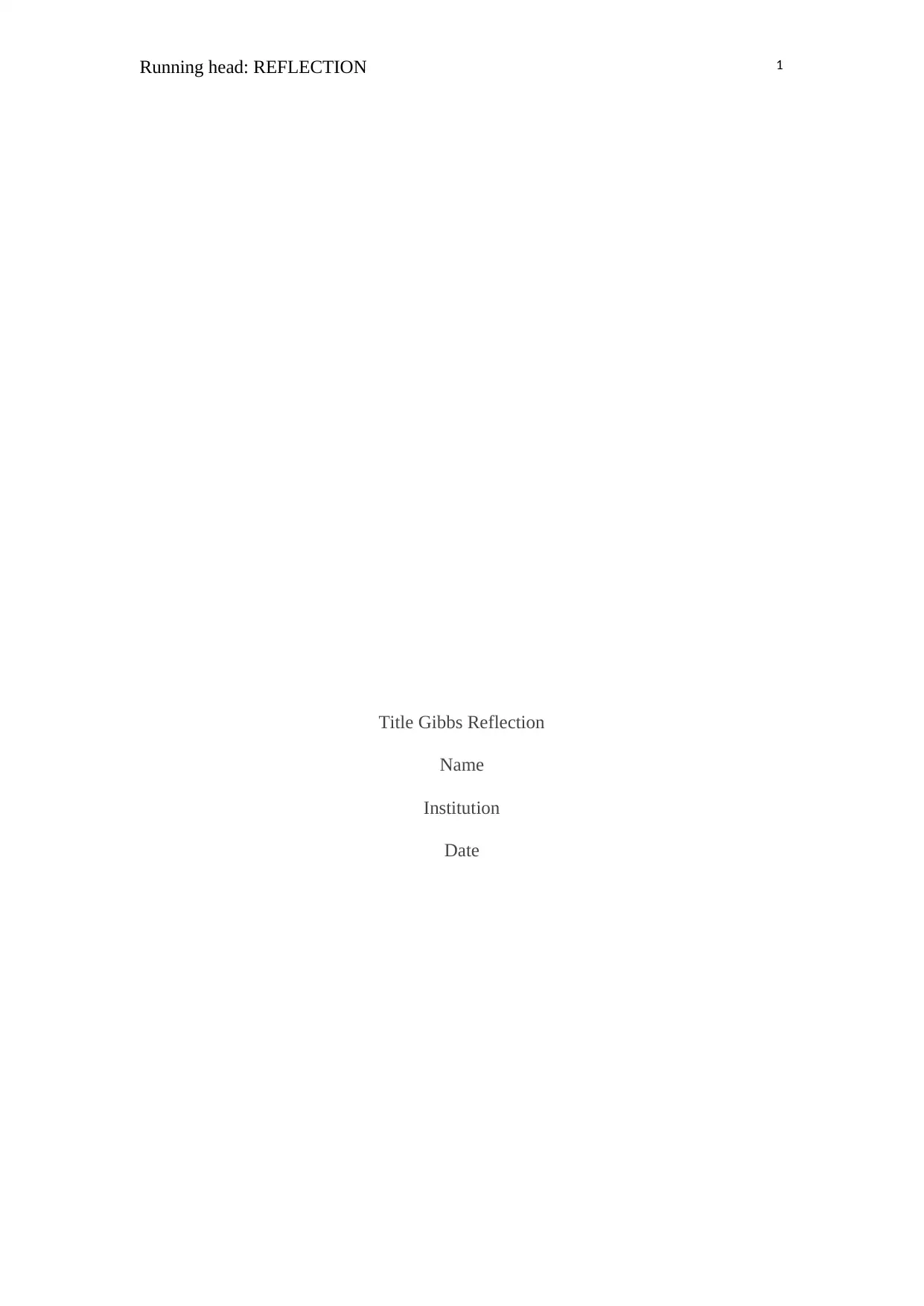
1Running head: REFLECTION
Title Gibbs Reflection
Name
Institution
Date
tabler-icon-diamond-filled.svg

Paraphrase This Document

Need a fresh take? Get an instant paraphrase of this document with our AI Paraphraser
Document Page
2REFLECTION
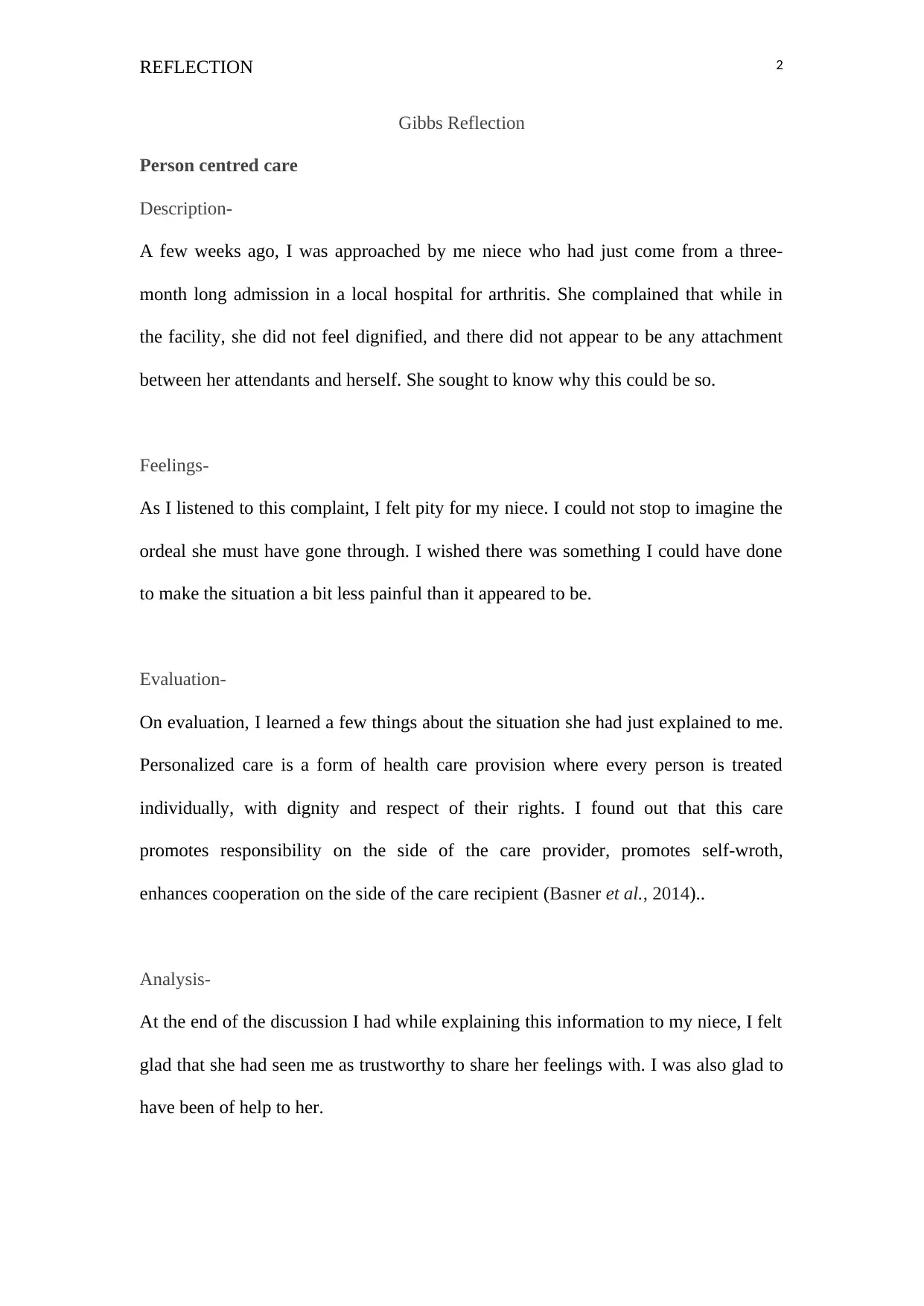
Gibbs Reflection
Person centred care
Description-
A few weeks ago, I was approached by me niece who had just come from a three-
month long admission in a local hospital for arthritis. She complained that while in
the facility, she did not feel dignified, and there did not appear to be any attachment
between her attendants and herself. She sought to know why this could be so.
Feelings-
As I listened to this complaint, I felt pity for my niece. I could not stop to imagine the
ordeal she must have gone through. I wished there was something I could have done
to make the situation a bit less painful than it appeared to be.
Evaluation-
On evaluation, I learned a few things about the situation she had just explained to me.
Personalized care is a form of health care provision where every person is treated
individually, with dignity and respect of their rights. I found out that this care
promotes responsibility on the side of the care provider, promotes self-wroth,
enhances cooperation on the side of the care recipient (Basner et al., 2014)..
Analysis-
At the end of the discussion I had while explaining this information to my niece, I felt
glad that she had seen me as trustworthy to share her feelings with. I was also glad to
have been of help to her.
Document Page
3REFLECTION
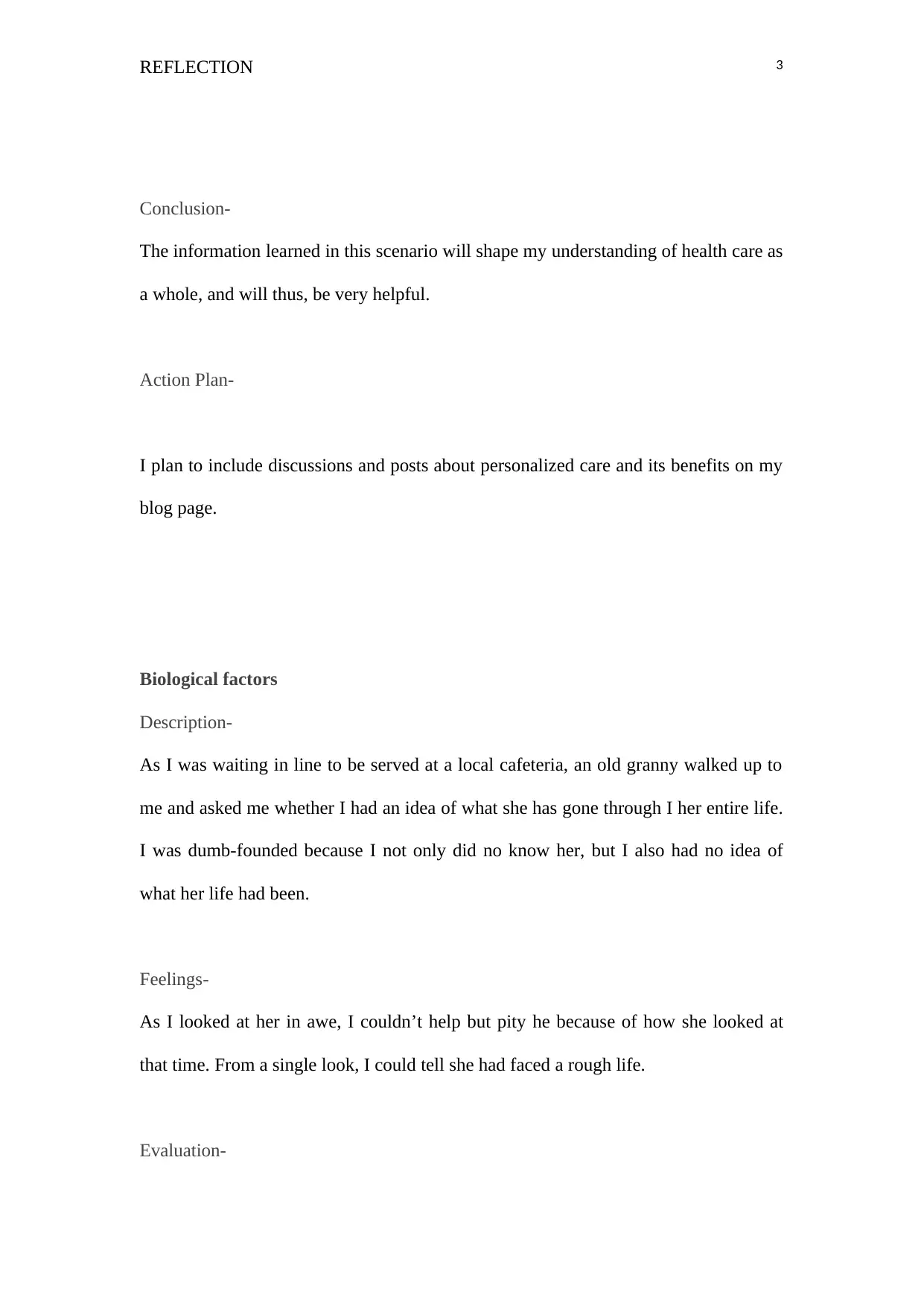
Conclusion-
The information learned in this scenario will shape my understanding of health care as
a whole, and will thus, be very helpful.
Action Plan-
I plan to include discussions and posts about personalized care and its benefits on my
blog page.
Biological factors
Description-
As I was waiting in line to be served at a local cafeteria, an old granny walked up to
me and asked me whether I had an idea of what she has gone through I her entire life.
I was dumb-founded because I not only did no know her, but I also had no idea of
what her life had been.
Feelings-
As I looked at her in awe, I couldn’t help but pity he because of how she looked at
that time. From a single look, I could tell she had faced a rough life.
Evaluation-
Document Page
4REFLECTION
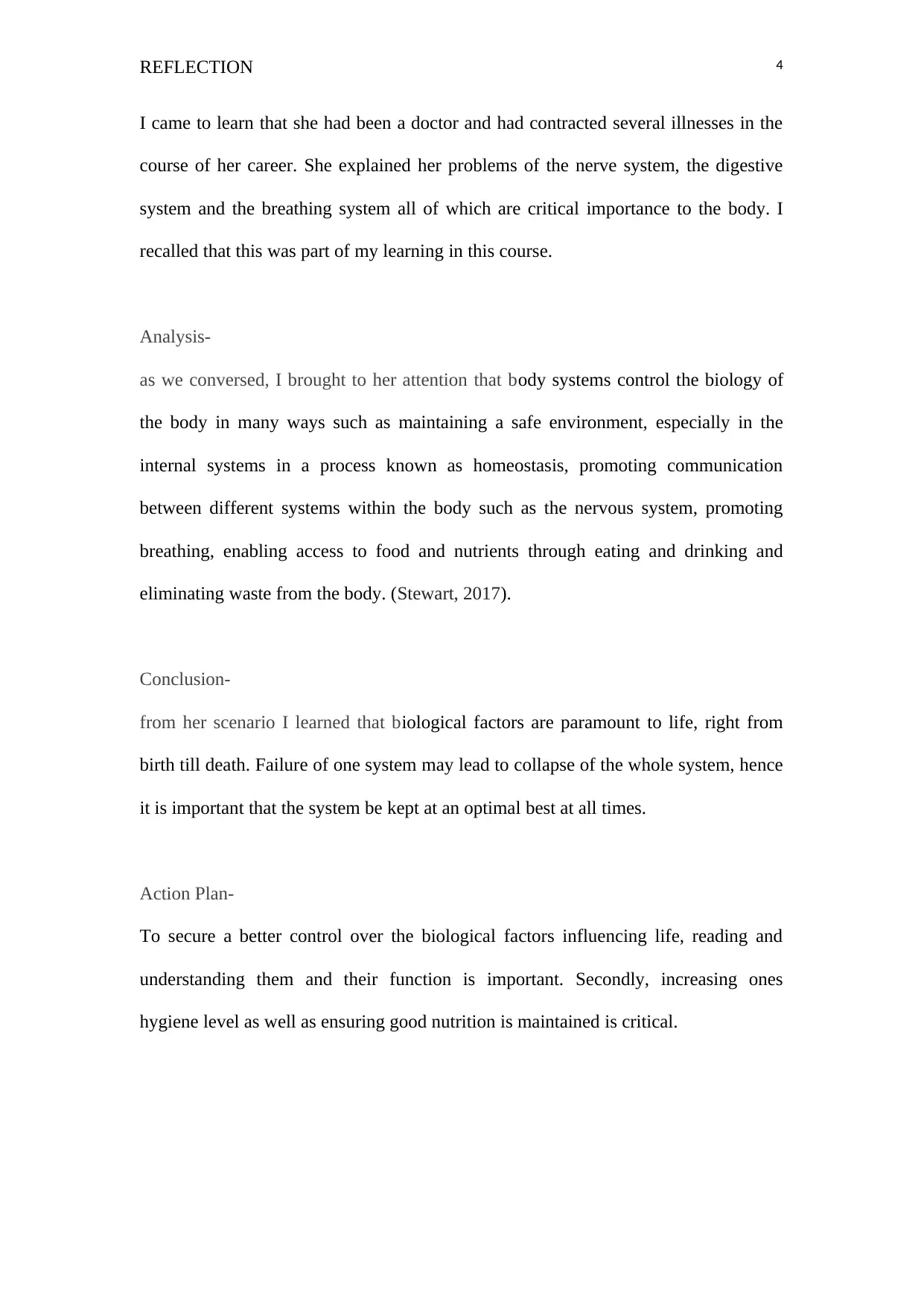
I came to learn that she had been a doctor and had contracted several illnesses in the
course of her career. She explained her problems of the nerve system, the digestive
system and the breathing system all of which are critical importance to the body. I
recalled that this was part of my learning in this course.
Analysis-
as we conversed, I brought to her attention that body systems control the biology of
the body in many ways such as maintaining a safe environment, especially in the
internal systems in a process known as homeostasis, promoting communication
between different systems within the body such as the nervous system, promoting
breathing, enabling access to food and nutrients through eating and drinking and
eliminating waste from the body. (Stewart, 2017).
Conclusion-
from her scenario I learned that biological factors are paramount to life, right from
birth till death. Failure of one system may lead to collapse of the whole system, hence
it is important that the system be kept at an optimal best at all times.
Action Plan-
To secure a better control over the biological factors influencing life, reading and
understanding them and their function is important. Secondly, increasing ones
hygiene level as well as ensuring good nutrition is maintained is critical.
tabler-icon-diamond-filled.svg

Paraphrase This Document

Need a fresh take? Get an instant paraphrase of this document with our AI Paraphraser
Document Page
5REFLECTION
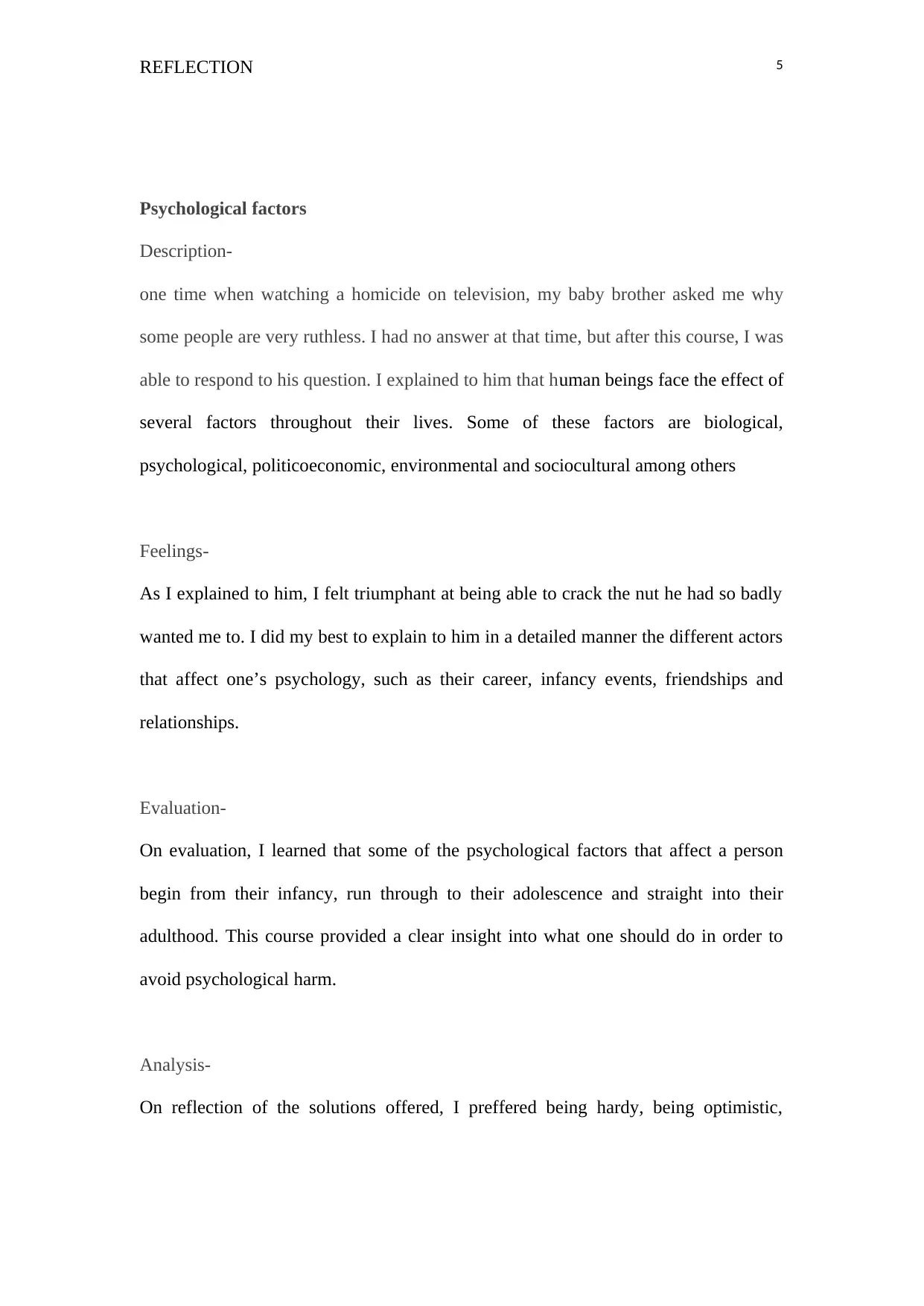
Psychological factors
Description-
one time when watching a homicide on television, my baby brother asked me why
some people are very ruthless. I had no answer at that time, but after this course, I was
able to respond to his question. I explained to him that human beings face the effect of
several factors throughout their lives. Some of these factors are biological,
psychological, politicoeconomic, environmental and sociocultural among others
Feelings-
As I explained to him, I felt triumphant at being able to crack the nut he had so badly
wanted me to. I did my best to explain to him in a detailed manner the different actors
that affect one’s psychology, such as their career, infancy events, friendships and
relationships.
Evaluation-
On evaluation, I learned that some of the psychological factors that affect a person
begin from their infancy, run through to their adolescence and straight into their
adulthood. This course provided a clear insight into what one should do in order to
avoid psychological harm.
Analysis-
On reflection of the solutions offered, I preffered being hardy, being optimistic,
Document Page
6REFLECTION
increasing one’s self esteem, taking care of one’s surroundings and their financial
solutions and being prepared to cope with hardships. (Mattar, 2011).
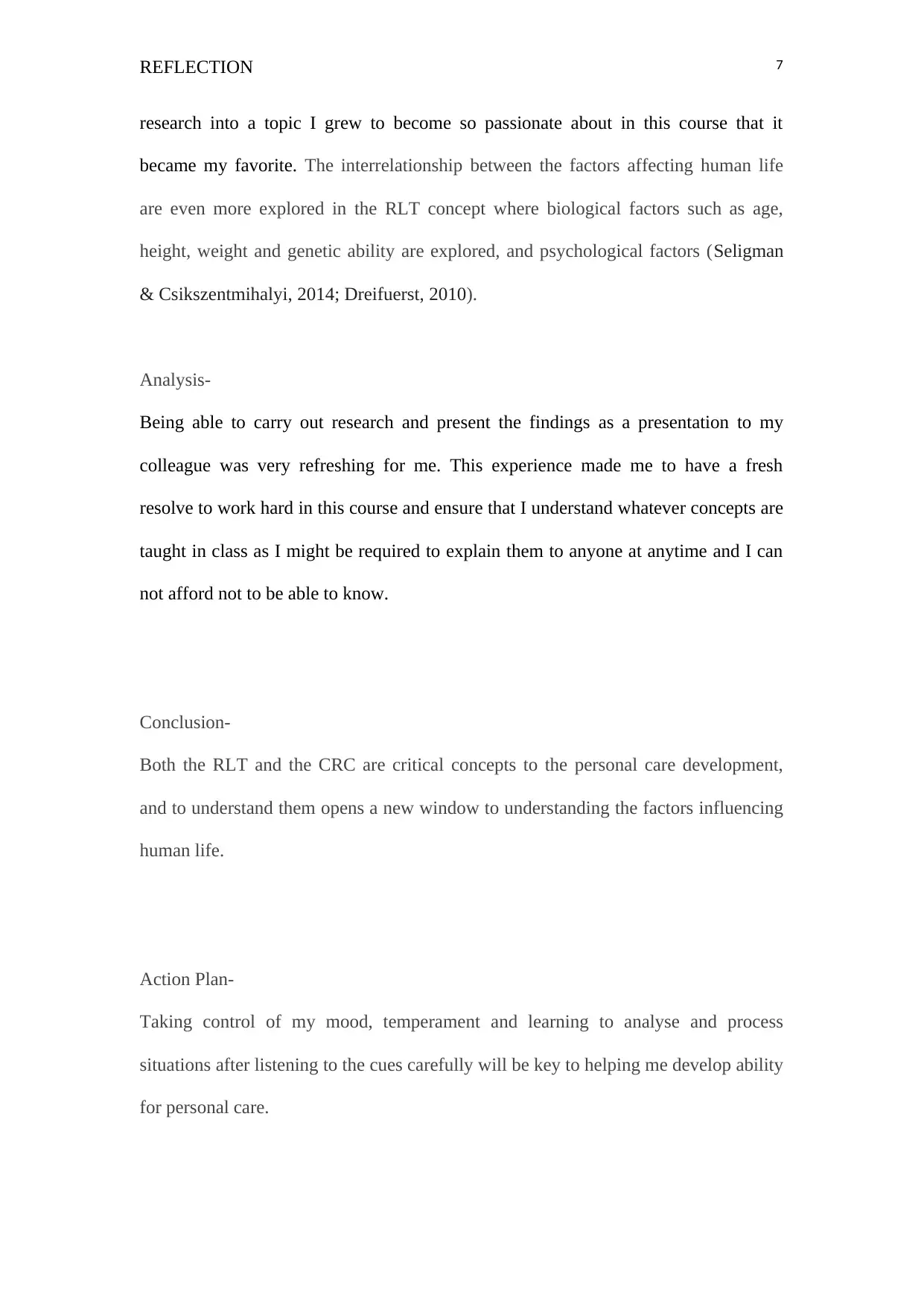
Conclusion-
Better psychological protection can help to prevent stress and hence improve life
expectancy. The feeling of content on my brothers face said it all.
Action Plan-
To understand better concepts in class, I intend to reread my class notes at the end of
the lectures just before I go home.
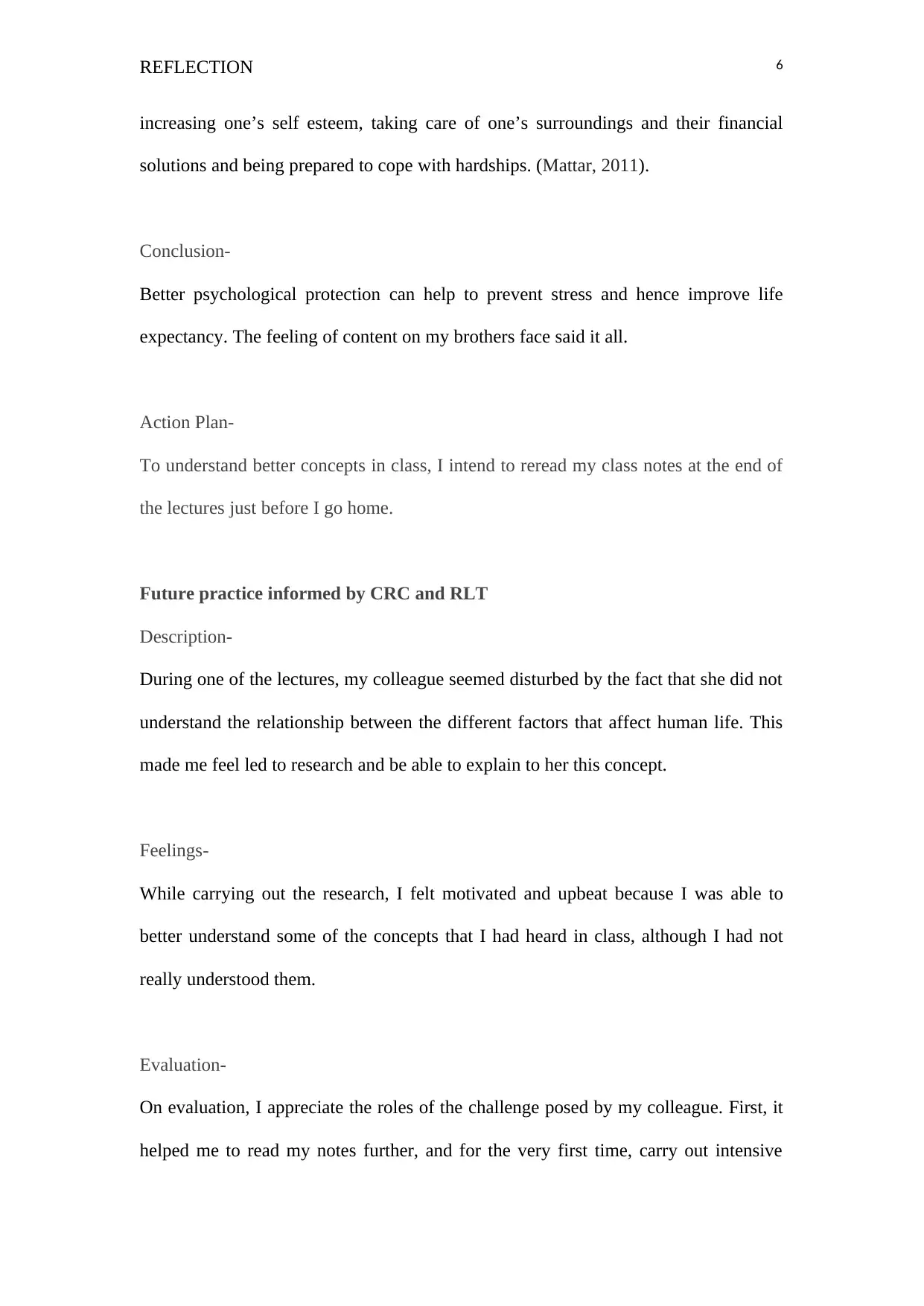
Future practice informed by CRC and RLT
Description-
During one of the lectures, my colleague seemed disturbed by the fact that she did not
understand the relationship between the different factors that affect human life. This
made me feel led to research and be able to explain to her this concept.
Feelings-
While carrying out the research, I felt motivated and upbeat because I was able to
better understand some of the concepts that I had heard in class, although I had not
really understood them.
Evaluation-
On evaluation, I appreciate the roles of the challenge posed by my colleague. First, it
helped me to read my notes further, and for the very first time, carry out intensive
Document Page
7REFLECTION
research into a topic I grew to become so passionate about in this course that it
became my favorite. The interrelationship between the factors affecting human life
are even more explored in the RLT concept where biological factors such as age,
height, weight and genetic ability are explored, and psychological factors (Seligman
& Csikszentmihalyi, 2014; Dreifuerst, 2010).
Analysis-
Being able to carry out research and present the findings as a presentation to my
colleague was very refreshing for me. This experience made me to have a fresh
resolve to work hard in this course and ensure that I understand whatever concepts are
taught in class as I might be required to explain them to anyone at anytime and I can
not afford not to be able to know.
Conclusion-
Both the RLT and the CRC are critical concepts to the personal care development,
and to understand them opens a new window to understanding the factors influencing
human life.
Action Plan-
Taking control of my mood, temperament and learning to analyse and process
situations after listening to the cues carefully will be key to helping me develop ability
for personal care.
tabler-icon-diamond-filled.svg

Paraphrase This Document

Need a fresh take? Get an instant paraphrase of this document with our AI Paraphraser
Document Page
8REFLECTION
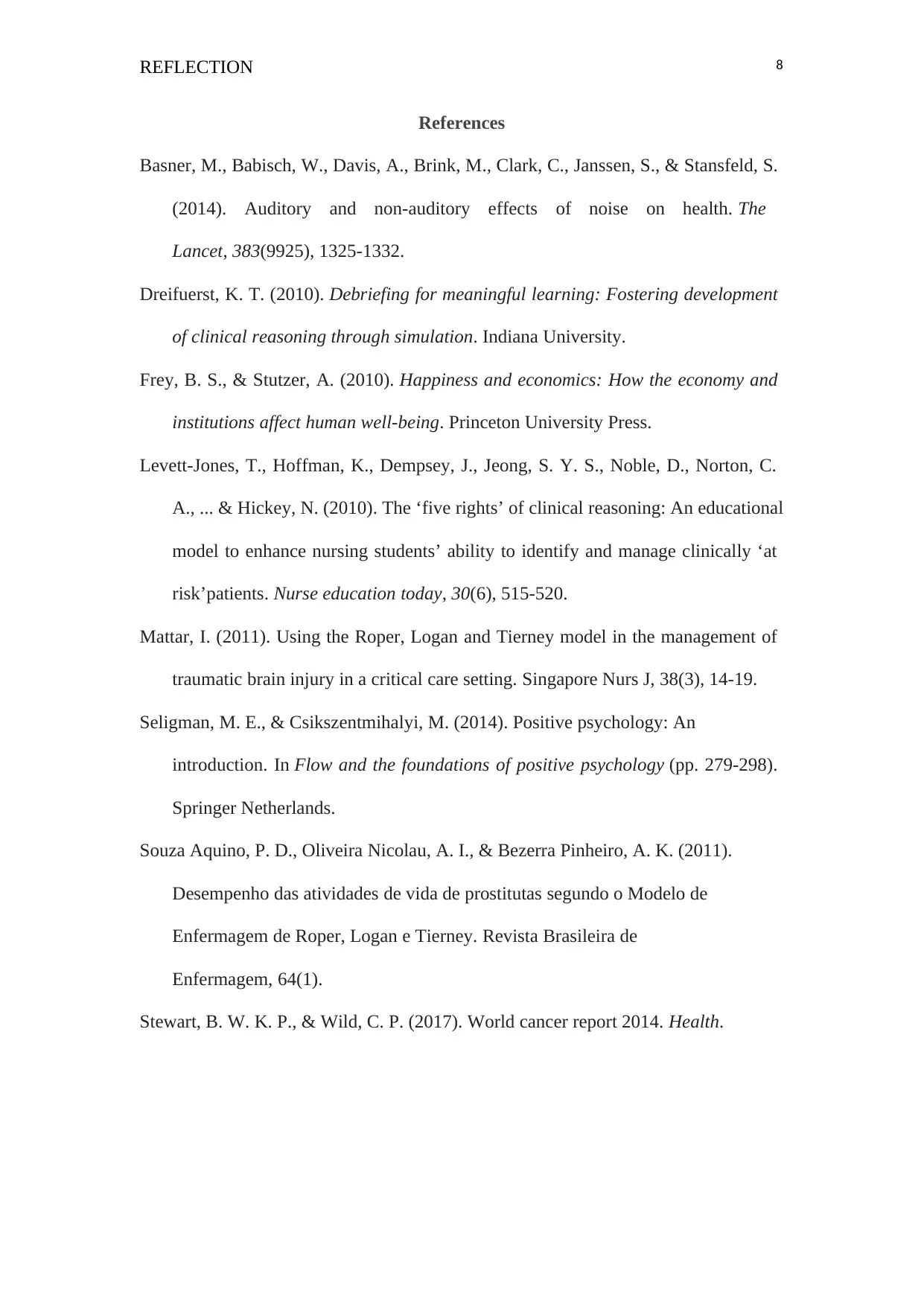
References
Basner, M., Babisch, W., Davis, A., Brink, M., Clark, C., Janssen, S., & Stansfeld, S.
(2014). Auditory and non-auditory effects of noise on health. The
Lancet, 383(9925), 1325-1332.
Dreifuerst, K. T. (2010). Debriefing for meaningful learning: Fostering development
of clinical reasoning through simulation. Indiana University.
Frey, B. S., & Stutzer, A. (2010). Happiness and economics: How the economy and
institutions affect human well-being. Princeton University Press.
Levett-Jones, T., Hoffman, K., Dempsey, J., Jeong, S. Y. S., Noble, D., Norton, C.
A., ... & Hickey, N. (2010). The ‘five rights’ of clinical reasoning: An educational
model to enhance nursing students’ ability to identify and manage clinically ‘at
risk’patients. Nurse education today, 30(6), 515-520.
Mattar, I. (2011). Using the Roper, Logan and Tierney model in the management of
traumatic brain injury in a critical care setting. Singapore Nurs J, 38(3), 14-19.
Seligman, M. E., & Csikszentmihalyi, M. (2014). Positive psychology: An
introduction. In Flow and the foundations of positive psychology (pp. 279-298).
Springer Netherlands.
Souza Aquino, P. D., Oliveira Nicolau, A. I., & Bezerra Pinheiro, A. K. (2011).
Desempenho das atividades de vida de prostitutas segundo o Modelo de
Enfermagem de Roper, Logan e Tierney. Revista Brasileira de
Enfermagem, 64(1).
Stewart, B. W. K. P., & Wild, C. P. (2017). World cancer report 2014. Health.
chevron_up_icon
1 out of 8
circle_padding
hide_on_mobile
zoom_out_icon
[object Object]