The Role of the Registered Nurse in Interprofessional Healthcare Teams
VerifiedAdded on 2020/12/18
|9
|2643
|102
Essay
AI Summary
This essay critically examines the pivotal role of registered nurses (RNs) within interprofessional healthcare teams. It delves into the RN's responsibilities in managing patient care, promoting health, and ensuring well-being through holistic approaches. The essay explores key aspects such as teamwork, professionalism, interprofessional collaboration, and leadership. It emphasizes the importance of RNs in communication, coordination, and cooperation within multidisciplinary teams to improve patient outcomes and reduce errors. The discussion incorporates various research findings, including the significance of trust, shared mental models, and ward-based leadership in fostering effective teamwork. Furthermore, the essay highlights the role of ethical codes and professional conduct in guiding RNs' practices and ensuring patient safety, confidentiality, and accountability. The conclusion underscores the essential contribution of RNs to delivering high-quality, patient-centered care through collaborative efforts within healthcare settings.

THE ROLE OF THE REGISTERED NURSE AS A
MEMBER OF THE INTER-PROFESSIONAL
HEALTHCARE TEAM
MEMBER OF THE INTER-PROFESSIONAL
HEALTHCARE TEAM

Paraphrase This Document
Need a fresh take? Get an instant paraphrase of this document with our AI Paraphraser
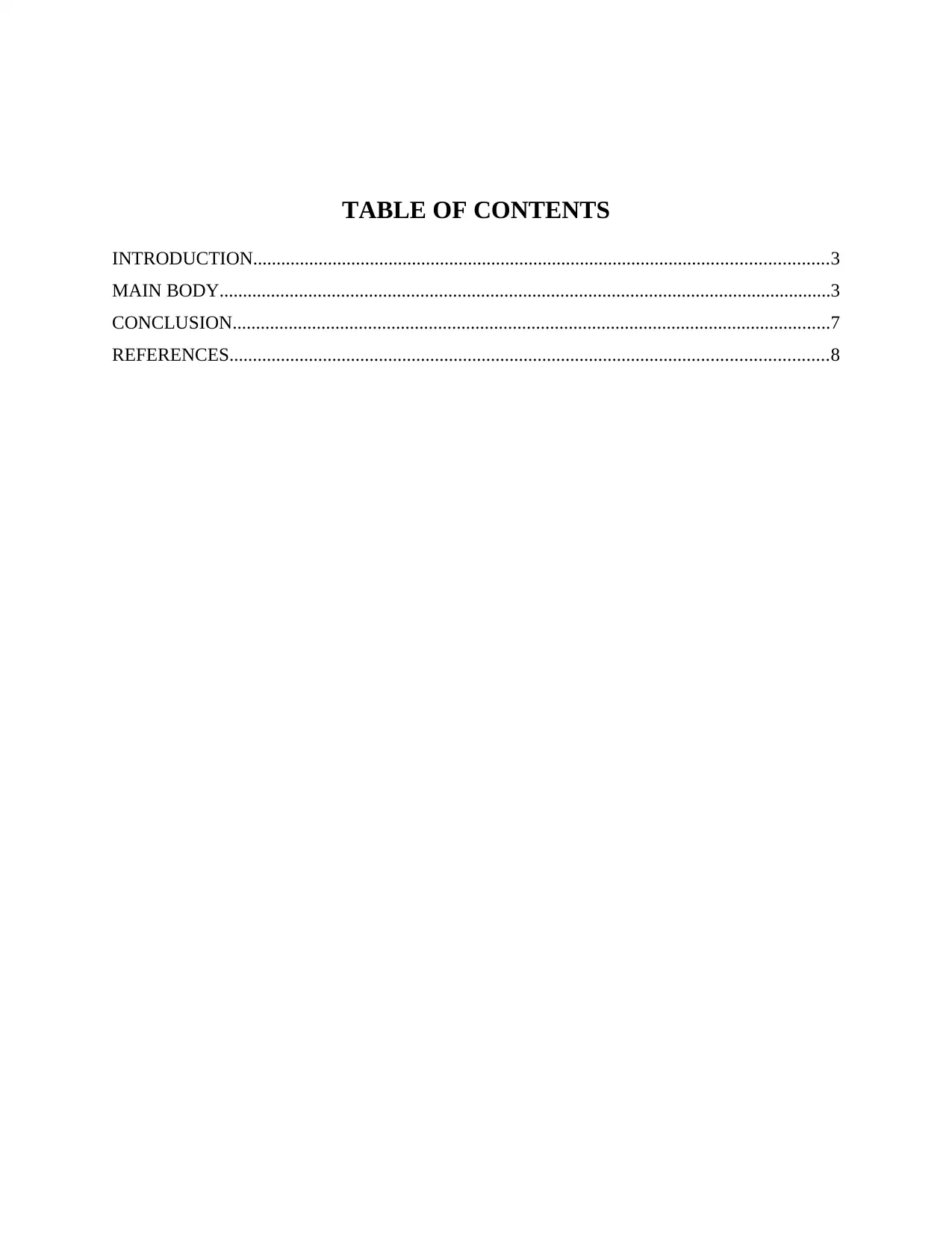
TABLE OF CONTENTS
INTRODUCTION...........................................................................................................................3
MAIN BODY...................................................................................................................................3
CONCLUSION................................................................................................................................7
REFERENCES................................................................................................................................8
INTRODUCTION...........................................................................................................................3
MAIN BODY...................................................................................................................................3
CONCLUSION................................................................................................................................7
REFERENCES................................................................................................................................8

INTRODUCTION
Registered Nurse are the graduate nursing individuals who play a vital role in health care
industry. The nurses are responsible for managing patient care, health and wellbeing by meeting
and focusing on holistic needs patients. Interpersonal team working in hospital setting motivates
health care professionals to work in partnership with service providers and patients which helps
in making effective patient care decision. The essay will critically discuss role of RN in
interprofessional health care team with regard to team work, professionalism, inter professional’s
collaboration and leadership.
MAIN BODY
Registered nurses are the most responsible individual of health care setting who contributes
in care of communities, population, vulnerable individuals and families. Care services by
nurses’ aid in protecting, promoting, optimizing health. The aim of service providers is to
prevent injury and illness by focusing on treatment and diagnosis of human response. Practices
of RN are governed by set of regulations, rules, code conduct which helps in managing safety in
patient care. According to (Van Soeren, 2011) health care professionals focuses on managing
and reducing errors which derives importance of involving RN in interprofessional health care
team. Role of registered nurse in multidisciplinary team is based on three C’s that is
communication, coordination and cooperation.
Interprofessional collaboration in health care team aim at improving patient outcomes where
service providers collaborate on the basis of scope of practice, education, knowledge, area of
expertise and discipline. In interprofessional health care team nurses are positioned to partner
and lead ser vices across continuum of care. However, it is improvement to involve service
providers in multidisciplinary team because the individuals in making observation related to
patient’s health and their environment. Role of Registered nurse in interprofessional health care
team is to reduce inefficient in treatment by managing effective collaboration and coordination
with health professional.
(Polis, 2017) articulated about factors which contributes to nursing team work in acute care
at tertiary hospital. In accordance with the study team work with nursing individuals is essential
elements of hospital setting because it aims at patient safety and improved health outcome. The
sample of study was midwives and nurse involved in outpatient and inpatient wards in an acute
care in hospital of Sydney Australia. The scholar outlined that team work is a dynamic process
Registered Nurse are the graduate nursing individuals who play a vital role in health care
industry. The nurses are responsible for managing patient care, health and wellbeing by meeting
and focusing on holistic needs patients. Interpersonal team working in hospital setting motivates
health care professionals to work in partnership with service providers and patients which helps
in making effective patient care decision. The essay will critically discuss role of RN in
interprofessional health care team with regard to team work, professionalism, inter professional’s
collaboration and leadership.
MAIN BODY
Registered nurses are the most responsible individual of health care setting who contributes
in care of communities, population, vulnerable individuals and families. Care services by
nurses’ aid in protecting, promoting, optimizing health. The aim of service providers is to
prevent injury and illness by focusing on treatment and diagnosis of human response. Practices
of RN are governed by set of regulations, rules, code conduct which helps in managing safety in
patient care. According to (Van Soeren, 2011) health care professionals focuses on managing
and reducing errors which derives importance of involving RN in interprofessional health care
team. Role of registered nurse in multidisciplinary team is based on three C’s that is
communication, coordination and cooperation.
Interprofessional collaboration in health care team aim at improving patient outcomes where
service providers collaborate on the basis of scope of practice, education, knowledge, area of
expertise and discipline. In interprofessional health care team nurses are positioned to partner
and lead ser vices across continuum of care. However, it is improvement to involve service
providers in multidisciplinary team because the individuals in making observation related to
patient’s health and their environment. Role of Registered nurse in interprofessional health care
team is to reduce inefficient in treatment by managing effective collaboration and coordination
with health professional.
(Polis, 2017) articulated about factors which contributes to nursing team work in acute care
at tertiary hospital. In accordance with the study team work with nursing individuals is essential
elements of hospital setting because it aims at patient safety and improved health outcome. The
sample of study was midwives and nurse involved in outpatient and inpatient wards in an acute
care in hospital of Sydney Australia. The scholar outlined that team work is a dynamic process
⊘ This is a preview!⊘
Do you want full access?
Subscribe today to unlock all pages.

Trusted by 1+ million students worldwide
compassing five sub scales that is trust, backup, team leadership, orientation and shared mental
model. Further, open communication between nurse and interprofessional health care team is
essential for effective team work and managing patient safety. Also, encouraging positive
communication and openness with service providers helps health care professionals in gaining
accuracy and reliability in patient care.
Apparently, score of accuracy and reliability information when working in team depends
on level of openness and individual knowledge. In this study researchers accumulated and
discussed factors like wellbeing of team working in hospital setting depends on shared
understanding and trust which is assured and not assumed. Further, scholars discussed about
shared mental models which aim at maximizing team process and performance in health care
organisation. Thus, as per the study team working of Registered nurse and interprofessional
health care team with the help of SMM model enhances performance and aid in managing
effective emergency and critical care in setting. Effectiveness in nursing when working in team
is based on ward-based leadership as it based on experience and knowledge. Thus, it can be said
that increase in tea work of registered nurse with inter professional team members increases
satisfaction as it is focused on high level of knowledge and expertise without training.
As per the views of (Ndoro, 2014) high quality patient care in hospital setting is attained
when working in multidisciplinary team, effective collaboration, transdisciplinary and
interdisciplinary team. The formation of such team is encouraging in health care setting to
deliver patient centred care. Working of multidisciplinary team involves collaboration for
evaluating care plan of patient where very individual pool their knowledge to provide quality
care services. The study outlined standard 4 of Care quality commission which focuses on
importance of registered nurses with other members of inter professional team because it assists
in attaining appropriate care and welfare of patients. Further, the article outlined example of
NHS England which has enforced 6 C’s for health professional to develop quality of care. The
patient care in collaboration is based on care, competence, compassion, courage, communication,
commitment. In accordance with this it can be sated that good communication is essential
component for nurse when working with interprofessional health care team. Role of nurse in
multidisciplinary team is to develop caring skills by communicating possible information and
knowledge.
model. Further, open communication between nurse and interprofessional health care team is
essential for effective team work and managing patient safety. Also, encouraging positive
communication and openness with service providers helps health care professionals in gaining
accuracy and reliability in patient care.
Apparently, score of accuracy and reliability information when working in team depends
on level of openness and individual knowledge. In this study researchers accumulated and
discussed factors like wellbeing of team working in hospital setting depends on shared
understanding and trust which is assured and not assumed. Further, scholars discussed about
shared mental models which aim at maximizing team process and performance in health care
organisation. Thus, as per the study team working of Registered nurse and interprofessional
health care team with the help of SMM model enhances performance and aid in managing
effective emergency and critical care in setting. Effectiveness in nursing when working in team
is based on ward-based leadership as it based on experience and knowledge. Thus, it can be said
that increase in tea work of registered nurse with inter professional team members increases
satisfaction as it is focused on high level of knowledge and expertise without training.
As per the views of (Ndoro, 2014) high quality patient care in hospital setting is attained
when working in multidisciplinary team, effective collaboration, transdisciplinary and
interdisciplinary team. The formation of such team is encouraging in health care setting to
deliver patient centred care. Working of multidisciplinary team involves collaboration for
evaluating care plan of patient where very individual pool their knowledge to provide quality
care services. The study outlined standard 4 of Care quality commission which focuses on
importance of registered nurses with other members of inter professional team because it assists
in attaining appropriate care and welfare of patients. Further, the article outlined example of
NHS England which has enforced 6 C’s for health professional to develop quality of care. The
patient care in collaboration is based on care, competence, compassion, courage, communication,
commitment. In accordance with this it can be sated that good communication is essential
component for nurse when working with interprofessional health care team. Role of nurse in
multidisciplinary team is to develop caring skills by communicating possible information and
knowledge.
Paraphrase This Document
Need a fresh take? Get an instant paraphrase of this document with our AI Paraphraser
Interprofessional collaboration is essential to maintain high quality patient care. Further,
effective and efficient interaction is the key to continuation of care when incorporating role of
nurse with interprofessional health care team members. As per the views of (Smolowitz, 2015)
collaborative practice needs to be integral in health care team to attain effective and quality care
of patients. Apparently, scholar outlined about the importance of involving registered nurse in
interprofessional collaboration which is to limit the errors like lack of trust, incorrect facts,
limited care due to lack of participation of nurses. Registered nurse in multidisciplinary teams
are responsible for understanding holistic needs of patient and therefore individual leads plans of
person-centred care which helps in delivering high quality care and targeting needs of individual
patient. Code of professional conduct and Ethics which have been enforced by Nursing and
Midwifery Board of Ireland suggest about role of registered nurse in health care setting. Care
providers are the individuals responsible for manging respect for dignity of patient, quality of
practice, trust, confidentiality, collaboration and responsibility. Thus, it can be stated that
collaboration of nurse with interprofessional health care team helps professionals in managing
efficacy in care by being accountable for patient safety (Cashin, 2017). Collaborative working
encourages role of nurse and their practices where the individual focuses on care planning of
patient according to individual holistic needs.
Nursing ethical code of conduct and standard helps in managing effective collaboration
and team working of individuals with interprofessional health care team. As per Standard 2
registered nurses will receive advice from other professionals in certain emergency situations
that are outside their nursing profession. However, Standard 3, states that registered nurses
should maintain relationship in effective manner with other nurses. In accordance with Standard
5, registered nurses should reflect leadership by collaborating with other team members. Further,
as per Standard 21, registered nurses should use proper communication skills for improving
relationship with team. Incorporation of standard when working in team helps nurses and other
team members in maintaining high quality of patient care with safety.
On the other hand, ethical code of conduct of nurses and midwives helps the individual in
managing supportive and effective patient care as the conducts govern every action of care
provider like nurses are accountable for provision of competent and safe care. Further, nurses
witnessing unlawful behaviour of any person when working as team or individual are responsible
to report to senior authority to safe guard interest of people in hospital setting. Also, nurses have
effective and efficient interaction is the key to continuation of care when incorporating role of
nurse with interprofessional health care team members. As per the views of (Smolowitz, 2015)
collaborative practice needs to be integral in health care team to attain effective and quality care
of patients. Apparently, scholar outlined about the importance of involving registered nurse in
interprofessional collaboration which is to limit the errors like lack of trust, incorrect facts,
limited care due to lack of participation of nurses. Registered nurse in multidisciplinary teams
are responsible for understanding holistic needs of patient and therefore individual leads plans of
person-centred care which helps in delivering high quality care and targeting needs of individual
patient. Code of professional conduct and Ethics which have been enforced by Nursing and
Midwifery Board of Ireland suggest about role of registered nurse in health care setting. Care
providers are the individuals responsible for manging respect for dignity of patient, quality of
practice, trust, confidentiality, collaboration and responsibility. Thus, it can be stated that
collaboration of nurse with interprofessional health care team helps professionals in managing
efficacy in care by being accountable for patient safety (Cashin, 2017). Collaborative working
encourages role of nurse and their practices where the individual focuses on care planning of
patient according to individual holistic needs.
Nursing ethical code of conduct and standard helps in managing effective collaboration
and team working of individuals with interprofessional health care team. As per Standard 2
registered nurses will receive advice from other professionals in certain emergency situations
that are outside their nursing profession. However, Standard 3, states that registered nurses
should maintain relationship in effective manner with other nurses. In accordance with Standard
5, registered nurses should reflect leadership by collaborating with other team members. Further,
as per Standard 21, registered nurses should use proper communication skills for improving
relationship with team. Incorporation of standard when working in team helps nurses and other
team members in maintaining high quality of patient care with safety.
On the other hand, ethical code of conduct of nurses and midwives helps the individual in
managing supportive and effective patient care as the conducts govern every action of care
provider like nurses are accountable for provision of competent and safe care. Further, nurses
witnessing unlawful behaviour of any person when working as team or individual are responsible
to report to senior authority to safe guard interest of people in hospital setting. Also, nurses have

ethical and legal obligations to protect the privacy of people requiring and receiving care. Thus,
it can be said that involving health are providers in interprofessional team is effective as the
individuals are responsible for promoting and protecting the interests of people receiving
treatment and care
Clinical registered nurses play an important role in providing healthcare facilities to the
patients that are visiting the healthcare centres like hospitals, clinics etc. It is very important to
retain skilled nurses in healthcare organizations for promoting the safety of health of the patients.
According to (Drennan, 2017) registered nurses plays an important role in delivering healthcare
services to the patients through effective team work and transparency in the communication with
other professionals like cardiologist etc. while delivering the healthcare services to the patients.
Effective team work will help in improving the result of efforts of the nurses.
Clinical nurses that contributes in effective team management will have high level of job
satisfaction while working with other team members in healthcare organization. Registered
nurses make efforts for promoting effective team work in healthcare organization that helps in
reducing the conflicts and frustrations that are occurring in between various healthcare
professionals.
According to (Burridge, 2017) due to the commitment of nurses while working in inter
professional teams helps to ensure the improvement in the process of delivering healthcare
services and it will also promote the improvement in quality of care provided by professionals
like doctor, registered nurses etc. Training is provided by top level management of healthcare
organization for promoting inter-professional team work. This will help to improve the services
of registered nurses. Clinical nurses are having updated knowledge regarding the changes that
are happening in inter-professional team work that's why they play an important role in
improving the functioning of the team.
According to the registered nurses who has participated in the interview process, training
that has been provided to the nurses has help in developing and improving the inter-professional
relationship with other team members like physicians, pharmacists etc. In inter-professional team
work nurses help in facilitating the conversation with other team members for sharing their point
of view.
According to (Regan, 2016) training to registered nurses helps in promoting the
knowledge of registered nurses in respect of team work which has resulted in improvement in the
it can be said that involving health are providers in interprofessional team is effective as the
individuals are responsible for promoting and protecting the interests of people receiving
treatment and care
Clinical registered nurses play an important role in providing healthcare facilities to the
patients that are visiting the healthcare centres like hospitals, clinics etc. It is very important to
retain skilled nurses in healthcare organizations for promoting the safety of health of the patients.
According to (Drennan, 2017) registered nurses plays an important role in delivering healthcare
services to the patients through effective team work and transparency in the communication with
other professionals like cardiologist etc. while delivering the healthcare services to the patients.
Effective team work will help in improving the result of efforts of the nurses.
Clinical nurses that contributes in effective team management will have high level of job
satisfaction while working with other team members in healthcare organization. Registered
nurses make efforts for promoting effective team work in healthcare organization that helps in
reducing the conflicts and frustrations that are occurring in between various healthcare
professionals.
According to (Burridge, 2017) due to the commitment of nurses while working in inter
professional teams helps to ensure the improvement in the process of delivering healthcare
services and it will also promote the improvement in quality of care provided by professionals
like doctor, registered nurses etc. Training is provided by top level management of healthcare
organization for promoting inter-professional team work. This will help to improve the services
of registered nurses. Clinical nurses are having updated knowledge regarding the changes that
are happening in inter-professional team work that's why they play an important role in
improving the functioning of the team.
According to the registered nurses who has participated in the interview process, training
that has been provided to the nurses has help in developing and improving the inter-professional
relationship with other team members like physicians, pharmacists etc. In inter-professional team
work nurses help in facilitating the conversation with other team members for sharing their point
of view.
According to (Regan, 2016) training to registered nurses helps in promoting the
knowledge of registered nurses in respect of team work which has resulted in improvement in the
⊘ This is a preview!⊘
Do you want full access?
Subscribe today to unlock all pages.
Trusted by 1+ million students worldwide
relationship between different team members that are working in inter-professional team for
providing healthcare services to the patients. The knowledge that registered nurses has gain from
training sessions helps in improving their communication skills. The nurses will use these skills
for improving the team work with other team members. These skills are helping the registered
nurses to improve the discharge planning process with other team members like pharmacist,
doctors etc.
Nurses plays an important role in promoting the advancements in the profession. Nurse leaders
helps healthcare organization to adapt the dynamic changes that are happening in the external
environment.
Registered nurse leaders play an important role in motivating and inspiring their team
members and colleagues for providing better health related services to the patients. According to
(Scully, 2015) registered clinical nurses that performs the functions of leadership support their
colleagues and influence them for effectively delivering the healthcare facilities to various
patients. One of the important styles of leadership that nurses follows is transformational
leadership style through which they help healthcare institutions to adapt the changes like change
in technology of various tools and equipment’s, etc. that takes place in environment. Nurse
leaders have different types of qualities like self-discipline, appropriate vision, high level of
energy that helps them to motivate their team members and also helps to give proper direction to
the efforts of other professionals that are working in healthcare organizations. Nurse leaders have
the potential of providing a safe and effective working environment to the colleagues so that,
they can offer high quality of facilities to the patients. Another type of leadership style that is
used by nurse leader is transactional and connective leadership. This leadership style is often
used by registered nurse leaders for motivating the team members for bringing change in the way
in which they are delivering the healthcare services to the patients.
According to (Bell, 2017) clinical nurse leaders plays an important role in directing the
efforts of other professionals that are working in a team for achieving the desired vision and
mission of healthcare institution. They are very important for the success of the efforts and
initiatives that are taken by different service providers for providing good facilities such as
treatment of patients of the hospitals or clinical centres etc. The registered clinical nurse leader
makes efforts for developing and managing the working environment in healthcare institutions so
that, diverse needs of patients from rural and urban areas can be satisfied.
providing healthcare services to the patients. The knowledge that registered nurses has gain from
training sessions helps in improving their communication skills. The nurses will use these skills
for improving the team work with other team members. These skills are helping the registered
nurses to improve the discharge planning process with other team members like pharmacist,
doctors etc.
Nurses plays an important role in promoting the advancements in the profession. Nurse leaders
helps healthcare organization to adapt the dynamic changes that are happening in the external
environment.
Registered nurse leaders play an important role in motivating and inspiring their team
members and colleagues for providing better health related services to the patients. According to
(Scully, 2015) registered clinical nurses that performs the functions of leadership support their
colleagues and influence them for effectively delivering the healthcare facilities to various
patients. One of the important styles of leadership that nurses follows is transformational
leadership style through which they help healthcare institutions to adapt the changes like change
in technology of various tools and equipment’s, etc. that takes place in environment. Nurse
leaders have different types of qualities like self-discipline, appropriate vision, high level of
energy that helps them to motivate their team members and also helps to give proper direction to
the efforts of other professionals that are working in healthcare organizations. Nurse leaders have
the potential of providing a safe and effective working environment to the colleagues so that,
they can offer high quality of facilities to the patients. Another type of leadership style that is
used by nurse leader is transactional and connective leadership. This leadership style is often
used by registered nurse leaders for motivating the team members for bringing change in the way
in which they are delivering the healthcare services to the patients.
According to (Bell, 2017) clinical nurse leaders plays an important role in directing the
efforts of other professionals that are working in a team for achieving the desired vision and
mission of healthcare institution. They are very important for the success of the efforts and
initiatives that are taken by different service providers for providing good facilities such as
treatment of patients of the hospitals or clinical centres etc. The registered clinical nurse leader
makes efforts for developing and managing the working environment in healthcare institutions so
that, diverse needs of patients from rural and urban areas can be satisfied.
Paraphrase This Document
Need a fresh take? Get an instant paraphrase of this document with our AI Paraphraser
CONCLUSION
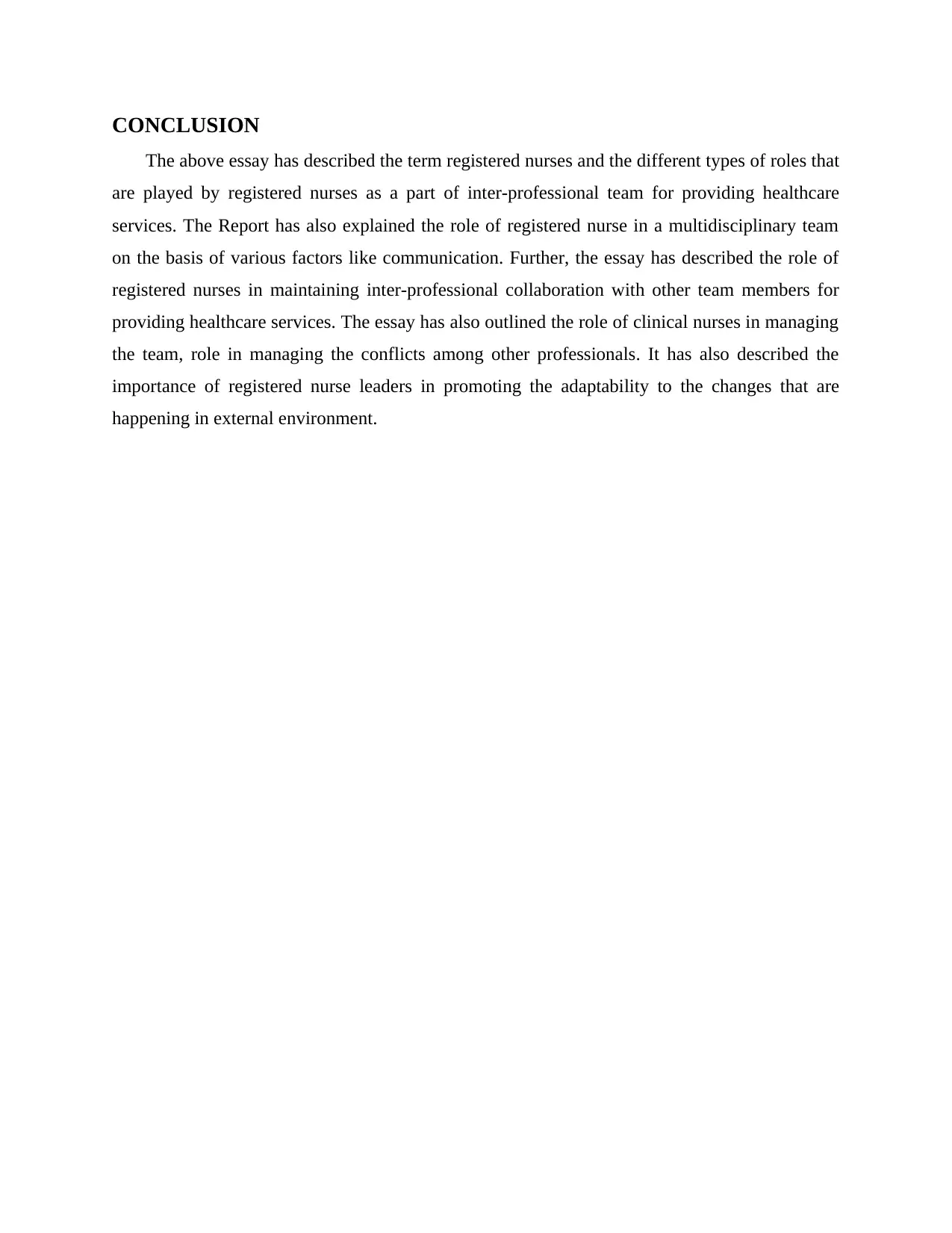
The above essay has described the term registered nurses and the different types of roles that
are played by registered nurses as a part of inter-professional team for providing healthcare
services. The Report has also explained the role of registered nurse in a multidisciplinary team
on the basis of various factors like communication. Further, the essay has described the role of
registered nurses in maintaining inter-professional collaboration with other team members for
providing healthcare services. The essay has also outlined the role of clinical nurses in managing
the team, role in managing the conflicts among other professionals. It has also described the
importance of registered nurse leaders in promoting the adaptability to the changes that are
happening in external environment.
The above essay has described the term registered nurses and the different types of roles that
are played by registered nurses as a part of inter-professional team for providing healthcare
services. The Report has also explained the role of registered nurse in a multidisciplinary team
on the basis of various factors like communication. Further, the essay has described the role of
registered nurses in maintaining inter-professional collaboration with other team members for
providing healthcare services. The essay has also outlined the role of clinical nurses in managing
the team, role in managing the conflicts among other professionals. It has also described the
importance of registered nurse leaders in promoting the adaptability to the changes that are
happening in external environment.
REFERENCES
Bibliography
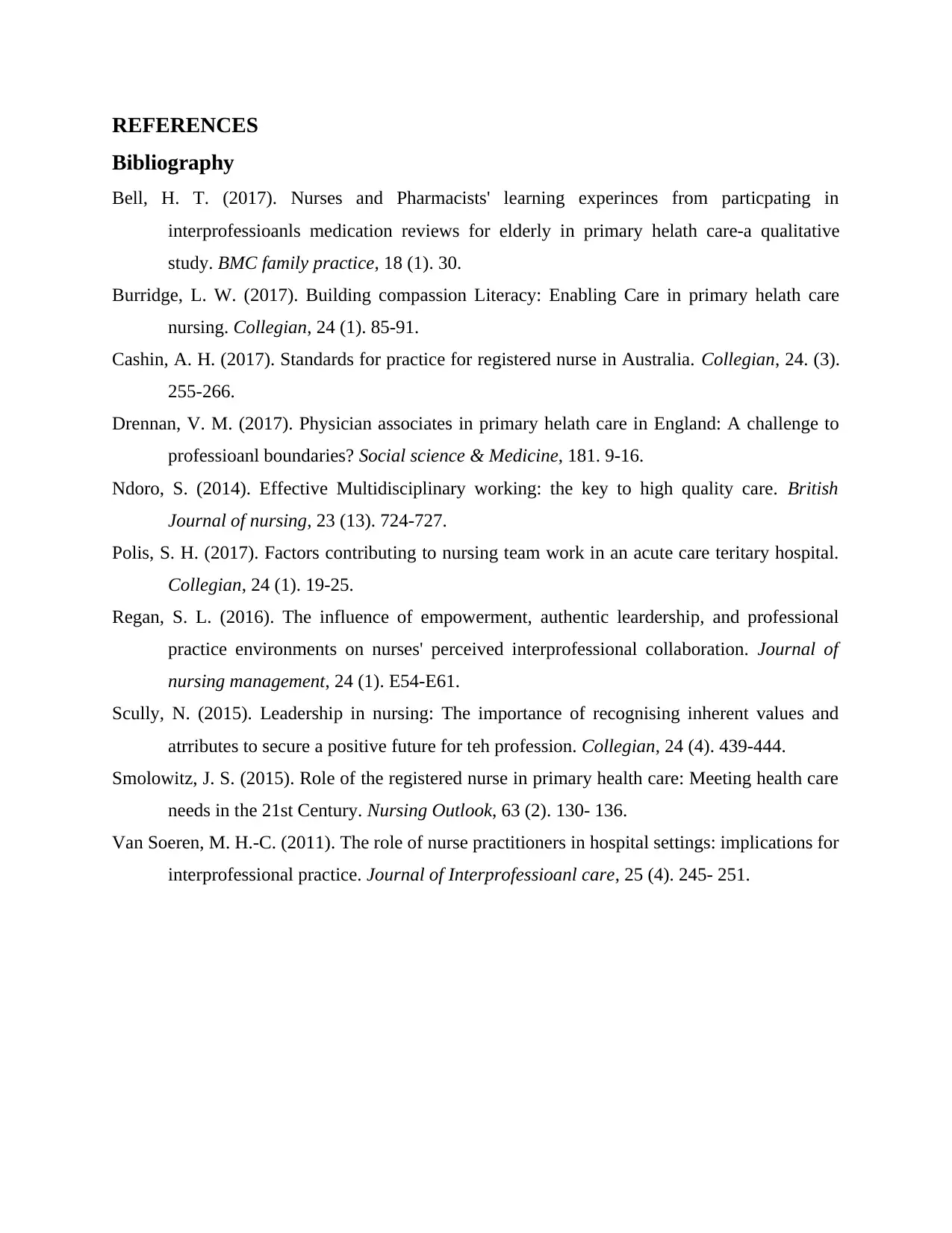
Bell, H. T. (2017). Nurses and Pharmacists' learning experinces from particpating in
interprofessioanls medication reviews for elderly in primary helath care-a qualitative
study. BMC family practice, 18 (1). 30.
Burridge, L. W. (2017). Building compassion Literacy: Enabling Care in primary helath care
nursing. Collegian, 24 (1). 85-91.
Cashin, A. H. (2017). Standards for practice for registered nurse in Australia. Collegian, 24. (3).
255-266.
Drennan, V. M. (2017). Physician associates in primary helath care in England: A challenge to
professioanl boundaries? Social science & Medicine, 181. 9-16.
Ndoro, S. (2014). Effective Multidisciplinary working: the key to high quality care. British
Journal of nursing, 23 (13). 724-727.
Polis, S. H. (2017). Factors contributing to nursing team work in an acute care teritary hospital.
Collegian, 24 (1). 19-25.
Regan, S. L. (2016). The influence of empowerment, authentic leardership, and professional
practice environments on nurses' perceived interprofessional collaboration. Journal of
nursing management, 24 (1). E54-E61.
Scully, N. (2015). Leadership in nursing: The importance of recognising inherent values and
atrributes to secure a positive future for teh profession. Collegian, 24 (4). 439-444.
Smolowitz, J. S. (2015). Role of the registered nurse in primary health care: Meeting health care
needs in the 21st Century. Nursing Outlook, 63 (2). 130- 136.
Van Soeren, M. H.-C. (2011). The role of nurse practitioners in hospital settings: implications for
interprofessional practice. Journal of Interprofessioanl care, 25 (4). 245- 251.
Bibliography
Bell, H. T. (2017). Nurses and Pharmacists' learning experinces from particpating in
interprofessioanls medication reviews for elderly in primary helath care-a qualitative
study. BMC family practice, 18 (1). 30.
Burridge, L. W. (2017). Building compassion Literacy: Enabling Care in primary helath care
nursing. Collegian, 24 (1). 85-91.
Cashin, A. H. (2017). Standards for practice for registered nurse in Australia. Collegian, 24. (3).
255-266.
Drennan, V. M. (2017). Physician associates in primary helath care in England: A challenge to
professioanl boundaries? Social science & Medicine, 181. 9-16.
Ndoro, S. (2014). Effective Multidisciplinary working: the key to high quality care. British
Journal of nursing, 23 (13). 724-727.
Polis, S. H. (2017). Factors contributing to nursing team work in an acute care teritary hospital.
Collegian, 24 (1). 19-25.
Regan, S. L. (2016). The influence of empowerment, authentic leardership, and professional
practice environments on nurses' perceived interprofessional collaboration. Journal of
nursing management, 24 (1). E54-E61.
Scully, N. (2015). Leadership in nursing: The importance of recognising inherent values and
atrributes to secure a positive future for teh profession. Collegian, 24 (4). 439-444.
Smolowitz, J. S. (2015). Role of the registered nurse in primary health care: Meeting health care
needs in the 21st Century. Nursing Outlook, 63 (2). 130- 136.
Van Soeren, M. H.-C. (2011). The role of nurse practitioners in hospital settings: implications for
interprofessional practice. Journal of Interprofessioanl care, 25 (4). 245- 251.
⊘ This is a preview!⊘
Do you want full access?
Subscribe today to unlock all pages.
Trusted by 1+ million students worldwide

1 out of 9


Related Documents


Your All-in-One AI-Powered Toolkit for Academic Success.
+13062052269
info@desklib.com
Available 24*7 on WhatsApp / Email
![[object Object]](/_next/static/media/star-bottom.7253800d.svg)
Unlock your academic potential
Copyright © 2020–2026 A2Z Services. All Rights Reserved. Developed and managed by ZUCOL.