Theories of Regulation and Corporate Social Responsibility Disclosures
VerifiedAdded on 2023/06/12
|5
|767
|326
Essay
AI Summary
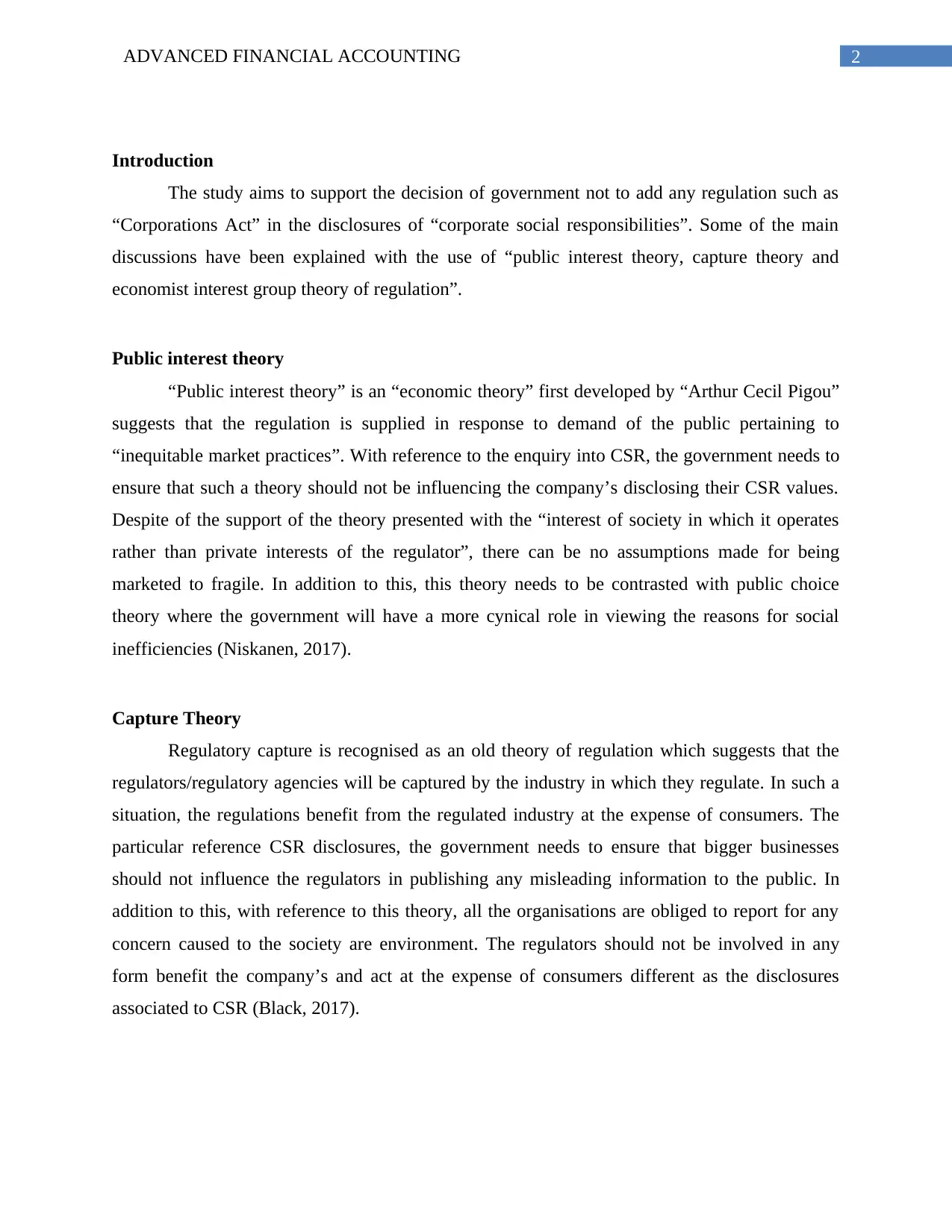
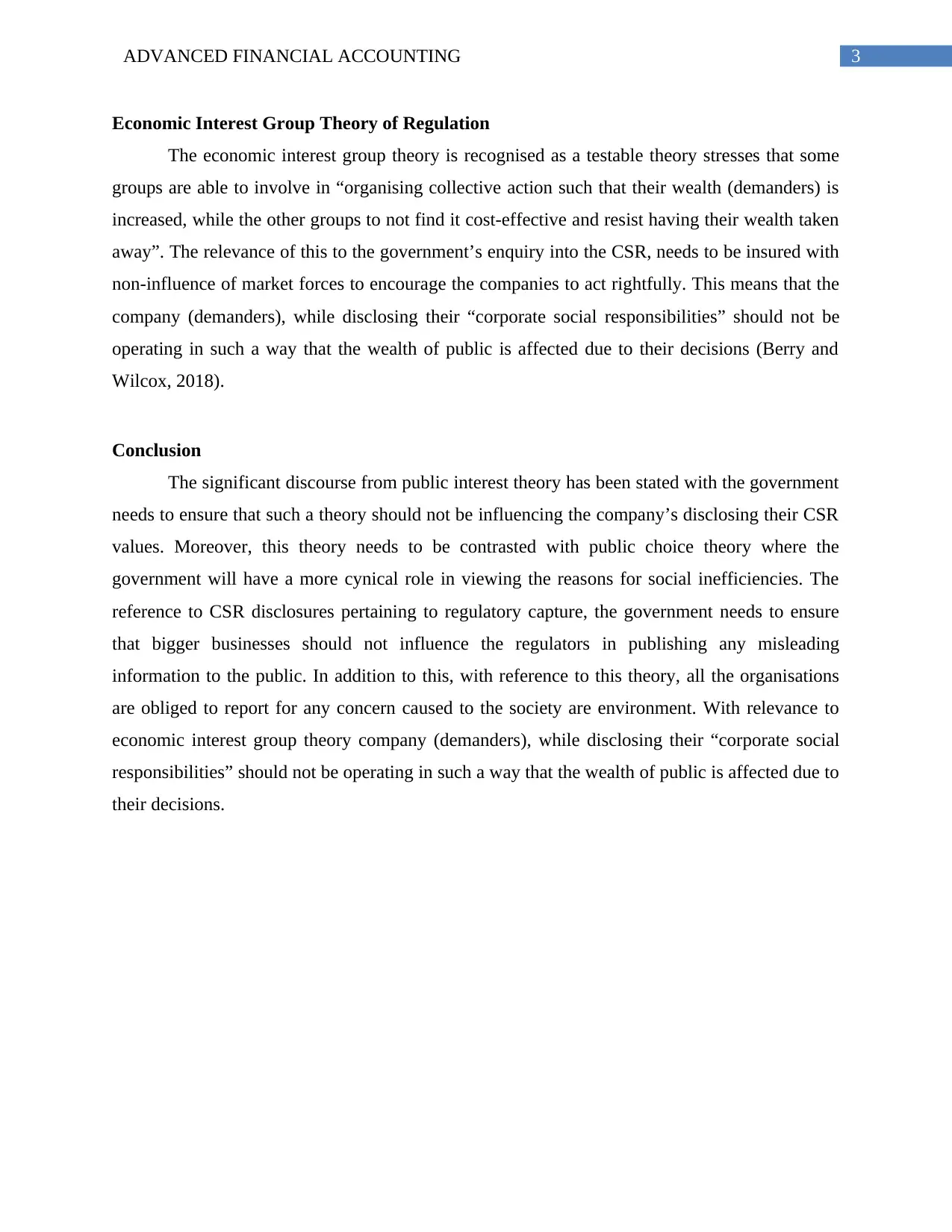
This essay critically examines the government's stance on regulating corporate social responsibility (CSR) disclosures, employing public interest theory, capture theory, and economic interest group theory. It argues that the government should be cautious about imposing regulations like the “Corporations Act” on CSR disclosures, as these theories suggest potential pitfalls. Public interest theory posits that regulation arises from public demand to correct inequitable market practices, but its susceptibility to manipulation necessitates careful consideration. Capture theory warns against regulatory agencies being unduly influenced by the industries they regulate, potentially leading to biased CSR disclosures. The economic interest group theory highlights the risk of powerful groups manipulating regulations to increase their wealth at the expense of the public. The essay concludes that while CSR disclosures are vital, the government must ensure that regulatory actions are not influenced by market forces, safeguarding public interests and preventing misleading information.



1 out of 5


Related Documents


Your All-in-One AI-Powered Toolkit for Academic Success.
+13062052269
info@desklib.com
Available 24*7 on WhatsApp / Email
![[object Object]](/_next/static/media/star-bottom.7253800d.svg)
Copyright © 2020–2026 A2Z Services. All Rights Reserved. Developed and managed by ZUCOL.