Report: The Relationship Between Religiosity and Happiness, PSYC1090
VerifiedAdded on 2022/09/26
|20
|3989
|25
Report
AI Summary
This report investigates the relationship between religiosity and happiness using a simulated dataset. The study employed the Daily Spiritual Experiences Scale (DSES) and the Subjective Happiness Scale (SHS) to assess the correlation between these two constructs within a sample of 50 participants. The report includes descriptive statistics, such as frequency and mean, and inferential statistics. The results revealed a statistically significant positive correlation between religiosity and happiness. The discussion section delves into the theological and theoretical aspects of the relationship, referencing prior research and suggesting that religious faith provides support, meaning, and a sense of belonging, contributing to individuals' overall happiness. The study concludes that, based on the findings, there is a positive relationship between religion and happiness, supporting the idea that religious commitment is associated with higher perceived well-being.
Running head: RELATIONSHIP BETWEEN RELIGIOSITY AND HAPPINESS 1
Religiosity and Happiness
By
(Name of Student)
(Instructor’s Name)
(Professor’s Name)
(Date of Submission)
Religiosity and Happiness
By
(Name of Student)
(Instructor’s Name)
(Professor’s Name)
(Date of Submission)

Paraphrase This Document
Need a fresh take? Get an instant paraphrase of this document with our AI Paraphraser
RELATIONSHIP BETWEEN RELIGIOSITY AND HAPPINESS 2
Abstract
A large body of research has investigated the relationship between religiosity and happiness.
However, two large-scale studies have recently revealed diverging findings. Abdel-Khalek (2016)
observed a positive relationship between religion and happiness, such that more religious people
were happier. Conversely, Lewis, Maltby and Day (2015) did not observe such a relationship. These
equivocal findings are typical of research in this area; thus, further studies using reliable measures
are required. The current study (i.e., simulated data set) uses the Daily Spiritual Experiences Scale
(DSES; Underwood & Teresi, 2012) and Subjective Happiness Scale (SHS; Lyubomirsky & Lepper,
2019) to investigate the relationship between these two constructs in a UK undergraduate population.
Introduction
Religious beliefs are deemed to be the essential factors to one’s faith and thus an individual’s
behavior and actions are guided by this belief. A religious faith can be described as a solid faith in
mystical power that govern the human destiny. In most cases, religious faith focuses on the concept
and philosophy of the religion. Happiness on the other hand, is a state of the mind where the thinking
is pleasurable, at least for a good percentage of time. Because it is a state of the mind, it is not a set
of happenings but something that one can control either directly or indirectly. There is a relationship
between religion and happiness and because of this a lot of studies have been undertaken to find this
kind of relationship. A number of researchers have indicated that there is a positive relationship
between happiness and religion. Among some of the researchers is Hackney and Sanders (2013).
They found that religious people on average report higher subjective well-being than non-religious
people
Also, the relationship between religion and happiness has been discovered through a research
done by using Oxford Happiness Inventory, that religiosity is related to happiness (Lewis, Cruise and
Sharon, 2016). A series of research have additionally concluded that non secular humans tend to be
Abstract
A large body of research has investigated the relationship between religiosity and happiness.
However, two large-scale studies have recently revealed diverging findings. Abdel-Khalek (2016)
observed a positive relationship between religion and happiness, such that more religious people
were happier. Conversely, Lewis, Maltby and Day (2015) did not observe such a relationship. These
equivocal findings are typical of research in this area; thus, further studies using reliable measures
are required. The current study (i.e., simulated data set) uses the Daily Spiritual Experiences Scale
(DSES; Underwood & Teresi, 2012) and Subjective Happiness Scale (SHS; Lyubomirsky & Lepper,
2019) to investigate the relationship between these two constructs in a UK undergraduate population.
Introduction
Religious beliefs are deemed to be the essential factors to one’s faith and thus an individual’s
behavior and actions are guided by this belief. A religious faith can be described as a solid faith in
mystical power that govern the human destiny. In most cases, religious faith focuses on the concept
and philosophy of the religion. Happiness on the other hand, is a state of the mind where the thinking
is pleasurable, at least for a good percentage of time. Because it is a state of the mind, it is not a set
of happenings but something that one can control either directly or indirectly. There is a relationship
between religion and happiness and because of this a lot of studies have been undertaken to find this
kind of relationship. A number of researchers have indicated that there is a positive relationship
between happiness and religion. Among some of the researchers is Hackney and Sanders (2013).
They found that religious people on average report higher subjective well-being than non-religious
people
Also, the relationship between religion and happiness has been discovered through a research
done by using Oxford Happiness Inventory, that religiosity is related to happiness (Lewis, Cruise and
Sharon, 2016). A series of research have additionally concluded that non secular humans tend to be
RELATIONSHIP BETWEEN RELIGIOSITY AND HAPPINESS 3
happier and healthier on average than non- religious people. In real terms, a few researchers have
determined this to be real in that folks that attend non secular offerings maximum of the time can
anticipate to live a median of seven years longer than their friends who do no longer attend non
secular carrier.
Furthermore, review of published peer-reviewed journals found out that there's a high-
quality correlation between religious commitment and better tiers of perceived well beings and
happiness. From the above genuine, it's far substantially clean that religious humans are happier than
non-non secular people. Why is this so? Pargament (2012) proposed that when human beings are
confronted with issues, challenges and are in tough situations, faith offers them some of helps: along
with religious guide, closing reasons and a motive in lifestyles that holds sacred significance.
Another daring research that the researchers are fascinated is the hyperlink between faith and
drug abuse. This relationship has been recognized via maximum researchers and among them is
Khavari and Harmon (2012). They recognized that in a preferred populace study, it came out that
folks that were not spiritual fed on more alcohol and had been smoker of marijuana. Again, a studies
by using Eng and Kenneth, (2019) came out that, in ordinary, each girl and male students who have
been no longer spiritual had been more likely to eat each licit and illicit drugs. The researchers
indicated that spiritual humans have been non-alcoholic and non-people who smoke as this become
deemed sin within the eyes of a religious character. Thus study aims at presenting whether there exist
any significant relationship between religiosity and happiness.
Methodology
i. Participants and Procedure
The participant in this study were the sample of 50 randomly selected believers from a given
Christin religious denomination. The participants were convinced and requested to take part in the
study by completing the given questions. In the current study, participants were asked to complete
happier and healthier on average than non- religious people. In real terms, a few researchers have
determined this to be real in that folks that attend non secular offerings maximum of the time can
anticipate to live a median of seven years longer than their friends who do no longer attend non
secular carrier.
Furthermore, review of published peer-reviewed journals found out that there's a high-
quality correlation between religious commitment and better tiers of perceived well beings and
happiness. From the above genuine, it's far substantially clean that religious humans are happier than
non-non secular people. Why is this so? Pargament (2012) proposed that when human beings are
confronted with issues, challenges and are in tough situations, faith offers them some of helps: along
with religious guide, closing reasons and a motive in lifestyles that holds sacred significance.
Another daring research that the researchers are fascinated is the hyperlink between faith and
drug abuse. This relationship has been recognized via maximum researchers and among them is
Khavari and Harmon (2012). They recognized that in a preferred populace study, it came out that
folks that were not spiritual fed on more alcohol and had been smoker of marijuana. Again, a studies
by using Eng and Kenneth, (2019) came out that, in ordinary, each girl and male students who have
been no longer spiritual had been more likely to eat each licit and illicit drugs. The researchers
indicated that spiritual humans have been non-alcoholic and non-people who smoke as this become
deemed sin within the eyes of a religious character. Thus study aims at presenting whether there exist
any significant relationship between religiosity and happiness.
Methodology
i. Participants and Procedure
The participant in this study were the sample of 50 randomly selected believers from a given
Christin religious denomination. The participants were convinced and requested to take part in the
study by completing the given questions. In the current study, participants were asked to complete
⊘ This is a preview!⊘
Do you want full access?
Subscribe today to unlock all pages.

Trusted by 1+ million students worldwide
RELATIONSHIP BETWEEN RELIGIOSITY AND HAPPINESS 4
the Daily Spiritual Experiences Scale and Subjective Happiness Scale. The participants signed up for
the study via SONA.
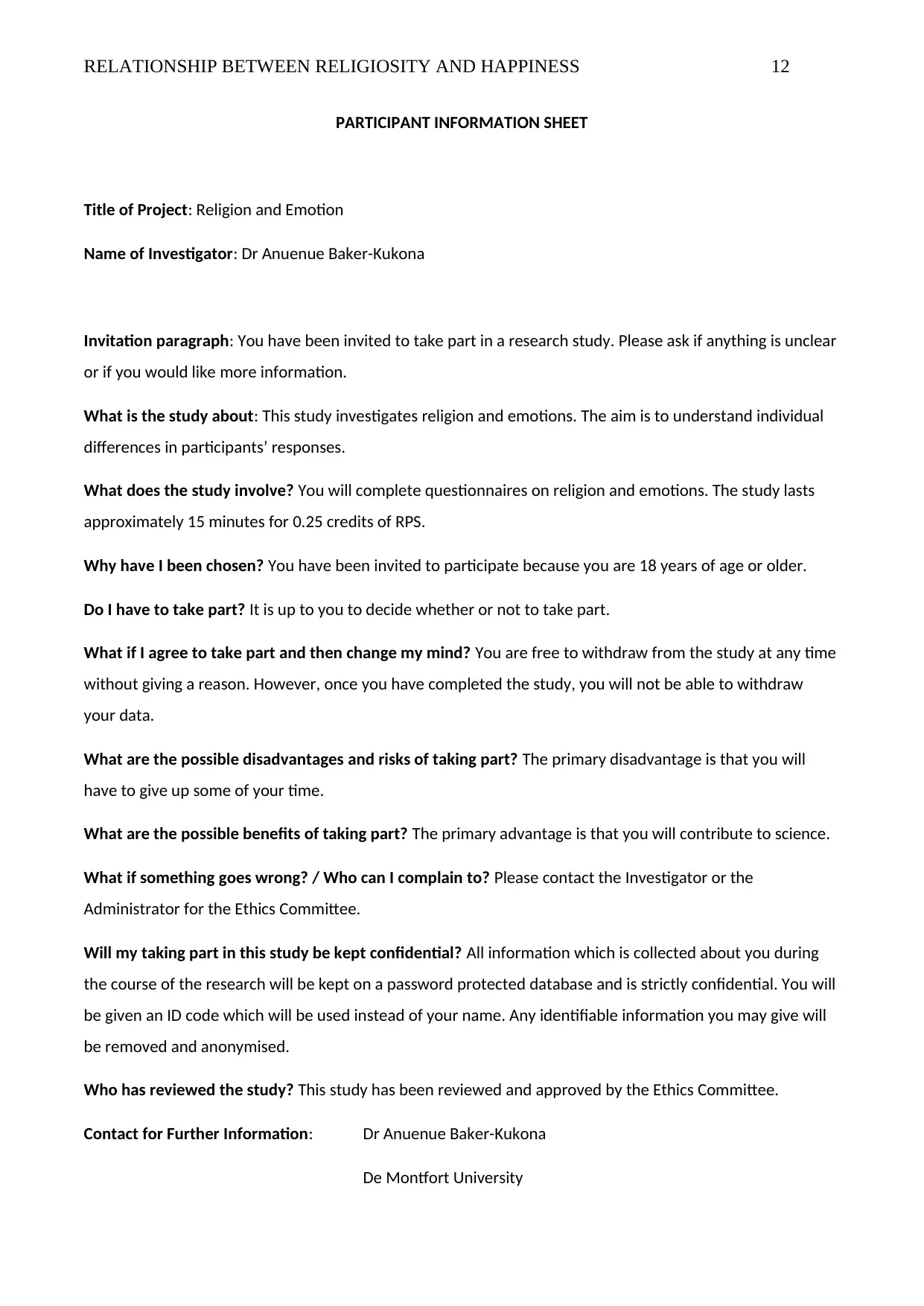
Participants were then provided with an Information Sheet (see Appendix A) upon arriving in
the lab for their individual session with the Investigator. Participants were asked to complete a
Consent Form (see Appendix B). Thereafter, the participants were asked to complete the Daily
Spiritual Experiences Scale (see Appendix D) and Subjective Happiness Scale (see Appendix E).
Finally, Participants received 0.25 credits of RPS for their 15 minutes of participation.
ii. Materials
Participants were provided with the following during the study;
Debrief Sheet
Information Sheet
Consent Form
Daily Spiritual Experiences Scale form
Subjective Happiness Scale
Research Questions
The current study addresses the following research question.
i. What is the relationship between participants’ religiosity and happiness?
In other words, is there a significant correlation between participants’ responses on the Daily
Spiritual Experiences Scale and Subjective Happiness Scale?
Data Set
In regard to this study, each participant was assigned an Identification (ID) and received 0.25 credits
of RPS. In addition to recording their Gender and Age in years, participants’ summed scores on the
Daily Spiritual Experiences Scale and Subjective Happiness Scale (Item 4 of this scale is negatively
the Daily Spiritual Experiences Scale and Subjective Happiness Scale. The participants signed up for
the study via SONA.
Participants were then provided with an Information Sheet (see Appendix A) upon arriving in
the lab for their individual session with the Investigator. Participants were asked to complete a
Consent Form (see Appendix B). Thereafter, the participants were asked to complete the Daily
Spiritual Experiences Scale (see Appendix D) and Subjective Happiness Scale (see Appendix E).
Finally, Participants received 0.25 credits of RPS for their 15 minutes of participation.
ii. Materials
Participants were provided with the following during the study;
Debrief Sheet
Information Sheet
Consent Form
Daily Spiritual Experiences Scale form
Subjective Happiness Scale
Research Questions
The current study addresses the following research question.
i. What is the relationship between participants’ religiosity and happiness?
In other words, is there a significant correlation between participants’ responses on the Daily
Spiritual Experiences Scale and Subjective Happiness Scale?
Data Set
In regard to this study, each participant was assigned an Identification (ID) and received 0.25 credits
of RPS. In addition to recording their Gender and Age in years, participants’ summed scores on the
Daily Spiritual Experiences Scale and Subjective Happiness Scale (Item 4 of this scale is negatively
Paraphrase This Document
Need a fresh take? Get an instant paraphrase of this document with our AI Paraphraser
RELATIONSHIP BETWEEN RELIGIOSITY AND HAPPINESS 5
worded and was reversed scored) were also recorded. Higher total scores on the former correspond to
higher religiosity and higher scores on the latter correspond to higher happiness. Each of these
variables is included in the simulated data set in the Appendix 2 attached below.
Results/Findings
i. Descriptive Statistics
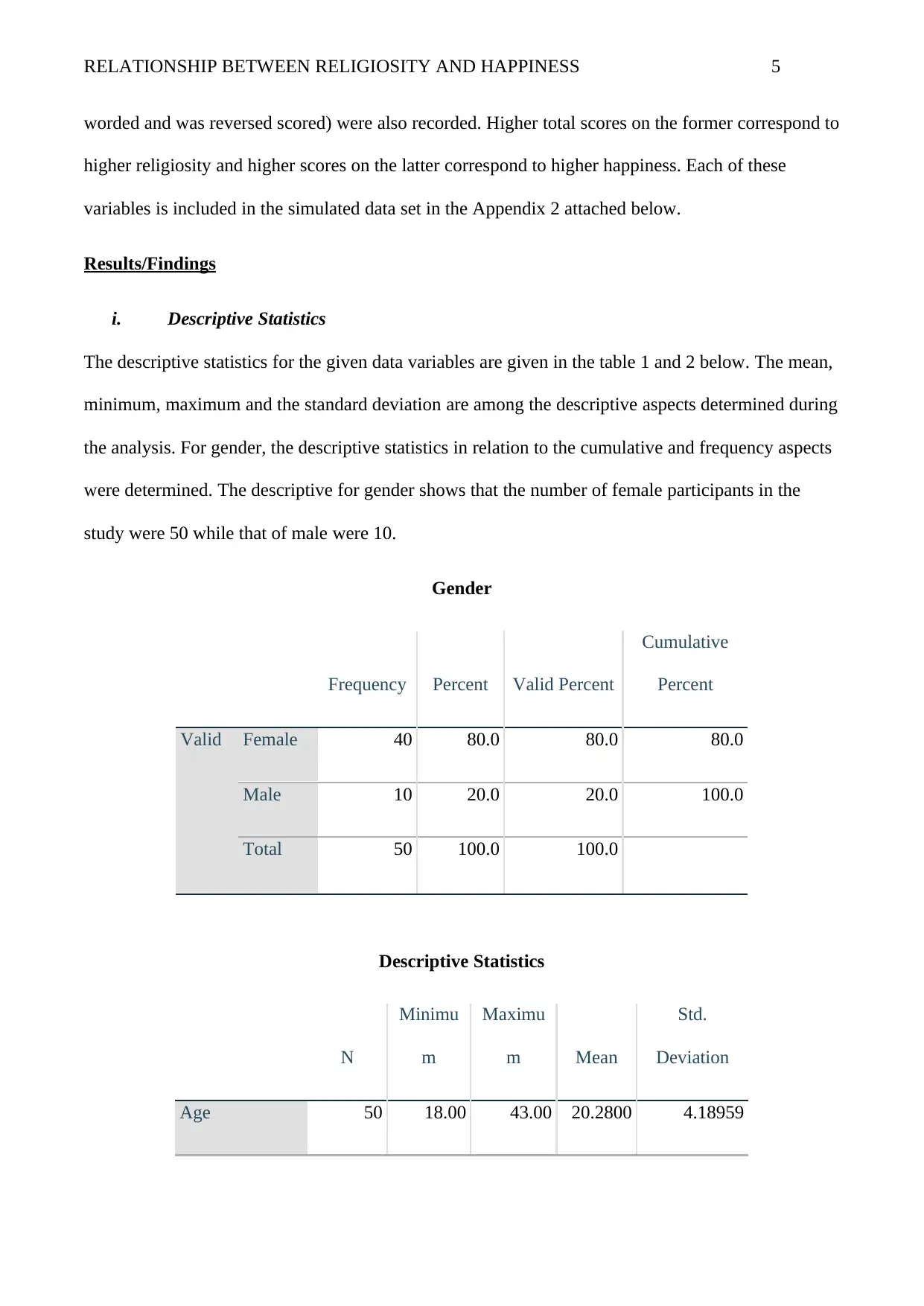
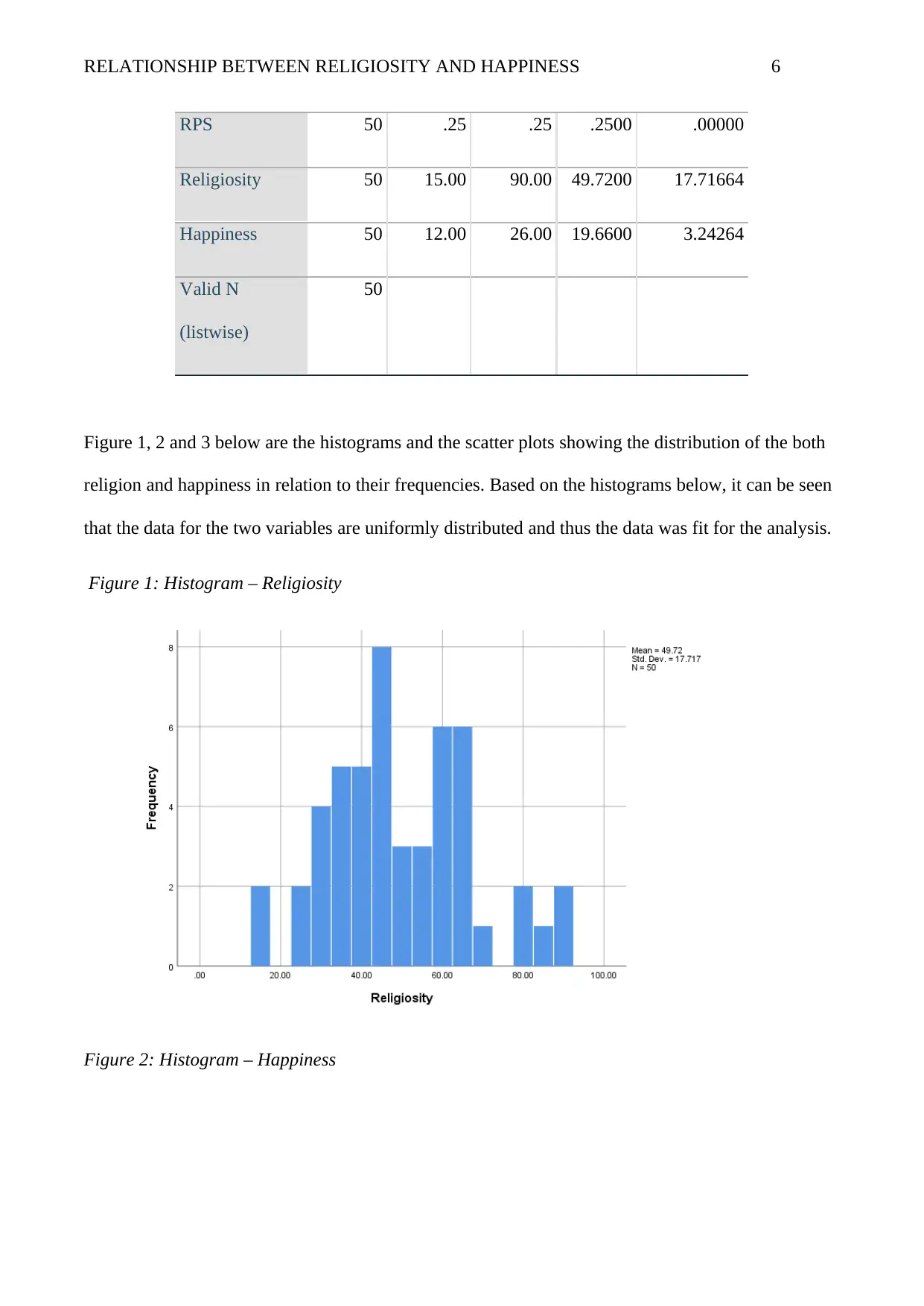
The descriptive statistics for the given data variables are given in the table 1 and 2 below. The mean,
minimum, maximum and the standard deviation are among the descriptive aspects determined during
the analysis. For gender, the descriptive statistics in relation to the cumulative and frequency aspects
were determined. The descriptive for gender shows that the number of female participants in the
study were 50 while that of male were 10.
Gender
Frequency Percent Valid Percent
Cumulative
Percent
Valid Female 40 80.0 80.0 80.0
Male 10 20.0 20.0 100.0
Total 50 100.0 100.0
Descriptive Statistics
N
Minimu
m
Maximu
m Mean
Std.
Deviation
Age 50 18.00 43.00 20.2800 4.18959
worded and was reversed scored) were also recorded. Higher total scores on the former correspond to
higher religiosity and higher scores on the latter correspond to higher happiness. Each of these
variables is included in the simulated data set in the Appendix 2 attached below.
Results/Findings
i. Descriptive Statistics
The descriptive statistics for the given data variables are given in the table 1 and 2 below. The mean,
minimum, maximum and the standard deviation are among the descriptive aspects determined during
the analysis. For gender, the descriptive statistics in relation to the cumulative and frequency aspects
were determined. The descriptive for gender shows that the number of female participants in the
study were 50 while that of male were 10.
Gender
Frequency Percent Valid Percent
Cumulative
Percent
Valid Female 40 80.0 80.0 80.0
Male 10 20.0 20.0 100.0
Total 50 100.0 100.0
Descriptive Statistics
N
Minimu
m
Maximu
m Mean
Std.
Deviation
Age 50 18.00 43.00 20.2800 4.18959
RELATIONSHIP BETWEEN RELIGIOSITY AND HAPPINESS 6
RPS 50 .25 .25 .2500 .00000
Religiosity 50 15.00 90.00 49.7200 17.71664
Happiness 50 12.00 26.00 19.6600 3.24264
Valid N
(listwise)
50
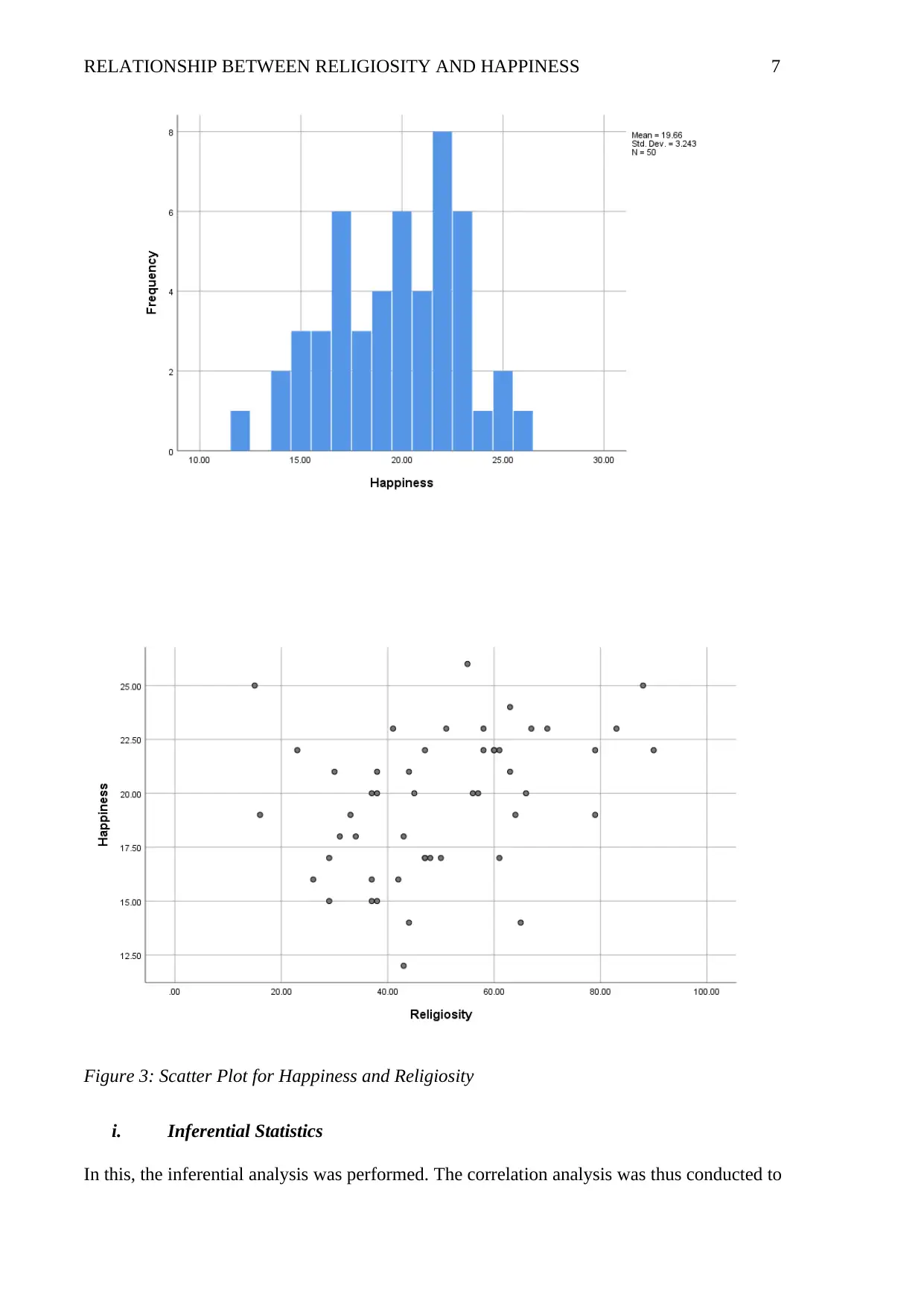
Figure 1, 2 and 3 below are the histograms and the scatter plots showing the distribution of the both
religion and happiness in relation to their frequencies. Based on the histograms below, it can be seen
that the data for the two variables are uniformly distributed and thus the data was fit for the analysis.
Figure 1: Histogram – Religiosity
Figure 2: Histogram – Happiness
RPS 50 .25 .25 .2500 .00000
Religiosity 50 15.00 90.00 49.7200 17.71664
Happiness 50 12.00 26.00 19.6600 3.24264
Valid N
(listwise)
50
Figure 1, 2 and 3 below are the histograms and the scatter plots showing the distribution of the both
religion and happiness in relation to their frequencies. Based on the histograms below, it can be seen
that the data for the two variables are uniformly distributed and thus the data was fit for the analysis.
Figure 1: Histogram – Religiosity
Figure 2: Histogram – Happiness
⊘ This is a preview!⊘
Do you want full access?
Subscribe today to unlock all pages.
Trusted by 1+ million students worldwide
RELATIONSHIP BETWEEN RELIGIOSITY AND HAPPINESS 7
Figure 3: Scatter Plot for Happiness and Religiosity
i. Inferential Statistics
In this, the inferential analysis was performed. The correlation analysis was thus conducted to
Figure 3: Scatter Plot for Happiness and Religiosity
i. Inferential Statistics
In this, the inferential analysis was performed. The correlation analysis was thus conducted to
Paraphrase This Document
Need a fresh take? Get an instant paraphrase of this document with our AI Paraphraser
RELATIONSHIP BETWEEN RELIGIOSITY AND HAPPINESS 8
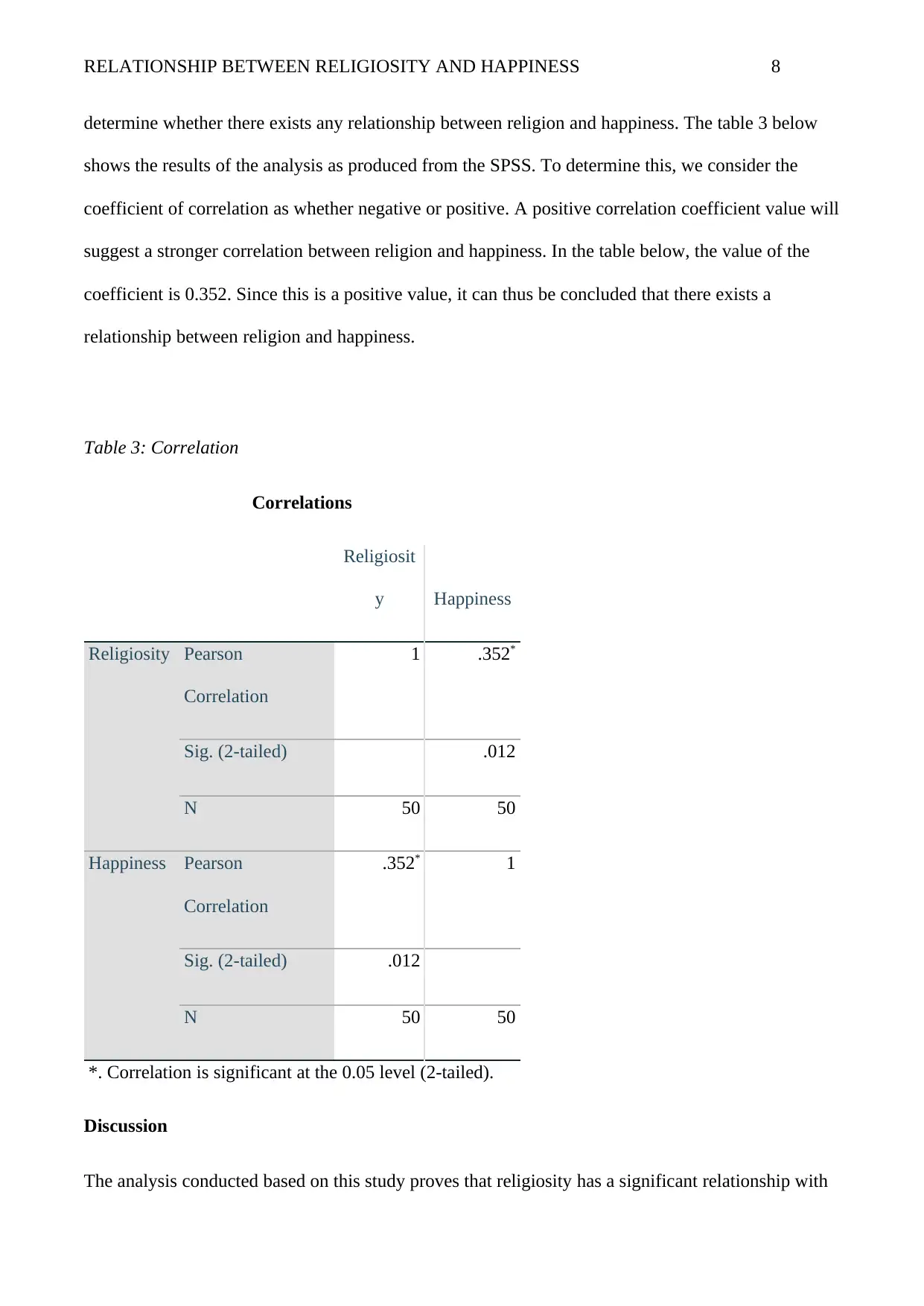
determine whether there exists any relationship between religion and happiness. The table 3 below
shows the results of the analysis as produced from the SPSS. To determine this, we consider the
coefficient of correlation as whether negative or positive. A positive correlation coefficient value will
suggest a stronger correlation between religion and happiness. In the table below, the value of the
coefficient is 0.352. Since this is a positive value, it can thus be concluded that there exists a
relationship between religion and happiness.
Table 3: Correlation
Correlations
Religiosit
y Happiness
Religiosity Pearson
Correlation
1 .352*
Sig. (2-tailed) .012
N 50 50
Happiness Pearson
Correlation
.352* 1
Sig. (2-tailed) .012
N 50 50
*. Correlation is significant at the 0.05 level (2-tailed).
Discussion
The analysis conducted based on this study proves that religiosity has a significant relationship with
determine whether there exists any relationship between religion and happiness. The table 3 below
shows the results of the analysis as produced from the SPSS. To determine this, we consider the
coefficient of correlation as whether negative or positive. A positive correlation coefficient value will
suggest a stronger correlation between religion and happiness. In the table below, the value of the
coefficient is 0.352. Since this is a positive value, it can thus be concluded that there exists a
relationship between religion and happiness.
Table 3: Correlation
Correlations
Religiosit
y Happiness
Religiosity Pearson
Correlation
1 .352*
Sig. (2-tailed) .012
N 50 50
Happiness Pearson
Correlation
.352* 1
Sig. (2-tailed) .012
N 50 50
*. Correlation is significant at the 0.05 level (2-tailed).
Discussion
The analysis conducted based on this study proves that religiosity has a significant relationship with
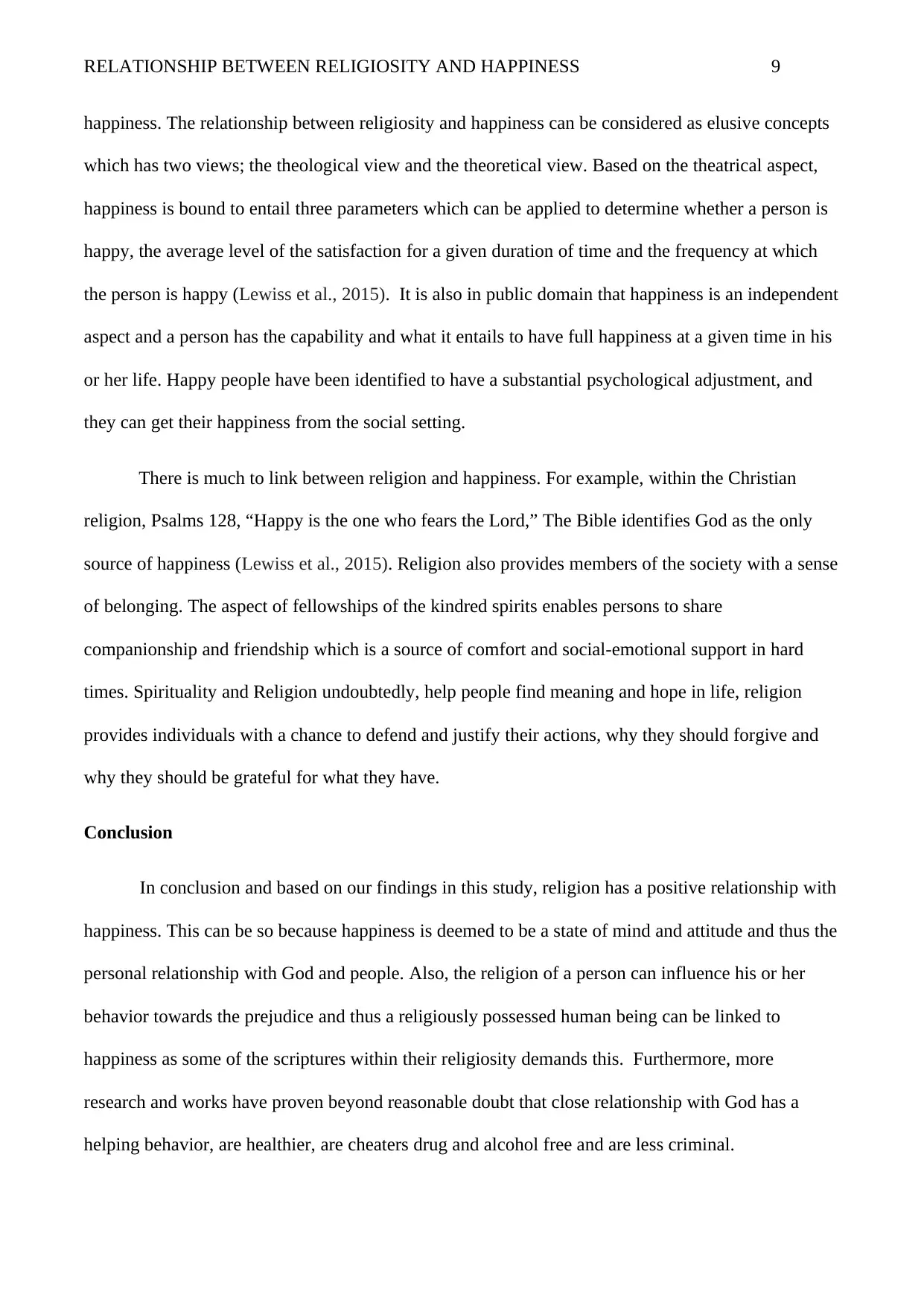
RELATIONSHIP BETWEEN RELIGIOSITY AND HAPPINESS 9
happiness. The relationship between religiosity and happiness can be considered as elusive concepts
which has two views; the theological view and the theoretical view. Based on the theatrical aspect,
happiness is bound to entail three parameters which can be applied to determine whether a person is
happy, the average level of the satisfaction for a given duration of time and the frequency at which
the person is happy (Lewiss et al., 2015). It is also in public domain that happiness is an independent
aspect and a person has the capability and what it entails to have full happiness at a given time in his
or her life. Happy people have been identified to have a substantial psychological adjustment, and
they can get their happiness from the social setting.
There is much to link between religion and happiness. For example, within the Christian
religion, Psalms 128, “Happy is the one who fears the Lord,” The Bible identifies God as the only
source of happiness (Lewiss et al., 2015). Religion also provides members of the society with a sense
of belonging. The aspect of fellowships of the kindred spirits enables persons to share
companionship and friendship which is a source of comfort and social-emotional support in hard
times. Spirituality and Religion undoubtedly, help people find meaning and hope in life, religion
provides individuals with a chance to defend and justify their actions, why they should forgive and
why they should be grateful for what they have.
Conclusion
In conclusion and based on our findings in this study, religion has a positive relationship with
happiness. This can be so because happiness is deemed to be a state of mind and attitude and thus the
personal relationship with God and people. Also, the religion of a person can influence his or her
behavior towards the prejudice and thus a religiously possessed human being can be linked to
happiness as some of the scriptures within their religiosity demands this. Furthermore, more
research and works have proven beyond reasonable doubt that close relationship with God has a
helping behavior, are healthier, are cheaters drug and alcohol free and are less criminal.
happiness. The relationship between religiosity and happiness can be considered as elusive concepts
which has two views; the theological view and the theoretical view. Based on the theatrical aspect,
happiness is bound to entail three parameters which can be applied to determine whether a person is
happy, the average level of the satisfaction for a given duration of time and the frequency at which
the person is happy (Lewiss et al., 2015). It is also in public domain that happiness is an independent
aspect and a person has the capability and what it entails to have full happiness at a given time in his
or her life. Happy people have been identified to have a substantial psychological adjustment, and
they can get their happiness from the social setting.
There is much to link between religion and happiness. For example, within the Christian
religion, Psalms 128, “Happy is the one who fears the Lord,” The Bible identifies God as the only
source of happiness (Lewiss et al., 2015). Religion also provides members of the society with a sense
of belonging. The aspect of fellowships of the kindred spirits enables persons to share
companionship and friendship which is a source of comfort and social-emotional support in hard
times. Spirituality and Religion undoubtedly, help people find meaning and hope in life, religion
provides individuals with a chance to defend and justify their actions, why they should forgive and
why they should be grateful for what they have.
Conclusion
In conclusion and based on our findings in this study, religion has a positive relationship with
happiness. This can be so because happiness is deemed to be a state of mind and attitude and thus the
personal relationship with God and people. Also, the religion of a person can influence his or her
behavior towards the prejudice and thus a religiously possessed human being can be linked to
happiness as some of the scriptures within their religiosity demands this. Furthermore, more
research and works have proven beyond reasonable doubt that close relationship with God has a
helping behavior, are healthier, are cheaters drug and alcohol free and are less criminal.
⊘ This is a preview!⊘
Do you want full access?
Subscribe today to unlock all pages.
Trusted by 1+ million students worldwide
RELATIONSHIP BETWEEN RELIGIOSITY AND HAPPINESS 10
References
Abdel-Khalek, A. M. (2016). Happiness, health and religiosity: Significant relations. Mental Health,
Religion & Culture, 9(1), 85-97.
Allport, G. W. (206). The Religious context of prejudice. Journal for Scientific Study of Religion,
5(3), 447-457.
Allport, G. W. & Ross, J. M. (2017). Personal religious orientation and prejudice. Journal of
Personality and Social Psychology, 5(4), 432-443.
Batson, D. & Gray, R. A. (2011). Religious orientation and helping behavior: Responding to one’s
own or to the victim’s needs? Journal of Personality and Social Psychology, 40(3), 511-520.
Deem, R. (2016). Scientific studies that show a positive effect of religion on health. Retrieved April
28, 2012, from http://www.godandscience.org/apologetics/religionhealth.html
Eng, R. C. & Kenneth, M. (2019). The effect of religion and religiosity on drug use among a selected
sample of post-secondary students in Scotland. Addition Research, 7(2), 149-170.
Hackney, C. H. & Sanders, G. S. (2013). Religiosity and mental health: A meta-analysis of recent
studies. Journal for Scientific Study of Religion, 42, 43-55.
Khavari, K. A. & Harmon, T. M. (2012). The relationship between the degree of professed religious
belief and the use of drugs. International Journal of the Addictions, 17 (5), 849-857
Lewis, C. A. & Cruise, S. M. (2016). Religion and happiness: Consensus, contradictions, comments
and concerns. Mental Health, Religion and Culture, 9(3), 213-225.
References
Abdel-Khalek, A. M. (2016). Happiness, health and religiosity: Significant relations. Mental Health,
Religion & Culture, 9(1), 85-97.
Allport, G. W. (206). The Religious context of prejudice. Journal for Scientific Study of Religion,
5(3), 447-457.
Allport, G. W. & Ross, J. M. (2017). Personal religious orientation and prejudice. Journal of
Personality and Social Psychology, 5(4), 432-443.
Batson, D. & Gray, R. A. (2011). Religious orientation and helping behavior: Responding to one’s
own or to the victim’s needs? Journal of Personality and Social Psychology, 40(3), 511-520.
Deem, R. (2016). Scientific studies that show a positive effect of religion on health. Retrieved April
28, 2012, from http://www.godandscience.org/apologetics/religionhealth.html
Eng, R. C. & Kenneth, M. (2019). The effect of religion and religiosity on drug use among a selected
sample of post-secondary students in Scotland. Addition Research, 7(2), 149-170.
Hackney, C. H. & Sanders, G. S. (2013). Religiosity and mental health: A meta-analysis of recent
studies. Journal for Scientific Study of Religion, 42, 43-55.
Khavari, K. A. & Harmon, T. M. (2012). The relationship between the degree of professed religious
belief and the use of drugs. International Journal of the Addictions, 17 (5), 849-857
Lewis, C. A. & Cruise, S. M. (2016). Religion and happiness: Consensus, contradictions, comments
and concerns. Mental Health, Religion and Culture, 9(3), 213-225.
Paraphrase This Document
Need a fresh take? Get an instant paraphrase of this document with our AI Paraphraser
RELATIONSHIP BETWEEN RELIGIOSITY AND HAPPINESS 11
Pagelow, M. D. (2014). Family Violence. New York: Prager
Paloutzian, R. F. (2016). Invitation to psychology of religion and coping (2nd ed.) Boston: Allyn and
Bacon.
Pargament, K. I. (2012). The bitter and Sweet: An evaluation of the costs and benefits of
religiousness. Psychological Inquiry, 13, 168-181.
Tay, L. & Myers, D. G. (2011). The religion paradox: If religion makes people happy, why are so
many dropping out? Journal of Personality and Social Psychology, 101(6), 1278-1290.
Walker, L. E. A. (2017). Jewish battered women: Shalom Bayit or a Shoude? In celebrating the lives
of Jewish Women: Patterns in a feminist sampler. Siegel, R. J., Cole, E. (eds). New York:
Harrington Park Press.
Appendix A: Information Sheet
Pagelow, M. D. (2014). Family Violence. New York: Prager
Paloutzian, R. F. (2016). Invitation to psychology of religion and coping (2nd ed.) Boston: Allyn and
Bacon.
Pargament, K. I. (2012). The bitter and Sweet: An evaluation of the costs and benefits of
religiousness. Psychological Inquiry, 13, 168-181.
Tay, L. & Myers, D. G. (2011). The religion paradox: If religion makes people happy, why are so
many dropping out? Journal of Personality and Social Psychology, 101(6), 1278-1290.
Walker, L. E. A. (2017). Jewish battered women: Shalom Bayit or a Shoude? In celebrating the lives
of Jewish Women: Patterns in a feminist sampler. Siegel, R. J., Cole, E. (eds). New York:
Harrington Park Press.
Appendix A: Information Sheet
RELATIONSHIP BETWEEN RELIGIOSITY AND HAPPINESS 12
PARTICIPANT INFORMATION SHEET
Title of Project: Religion and Emotion
Name of Investigator: Dr Anuenue Baker-Kukona
Invitation paragraph: You have been invited to take part in a research study. Please ask if anything is unclear
or if you would like more information.
What is the study about: This study investigates religion and emotions. The aim is to understand individual
differences in participants’ responses.
What does the study involve? You will complete questionnaires on religion and emotions. The study lasts
approximately 15 minutes for 0.25 credits of RPS.
Why have I been chosen? You have been invited to participate because you are 18 years of age or older.
Do I have to take part? It is up to you to decide whether or not to take part.
What if I agree to take part and then change my mind? You are free to withdraw from the study at any time
without giving a reason. However, once you have completed the study, you will not be able to withdraw
your data.
What are the possible disadvantages and risks of taking part? The primary disadvantage is that you will
have to give up some of your time.
What are the possible benefits of taking part? The primary advantage is that you will contribute to science.
What if something goes wrong? / Who can I complain to? Please contact the Investigator or the
Administrator for the Ethics Committee.
Will my taking part in this study be kept confidential? All information which is collected about you during
the course of the research will be kept on a password protected database and is strictly confidential. You will
be given an ID code which will be used instead of your name. Any identifiable information you may give will
be removed and anonymised.
Who has reviewed the study? This study has been reviewed and approved by the Ethics Committee.
Contact for Further Information: Dr Anuenue Baker-Kukona
De Montfort University
PARTICIPANT INFORMATION SHEET
Title of Project: Religion and Emotion
Name of Investigator: Dr Anuenue Baker-Kukona
Invitation paragraph: You have been invited to take part in a research study. Please ask if anything is unclear
or if you would like more information.
What is the study about: This study investigates religion and emotions. The aim is to understand individual
differences in participants’ responses.
What does the study involve? You will complete questionnaires on religion and emotions. The study lasts
approximately 15 minutes for 0.25 credits of RPS.
Why have I been chosen? You have been invited to participate because you are 18 years of age or older.
Do I have to take part? It is up to you to decide whether or not to take part.
What if I agree to take part and then change my mind? You are free to withdraw from the study at any time
without giving a reason. However, once you have completed the study, you will not be able to withdraw
your data.
What are the possible disadvantages and risks of taking part? The primary disadvantage is that you will
have to give up some of your time.
What are the possible benefits of taking part? The primary advantage is that you will contribute to science.
What if something goes wrong? / Who can I complain to? Please contact the Investigator or the
Administrator for the Ethics Committee.
Will my taking part in this study be kept confidential? All information which is collected about you during
the course of the research will be kept on a password protected database and is strictly confidential. You will
be given an ID code which will be used instead of your name. Any identifiable information you may give will
be removed and anonymised.
Who has reviewed the study? This study has been reviewed and approved by the Ethics Committee.
Contact for Further Information: Dr Anuenue Baker-Kukona
De Montfort University
⊘ This is a preview!⊘
Do you want full access?
Subscribe today to unlock all pages.
Trusted by 1+ million students worldwide

1 out of 20


Related Documents


Your All-in-One AI-Powered Toolkit for Academic Success.
+13062052269
info@desklib.com
Available 24*7 on WhatsApp / Email
![[object Object]](/_next/static/media/star-bottom.7253800d.svg)
Unlock your academic potential
Copyright © 2020–2026 A2Z Services. All Rights Reserved. Developed and managed by ZUCOL.