Analysis of the Power Supply Market's Relevancy in Singapore

Verified

Added on  2022/11/15

|8
|1826
|247
Report
AI Summary
This report provides an analysis of the power supply market in Singapore, focusing on the transition from a monopolistic structure to an open and competitive market. It examines the role of the Energy Market Authority (EMA) in directing the electricity and gas supply, and the impact of the retail electricity liberalization policy. The report explores the market structure before liberalization, the influence of the Singapore Power (SP) Group, and the effects of the Open Electricity Market (OEM) on consumers and producers. It includes welfare analysis comparing perfect competition and monopoly markets, discussing consumer surplus, deadweight loss, and the long-run sustainability of the market structure. The report also critically examines the competitive power market, its benefits, and the need for government intervention to balance consumer welfare and the profitability of distributors. The conclusion highlights the government's role in maintaining both consumer satisfaction and the sustainability of firms in the energy market.
Document Page
Running head: THE RELEVANCY OF THE POWER SUPPLY MARKET OF
SINGAPORE
THE RELEVANCY OF THE POWER SUPPLY MARKET OF SINGAPORE
Name of the Student
Name of the University
Author Note
tabler-icon-diamond-filled.svg

Paraphrase This Document

Need a fresh take? Get an instant paraphrase of this document with our AI Paraphraser
Document Page
1THE RELEVANCY OF THE POWER SUPPLY MARKET OF SINGAPORE
Introduction
The Energy Market Authority (EMA) of Singapore is a government body that directs
and controls the electricity and gas supply of the country. The market for electricity supply
consists of two sub-markets: the wholesale electricity market and the retail energy market
(Huang et al. 2015). The power manufacturing organizations sell electricity in the wholesale
market through the process of auction. The bids decide the volume purchased and sold. The
forces of demand and supply determine the market rate for electricity in Singapore. However,
the prices fluctuate every half an hour and the traders in the market are highly competitive.
This competition has recently intensified after the liberalization of the market in 2011 by the
EMA (ema.gov.sg 2019).
Analyzing the previous structure of the electricity market
The Singapore Power (SP) Group is a government-owned organization that supplies the
electricity in the market. In the pre-liberalization market scenario, this group was the sole
supplier of power in the consumer market for electricity supply (Ho and Jones 2015). This
organization acted as a monopoly over the market due to its wide coverage in the
transmission and distribution network. The power production houses of Singapore were
completely dependent upon the decision of the SP Group for setting the fee that is to be
charged for the supply of electricity (Behrangrad 2015). The higher cost of production was
met up by burdening the customers with increased prices of electricity. This can lead to a
restrictive supply of output by the group corresponding to a greater price level. This can lead
to market distortions and failure. However, being a government-owned body, the price is set
by the administrative authority. Hence, to be precise the SP Group is a natural monopoly
regulated by the government of Singapore (businesstimes.com.sg 2019).
Document Page
2THE RELEVANCY OF THE POWER SUPPLY MARKET OF SINGAPORE
Consumer Surplus extracted by a
monopolist
MC
Deadweight loss
MR AR
A
B
C
PM
PC
QM QC
Price,
MR, MC,
AR
Quantity
D
0
Impact of the electricity retail liberalization policy on the structure of the market
The Energy Market Authority (EMA) has directed and implemented steps to remove
the barriers to entry of the retail electricity market of Singapore (ifaq.gov.sg 2019). This
policy is adopted to increase the rate of innovation, service quality and efficiency in prices
charged. The introduction of new firms has increased the number of retailers in the market,
which has helped in decreasing the rates charged. Being an island country, the number of
buyers is small as a result this will intensify the level of competition in the market. Thus, an
increase in competition has dropped the price level and has introduced buyers to a wide range
of plans (channelnewsasia.com 2019). Hence, increasing social welfare by reducing the
individual budget. This marketplace can be termed as a competitive market due to the
presence of a large number of non-dominating firms compared to a relatively small number
of buyers. This has increased the supply of electricity with a wider range of fee plans for
customers.
Document Page
3THE RELEVANCY OF THE POWER SUPPLY MARKET OF SINGAPORE
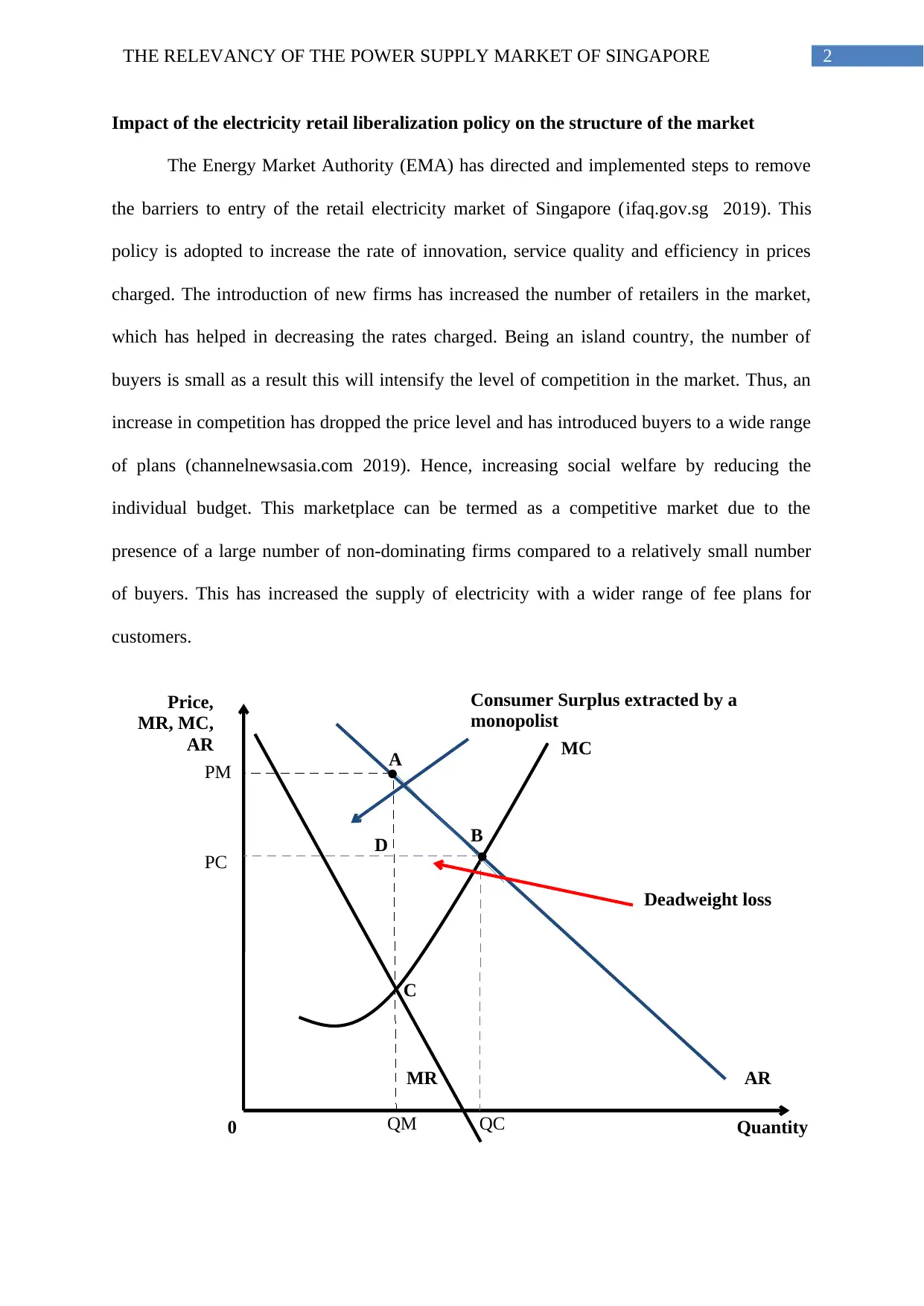
Figure 1: Welfare analysis between perfect competition and monopoly market
(Source: Created by Author)
The figure illustrates a comparison between a perfectly competitive market structure
and a monopoly marketplace. A monopoly firm is characterized by its profit-maximizing
attitude. The firm charges a higher price PM for a smaller quantity of output supplied QM.
This creates market inefficiency by distorting the buyers. On the other hand, in a perfectly
competitive market structure, the price is set by the adjustments in demand and supply. Thus,
it charges a lower price PC compared to the monopolist, corresponding to a higher level of
output QC. Thus, there is an increase in welfare among the consumers and the surplus is the
area PMPCAD. However, this gain received by the customers is extracted by a monopolist
firm. As a result, there arises a deadweight loss of area ABC due to inefficient utilization of
resources and loss in social well-being. This market failure created by a monopolist firm
forces the government to open up the market to increase competitiveness (Hawley 2015).
Synopsis of the long-run sustainability of the existing market structure
The buyers of the Open Electricity Market (OEM) are benefited from the retail
liberalization policy addressed by the government of Singapore. They are offered with
various options to select from like any other shopping site. Moreover, their budget has
flourished with a quality service. When judging from the viewpoint of the producers,
increased competition has affected their revenues. As per the competitive structure of the
market, in the long run, the existing companies will face downward pressure in their profit
margins.
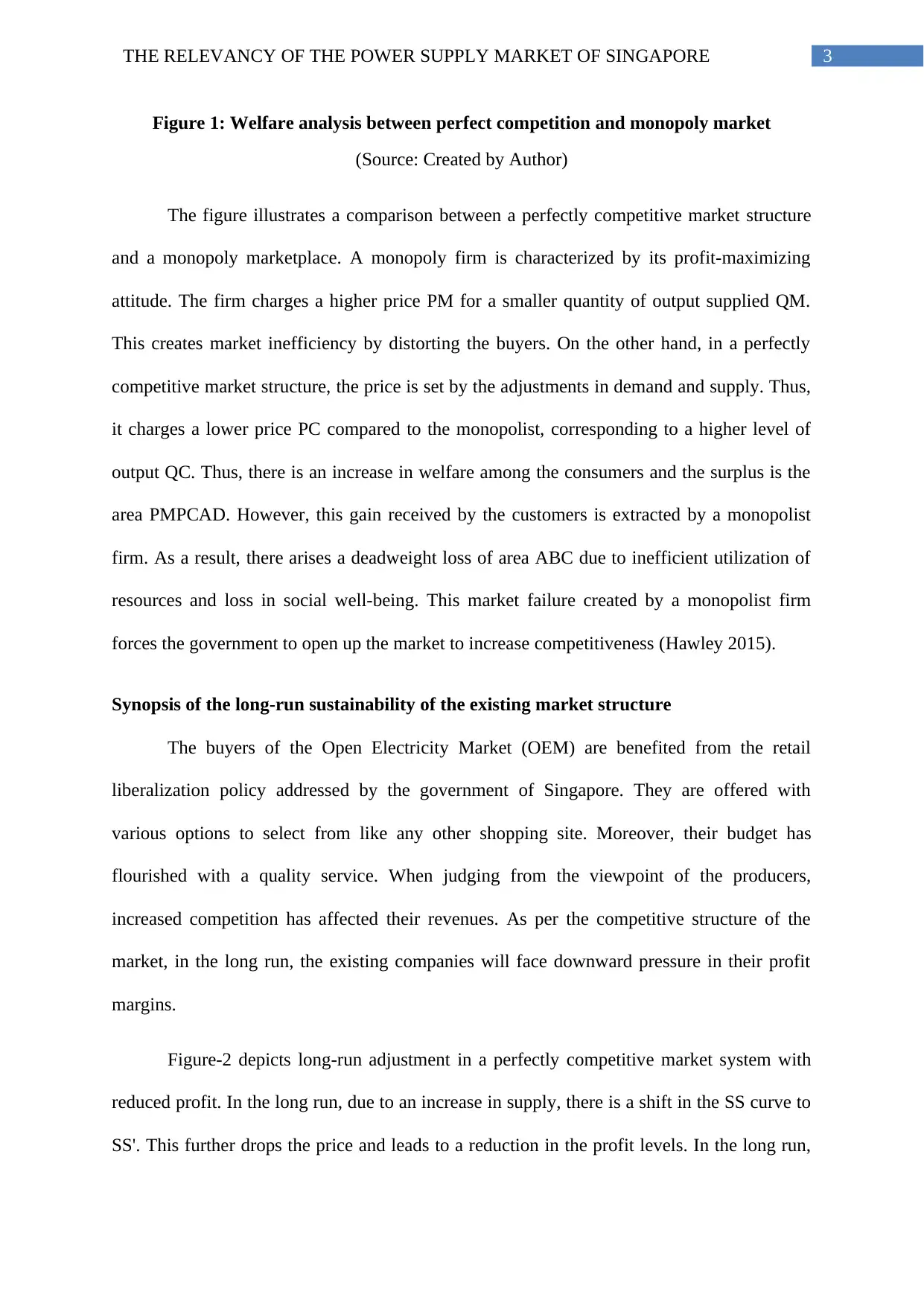
Figure-2 depicts long-run adjustment in a perfectly competitive market system with
reduced profit. In the long run, due to an increase in supply, there is a shift in the SS curve to
SS'. This further drops the price and leads to a reduction in the profit levels. In the long run,
tabler-icon-diamond-filled.svg

Paraphrase This Document

Need a fresh take? Get an instant paraphrase of this document with our AI Paraphraser
Document Page
4THE RELEVANCY OF THE POWER SUPPLY MARKET OF SINGAPORE
MCAC
SS
SS’
DD
P
P’
QCQ Q’
Price,
MC,
AC
Price
Output Output
P=AR=MR
P’=AR’=MR’
all firms in a competitive marketplace earn zero normal profit (Shaikh 2016). Thus, it reduces
the welfare of the produces that can induce them to leave the market.
Singapore uses imported natural gas to generate gas supply. Moreover, the fuel and
other related costs like bidding increase the amount of tariff charged by the firms. When there
is a reduction in prices, their profit levels fall drastically. This affects the business strategy
and motivation of the firms. Though competition is necessary to boost efficiency and welfare
in the market, in the long run, it lowers the profit of the business organizations (Beesley and
Littlechild 2013). Hence, perfect competition is not always worthy or relevant for producers
in a market system.
Figure 2: Long run profit earned by a perfectly competitive system
(Source: Created by Author)
A critical examination of the open power supply market
The recent competitive power market in Singapore is formulated with a nationwide
rollout policy. This policy is implemented to clear the prevailing failures and inefficiencies in
Document Page
5THE RELEVANCY OF THE POWER SUPPLY MARKET OF SINGAPORE
the system. Introduction of this policy has greatly comprehended the buyers by reducing their
expenditure on energy consumption bills. The different types of plans offered and the
convenient selection procedure has provided them with hassle-free consumption of
electricity. Moreover, the authority has directed the companies with certain rules to protect
consumers from fraudulent and inconvenience. As per the guidelines, the customers are not to
be misconducted with forced calls and messages. The switching of retailers should not be
forced by organizations and relevant documents must be handed over to the customers. The
policy is addressed to support and protect the consumers of Singapore electricity sector.
However, this does not picture the profitability of the different companies engaged in this
retail business. Thus, for balancing welfare and revenue earned by organizations the
government should intervene and impose regulations on entry. The firms can take initiative to
collude with rivals to maximize overall profit levels. Thus, an oligopolistic market could
perfectly allocate welfare and profit between buyers and suppliers.
Conclusion
Thus, to conclude, this can be stated that the government of Singapore in the process
of increasing welfare of buyers has overlooked the business scenario of the energy
distributing market. The transformation from a restrictive monopoly structure to an open
competitive system has successfully helped the government in clearing the loss bone by
consumers. Moreover, increased competitiveness has favored the proper allocation of
resources to produce a greater amount of power. However, the profitability of the distributors
and suppliers are neglected. Thus, the government needs to maintain the sustainability of the
firms along with customer satisfaction.
Document Page
6THE RELEVANCY OF THE POWER SUPPLY MARKET OF SINGAPORE
References
Beesley, M.E. and Littlechild, S.C., 2013. Privatization: principles, problems, and priorities.
In Privatization, regulation, and deregulation (pp. 36-52). Routledge.
Behrangrad, M., 2015. A review of demand-side management business models in the
electricity market. Renewable and Sustainable Energy Reviews, 47, pp.270-283.
businesstimes.com.sg 2019. Gabriel, A. Power grab in Singapore's electricity market could
spur consolidation. The Business Times. Retrieved 11 September 2019, from
https://www.businesstimes.com.sg/energy-commodities/power-grab-in-singapores-
electricity-market-could-spur-consolidation-0
channelnewsasia.com 2019. Singapore to open up retail electricity market from November:
What it means for consumers. CNA. Retrieved 11 September 2019, from
https://www.channelnewsasia.com/news/singapore/singapore-to-open-up-retail-electricity-
market-from-november-10766440
ema.gov.sg 2019. EMA: Liberalisation of Retail Electricity Market. Retrieved 11 September
2019, from https://www.ema.gov.sg/Electricity_Market_Liberalisation.aspx
Hawley, E.W., 2015. The New Deal and the problem of monopoly. Princeton University
Press.
Ho, C.S.B. and Jones, D.S., 2015. Infrastructure management in Singapore: privatization and
government control. Asian Education and Development Studies.
Huang, S., Tushar, W., Yuen, C. and Otto, K., 2015. Quantifying economic benefits in the
ancillary electricity market for smart appliances in Singapore households. Sustainable
Energy, Grids and Networks, 1, pp.53-62.
tabler-icon-diamond-filled.svg

Paraphrase This Document

Need a fresh take? Get an instant paraphrase of this document with our AI Paraphraser
Document Page
7THE RELEVANCY OF THE POWER SUPPLY MARKET OF SINGAPORE
ifaq.gov.sg 2019. EMA - FAQs >> Electricity Retail Market. [online] Ifaq.gov.sg. Available
at: http://www.ifaq.gov.sg/ema/apps/fcd_faqmain.aspx?qst=hRhkP9BzcBKnt75r
%2Bl1bopmAANxUYJsZ1XtCavhh%2Bg8uifs
%2FSSJBsAh7OmiQml167pLtwkYdh5wiu7wpAEFDWcFB
%2Brth7VHC40GssBEaCJ2TH0eGaCGaOsYNDND2m%2FG2qUnK
%2BF2dkbGBoheNrQJHwTya98TwiiRQ#FAQ_237752 [Accessed 12 Sep. 2019].
Shaikh, A., 2016. Capitalism: Competition, conflict, crises. Oxford University Press.
chevron_up_icon
1 out of 8
circle_padding
hide_on_mobile
zoom_out_icon
[object Object]