Process Oriented Requirements Engineering for Heritage Institutions
VerifiedAdded on 2021/04/24
|21
|4233
|143
Report
AI Summary
This report provides an in-depth analysis of process-oriented requirements engineering, specifically focusing on the challenges faced by cultural heritage institutions in managing diligent searches for rightsholders. The report begins with an executive summary and table of contents, followed by an introduction that outlines the case study and the report's objectives. The core of the report is divided into three main tasks: requirements identification and modeling, information technology solutions, and SysML requirements verification and validation. The requirements identification section utilizes the Volere template, use case diagrams, and SysML requirements diagrams to model the system's needs. The IT solutions section explores the application of federated database systems, including IBM and Oracle technologies, to improve diligent search management. The SysML block diagrams are presented to visually represent the system structure. Finally, the verification and validation section discusses the differences between these two processes, the available methods and tools for SysML V&V, and how these methods are incorporated into modeling methods. The report concludes with a summary of the findings and recommendations for future research.
Running head: PROCESS ORIENTED REQUIREMENTS ENGINEERING
Process Oriented Requirements Engineering
Name of the Student
Name of the University
Author Note
Process Oriented Requirements Engineering
Name of the Student
Name of the University
Author Note
Paraphrase This Document
Need a fresh take? Get an instant paraphrase of this document with our AI Paraphraser

1PROCESS ORIENTED REQUIREMENTS ENGINEERING
Executive Summary
The purpose of this report is to analyze the various aspects of requirement analysis and system
specification in order to provide different methods for the given case study. The case study taken
and evaluated in this report is Cultural Heritage Institutions having concerns related to diligent
search management of righstholders. The report presents different diagram and templates such as
SysML requirement and block diagram, use case diagram and volere template respectively. The
thorough analysis of prior researches on information technology solutions and verification and
validation has been done. The report finally concludes incorporation of the solutions evaluated
from the researches.
Executive Summary
The purpose of this report is to analyze the various aspects of requirement analysis and system
specification in order to provide different methods for the given case study. The case study taken
and evaluated in this report is Cultural Heritage Institutions having concerns related to diligent
search management of righstholders. The report presents different diagram and templates such as
SysML requirement and block diagram, use case diagram and volere template respectively. The
thorough analysis of prior researches on information technology solutions and verification and
validation has been done. The report finally concludes incorporation of the solutions evaluated
from the researches.

2PROCESS ORIENTED REQUIREMENTS ENGINEERING
Table of Contents
Executive Summary.........................................................................................................................1
Introduction......................................................................................................................................3
Discussion........................................................................................................................................3
Requirements Identification and Modelling................................................................................3
Volere template........................................................................................................................3
Use Case Diagrams..................................................................................................................6
SysML Requirements diagram................................................................................................7
Information Technology solution for the case study...................................................................7
Information Technology solution............................................................................................7
SysML block Diagram with explanation...............................................................................11
SysML requirements verification and validation......................................................................12
Verification and Validation...................................................................................................12
SysML V&V methods and tools............................................................................................14
Conclusion.....................................................................................................................................16
References......................................................................................................................................18
Table of Contents
Executive Summary.........................................................................................................................1
Introduction......................................................................................................................................3
Discussion........................................................................................................................................3
Requirements Identification and Modelling................................................................................3
Volere template........................................................................................................................3
Use Case Diagrams..................................................................................................................6
SysML Requirements diagram................................................................................................7
Information Technology solution for the case study...................................................................7
Information Technology solution............................................................................................7
SysML block Diagram with explanation...............................................................................11
SysML requirements verification and validation......................................................................12
Verification and Validation...................................................................................................12
SysML V&V methods and tools............................................................................................14
Conclusion.....................................................................................................................................16
References......................................................................................................................................18
⊘ This is a preview!⊘
Do you want full access?
Subscribe today to unlock all pages.

Trusted by 1+ million students worldwide

3PROCESS ORIENTED REQUIREMENTS ENGINEERING
Introduction
The requirement analysis and systems specification is presented in this report with focus
on identification of requirement, proposing IT technology and verification and validation of
requirements (Chitchyan et al. 2015). The report is analyzed through perspective of a given case
study of a specific application domain. The case study is on cultural heritage institutions that are
presently involved in digitizing their collection of items. The major concern for cultural heritage
institutions is that the digitization requires permission from legal and authorized people,
rightsholders (Fromer, J.C., 2015). The searching of rightsholders is a major task for the
institutions and the searching process is called diligent search (Bahill and Madni 2017). The
purpose of this report is to analyze the requirements for the case study and system specification
to match the analysis.
The structure of the report is divided into three tasks. The three tasks are requirements
identification and modelling, information technology solution for the given case study and
SysML requirements verification and validation. The first task is volere template, use case
diagrams and SysML requirements diagram for the requirements. The second task is solution for
information technology and SysML block diagram with explanation. The third task is differences
between verification and validation, available methods and tools for SysML V&V and SysML
V&V methods incorporation in modeling methods.
Discussion
Requirements Identification and Modelling
Volere template
1. Purpose of the project
Introduction
The requirement analysis and systems specification is presented in this report with focus
on identification of requirement, proposing IT technology and verification and validation of
requirements (Chitchyan et al. 2015). The report is analyzed through perspective of a given case
study of a specific application domain. The case study is on cultural heritage institutions that are
presently involved in digitizing their collection of items. The major concern for cultural heritage
institutions is that the digitization requires permission from legal and authorized people,
rightsholders (Fromer, J.C., 2015). The searching of rightsholders is a major task for the
institutions and the searching process is called diligent search (Bahill and Madni 2017). The
purpose of this report is to analyze the requirements for the case study and system specification
to match the analysis.
The structure of the report is divided into three tasks. The three tasks are requirements
identification and modelling, information technology solution for the given case study and
SysML requirements verification and validation. The first task is volere template, use case
diagrams and SysML requirements diagram for the requirements. The second task is solution for
information technology and SysML block diagram with explanation. The third task is differences
between verification and validation, available methods and tools for SysML V&V and SysML
V&V methods incorporation in modeling methods.
Discussion
Requirements Identification and Modelling
Volere template
1. Purpose of the project
Paraphrase This Document
Need a fresh take? Get an instant paraphrase of this document with our AI Paraphraser

4PROCESS ORIENTED REQUIREMENTS ENGINEERING
1.1. Goals of the project
The goal of this project is to propose and design an Information Technology solution for
diligent search management of cultural heritage institutions.
2. Mandate constraints
2.1. Solution constraints
The only solution constraint is manual searching of databases in the developed platform for
cultural heritage institutions.
2.2. Implementation constraints
The implementation constraint is the platform developed which provides diligent search. It
provides manual searching which is time consuming and high cost.
3. Scope of the Work
3.1. Context of the work
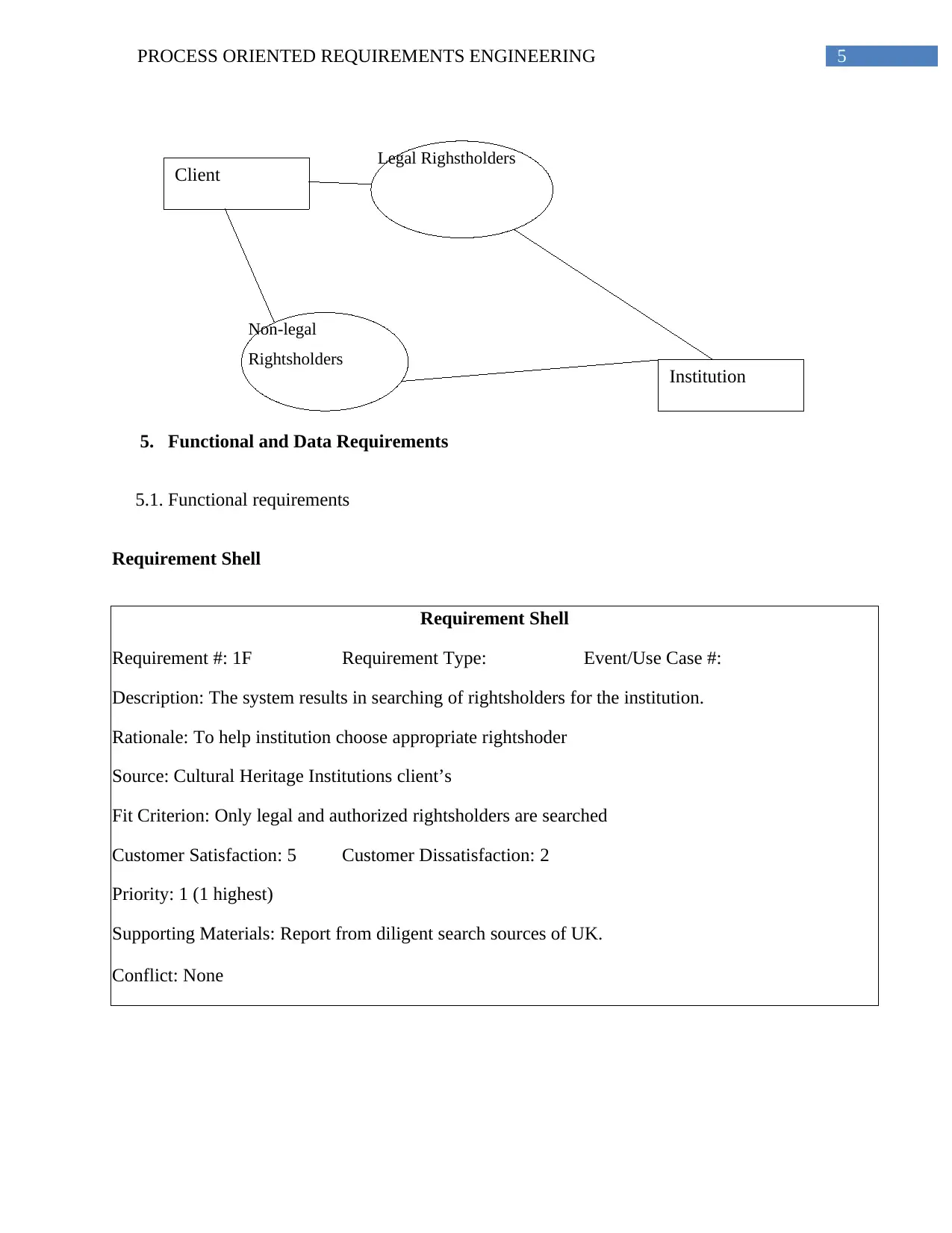
The project is regarding diligent search of legal and authorized rightsholders and the work is
done through database system where searching is done manually.
3.2. Work partitioning
The work is partitioned between searching of legal and authorized rightsholders for taking
permission for digitization and non-legal rightsholders.
4. Scope of the Project
4.1. Project boundary
1.1. Goals of the project
The goal of this project is to propose and design an Information Technology solution for
diligent search management of cultural heritage institutions.
2. Mandate constraints
2.1. Solution constraints
The only solution constraint is manual searching of databases in the developed platform for
cultural heritage institutions.
2.2. Implementation constraints
The implementation constraint is the platform developed which provides diligent search. It
provides manual searching which is time consuming and high cost.
3. Scope of the Work
3.1. Context of the work
The project is regarding diligent search of legal and authorized rightsholders and the work is
done through database system where searching is done manually.
3.2. Work partitioning
The work is partitioned between searching of legal and authorized rightsholders for taking
permission for digitization and non-legal rightsholders.
4. Scope of the Project
4.1. Project boundary

5PROCESS ORIENTED REQUIREMENTS ENGINEERING
5. Functional and Data Requirements
5.1. Functional requirements
Requirement Shell
Requirement Shell
Requirement #: 1F Requirement Type: Event/Use Case #:
Description: The system results in searching of rightsholders for the institution.
Rationale: To help institution choose appropriate rightshoder
Source: Cultural Heritage Institutions client’s
Fit Criterion: Only legal and authorized rightsholders are searched
Customer Satisfaction: 5 Customer Dissatisfaction: 2
Priority: 1 (1 highest)
Supporting Materials: Report from diligent search sources of UK.
Conflict: None
Client
Institution
Legal Righstholders
Non-legal
Rightsholders
5. Functional and Data Requirements
5.1. Functional requirements
Requirement Shell
Requirement Shell
Requirement #: 1F Requirement Type: Event/Use Case #:
Description: The system results in searching of rightsholders for the institution.
Rationale: To help institution choose appropriate rightshoder
Source: Cultural Heritage Institutions client’s
Fit Criterion: Only legal and authorized rightsholders are searched
Customer Satisfaction: 5 Customer Dissatisfaction: 2
Priority: 1 (1 highest)
Supporting Materials: Report from diligent search sources of UK.
Conflict: None
Client
Institution
Legal Righstholders
Non-legal
Rightsholders
⊘ This is a preview!⊘
Do you want full access?
Subscribe today to unlock all pages.

Trusted by 1+ million students worldwide

6PROCESS ORIENTED REQUIREMENTS ENGINEERING
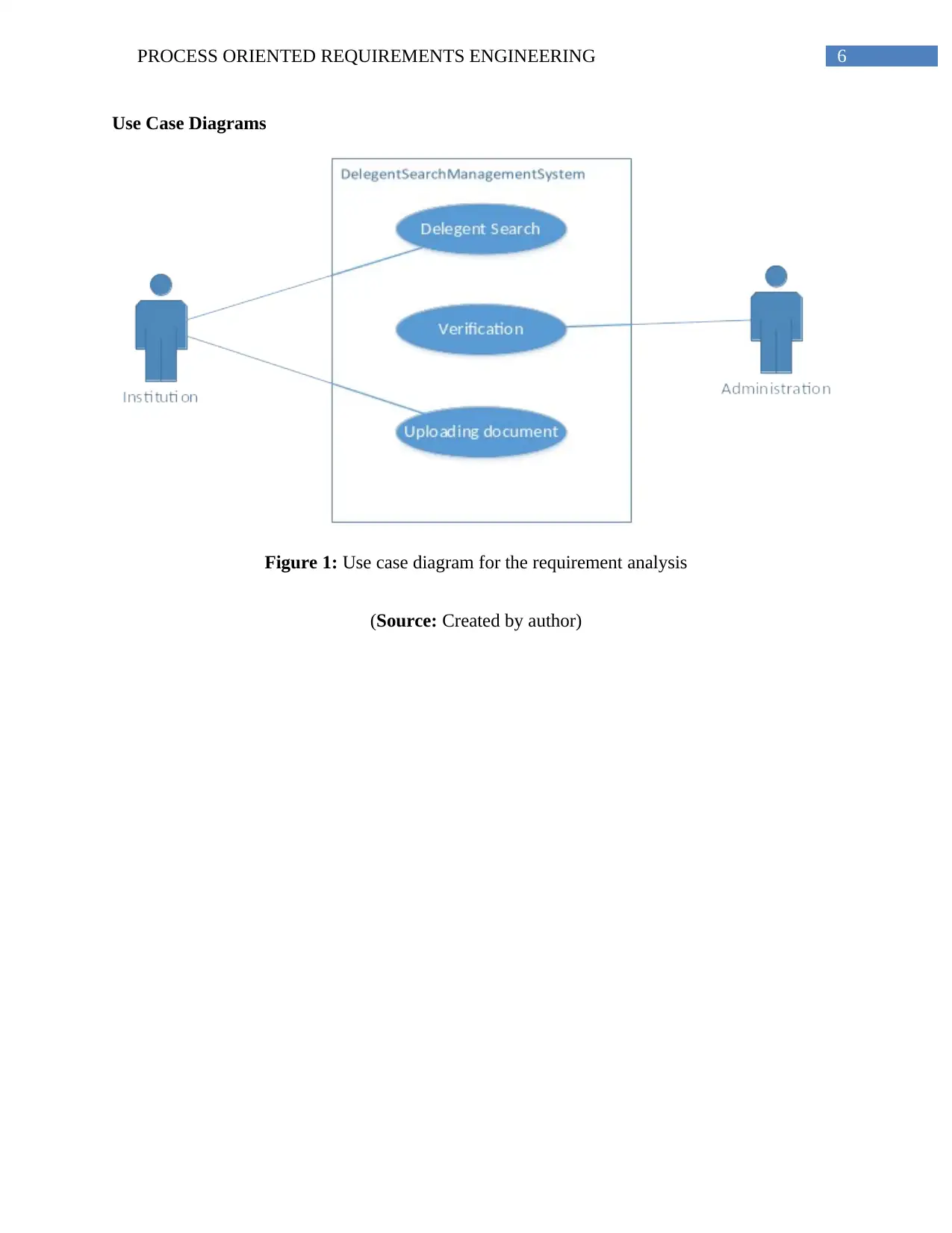
Use Case Diagrams
Figure 1: Use case diagram for the requirement analysis
(Source: Created by author)
Use Case Diagrams
Figure 1: Use case diagram for the requirement analysis
(Source: Created by author)
Paraphrase This Document
Need a fresh take? Get an instant paraphrase of this document with our AI Paraphraser

7PROCESS ORIENTED REQUIREMENTS ENGINEERING
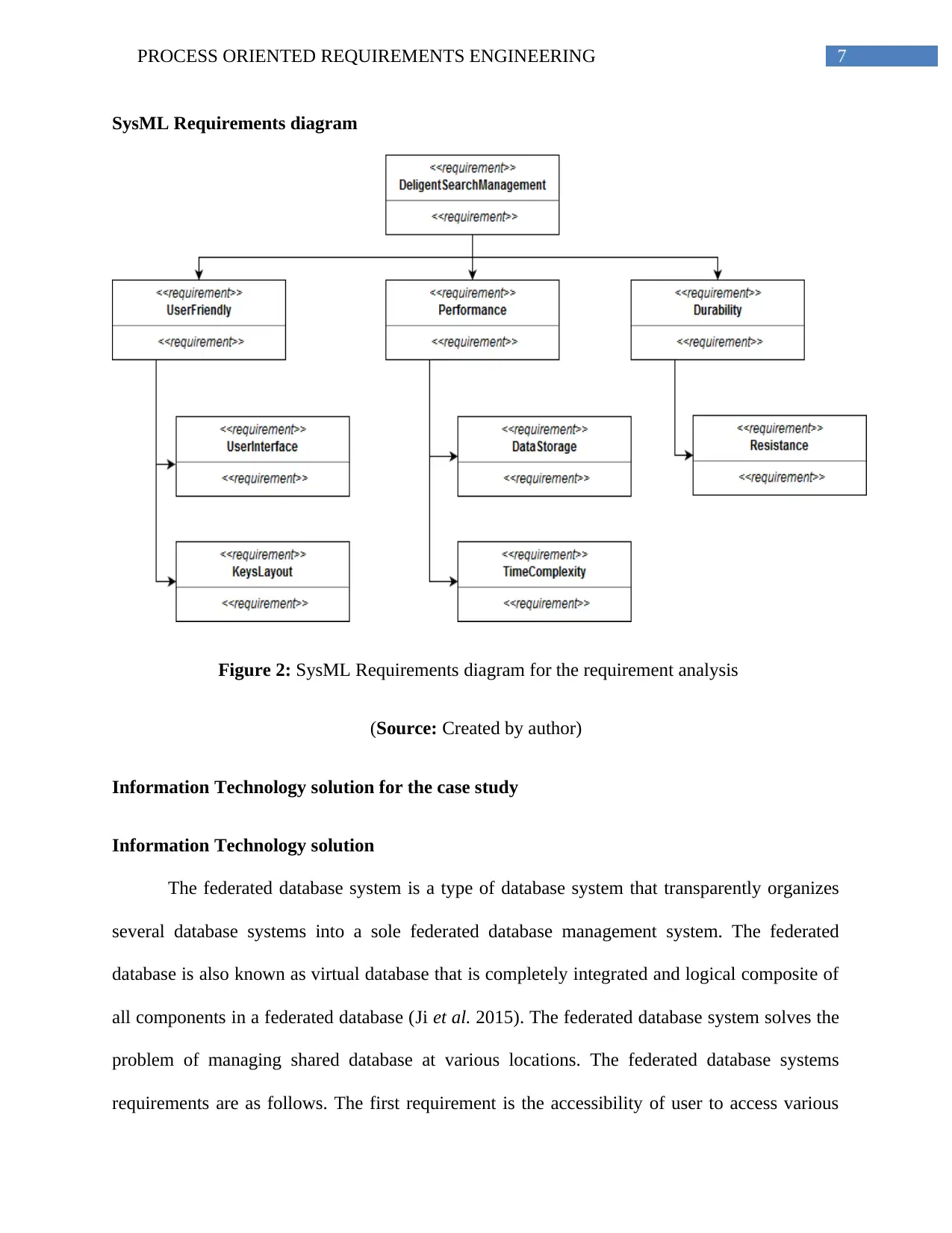
SysML Requirements diagram
Figure 2: SysML Requirements diagram for the requirement analysis
(Source: Created by author)
Information Technology solution for the case study
Information Technology solution
The federated database system is a type of database system that transparently organizes
several database systems into a sole federated database management system. The federated
database is also known as virtual database that is completely integrated and logical composite of
all components in a federated database (Ji et al. 2015). The federated database system solves the
problem of managing shared database at various locations. The federated database systems
requirements are as follows. The first requirement is the accessibility of user to access various
SysML Requirements diagram
Figure 2: SysML Requirements diagram for the requirement analysis
(Source: Created by author)
Information Technology solution for the case study
Information Technology solution
The federated database system is a type of database system that transparently organizes
several database systems into a sole federated database management system. The federated
database is also known as virtual database that is completely integrated and logical composite of
all components in a federated database (Ji et al. 2015). The federated database system solves the
problem of managing shared database at various locations. The federated database systems
requirements are as follows. The first requirement is the accessibility of user to access various

8PROCESS ORIENTED REQUIREMENTS ENGINEERING
heterogeneous databases similar to accessing an individual database. The second requirement is
accessibility of databases using a recognizable data model and systems (Beneventano, Olaru and
Vincini 2017). The third requirement is that existing database system should not change any data
as per the requirement of federated database system. The fourth requirement is the
accommodation of new databases addition to the network system. The fifth requirement is
accessibility of databases for both retrieving and updating of database. The sixth requirement is
performance of federated database system should be equivalent to the performance of
homogeneous distributed database systems (Baharorn, Deraman and Hamdan 2016). These
shows that federated database systems has some requirements that is needed for achieving
successful database management.
The federated database system is characterized into components including autonomy,
distribution and heterogeneity. The autonomy has features of transaction control, access control
and query processing. The distribution has features of improved access to availability, reliability
and time. The heterogeneity has features of making database function smoothly without any
hassle.
The most popular organization in information technology field, IBM, has invested high
cost in federation database management system. This has resulted in leading capabilities in the
current market. The federation technology has provided huge benefits to the digital information
world including storage of information in any format that is structured and unstructured. The
federation database system technologies are available in the current market through various IBM
products. The IBM products are InfoSphere Federation Server, InfoSphere Warehouse, TBM
Enterprise Information portal (EIP) and Federation Server for UNIX, Windows and Linux
(Analytics 2017). These products provide federation technologies to enhance and improve
heterogeneous databases similar to accessing an individual database. The second requirement is
accessibility of databases using a recognizable data model and systems (Beneventano, Olaru and
Vincini 2017). The third requirement is that existing database system should not change any data
as per the requirement of federated database system. The fourth requirement is the
accommodation of new databases addition to the network system. The fifth requirement is
accessibility of databases for both retrieving and updating of database. The sixth requirement is
performance of federated database system should be equivalent to the performance of
homogeneous distributed database systems (Baharorn, Deraman and Hamdan 2016). These
shows that federated database systems has some requirements that is needed for achieving
successful database management.
The federated database system is characterized into components including autonomy,
distribution and heterogeneity. The autonomy has features of transaction control, access control
and query processing. The distribution has features of improved access to availability, reliability
and time. The heterogeneity has features of making database function smoothly without any
hassle.
The most popular organization in information technology field, IBM, has invested high
cost in federation database management system. This has resulted in leading capabilities in the
current market. The federation technology has provided huge benefits to the digital information
world including storage of information in any format that is structured and unstructured. The
federation database system technologies are available in the current market through various IBM
products. The IBM products are InfoSphere Federation Server, InfoSphere Warehouse, TBM
Enterprise Information portal (EIP) and Federation Server for UNIX, Windows and Linux
(Analytics 2017). These products provide federation technologies to enhance and improve
⊘ This is a preview!⊘
Do you want full access?
Subscribe today to unlock all pages.

Trusted by 1+ million students worldwide

9PROCESS ORIENTED REQUIREMENTS ENGINEERING
client’s investment for delivery of improved real business goals and values. The IBM’s federated
database management systems provide powerful features for combining data from various data
sources.
The other technology of federated database system provided by Oracle is Shared-Disk
Cluster Database Architecture. This technology uses cluster format to deliver the required
service. The cluster in Shared-Disk Cluster Database Architecture contains servers that are
shared disk subsystem and interconnection of cluster (Das et al. 2015). The working process of
Shared-Disk Cluster Database Architecture is the accessibility to all disks with equal
participation of architecture of shared disk database on hardware cluster system. The Shared-
Disk Cluster Database Architecture technology utilizes Cache Fusion. The working process of
Cache Fusion is as follows. The utilization of collection of database caches in the database
system satisfies the fusing of the caches into one cache (Amirishetty et al. 2017). The disk
operation is removed from the critical path in Cache Fusion for the synchronization of data. The
required number of messages is reduced for synchronization of inter-node. The exploitation of
low-latency cluster with interconnects protocols for messages and data of database to ship
between caches (Müller 2016). The Shared-Disk Cluster Database Architecture technologydoes
not imposes any additional constraints on the developers. The Shared-Disk Cluster Database
Architecture technology provides scalability to the client’s businesses. The Shared-Disk Cluster
Database Architecture technology is available to client’s businesses as it provides recovery of
failed node is automatic (Gupta and Kaushal 2017). The Shared-Disk Cluster Database
Architecture technology is manageable as recovery of logs per instance is easy and simple.
The above paragraphs shows that federated database system discussed have various
benefits and they are driving the current market with real business values. The advantages of
client’s investment for delivery of improved real business goals and values. The IBM’s federated
database management systems provide powerful features for combining data from various data
sources.
The other technology of federated database system provided by Oracle is Shared-Disk
Cluster Database Architecture. This technology uses cluster format to deliver the required
service. The cluster in Shared-Disk Cluster Database Architecture contains servers that are
shared disk subsystem and interconnection of cluster (Das et al. 2015). The working process of
Shared-Disk Cluster Database Architecture is the accessibility to all disks with equal
participation of architecture of shared disk database on hardware cluster system. The Shared-
Disk Cluster Database Architecture technology utilizes Cache Fusion. The working process of
Cache Fusion is as follows. The utilization of collection of database caches in the database
system satisfies the fusing of the caches into one cache (Amirishetty et al. 2017). The disk
operation is removed from the critical path in Cache Fusion for the synchronization of data. The
required number of messages is reduced for synchronization of inter-node. The exploitation of
low-latency cluster with interconnects protocols for messages and data of database to ship
between caches (Müller 2016). The Shared-Disk Cluster Database Architecture technologydoes
not imposes any additional constraints on the developers. The Shared-Disk Cluster Database
Architecture technology provides scalability to the client’s businesses. The Shared-Disk Cluster
Database Architecture technology is available to client’s businesses as it provides recovery of
failed node is automatic (Gupta and Kaushal 2017). The Shared-Disk Cluster Database
Architecture technology is manageable as recovery of logs per instance is easy and simple.
The above paragraphs shows that federated database system discussed have various
benefits and they are driving the current market with real business values. The advantages of
Paraphrase This Document
Need a fresh take? Get an instant paraphrase of this document with our AI Paraphraser

10PROCESS ORIENTED REQUIREMENTS ENGINEERING
federate database system are as follows. The benefits are consistency, uniform view of data, and
easy access to data for clients and clients not aware of multiple existing databases that exist
(Gupta and Kaushal 2017). However, there are disadvantages also related with the federated
database system. They are complexity in creating automation of a global framework, sacrificing
of associated autonomy and semantic information is loss based on performance of integrated
schema. The other disadvantages are time consuming and prone to errors.
The various problems that need to be looked upon and researched in future are given in
the following paragraph.
Identification and representation of all the semantics that are useful in
performance of federated database management system.
Lack of integrated tools and software tools to improve performance, maintenance
and management of federated database system.
There is lack of sufficient transaction management algorithms to provide
consistency levels.
federate database system are as follows. The benefits are consistency, uniform view of data, and
easy access to data for clients and clients not aware of multiple existing databases that exist
(Gupta and Kaushal 2017). However, there are disadvantages also related with the federated
database system. They are complexity in creating automation of a global framework, sacrificing
of associated autonomy and semantic information is loss based on performance of integrated
schema. The other disadvantages are time consuming and prone to errors.
The various problems that need to be looked upon and researched in future are given in
the following paragraph.
Identification and representation of all the semantics that are useful in
performance of federated database management system.
Lack of integrated tools and software tools to improve performance, maintenance
and management of federated database system.
There is lack of sufficient transaction management algorithms to provide
consistency levels.

11PROCESS ORIENTED REQUIREMENTS ENGINEERING
SysML block Diagram with explanation
Figure 3: SysML block diagram for the requirement analysis
(Source: Created by author)
The SysML block diagram given above represents the structure of the system for the given case
study in a systematic hierarchical way (Grönninger et al. 2014). The diagram describes the
SysML block Diagram with explanation
Figure 3: SysML block diagram for the requirement analysis
(Source: Created by author)
The SysML block diagram given above represents the structure of the system for the given case
study in a systematic hierarchical way (Grönninger et al. 2014). The diagram describes the
⊘ This is a preview!⊘
Do you want full access?
Subscribe today to unlock all pages.

Trusted by 1+ million students worldwide
1 out of 21
Related Documents
Your All-in-One AI-Powered Toolkit for Academic Success.
+13062052269
info@desklib.com
Available 24*7 on WhatsApp / Email
Unlock your academic potential
Copyright © 2020–2026 A2Z Services. All Rights Reserved. Developed and managed by ZUCOL.