Report: Customer Experience, Retention, and Perceived Value in Retail
VerifiedAdded on 2022/10/19
|13
|3320
|16
Report
AI Summary
This report presents a comprehensive analysis of customer experience and retention within the retail industry, drawing on two primary research articles. Part A focuses on a holistic framework for conceptualizing customer experiences in retail environments, utilizing qualitative research and ethnographic interviews to understand customer perceptions and the impact of retail design. The research explores the use of interpretivism and the snowball sampling technique, analyzing data with ATLAS.ti software to develop a nuanced understanding of customer interactions. Part B examines customer retention and the mediating role of perceived value, employing a quantitative research approach with surveys and structural equation modeling to assess the influence of factors like corporate social responsibility, social media marketing, and store environment. The findings highlight the significant positive effect of perceived value on customer retention and the importance of understanding the customer experience to drive business success. The report concludes with an evaluation of strengths and weaknesses of each study, providing valuable insights for retail practitioners and designers.

Running Head: MANAGEMENT
MANAGEMENT
MANAGEMENT

Paraphrase This Document
Need a fresh take? Get an instant paraphrase of this document with our AI Paraphraser
MANAGEMENT 2
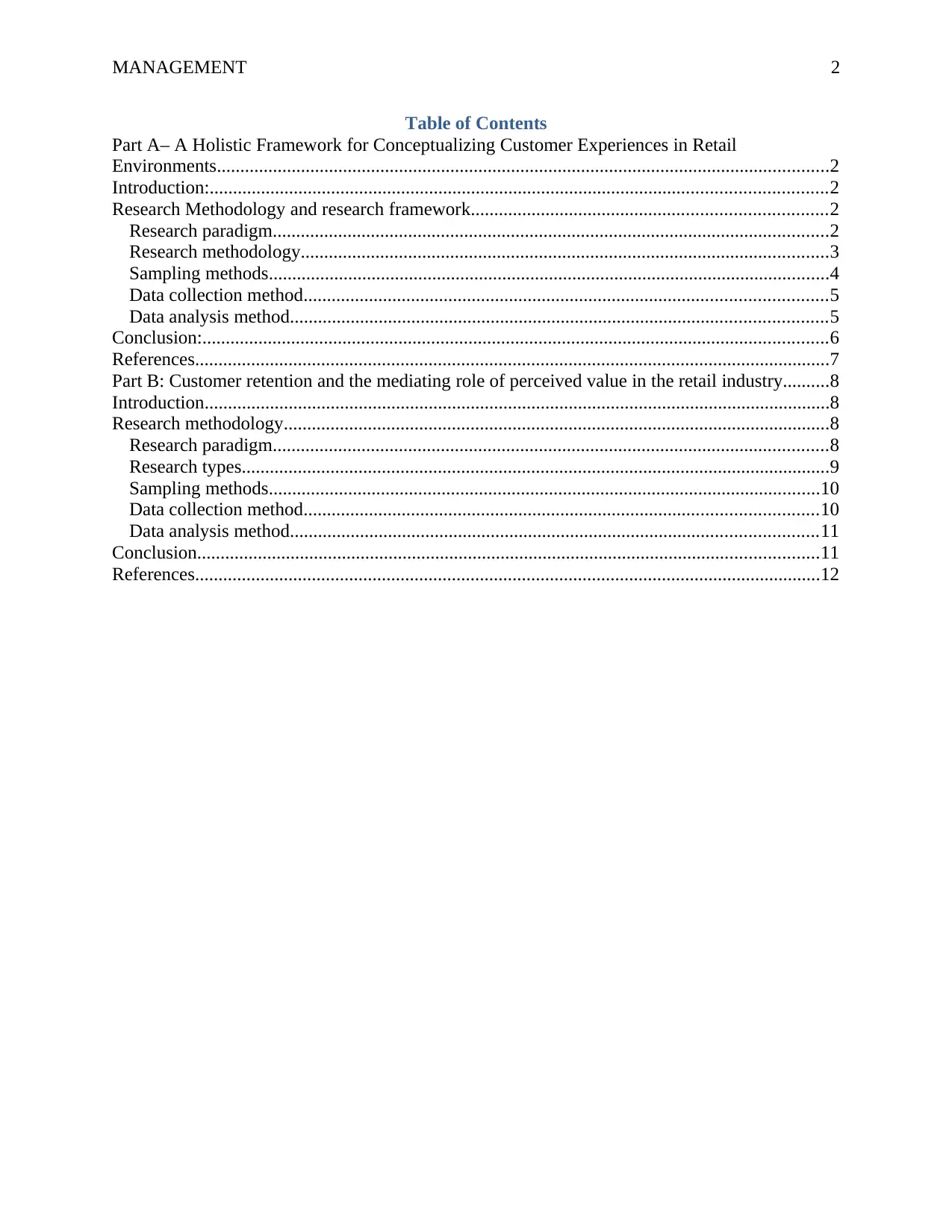
Table of Contents
Part A– A Holistic Framework for Conceptualizing Customer Experiences in Retail
Environments...................................................................................................................................2
Introduction:....................................................................................................................................2
Research Methodology and research framework............................................................................2
Research paradigm.......................................................................................................................2
Research methodology.................................................................................................................3
Sampling methods........................................................................................................................4
Data collection method................................................................................................................5
Data analysis method...................................................................................................................5
Conclusion:......................................................................................................................................6
References........................................................................................................................................7
Part B: Customer retention and the mediating role of perceived value in the retail industry..........8
Introduction......................................................................................................................................8
Research methodology.....................................................................................................................8
Research paradigm.......................................................................................................................8
Research types..............................................................................................................................9
Sampling methods......................................................................................................................10
Data collection method..............................................................................................................10
Data analysis method.................................................................................................................11
Conclusion.....................................................................................................................................11
References......................................................................................................................................12
Table of Contents
Part A– A Holistic Framework for Conceptualizing Customer Experiences in Retail
Environments...................................................................................................................................2
Introduction:....................................................................................................................................2
Research Methodology and research framework............................................................................2
Research paradigm.......................................................................................................................2
Research methodology.................................................................................................................3
Sampling methods........................................................................................................................4
Data collection method................................................................................................................5
Data analysis method...................................................................................................................5
Conclusion:......................................................................................................................................6
References........................................................................................................................................7
Part B: Customer retention and the mediating role of perceived value in the retail industry..........8
Introduction......................................................................................................................................8
Research methodology.....................................................................................................................8
Research paradigm.......................................................................................................................8
Research types..............................................................................................................................9
Sampling methods......................................................................................................................10
Data collection method..............................................................................................................10
Data analysis method.................................................................................................................11
Conclusion.....................................................................................................................................11
References......................................................................................................................................12
MANAGEMENT 3
Part A– A Holistic Framework for Conceptualizing Customer Experiences in Retail
Environments
Introduction:
In this article, qualitative research is used by a researcher for developing a holistic
framework for conceptualizing customer experiences in retail environments. In this article,
systematic processes are used for completing the research. Furthermore, Interpretivism research
philosophy is used in this research. In addition to this, the Ethnography research methodology is
used by the researcher for addressing the research issues. Snowball sampling technique is used
for choosing the participants from a large number of populations. Moreover, ATLAS.ti version
WIN 5.0 software is used for analyzing the gathered information regarding research issues.
Research Methodology and research framework
Research paradigm
This philosophy is view towards ways through that information towards phenomenon can
be collected, analyzed, as well as implemented. The word epistemology illustrates ‘what is
identified to be true’ in contrast to doxology depicts ‘what is supposed to be true’. These features
entail different philosophies of study strategy. These methods are positivism and interpretivism
philosophy (Kumar, 2019).
In this article, Interpretivism study philosophy practiced with intention of this
investigation because it construes to the component of study. This philosophy is selected
interpretivism integrates the human interest in the investigation. According to this philosophy, a
researcher accepts that evaluates the reality that is only acquired by social named as
assumes that access to reality is only acquired through social structures such as
instruments, awareness, and language and communal meanings (Silverman, 2016).
Part A– A Holistic Framework for Conceptualizing Customer Experiences in Retail
Environments
Introduction:
In this article, qualitative research is used by a researcher for developing a holistic
framework for conceptualizing customer experiences in retail environments. In this article,
systematic processes are used for completing the research. Furthermore, Interpretivism research
philosophy is used in this research. In addition to this, the Ethnography research methodology is
used by the researcher for addressing the research issues. Snowball sampling technique is used
for choosing the participants from a large number of populations. Moreover, ATLAS.ti version
WIN 5.0 software is used for analyzing the gathered information regarding research issues.
Research Methodology and research framework
Research paradigm
This philosophy is view towards ways through that information towards phenomenon can
be collected, analyzed, as well as implemented. The word epistemology illustrates ‘what is
identified to be true’ in contrast to doxology depicts ‘what is supposed to be true’. These features
entail different philosophies of study strategy. These methods are positivism and interpretivism
philosophy (Kumar, 2019).
In this article, Interpretivism study philosophy practiced with intention of this
investigation because it construes to the component of study. This philosophy is selected
interpretivism integrates the human interest in the investigation. According to this philosophy, a
researcher accepts that evaluates the reality that is only acquired by social named as
assumes that access to reality is only acquired through social structures such as
instruments, awareness, and language and communal meanings (Silverman, 2016).
⊘ This is a preview!⊘
Do you want full access?
Subscribe today to unlock all pages.

Trusted by 1+ million students worldwide
MANAGEMENT 4
This philosophy is associated with a philosophical position with respect to idealism and could be
used in the team group. It is implemented by an investigator as it includes the different strategies
like social constructivism, phenomenology as well as hermeneutics strategies that can reject
objectivist perception that has the meaning of exist in international self-sufficiently of awareness
(Taylor, Bogdan, & DeVault, 2015).
This research focuses on the meaning and can employ different techniques for reflecting
several aspects associated with issues. According to this strategy, a person could not be detached
by their knowledge as well as hence there is association among researcher and study subject.
This approach is beneficial for addressing holistic structure in abstracting buyer involvements in
retail atmosphere. It relies on meaning and knowledge about customer experiences with
empirical level. This approach is applied in performing the survey through questionnaire as it is
supportive for collecting reality regarding research concerns (Flick, 2015).
Research methodology
Ethnography is used as a research model in this article. This methodology is rooted
within cultural anthropology that depends on entering into the natural life of an individual. In the
given article, ethnography considers phenomenologically oriented research strategy. It seems
specifically well matched to interior architects as well as, viewpoints of designers. It is identified
that the aim of conducting ethnographic approaches is to offer holistic explanation of the
phenomenon in the natural set via description, understanding as well as, clarification (Alvesson
& Sköldberg, 2017).
With the purpose of working with the individual in their natural setting as well as, aiming
to comprehend the insider aspects about reality, the ethnographic methodology could be
This philosophy is associated with a philosophical position with respect to idealism and could be
used in the team group. It is implemented by an investigator as it includes the different strategies
like social constructivism, phenomenology as well as hermeneutics strategies that can reject
objectivist perception that has the meaning of exist in international self-sufficiently of awareness
(Taylor, Bogdan, & DeVault, 2015).
This research focuses on the meaning and can employ different techniques for reflecting
several aspects associated with issues. According to this strategy, a person could not be detached
by their knowledge as well as hence there is association among researcher and study subject.
This approach is beneficial for addressing holistic structure in abstracting buyer involvements in
retail atmosphere. It relies on meaning and knowledge about customer experiences with
empirical level. This approach is applied in performing the survey through questionnaire as it is
supportive for collecting reality regarding research concerns (Flick, 2015).
Research methodology
Ethnography is used as a research model in this article. This methodology is rooted
within cultural anthropology that depends on entering into the natural life of an individual. In the
given article, ethnography considers phenomenologically oriented research strategy. It seems
specifically well matched to interior architects as well as, viewpoints of designers. It is identified
that the aim of conducting ethnographic approaches is to offer holistic explanation of the
phenomenon in the natural set via description, understanding as well as, clarification (Alvesson
& Sköldberg, 2017).
With the purpose of working with the individual in their natural setting as well as, aiming
to comprehend the insider aspects about reality, the ethnographic methodology could be
Paraphrase This Document
Need a fresh take? Get an instant paraphrase of this document with our AI Paraphraser
MANAGEMENT 5
significant for investigating the customer experience to shop interiors (Petermans, Janssens, &
Van Cleempoel, 2013).
The main characteristic of ethnographic interviews is the idea that an investigator is truly
keen on learning by a interviewee. With respect to operational procedure, ethnographic
interviews entail a wider agenda that contains the concerns to be evaluated in the interview.
However, exact instruction as well as ways wherein, they are transported to front in the time of
interview. It is quite flexible in terms of empowering the interviewee to support in shaping
content of interview. This type of interview thus entails advanced extent of directness on element
of questioner with respect to interviewee as compared to the interviewee (Bresler & Stake,
2017).
Sampling methods
In this article, the snowball technique is used for composing the example as past practices
taught a researcher that ordinary stock is not keen to make time for involving in an in-situ store
associated study projects. Moreover, 3 retailers as well as 10 consumers were willing to respond
to the study project (Ledford & Gast, 2018).
The respondents visited real supplies on weekdays and during the normal opening hours.
The stores of Belgium were imperative often between 9 and 6. Along with this, 5 respondents are
visited in the worried retail atmosphere for initial time period whereas other five candidates
were recognizable with retail trade atmosphere they were visiting in structure of this
investigation. Their store is visiting lasted about 10 min. (Bauer, 2014).
Data collection method
Under ethnographic investigation, multiple data-gathering techniques could be
implemented to the single phenomenon and permitting an investigator for triangulate the
significant for investigating the customer experience to shop interiors (Petermans, Janssens, &
Van Cleempoel, 2013).
The main characteristic of ethnographic interviews is the idea that an investigator is truly
keen on learning by a interviewee. With respect to operational procedure, ethnographic
interviews entail a wider agenda that contains the concerns to be evaluated in the interview.
However, exact instruction as well as ways wherein, they are transported to front in the time of
interview. It is quite flexible in terms of empowering the interviewee to support in shaping
content of interview. This type of interview thus entails advanced extent of directness on element
of questioner with respect to interviewee as compared to the interviewee (Bresler & Stake,
2017).
Sampling methods
In this article, the snowball technique is used for composing the example as past practices
taught a researcher that ordinary stock is not keen to make time for involving in an in-situ store
associated study projects. Moreover, 3 retailers as well as 10 consumers were willing to respond
to the study project (Ledford & Gast, 2018).
The respondents visited real supplies on weekdays and during the normal opening hours.
The stores of Belgium were imperative often between 9 and 6. Along with this, 5 respondents are
visited in the worried retail atmosphere for initial time period whereas other five candidates
were recognizable with retail trade atmosphere they were visiting in structure of this
investigation. Their store is visiting lasted about 10 min. (Bauer, 2014).
Data collection method
Under ethnographic investigation, multiple data-gathering techniques could be
implemented to the single phenomenon and permitting an investigator for triangulate the
MANAGEMENT 6
gathered information. Under the residue of this chapter, we permitted this stripe of rational as
well as we emphasize on study method as well as outcomes of ethnographic talks with
originators, customers, and retailers (Choy, 2014).
We have opted for performing ethnographic discussions with such shareholders as they
demonstrate parties entailed in procedure of triggering, designing as well as, feeling actual
experiencing in real retail atmospheres. By performing the discussions with them, the aim is to
express and comprehend associations that applicants attach to an aspect of theoretical
understanding regarding customer experiences. Furthermore, interviewing participants in depth
is one of key data-gathering technique practices in the qualitative investigation. In-depth
interviews implemented in literature as unstructured and ethnographic interviews (Bauer, 2014).
Data analysis method
All meetings processed to ATLAS.ti version WIN 5.0 (Scientific Software Development,
n.d.). There is preliminary interpretation as well as re-reading of discussion transcripts were
tracked through transmission codes in ATLAS.ti with particular words implemented by
applicants and to units of text (Petermans, Janssens, & Van Cleempoel, 2013).
Twenty rapports in resulting from literature review and it is worked as director for coding
discussion information. In this article, codes allotted every time to applicant deliberated one of
such sides in accurate terms. The software is not only supportive for the researcher to investigate
the information held in every code but, indicates coding as a words number and number of times
a section of primary documents within ATLAS.ti is assigned to specific code (Ledford & Gast,
2018).
It enables a researcher to analyze and process the information in form of incidences and it
is not infrequent for ethnographic investigators since it permits them for developing visual and
gathered information. Under the residue of this chapter, we permitted this stripe of rational as
well as we emphasize on study method as well as outcomes of ethnographic talks with
originators, customers, and retailers (Choy, 2014).
We have opted for performing ethnographic discussions with such shareholders as they
demonstrate parties entailed in procedure of triggering, designing as well as, feeling actual
experiencing in real retail atmospheres. By performing the discussions with them, the aim is to
express and comprehend associations that applicants attach to an aspect of theoretical
understanding regarding customer experiences. Furthermore, interviewing participants in depth
is one of key data-gathering technique practices in the qualitative investigation. In-depth
interviews implemented in literature as unstructured and ethnographic interviews (Bauer, 2014).
Data analysis method
All meetings processed to ATLAS.ti version WIN 5.0 (Scientific Software Development,
n.d.). There is preliminary interpretation as well as re-reading of discussion transcripts were
tracked through transmission codes in ATLAS.ti with particular words implemented by
applicants and to units of text (Petermans, Janssens, & Van Cleempoel, 2013).
Twenty rapports in resulting from literature review and it is worked as director for coding
discussion information. In this article, codes allotted every time to applicant deliberated one of
such sides in accurate terms. The software is not only supportive for the researcher to investigate
the information held in every code but, indicates coding as a words number and number of times
a section of primary documents within ATLAS.ti is assigned to specific code (Ledford & Gast,
2018).
It enables a researcher to analyze and process the information in form of incidences and it
is not infrequent for ethnographic investigators since it permits them for developing visual and
⊘ This is a preview!⊘
Do you want full access?
Subscribe today to unlock all pages.
Trusted by 1+ million students worldwide
MANAGEMENT 7
graphical representations about verbal information. The application about visualization is used
for demonstrating the research outcomes (Alvesson & Sköldberg, 2017).
It could be supportive for directly associated research outcome to principle of phenomenon in the
investigation. It is important to the phenomenological inspired investigation. Through opting to
visualize the information, the aim is to offer a multi-dimensional opinion of associations that
applicants attach to each of notions associated with client experiences (Alvesson & Sköldberg,
2017).
Conclusion:
With respect to the above discussion, it can be summarized that there are different
strength of reading these articles. This research article helps to develop a holistic framework for
conceptualizing customer experiences in retail environments. It is also beneficial for
understanding customer perceptions about retail environments. It is also advantageous for
conducting further research on consumer perception. It can be summarised that there are some
weaknesses in this article. These weaknesses are small sample size, only focus on the specific
sector such as retail environments, and do not provide depth reviews about customer
experiences.
graphical representations about verbal information. The application about visualization is used
for demonstrating the research outcomes (Alvesson & Sköldberg, 2017).
It could be supportive for directly associated research outcome to principle of phenomenon in the
investigation. It is important to the phenomenological inspired investigation. Through opting to
visualize the information, the aim is to offer a multi-dimensional opinion of associations that
applicants attach to each of notions associated with client experiences (Alvesson & Sköldberg,
2017).
Conclusion:
With respect to the above discussion, it can be summarized that there are different
strength of reading these articles. This research article helps to develop a holistic framework for
conceptualizing customer experiences in retail environments. It is also beneficial for
understanding customer perceptions about retail environments. It is also advantageous for
conducting further research on consumer perception. It can be summarised that there are some
weaknesses in this article. These weaknesses are small sample size, only focus on the specific
sector such as retail environments, and do not provide depth reviews about customer
experiences.
Paraphrase This Document
Need a fresh take? Get an instant paraphrase of this document with our AI Paraphraser
MANAGEMENT 8
References
Alvesson, M., & Sköldberg, K. (2017). Reflexive methodology: New vistas for qualitative
research. Sage.
Bauer, G. R. (2014). Incorporating intersectionality theory into population health research
methodology: challenges and the potential to advance health equity. Social science &
medicine, 110, 10-17.
Bresler, L., & Stake, R. E. (2017). Qualitative research methodology in music education.
In Critical Essays in Music Education(pp. 113-128). Routledge.
Choy, L. T. (2014). The strengths and weaknesses of research methodology: comparison and
complimentary between qualitative and quantitative approaches. IOSR Journal of
Humanities and Social Science, 19(4), 99-104.
Flick, U. (2015). Introducing research methodology: A beginner's guide to doing a research
project. Sage.
Kumar, R. (2019). Research methodology: A step-by-step guide for beginners. Sage Publications
Limited.
Ledford, J. R., & Gast, D. L. (2018). Single case research methodology: Applications in special
education and behavioral sciences. Routledge.
Petermans, A., Janssens, W., & Van Cleempoel, K. (2013). A holistic framework for
conceptualizing customer experiences in retail environments. International Journal of
Design, 7(2), 1-18.
Silverman, D. (Ed.). (2016).Qualitative research. Sage.
Taylor, S. J., Bogdan, R., & DeVault, M. (2015). Introduction to qualitative research methods: A
guidebook and resource. John Wiley & Sons.
References
Alvesson, M., & Sköldberg, K. (2017). Reflexive methodology: New vistas for qualitative
research. Sage.
Bauer, G. R. (2014). Incorporating intersectionality theory into population health research
methodology: challenges and the potential to advance health equity. Social science &
medicine, 110, 10-17.
Bresler, L., & Stake, R. E. (2017). Qualitative research methodology in music education.
In Critical Essays in Music Education(pp. 113-128). Routledge.
Choy, L. T. (2014). The strengths and weaknesses of research methodology: comparison and
complimentary between qualitative and quantitative approaches. IOSR Journal of
Humanities and Social Science, 19(4), 99-104.
Flick, U. (2015). Introducing research methodology: A beginner's guide to doing a research
project. Sage.
Kumar, R. (2019). Research methodology: A step-by-step guide for beginners. Sage Publications
Limited.
Ledford, J. R., & Gast, D. L. (2018). Single case research methodology: Applications in special
education and behavioral sciences. Routledge.
Petermans, A., Janssens, W., & Van Cleempoel, K. (2013). A holistic framework for
conceptualizing customer experiences in retail environments. International Journal of
Design, 7(2), 1-18.
Silverman, D. (Ed.). (2016).Qualitative research. Sage.
Taylor, S. J., Bogdan, R., & DeVault, M. (2015). Introduction to qualitative research methods: A
guidebook and resource. John Wiley & Sons.
MANAGEMENT 9
Part B: Customer retention and the mediating role of perceived value in the retail industry
Introduction
This study is vital in obtaining study methods in the favor of customer retention as well
as mediating role of perceived value in retail industry. The research methodology could consider
many methods in getting the depth data about the research issue named as a research paradigm,
research methodology, sampling method, data collection method, and data analysis method
(Nardi, 2018). These methods will aid the investigator to select such research tools for
effectively performing the study and get a favorable result. It is examined that this tool assists to
get higher competitive advantages. These are discussed below:
Research methodology
Research paradigm
Research philosophy is used for developing knowledge by entailing different sources.
It is a tool that is practiced to examine the beliefs towards different methods herein the
information could be gathered used and evaluated. The researcher would select a suitable tool
and meet the study purpose in an effective manner. The secondary data will be gathered to meet
the purpose of study matter. This study has considered the interpretivism philosophy is practiced
as it assists to evaluate theoretical data in the context of study matter. This philosophy could also
assist to effectively develop theory towards the research matter (Mertens, 2014).
Research types
It is an effective approach to get information with the favour of this study issue. This tool
could considered many methods by the researcher to conduct their study and get information
towards the research matter named as a qualitative and quantitative approach (Antwi, & Hamza,
2015).
Part B: Customer retention and the mediating role of perceived value in the retail industry
Introduction
This study is vital in obtaining study methods in the favor of customer retention as well
as mediating role of perceived value in retail industry. The research methodology could consider
many methods in getting the depth data about the research issue named as a research paradigm,
research methodology, sampling method, data collection method, and data analysis method
(Nardi, 2018). These methods will aid the investigator to select such research tools for
effectively performing the study and get a favorable result. It is examined that this tool assists to
get higher competitive advantages. These are discussed below:
Research methodology
Research paradigm
Research philosophy is used for developing knowledge by entailing different sources.
It is a tool that is practiced to examine the beliefs towards different methods herein the
information could be gathered used and evaluated. The researcher would select a suitable tool
and meet the study purpose in an effective manner. The secondary data will be gathered to meet
the purpose of study matter. This study has considered the interpretivism philosophy is practiced
as it assists to evaluate theoretical data in the context of study matter. This philosophy could also
assist to effectively develop theory towards the research matter (Mertens, 2014).
Research types
It is an effective approach to get information with the favour of this study issue. This tool
could considered many methods by the researcher to conduct their study and get information
towards the research matter named as a qualitative and quantitative approach (Antwi, & Hamza,
2015).
⊘ This is a preview!⊘
Do you want full access?
Subscribe today to unlock all pages.
Trusted by 1+ million students worldwide
MANAGEMENT 10
The quantitative research tool is practiced as it allows to meets the study matter. The
quantitative research method could consider the survey through a questionnaire as it would be
vital to meet the research purpose. Moreover, this strategy will allow the investigator to pool
factual information towards the customer retention and value perceived for retail industry
(Hartas, 2015).
The research approach could entail kinds of tools are used by the researcher for meeting
the research purpose. This approach could consider many sources named as grounded theory,
focus group, interview, literature review, cross-sectional, content analysis, and observation
method. It will aid to meet the study purpose. The investigator could also entail internal sources
to get depth information in the context of the current issue. These sources are known as authentic
websites and retail industry websites. It is examined that the external sources also practiced by
the investigator such as the internet, books, and competitors data, and government report. In
addition, investigator use literature review tool that is practiced to get views and opinions of
another expert towards the research issue (Mertens, 2014).
This tool is vital in getting depth knowledge about concepts as well as rational which are
practiced to meet the research outcome. With respect to this, it is examined that this technique
could provide a path to the organization for critically evaluating the research work that is used in
exploratory nature in the research work. In addition, it is addressed that the literature review tool
makes the research scholar more capable to identify the relation between the customer's retention
and perceived value. Therefore, the depth knowledge towards the research concern is gathered
by the explanatory nature of the study (Nardi, 2018).
The quantitative research tool is practiced as it allows to meets the study matter. The
quantitative research method could consider the survey through a questionnaire as it would be
vital to meet the research purpose. Moreover, this strategy will allow the investigator to pool
factual information towards the customer retention and value perceived for retail industry
(Hartas, 2015).
The research approach could entail kinds of tools are used by the researcher for meeting
the research purpose. This approach could consider many sources named as grounded theory,
focus group, interview, literature review, cross-sectional, content analysis, and observation
method. It will aid to meet the study purpose. The investigator could also entail internal sources
to get depth information in the context of the current issue. These sources are known as authentic
websites and retail industry websites. It is examined that the external sources also practiced by
the investigator such as the internet, books, and competitors data, and government report. In
addition, investigator use literature review tool that is practiced to get views and opinions of
another expert towards the research issue (Mertens, 2014).
This tool is vital in getting depth knowledge about concepts as well as rational which are
practiced to meet the research outcome. With respect to this, it is examined that this technique
could provide a path to the organization for critically evaluating the research work that is used in
exploratory nature in the research work. In addition, it is addressed that the literature review tool
makes the research scholar more capable to identify the relation between the customer's retention
and perceived value. Therefore, the depth knowledge towards the research concern is gathered
by the explanatory nature of the study (Nardi, 2018).
Paraphrase This Document
Need a fresh take? Get an instant paraphrase of this document with our AI Paraphraser
MANAGEMENT 11
Sampling methods
The sampling is a tool that is practiced to select a suitable sample size to get the
information towards the research. The sampling is the best tool to conduct research in an
effective way. There are two kinds of sampling tool, which entailed by the researcher named as
the probability, and non- probability-sampling tool (Creswell & Creswell, 2017). The researcher
has practiced non-probability with convenience sampling procedure is practiced due to getting
accurate information towards the research.
The non-probability sampling enables to select the research candidates on bahalf of age,
gender, education, as well as region. It will be imperative in conducting the study in a specific
manner. The probability-sampling tool is lead to choose research candidates on the random basis
that could decline the probability of getting the quality result in favor of the research outcome.
For conducting this study, 278 research candidates have selected to conduct the study. It will be
vital to obtain depth information towards study issues. The researcher selected such participants
and get their direct responses to research matter (Kumar, 2019).
Data collection method
In this study, the investigator will choose the suitable method for selecting suitable data
gathering tool for getting the suitable tools named as primary data collection method and
secondary data collection method. The survey through questionnaire tool has been practiced by
the researcher as it allows directly meeting with the participants and obtaining their favorable
data in the concern in the context of current matter (Choy, 2014).
The survey through the questionnaire is vital technique that is used by the investigator to
get the factual information as it would assist to enhance quality of research result. The primary
data gathering tool is a tool that enables to conduct the study in an effective manner. The
Sampling methods
The sampling is a tool that is practiced to select a suitable sample size to get the
information towards the research. The sampling is the best tool to conduct research in an
effective way. There are two kinds of sampling tool, which entailed by the researcher named as
the probability, and non- probability-sampling tool (Creswell & Creswell, 2017). The researcher
has practiced non-probability with convenience sampling procedure is practiced due to getting
accurate information towards the research.
The non-probability sampling enables to select the research candidates on bahalf of age,
gender, education, as well as region. It will be imperative in conducting the study in a specific
manner. The probability-sampling tool is lead to choose research candidates on the random basis
that could decline the probability of getting the quality result in favor of the research outcome.
For conducting this study, 278 research candidates have selected to conduct the study. It will be
vital to obtain depth information towards study issues. The researcher selected such participants
and get their direct responses to research matter (Kumar, 2019).
Data collection method
In this study, the investigator will choose the suitable method for selecting suitable data
gathering tool for getting the suitable tools named as primary data collection method and
secondary data collection method. The survey through questionnaire tool has been practiced by
the researcher as it allows directly meeting with the participants and obtaining their favorable
data in the concern in the context of current matter (Choy, 2014).
The survey through the questionnaire is vital technique that is used by the investigator to
get the factual information as it would assist to enhance quality of research result. The primary
data gathering tool is a tool that enables to conduct the study in an effective manner. The
MANAGEMENT 12
secondary data has been also considered to get theoretical information in favours of customer
retain in the retail industry. The secondary data collection technique is another approach that is
practiced to develop theory in the context of the study by entailing existing sources named as
online web, books, articles, books, journals. It would also assist for accomplishing the research
purpose (McCusker & Gunaydin, 2015).
Data analysis method
The data analysis method is vital for evaluating the study by entailing different sources
such as quantitative as well as qualitative data evaluation tools. The researcher has select
quantitative data evaluation too by which survey through questionnaire method will be
considered by invetsigator. For evaluating information, SPSS software will practice by which the
researcher will present the data by graphs, charts, and tables. It would also be imperative in
making consistency in the research result. It will lead to meet the research outcome (Hanaysha,
2018).
Conclusion
In the context of above interpretation, it can be concluded that perceived value has a
direct positive impact on customer retention. From the evaluation of the article, it is addressed
that social media marketing could also significant impact on perceived value. In addition, it can
be summarized that outcomes showed that corporate social accountability and store atmosphere
have positively impacted on customer retention as well as perceived value. Furthermore, it can
be addressed that the research strategies enables to select the suitable research tools and meet the
research objectives in a systematic manner. In this, the quantitative research method has been
selected that is conducted by considering survey through questionnaire on 278 responded and
obtain their response in the favor of the concern.
secondary data has been also considered to get theoretical information in favours of customer
retain in the retail industry. The secondary data collection technique is another approach that is
practiced to develop theory in the context of the study by entailing existing sources named as
online web, books, articles, books, journals. It would also assist for accomplishing the research
purpose (McCusker & Gunaydin, 2015).
Data analysis method
The data analysis method is vital for evaluating the study by entailing different sources
such as quantitative as well as qualitative data evaluation tools. The researcher has select
quantitative data evaluation too by which survey through questionnaire method will be
considered by invetsigator. For evaluating information, SPSS software will practice by which the
researcher will present the data by graphs, charts, and tables. It would also be imperative in
making consistency in the research result. It will lead to meet the research outcome (Hanaysha,
2018).
Conclusion
In the context of above interpretation, it can be concluded that perceived value has a
direct positive impact on customer retention. From the evaluation of the article, it is addressed
that social media marketing could also significant impact on perceived value. In addition, it can
be summarized that outcomes showed that corporate social accountability and store atmosphere
have positively impacted on customer retention as well as perceived value. Furthermore, it can
be addressed that the research strategies enables to select the suitable research tools and meet the
research objectives in a systematic manner. In this, the quantitative research method has been
selected that is conducted by considering survey through questionnaire on 278 responded and
obtain their response in the favor of the concern.
⊘ This is a preview!⊘
Do you want full access?
Subscribe today to unlock all pages.
Trusted by 1+ million students worldwide

1 out of 13


Related Documents


Your All-in-One AI-Powered Toolkit for Academic Success.
+13062052269
info@desklib.com
Available 24*7 on WhatsApp / Email
![[object Object]](/_next/static/media/star-bottom.7253800d.svg)
Unlock your academic potential
Copyright © 2020–2026 A2Z Services. All Rights Reserved. Developed and managed by ZUCOL.