Empirical Investigation of Islamic Banks Risk Management Framework
VerifiedAdded on 2023/01/11
|17
|4043
|55
Project
AI Summary
This research project undertakes an empirical investigation of the risk management framework employed by Islamic banks in Pakistan. The study aims to explore the specific risks faced by these institutions, differentiating them from conventional banks, and to analyze the relationship between financial performance and risk management practices. The methodology involves both primary and secondary data collection, including questionnaires and interviews with bank managers, alongside a review of academic literature and industry reports. The research will utilize decision theory and the NIST Risk Management Framework to analyze data, employing both inductive and deductive approaches, and employing both quantitative and qualitative methods. The findings will contribute to a better understanding of the effectiveness of risk management strategies and identify challenges faced by Islamic banks in maintaining financial stability and growth. Return on Asset (ROA) and Return on Equity (ROE) will be used to identify and analyze the financial performance of the Islamic bank. The study will also provide insights into the techniques and practices of risk management in Islamic banks in Pakistan.
2.Programme of Research
2.1 Title of the proposed investigation (to appear on the certificate unless later modified via an R9):
Empirical Investigation of Risk Management Framework ofIslamic Banks in Pakistan.
2.2 Aim(s)and objectives of the investigation(bullet points only):
Study Aim:
The aim of the study is to empirically investigate risk management framework of Islamic banks in Pakistan.
Study Objectives:
To briefly discuss the risks faced by Islamic banks and describe the difference between the risk faced by
Islamic and conventional banks
To empirically analyses and investigate the relationship between financial performance and risk management
of Islamic banks.
2.1 Title of the proposed investigation (to appear on the certificate unless later modified via an R9):
Empirical Investigation of Risk Management Framework ofIslamic Banks in Pakistan.
2.2 Aim(s)and objectives of the investigation(bullet points only):
Study Aim:
The aim of the study is to empirically investigate risk management framework of Islamic banks in Pakistan.
Study Objectives:
To briefly discuss the risks faced by Islamic banks and describe the difference between the risk faced by
Islamic and conventional banks
To empirically analyses and investigate the relationship between financial performance and risk management
of Islamic banks.

Paraphrase This Document
Need a fresh take? Get an instant paraphrase of this document with our AI Paraphraser
To identify the main techniques and practices of risk management in Islamic banks of Pakistan.
To investigate the efficiency of risk management structure of Islamic banks in Pakistan.
To discuss the challenges faced by Islamic banks in Pakistan regarding risk management.
2.3 Give an account of the proposed plan of work for the research to be undertaken for theMPhil and/or PhD. Include its
relationship to previous work, with references, and its intended outcomes (between 1000 and 1500 words).Please
include word count.(1487)
Introduction
The modern Islamic banking system is different as compare to conventional banking system(AlimshanFaizulayev, 2011)and the
history of modem day's Islamic banking system isnot as older as conventional banking system(Shabbiretal.2012).In the
1970s, the first ever current Islamic banking system was introduced in the Middle East (Ali,2015). After the tremendous success of
the Islamic banking system since its introduction to the world. The only purpose of the bank was to implement sharia principles
(Alam and Rizvi, 2017). The projected assets of the Islamic banks will be worth $3.5 trillion by 2020 with the estimated
growth of between 10-12% over the last 10 years and more than 622 Islamic financial institutions has been established
worldwide(arabianbusiness,2016). There has been a significant growth of 35% in 2017 of Islamic banking industry in Pakistan.
As per The State Bank of Pakistan, there was an increase in profit before tax by Islamic banking sector amounting to Rs.23
To investigate the efficiency of risk management structure of Islamic banks in Pakistan.
To discuss the challenges faced by Islamic banks in Pakistan regarding risk management.
2.3 Give an account of the proposed plan of work for the research to be undertaken for theMPhil and/or PhD. Include its
relationship to previous work, with references, and its intended outcomes (between 1000 and 1500 words).Please
include word count.(1487)
Introduction
The modern Islamic banking system is different as compare to conventional banking system(AlimshanFaizulayev, 2011)and the
history of modem day's Islamic banking system isnot as older as conventional banking system(Shabbiretal.2012).In the
1970s, the first ever current Islamic banking system was introduced in the Middle East (Ali,2015). After the tremendous success of
the Islamic banking system since its introduction to the world. The only purpose of the bank was to implement sharia principles
(Alam and Rizvi, 2017). The projected assets of the Islamic banks will be worth $3.5 trillion by 2020 with the estimated
growth of between 10-12% over the last 10 years and more than 622 Islamic financial institutions has been established
worldwide(arabianbusiness,2016). There has been a significant growth of 35% in 2017 of Islamic banking industry in Pakistan.
As per The State Bank of Pakistan, there was an increase in profit before tax by Islamic banking sector amounting to Rs.23
billion in 2017. By the end of 2017, there were about 21 Islamic banking institutions out of which 5 were fully based on
Islamic banking system and 16 were conventional banks with Islamic banking windows (Abdul Rahman, 2018).Islamic banks
in Pakistan need to pay more attention towards its risk management structure in order to keep its growth consistent every
year or to increase its assets value in the coming years(Salman Skeikh,2017).
Risk management plays a crucial role in the survival, growth and progress of Islamic banking sector. But this study will
focus on the different risks that are faced by the Islamic banks and to identify the different methods of risk management to
empirically analyse and investigate the risk management framework (Naceuret.al., 2017). Commonly used risk management
process which includes identifying the risk, measuring and analysing the risk, mitigating the risk and monitoring and reporting
the risk will also be the part of the investigation.
Literature Review
Islamic banking system is facing a greater challenge in identifying and analyzing the risk as compared to the conventional banking
system. One of the main reasons for such a significant challenge is because of the specific features of financing contracts, liquidity
infrastructure, legal requirements and governance of Islamic banking system (Cihak and Hesse, 2008). The performance of banks
linked with the good risk management practices and many studies on the relationship between risk management and financial
performance are based on conceptual nature (Al-Tamimi et.al., 2015). In modem banking system, risk management is described
as different strategies like board and management oversight, portfolio management, market analysis and more, that are
implemented towards risk and pay off associated with it(Iqbal and Molyneux, 2016).Different Islamic banks are exposed to
different kinds of risks like credit, liquidity, moral hazard, operational risk and more, which can badly affect their performance.
Islamic banking system and 16 were conventional banks with Islamic banking windows (Abdul Rahman, 2018).Islamic banks
in Pakistan need to pay more attention towards its risk management structure in order to keep its growth consistent every
year or to increase its assets value in the coming years(Salman Skeikh,2017).
Risk management plays a crucial role in the survival, growth and progress of Islamic banking sector. But this study will
focus on the different risks that are faced by the Islamic banks and to identify the different methods of risk management to
empirically analyse and investigate the risk management framework (Naceuret.al., 2017). Commonly used risk management
process which includes identifying the risk, measuring and analysing the risk, mitigating the risk and monitoring and reporting
the risk will also be the part of the investigation.
Literature Review
Islamic banking system is facing a greater challenge in identifying and analyzing the risk as compared to the conventional banking
system. One of the main reasons for such a significant challenge is because of the specific features of financing contracts, liquidity
infrastructure, legal requirements and governance of Islamic banking system (Cihak and Hesse, 2008). The performance of banks
linked with the good risk management practices and many studies on the relationship between risk management and financial
performance are based on conceptual nature (Al-Tamimi et.al., 2015). In modem banking system, risk management is described
as different strategies like board and management oversight, portfolio management, market analysis and more, that are
implemented towards risk and pay off associated with it(Iqbal and Molyneux, 2016).Different Islamic banks are exposed to
different kinds of risks like credit, liquidity, moral hazard, operational risk and more, which can badly affect their performance.
⊘ This is a preview!⊘
Do you want full access?
Subscribe today to unlock all pages.

Trusted by 1+ million students worldwide
Unlike the conventional banking, the research studies on risk management in Islamic banking system accelerated in 1997(Khan,
1997). And after that various scholars had started to study risk analyses in Islamic finance. All these researchers like Rahman
(2018) andMirr (2011),brought the argument that the Islamic banking is not only exposed to the risk that conventional banking
sector is having, instead there were many other risks due to their restrictions on interest and other shariah principles (Mirr, 2011).
Two types of techniques can be used to identify and manage the risk in Islamic banks. The first technique is a standard type and
consist on risk reporting, external and internal audits, internal rating and so on. The second technique normally adopted by
keeping in mind the requirements for sharia principles such as prohibition of interests or usury, ethical standards, liability and
business risk etc (Rammal and Zurbruegg, 2016).
Theoretical Framework
Decision Theory
For the current research paper, decision theory will be taken into consideration. By making use of appropriate knowledge about
decision theory and the field of risk management, a common basis was formed. This common basis had laid increased emphasis
on dealing with the uncertainties and giving them the priority (Coopchik, 2015). Decision theory can play the role of the counsel in
the response to these uncertainties by examining that preference should be given to which course of action (Al Suwailem, 2000). It
does not eliminate the roles of a risk manager within a company because decision theory only act as a tool through which certain
suggestion is being provided.
In the case of Islamic banking in Pakistan, there are a lot of uncertainties with respect to operations being performed by Islamic
1997). And after that various scholars had started to study risk analyses in Islamic finance. All these researchers like Rahman
(2018) andMirr (2011),brought the argument that the Islamic banking is not only exposed to the risk that conventional banking
sector is having, instead there were many other risks due to their restrictions on interest and other shariah principles (Mirr, 2011).
Two types of techniques can be used to identify and manage the risk in Islamic banks. The first technique is a standard type and
consist on risk reporting, external and internal audits, internal rating and so on. The second technique normally adopted by
keeping in mind the requirements for sharia principles such as prohibition of interests or usury, ethical standards, liability and
business risk etc (Rammal and Zurbruegg, 2016).
Theoretical Framework
Decision Theory
For the current research paper, decision theory will be taken into consideration. By making use of appropriate knowledge about
decision theory and the field of risk management, a common basis was formed. This common basis had laid increased emphasis
on dealing with the uncertainties and giving them the priority (Coopchik, 2015). Decision theory can play the role of the counsel in
the response to these uncertainties by examining that preference should be given to which course of action (Al Suwailem, 2000). It
does not eliminate the roles of a risk manager within a company because decision theory only act as a tool through which certain
suggestion is being provided.
In the case of Islamic banking in Pakistan, there are a lot of uncertainties with respect to operations being performed by Islamic
Paraphrase This Document
Need a fresh take? Get an instant paraphrase of this document with our AI Paraphraser
banks. The decision making will help in gaining the confidence of customers, which is considered as an essential tool to promote
integrity and trust among customers. It will develop the strength in customers to choose Islamic banking services over traditional
banking(Selvanathan, 2018).
Data and Methodology
For data collection mainly both primary and secondary data sources will be used. For the primary data collection a
questionnaire will be used in order to conduct the interview whereas, secondary data has been used to achieve aims and
objectives which includes journals, articles, research papers, literature reviews and professional associations reports and to
get access to all these journals, e-books and research papers, university library will be used. Other than this, various
accredited websites such as google scholars, IEEE, science direct etc. will also be used as data collection sources. This
study will use qualitative and quantitative data and thus inductive and deductive approach will be used. In inductive research
approach different theories are used to explore the data. Whereas, deductive approach will help the researcher to draw a
logical conclusion (Sekaran, 2012).
Data collection approach: Within an investigation both approaches such as qualitative and quantitative will be used for
collecting information about the topic. Both are effective approaches because these will support researcher in collecting of valid
outcomes easily and in minimum time period. For collecting qualitative data, researcher will use interview method because it
facilitate in gathering of qualitative and reliable information about the topic. In this method, researcher will make some open-ended
questions related to the topic that turn to help indentifying of respondents opinion about the study. Along with this, for collecting
quantitative data, questionnaire will be applied by researcher because it supports them in gathering of valid and reliable information
within lesser time period. Therefore, interview and questionnaire will be applied for collecting qualitative and quantitative data about
integrity and trust among customers. It will develop the strength in customers to choose Islamic banking services over traditional
banking(Selvanathan, 2018).
Data and Methodology
For data collection mainly both primary and secondary data sources will be used. For the primary data collection a
questionnaire will be used in order to conduct the interview whereas, secondary data has been used to achieve aims and
objectives which includes journals, articles, research papers, literature reviews and professional associations reports and to
get access to all these journals, e-books and research papers, university library will be used. Other than this, various
accredited websites such as google scholars, IEEE, science direct etc. will also be used as data collection sources. This
study will use qualitative and quantitative data and thus inductive and deductive approach will be used. In inductive research
approach different theories are used to explore the data. Whereas, deductive approach will help the researcher to draw a
logical conclusion (Sekaran, 2012).
Data collection approach: Within an investigation both approaches such as qualitative and quantitative will be used for
collecting information about the topic. Both are effective approaches because these will support researcher in collecting of valid
outcomes easily and in minimum time period. For collecting qualitative data, researcher will use interview method because it
facilitate in gathering of qualitative and reliable information about the topic. In this method, researcher will make some open-ended
questions related to the topic that turn to help indentifying of respondents opinion about the study. Along with this, for collecting
quantitative data, questionnaire will be applied by researcher because it supports them in gathering of valid and reliable information
within lesser time period. Therefore, interview and questionnaire will be applied for collecting qualitative and quantitative data about
the Empirical Investigation of Risk Management Framework of Islamic Banks in Pakistan.
Data analysis approach: There are basically two approaches of data analysis which are known as inductive and deductive. Both
approaches are used within an investigation because this research is based on qualitative and quantitative data. In order to
analysis qualitative information, inductive approach will be followed because it support in analysing and interpreting of quantitative
data. On the other hand, for analysing quantitative information, deductive approach will be followed by researcher because it will
support them to analyse as well as interpreted quantitative information easily.
Along with this, for analysing quantitative data, thematic analysis will be used. In this method researcher will make themes
on each questions of Interview. On the other side, for analysing quantitative data, researcher will use descriptive analysis because
it will help them by providing data in numerical form.
A visit to Pakistan will be done to physically meet the managers of different Islamic banks, in Pakistan to get the relevant
information on current structure of risk management along with issues faced by the Islamic banks in Pakistan. For providing
answers to the questions an interpretivism will be used in which various concepts and theoretical aspects will be used to
demonstrate the understanding of collected data. However, as the research is based on qualitative and quantitative, the
realism philosophy will also be used in order to assess the data gathered through SPSS (Samad and Hassan,1999).
To identify and analyse the financial performance of the Islamic bank, return on asset ratio (ROA) and return on equity
ratio (ROE) will be used. Return on assets refers to ratio of net income over the total assets which indicates the profit earned
per dollar of assets and shows the efficiency and performance of the banks (Akhtar, et.al., 2017). To know the impact of risk
managementframework on the financial performance of Islamic banks in Pakistan, a regression model will also be used to
investigate the impact. The statistical data collected from the population will assist in achieving the research objectives
(Samad and Hassan,1999).
Data analysis approach: There are basically two approaches of data analysis which are known as inductive and deductive. Both
approaches are used within an investigation because this research is based on qualitative and quantitative data. In order to
analysis qualitative information, inductive approach will be followed because it support in analysing and interpreting of quantitative
data. On the other hand, for analysing quantitative information, deductive approach will be followed by researcher because it will
support them to analyse as well as interpreted quantitative information easily.
Along with this, for analysing quantitative data, thematic analysis will be used. In this method researcher will make themes
on each questions of Interview. On the other side, for analysing quantitative data, researcher will use descriptive analysis because
it will help them by providing data in numerical form.
A visit to Pakistan will be done to physically meet the managers of different Islamic banks, in Pakistan to get the relevant
information on current structure of risk management along with issues faced by the Islamic banks in Pakistan. For providing
answers to the questions an interpretivism will be used in which various concepts and theoretical aspects will be used to
demonstrate the understanding of collected data. However, as the research is based on qualitative and quantitative, the
realism philosophy will also be used in order to assess the data gathered through SPSS (Samad and Hassan,1999).
To identify and analyse the financial performance of the Islamic bank, return on asset ratio (ROA) and return on equity
ratio (ROE) will be used. Return on assets refers to ratio of net income over the total assets which indicates the profit earned
per dollar of assets and shows the efficiency and performance of the banks (Akhtar, et.al., 2017). To know the impact of risk
managementframework on the financial performance of Islamic banks in Pakistan, a regression model will also be used to
investigate the impact. The statistical data collected from the population will assist in achieving the research objectives
(Samad and Hassan,1999).
⊘ This is a preview!⊘
Do you want full access?
Subscribe today to unlock all pages.
Trusted by 1+ million students worldwide
NIST Risk Management Framework will be used to develop and respond to the research question. The risk management
framework is the integration of information security standards and policies for federal government created by The National
Institute of Standards and Technology (NIST). It provides guidelines through the impact of various kinds of risks can be
mitigated to a greater extent. Through the risk management framework, the process will be provided that would integrate the
activities of risk and security management into the life cycle of system development(Jaeger, 2019) .
The population used in the research study is 6 fully fledged Islamic banks and 15 Islamic windows of conventional banks and
having interview with the professionals of Islamic banks will help in gathering necessary information on risk management
practices related to the research. It is an exploratory research that intended to carry out investigation of risk management
framework for Islamic banks (Platonova et.al., 2018). It is planned that interview will be conducted with a total of 10-15
managers who are currently working or serving in the Islamic banking institution in Pakistan. A total of 15 to 20 questions will
be asked in the interview from each participant where each participant has a choice to share their ideas, opinion and views
(Chattha and Alhabshi, 2017). These questions mainly consist of open-ended questions and each session last for 1 to 1 and
half an hour. Most of the interviewees in the research process falls in the age bracket of above 30 years having immense
exposure and knowledge within the field which includes both male and female participants. This research also follows
convenience sampling method, giving equal opportunity to all the participants of being selected. Also, prior permission will be
taken from each participant to record their responses and maintaining confidentiality of the personal information of each
participant throughout the process. For analysing the data both primary and secondary sources will be used. For the analysis
of secondary sources, a literature review will be performed so that suitable conclusions can be drawn based on previous
research studies.
Results chapter will include primary and secondary data about the topic. For analysing primary data, thematic and
framework is the integration of information security standards and policies for federal government created by The National
Institute of Standards and Technology (NIST). It provides guidelines through the impact of various kinds of risks can be
mitigated to a greater extent. Through the risk management framework, the process will be provided that would integrate the
activities of risk and security management into the life cycle of system development(Jaeger, 2019) .
The population used in the research study is 6 fully fledged Islamic banks and 15 Islamic windows of conventional banks and
having interview with the professionals of Islamic banks will help in gathering necessary information on risk management
practices related to the research. It is an exploratory research that intended to carry out investigation of risk management
framework for Islamic banks (Platonova et.al., 2018). It is planned that interview will be conducted with a total of 10-15
managers who are currently working or serving in the Islamic banking institution in Pakistan. A total of 15 to 20 questions will
be asked in the interview from each participant where each participant has a choice to share their ideas, opinion and views
(Chattha and Alhabshi, 2017). These questions mainly consist of open-ended questions and each session last for 1 to 1 and
half an hour. Most of the interviewees in the research process falls in the age bracket of above 30 years having immense
exposure and knowledge within the field which includes both male and female participants. This research also follows
convenience sampling method, giving equal opportunity to all the participants of being selected. Also, prior permission will be
taken from each participant to record their responses and maintaining confidentiality of the personal information of each
participant throughout the process. For analysing the data both primary and secondary sources will be used. For the analysis
of secondary sources, a literature review will be performed so that suitable conclusions can be drawn based on previous
research studies.
Results chapter will include primary and secondary data about the topic. For analysing primary data, thematic and
Paraphrase This Document
Need a fresh take? Get an instant paraphrase of this document with our AI Paraphraser
descriptive analysis will be used. Both are effective techniques in analysing of qualitative as well as quantitative information
regarding the existing topic. On the other hand, in this chapter researcher will also discussion secondary data that will be
useful in identifying of relationship between the primary and secondary information. Results of the study are based on both
primary as well as secondary information.
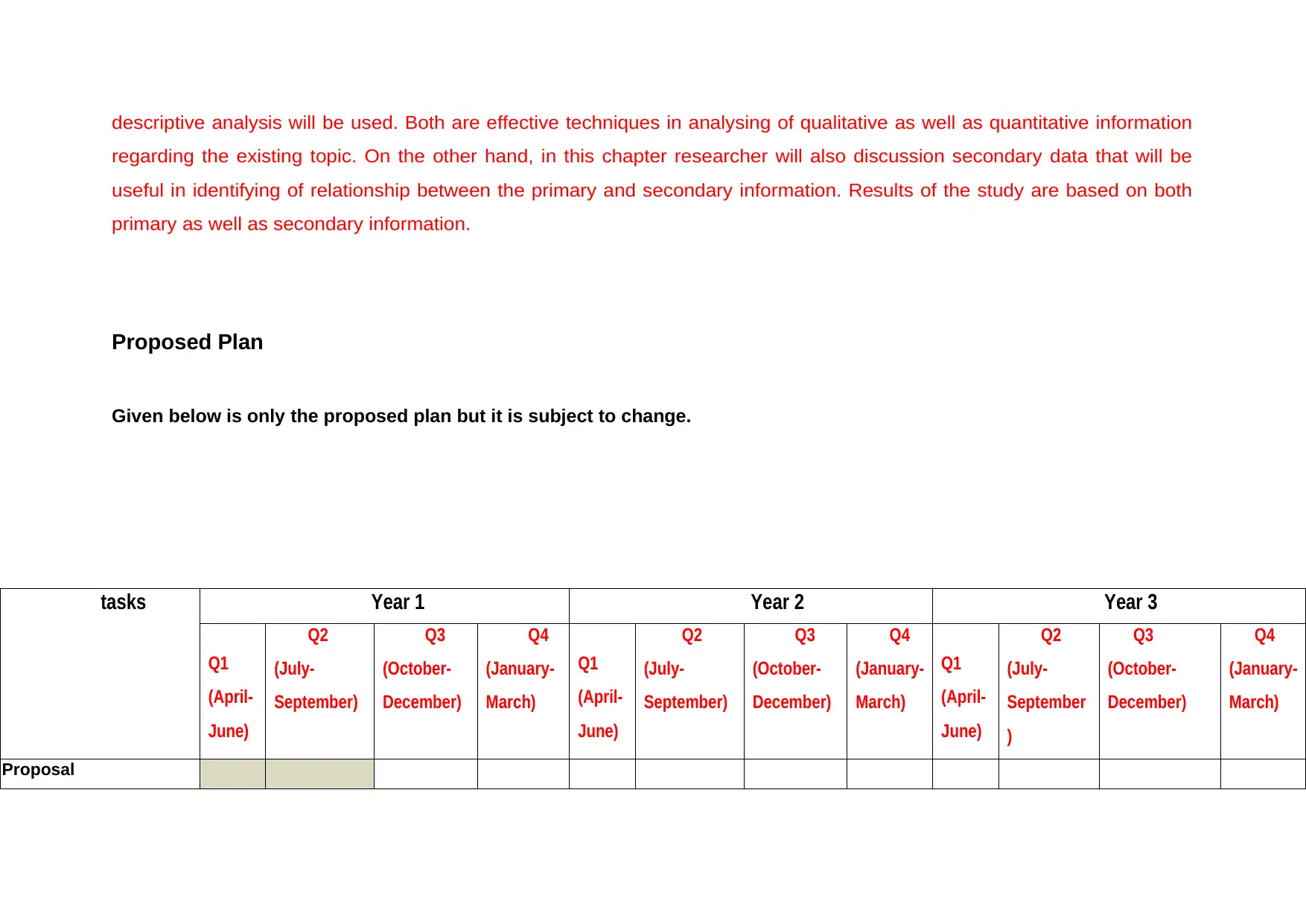
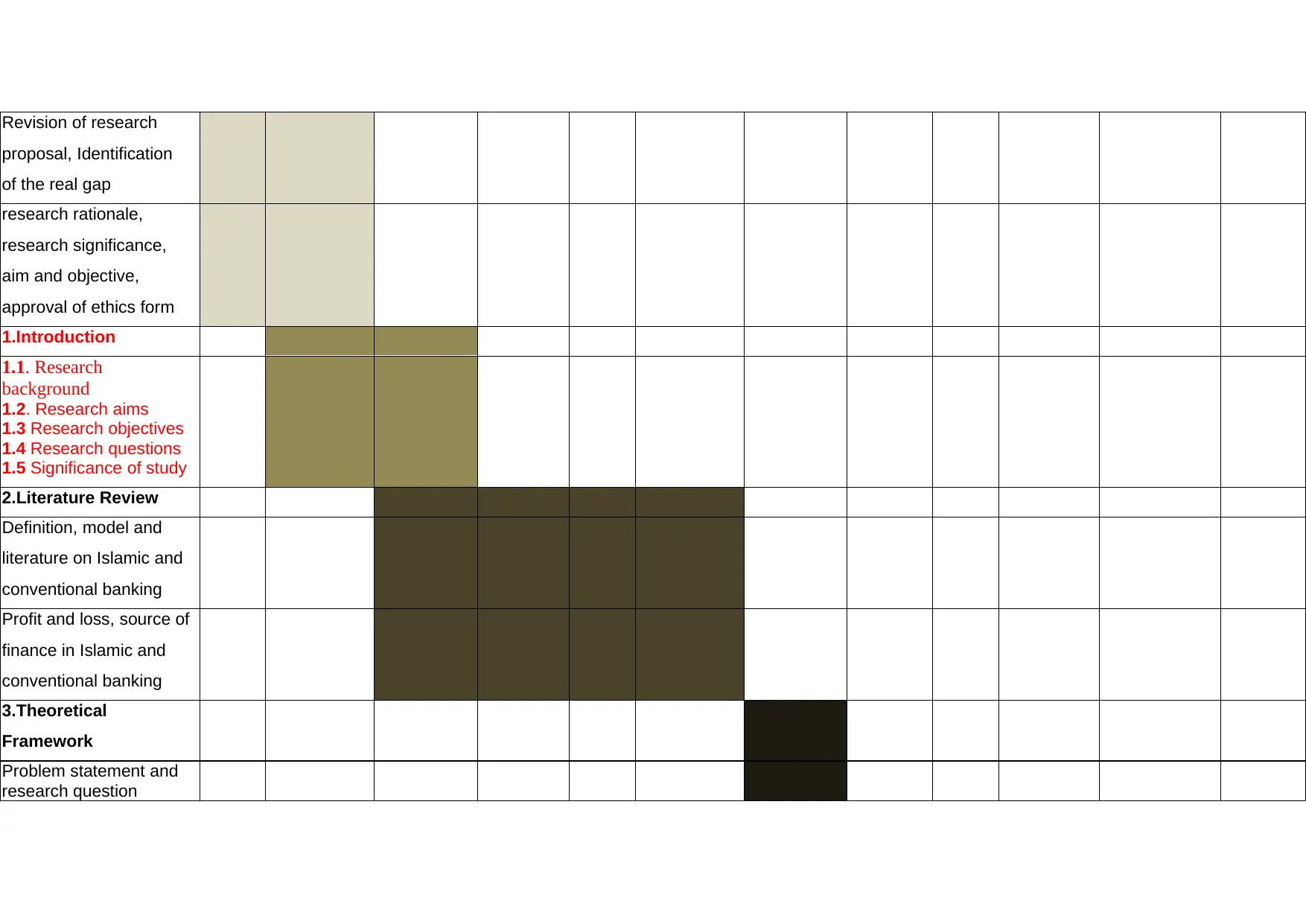
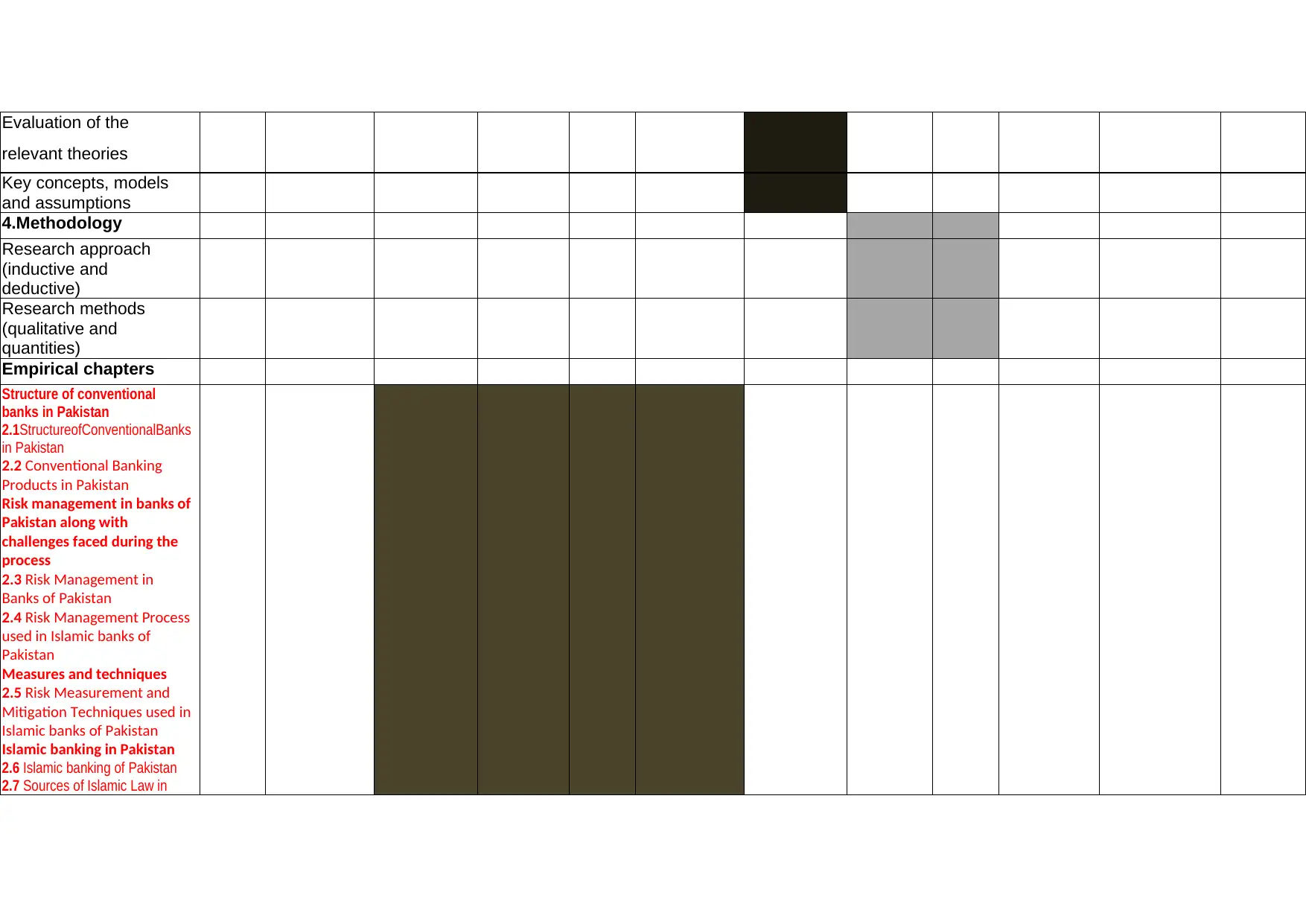
Proposed Plan
Given below is only the proposed plan but it is subject to change.
tasks Year 1 Year 2 Year 3
Q1
(April-
June)
Q2
(July-
September)
Q3
(October-
December)
Q4
(January-
March)
Q1
(April-
June)
Q2
(July-
September)
Q3
(October-
December)
Q4
(January-
March)
Q1
(April-
June)
Q2
(July-
September
)
Q3
(October-
December)
Q4
(January-
March)
Proposal
regarding the existing topic. On the other hand, in this chapter researcher will also discussion secondary data that will be
useful in identifying of relationship between the primary and secondary information. Results of the study are based on both
primary as well as secondary information.
Proposed Plan
Given below is only the proposed plan but it is subject to change.
tasks Year 1 Year 2 Year 3
Q1
(April-
June)
Q2
(July-
September)
Q3
(October-
December)
Q4
(January-
March)
Q1
(April-
June)
Q2
(July-
September)
Q3
(October-
December)
Q4
(January-
March)
Q1
(April-
June)
Q2
(July-
September
)
Q3
(October-
December)
Q4
(January-
March)
Proposal
Revision of research
proposal, Identification
of the real gap
research rationale,
research significance,
aim and objective,
approval of ethics form
1.Introduction
1.1. Research
background
1.2. Research aims
1.3 Research objectives
1.4 Research questions
1.5 Significance of study
2.Literature Review
Definition, model and
literature on Islamic and
conventional banking
Profit and loss, source of
finance in Islamic and
conventional banking
3.Theoretical
Framework
Problem statement and
research question
proposal, Identification
of the real gap
research rationale,
research significance,
aim and objective,
approval of ethics form
1.Introduction
1.1. Research
background
1.2. Research aims
1.3 Research objectives
1.4 Research questions
1.5 Significance of study
2.Literature Review
Definition, model and
literature on Islamic and
conventional banking
Profit and loss, source of
finance in Islamic and
conventional banking
3.Theoretical
Framework
Problem statement and
research question
⊘ This is a preview!⊘
Do you want full access?
Subscribe today to unlock all pages.
Trusted by 1+ million students worldwide
Evaluation of the
relevant theories
Key concepts, models
and assumptions
4.Methodology
Research approach
(inductive and
deductive)
Research methods
(qualitative and
quantities)
Empirical chapters
Structure of conventional
banks in Pakistan
2.1StructureofConventionalBanks
in Pakistan
2.2 Conventional Banking
Products in Pakistan
Risk management in banks of
Pakistan along with
challenges faced during the
process
2.3 Risk Management in
Banks of Pakistan
2.4 Risk Management Process
used in Islamic banks of
Pakistan
Measures and techniques
2.5 Risk Measurement and
Mitigation Techniques used in
Islamic banks of Pakistan
Islamic banking in Pakistan
2.6 Islamic banking of Pakistan
2.7 Sources of Islamic Law in
relevant theories
Key concepts, models
and assumptions
4.Methodology
Research approach
(inductive and
deductive)
Research methods
(qualitative and
quantities)
Empirical chapters
Structure of conventional
banks in Pakistan
2.1StructureofConventionalBanks
in Pakistan
2.2 Conventional Banking
Products in Pakistan
Risk management in banks of
Pakistan along with
challenges faced during the
process
2.3 Risk Management in
Banks of Pakistan
2.4 Risk Management Process
used in Islamic banks of
Pakistan
Measures and techniques
2.5 Risk Measurement and
Mitigation Techniques used in
Islamic banks of Pakistan
Islamic banking in Pakistan
2.6 Islamic banking of Pakistan
2.7 Sources of Islamic Law in
Paraphrase This Document
Need a fresh take? Get an instant paraphrase of this document with our AI Paraphraser

banking and applied on Pakistan
2.8 Growth of Islamic Financial
Institutions in Pakistan
2.9 Function of Islamic vs
conventional banks in Pakistan
Efficiency of risk management
structure in Pakistan
2.10 Risk management structure
in Islamic banking Pakistan
2.11 Risk management structure
in conventional banking Pakistan
2.13 Growth of Islamic banking in
Pakistan
4.1Research Philosophies
4.2Research Design
4.3Justification of
Research Methods
4.4Primary Data
Collection
5.Data collection and
analysis
6.Findings
Final editing and proof
reading
Submission of final
draft
2.8 Growth of Islamic Financial
Institutions in Pakistan
2.9 Function of Islamic vs
conventional banks in Pakistan
Efficiency of risk management
structure in Pakistan
2.10 Risk management structure
in Islamic banking Pakistan
2.11 Risk management structure
in conventional banking Pakistan
2.13 Growth of Islamic banking in
Pakistan
4.1Research Philosophies
4.2Research Design
4.3Justification of
Research Methods
4.4Primary Data
Collection
5.Data collection and
analysis
6.Findings
Final editing and proof
reading
Submission of final
draft
References
Alam, A. and Rizvi, S. (2017). Empirical Research in Islamic Banking: Past, Present, and Future. In Islamic Banking. 1st ed.
Palgrave Macmillan: Cham., pp.1-13.
Al-Tamimi, H., Hussein, A., Miniaoui, H. and Elkelish, W. (2015). Financial risk and Islamic banks’ performance in the gulf
cooperation council countries. The International Journal of Business and Finance Research, 9(5), pp.103-112.
Ahmed, A., Malik, M. I. &Humayoun, A. (2010). Banking Developments in Pakistan: A Journey from Conventional to Islamic
Banking. European Journal annual Social Sciences: 12-17.
Alam, N. (2014). Regulations and bank risk taking in dual banking countries. Journal of Banking Regulation, 15(2), 105-116.
Alimshan, F. (2011). Comparative Analysis between Islamic Banking and Conventional Banking Firms in terms of Profitability,
2006-2009. Eastern Mediterranean University, Dept. of Banking and Finance.
Abedifar, P., Molyneux, P. &Tarazi, A. (2013). Risk in Islamic banking. Review of Finance, 17(6), 2035-2096.
Alam, A. and Rizvi, S. (2017). Empirical Research in Islamic Banking: Past, Present, and Future. In Islamic Banking. 1st ed.
Palgrave Macmillan: Cham., pp.1-13.
Al-Tamimi, H., Hussein, A., Miniaoui, H. and Elkelish, W. (2015). Financial risk and Islamic banks’ performance in the gulf
cooperation council countries. The International Journal of Business and Finance Research, 9(5), pp.103-112.
Ahmed, A., Malik, M. I. &Humayoun, A. (2010). Banking Developments in Pakistan: A Journey from Conventional to Islamic
Banking. European Journal annual Social Sciences: 12-17.
Alam, N. (2014). Regulations and bank risk taking in dual banking countries. Journal of Banking Regulation, 15(2), 105-116.
Alimshan, F. (2011). Comparative Analysis between Islamic Banking and Conventional Banking Firms in terms of Profitability,
2006-2009. Eastern Mediterranean University, Dept. of Banking and Finance.
Abedifar, P., Molyneux, P. &Tarazi, A. (2013). Risk in Islamic banking. Review of Finance, 17(6), 2035-2096.
⊘ This is a preview!⊘
Do you want full access?
Subscribe today to unlock all pages.
Trusted by 1+ million students worldwide

1 out of 17


Related Documents


Your All-in-One AI-Powered Toolkit for Academic Success.
+13062052269
info@desklib.com
Available 24*7 on WhatsApp / Email
![[object Object]](/_next/static/media/star-bottom.7253800d.svg)
Unlock your academic potential
Copyright © 2020–2026 A2Z Services. All Rights Reserved. Developed and managed by ZUCOL.