Robots in Society and the End of Manual Labor for Humans
VerifiedAdded on 2020/02/23
|12
|1601
|382
Essay
AI Summary
This essay examines the increasing use of robots in various workplaces and their impact on human manual labor. It discusses the advantages of robots, such as increased productivity and efficiency, which are leading to the displacement of human workers. The essay explores the causes behind this trend, including the need for businesses to enhance productivity and reduce costs, and the impacts of robots on employment, the economy, and society. It highlights the potential for job losses in various sectors and considers both the benefits and drawbacks of automation. The essay also touches upon the importance of protecting human employment and addresses the limitations of robots, such as their lack of reasoning and emotional intelligence. Overall, the essay concludes that while robots offer significant advantages, their rise necessitates a careful consideration of their societal consequences and the need for strategies to mitigate the negative impacts on human workers.
Running head: ROBOTS IN SOCIETY AND THE END OF MANUAL LABOR FOR
HUMANS
Robots in Society and the End of Manual Labor for Humans
Name of the Student:
Name of the University:
Author’s Note:
HUMANS
Robots in Society and the End of Manual Labor for Humans
Name of the Student:
Name of the University:
Author’s Note:
Paraphrase This Document
Need a fresh take? Get an instant paraphrase of this document with our AI Paraphraser

1ROBOTS IN SOCIETY AND THE END OF MANUAL LABOR FOR HUMANS
Technological advancements have led to the rise of machines that possess the ability of
replacing humans at workplace. The skills of the robots are expanding that is helping the
business organizations to increase the overall productivity drastically (Chijindu and Inyiama
2012). The ability of the robots to perform much more compared to the human counterparts is
posing potential threats on their employment.
This essay highlights the rise of robots or machines at the different workplace that is
hampering manual labor. Therefore, the essay discusses the problems, examples, causes and the
impacts of the rise of robots and the end of manual labor for the humans.
Over the past decades, the business organizations are aiming towards increasing their
productivity along with business expansion by satisfying the customers. In order to increase the
productivity of the business, use of technology is preferred by the companies. As commented by
Moniz (2013), the urge of the companies to increase the productivity has led to the rise of the use
of robots in the workplace. The use of robots has enabled the companies to perform tasks in less
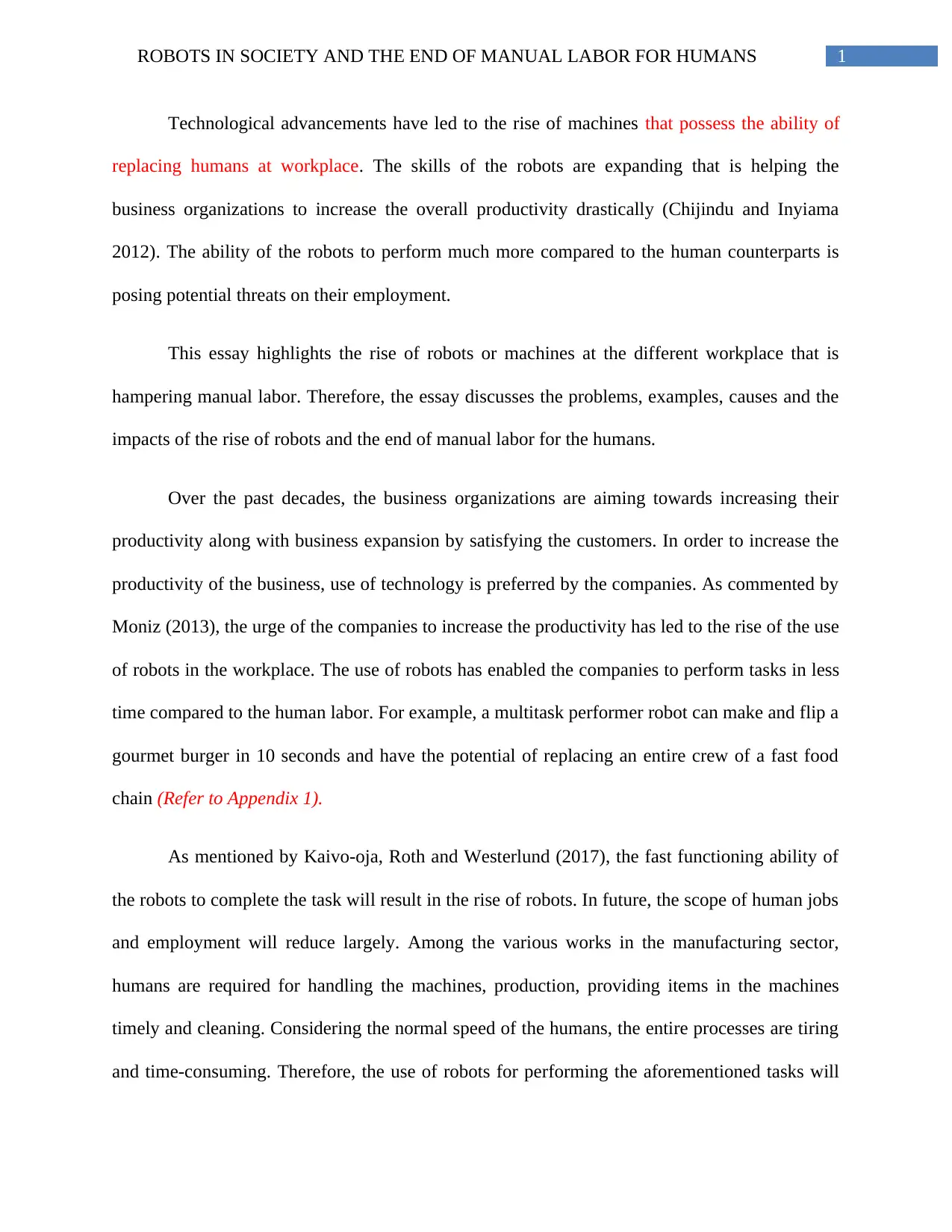
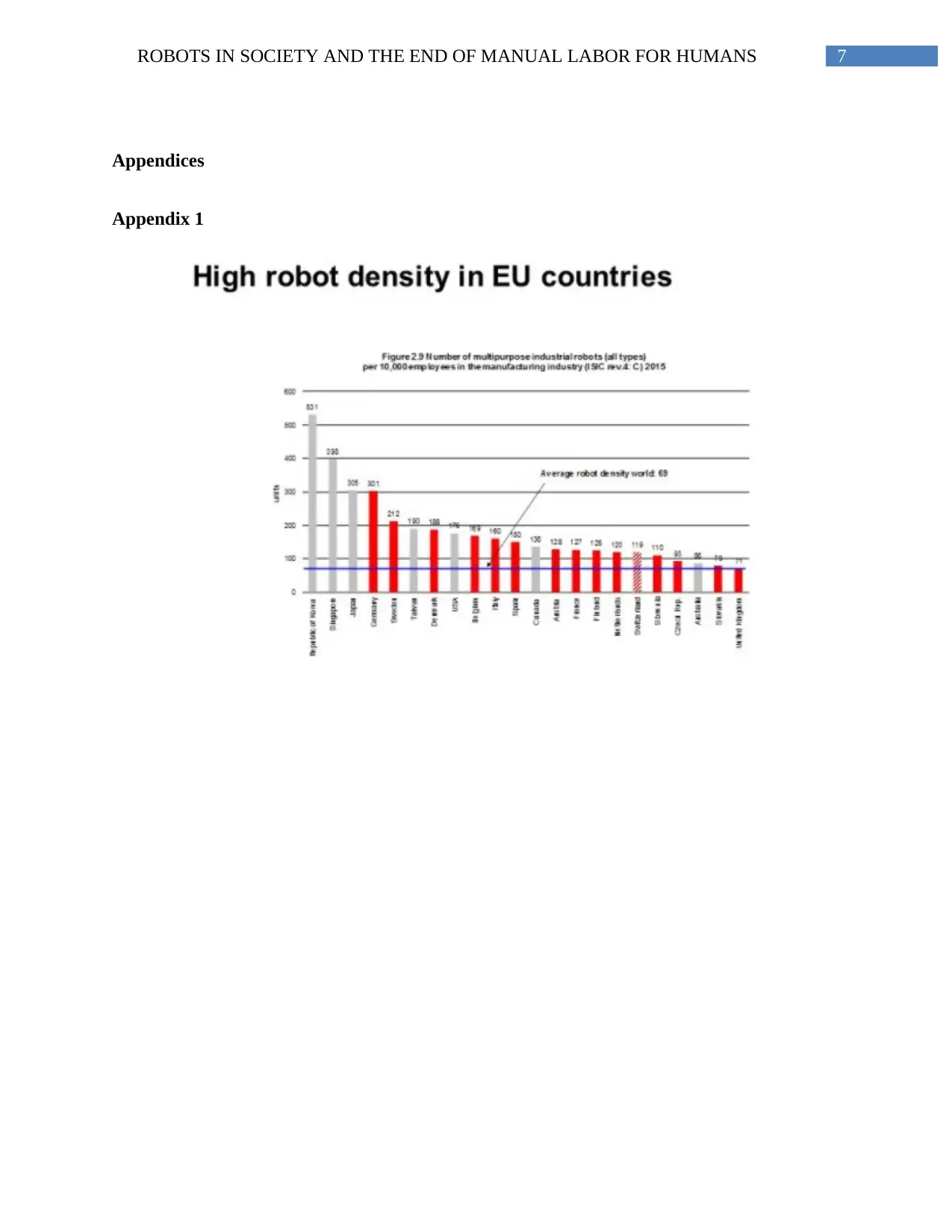
time compared to the human labor. For example, a multitask performer robot can make and flip a
gourmet burger in 10 seconds and have the potential of replacing an entire crew of a fast food
chain (Refer to Appendix 1).
As mentioned by Kaivo-oja, Roth and Westerlund (2017), the fast functioning ability of
the robots to complete the task will result in the rise of robots. In future, the scope of human jobs
and employment will reduce largely. Among the various works in the manufacturing sector,
humans are required for handling the machines, production, providing items in the machines
timely and cleaning. Considering the normal speed of the humans, the entire processes are tiring
and time-consuming. Therefore, the use of robots for performing the aforementioned tasks will
Technological advancements have led to the rise of machines that possess the ability of
replacing humans at workplace. The skills of the robots are expanding that is helping the
business organizations to increase the overall productivity drastically (Chijindu and Inyiama
2012). The ability of the robots to perform much more compared to the human counterparts is
posing potential threats on their employment.
This essay highlights the rise of robots or machines at the different workplace that is
hampering manual labor. Therefore, the essay discusses the problems, examples, causes and the
impacts of the rise of robots and the end of manual labor for the humans.
Over the past decades, the business organizations are aiming towards increasing their
productivity along with business expansion by satisfying the customers. In order to increase the
productivity of the business, use of technology is preferred by the companies. As commented by
Moniz (2013), the urge of the companies to increase the productivity has led to the rise of the use
of robots in the workplace. The use of robots has enabled the companies to perform tasks in less
time compared to the human labor. For example, a multitask performer robot can make and flip a
gourmet burger in 10 seconds and have the potential of replacing an entire crew of a fast food
chain (Refer to Appendix 1).
As mentioned by Kaivo-oja, Roth and Westerlund (2017), the fast functioning ability of
the robots to complete the task will result in the rise of robots. In future, the scope of human jobs
and employment will reduce largely. Among the various works in the manufacturing sector,
humans are required for handling the machines, production, providing items in the machines
timely and cleaning. Considering the normal speed of the humans, the entire processes are tiring
and time-consuming. Therefore, the use of robots for performing the aforementioned tasks will

2ROBOTS IN SOCIETY AND THE END OF MANUAL LABOR FOR HUMANS
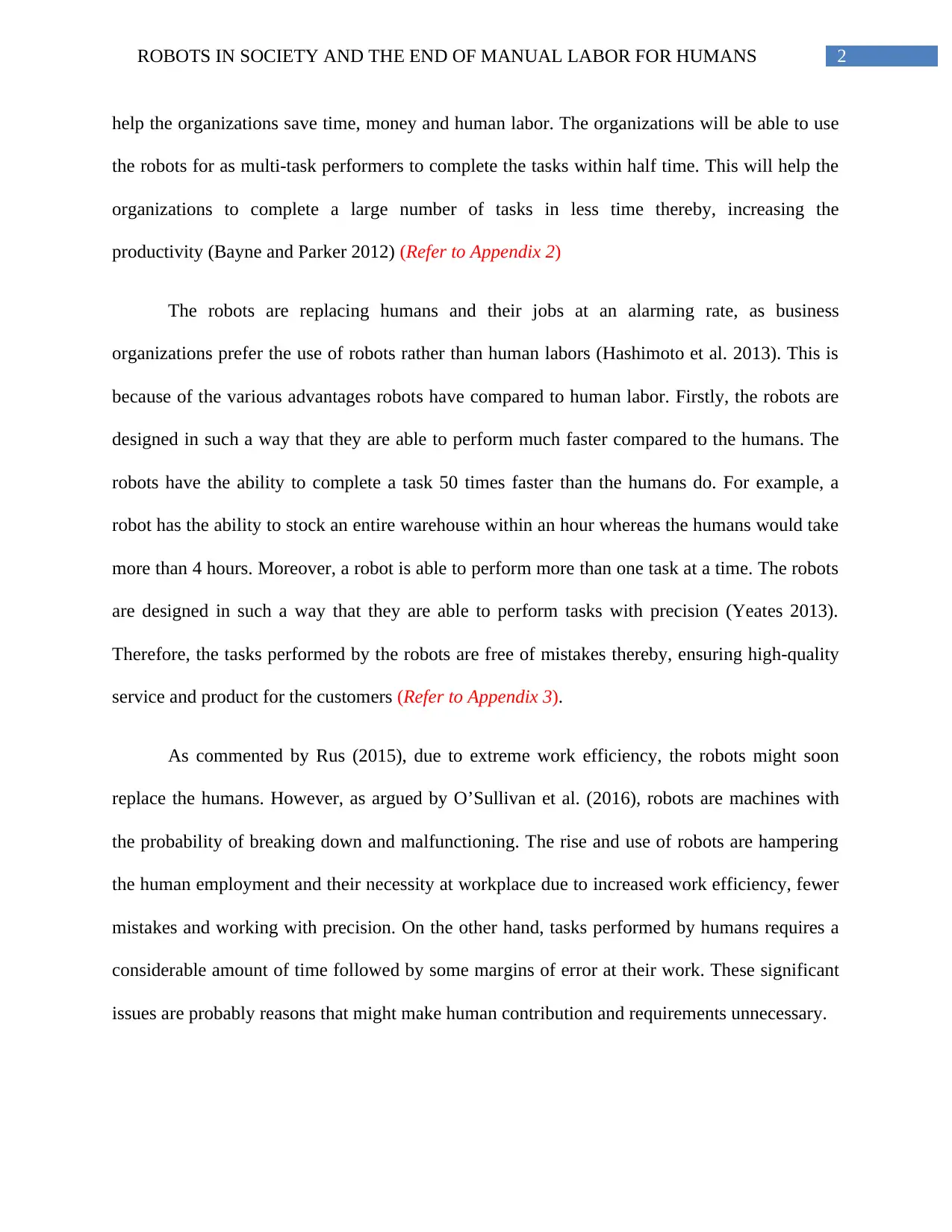
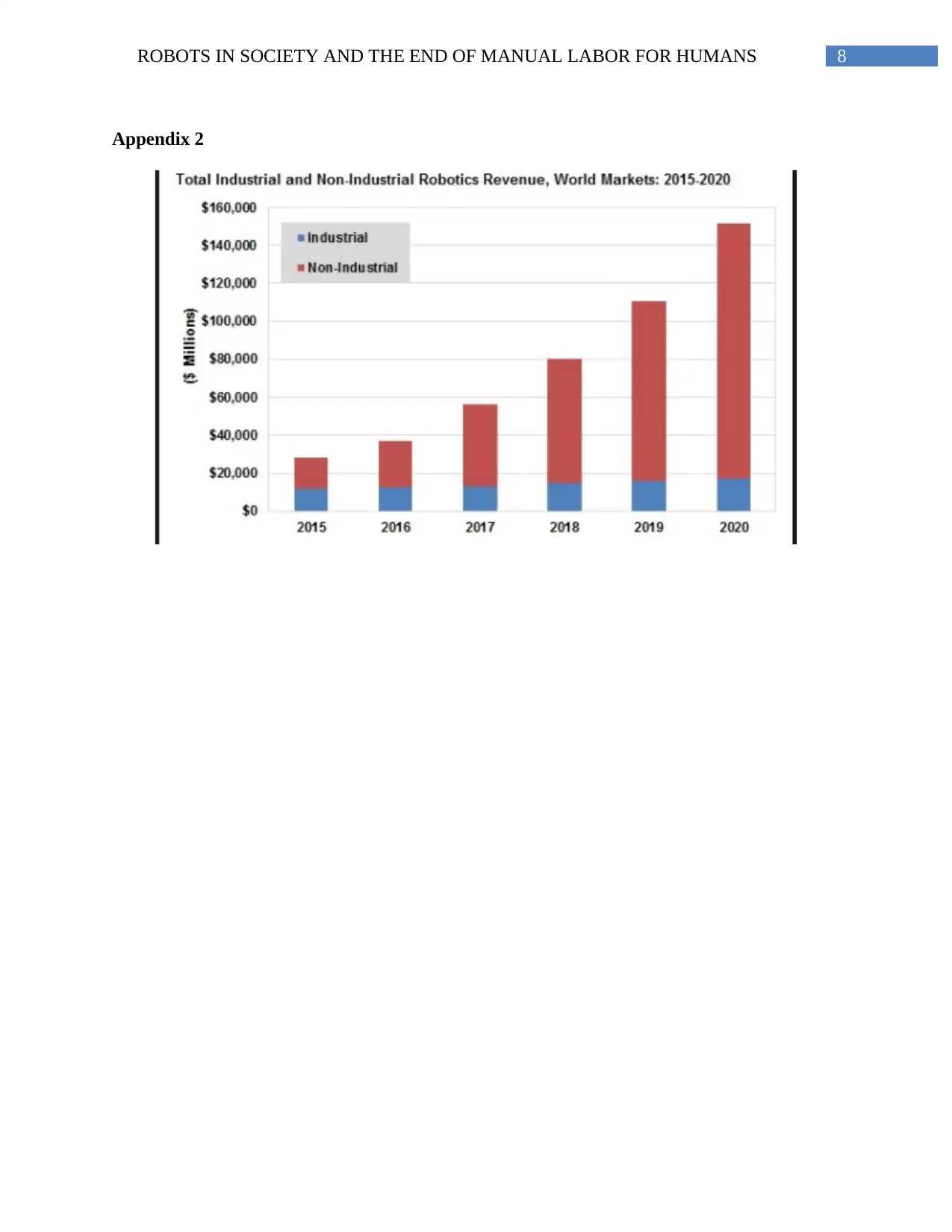
help the organizations save time, money and human labor. The organizations will be able to use
the robots for as multi-task performers to complete the tasks within half time. This will help the
organizations to complete a large number of tasks in less time thereby, increasing the
productivity (Bayne and Parker 2012) (Refer to Appendix 2)
The robots are replacing humans and their jobs at an alarming rate, as business
organizations prefer the use of robots rather than human labors (Hashimoto et al. 2013). This is
because of the various advantages robots have compared to human labor. Firstly, the robots are
designed in such a way that they are able to perform much faster compared to the humans. The
robots have the ability to complete a task 50 times faster than the humans do. For example, a
robot has the ability to stock an entire warehouse within an hour whereas the humans would take
more than 4 hours. Moreover, a robot is able to perform more than one task at a time. The robots
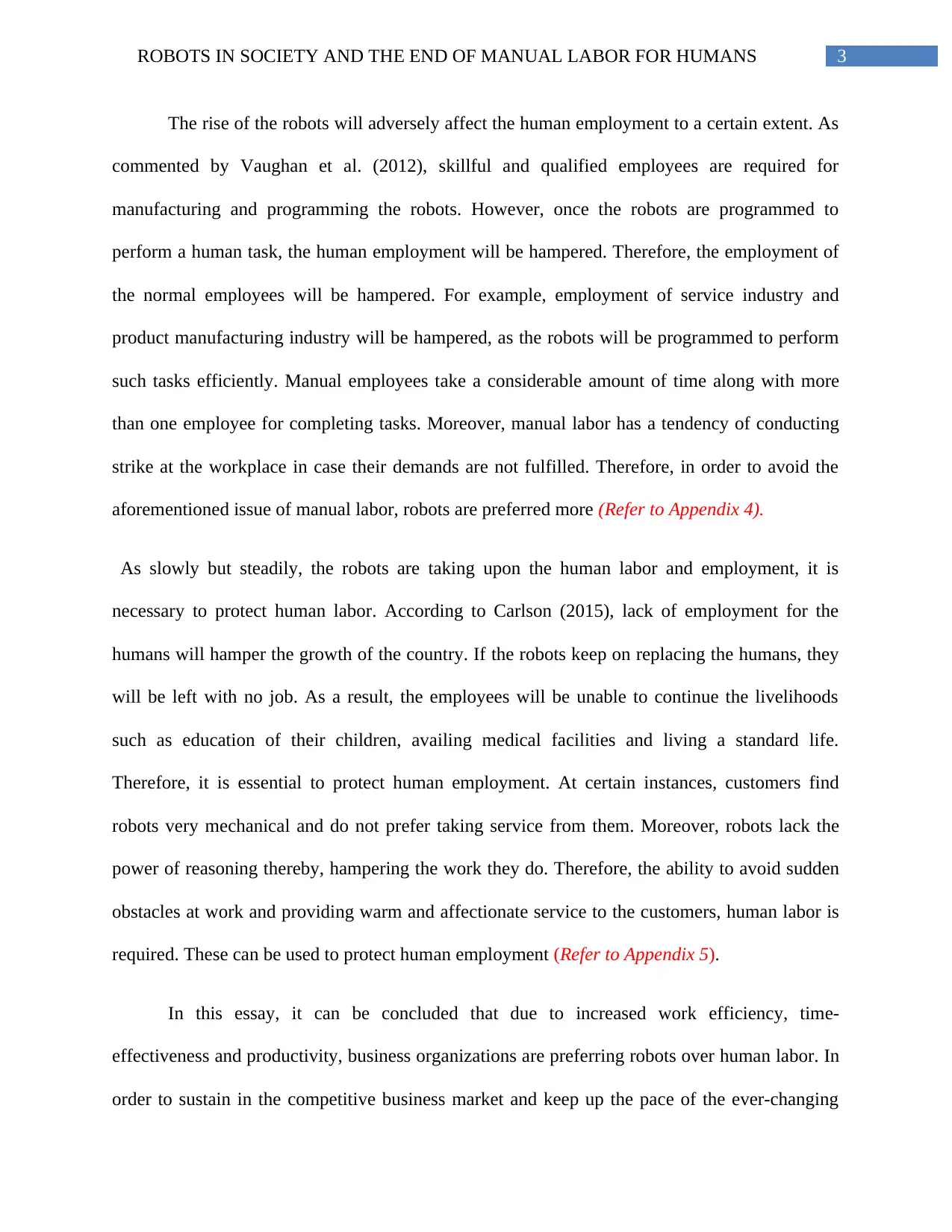
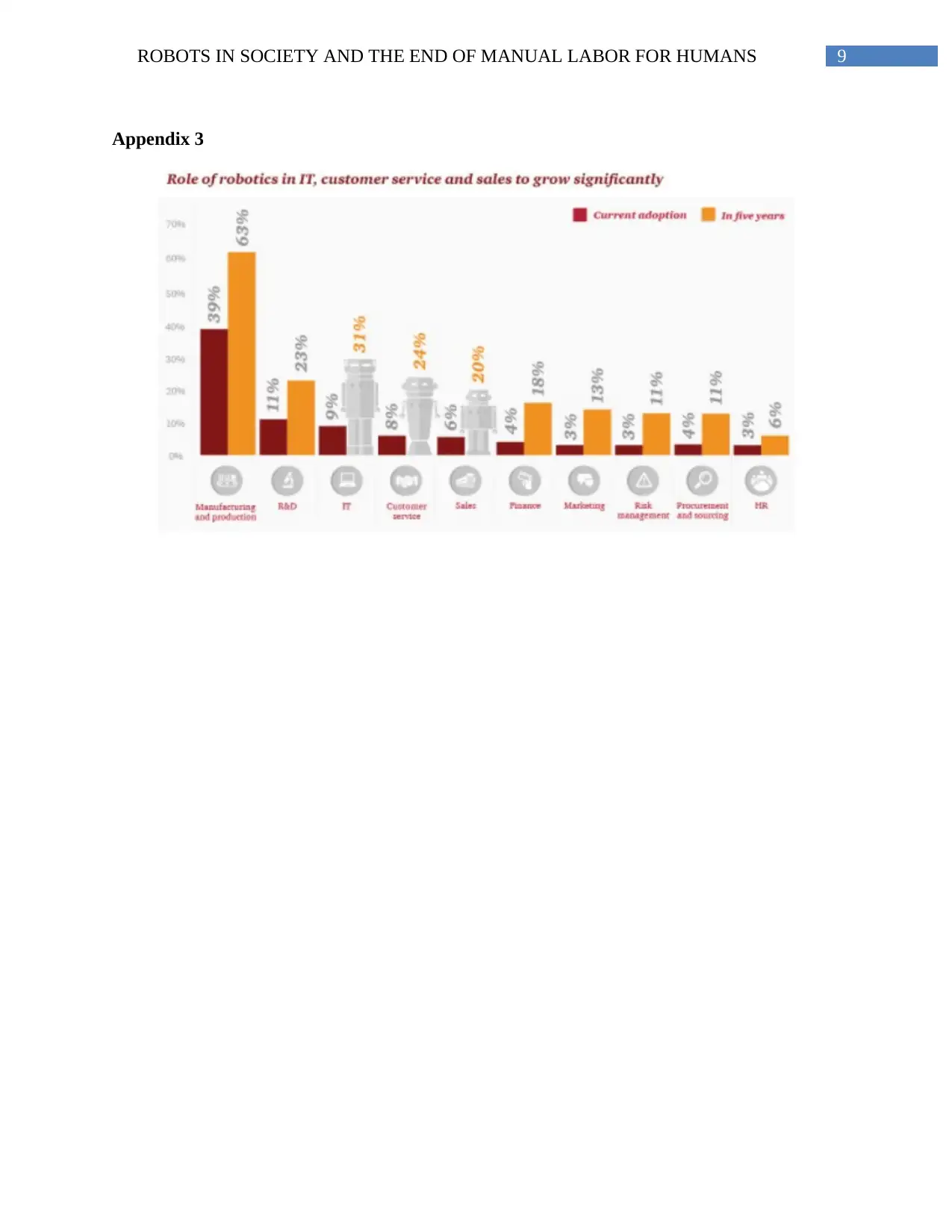
are designed in such a way that they are able to perform tasks with precision (Yeates 2013).
Therefore, the tasks performed by the robots are free of mistakes thereby, ensuring high-quality
service and product for the customers (Refer to Appendix 3).
As commented by Rus (2015), due to extreme work efficiency, the robots might soon
replace the humans. However, as argued by O’Sullivan et al. (2016), robots are machines with
the probability of breaking down and malfunctioning. The rise and use of robots are hampering
the human employment and their necessity at workplace due to increased work efficiency, fewer
mistakes and working with precision. On the other hand, tasks performed by humans requires a
considerable amount of time followed by some margins of error at their work. These significant
issues are probably reasons that might make human contribution and requirements unnecessary.
help the organizations save time, money and human labor. The organizations will be able to use
the robots for as multi-task performers to complete the tasks within half time. This will help the
organizations to complete a large number of tasks in less time thereby, increasing the
productivity (Bayne and Parker 2012) (Refer to Appendix 2)
The robots are replacing humans and their jobs at an alarming rate, as business
organizations prefer the use of robots rather than human labors (Hashimoto et al. 2013). This is
because of the various advantages robots have compared to human labor. Firstly, the robots are
designed in such a way that they are able to perform much faster compared to the humans. The
robots have the ability to complete a task 50 times faster than the humans do. For example, a
robot has the ability to stock an entire warehouse within an hour whereas the humans would take
more than 4 hours. Moreover, a robot is able to perform more than one task at a time. The robots
are designed in such a way that they are able to perform tasks with precision (Yeates 2013).
Therefore, the tasks performed by the robots are free of mistakes thereby, ensuring high-quality
service and product for the customers (Refer to Appendix 3).
As commented by Rus (2015), due to extreme work efficiency, the robots might soon
replace the humans. However, as argued by O’Sullivan et al. (2016), robots are machines with
the probability of breaking down and malfunctioning. The rise and use of robots are hampering
the human employment and their necessity at workplace due to increased work efficiency, fewer
mistakes and working with precision. On the other hand, tasks performed by humans requires a
considerable amount of time followed by some margins of error at their work. These significant
issues are probably reasons that might make human contribution and requirements unnecessary.
⊘ This is a preview!⊘
Do you want full access?
Subscribe today to unlock all pages.

Trusted by 1+ million students worldwide

3ROBOTS IN SOCIETY AND THE END OF MANUAL LABOR FOR HUMANS
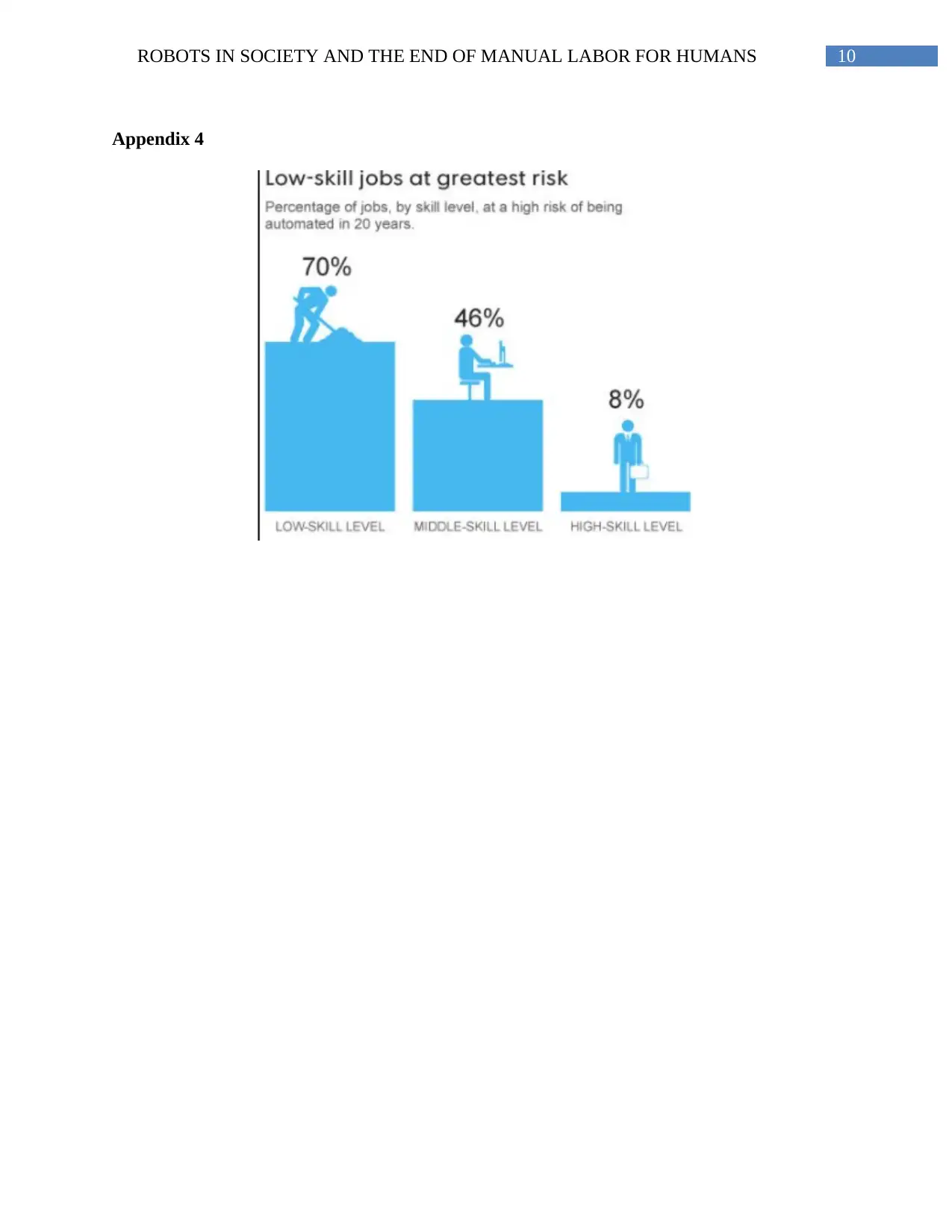
The rise of the robots will adversely affect the human employment to a certain extent. As
commented by Vaughan et al. (2012), skillful and qualified employees are required for
manufacturing and programming the robots. However, once the robots are programmed to
perform a human task, the human employment will be hampered. Therefore, the employment of
the normal employees will be hampered. For example, employment of service industry and
product manufacturing industry will be hampered, as the robots will be programmed to perform
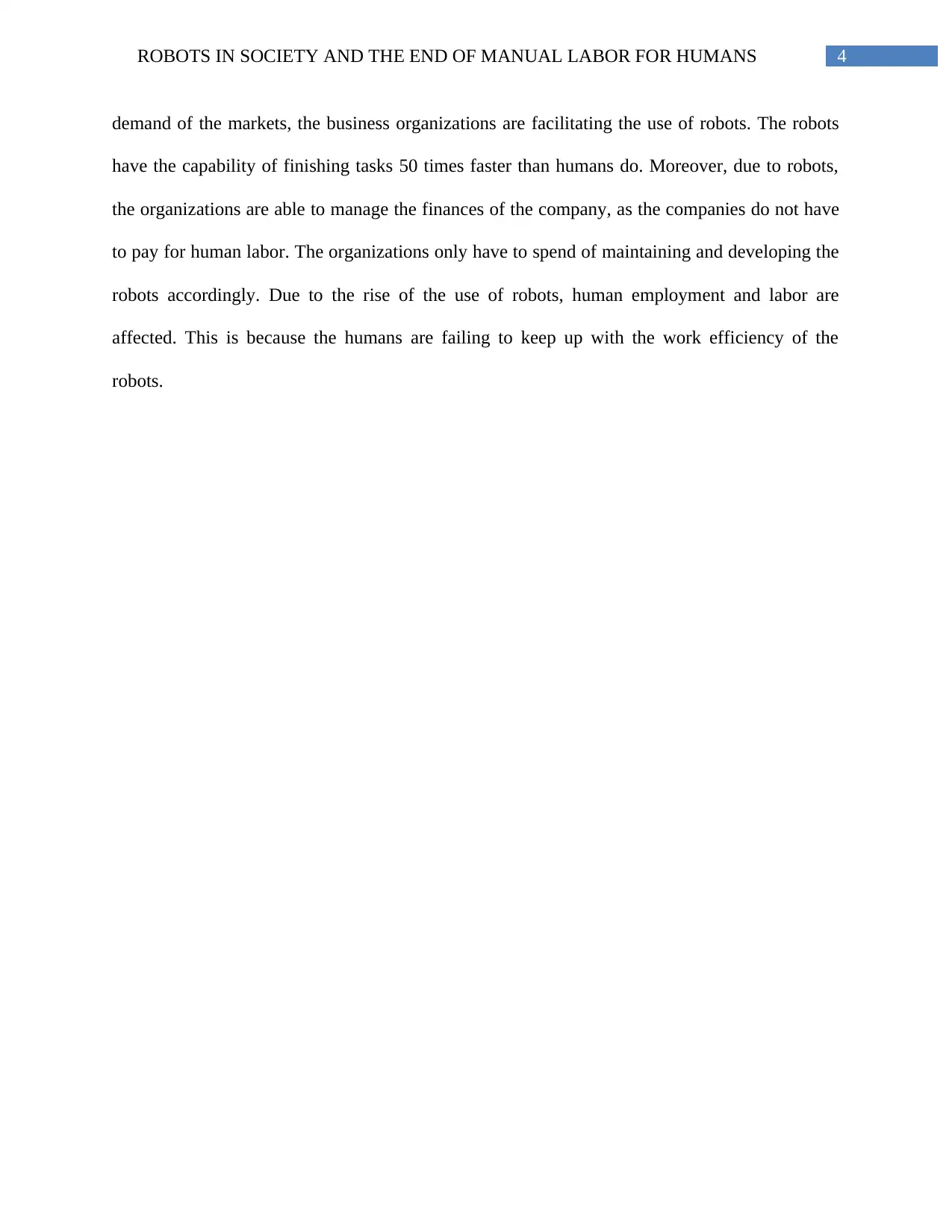
such tasks efficiently. Manual employees take a considerable amount of time along with more
than one employee for completing tasks. Moreover, manual labor has a tendency of conducting
strike at the workplace in case their demands are not fulfilled. Therefore, in order to avoid the
aforementioned issue of manual labor, robots are preferred more (Refer to Appendix 4).
As slowly but steadily, the robots are taking upon the human labor and employment, it is
necessary to protect human labor. According to Carlson (2015), lack of employment for the
humans will hamper the growth of the country. If the robots keep on replacing the humans, they
will be left with no job. As a result, the employees will be unable to continue the livelihoods
such as education of their children, availing medical facilities and living a standard life.
Therefore, it is essential to protect human employment. At certain instances, customers find
robots very mechanical and do not prefer taking service from them. Moreover, robots lack the
power of reasoning thereby, hampering the work they do. Therefore, the ability to avoid sudden
obstacles at work and providing warm and affectionate service to the customers, human labor is
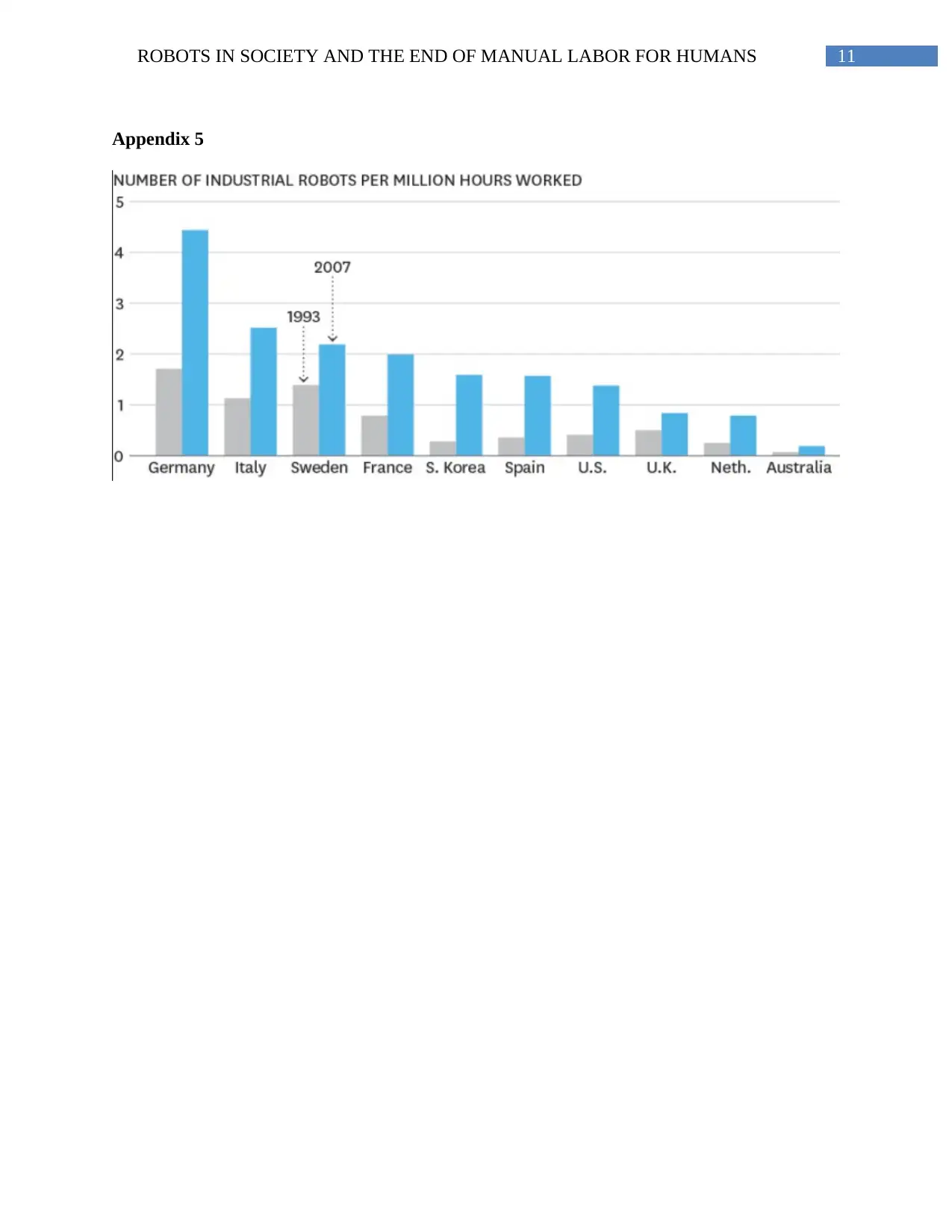
required. These can be used to protect human employment (Refer to Appendix 5).
In this essay, it can be concluded that due to increased work efficiency, time-
effectiveness and productivity, business organizations are preferring robots over human labor. In
order to sustain in the competitive business market and keep up the pace of the ever-changing
The rise of the robots will adversely affect the human employment to a certain extent. As
commented by Vaughan et al. (2012), skillful and qualified employees are required for
manufacturing and programming the robots. However, once the robots are programmed to
perform a human task, the human employment will be hampered. Therefore, the employment of
the normal employees will be hampered. For example, employment of service industry and
product manufacturing industry will be hampered, as the robots will be programmed to perform
such tasks efficiently. Manual employees take a considerable amount of time along with more
than one employee for completing tasks. Moreover, manual labor has a tendency of conducting
strike at the workplace in case their demands are not fulfilled. Therefore, in order to avoid the
aforementioned issue of manual labor, robots are preferred more (Refer to Appendix 4).
As slowly but steadily, the robots are taking upon the human labor and employment, it is
necessary to protect human labor. According to Carlson (2015), lack of employment for the
humans will hamper the growth of the country. If the robots keep on replacing the humans, they
will be left with no job. As a result, the employees will be unable to continue the livelihoods
such as education of their children, availing medical facilities and living a standard life.
Therefore, it is essential to protect human employment. At certain instances, customers find
robots very mechanical and do not prefer taking service from them. Moreover, robots lack the
power of reasoning thereby, hampering the work they do. Therefore, the ability to avoid sudden
obstacles at work and providing warm and affectionate service to the customers, human labor is
required. These can be used to protect human employment (Refer to Appendix 5).
In this essay, it can be concluded that due to increased work efficiency, time-
effectiveness and productivity, business organizations are preferring robots over human labor. In
order to sustain in the competitive business market and keep up the pace of the ever-changing
Paraphrase This Document
Need a fresh take? Get an instant paraphrase of this document with our AI Paraphraser

4ROBOTS IN SOCIETY AND THE END OF MANUAL LABOR FOR HUMANS
demand of the markets, the business organizations are facilitating the use of robots. The robots
have the capability of finishing tasks 50 times faster than humans do. Moreover, due to robots,
the organizations are able to manage the finances of the company, as the companies do not have
to pay for human labor. The organizations only have to spend of maintaining and developing the
robots accordingly. Due to the rise of the use of robots, human employment and labor are
affected. This is because the humans are failing to keep up with the work efficiency of the
robots.
demand of the markets, the business organizations are facilitating the use of robots. The robots
have the capability of finishing tasks 50 times faster than humans do. Moreover, due to robots,
the organizations are able to manage the finances of the company, as the companies do not have
to pay for human labor. The organizations only have to spend of maintaining and developing the
robots accordingly. Due to the rise of the use of robots, human employment and labor are
affected. This is because the humans are failing to keep up with the work efficiency of the
robots.

5ROBOTS IN SOCIETY AND THE END OF MANUAL LABOR FOR HUMANS
References
Bayne, K.M. and Parker, R.J., 2012. The introduction of robotics for New Zealand forestry
operations: Forest sector employee perceptions and implications. Technology in Society, 34(2),
pp.138-148.
Chijindu, V.C. and Inyiama, H.C., 2012. Social implications of robots An overview.
International Journal of Physical Sciences, 7(8), pp.1270-1275.
Hashimoto, K., Saito, F., Yamamoto, T. and Ikeda, K., 2013, November. A field study of the
human support robot in the home environment. In Advanced Robotics and its Social Impacts
(ARSO), 2013 IEEE Workshop on (pp. 143-150). IEEE.
Kaivo-oja, J., Roth, S. and Westerlund, L., 2017. Futures of robotics. Human work in digital
transformation. International Journal of Technology Management, 73(4), pp.176-205.
Moniz, A., 2013. Robots and humans as co-workers? The human-centred perspective of work
with autonomous systems. IET Working Papers Series, pp.1-21.
O'sullivan, C.A., Park, C., Gilbert, M.L., Ondrej, J. and Freeman, K.G., Disney Enterprises, Inc.,
2016. Trained human-intention classifier for safe and efficient robot navigation. U.S. Patent
Application 14/989,345.
Rus, D., 2015. The robots are coming. Foreign Aff., 94, p.2.
Vaughan, B., Han, J.G., Kilmartin, E. and Campbell, N., 2012. Designing and implementing a
platform for collecting multi-modal data of human-robot interaction.
References
Bayne, K.M. and Parker, R.J., 2012. The introduction of robotics for New Zealand forestry
operations: Forest sector employee perceptions and implications. Technology in Society, 34(2),
pp.138-148.
Chijindu, V.C. and Inyiama, H.C., 2012. Social implications of robots An overview.
International Journal of Physical Sciences, 7(8), pp.1270-1275.
Hashimoto, K., Saito, F., Yamamoto, T. and Ikeda, K., 2013, November. A field study of the
human support robot in the home environment. In Advanced Robotics and its Social Impacts
(ARSO), 2013 IEEE Workshop on (pp. 143-150). IEEE.
Kaivo-oja, J., Roth, S. and Westerlund, L., 2017. Futures of robotics. Human work in digital
transformation. International Journal of Technology Management, 73(4), pp.176-205.
Moniz, A., 2013. Robots and humans as co-workers? The human-centred perspective of work
with autonomous systems. IET Working Papers Series, pp.1-21.
O'sullivan, C.A., Park, C., Gilbert, M.L., Ondrej, J. and Freeman, K.G., Disney Enterprises, Inc.,
2016. Trained human-intention classifier for safe and efficient robot navigation. U.S. Patent
Application 14/989,345.
Rus, D., 2015. The robots are coming. Foreign Aff., 94, p.2.
Vaughan, B., Han, J.G., Kilmartin, E. and Campbell, N., 2012. Designing and implementing a
platform for collecting multi-modal data of human-robot interaction.
⊘ This is a preview!⊘
Do you want full access?
Subscribe today to unlock all pages.

Trusted by 1+ million students worldwide

6ROBOTS IN SOCIETY AND THE END OF MANUAL LABOR FOR HUMANS
Vaughan, B., Han, J.G., Kilmartin, E. and Campbell, N., 2012. Designing and implementing a
platform for collecting multi-modal data of human-robot interaction.
Yeates, A., 2013, April. The Effects of Automation on The Society. In 12 th Research Seminar
Series Workshop.
Vaughan, B., Han, J.G., Kilmartin, E. and Campbell, N., 2012. Designing and implementing a
platform for collecting multi-modal data of human-robot interaction.
Yeates, A., 2013, April. The Effects of Automation on The Society. In 12 th Research Seminar
Series Workshop.
Paraphrase This Document
Need a fresh take? Get an instant paraphrase of this document with our AI Paraphraser

7ROBOTS IN SOCIETY AND THE END OF MANUAL LABOR FOR HUMANS
Appendices
Appendix 1
Appendices
Appendix 1

8ROBOTS IN SOCIETY AND THE END OF MANUAL LABOR FOR HUMANS
Appendix 2
Appendix 2
⊘ This is a preview!⊘
Do you want full access?
Subscribe today to unlock all pages.

Trusted by 1+ million students worldwide

9ROBOTS IN SOCIETY AND THE END OF MANUAL LABOR FOR HUMANS
Appendix 3
Appendix 3
Paraphrase This Document
Need a fresh take? Get an instant paraphrase of this document with our AI Paraphraser

10ROBOTS IN SOCIETY AND THE END OF MANUAL LABOR FOR HUMANS
Appendix 4
Appendix 4

11ROBOTS IN SOCIETY AND THE END OF MANUAL LABOR FOR HUMANS
Appendix 5
Appendix 5
⊘ This is a preview!⊘
Do you want full access?
Subscribe today to unlock all pages.

Trusted by 1+ million students worldwide
1 out of 12
Related Documents
Your All-in-One AI-Powered Toolkit for Academic Success.
+13062052269
info@desklib.com
Available 24*7 on WhatsApp / Email
Unlock your academic potential
Copyright © 2020–2026 A2Z Services. All Rights Reserved. Developed and managed by ZUCOL.