Role Concepts in Healthcare: Analyzing Impact of Unmet Needs
VerifiedAdded on 2022/12/15
|5
|1016
|331
Case Study
AI Summary
This case study analyzes the challenges faced by a new graduate in a healthcare setting, focusing on the impact of unmet needs, poor time management, and a negative work environment on her wellbeing. The analysis highlights the graduate's lack of self-confidence, the absence of a supportive work environment, and the effects of inadequate peer support. The paper explores how these issues led to increased stress, alcohol consumption, and physical symptoms. It suggests the implementation of Maslow's Hierarchy of Needs, improved teamwork, and time management training as potential solutions to create a safer, more supportive environment. The study emphasizes the importance of collaborative practice, stress management, and empathetic communication to improve the graduate's overall wellbeing and professional performance. The assignment references several scholarly articles to support the analysis and proposed solutions.
Running head: ROLE CONCEPTS IN HEALTH CARE
ROLE CONCEPTS IN HEALTH CARE
Name of the student
Name of the university
Author note:
ROLE CONCEPTS IN HEALTH CARE
Name of the student
Name of the university
Author note:
Paraphrase This Document
Need a fresh take? Get an instant paraphrase of this document with our AI Paraphraser

1
ROLE CONCEPTS IN HEALTH CARE
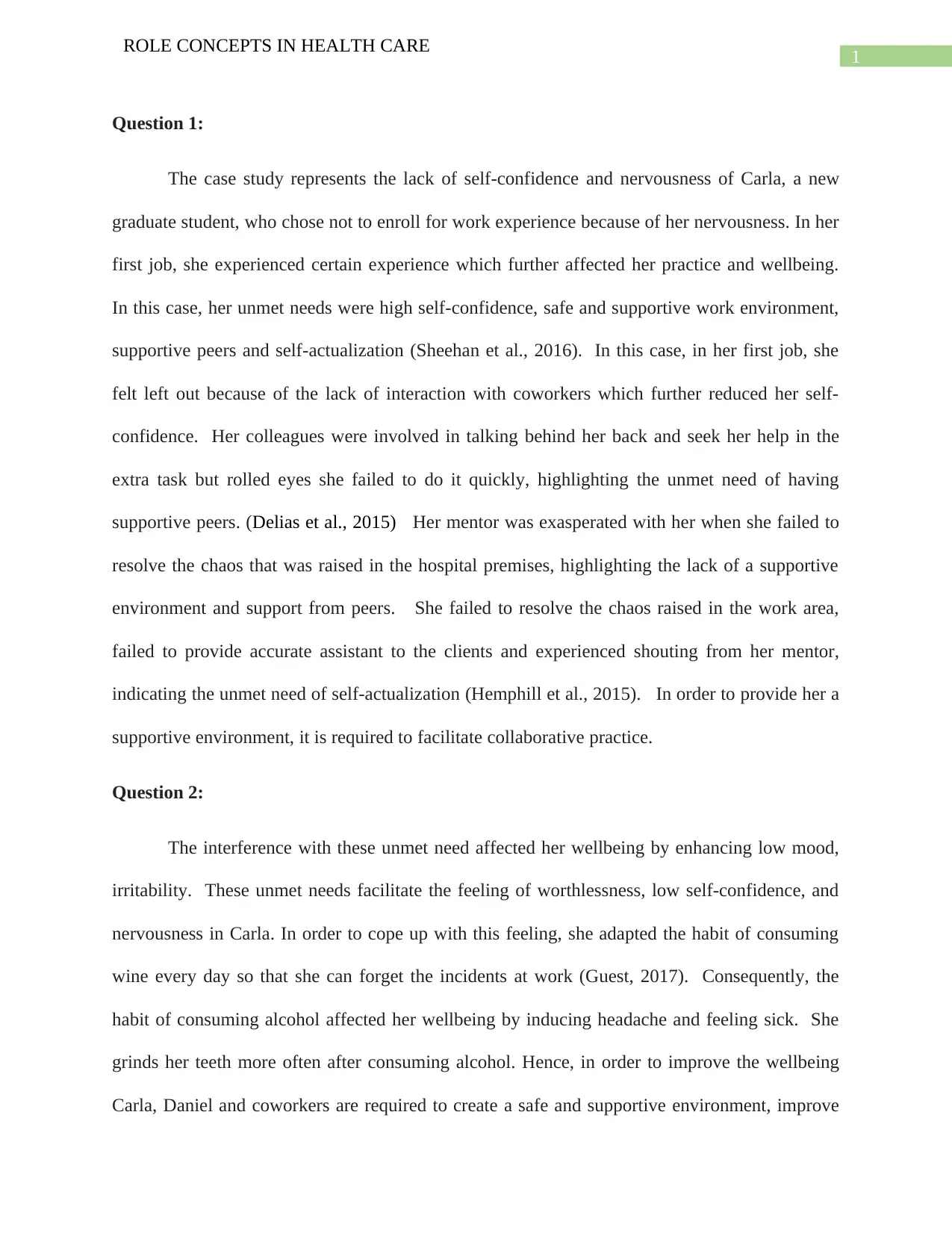
Question 1:
The case study represents the lack of self-confidence and nervousness of Carla, a new
graduate student, who chose not to enroll for work experience because of her nervousness. In her
first job, she experienced certain experience which further affected her practice and wellbeing.
In this case, her unmet needs were high self-confidence, safe and supportive work environment,
supportive peers and self-actualization (Sheehan et al., 2016). In this case, in her first job, she
felt left out because of the lack of interaction with coworkers which further reduced her self-
confidence. Her colleagues were involved in talking behind her back and seek her help in the
extra task but rolled eyes she failed to do it quickly, highlighting the unmet need of having
supportive peers. (Delias et al., 2015) Her mentor was exasperated with her when she failed to
resolve the chaos that was raised in the hospital premises, highlighting the lack of a supportive
environment and support from peers. She failed to resolve the chaos raised in the work area,
failed to provide accurate assistant to the clients and experienced shouting from her mentor,
indicating the unmet need of self-actualization (Hemphill et al., 2015). In order to provide her a
supportive environment, it is required to facilitate collaborative practice.
Question 2:
The interference with these unmet need affected her wellbeing by enhancing low mood,
irritability. These unmet needs facilitate the feeling of worthlessness, low self-confidence, and
nervousness in Carla. In order to cope up with this feeling, she adapted the habit of consuming
wine every day so that she can forget the incidents at work (Guest, 2017). Consequently, the
habit of consuming alcohol affected her wellbeing by inducing headache and feeling sick. She
grinds her teeth more often after consuming alcohol. Hence, in order to improve the wellbeing
Carla, Daniel and coworkers are required to create a safe and supportive environment, improve
ROLE CONCEPTS IN HEALTH CARE
Question 1:
The case study represents the lack of self-confidence and nervousness of Carla, a new
graduate student, who chose not to enroll for work experience because of her nervousness. In her
first job, she experienced certain experience which further affected her practice and wellbeing.
In this case, her unmet needs were high self-confidence, safe and supportive work environment,
supportive peers and self-actualization (Sheehan et al., 2016). In this case, in her first job, she
felt left out because of the lack of interaction with coworkers which further reduced her self-
confidence. Her colleagues were involved in talking behind her back and seek her help in the
extra task but rolled eyes she failed to do it quickly, highlighting the unmet need of having
supportive peers. (Delias et al., 2015) Her mentor was exasperated with her when she failed to
resolve the chaos that was raised in the hospital premises, highlighting the lack of a supportive
environment and support from peers. She failed to resolve the chaos raised in the work area,
failed to provide accurate assistant to the clients and experienced shouting from her mentor,
indicating the unmet need of self-actualization (Hemphill et al., 2015). In order to provide her a
supportive environment, it is required to facilitate collaborative practice.
Question 2:
The interference with these unmet need affected her wellbeing by enhancing low mood,
irritability. These unmet needs facilitate the feeling of worthlessness, low self-confidence, and
nervousness in Carla. In order to cope up with this feeling, she adapted the habit of consuming
wine every day so that she can forget the incidents at work (Guest, 2017). Consequently, the
habit of consuming alcohol affected her wellbeing by inducing headache and feeling sick. She
grinds her teeth more often after consuming alcohol. Hence, in order to improve the wellbeing
Carla, Daniel and coworkers are required to create a safe and supportive environment, improve

2
ROLE CONCEPTS IN HEALTH CARE
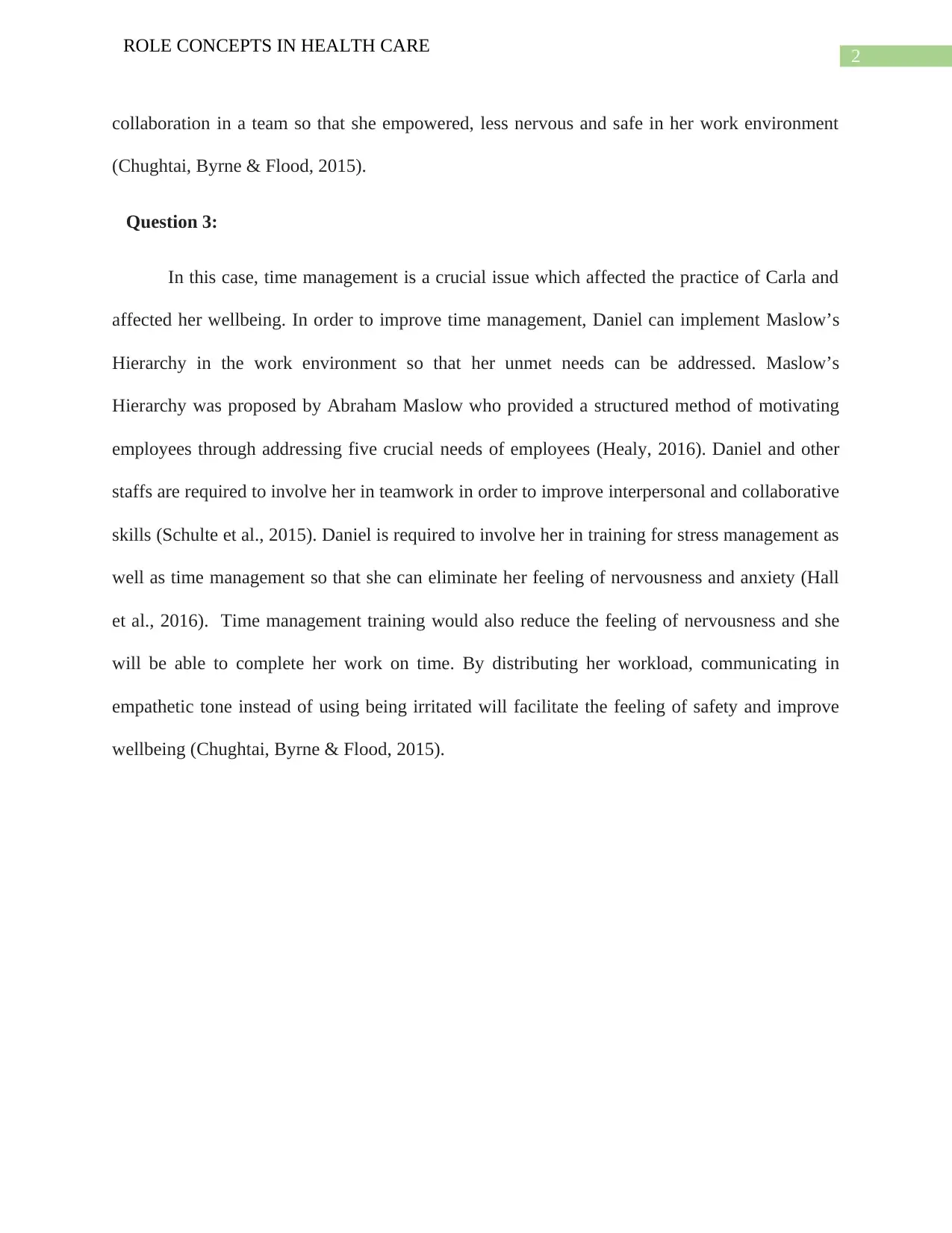
collaboration in a team so that she empowered, less nervous and safe in her work environment
(Chughtai, Byrne & Flood, 2015).
Question 3:
In this case, time management is a crucial issue which affected the practice of Carla and
affected her wellbeing. In order to improve time management, Daniel can implement Maslow’s
Hierarchy in the work environment so that her unmet needs can be addressed. Maslow’s
Hierarchy was proposed by Abraham Maslow who provided a structured method of motivating
employees through addressing five crucial needs of employees (Healy, 2016). Daniel and other
staffs are required to involve her in teamwork in order to improve interpersonal and collaborative
skills (Schulte et al., 2015). Daniel is required to involve her in training for stress management as
well as time management so that she can eliminate her feeling of nervousness and anxiety (Hall
et al., 2016). Time management training would also reduce the feeling of nervousness and she
will be able to complete her work on time. By distributing her workload, communicating in
empathetic tone instead of using being irritated will facilitate the feeling of safety and improve
wellbeing (Chughtai, Byrne & Flood, 2015).
ROLE CONCEPTS IN HEALTH CARE
collaboration in a team so that she empowered, less nervous and safe in her work environment
(Chughtai, Byrne & Flood, 2015).
Question 3:
In this case, time management is a crucial issue which affected the practice of Carla and
affected her wellbeing. In order to improve time management, Daniel can implement Maslow’s
Hierarchy in the work environment so that her unmet needs can be addressed. Maslow’s
Hierarchy was proposed by Abraham Maslow who provided a structured method of motivating
employees through addressing five crucial needs of employees (Healy, 2016). Daniel and other
staffs are required to involve her in teamwork in order to improve interpersonal and collaborative
skills (Schulte et al., 2015). Daniel is required to involve her in training for stress management as
well as time management so that she can eliminate her feeling of nervousness and anxiety (Hall
et al., 2016). Time management training would also reduce the feeling of nervousness and she
will be able to complete her work on time. By distributing her workload, communicating in
empathetic tone instead of using being irritated will facilitate the feeling of safety and improve
wellbeing (Chughtai, Byrne & Flood, 2015).
⊘ This is a preview!⊘
Do you want full access?
Subscribe today to unlock all pages.

Trusted by 1+ million students worldwide

3
ROLE CONCEPTS IN HEALTH CARE
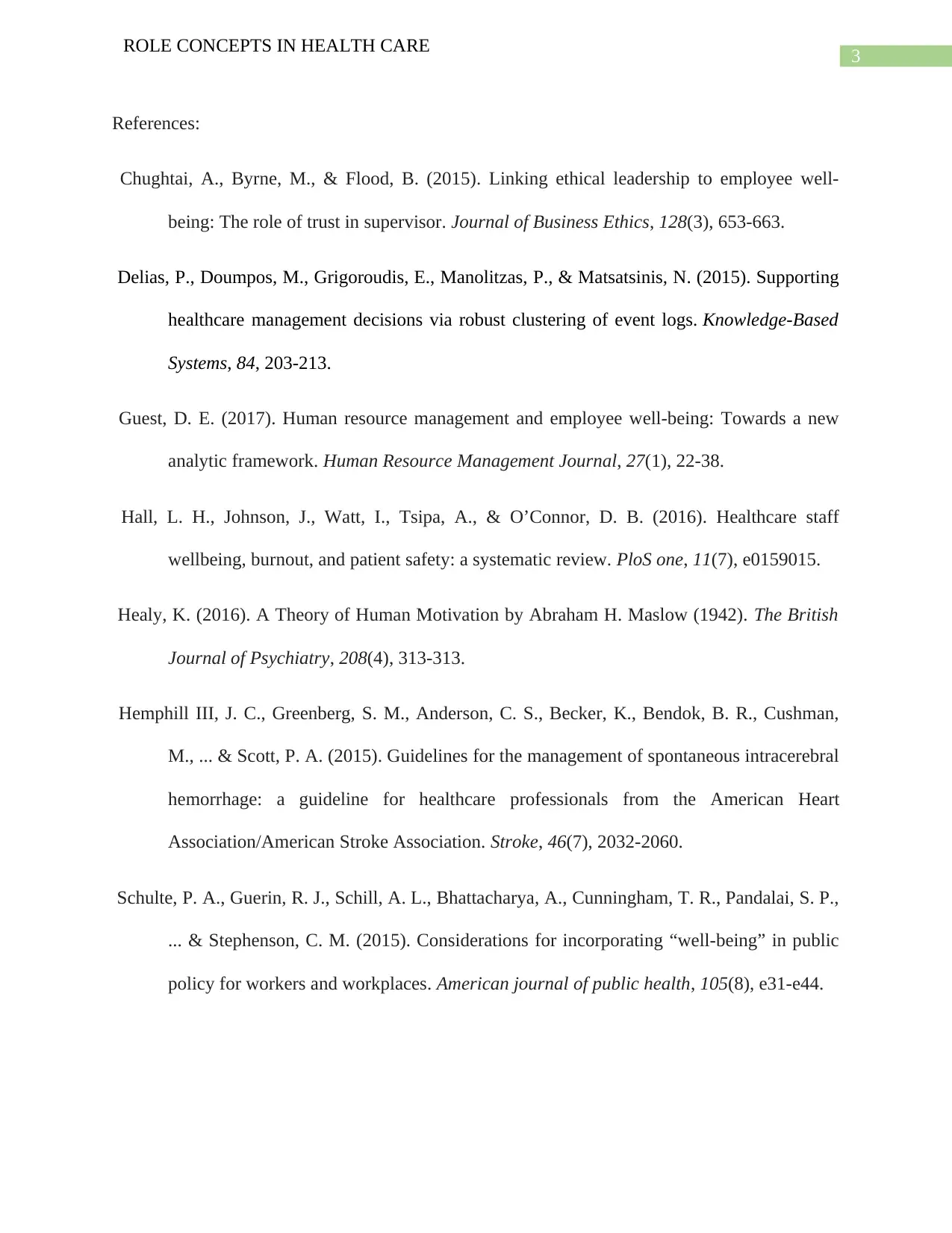
References:
Chughtai, A., Byrne, M., & Flood, B. (2015). Linking ethical leadership to employee well-
being: The role of trust in supervisor. Journal of Business Ethics, 128(3), 653-663.
Delias, P., Doumpos, M., Grigoroudis, E., Manolitzas, P., & Matsatsinis, N. (2015). Supporting
healthcare management decisions via robust clustering of event logs. Knowledge-Based
Systems, 84, 203-213.
Guest, D. E. (2017). Human resource management and employee well‐being: Towards a new
analytic framework. Human Resource Management Journal, 27(1), 22-38.
Hall, L. H., Johnson, J., Watt, I., Tsipa, A., & O’Connor, D. B. (2016). Healthcare staff
wellbeing, burnout, and patient safety: a systematic review. PloS one, 11(7), e0159015.
Healy, K. (2016). A Theory of Human Motivation by Abraham H. Maslow (1942). The British
Journal of Psychiatry, 208(4), 313-313.
Hemphill III, J. C., Greenberg, S. M., Anderson, C. S., Becker, K., Bendok, B. R., Cushman,
M., ... & Scott, P. A. (2015). Guidelines for the management of spontaneous intracerebral
hemorrhage: a guideline for healthcare professionals from the American Heart
Association/American Stroke Association. Stroke, 46(7), 2032-2060.
Schulte, P. A., Guerin, R. J., Schill, A. L., Bhattacharya, A., Cunningham, T. R., Pandalai, S. P.,
... & Stephenson, C. M. (2015). Considerations for incorporating “well-being” in public
policy for workers and workplaces. American journal of public health, 105(8), e31-e44.
ROLE CONCEPTS IN HEALTH CARE
References:
Chughtai, A., Byrne, M., & Flood, B. (2015). Linking ethical leadership to employee well-
being: The role of trust in supervisor. Journal of Business Ethics, 128(3), 653-663.
Delias, P., Doumpos, M., Grigoroudis, E., Manolitzas, P., & Matsatsinis, N. (2015). Supporting
healthcare management decisions via robust clustering of event logs. Knowledge-Based
Systems, 84, 203-213.
Guest, D. E. (2017). Human resource management and employee well‐being: Towards a new
analytic framework. Human Resource Management Journal, 27(1), 22-38.
Hall, L. H., Johnson, J., Watt, I., Tsipa, A., & O’Connor, D. B. (2016). Healthcare staff
wellbeing, burnout, and patient safety: a systematic review. PloS one, 11(7), e0159015.
Healy, K. (2016). A Theory of Human Motivation by Abraham H. Maslow (1942). The British
Journal of Psychiatry, 208(4), 313-313.
Hemphill III, J. C., Greenberg, S. M., Anderson, C. S., Becker, K., Bendok, B. R., Cushman,
M., ... & Scott, P. A. (2015). Guidelines for the management of spontaneous intracerebral
hemorrhage: a guideline for healthcare professionals from the American Heart
Association/American Stroke Association. Stroke, 46(7), 2032-2060.
Schulte, P. A., Guerin, R. J., Schill, A. L., Bhattacharya, A., Cunningham, T. R., Pandalai, S. P.,
... & Stephenson, C. M. (2015). Considerations for incorporating “well-being” in public
policy for workers and workplaces. American journal of public health, 105(8), e31-e44.
Paraphrase This Document
Need a fresh take? Get an instant paraphrase of this document with our AI Paraphraser

4
ROLE CONCEPTS IN HEALTH CARE
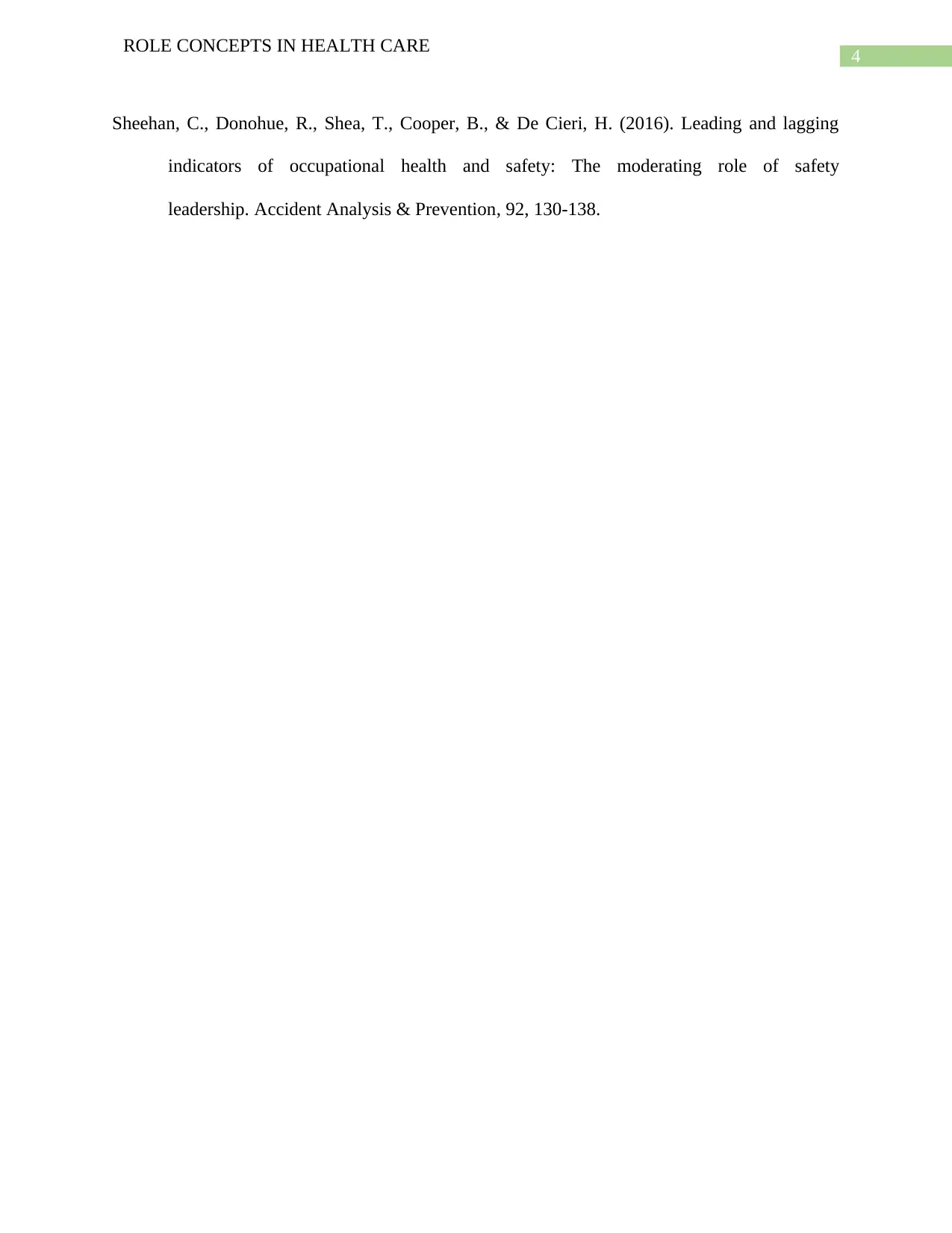
Sheehan, C., Donohue, R., Shea, T., Cooper, B., & De Cieri, H. (2016). Leading and lagging
indicators of occupational health and safety: The moderating role of safety
leadership. Accident Analysis & Prevention, 92, 130-138.
ROLE CONCEPTS IN HEALTH CARE
Sheehan, C., Donohue, R., Shea, T., Cooper, B., & De Cieri, H. (2016). Leading and lagging
indicators of occupational health and safety: The moderating role of safety
leadership. Accident Analysis & Prevention, 92, 130-138.
1 out of 5
Related Documents
Your All-in-One AI-Powered Toolkit for Academic Success.
+13062052269
info@desklib.com
Available 24*7 on WhatsApp / Email
Unlock your academic potential
Copyright © 2020–2025 A2Z Services. All Rights Reserved. Developed and managed by ZUCOL.