Sustainable Business Strategy Analysis: Rolex Case Study Report
VerifiedAdded on 2022/09/18
|27
|5179
|46
Report
AI Summary
This report analyzes the sustainable business strategy of Rolex, a luxury watch brand, within the retail industry. It begins with an industry analysis using Porter's Five Forces and PESTLE frameworks, identifying key opportunities and threats. The report then examines Rolex's sustainability initiatives, including its triple bottom line approach. A deep dive into Rolex's dynamic capabilities follows, utilizing value chain and VRIO analyses to assess its resources and competitive advantages. The report also includes a financial position analysis. Finally, the report evaluates Rolex's current strategy using a TWOS matrix and offers strategic recommendations for technology integration, personalization, new product development, differentiation, and potential acquisition strategies, to ensure continued success in the luxury market.
qwertyuiopasdfghjklzxcvbnmqwe
rtyuiopasdfghjklzxcvbnmqwertyu
iopasdfghjklzxcvbnmqwertyuiopa
sdfghjklzxcvbnmqwertyuiopasdfg
hjklzxcvbnmqwertyuiopasdfghjkl
zxcvbnmqwertyuiopasdfghjklzxcv
bnmqwertyuiopasdfghjklzxcvbnm
qwertyuiopasdfghjklzxcvbnmqwe
rtyuiopasdfghjklzxcvbnmqwertyu
iopasdfghjklzxcvbnmqwertyuiopa
sdfghjklzxcvbnmqwertyuiopasdfg
hjklzxcvbnmqwertyuiopasdfghjkl
zxcvbnmqwertyuiopasdfghjklzxcv
bnmqwertyuiopasdfghjklzxcvbnm
qwertyuiopasdfghjklzxcvbnmqwe
rtyuiopasdfghjklzxcvbnmrtyuiopa
SUSTAINABLE BUSINESS STRATEGY
[Type the document subtitle]
8/23/2019
Student name
rtyuiopasdfghjklzxcvbnmqwertyu
iopasdfghjklzxcvbnmqwertyuiopa
sdfghjklzxcvbnmqwertyuiopasdfg
hjklzxcvbnmqwertyuiopasdfghjkl
zxcvbnmqwertyuiopasdfghjklzxcv
bnmqwertyuiopasdfghjklzxcvbnm
qwertyuiopasdfghjklzxcvbnmqwe
rtyuiopasdfghjklzxcvbnmqwertyu
iopasdfghjklzxcvbnmqwertyuiopa
sdfghjklzxcvbnmqwertyuiopasdfg
hjklzxcvbnmqwertyuiopasdfghjkl
zxcvbnmqwertyuiopasdfghjklzxcv
bnmqwertyuiopasdfghjklzxcvbnm
qwertyuiopasdfghjklzxcvbnmqwe
rtyuiopasdfghjklzxcvbnmrtyuiopa
SUSTAINABLE BUSINESS STRATEGY
[Type the document subtitle]
8/23/2019
Student name

Paraphrase This Document
Need a fresh take? Get an instant paraphrase of this document with our AI Paraphraser
SUSTAINABLE BUSINESS STRATEGY 1
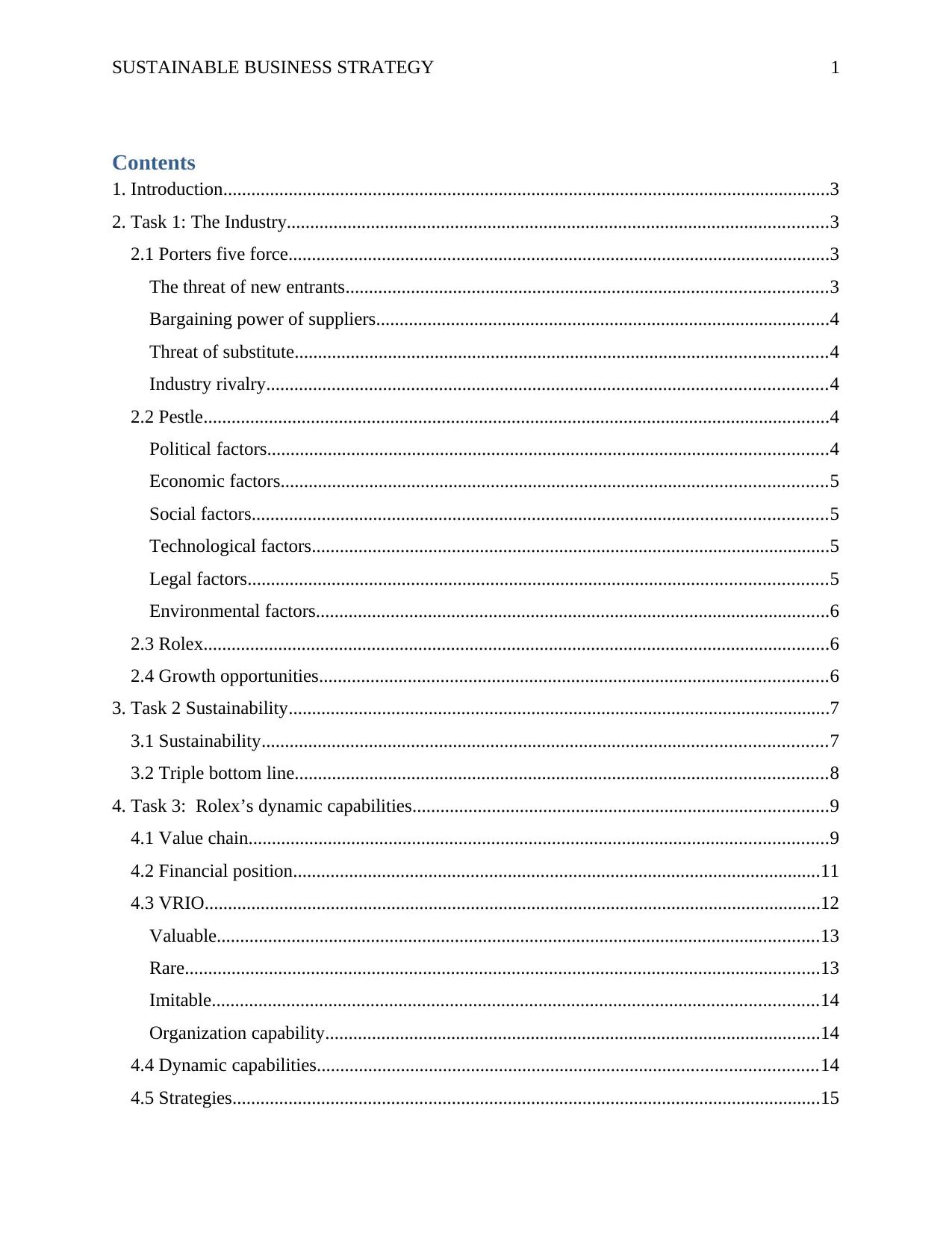
Contents
1. Introduction..................................................................................................................................3
2. Task 1: The Industry....................................................................................................................3
2.1 Porters five force....................................................................................................................3
The threat of new entrants.......................................................................................................3
Bargaining power of suppliers.................................................................................................4
Threat of substitute..................................................................................................................4
Industry rivalry........................................................................................................................4
2.2 Pestle......................................................................................................................................4
Political factors........................................................................................................................4
Economic factors.....................................................................................................................5
Social factors...........................................................................................................................5
Technological factors...............................................................................................................5
Legal factors............................................................................................................................5
Environmental factors..............................................................................................................6
2.3 Rolex......................................................................................................................................6
2.4 Growth opportunities.............................................................................................................6
3. Task 2 Sustainability....................................................................................................................7
3.1 Sustainability.........................................................................................................................7
3.2 Triple bottom line..................................................................................................................8
4. Task 3: Rolex’s dynamic capabilities.........................................................................................9
4.1 Value chain............................................................................................................................9
4.2 Financial position.................................................................................................................11
4.3 VRIO....................................................................................................................................12
Valuable.................................................................................................................................13
Rare........................................................................................................................................13
Imitable..................................................................................................................................14
Organization capability..........................................................................................................14
4.4 Dynamic capabilities...........................................................................................................14
4.5 Strategies..............................................................................................................................15
Contents
1. Introduction..................................................................................................................................3
2. Task 1: The Industry....................................................................................................................3
2.1 Porters five force....................................................................................................................3
The threat of new entrants.......................................................................................................3
Bargaining power of suppliers.................................................................................................4
Threat of substitute..................................................................................................................4
Industry rivalry........................................................................................................................4
2.2 Pestle......................................................................................................................................4
Political factors........................................................................................................................4
Economic factors.....................................................................................................................5
Social factors...........................................................................................................................5
Technological factors...............................................................................................................5
Legal factors............................................................................................................................5
Environmental factors..............................................................................................................6
2.3 Rolex......................................................................................................................................6
2.4 Growth opportunities.............................................................................................................6
3. Task 2 Sustainability....................................................................................................................7
3.1 Sustainability.........................................................................................................................7
3.2 Triple bottom line..................................................................................................................8
4. Task 3: Rolex’s dynamic capabilities.........................................................................................9
4.1 Value chain............................................................................................................................9
4.2 Financial position.................................................................................................................11
4.3 VRIO....................................................................................................................................12
Valuable.................................................................................................................................13
Rare........................................................................................................................................13
Imitable..................................................................................................................................14
Organization capability..........................................................................................................14
4.4 Dynamic capabilities...........................................................................................................14
4.5 Strategies..............................................................................................................................15
SUSTAINABLE BUSINESS STRATEGY 2
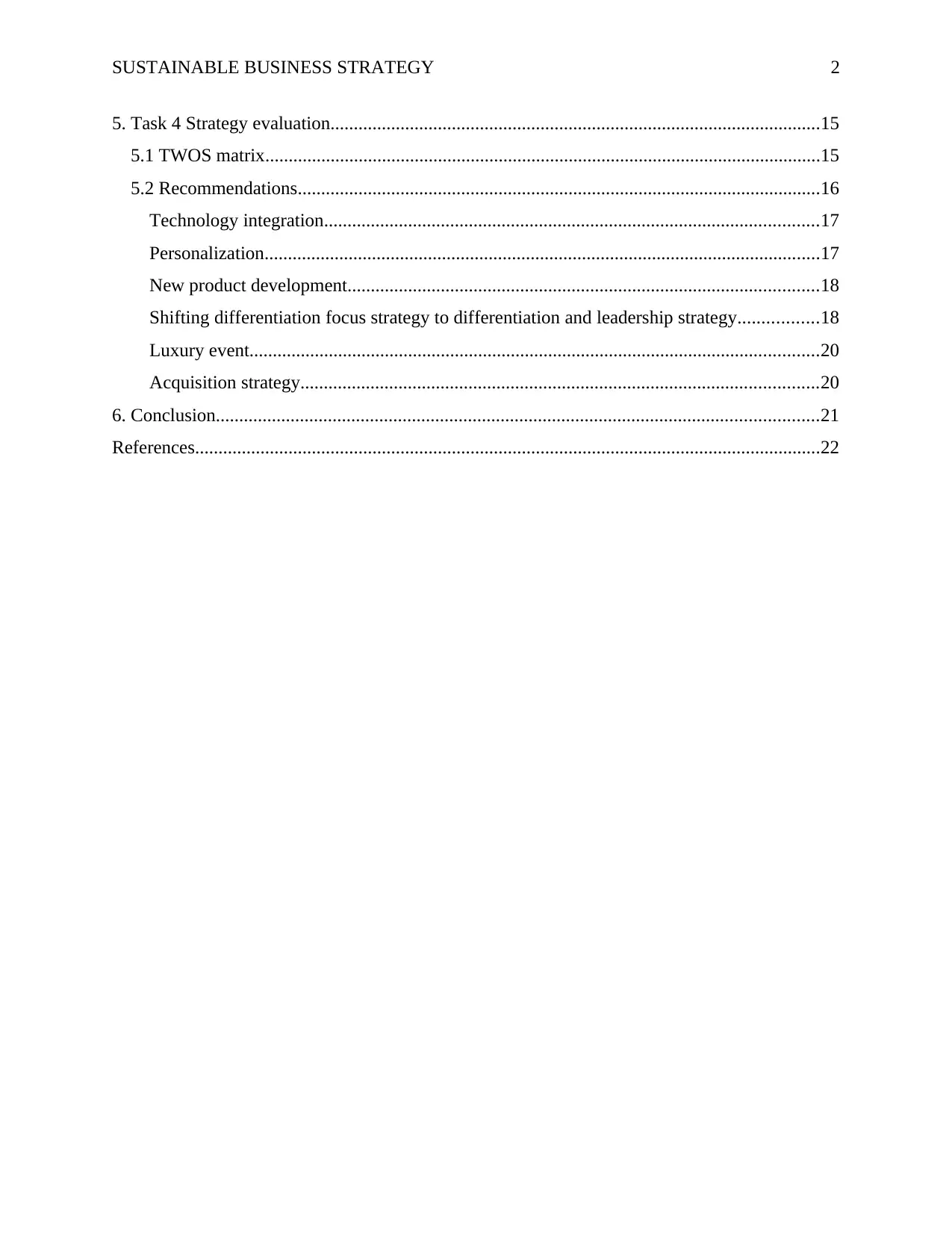
5. Task 4 Strategy evaluation.........................................................................................................15
5.1 TWOS matrix.......................................................................................................................15
5.2 Recommendations................................................................................................................16
Technology integration..........................................................................................................17
Personalization.......................................................................................................................17
New product development.....................................................................................................18
Shifting differentiation focus strategy to differentiation and leadership strategy.................18
Luxury event..........................................................................................................................20
Acquisition strategy...............................................................................................................20
6. Conclusion.................................................................................................................................21
References......................................................................................................................................22
5. Task 4 Strategy evaluation.........................................................................................................15
5.1 TWOS matrix.......................................................................................................................15
5.2 Recommendations................................................................................................................16
Technology integration..........................................................................................................17
Personalization.......................................................................................................................17
New product development.....................................................................................................18
Shifting differentiation focus strategy to differentiation and leadership strategy.................18
Luxury event..........................................................................................................................20
Acquisition strategy...............................................................................................................20
6. Conclusion.................................................................................................................................21
References......................................................................................................................................22
⊘ This is a preview!⊘
Do you want full access?
Subscribe today to unlock all pages.

Trusted by 1+ million students worldwide
SUSTAINABLE BUSINESS STRATEGY 3
1. Introduction
A strategy of a company is largely responsible for the achievement of vision and mission of the
company. For analyzing the strategy, it is important to understand the relevance of internal and
external environment of the company as a company is performing activities, which are reflected
by the factors in internal and external environment (Doole & Lowe, 2008). The objective of the
research is to analyze the sustainability of business strategy considering an organizational case,
for which the report will discuss analyzing the industry in which the company exists,
sustainability of the company, dynamic capabilities of the company and evaluating the strategy
in order to recommend new strategic options for the company. The industry considers for the
discussion is retail industry, for which the selected company is Rolex that is a luxury watches
brand (Herd et al., 2016).
2. Task 1: The Industry
2.1 Porters five force
The five forces depicted by this model reflect the impact of the force in the competitive
environment of the industry that reflects the industry attractiveness. The forces include
The threat of new entrants
Since Rolex is conducting business and offering luxury watches the threat of new entrants is
medium, the reason being the investment in the industry is quite huge and most importantly the
brand recognition is the major influence as per the customer preference.
1. Introduction
A strategy of a company is largely responsible for the achievement of vision and mission of the
company. For analyzing the strategy, it is important to understand the relevance of internal and
external environment of the company as a company is performing activities, which are reflected
by the factors in internal and external environment (Doole & Lowe, 2008). The objective of the
research is to analyze the sustainability of business strategy considering an organizational case,
for which the report will discuss analyzing the industry in which the company exists,
sustainability of the company, dynamic capabilities of the company and evaluating the strategy
in order to recommend new strategic options for the company. The industry considers for the
discussion is retail industry, for which the selected company is Rolex that is a luxury watches
brand (Herd et al., 2016).
2. Task 1: The Industry
2.1 Porters five force
The five forces depicted by this model reflect the impact of the force in the competitive
environment of the industry that reflects the industry attractiveness. The forces include
The threat of new entrants
Since Rolex is conducting business and offering luxury watches the threat of new entrants is
medium, the reason being the investment in the industry is quite huge and most importantly the
brand recognition is the major influence as per the customer preference.
Paraphrase This Document
Need a fresh take? Get an instant paraphrase of this document with our AI Paraphraser
SUSTAINABLE BUSINESS STRATEGY 4
Bargaining power of buyers The bargaining power of buyers are medium in case of luxury
watches industry, the reason being companies like Rolex are offering product differentiation for
which they are asking for premium prices and customers are ready to pay for the same (Dobbs,
2014).
Bargaining power of suppliers
Bargaining power of suppliers is low, the reason being luxury brands in watches industry is
having agile supply chain across the globe, and large numbers of suppliers are associated with
the brand. The key material includes Precious metals, precious stones, mother-of-pearl, stainless
steel, and ceramic (rolex, 2019).
Threat of substitute
The threat of substitute is medium in case of the luxury watch industry; the reason being one of
the major substitutes is premium mobile phones. However, brands like Rolex are able to reduce
this threat as the brand position reflects the status symbol of the customer (refreshbreeze, 2019).
Industry rivalry
The competition in the industry is very large as the direct competition include luxury watches
brand but the competition from medium range watches are also high like a fossil, Armani. The
two major competitors of Rolex around the globe are Patek Philippe and Tag Heuer (watchpro,
2019).
2.2 Pestle
Political factors
This factor includes policies and rules of the nation in which the company will conduct business.
For a luxury watches Industry, policies that will affect the business include the import policies,
Bargaining power of buyers The bargaining power of buyers are medium in case of luxury
watches industry, the reason being companies like Rolex are offering product differentiation for
which they are asking for premium prices and customers are ready to pay for the same (Dobbs,
2014).
Bargaining power of suppliers
Bargaining power of suppliers is low, the reason being luxury brands in watches industry is
having agile supply chain across the globe, and large numbers of suppliers are associated with
the brand. The key material includes Precious metals, precious stones, mother-of-pearl, stainless
steel, and ceramic (rolex, 2019).
Threat of substitute
The threat of substitute is medium in case of the luxury watch industry; the reason being one of
the major substitutes is premium mobile phones. However, brands like Rolex are able to reduce
this threat as the brand position reflects the status symbol of the customer (refreshbreeze, 2019).
Industry rivalry
The competition in the industry is very large as the direct competition include luxury watches
brand but the competition from medium range watches are also high like a fossil, Armani. The
two major competitors of Rolex around the globe are Patek Philippe and Tag Heuer (watchpro,
2019).
2.2 Pestle
Political factors
This factor includes policies and rules of the nation in which the company will conduct business.
For a luxury watches Industry, policies that will affect the business include the import policies,
SUSTAINABLE BUSINESS STRATEGY 5
taxes in the nation like 30% corporate tax in Australia (theglobaleconomy, 2019). However these
factors include effect of globalization which may be acting positively for the watch industry like
in case of Rolex (Ho, 2014).
Economic factors
This factor includes precious metal prices in case of watch Industry which impact majorly on the
business. GDP of a nation is another factor contributing to the customer demand for luxury
brands. Four examples the GDP of developed nations like United Nations are increasing which
reflect increase in demand for luxury brands and they picked opportunity for Rolex to conduct
business (Gay, 2016).
Social factors
These factors include culture, fashion trends in the nation. For example, preference to one kind
of precious stone is preferable in particular regions like gold in Dubai. The ethics also impact
this industry like in some of the society‘s blood diamond is considered as holy sin
(globalnegotiator, 2019).
Technological factors
Technology plays a major role in innovation and contemporary trends. This factor could be a
threat to the company as Rolex considered as prone to innovation when it comes to technology
(Judith & Steven, 2002).
Legal factors
These factors can be a threat to the company as there are various legal rules and regulations
which need to be applied by the company in every nation so as to maintain the sustainability and
taxes in the nation like 30% corporate tax in Australia (theglobaleconomy, 2019). However these
factors include effect of globalization which may be acting positively for the watch industry like
in case of Rolex (Ho, 2014).
Economic factors
This factor includes precious metal prices in case of watch Industry which impact majorly on the
business. GDP of a nation is another factor contributing to the customer demand for luxury
brands. Four examples the GDP of developed nations like United Nations are increasing which
reflect increase in demand for luxury brands and they picked opportunity for Rolex to conduct
business (Gay, 2016).
Social factors
These factors include culture, fashion trends in the nation. For example, preference to one kind
of precious stone is preferable in particular regions like gold in Dubai. The ethics also impact
this industry like in some of the society‘s blood diamond is considered as holy sin
(globalnegotiator, 2019).
Technological factors
Technology plays a major role in innovation and contemporary trends. This factor could be a
threat to the company as Rolex considered as prone to innovation when it comes to technology
(Judith & Steven, 2002).
Legal factors
These factors can be a threat to the company as there are various legal rules and regulations
which need to be applied by the company in every nation so as to maintain the sustainability and
⊘ This is a preview!⊘
Do you want full access?
Subscribe today to unlock all pages.
Trusted by 1+ million students worldwide
SUSTAINABLE BUSINESS STRATEGY 6
success graph. Moreover since the luxury brand are targeting upper class and elites the concerns
related to the legal stuff increases (Trivedi, 2016).
Environmental factors
Global environment safety laws are the major global standards that need to be in a compass by
companies in the retail industry. For this Rolex has been supporting and environmental factors
through various campaigns. Before this factor is not considered to be a major threat to the
company (spark.adobe, 2019).
2.3 Rolex
Rolex watches are a private limited company founded in United Kingdom and headquartered in
Switzerland. It is a Swiss watch manufacturer founded in 1905 (rolex, 2019). The company is
offering luxury watches across the globe with the help of 6000 and more employees. The
company position itself as a range developed of timepieces to reflect as icons of watchmaking.
The company has used luxury materials to offer to customers like precious stones like gold and
diamond. The target customer for the company considering the demographic factors is high-
income group and the lifestyle that has been targeted by the company is wristwatches for artist,
visionaries, pioneers, and athletes. Wearing a Rolex is considered to be a status symbol for
people across the globe, which has contributed to the success of the company which is reflected
by companies profit and financial statement. By 2016 the revenue of the company report was
$4.6 billion (forbes, 2019).
2.4 Growth opportunities
The major growth opportunities identified are product innovation. The companies unique selling
proposition and is its product quality, design, uniqueness and materials used for manufacturing
success graph. Moreover since the luxury brand are targeting upper class and elites the concerns
related to the legal stuff increases (Trivedi, 2016).
Environmental factors
Global environment safety laws are the major global standards that need to be in a compass by
companies in the retail industry. For this Rolex has been supporting and environmental factors
through various campaigns. Before this factor is not considered to be a major threat to the
company (spark.adobe, 2019).
2.3 Rolex
Rolex watches are a private limited company founded in United Kingdom and headquartered in
Switzerland. It is a Swiss watch manufacturer founded in 1905 (rolex, 2019). The company is
offering luxury watches across the globe with the help of 6000 and more employees. The
company position itself as a range developed of timepieces to reflect as icons of watchmaking.
The company has used luxury materials to offer to customers like precious stones like gold and
diamond. The target customer for the company considering the demographic factors is high-
income group and the lifestyle that has been targeted by the company is wristwatches for artist,
visionaries, pioneers, and athletes. Wearing a Rolex is considered to be a status symbol for
people across the globe, which has contributed to the success of the company which is reflected
by companies profit and financial statement. By 2016 the revenue of the company report was
$4.6 billion (forbes, 2019).
2.4 Growth opportunities
The major growth opportunities identified are product innovation. The companies unique selling
proposition and is its product quality, design, uniqueness and materials used for manufacturing
Paraphrase This Document
Need a fresh take? Get an instant paraphrase of this document with our AI Paraphraser
SUSTAINABLE BUSINESS STRATEGY 7
luxury watches. Considering the needs of the customer and change in preferences that are two
words use of technology and digitalization, the opportunity identified is integrating technology
with the premium design watches with precious stones included in the design. As per the
financial records, Rolex revenue from sales of luxury watches in 2018 was around $11.6 billion
to retailers across the globe (watchpro, 2019).
3. Task 2 Sustainability
3.1 Sustainability
Considering the historical data of the company, the company has been implementing the
sustainability plan since 1976. The company initiated an award for enterprise program, for which
the company manufactured world’s first wrist waterproof watch (Asfaw et al., 2015). In year
2014, Rolex young laureates, who were responsible for finding five visionaries, for which the
winner declared was Maritza Morales. However the award given by the company were not their
internal employees, these were the people from all around the world, which could be beneficial
to encourage people to save their environment, but the company could have also implemented
this program within the organization to promote the environmental sustainability in the
organization as well. Moreover, the winners were not promoted much by the company, which
could have done by the company (spark.adobe, 2019).
luxury watches. Considering the needs of the customer and change in preferences that are two
words use of technology and digitalization, the opportunity identified is integrating technology
with the premium design watches with precious stones included in the design. As per the
financial records, Rolex revenue from sales of luxury watches in 2018 was around $11.6 billion
to retailers across the globe (watchpro, 2019).
3. Task 2 Sustainability
3.1 Sustainability
Considering the historical data of the company, the company has been implementing the
sustainability plan since 1976. The company initiated an award for enterprise program, for which
the company manufactured world’s first wrist waterproof watch (Asfaw et al., 2015). In year
2014, Rolex young laureates, who were responsible for finding five visionaries, for which the
winner declared was Maritza Morales. However the award given by the company were not their
internal employees, these were the people from all around the world, which could be beneficial
to encourage people to save their environment, but the company could have also implemented
this program within the organization to promote the environmental sustainability in the
organization as well. Moreover, the winners were not promoted much by the company, which
could have done by the company (spark.adobe, 2019).
SUSTAINABLE BUSINESS STRATEGY 8
3.2 Triple bottom line
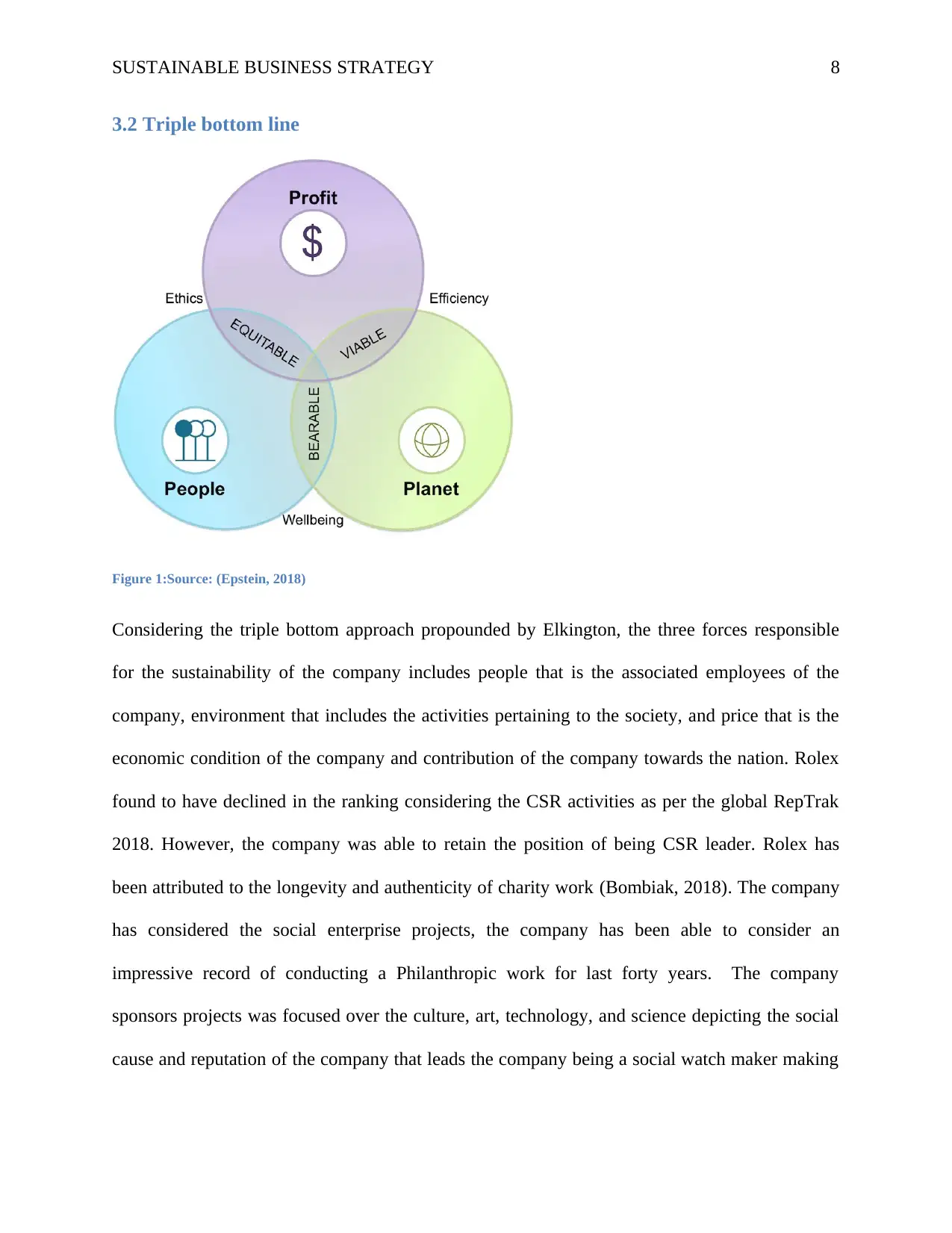
Figure 1:Source: (Epstein, 2018)
Considering the triple bottom approach propounded by Elkington, the three forces responsible
for the sustainability of the company includes people that is the associated employees of the
company, environment that includes the activities pertaining to the society, and price that is the
economic condition of the company and contribution of the company towards the nation. Rolex
found to have declined in the ranking considering the CSR activities as per the global RepTrak
2018. However, the company was able to retain the position of being CSR leader. Rolex has
been attributed to the longevity and authenticity of charity work (Bombiak, 2018). The company
has considered the social enterprise projects, the company has been able to consider an
impressive record of conducting a Philanthropic work for last forty years. The company
sponsors projects was focused over the culture, art, technology, and science depicting the social
cause and reputation of the company that leads the company being a social watch maker making
3.2 Triple bottom line
Figure 1:Source: (Epstein, 2018)
Considering the triple bottom approach propounded by Elkington, the three forces responsible
for the sustainability of the company includes people that is the associated employees of the
company, environment that includes the activities pertaining to the society, and price that is the
economic condition of the company and contribution of the company towards the nation. Rolex
found to have declined in the ranking considering the CSR activities as per the global RepTrak
2018. However, the company was able to retain the position of being CSR leader. Rolex has
been attributed to the longevity and authenticity of charity work (Bombiak, 2018). The company
has considered the social enterprise projects, the company has been able to consider an
impressive record of conducting a Philanthropic work for last forty years. The company
sponsors projects was focused over the culture, art, technology, and science depicting the social
cause and reputation of the company that leads the company being a social watch maker making
⊘ This is a preview!⊘
Do you want full access?
Subscribe today to unlock all pages.
Trusted by 1+ million students worldwide
SUSTAINABLE BUSINESS STRATEGY 9
company more sustainable. Moreover, the authentic CSR business model of the company has
also found to be one of the reasons for maintain the sustainability goal (medium, 2019).
4. Task 3: Rolex’s dynamic capabilities
4.1 Value chain
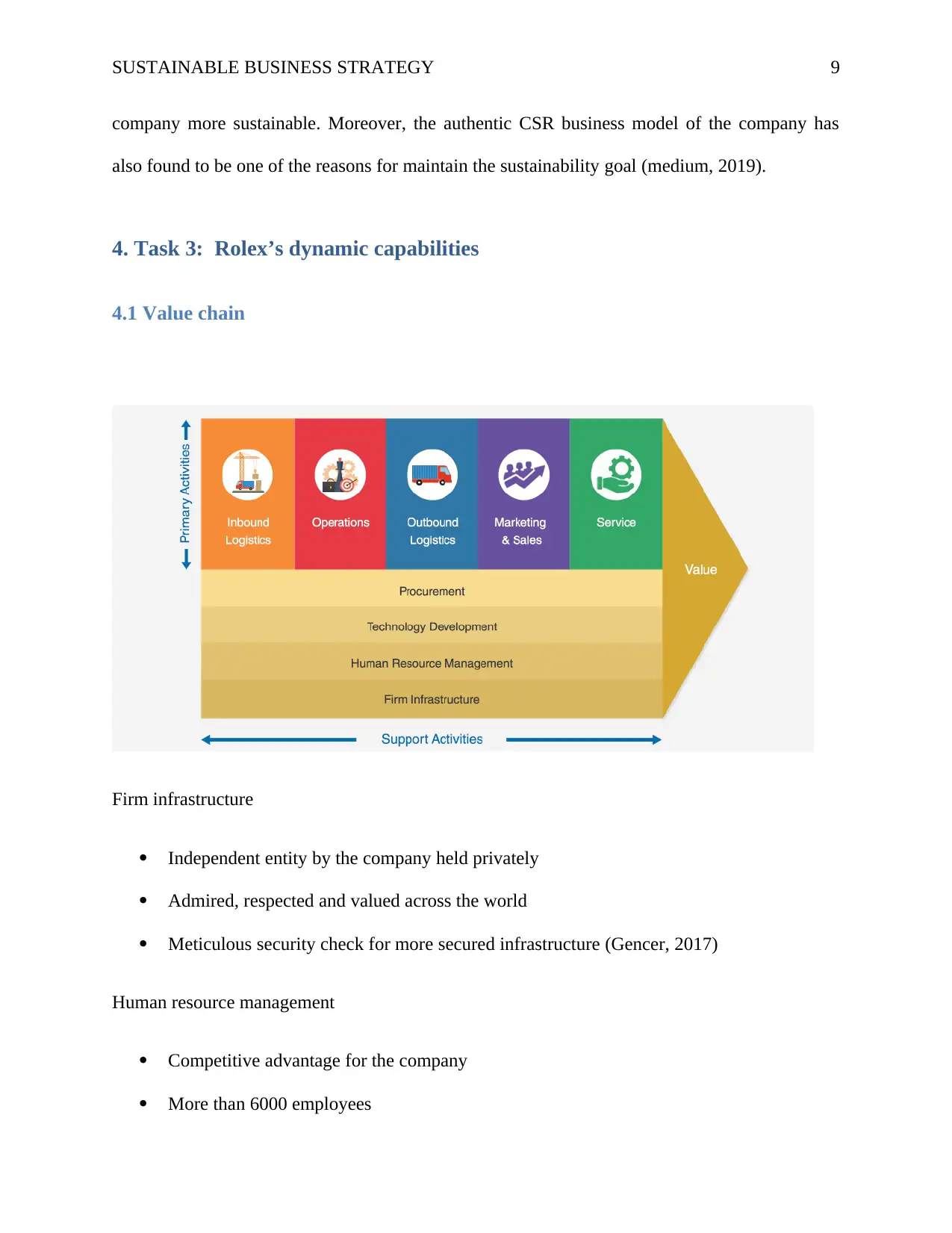
Firm infrastructure
Independent entity by the company held privately
Admired, respected and valued across the world
Meticulous security check for more secured infrastructure (Gencer, 2017)
Human resource management
Competitive advantage for the company
More than 6000 employees
company more sustainable. Moreover, the authentic CSR business model of the company has
also found to be one of the reasons for maintain the sustainability goal (medium, 2019).
4. Task 3: Rolex’s dynamic capabilities
4.1 Value chain
Firm infrastructure
Independent entity by the company held privately
Admired, respected and valued across the world
Meticulous security check for more secured infrastructure (Gencer, 2017)
Human resource management
Competitive advantage for the company
More than 6000 employees
Paraphrase This Document
Need a fresh take? Get an instant paraphrase of this document with our AI Paraphraser
SUSTAINABLE BUSINESS STRATEGY 10
Highly trained scientist (Kolk, 2016)
Technology development
Well equipment labs for professionals
Research and development department
Other than these four elements, another key element responsible for the company’s success is
marketing and sales. This element includes the positioning of the brand and the promotion of the
brand to increase and retain the global reputation of the company across the globe. Therefore,
through the value chain analysis it can be said that one of the most crucial activities conducted
by the company includes procurement of raw material as the company key focus is to procure
best quality stainless steel, precious metals and stones.
Highly trained scientist (Kolk, 2016)
Technology development
Well equipment labs for professionals
Research and development department
Other than these four elements, another key element responsible for the company’s success is
marketing and sales. This element includes the positioning of the brand and the promotion of the
brand to increase and retain the global reputation of the company across the globe. Therefore,
through the value chain analysis it can be said that one of the most crucial activities conducted
by the company includes procurement of raw material as the company key focus is to procure
best quality stainless steel, precious metals and stones.
SUSTAINABLE BUSINESS STRATEGY 11
4.2 Financial position
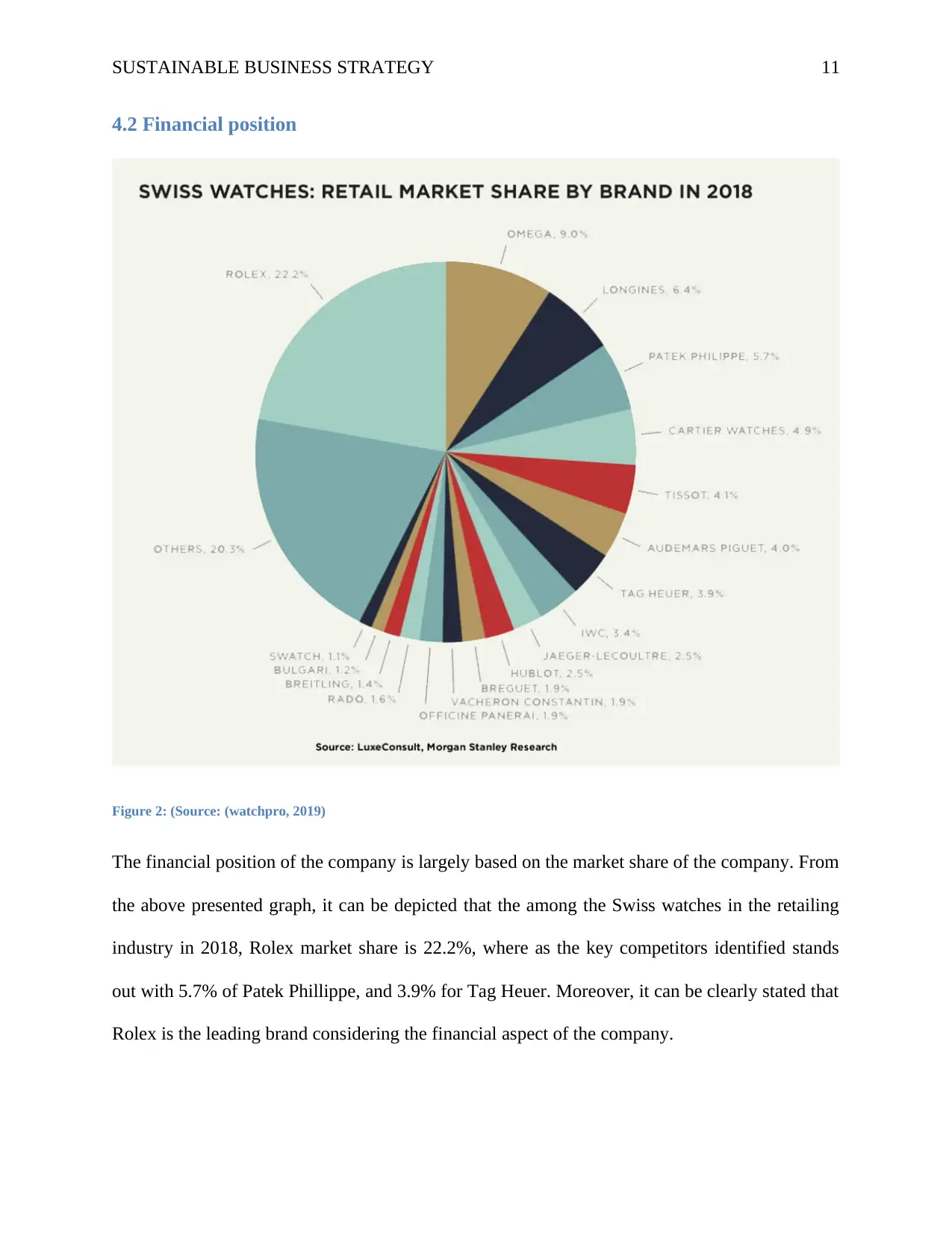
Figure 2: (Source: (watchpro, 2019)
The financial position of the company is largely based on the market share of the company. From
the above presented graph, it can be depicted that the among the Swiss watches in the retailing
industry in 2018, Rolex market share is 22.2%, where as the key competitors identified stands
out with 5.7% of Patek Phillippe, and 3.9% for Tag Heuer. Moreover, it can be clearly stated that
Rolex is the leading brand considering the financial aspect of the company.
4.2 Financial position
Figure 2: (Source: (watchpro, 2019)
The financial position of the company is largely based on the market share of the company. From
the above presented graph, it can be depicted that the among the Swiss watches in the retailing
industry in 2018, Rolex market share is 22.2%, where as the key competitors identified stands
out with 5.7% of Patek Phillippe, and 3.9% for Tag Heuer. Moreover, it can be clearly stated that
Rolex is the leading brand considering the financial aspect of the company.
⊘ This is a preview!⊘
Do you want full access?
Subscribe today to unlock all pages.
Trusted by 1+ million students worldwide

1 out of 27


Related Documents


Your All-in-One AI-Powered Toolkit for Academic Success.
+13062052269
info@desklib.com
Available 24*7 on WhatsApp / Email
![[object Object]](/_next/static/media/star-bottom.7253800d.svg)
Unlock your academic potential
Copyright © 2020–2026 A2Z Services. All Rights Reserved. Developed and managed by ZUCOL.