Rosetta Stone IPO: Business Model, Valuation, and Strategy Analysis
VerifiedAdded on 2019/12/04
|21
|5090
|168
Report
AI Summary
This report provides a comprehensive analysis of the Rosetta Stone IPO, focusing on its business model, core strategies, and the advantages and disadvantages of undertaking an initial public offering. It explores the use of the market-multiples approach to determine an exit value, calculating a suitable share price for the IPO and considering relevant factors. The report also delves into the reasonable rate of return on investment and applies a free cash flow model to arrive at a valuation. It offers insights into the offer price for the IPO, providing a detailed financial overview of the company's potential and challenges in the context of going public in 2009. The report also covers the IPO process, including the costs involved and the steps required for a company to go public.

Financial Entrepreneurial Initiatives
Rosetta Stone: Pricing the 2009 IPO
Rosetta Stone: Pricing the 2009 IPO

Paraphrase This Document
Need a fresh take? Get an instant paraphrase of this document with our AI Paraphraser
Table of Contents
INTRODUCTION .....................................................................................................................................3
1 Key features of Rosetta Stone’s business model and explain its core business strategy ....................3
2. Advantages and disadvantages of Rosetta Stone undertaking an IPO...............................................4
1.Evaluate the use of Market-Multiples approach for Rosetta Stone in determining an exit value.......7
4 Calculation of suitable share price for Rosetta Stone’s IPO using Market-multiples approach and
considerations would need to be made ..................................................................................................8
5. Reasonable rate of return on an investment in Rosetta Stone..........................................................12
6. Free Cash Flow model to Rosetta Stone to arrive at a valuation .....................................................13
7. Offer price for the IPO ....................................................................................................................16
CONCLUSION .......................................................................................................................................17
REFERENCES ........................................................................................................................................18
INTRODUCTION .....................................................................................................................................3
1 Key features of Rosetta Stone’s business model and explain its core business strategy ....................3
2. Advantages and disadvantages of Rosetta Stone undertaking an IPO...............................................4
1.Evaluate the use of Market-Multiples approach for Rosetta Stone in determining an exit value.......7
4 Calculation of suitable share price for Rosetta Stone’s IPO using Market-multiples approach and
considerations would need to be made ..................................................................................................8
5. Reasonable rate of return on an investment in Rosetta Stone..........................................................12
6. Free Cash Flow model to Rosetta Stone to arrive at a valuation .....................................................13
7. Offer price for the IPO ....................................................................................................................16
CONCLUSION .......................................................................................................................................17
REFERENCES ........................................................................................................................................18
Rosetta Stone
Financial market are those in which financial securities, commodities and other fungible items
are traded at various costs (Madura, 2014). The securities traded in financial markets includes stocks,
bonds, commodities etc. Initial public offering is the crucial sources of raising funds from the market
through offering equity and preference shares even debentures to public (Chemmanur and Krishnan,
2012). This is an initiative taken by an organization to public its stock however, is a long process to
register a company for IPO.
The report herewith is based on a case scenario of an USA based global education technology
Software Company, “Rosetta Stone” which deals with Language-Learning solutions products. As per
the case, business entity is moved further to the deal of going public in 2009. Therefore, this
investigation represents the advantages and disadvantages of Rosetta Stone to undertake an IPO.
Including this, key features of Rosetta Stone’s business model and its core business strategy are
explained in this report. Furthermore, Market-Multiples approach for Rosetta Stone is used to
determine an exit value along with calculating reasonable rate of return on an investment and free Cash
Flow model is applied to arrive at a valuation.
Key features of Rosetta Stone’s business model and explain its core business strategy
Rosetta Stone is an USA based global education technology Software Company deals with
developing language, learning and brain-fitness software. The organization is significantly known for
its innovative Language-Learning solutions products.
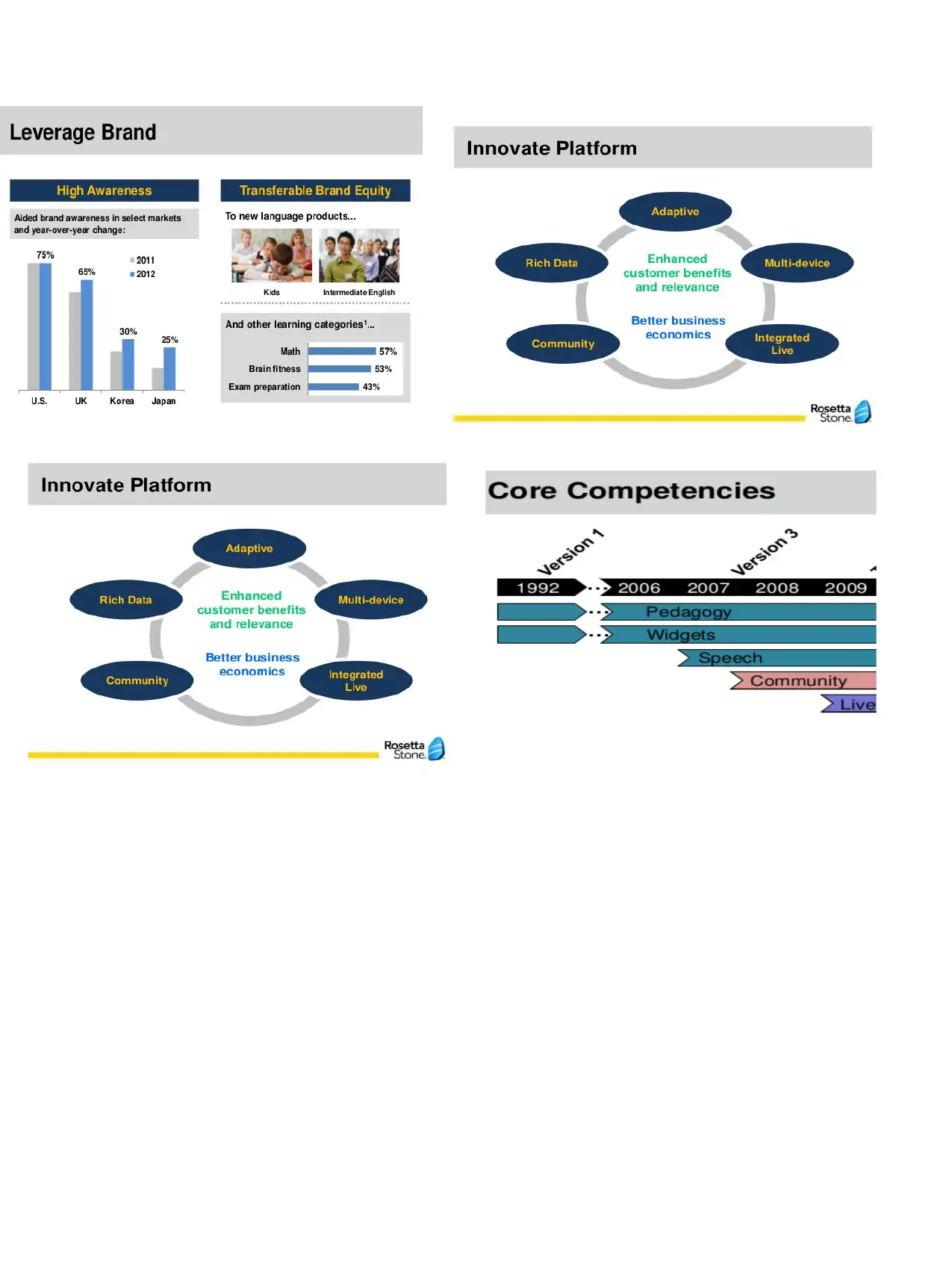
Business model of Rosetta stone
From the beginning, organization has started seeking more natural learning methods, therefore,
business model of Rosetta Stone is to use commuter technology to simulate the way people learn their
native languages. Along with this, business entity uses pictures and sounds to impart learning to the
individuals. The core area of business model is that how computer can be used to facilitate language
learning. In 1992, Stoltzfus and Fairfield came with Fairfield language technology, further the
emergence of CD-ROM technology has supported business of the cited company. The business model
of cited Company is specifically designed to distinguish the firm from other language companies and to
create an environment conducive to learning language naturally. The business model of company was
flexible and focused towards innovation. Further, in the year 1999, the organization has released its first
retail language training software product. The organization is continuously using series of CD ROMs
which is emerged as an effective ways to impart new learning to the individuals.
Business strategy of Rosetta Stone
Financial market are those in which financial securities, commodities and other fungible items
are traded at various costs (Madura, 2014). The securities traded in financial markets includes stocks,
bonds, commodities etc. Initial public offering is the crucial sources of raising funds from the market
through offering equity and preference shares even debentures to public (Chemmanur and Krishnan,
2012). This is an initiative taken by an organization to public its stock however, is a long process to
register a company for IPO.
The report herewith is based on a case scenario of an USA based global education technology
Software Company, “Rosetta Stone” which deals with Language-Learning solutions products. As per
the case, business entity is moved further to the deal of going public in 2009. Therefore, this
investigation represents the advantages and disadvantages of Rosetta Stone to undertake an IPO.
Including this, key features of Rosetta Stone’s business model and its core business strategy are
explained in this report. Furthermore, Market-Multiples approach for Rosetta Stone is used to
determine an exit value along with calculating reasonable rate of return on an investment and free Cash
Flow model is applied to arrive at a valuation.
Key features of Rosetta Stone’s business model and explain its core business strategy
Rosetta Stone is an USA based global education technology Software Company deals with
developing language, learning and brain-fitness software. The organization is significantly known for
its innovative Language-Learning solutions products.
Business model of Rosetta stone
From the beginning, organization has started seeking more natural learning methods, therefore,
business model of Rosetta Stone is to use commuter technology to simulate the way people learn their
native languages. Along with this, business entity uses pictures and sounds to impart learning to the
individuals. The core area of business model is that how computer can be used to facilitate language
learning. In 1992, Stoltzfus and Fairfield came with Fairfield language technology, further the
emergence of CD-ROM technology has supported business of the cited company. The business model
of cited Company is specifically designed to distinguish the firm from other language companies and to
create an environment conducive to learning language naturally. The business model of company was
flexible and focused towards innovation. Further, in the year 1999, the organization has released its first
retail language training software product. The organization is continuously using series of CD ROMs
which is emerged as an effective ways to impart new learning to the individuals.
Business strategy of Rosetta Stone
⊘ This is a preview!⊘
Do you want full access?
Subscribe today to unlock all pages.

Trusted by 1+ million students worldwide
Paraphrase This Document
Need a fresh take? Get an instant paraphrase of this document with our AI Paraphraser
Market share and growth of Rosetta stone is very high because it offers opportunity to the
learners to develop their understanding in relation to the different languages. Moreover, now students
and other people have desire to develop knowledge about varied languages with the aim to enhance
their potential. In addition to this, demand for such language learning is very high. Along with this,
there is high growth potential for the firm in terms of increased profitability and large customer base.
However, according to the cited case situation growth potential of such business sector decreased from
91% to 52% during 2004 to 2008. Hence, by considering such aspect business unit needs to make focus
on promotional aspect. This in turn helps Rosetta Stone in developing awareness among the potential
learners.
Further, case situation describes that expenses of the firm are increased with the very high pace
such as 77% in comparison to the sales revenue growth (66%). In addition to this, R&D expenditure of
the firm also increased by 72%. Thus, company needs to make focus on promotional strategies to entice
sales. Along with this, business unit also needs to make competent strategies which help them in exert
control over the expenses. Hence, by considering all such aspects Rosetta Stone can exert control over
the expenses. The impressive financial growth with 53% increase in revenues has supported decision
despite the global economic contraction. In this regard, by launching IPO Rosetta Stone can generate
money for the purpose of growth and expansion.
Advantages and disadvantages of Rosetta Stone undertaking an IPO
Advantages Disadvantage
learners to develop their understanding in relation to the different languages. Moreover, now students
and other people have desire to develop knowledge about varied languages with the aim to enhance
their potential. In addition to this, demand for such language learning is very high. Along with this,
there is high growth potential for the firm in terms of increased profitability and large customer base.
However, according to the cited case situation growth potential of such business sector decreased from
91% to 52% during 2004 to 2008. Hence, by considering such aspect business unit needs to make focus
on promotional aspect. This in turn helps Rosetta Stone in developing awareness among the potential
learners.
Further, case situation describes that expenses of the firm are increased with the very high pace
such as 77% in comparison to the sales revenue growth (66%). In addition to this, R&D expenditure of
the firm also increased by 72%. Thus, company needs to make focus on promotional strategies to entice
sales. Along with this, business unit also needs to make competent strategies which help them in exert
control over the expenses. Hence, by considering all such aspects Rosetta Stone can exert control over
the expenses. The impressive financial growth with 53% increase in revenues has supported decision
despite the global economic contraction. In this regard, by launching IPO Rosetta Stone can generate
money for the purpose of growth and expansion.
Advantages and disadvantages of Rosetta Stone undertaking an IPO
Advantages Disadvantage
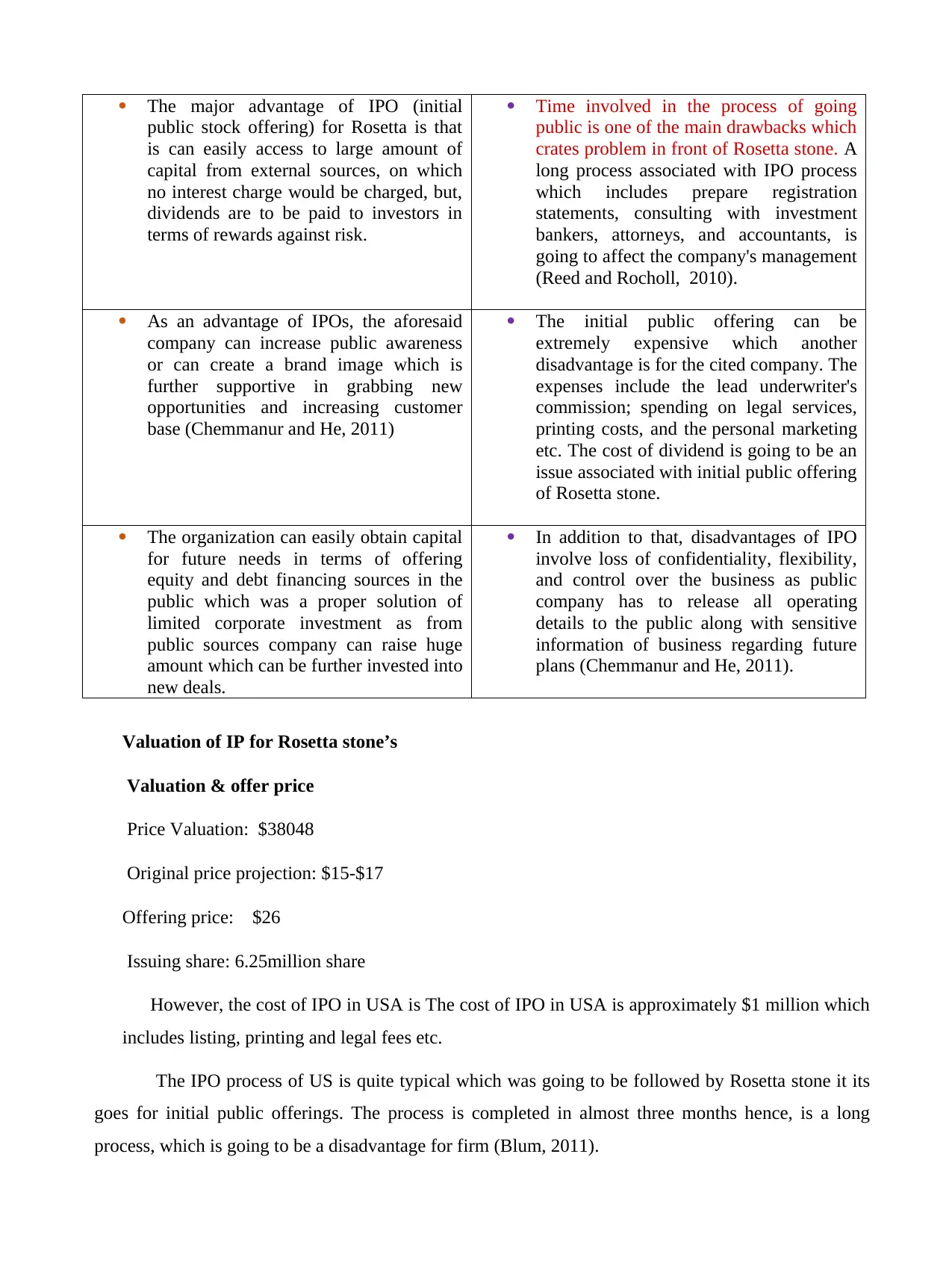
The major advantage of IPO (initial
public stock offering) for Rosetta is that
is can easily access to large amount of
capital from external sources, on which
no interest charge would be charged, but,
dividends are to be paid to investors in
terms of rewards against risk.
Time involved in the process of going
public is one of the main drawbacks which
crates problem in front of Rosetta stone. A
long process associated with IPO process
which includes prepare registration
statements, consulting with investment
bankers, attorneys, and accountants, is
going to affect the company's management
(Reed and Rocholl, 2010).
As an advantage of IPOs, the aforesaid
company can increase public awareness
or can create a brand image which is
further supportive in grabbing new
opportunities and increasing customer
base (Chemmanur and He, 2011)
The initial public offering can be
extremely expensive which another
disadvantage is for the cited company. The
expenses include the lead underwriter's
commission; spending on legal services,
printing costs, and the personal marketing
etc. The cost of dividend is going to be an
issue associated with initial public offering
of Rosetta stone.
The organization can easily obtain capital
for future needs in terms of offering
equity and debt financing sources in the
public which was a proper solution of
limited corporate investment as from
public sources company can raise huge
amount which can be further invested into
new deals.
In addition to that, disadvantages of IPO
involve loss of confidentiality, flexibility,
and control over the business as public
company has to release all operating
details to the public along with sensitive
information of business regarding future
plans (Chemmanur and He, 2011).
Valuation of IP for Rosetta stone’s
Valuation & offer price
Price Valuation: $38048
Original price projection: $15-$17
Offering price: $26
Issuing share: 6.25million share
However, the cost of IPO in USA is The cost of IPO in USA is approximately $1 million which
includes listing, printing and legal fees etc.
The IPO process of US is quite typical which was going to be followed by Rosetta stone it its
goes for initial public offerings. The process is completed in almost three months hence, is a long
process, which is going to be a disadvantage for firm (Blum, 2011).
public stock offering) for Rosetta is that
is can easily access to large amount of
capital from external sources, on which
no interest charge would be charged, but,
dividends are to be paid to investors in
terms of rewards against risk.
Time involved in the process of going
public is one of the main drawbacks which
crates problem in front of Rosetta stone. A
long process associated with IPO process
which includes prepare registration
statements, consulting with investment
bankers, attorneys, and accountants, is
going to affect the company's management
(Reed and Rocholl, 2010).
As an advantage of IPOs, the aforesaid
company can increase public awareness
or can create a brand image which is
further supportive in grabbing new
opportunities and increasing customer
base (Chemmanur and He, 2011)
The initial public offering can be
extremely expensive which another
disadvantage is for the cited company. The
expenses include the lead underwriter's
commission; spending on legal services,
printing costs, and the personal marketing
etc. The cost of dividend is going to be an
issue associated with initial public offering
of Rosetta stone.
The organization can easily obtain capital
for future needs in terms of offering
equity and debt financing sources in the
public which was a proper solution of
limited corporate investment as from
public sources company can raise huge
amount which can be further invested into
new deals.
In addition to that, disadvantages of IPO
involve loss of confidentiality, flexibility,
and control over the business as public
company has to release all operating
details to the public along with sensitive
information of business regarding future
plans (Chemmanur and He, 2011).
Valuation of IP for Rosetta stone’s
Valuation & offer price
Price Valuation: $38048
Original price projection: $15-$17
Offering price: $26
Issuing share: 6.25million share
However, the cost of IPO in USA is The cost of IPO in USA is approximately $1 million which
includes listing, printing and legal fees etc.
The IPO process of US is quite typical which was going to be followed by Rosetta stone it its
goes for initial public offerings. The process is completed in almost three months hence, is a long
process, which is going to be a disadvantage for firm (Blum, 2011).
⊘ This is a preview!⊘
Do you want full access?
Subscribe today to unlock all pages.
Trusted by 1+ million students worldwide
Prior to initiate for a process, it becomes important to carry out a meeting with qualified
management team or board of directors to discuss about equity-issuance process. Including this,
board of members or responsible persons have to discuss about the IPO deals with various
investment bankers, lawyers and accountants before selecting a lead underwriter for which a
significant cots is to be paid (Plotnicki and Szyszka, 2014). However, some additional meeting
are also to be initiated in mid for discussing on problems and reviews. The guidelines of SEC
prohibited company to carry huge publicity for company’s name, products and geographic
locations, but, a normal advertisement can be created.
The process further involves preparation for prospects which is prepared to gain specific
attention from parties along with this the company has to provide make a due diligence in which
management shows that nothing in untrue and not a single misleading information about
company is quoted in the registration statements.
The process of underwriting then stared in which number of investment banks who are agreed to
buy portions, after then SEC review period started, After reviewing the registration process,
letter of comment received from SEC is received. After completing this three months of long
process the organization can trade in equity shares as by getting effective dates and share
offered (Blum, 2011).
management team or board of directors to discuss about equity-issuance process. Including this,
board of members or responsible persons have to discuss about the IPO deals with various
investment bankers, lawyers and accountants before selecting a lead underwriter for which a
significant cots is to be paid (Plotnicki and Szyszka, 2014). However, some additional meeting
are also to be initiated in mid for discussing on problems and reviews. The guidelines of SEC
prohibited company to carry huge publicity for company’s name, products and geographic
locations, but, a normal advertisement can be created.
The process further involves preparation for prospects which is prepared to gain specific
attention from parties along with this the company has to provide make a due diligence in which
management shows that nothing in untrue and not a single misleading information about
company is quoted in the registration statements.
The process of underwriting then stared in which number of investment banks who are agreed to
buy portions, after then SEC review period started, After reviewing the registration process,
letter of comment received from SEC is received. After completing this three months of long
process the organization can trade in equity shares as by getting effective dates and share
offered (Blum, 2011).
Paraphrase This Document
Need a fresh take? Get an instant paraphrase of this document with our AI Paraphraser
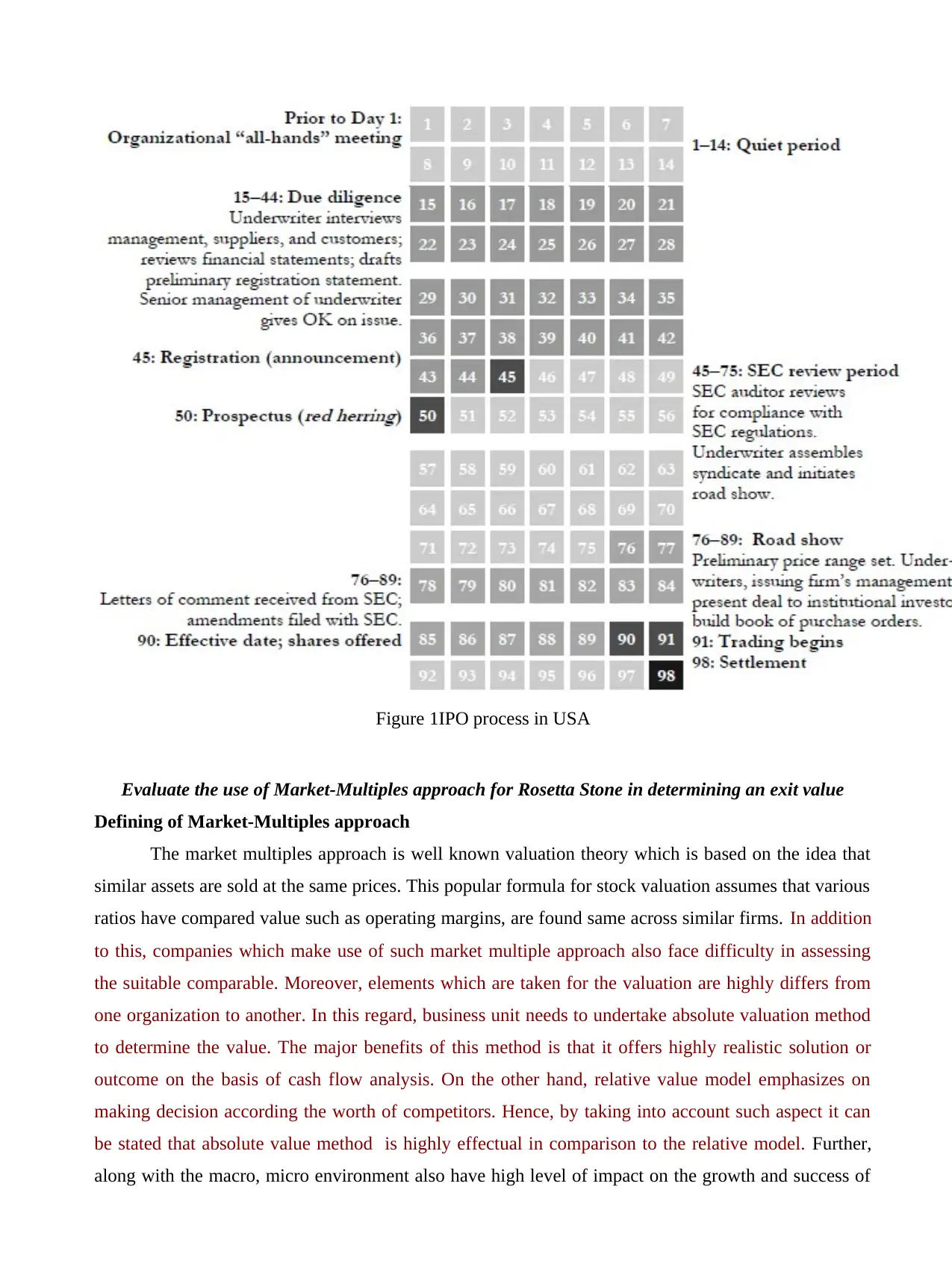
Figure 1IPO process in USA
Evaluate the use of Market-Multiples approach for Rosetta Stone in determining an exit value
Defining of Market-Multiples approach
The market multiples approach is well known valuation theory which is based on the idea that
similar assets are sold at the same prices. This popular formula for stock valuation assumes that various
ratios have compared value such as operating margins, are found same across similar firms. In addition
to this, companies which make use of such market multiple approach also face difficulty in assessing
the suitable comparable. Moreover, elements which are taken for the valuation are highly differs from
one organization to another. In this regard, business unit needs to undertake absolute valuation method
to determine the value. The major benefits of this method is that it offers highly realistic solution or
outcome on the basis of cash flow analysis. On the other hand, relative value model emphasizes on
making decision according the worth of competitors. Hence, by taking into account such aspect it can
be stated that absolute value method is highly effectual in comparison to the relative model. Further,
along with the macro, micro environment also have high level of impact on the growth and success of
Evaluate the use of Market-Multiples approach for Rosetta Stone in determining an exit value
Defining of Market-Multiples approach
The market multiples approach is well known valuation theory which is based on the idea that
similar assets are sold at the same prices. This popular formula for stock valuation assumes that various
ratios have compared value such as operating margins, are found same across similar firms. In addition
to this, companies which make use of such market multiple approach also face difficulty in assessing
the suitable comparable. Moreover, elements which are taken for the valuation are highly differs from
one organization to another. In this regard, business unit needs to undertake absolute valuation method
to determine the value. The major benefits of this method is that it offers highly realistic solution or
outcome on the basis of cash flow analysis. On the other hand, relative value model emphasizes on
making decision according the worth of competitors. Hence, by taking into account such aspect it can
be stated that absolute value method is highly effectual in comparison to the relative model. Further,
along with the macro, micro environment also have high level of impact on the growth and success of
firm. Hence, by considering only macro factors business organization is not able to prepare competent
framework.
Market multiple valuation for Rosetta Stone
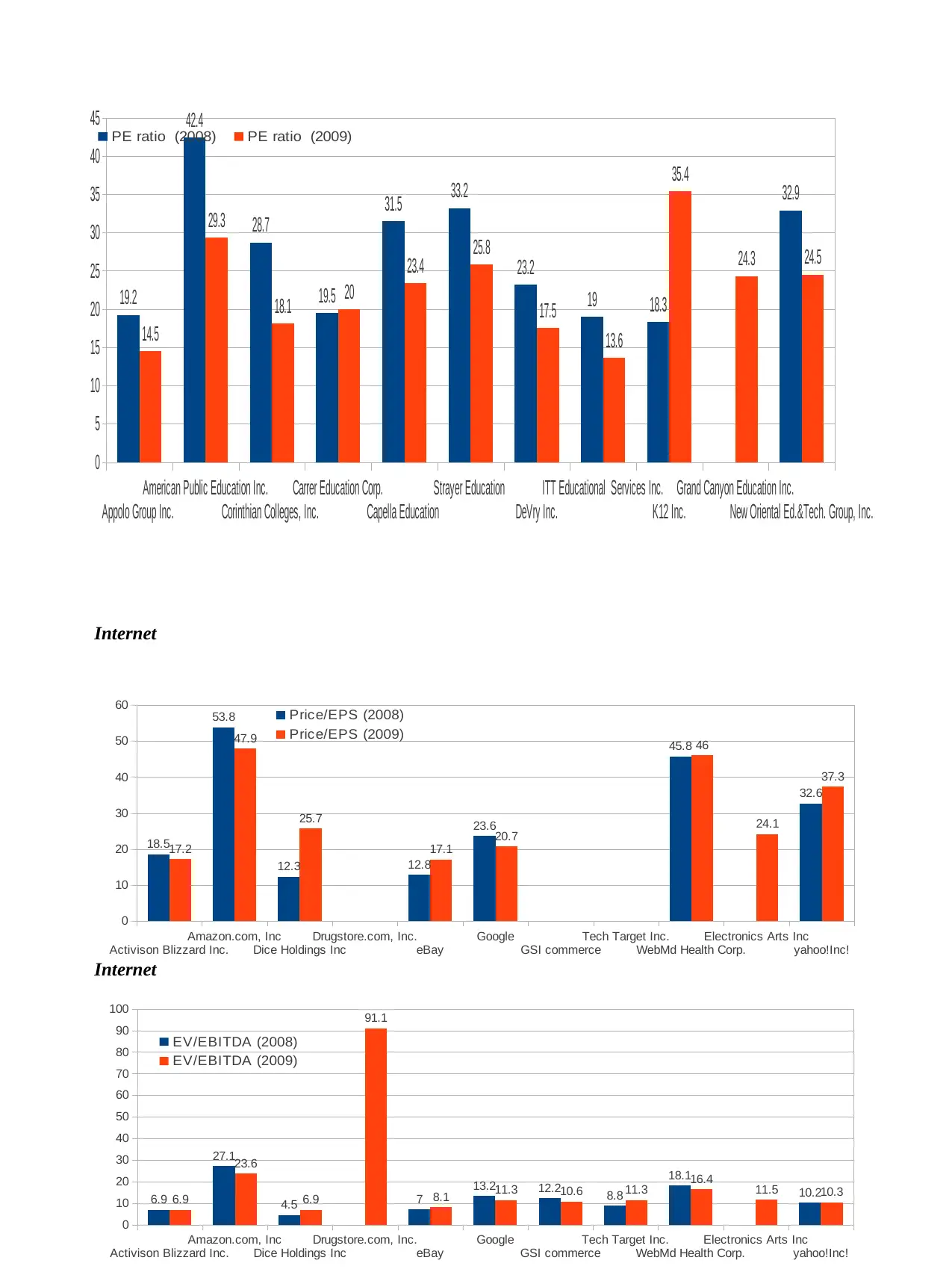
The market multiple valuation is going to be an effective method for Rosetta Stone to determine
stock valuation, therefore, it is important to find out the comparable company of mentioned
organization. Some of the comparable companies for Rosetta Stone are Apollo, American public
education, Corinthian college, Career Education Capella, DeVey, IIT, K12, Grand Canyon, New
Oriental etc. In the process of determining an exit value of firm using market multiple method, first
process is of identifying comparable assets and market values for such assets. After that, the market
values are to be converted into standardized values as comparison among absolute prices cannot be
done accurately, the process is called as valuation multiples (Moore, Filatotchev, and Rasheed, 2012).
This is going to be a simplistic method through which provide useful information about relative value.
Calculation of suitable share price for Rosetta Stone’s IPO using Market-multiples approach and
considerations would need to be made
According to the given case scenario, the organization is going to make an IPO in 2009 hence,
the method of market multiple is used so as to calculate suitable share price for Rosetta stone’s IPO.
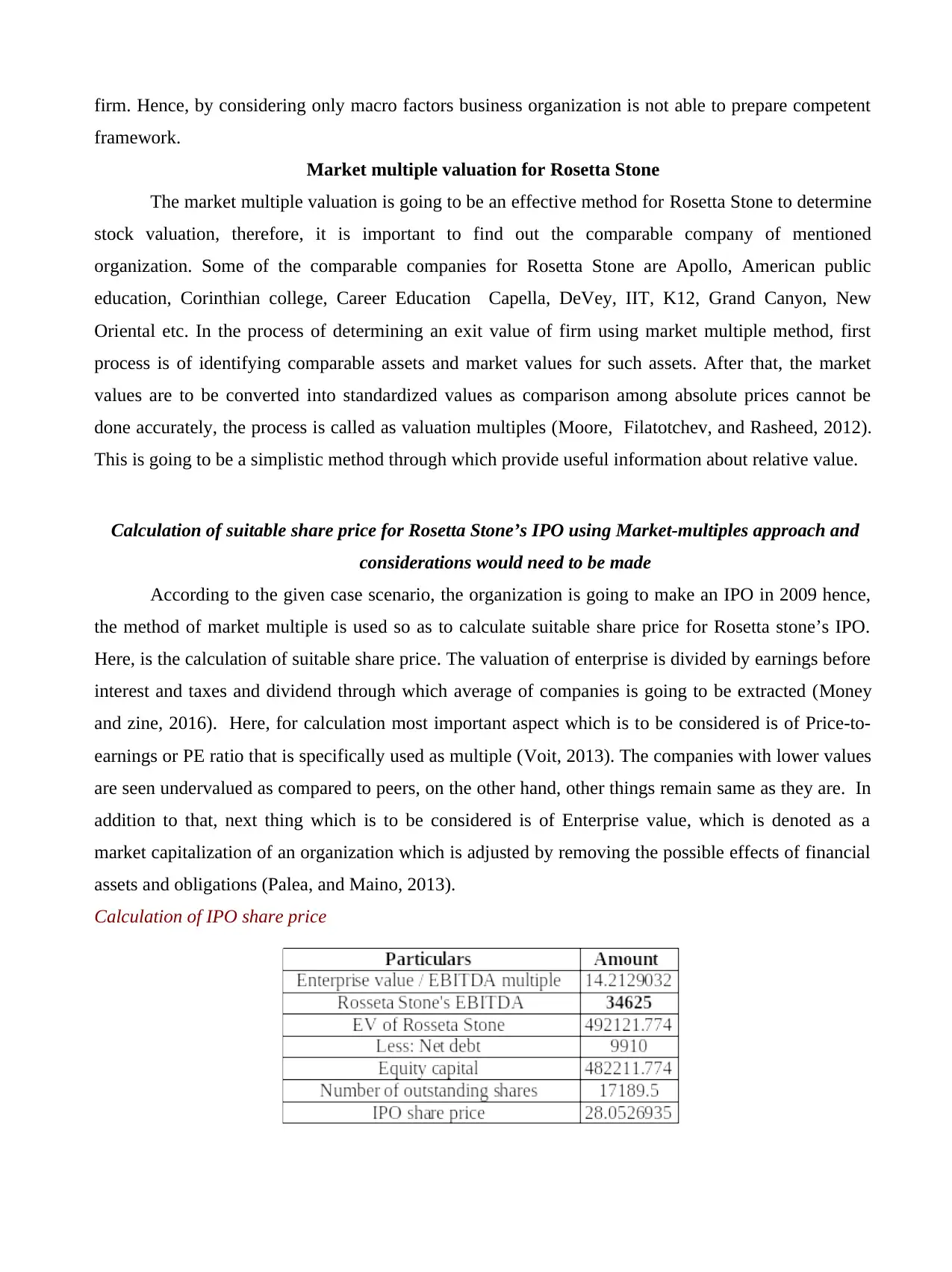
Here, is the calculation of suitable share price. The valuation of enterprise is divided by earnings before
interest and taxes and dividend through which average of companies is going to be extracted (Money
and zine, 2016). Here, for calculation most important aspect which is to be considered is of Price-to-
earnings or PE ratio that is specifically used as multiple (Voit, 2013). The companies with lower values
are seen undervalued as compared to peers, on the other hand, other things remain same as they are. In
addition to that, next thing which is to be considered is of Enterprise value, which is denoted as a
market capitalization of an organization which is adjusted by removing the possible effects of financial
assets and obligations (Palea, and Maino, 2013).
Calculation of IPO share price
framework.
Market multiple valuation for Rosetta Stone
The market multiple valuation is going to be an effective method for Rosetta Stone to determine
stock valuation, therefore, it is important to find out the comparable company of mentioned
organization. Some of the comparable companies for Rosetta Stone are Apollo, American public
education, Corinthian college, Career Education Capella, DeVey, IIT, K12, Grand Canyon, New
Oriental etc. In the process of determining an exit value of firm using market multiple method, first
process is of identifying comparable assets and market values for such assets. After that, the market
values are to be converted into standardized values as comparison among absolute prices cannot be
done accurately, the process is called as valuation multiples (Moore, Filatotchev, and Rasheed, 2012).
This is going to be a simplistic method through which provide useful information about relative value.
Calculation of suitable share price for Rosetta Stone’s IPO using Market-multiples approach and
considerations would need to be made
According to the given case scenario, the organization is going to make an IPO in 2009 hence,
the method of market multiple is used so as to calculate suitable share price for Rosetta stone’s IPO.
Here, is the calculation of suitable share price. The valuation of enterprise is divided by earnings before
interest and taxes and dividend through which average of companies is going to be extracted (Money
and zine, 2016). Here, for calculation most important aspect which is to be considered is of Price-to-
earnings or PE ratio that is specifically used as multiple (Voit, 2013). The companies with lower values
are seen undervalued as compared to peers, on the other hand, other things remain same as they are. In
addition to that, next thing which is to be considered is of Enterprise value, which is denoted as a
market capitalization of an organization which is adjusted by removing the possible effects of financial
assets and obligations (Palea, and Maino, 2013).
Calculation of IPO share price
⊘ This is a preview!⊘
Do you want full access?
Subscribe today to unlock all pages.
Trusted by 1+ million students worldwide

EV = Market Capitalization + Debt + Minority Interest – Cash & Cash Equivalents – Investments
(Valuation: Market Multiples Method. 2016)
Profit educations
Profit educations
Appolo Group Inc.
American Public Education Inc.
Corinthian Colleges, Inc.
Carrer Education Corp.
Capella Education
Strayer Education
DeVry Inc.
ITT Educational Services Inc.
K12 Inc.
Grand Canyon Education Inc.
New Oriental Ed.&Tech. Group, Inc.
0
5
10
15
20
25
30
35
9.7
20.5
11.6
6.8
13.4
17.8
12.5
10.1
13.4
30.2
23.8
7.2
13.8
7.8 6.8
10.3
14.1
9.6
7.4 8.7
11.5
17.2
Ev /EBITDA (2008)
Ev /EBITDA (2009)
(Valuation: Market Multiples Method. 2016)
Profit educations
Profit educations
Appolo Group Inc.
American Public Education Inc.
Corinthian Colleges, Inc.
Carrer Education Corp.
Capella Education
Strayer Education
DeVry Inc.
ITT Educational Services Inc.
K12 Inc.
Grand Canyon Education Inc.
New Oriental Ed.&Tech. Group, Inc.
0
5
10
15
20
25
30
35
9.7
20.5
11.6
6.8
13.4
17.8
12.5
10.1
13.4
30.2
23.8
7.2
13.8
7.8 6.8
10.3
14.1
9.6
7.4 8.7
11.5
17.2
Ev /EBITDA (2008)
Ev /EBITDA (2009)
Paraphrase This Document
Need a fresh take? Get an instant paraphrase of this document with our AI Paraphraser
Internet
Internet
Appolo Group Inc.
American Public Education Inc.
Corinthian Colleges, Inc.
Carrer Education Corp.
Capella Education
Strayer Education
DeVry Inc.
ITT Educational Services Inc.
K12 Inc.
Grand Canyon Education Inc.
New Oriental Ed.&Tech. Group, Inc.
0
5
10
15
20
25
30
35
40
45
19.2
42.4
28.7
19.5
31.5 33.2
23.2
19 18.3
32.9
14.5
29.3
18.1 20
23.4 25.8
17.5
13.6
35.4
24.3 24.5
PE ratio (2008) PE ratio (2009)
Activison Blizzard Inc.
Amazon.com, Inc
Dice Holdings Inc
Drugstore.com, Inc.
eBay
Google
GSI commerce
Tech Target Inc.
WebMd Health Corp.
Electronics Arts Inc
yahoo!Inc!
0
10
20
30
40
50
60
18.5
53.8
12.3 12.8
23.6
45.8
32.6
17.2
47.9
25.7
17.1
20.7
46
24.1
37.3
Price/EPS (2008)
Price/EPS (2009)
Activison Blizzard Inc.
Amazon.com, Inc
Dice Holdings Inc
Drugstore.com, Inc.
eBay
Google
GSI commerce
Tech Target Inc.
WebMd Health Corp.
Electronics Arts Inc
yahoo!Inc!
0
10
20
30
40
50
60
70
80
90
100
6.9
27.1
4.5 7
13.2 12.2 8.8
18.1
10.2
6.9
23.6
6.9
91.1
8.1 11.3 10.6 11.3 16.4 11.5 10.3
EV/EBITDA (2008)
EV/EBITDA (2009)
Internet
Appolo Group Inc.
American Public Education Inc.
Corinthian Colleges, Inc.
Carrer Education Corp.
Capella Education
Strayer Education
DeVry Inc.
ITT Educational Services Inc.
K12 Inc.
Grand Canyon Education Inc.
New Oriental Ed.&Tech. Group, Inc.
0
5
10
15
20
25
30
35
40
45
19.2
42.4
28.7
19.5
31.5 33.2
23.2
19 18.3
32.9
14.5
29.3
18.1 20
23.4 25.8
17.5
13.6
35.4
24.3 24.5
PE ratio (2008) PE ratio (2009)
Activison Blizzard Inc.
Amazon.com, Inc
Dice Holdings Inc
Drugstore.com, Inc.
eBay
GSI commerce
Tech Target Inc.
WebMd Health Corp.
Electronics Arts Inc
yahoo!Inc!
0
10
20
30
40
50
60
18.5
53.8
12.3 12.8
23.6
45.8
32.6
17.2
47.9
25.7
17.1
20.7
46
24.1
37.3
Price/EPS (2008)
Price/EPS (2009)
Activison Blizzard Inc.
Amazon.com, Inc
Dice Holdings Inc
Drugstore.com, Inc.
eBay
GSI commerce
Tech Target Inc.
WebMd Health Corp.
Electronics Arts Inc
yahoo!Inc!
0
10
20
30
40
50
60
70
80
90
100
6.9
27.1
4.5 7
13.2 12.2 8.8
18.1
10.2
6.9
23.6
6.9
91.1
8.1 11.3 10.6 11.3 16.4 11.5 10.3
EV/EBITDA (2008)
EV/EBITDA (2009)
Software
Software
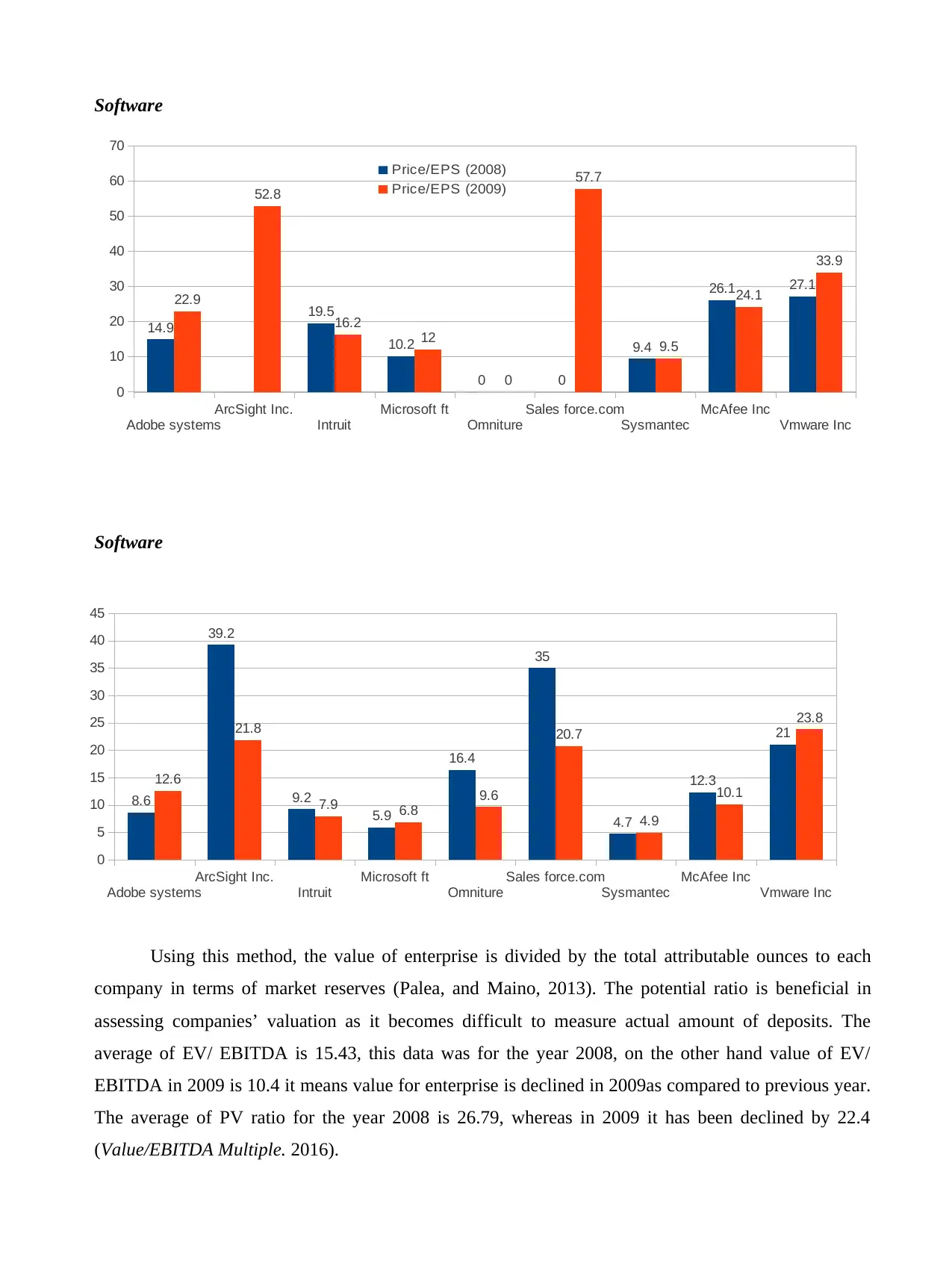
Using this method, the value of enterprise is divided by the total attributable ounces to each
company in terms of market reserves (Palea, and Maino, 2013). The potential ratio is beneficial in
assessing companies’ valuation as it becomes difficult to measure actual amount of deposits. The
average of EV/ EBITDA is 15.43, this data was for the year 2008, on the other hand value of EV/
EBITDA in 2009 is 10.4 it means value for enterprise is declined in 2009as compared to previous year.
The average of PV ratio for the year 2008 is 26.79, whereas in 2009 it has been declined by 22.4
(Value/EBITDA Multiple. 2016).
Price/EPS (2008)
Price/EPS (2009)
Adobe systems
ArcSight Inc.
Intruit
Microsoft ft
Omniture
Sales force.com
Sysmantec
McAfee Inc
Vmware Inc
0
10
20
30
40
50
60
70
14.9
19.5
10.2
0 0
9.4
26.1 27.1
22.9
52.8
16.2
12
0
57.7
9.5
24.1
33.9
Adobe systems
ArcSight Inc.
Intruit
Microsoft ft
Omniture
Sales force.com
Sysmantec
McAfee Inc
Vmware Inc
0
5
10
15
20
25
30
35
40
45
8.6
39.2
9.2
5.9
16.4
35
4.7
12.3
21
12.6
21.8
7.9 6.8
9.6
20.7
4.9
10.1
23.8
Software
Using this method, the value of enterprise is divided by the total attributable ounces to each
company in terms of market reserves (Palea, and Maino, 2013). The potential ratio is beneficial in
assessing companies’ valuation as it becomes difficult to measure actual amount of deposits. The
average of EV/ EBITDA is 15.43, this data was for the year 2008, on the other hand value of EV/
EBITDA in 2009 is 10.4 it means value for enterprise is declined in 2009as compared to previous year.
The average of PV ratio for the year 2008 is 26.79, whereas in 2009 it has been declined by 22.4
(Value/EBITDA Multiple. 2016).
Price/EPS (2008)
Price/EPS (2009)
Adobe systems
ArcSight Inc.
Intruit
Microsoft ft
Omniture
Sales force.com
Sysmantec
McAfee Inc
Vmware Inc
0
10
20
30
40
50
60
70
14.9
19.5
10.2
0 0
9.4
26.1 27.1
22.9
52.8
16.2
12
0
57.7
9.5
24.1
33.9
Adobe systems
ArcSight Inc.
Intruit
Microsoft ft
Omniture
Sales force.com
Sysmantec
McAfee Inc
Vmware Inc
0
5
10
15
20
25
30
35
40
45
8.6
39.2
9.2
5.9
16.4
35
4.7
12.3
21
12.6
21.8
7.9 6.8
9.6
20.7
4.9
10.1
23.8
⊘ This is a preview!⊘
Do you want full access?
Subscribe today to unlock all pages.
Trusted by 1+ million students worldwide

1 out of 21


Related Documents


Your All-in-One AI-Powered Toolkit for Academic Success.
+13062052269
info@desklib.com
Available 24*7 on WhatsApp / Email
![[object Object]](/_next/static/media/star-bottom.7253800d.svg)
Unlock your academic potential
Copyright © 2020–2026 A2Z Services. All Rights Reserved. Developed and managed by ZUCOL.