Failure of In-House Safety Training to Produce Desired Outcomes
VerifiedAdded on 2020/04/15
|9
|1624
|97
Report
AI Summary
This report investigates the reasons behind the failure of in-house safety training programs to achieve desired safety outcomes. The report analyzes the aims and objectives of the study, which include investigating the reasons for training failures, assessing the impact of training programs, and identifying factors contributing to success. A literature review highlights the importance of safety training, the impact of accidents, and the role of in-house staff. The rationale for the study emphasizes the need to address hazardous activities and ensure a safe working environment. The study design involves primary surveys and secondary data analysis, with exploratory research methods. The methodology includes questionnaires and interviews with in-house staff from construction companies. Ethical considerations ensure participant confidentiality and data integrity. The report also addresses potential risks and resources required for construction site safety. A program diary outlines the research timeline, from topic selection to final submission. The report provides valuable insights into improving workplace safety and preventing accidents, focusing on the effectiveness of in-house training initiatives.
Running head: FAILURE OF IN – HOUSE SAFETY TRAINING TO PRODUCE DESIRED
SAFETY OUTCOMES
Failure of in – house safety training to produce desired safety outcomes
Name of the Student:
Name of the University:
Author Note:
SAFETY OUTCOMES
Failure of in – house safety training to produce desired safety outcomes
Name of the Student:
Name of the University:
Author Note:
Paraphrase This Document
Need a fresh take? Get an instant paraphrase of this document with our AI Paraphraser

1
FAILURE OF IN – HOUSE SAFETY TRAINING TO PRODUCE DESIRED SAFETY
OUTCOMES
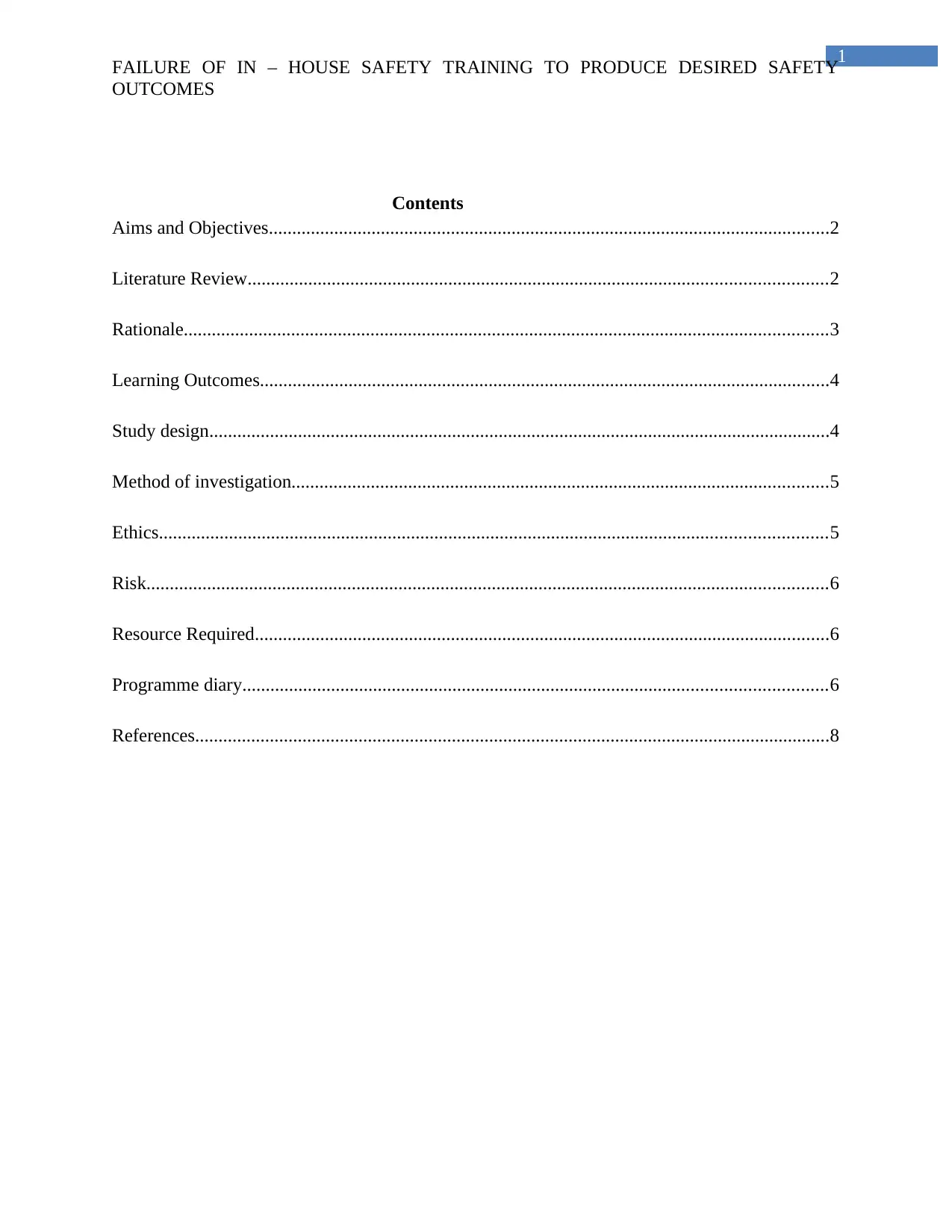
Contents
Aims and Objectives........................................................................................................................2
Literature Review............................................................................................................................2
Rationale..........................................................................................................................................3
Learning Outcomes..........................................................................................................................4
Study design.....................................................................................................................................4
Method of investigation...................................................................................................................5
Ethics...............................................................................................................................................5
Risk..................................................................................................................................................6
Resource Required...........................................................................................................................6
Programme diary.............................................................................................................................6
References........................................................................................................................................8
FAILURE OF IN – HOUSE SAFETY TRAINING TO PRODUCE DESIRED SAFETY
OUTCOMES
Contents
Aims and Objectives........................................................................................................................2
Literature Review............................................................................................................................2
Rationale..........................................................................................................................................3
Learning Outcomes..........................................................................................................................4
Study design.....................................................................................................................................4
Method of investigation...................................................................................................................5
Ethics...............................................................................................................................................5
Risk..................................................................................................................................................6
Resource Required...........................................................................................................................6
Programme diary.............................................................................................................................6
References........................................................................................................................................8

2
FAILURE OF IN – HOUSE SAFETY TRAINING TO PRODUCE DESIRED SAFETY
OUTCOMES
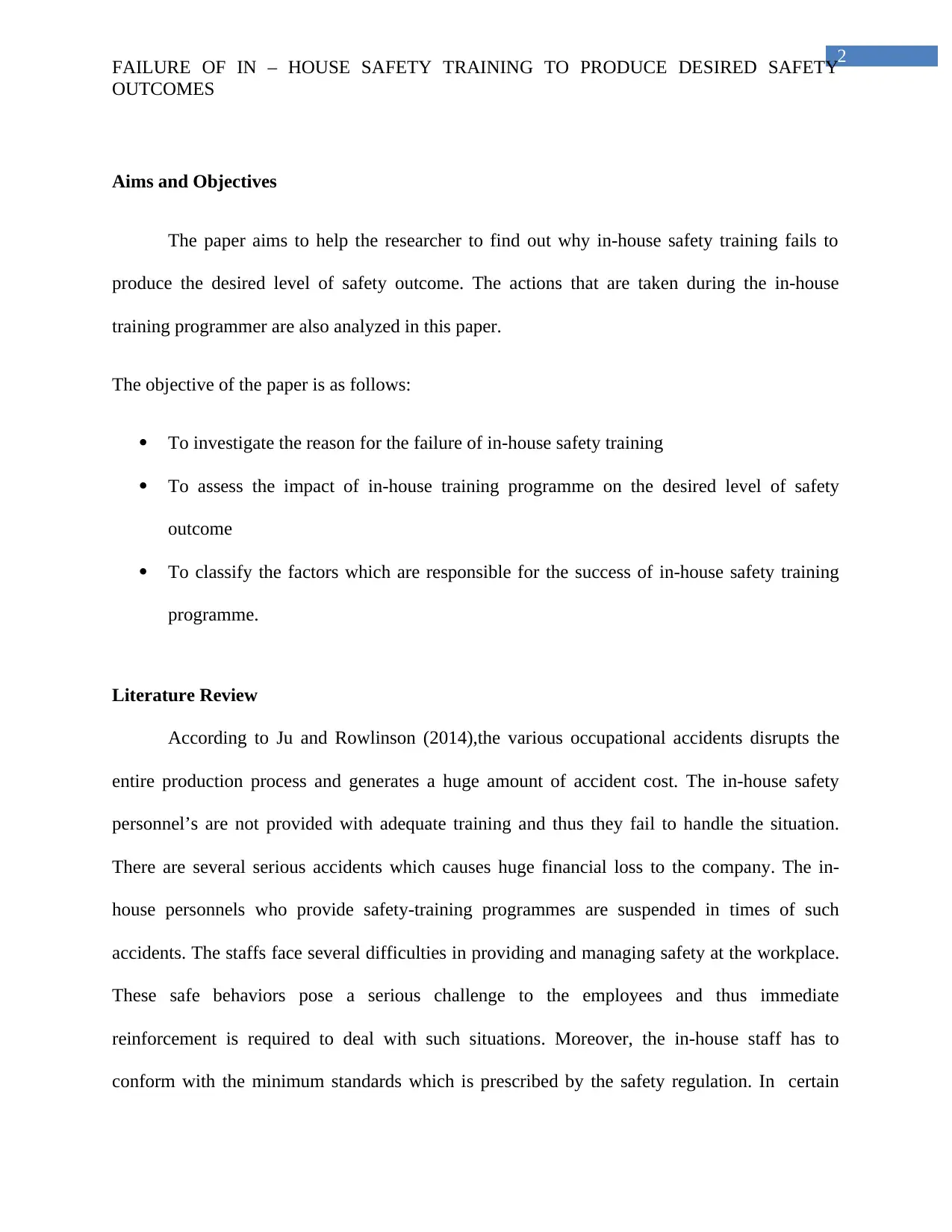
Aims and Objectives
The paper aims to help the researcher to find out why in-house safety training fails to
produce the desired level of safety outcome. The actions that are taken during the in-house
training programmer are also analyzed in this paper.
The objective of the paper is as follows:
To investigate the reason for the failure of in-house safety training
To assess the impact of in-house training programme on the desired level of safety
outcome
To classify the factors which are responsible for the success of in-house safety training
programme.
Literature Review
According to Ju and Rowlinson (2014),the various occupational accidents disrupts the
entire production process and generates a huge amount of accident cost. The in-house safety
personnel’s are not provided with adequate training and thus they fail to handle the situation.
There are several serious accidents which causes huge financial loss to the company. The in-
house personnels who provide safety-training programmes are suspended in times of such
accidents. The staffs face several difficulties in providing and managing safety at the workplace.
These safe behaviors pose a serious challenge to the employees and thus immediate
reinforcement is required to deal with such situations. Moreover, the in-house staff has to
conform with the minimum standards which is prescribed by the safety regulation. In certain
FAILURE OF IN – HOUSE SAFETY TRAINING TO PRODUCE DESIRED SAFETY
OUTCOMES
Aims and Objectives
The paper aims to help the researcher to find out why in-house safety training fails to
produce the desired level of safety outcome. The actions that are taken during the in-house
training programmer are also analyzed in this paper.
The objective of the paper is as follows:
To investigate the reason for the failure of in-house safety training
To assess the impact of in-house training programme on the desired level of safety
outcome
To classify the factors which are responsible for the success of in-house safety training
programme.
Literature Review
According to Ju and Rowlinson (2014),the various occupational accidents disrupts the
entire production process and generates a huge amount of accident cost. The in-house safety
personnel’s are not provided with adequate training and thus they fail to handle the situation.
There are several serious accidents which causes huge financial loss to the company. The in-
house personnels who provide safety-training programmes are suspended in times of such
accidents. The staffs face several difficulties in providing and managing safety at the workplace.
These safe behaviors pose a serious challenge to the employees and thus immediate
reinforcement is required to deal with such situations. Moreover, the in-house staff has to
conform with the minimum standards which is prescribed by the safety regulation. In certain
⊘ This is a preview!⊘
Do you want full access?
Subscribe today to unlock all pages.

Trusted by 1+ million students worldwide

3
FAILURE OF IN – HOUSE SAFETY TRAINING TO PRODUCE DESIRED SAFETY
OUTCOMES
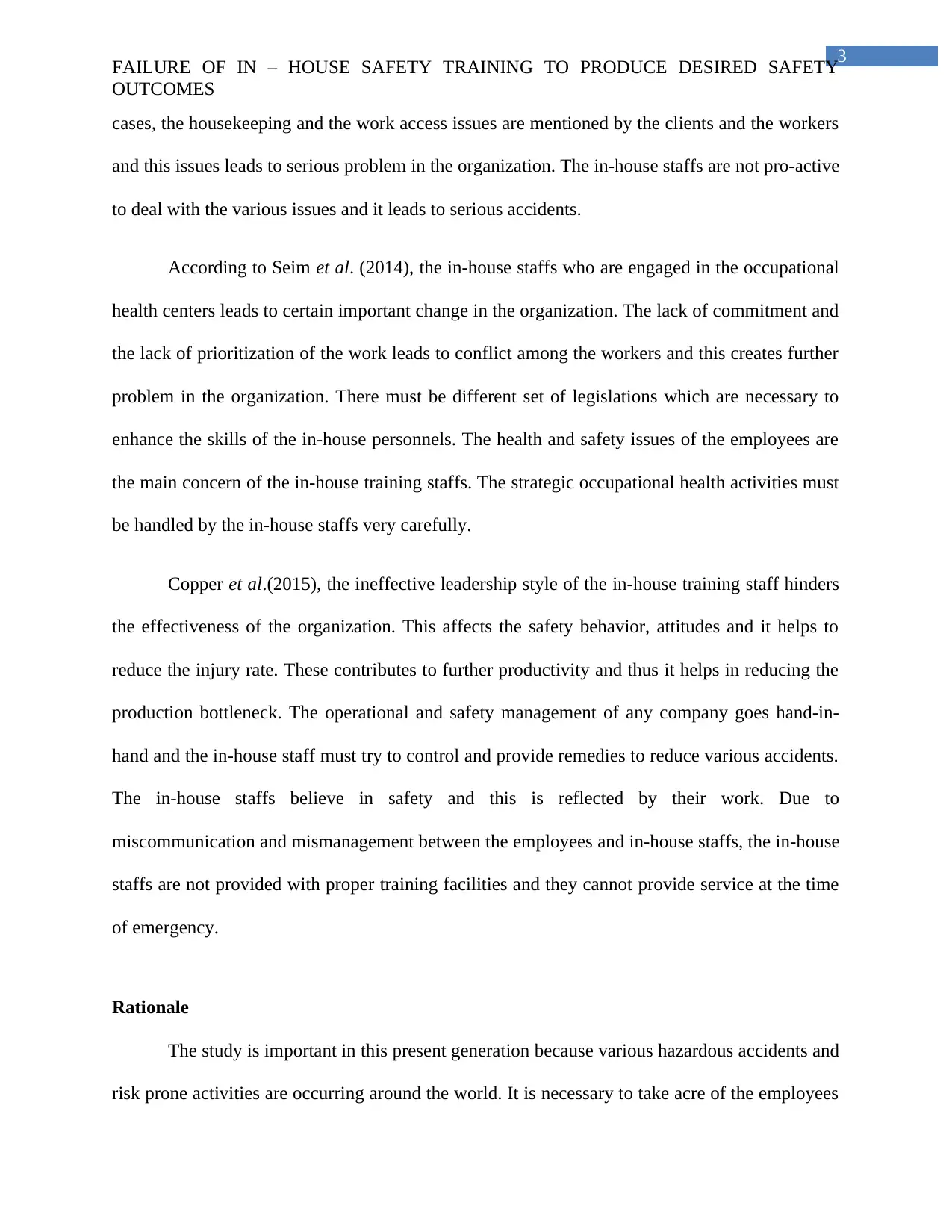
cases, the housekeeping and the work access issues are mentioned by the clients and the workers
and this issues leads to serious problem in the organization. The in-house staffs are not pro-active
to deal with the various issues and it leads to serious accidents.
According to Seim et al. (2014), the in-house staffs who are engaged in the occupational
health centers leads to certain important change in the organization. The lack of commitment and
the lack of prioritization of the work leads to conflict among the workers and this creates further
problem in the organization. There must be different set of legislations which are necessary to
enhance the skills of the in-house personnels. The health and safety issues of the employees are
the main concern of the in-house training staffs. The strategic occupational health activities must
be handled by the in-house staffs very carefully.
Copper et al.(2015), the ineffective leadership style of the in-house training staff hinders
the effectiveness of the organization. This affects the safety behavior, attitudes and it helps to
reduce the injury rate. These contributes to further productivity and thus it helps in reducing the
production bottleneck. The operational and safety management of any company goes hand-in-
hand and the in-house staff must try to control and provide remedies to reduce various accidents.
The in-house staffs believe in safety and this is reflected by their work. Due to
miscommunication and mismanagement between the employees and in-house staffs, the in-house
staffs are not provided with proper training facilities and they cannot provide service at the time
of emergency.
Rationale
The study is important in this present generation because various hazardous accidents and
risk prone activities are occurring around the world. It is necessary to take acre of the employees
FAILURE OF IN – HOUSE SAFETY TRAINING TO PRODUCE DESIRED SAFETY
OUTCOMES
cases, the housekeeping and the work access issues are mentioned by the clients and the workers
and this issues leads to serious problem in the organization. The in-house staffs are not pro-active
to deal with the various issues and it leads to serious accidents.
According to Seim et al. (2014), the in-house staffs who are engaged in the occupational
health centers leads to certain important change in the organization. The lack of commitment and
the lack of prioritization of the work leads to conflict among the workers and this creates further
problem in the organization. There must be different set of legislations which are necessary to
enhance the skills of the in-house personnels. The health and safety issues of the employees are
the main concern of the in-house training staffs. The strategic occupational health activities must
be handled by the in-house staffs very carefully.
Copper et al.(2015), the ineffective leadership style of the in-house training staff hinders
the effectiveness of the organization. This affects the safety behavior, attitudes and it helps to
reduce the injury rate. These contributes to further productivity and thus it helps in reducing the
production bottleneck. The operational and safety management of any company goes hand-in-
hand and the in-house staff must try to control and provide remedies to reduce various accidents.
The in-house staffs believe in safety and this is reflected by their work. Due to
miscommunication and mismanagement between the employees and in-house staffs, the in-house
staffs are not provided with proper training facilities and they cannot provide service at the time
of emergency.
Rationale
The study is important in this present generation because various hazardous accidents and
risk prone activities are occurring around the world. It is necessary to take acre of the employees
Paraphrase This Document
Need a fresh take? Get an instant paraphrase of this document with our AI Paraphraser

4
FAILURE OF IN – HOUSE SAFETY TRAINING TO PRODUCE DESIRED SAFETY
OUTCOMES
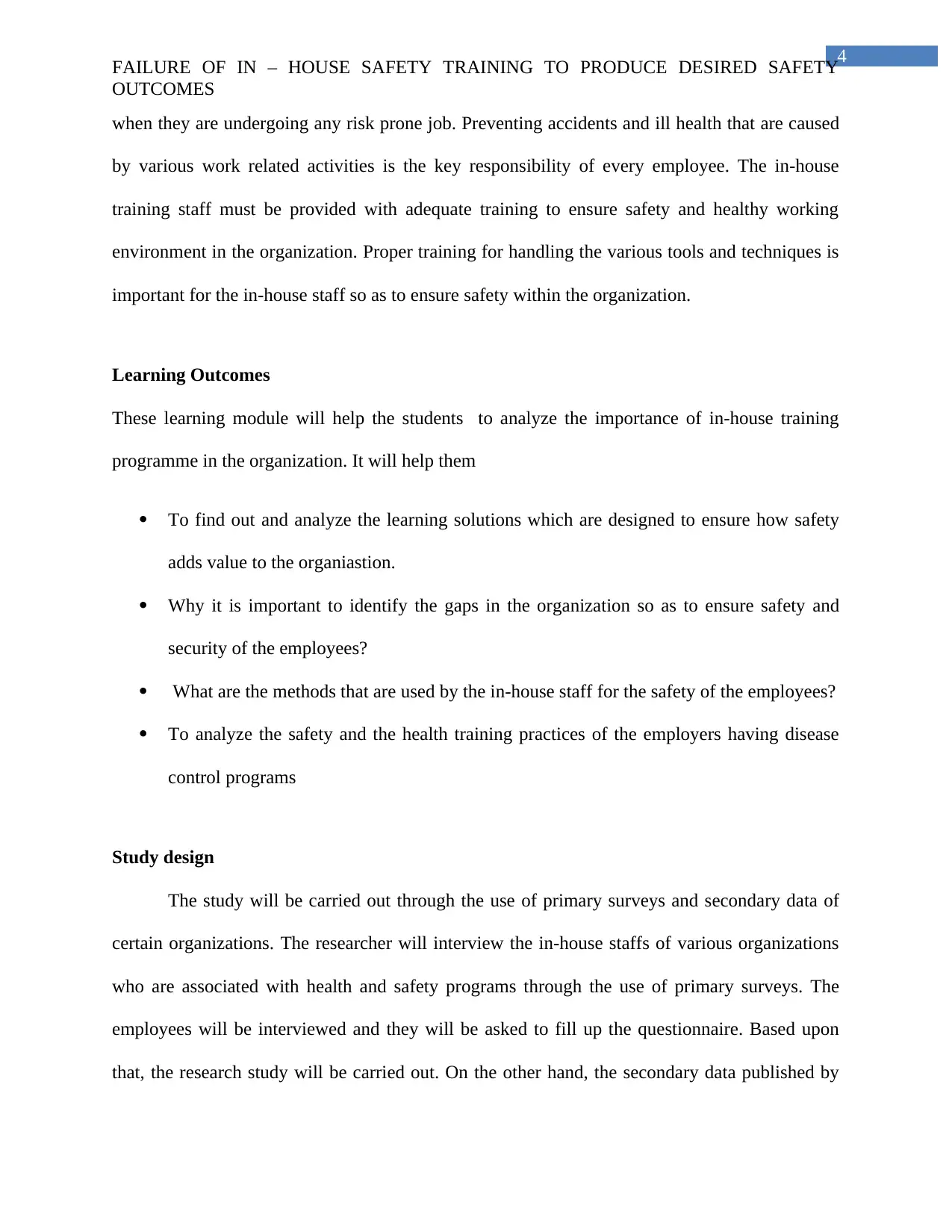
when they are undergoing any risk prone job. Preventing accidents and ill health that are caused
by various work related activities is the key responsibility of every employee. The in-house
training staff must be provided with adequate training to ensure safety and healthy working
environment in the organization. Proper training for handling the various tools and techniques is
important for the in-house staff so as to ensure safety within the organization.
Learning Outcomes
These learning module will help the students to analyze the importance of in-house training
programme in the organization. It will help them
To find out and analyze the learning solutions which are designed to ensure how safety
adds value to the organiastion.
Why it is important to identify the gaps in the organization so as to ensure safety and
security of the employees?
What are the methods that are used by the in-house staff for the safety of the employees?
To analyze the safety and the health training practices of the employers having disease
control programs
Study design
The study will be carried out through the use of primary surveys and secondary data of
certain organizations. The researcher will interview the in-house staffs of various organizations
who are associated with health and safety programs through the use of primary surveys. The
employees will be interviewed and they will be asked to fill up the questionnaire. Based upon
that, the research study will be carried out. On the other hand, the secondary data published by
FAILURE OF IN – HOUSE SAFETY TRAINING TO PRODUCE DESIRED SAFETY
OUTCOMES
when they are undergoing any risk prone job. Preventing accidents and ill health that are caused
by various work related activities is the key responsibility of every employee. The in-house
training staff must be provided with adequate training to ensure safety and healthy working
environment in the organization. Proper training for handling the various tools and techniques is
important for the in-house staff so as to ensure safety within the organization.
Learning Outcomes
These learning module will help the students to analyze the importance of in-house training
programme in the organization. It will help them
To find out and analyze the learning solutions which are designed to ensure how safety
adds value to the organiastion.
Why it is important to identify the gaps in the organization so as to ensure safety and
security of the employees?
What are the methods that are used by the in-house staff for the safety of the employees?
To analyze the safety and the health training practices of the employers having disease
control programs
Study design
The study will be carried out through the use of primary surveys and secondary data of
certain organizations. The researcher will interview the in-house staffs of various organizations
who are associated with health and safety programs through the use of primary surveys. The
employees will be interviewed and they will be asked to fill up the questionnaire. Based upon
that, the research study will be carried out. On the other hand, the secondary data published by

5
FAILURE OF IN – HOUSE SAFETY TRAINING TO PRODUCE DESIRED SAFETY
OUTCOMES
various health and occupational centers will also be taken and analyzed. This will help the
researcher to make a comparison of the future risk and uncertainties that may affect the
organization in the long run. The researcher will choose exploratory research. In this type of
data, the researcher will explore the secondary data and make an interpretation of the data to
reach valid conclusion (McNeil et al. 2015).
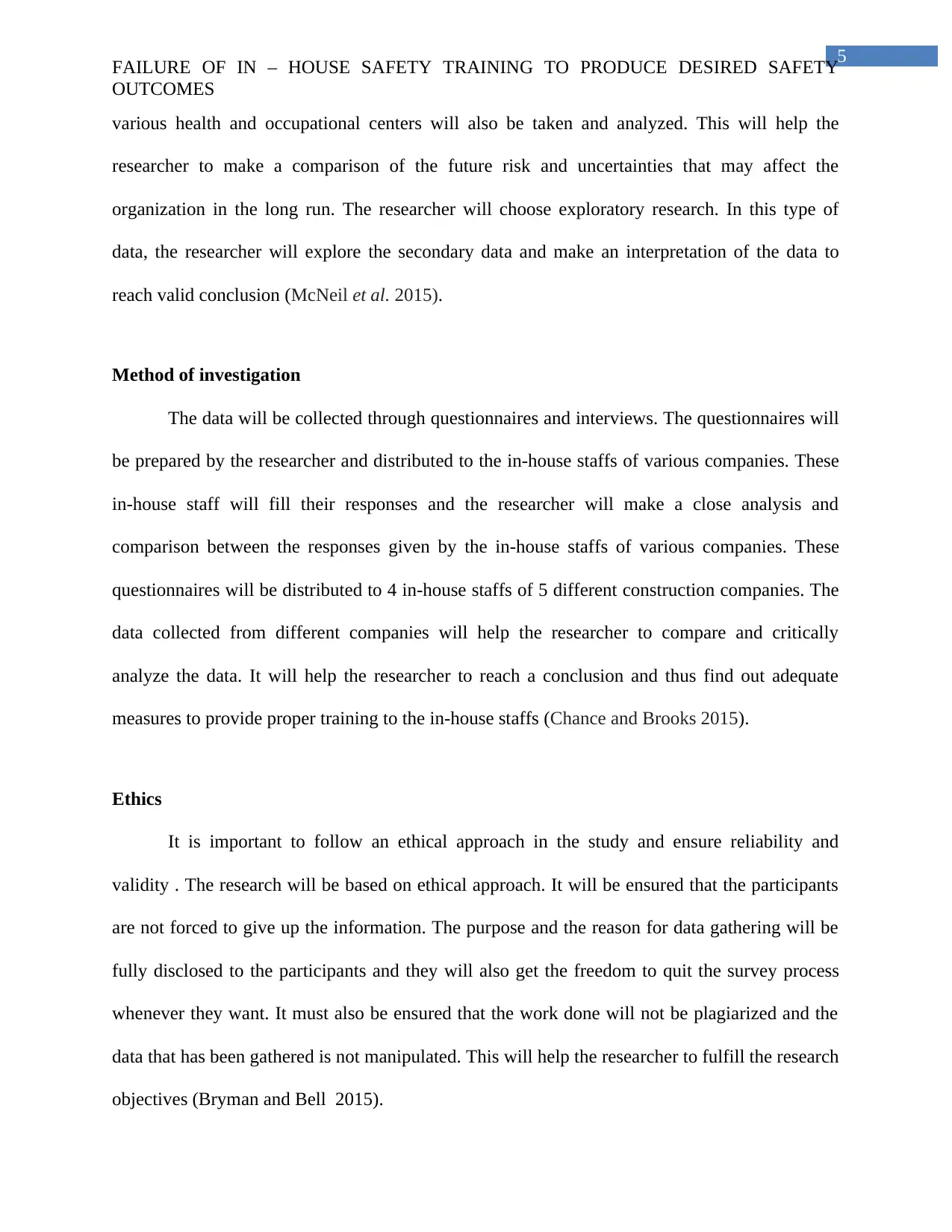
Method of investigation
The data will be collected through questionnaires and interviews. The questionnaires will
be prepared by the researcher and distributed to the in-house staffs of various companies. These
in-house staff will fill their responses and the researcher will make a close analysis and
comparison between the responses given by the in-house staffs of various companies. These
questionnaires will be distributed to 4 in-house staffs of 5 different construction companies. The
data collected from different companies will help the researcher to compare and critically
analyze the data. It will help the researcher to reach a conclusion and thus find out adequate
measures to provide proper training to the in-house staffs (Chance and Brooks 2015).
Ethics
It is important to follow an ethical approach in the study and ensure reliability and
validity . The research will be based on ethical approach. It will be ensured that the participants
are not forced to give up the information. The purpose and the reason for data gathering will be
fully disclosed to the participants and they will also get the freedom to quit the survey process
whenever they want. It must also be ensured that the work done will not be plagiarized and the
data that has been gathered is not manipulated. This will help the researcher to fulfill the research
objectives (Bryman and Bell 2015).
FAILURE OF IN – HOUSE SAFETY TRAINING TO PRODUCE DESIRED SAFETY
OUTCOMES
various health and occupational centers will also be taken and analyzed. This will help the
researcher to make a comparison of the future risk and uncertainties that may affect the
organization in the long run. The researcher will choose exploratory research. In this type of
data, the researcher will explore the secondary data and make an interpretation of the data to
reach valid conclusion (McNeil et al. 2015).
Method of investigation
The data will be collected through questionnaires and interviews. The questionnaires will
be prepared by the researcher and distributed to the in-house staffs of various companies. These
in-house staff will fill their responses and the researcher will make a close analysis and
comparison between the responses given by the in-house staffs of various companies. These
questionnaires will be distributed to 4 in-house staffs of 5 different construction companies. The
data collected from different companies will help the researcher to compare and critically
analyze the data. It will help the researcher to reach a conclusion and thus find out adequate
measures to provide proper training to the in-house staffs (Chance and Brooks 2015).
Ethics
It is important to follow an ethical approach in the study and ensure reliability and
validity . The research will be based on ethical approach. It will be ensured that the participants
are not forced to give up the information. The purpose and the reason for data gathering will be
fully disclosed to the participants and they will also get the freedom to quit the survey process
whenever they want. It must also be ensured that the work done will not be plagiarized and the
data that has been gathered is not manipulated. This will help the researcher to fulfill the research
objectives (Bryman and Bell 2015).
⊘ This is a preview!⊘
Do you want full access?
Subscribe today to unlock all pages.

Trusted by 1+ million students worldwide

6
FAILURE OF IN – HOUSE SAFETY TRAINING TO PRODUCE DESIRED SAFETY
OUTCOMES
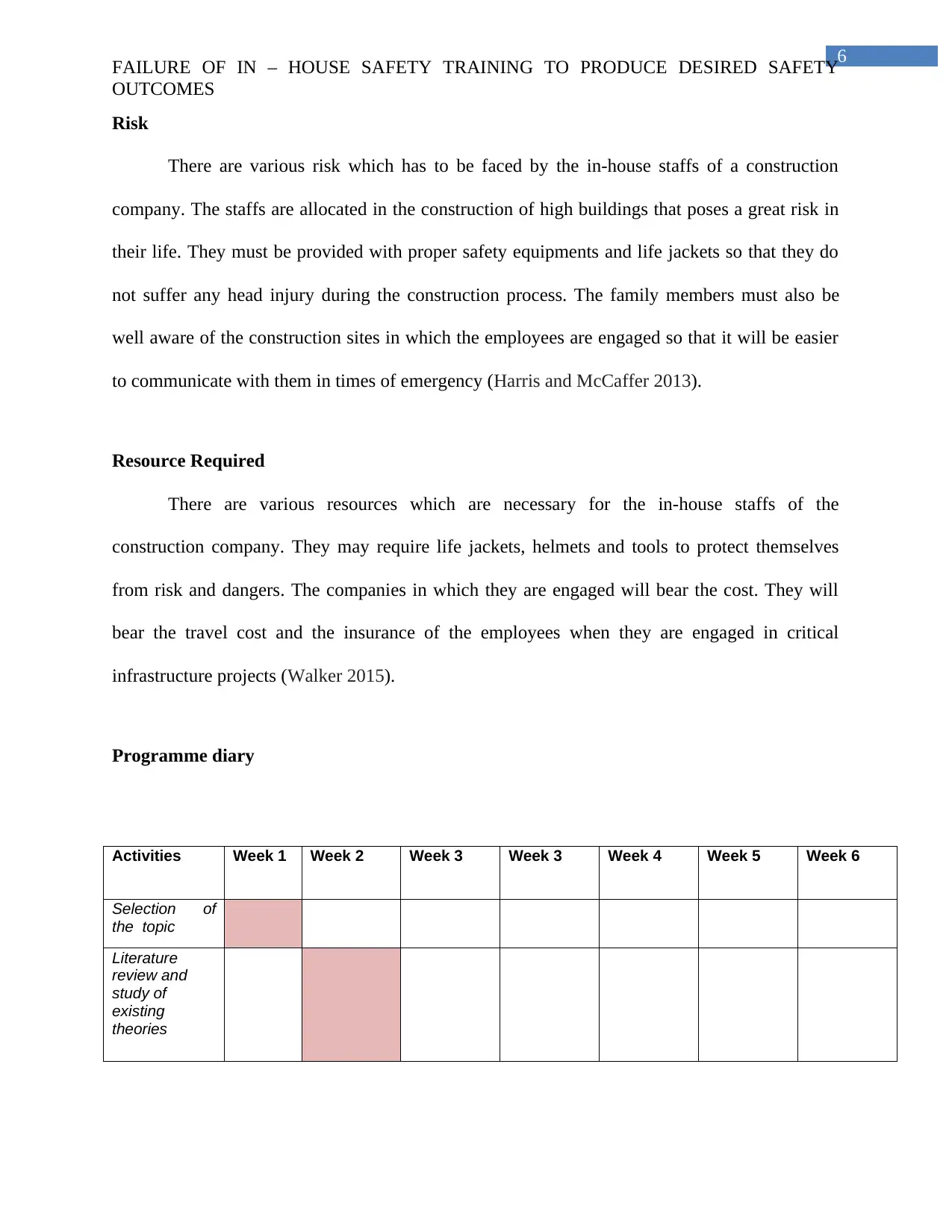
Risk
There are various risk which has to be faced by the in-house staffs of a construction
company. The staffs are allocated in the construction of high buildings that poses a great risk in
their life. They must be provided with proper safety equipments and life jackets so that they do
not suffer any head injury during the construction process. The family members must also be
well aware of the construction sites in which the employees are engaged so that it will be easier
to communicate with them in times of emergency (Harris and McCaffer 2013).
Resource Required
There are various resources which are necessary for the in-house staffs of the
construction company. They may require life jackets, helmets and tools to protect themselves
from risk and dangers. The companies in which they are engaged will bear the cost. They will
bear the travel cost and the insurance of the employees when they are engaged in critical
infrastructure projects (Walker 2015).
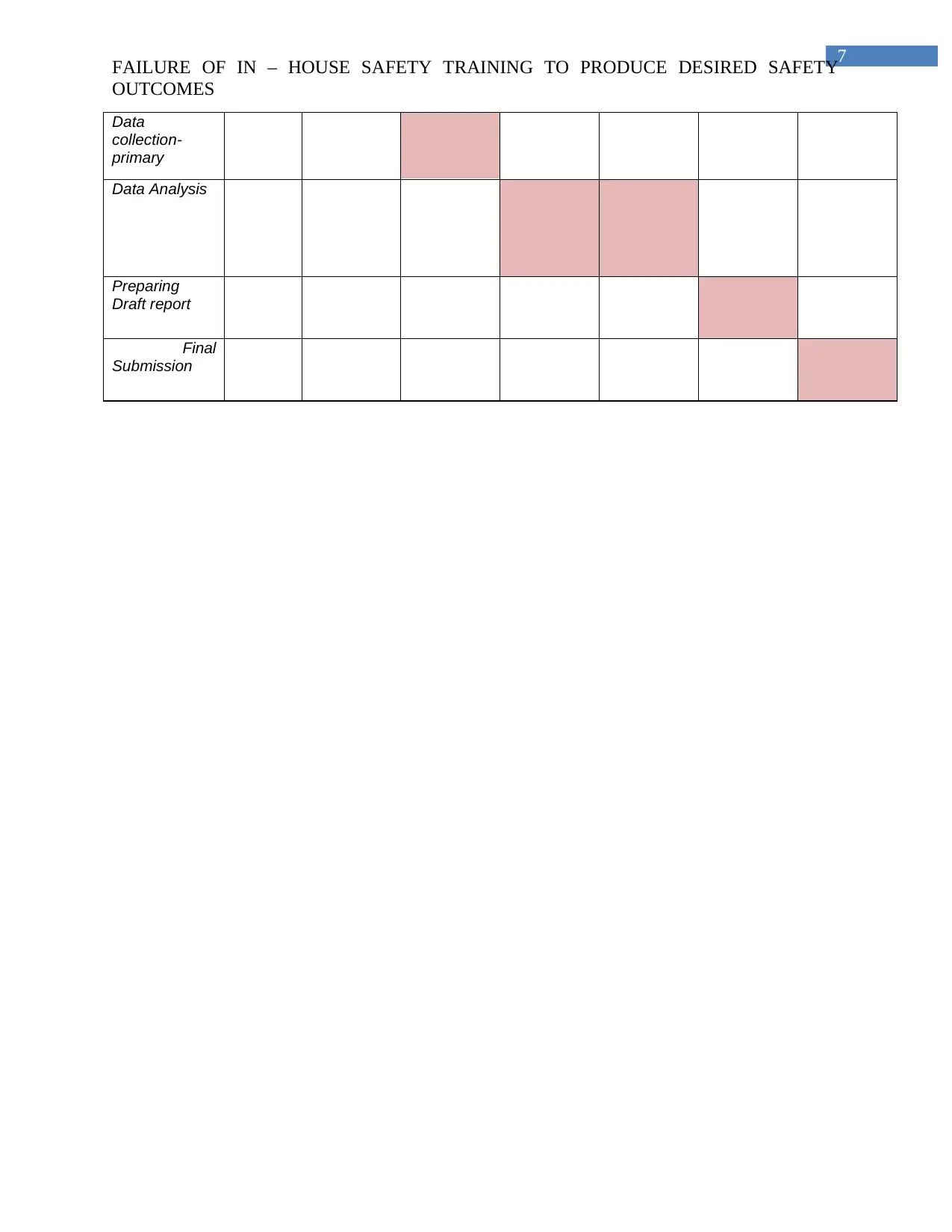
Programme diary
Activities Week 1 Week 2 Week 3 Week 3 Week 4 Week 5 Week 6
Selection of
the topic
Literature
review and
study of
existing
theories
FAILURE OF IN – HOUSE SAFETY TRAINING TO PRODUCE DESIRED SAFETY
OUTCOMES
Risk
There are various risk which has to be faced by the in-house staffs of a construction
company. The staffs are allocated in the construction of high buildings that poses a great risk in
their life. They must be provided with proper safety equipments and life jackets so that they do
not suffer any head injury during the construction process. The family members must also be
well aware of the construction sites in which the employees are engaged so that it will be easier
to communicate with them in times of emergency (Harris and McCaffer 2013).
Resource Required
There are various resources which are necessary for the in-house staffs of the
construction company. They may require life jackets, helmets and tools to protect themselves
from risk and dangers. The companies in which they are engaged will bear the cost. They will
bear the travel cost and the insurance of the employees when they are engaged in critical
infrastructure projects (Walker 2015).
Programme diary
Activities Week 1 Week 2 Week 3 Week 3 Week 4 Week 5 Week 6
Selection of
the topic
Literature
review and
study of
existing
theories
Paraphrase This Document
Need a fresh take? Get an instant paraphrase of this document with our AI Paraphraser

7
FAILURE OF IN – HOUSE SAFETY TRAINING TO PRODUCE DESIRED SAFETY
OUTCOMES
Data
collection-
primary
Data Analysis
Preparing
Draft report
Final
Submission
FAILURE OF IN – HOUSE SAFETY TRAINING TO PRODUCE DESIRED SAFETY
OUTCOMES
Data
collection-
primary
Data Analysis
Preparing
Draft report
Final
Submission

8
FAILURE OF IN – HOUSE SAFETY TRAINING TO PRODUCE DESIRED SAFETY
OUTCOMES
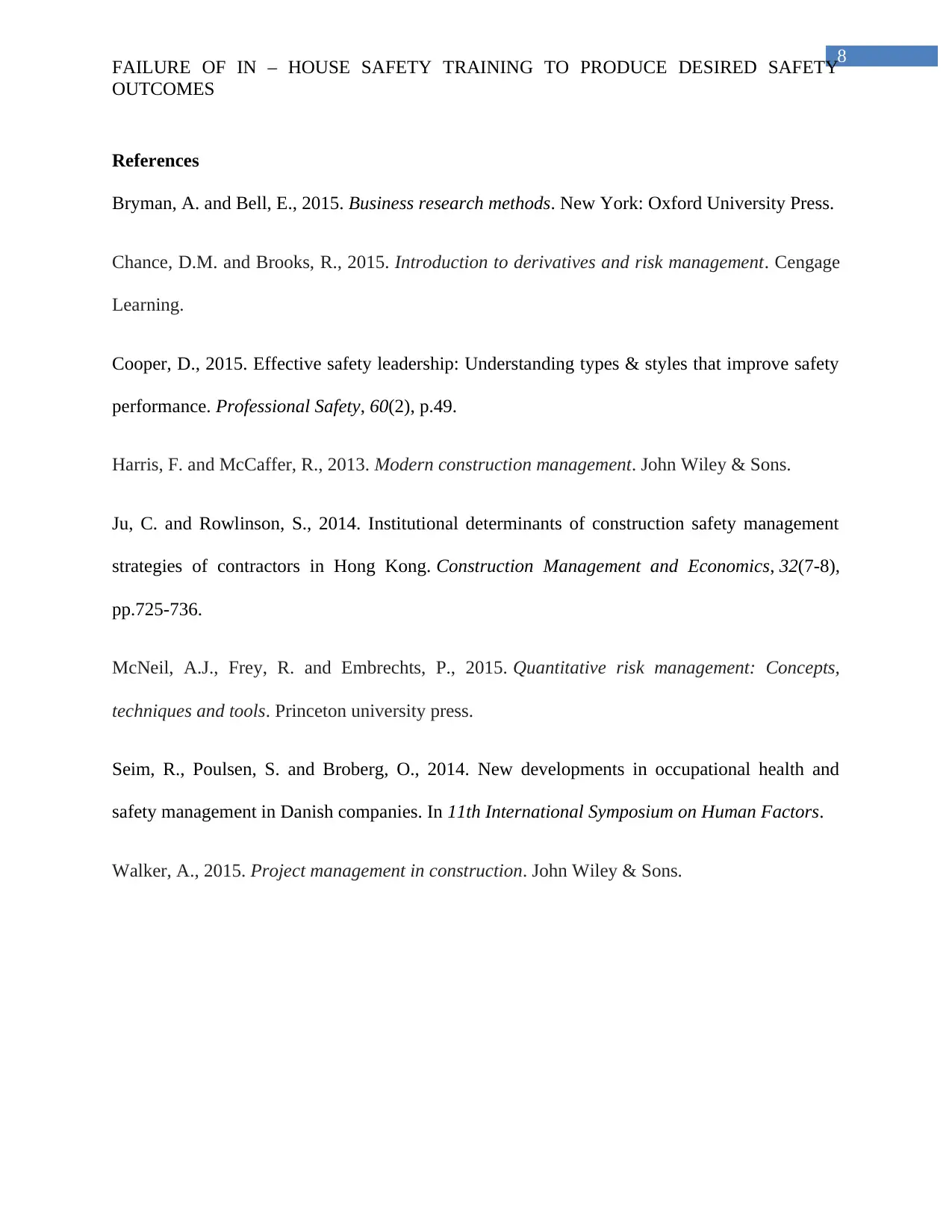
References
Bryman, A. and Bell, E., 2015. Business research methods. New York: Oxford University Press.
Chance, D.M. and Brooks, R., 2015. Introduction to derivatives and risk management. Cengage
Learning.
Cooper, D., 2015. Effective safety leadership: Understanding types & styles that improve safety
performance. Professional Safety, 60(2), p.49.
Harris, F. and McCaffer, R., 2013. Modern construction management. John Wiley & Sons.
Ju, C. and Rowlinson, S., 2014. Institutional determinants of construction safety management
strategies of contractors in Hong Kong. Construction Management and Economics, 32(7-8),
pp.725-736.
McNeil, A.J., Frey, R. and Embrechts, P., 2015. Quantitative risk management: Concepts,
techniques and tools. Princeton university press.
Seim, R., Poulsen, S. and Broberg, O., 2014. New developments in occupational health and
safety management in Danish companies. In 11th International Symposium on Human Factors.
Walker, A., 2015. Project management in construction. John Wiley & Sons.
FAILURE OF IN – HOUSE SAFETY TRAINING TO PRODUCE DESIRED SAFETY
OUTCOMES
References
Bryman, A. and Bell, E., 2015. Business research methods. New York: Oxford University Press.
Chance, D.M. and Brooks, R., 2015. Introduction to derivatives and risk management. Cengage
Learning.
Cooper, D., 2015. Effective safety leadership: Understanding types & styles that improve safety
performance. Professional Safety, 60(2), p.49.
Harris, F. and McCaffer, R., 2013. Modern construction management. John Wiley & Sons.
Ju, C. and Rowlinson, S., 2014. Institutional determinants of construction safety management
strategies of contractors in Hong Kong. Construction Management and Economics, 32(7-8),
pp.725-736.
McNeil, A.J., Frey, R. and Embrechts, P., 2015. Quantitative risk management: Concepts,
techniques and tools. Princeton university press.
Seim, R., Poulsen, S. and Broberg, O., 2014. New developments in occupational health and
safety management in Danish companies. In 11th International Symposium on Human Factors.
Walker, A., 2015. Project management in construction. John Wiley & Sons.
⊘ This is a preview!⊘
Do you want full access?
Subscribe today to unlock all pages.

Trusted by 1+ million students worldwide
1 out of 9
Related Documents
Your All-in-One AI-Powered Toolkit for Academic Success.
+13062052269
info@desklib.com
Available 24*7 on WhatsApp / Email
Unlock your academic potential
Copyright © 2020–2025 A2Z Services. All Rights Reserved. Developed and managed by ZUCOL.