UK Schizophrenia Recovery: Comparing Intervention Effectiveness

Verified

Added on  2023/06/11

|5
|981
|217
Literature Review
AI Summary
This dissertation systematically reviews the effectiveness of pharmacological and non-pharmacological interventions, particularly those procured by mental health nurses, in improving recovery time for individuals with schizophrenia in the UK. It addresses the background of schizophrenia, its treatment challenges, and the rationale for comparing these interventions. The review aims to determine the effectiveness of both types of interventions, analyze the skills of mental health nurses in delivering non-pharmacological treatments, compare the outcomes of each approach, and recommend how combining them can lead to better patient outcomes. The methodology involves a qualitative systematic review to identify the best approaches for addressing the complex mental health issues of schizophrenia patients, ultimately contributing to the generation of person-centered interventions.
Document Page
Running head: DISSERTATION
Dissertation
Name of the Student
Name of the University
Author Note
tabler-icon-diamond-filled.svg

Paraphrase This Document

Need a fresh take? Get an instant paraphrase of this document with our AI Paraphraser
Document Page
1
DISSERTATION
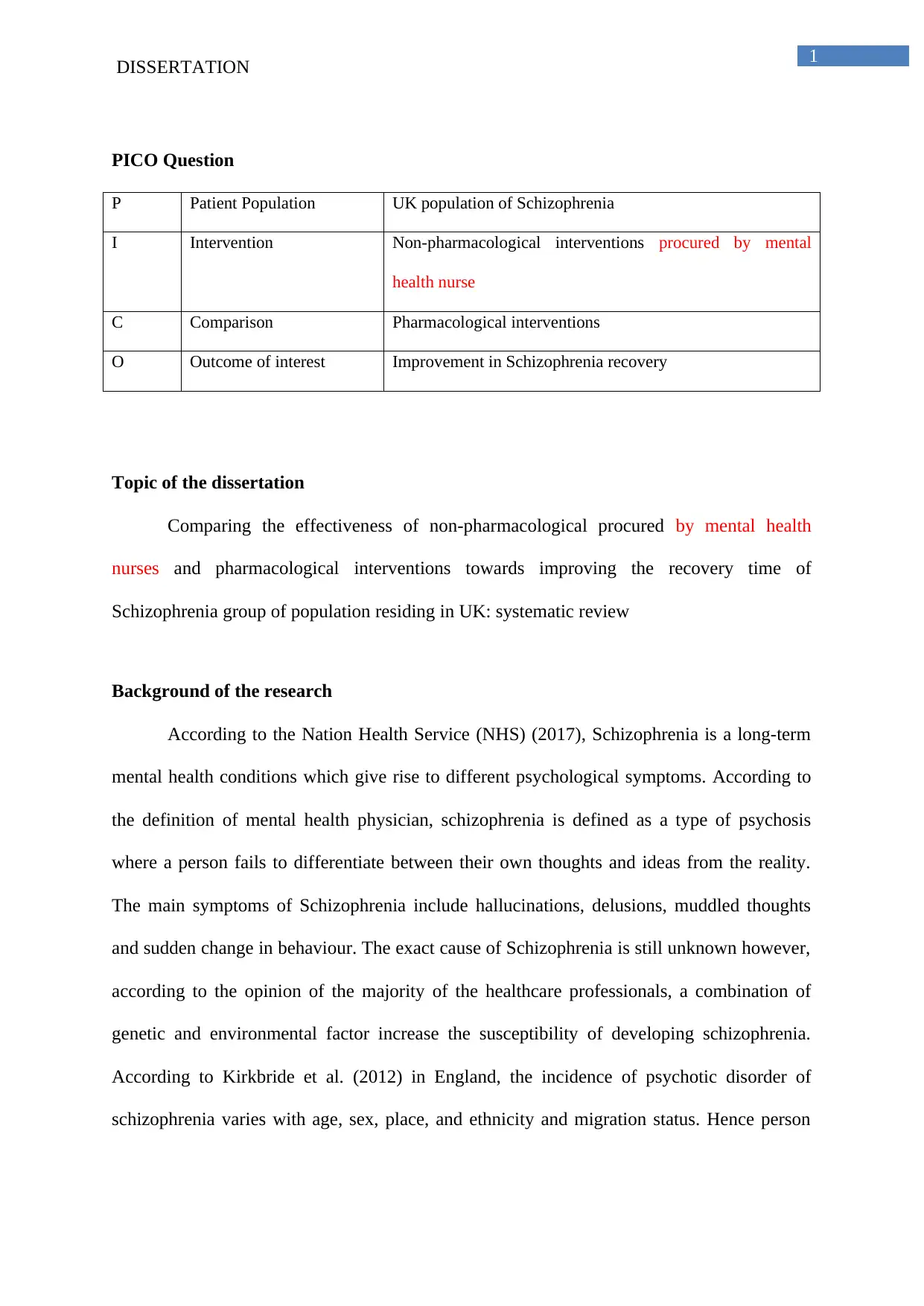
PICO Question
P Patient Population UK population of Schizophrenia
I Intervention Non-pharmacological interventions procured by mental
health nurse
C Comparison Pharmacological interventions
O Outcome of interest Improvement in Schizophrenia recovery
Topic of the dissertation
Comparing the effectiveness of non-pharmacological procured by mental health
nurses and pharmacological interventions towards improving the recovery time of
Schizophrenia group of population residing in UK: systematic review
Background of the research
According to the Nation Health Service (NHS) (2017), Schizophrenia is a long-term
mental health conditions which give rise to different psychological symptoms. According to
the definition of mental health physician, schizophrenia is defined as a type of psychosis
where a person fails to differentiate between their own thoughts and ideas from the reality.
The main symptoms of Schizophrenia include hallucinations, delusions, muddled thoughts
and sudden change in behaviour. The exact cause of Schizophrenia is still unknown however,
according to the opinion of the majority of the healthcare professionals, a combination of
genetic and environmental factor increase the susceptibility of developing schizophrenia.
According to Kirkbride et al. (2012) in England, the incidence of psychotic disorder of
schizophrenia varies with age, sex, place, and ethnicity and migration status. Hence person
Document Page
2
DISSERTATION
centred approach are required to be undertaken via a mental health nurse in order to deal with
varying psychotic complications of schizophrenia patients.
Rationale of the research
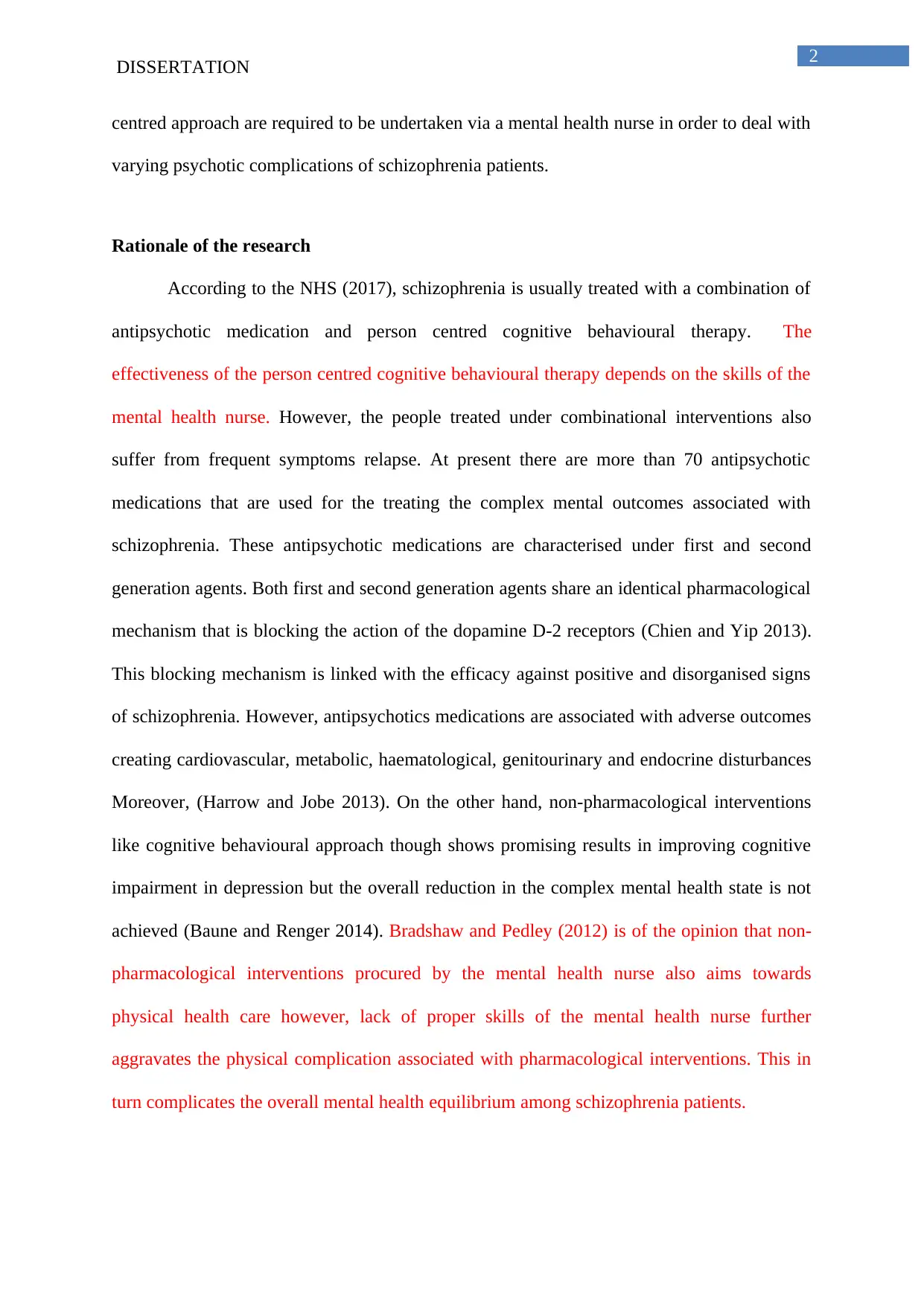
According to the NHS (2017), schizophrenia is usually treated with a combination of
antipsychotic medication and person centred cognitive behavioural therapy. The
effectiveness of the person centred cognitive behavioural therapy depends on the skills of the
mental health nurse. However, the people treated under combinational interventions also
suffer from frequent symptoms relapse. At present there are more than 70 antipsychotic
medications that are used for the treating the complex mental outcomes associated with
schizophrenia. These antipsychotic medications are characterised under first and second
generation agents. Both first and second generation agents share an identical pharmacological
mechanism that is blocking the action of the dopamine D-2 receptors (Chien and Yip 2013).
This blocking mechanism is linked with the efficacy against positive and disorganised signs
of schizophrenia. However, antipsychotics medications are associated with adverse outcomes
creating cardiovascular, metabolic, haematological, genitourinary and endocrine disturbances
Moreover, (Harrow and Jobe 2013). On the other hand, non-pharmacological interventions
like cognitive behavioural approach though shows promising results in improving cognitive
impairment in depression but the overall reduction in the complex mental health state is not
achieved (Baune and Renger 2014). Bradshaw and Pedley (2012) is of the opinion that non-
pharmacological interventions procured by the mental health nurse also aims towards
physical health care however, lack of proper skills of the mental health nurse further
aggravates the physical complication associated with pharmacological interventions. This in
turn complicates the overall mental health equilibrium among schizophrenia patients.
Document Page
3
DISSERTATION
The importance of the topic is that it will help in the selection of the best ever
pharmacological interventions and effective non-pharmacological approaches procured by the
mental health nurse which are effective in addressing complex mental health issues of
Schizophrenia patients. Identification of these best in class approaches will help in the
generation of person-centred interventions which are successful in addressing the complex
mental needs of schizophrenia. Such effective intervention will help the mental health
professionals to treat diverse group of schizophrenia patients in UK.
Aims of the Research
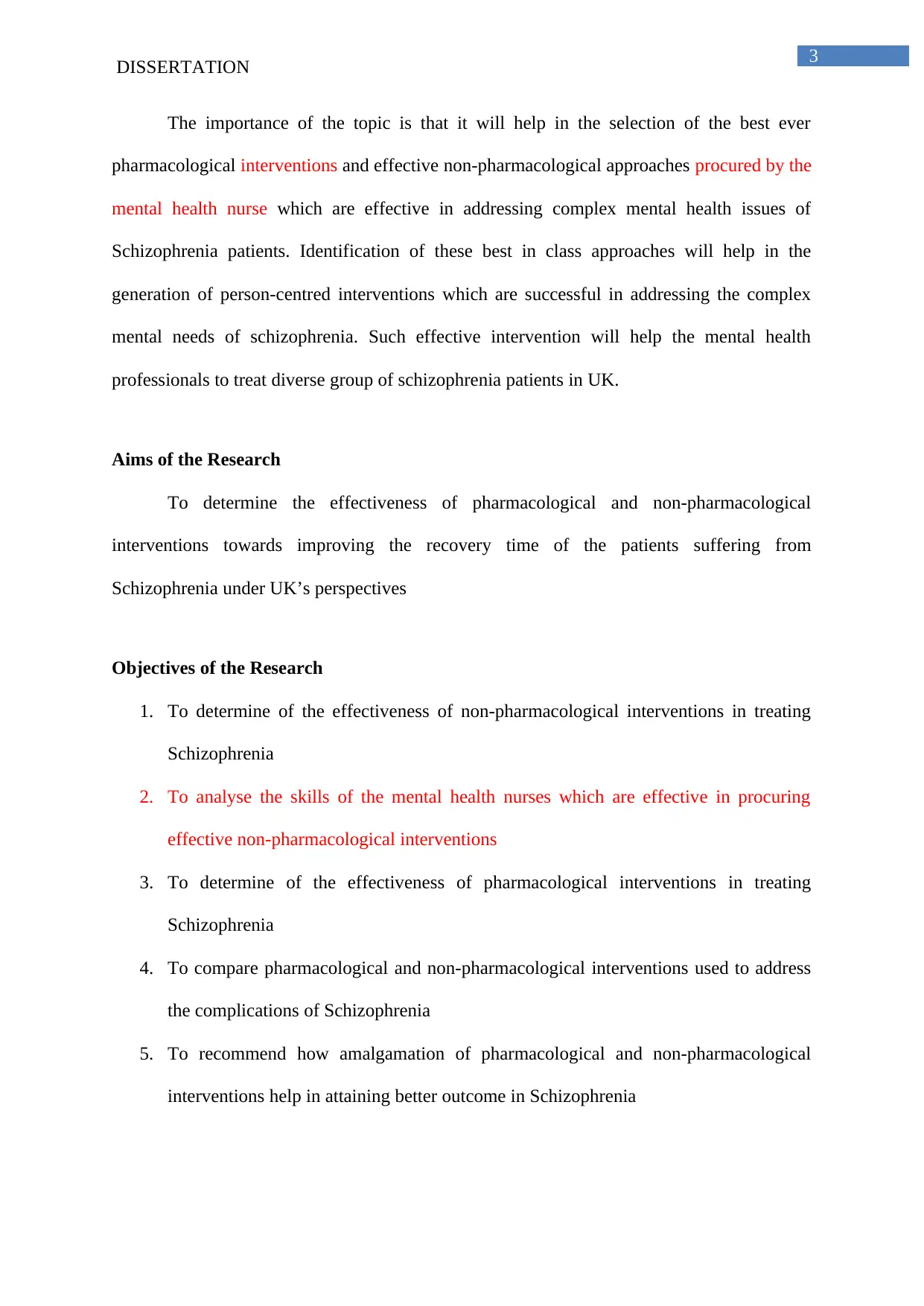
To determine the effectiveness of pharmacological and non-pharmacological
interventions towards improving the recovery time of the patients suffering from
Schizophrenia under UK’s perspectives
Objectives of the Research
1. To determine of the effectiveness of non-pharmacological interventions in treating
Schizophrenia
2. To analyse the skills of the mental health nurses which are effective in procuring
effective non-pharmacological interventions
3. To determine of the effectiveness of pharmacological interventions in treating
Schizophrenia
4. To compare pharmacological and non-pharmacological interventions used to address
the complications of Schizophrenia
5. To recommend how amalgamation of pharmacological and non-pharmacological
interventions help in attaining better outcome in Schizophrenia
tabler-icon-diamond-filled.svg

Paraphrase This Document

Need a fresh take? Get an instant paraphrase of this document with our AI Paraphraser
Document Page
4
DISSERTATION
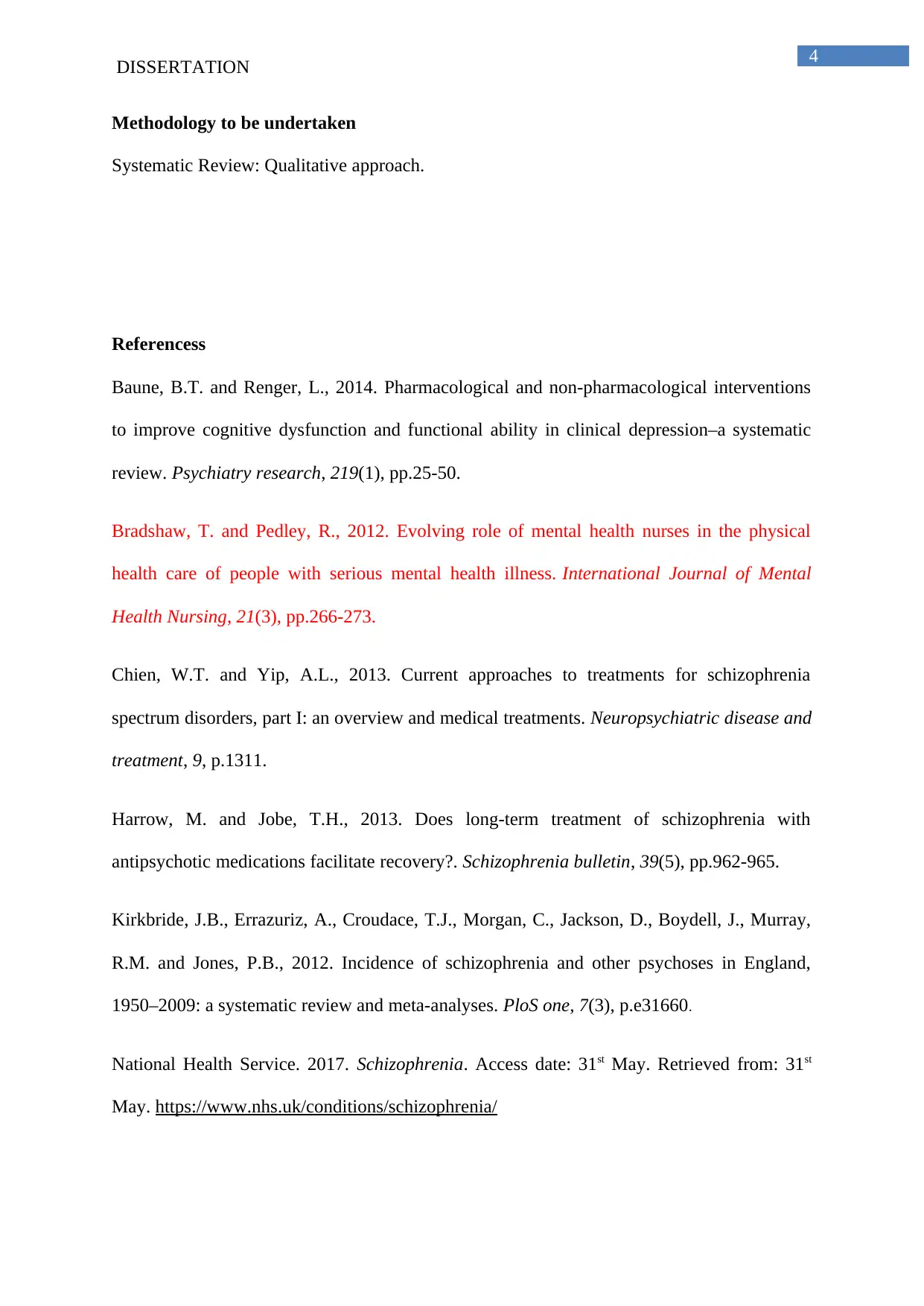
Methodology to be undertaken
Systematic Review: Qualitative approach.
Referencess
Baune, B.T. and Renger, L., 2014. Pharmacological and non-pharmacological interventions
to improve cognitive dysfunction and functional ability in clinical depression–a systematic
review. Psychiatry research, 219(1), pp.25-50.
Bradshaw, T. and Pedley, R., 2012. Evolving role of mental health nurses in the physical
health care of people with serious mental health illness. International Journal of Mental
Health Nursing, 21(3), pp.266-273.
Chien, W.T. and Yip, A.L., 2013. Current approaches to treatments for schizophrenia
spectrum disorders, part I: an overview and medical treatments. Neuropsychiatric disease and
treatment, 9, p.1311.
Harrow, M. and Jobe, T.H., 2013. Does long-term treatment of schizophrenia with
antipsychotic medications facilitate recovery?. Schizophrenia bulletin, 39(5), pp.962-965.
Kirkbride, J.B., Errazuriz, A., Croudace, T.J., Morgan, C., Jackson, D., Boydell, J., Murray,
R.M. and Jones, P.B., 2012. Incidence of schizophrenia and other psychoses in England,
1950–2009: a systematic review and meta-analyses. PloS one, 7(3), p.e31660.
National Health Service. 2017. Schizophrenia. Access date: 31st May. Retrieved from: 31st
May. https://www.nhs.uk/conditions/schizophrenia/
chevron_up_icon
1 out of 5
circle_padding
hide_on_mobile
zoom_out_icon
[object Object]