Schizophrenia: A Comprehensive Report on Symptoms, Nursing Management

Verified

Added on  2022/09/28

|5
|996
|21
Report
AI Summary
This report provides a comprehensive overview of schizophrenia, a significant mental disorder characterized by disruptions in thinking, language, perception, and self-sense. It begins by defining schizophrenia and discussing its potential causes, including genetic and biochemical factors. The report then outlines the three phases of schizophrenia: prodromal, acute, and recovery, detailing the progression and impact of the illness. Key symptoms are explored, including cognitive impairments such as delusions and memory loss, behavioral issues like hallucinations and aggression, and mood disturbances like anxiety and anger. The report also classifies different types of schizophrenia, such as paranoid, disorganized, and catatonic, based on their distinct symptom profiles. Furthermore, the report focuses on nursing management strategies, emphasizing the importance of medication administration, ensuring patient safety, providing nutritional support, and addressing hallucinations. It also highlights the significance of family involvement, patient education, and the use of community resources like mental health organizations and rehabilitation centers. In conclusion, the report underscores the treatable nature of schizophrenia and the importance of a multifaceted approach involving medication, psychotherapy, and social support to improve patient outcomes.
Document Page
Running head: SCHIZOPHRENIA 1
Schizophrenia
Student’s Name:
Institution Affiliation:
tabler-icon-diamond-filled.svg

Paraphrase This Document

Need a fresh take? Get an instant paraphrase of this document with our AI Paraphraser
Document Page
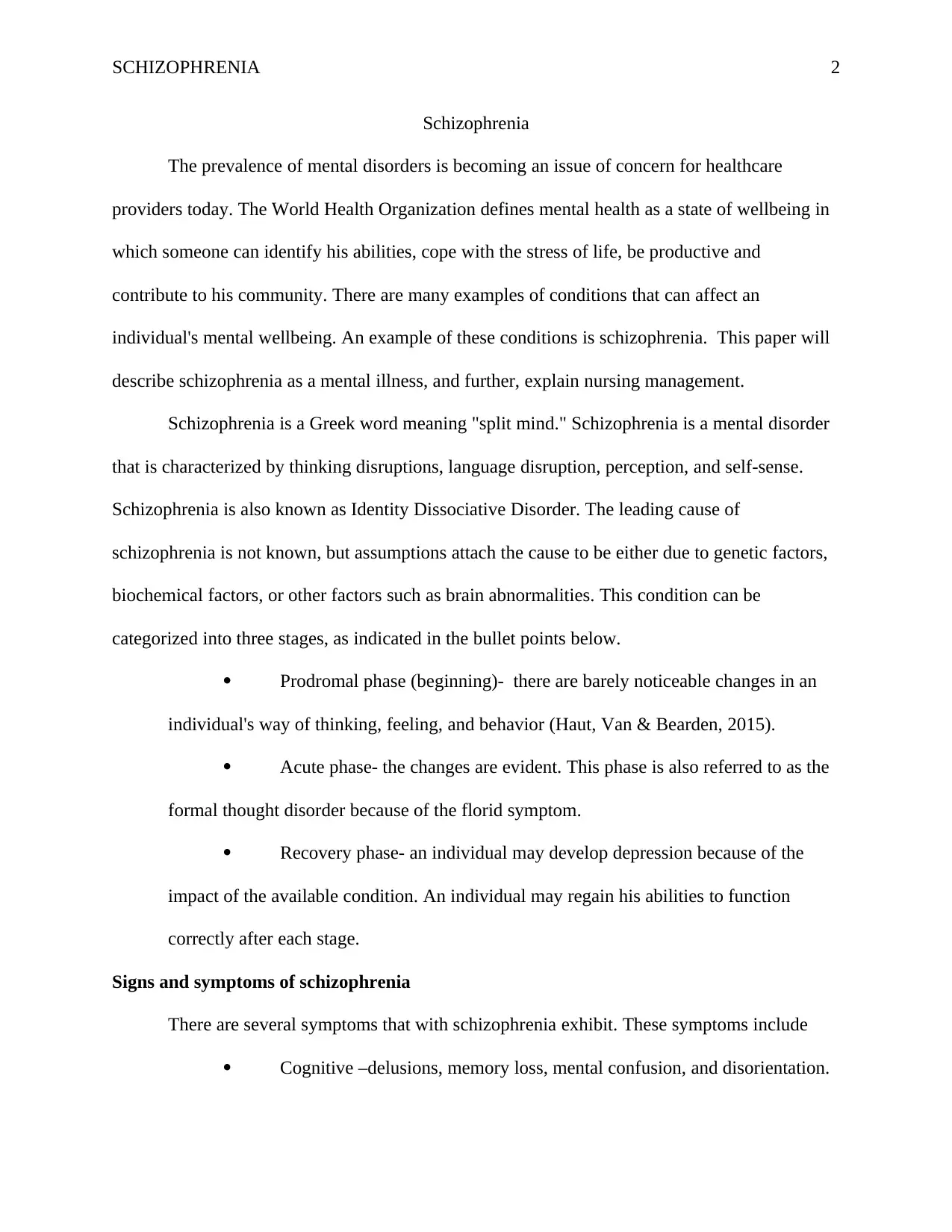
SCHIZOPHRENIA 2
Schizophrenia
The prevalence of mental disorders is becoming an issue of concern for healthcare
providers today. The World Health Organization defines mental health as a state of wellbeing in
which someone can identify his abilities, cope with the stress of life, be productive and
contribute to his community. There are many examples of conditions that can affect an
individual's mental wellbeing. An example of these conditions is schizophrenia. This paper will
describe schizophrenia as a mental illness, and further, explain nursing management.
Schizophrenia is a Greek word meaning "split mind." Schizophrenia is a mental disorder
that is characterized by thinking disruptions, language disruption, perception, and self-sense.
Schizophrenia is also known as Identity Dissociative Disorder. The leading cause of
schizophrenia is not known, but assumptions attach the cause to be either due to genetic factors,
biochemical factors, or other factors such as brain abnormalities. This condition can be
categorized into three stages, as indicated in the bullet points below.
Prodromal phase (beginning)- there are barely noticeable changes in an
individual's way of thinking, feeling, and behavior (Haut, Van & Bearden, 2015).
Acute phase- the changes are evident. This phase is also referred to as the
formal thought disorder because of the florid symptom.
Recovery phase- an individual may develop depression because of the
impact of the available condition. An individual may regain his abilities to function
correctly after each stage.
Signs and symptoms of schizophrenia
There are several symptoms that with schizophrenia exhibit. These symptoms include
Cognitive –delusions, memory loss, mental confusion, and disorientation.
Document Page
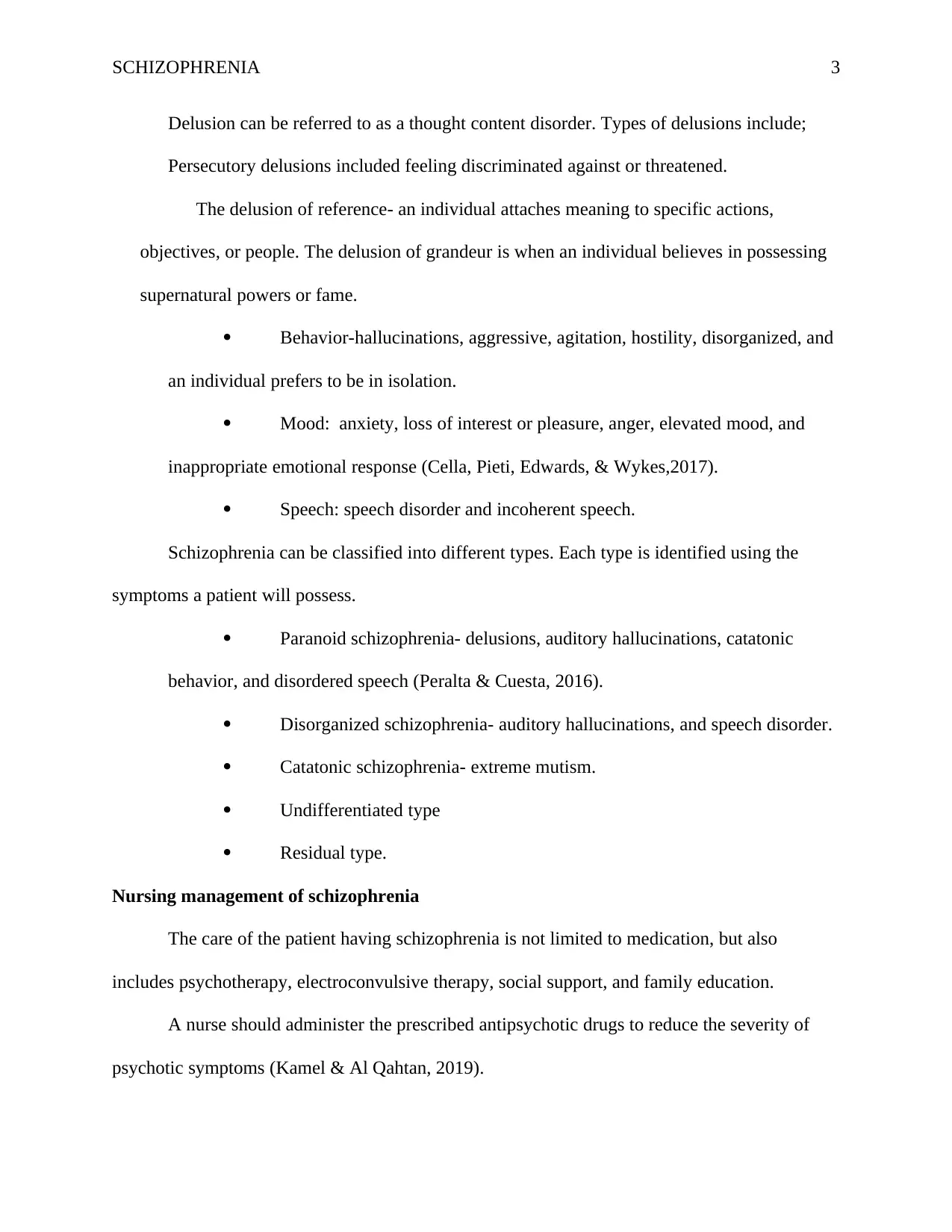
SCHIZOPHRENIA 3
Delusion can be referred to as a thought content disorder. Types of delusions include;
Persecutory delusions included feeling discriminated against or threatened.
The delusion of reference- an individual attaches meaning to specific actions,
objectives, or people. The delusion of grandeur is when an individual believes in possessing
supernatural powers or fame.
Behavior-hallucinations, aggressive, agitation, hostility, disorganized, and
an individual prefers to be in isolation.
Mood: anxiety, loss of interest or pleasure, anger, elevated mood, and
inappropriate emotional response (Cella, Pieti, Edwards, & Wykes,2017).
Speech: speech disorder and incoherent speech.
Schizophrenia can be classified into different types. Each type is identified using the
symptoms a patient will possess.
Paranoid schizophrenia- delusions, auditory hallucinations, catatonic
behavior, and disordered speech (Peralta & Cuesta, 2016).
Disorganized schizophrenia- auditory hallucinations, and speech disorder.
Catatonic schizophrenia- extreme mutism.
Undifferentiated type
Residual type.
Nursing management of schizophrenia
The care of the patient having schizophrenia is not limited to medication, but also
includes psychotherapy, electroconvulsive therapy, social support, and family education.
A nurse should administer the prescribed antipsychotic drugs to reduce the severity of
psychotic symptoms (Kamel & Al Qahtan, 2019).
Document Page
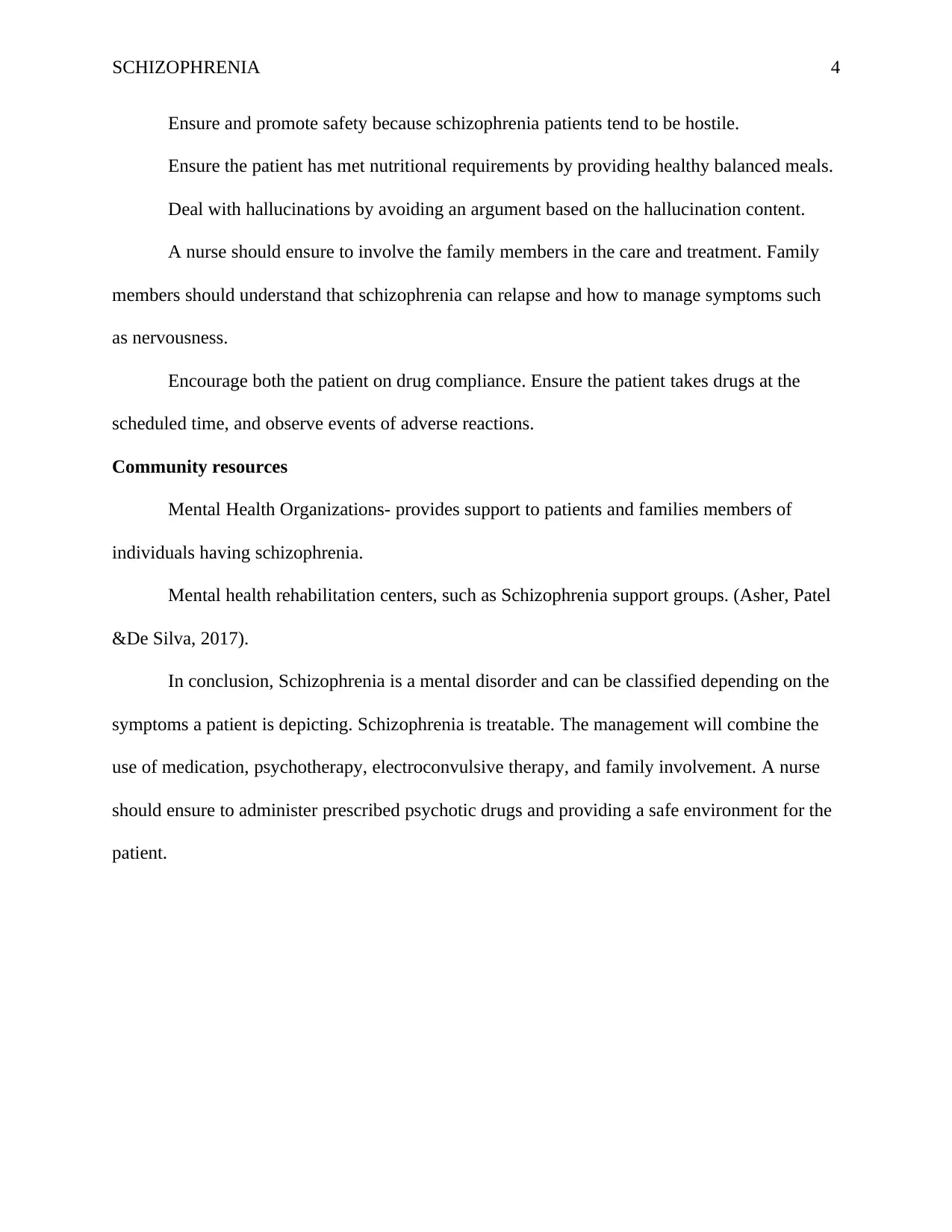
SCHIZOPHRENIA 4
Ensure and promote safety because schizophrenia patients tend to be hostile.
Ensure the patient has met nutritional requirements by providing healthy balanced meals.
Deal with hallucinations by avoiding an argument based on the hallucination content.
A nurse should ensure to involve the family members in the care and treatment. Family
members should understand that schizophrenia can relapse and how to manage symptoms such
as nervousness.
Encourage both the patient on drug compliance. Ensure the patient takes drugs at the
scheduled time, and observe events of adverse reactions.
Community resources
Mental Health Organizations- provides support to patients and families members of
individuals having schizophrenia.
Mental health rehabilitation centers, such as Schizophrenia support groups. (Asher, Patel
&De Silva, 2017).
In conclusion, Schizophrenia is a mental disorder and can be classified depending on the
symptoms a patient is depicting. Schizophrenia is treatable. The management will combine the
use of medication, psychotherapy, electroconvulsive therapy, and family involvement. A nurse
should ensure to administer prescribed psychotic drugs and providing a safe environment for the
patient.
tabler-icon-diamond-filled.svg

Paraphrase This Document

Need a fresh take? Get an instant paraphrase of this document with our AI Paraphraser
Document Page
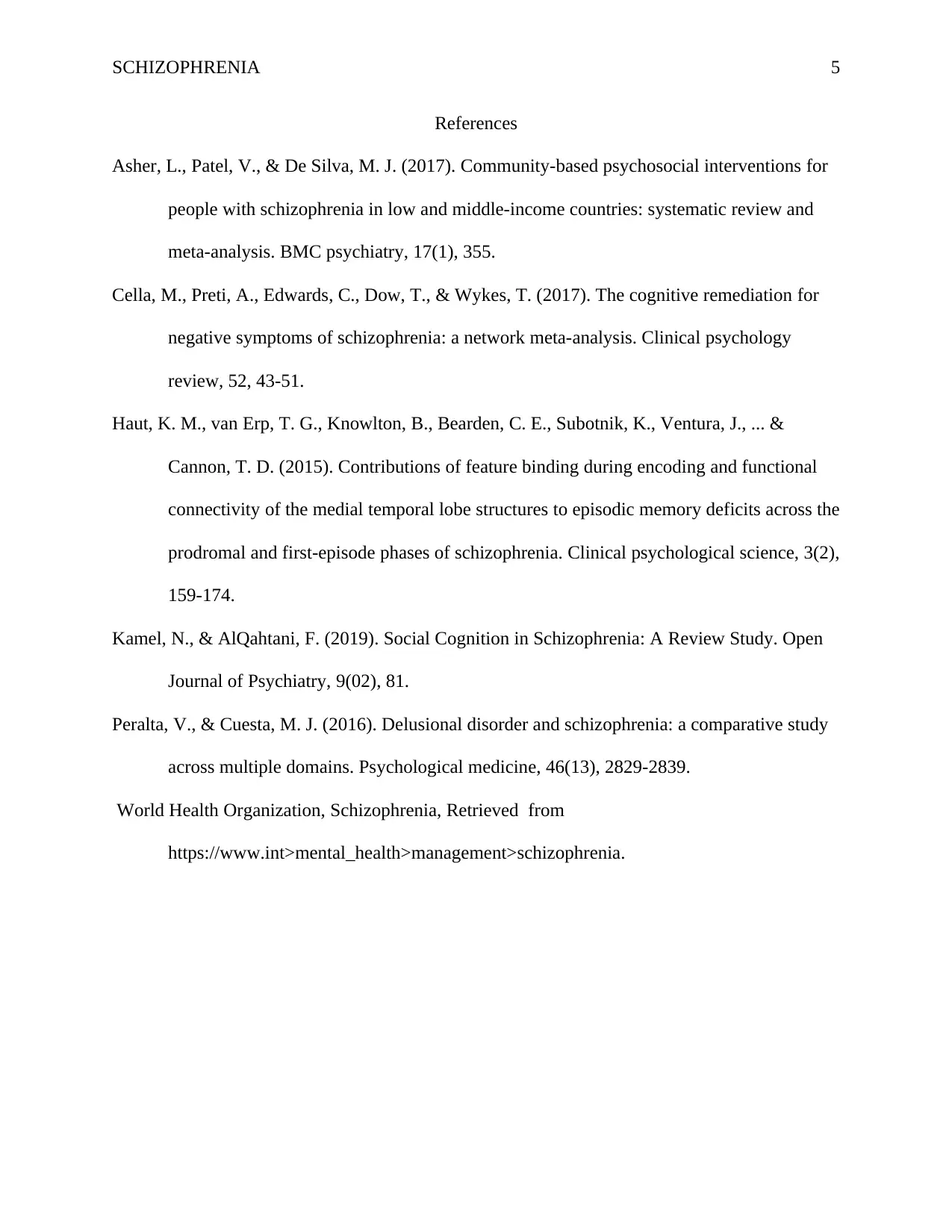
SCHIZOPHRENIA 5
References
Asher, L., Patel, V., & De Silva, M. J. (2017). Community-based psychosocial interventions for
people with schizophrenia in low and middle-income countries: systematic review and
meta-analysis. BMC psychiatry, 17(1), 355.
Cella, M., Preti, A., Edwards, C., Dow, T., & Wykes, T. (2017). The cognitive remediation for
negative symptoms of schizophrenia: a network meta-analysis. Clinical psychology
review, 52, 43-51.
Haut, K. M., van Erp, T. G., Knowlton, B., Bearden, C. E., Subotnik, K., Ventura, J., ... &
Cannon, T. D. (2015). Contributions of feature binding during encoding and functional
connectivity of the medial temporal lobe structures to episodic memory deficits across the
prodromal and first-episode phases of schizophrenia. Clinical psychological science, 3(2),
159-174.
Kamel, N., & AlQahtani, F. (2019). Social Cognition in Schizophrenia: A Review Study. Open
Journal of Psychiatry, 9(02), 81.
Peralta, V., & Cuesta, M. J. (2016). Delusional disorder and schizophrenia: a comparative study
across multiple domains. Psychological medicine, 46(13), 2829-2839.
World Health Organization, Schizophrenia, Retrieved from
https://www.int>mental_health>management>schizophrenia.
chevron_up_icon
1 out of 5
circle_padding
hide_on_mobile
zoom_out_icon
[object Object]