E-Commerce Security Report: Threats, Mitigation, and Best Practices

Verified

Added on  2023/01/19

|9
|462
|85
Report
AI Summary
This report delves into the multifaceted realm of e-commerce security, addressing critical aspects such as protection against unauthorized access, data breaches, and various forms of cyberattacks. The report meticulously examines the dimensions of e-commerce security, including non-repudiation, integrity, authenticity, privacy, and availability. It identifies core security issues like authentication, auditing, and authorization. The context of the problem is explored through payment transaction security, encryption standards, privacy concerns during transactions, and consumer privacy, including DDOS attacks. The report aims to discuss security aspects, client-side, server-side, and database security during e-commerce transactions, as well as threats, their analysis, and mitigation strategies. It proposes methods like client-side, server-side, and database server security implementations, along with communication protocols. The timeline includes encryption, SQL connections, and database server encryption. The report references key literature addressing inaccurate management, price manipulation, spam, malicious code, and DDOS attacks. It offers a comprehensive analysis of e-commerce security challenges and potential solutions.

Document Page
E-Commerce Security
Name of the Student
Name of the University
tabler-icon-diamond-filled.svg

Paraphrase This Document

Need a fresh take? Get an instant paraphrase of this document with our AI Paraphraser
Document Page
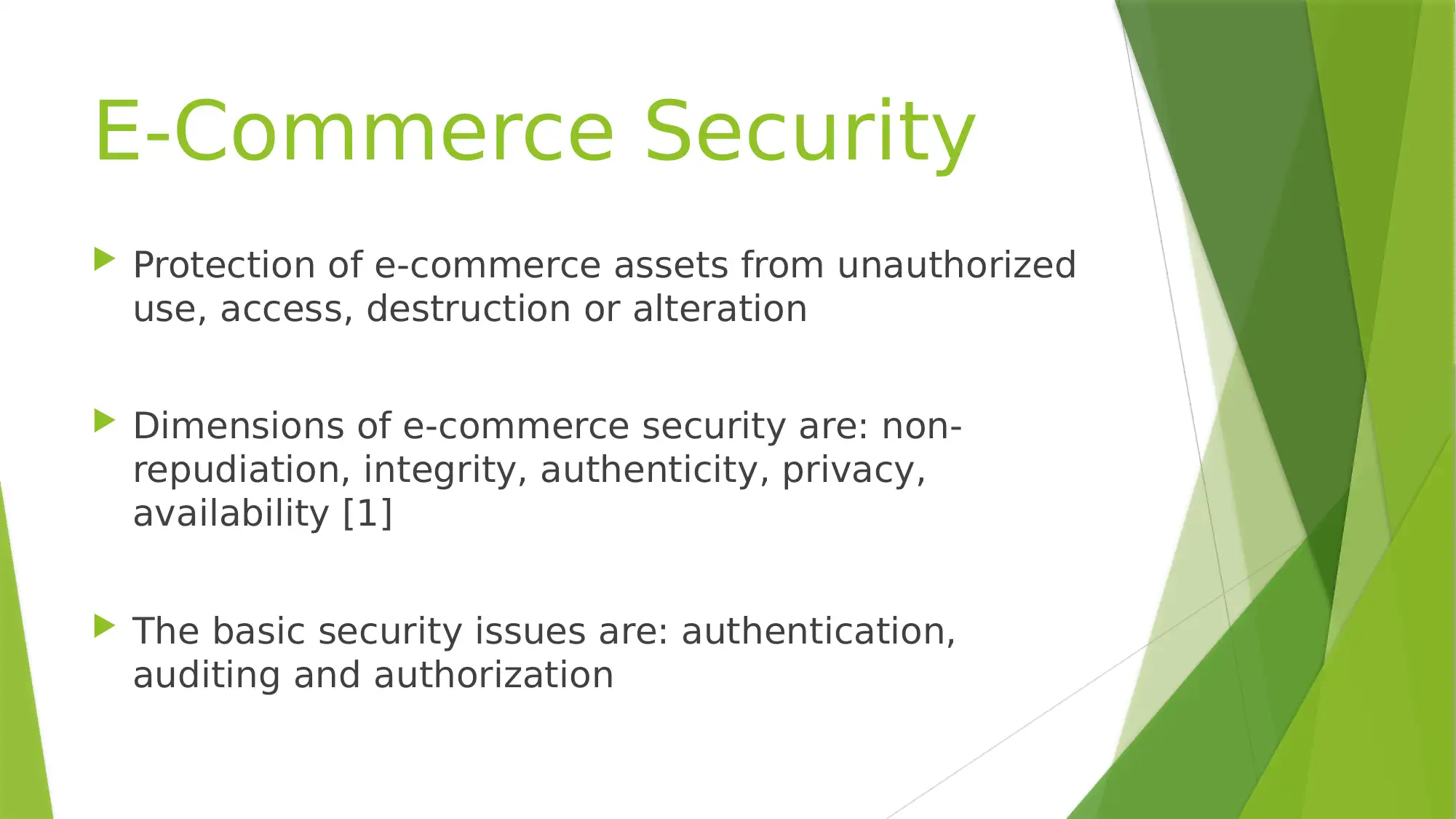
E-Commerce Security
Protection of e-commerce assets from unauthorized
use, access, destruction or alteration
Dimensions of e-commerce security are: non-
repudiation, integrity, authenticity, privacy,
availability [1]
The basic security issues are: authentication,
auditing and authorization
Document Page
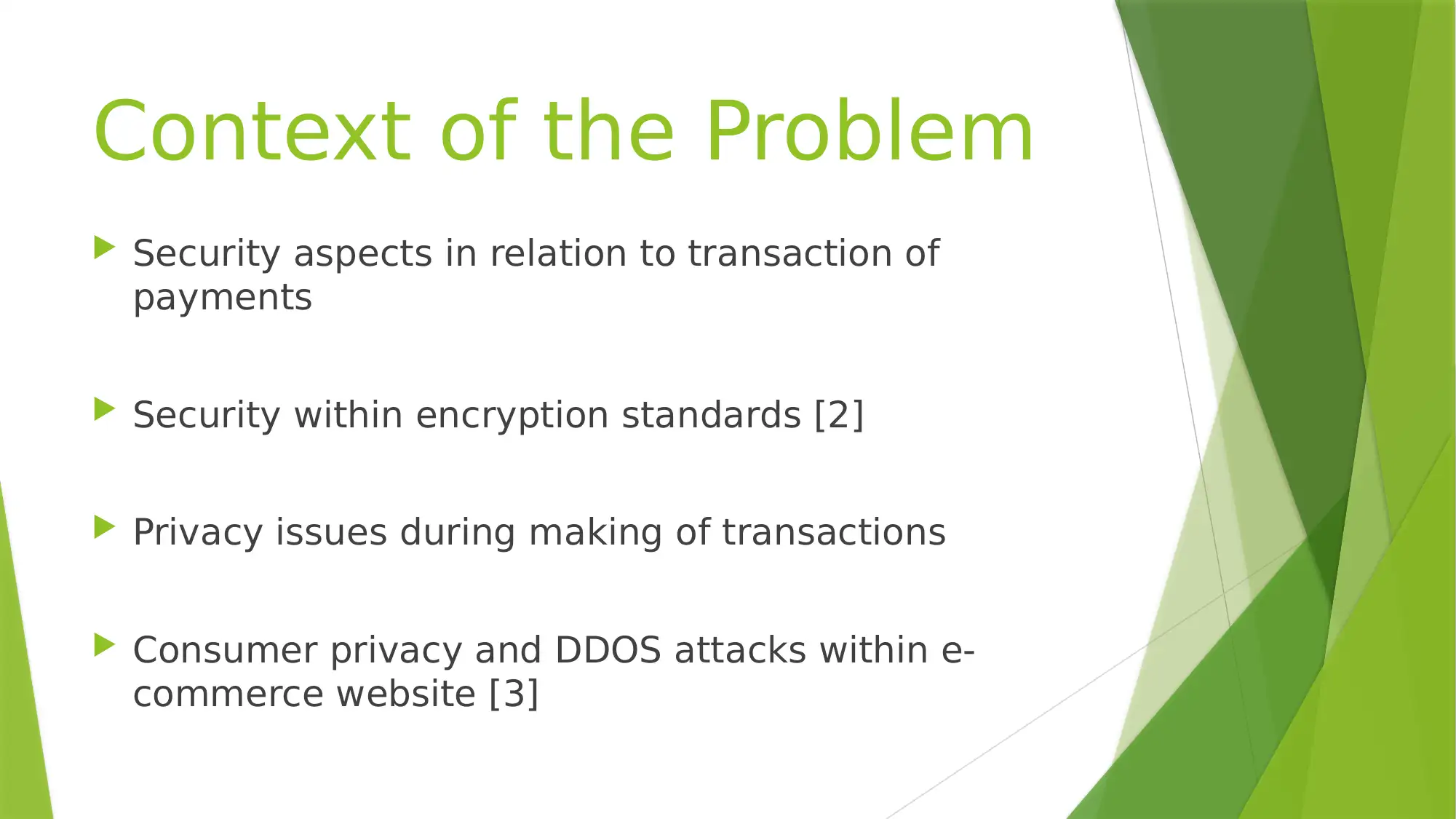
Context of the Problem
Security aspects in relation to transaction of
payments
Security within encryption standards [2]
Privacy issues during making of transactions
Consumer privacy and DDOS attacks within e-
commerce website [3]
Document Page
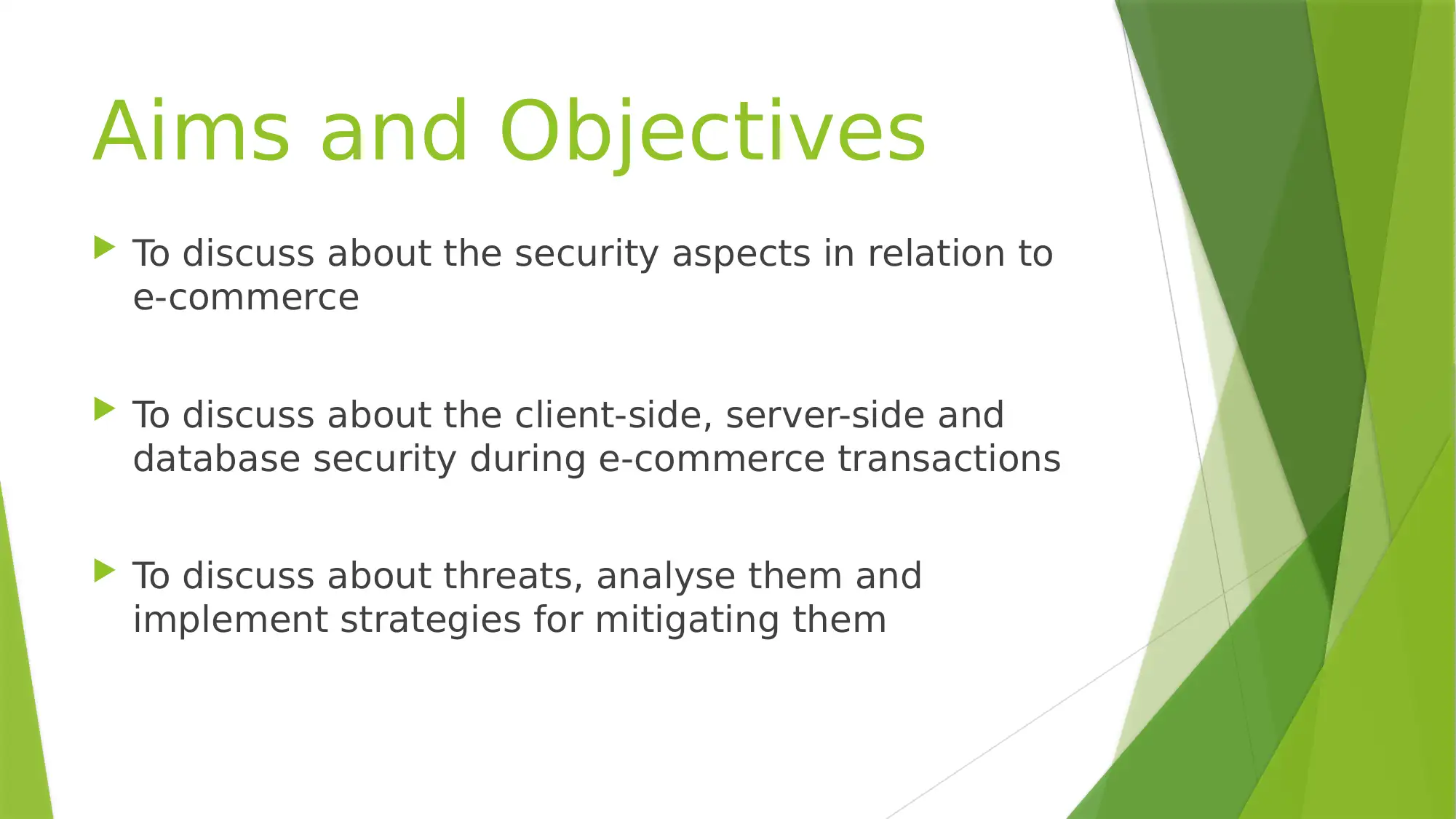
Aims and Objectives
To discuss about the security aspects in relation to
e-commerce
To discuss about the client-side, server-side and
database security during e-commerce transactions
To discuss about threats, analyse them and
implement strategies for mitigating them
tabler-icon-diamond-filled.svg

Paraphrase This Document

Need a fresh take? Get an instant paraphrase of this document with our AI Paraphraser
Document Page
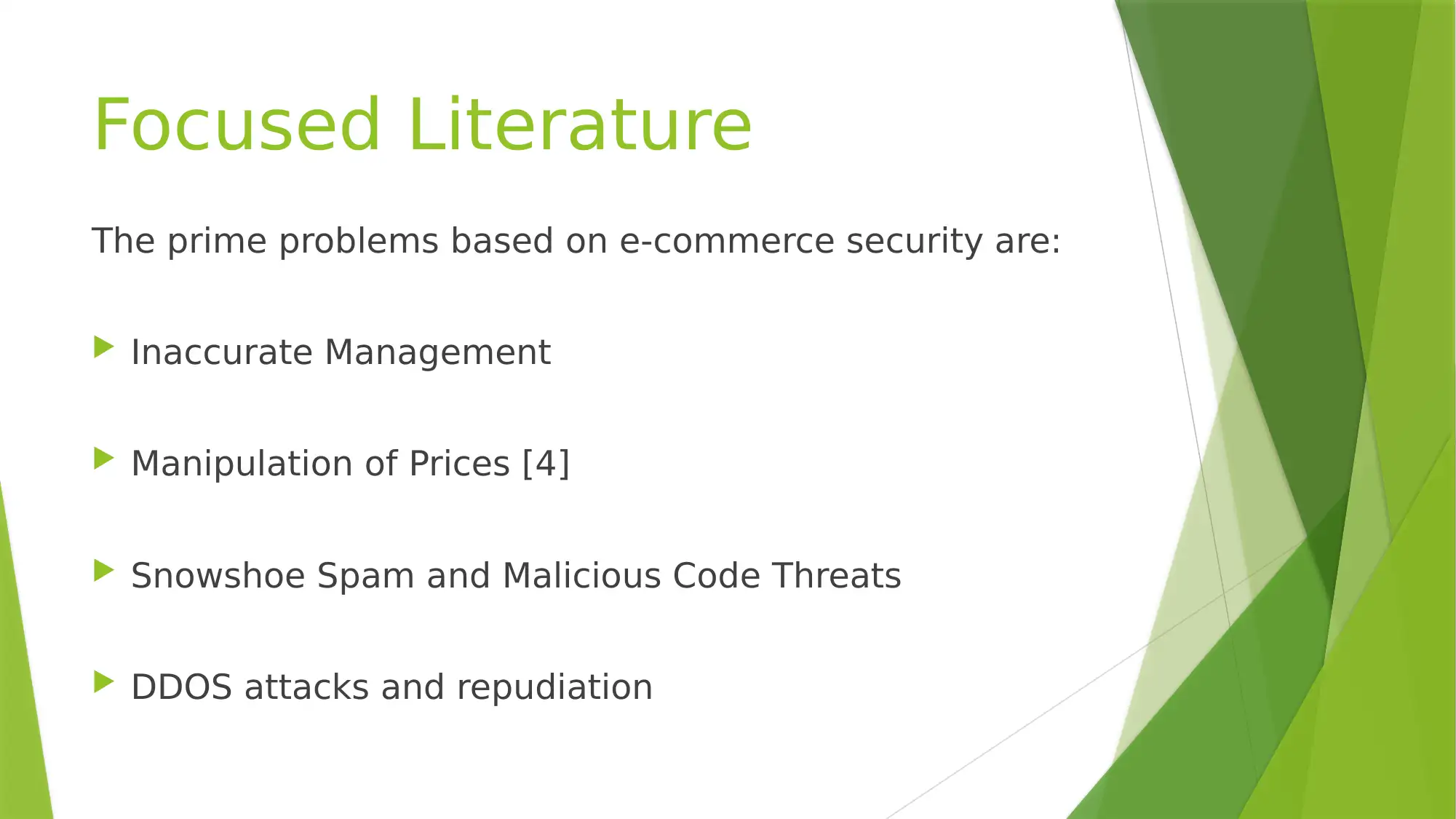
Focused Literature
The prime problems based on e-commerce security are:
Inaccurate Management
Manipulation of Prices [4]
Snowshoe Spam and Malicious Code Threats
DDOS attacks and repudiation
Document Page
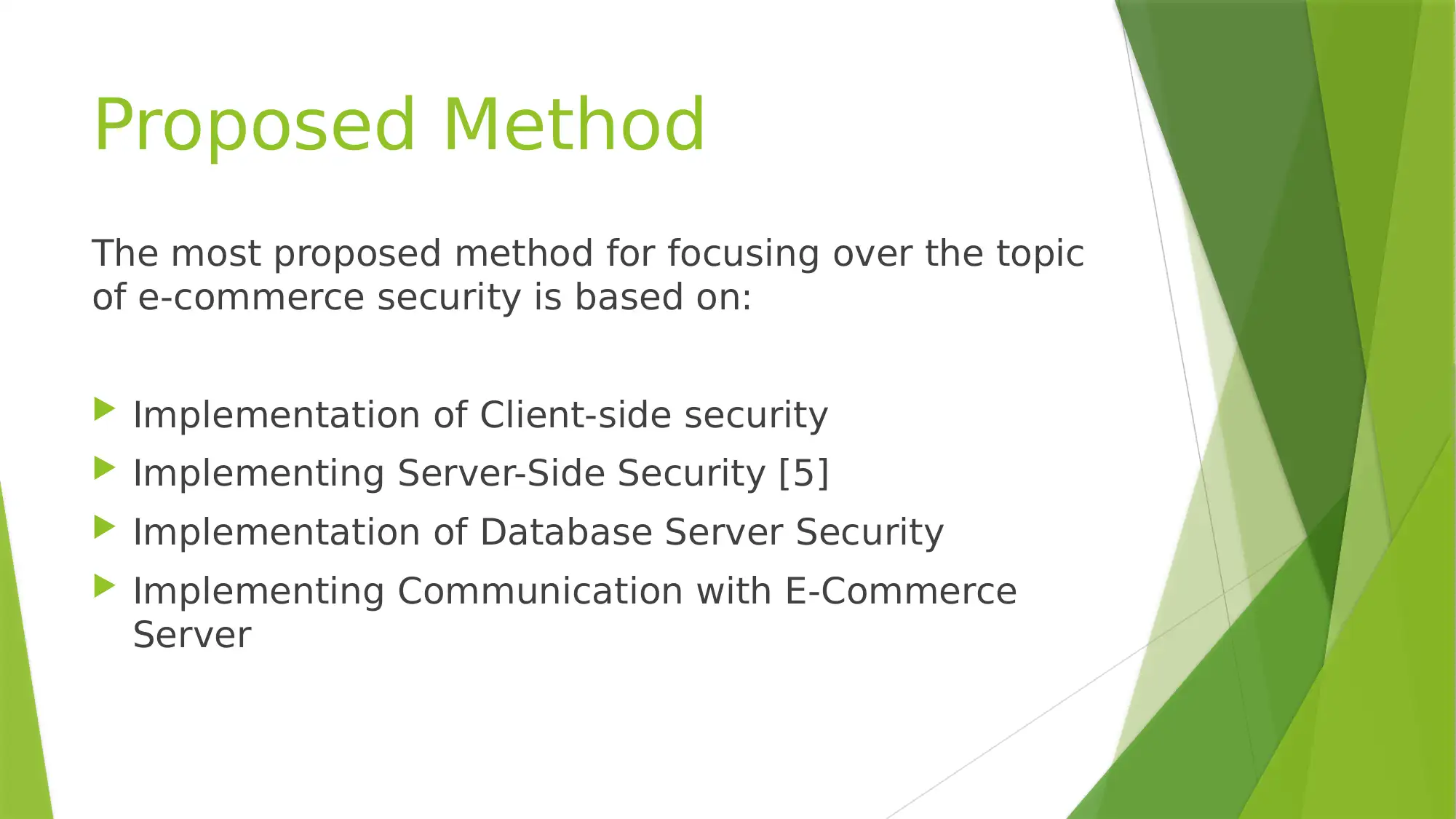
Proposed Method
The most proposed method for focusing over the topic
of e-commerce security is based on:
Implementation of Client-side security
Implementing Server-Side Security [5]
Implementation of Database Server Security
Implementing Communication with E-Commerce
Server
Document Page
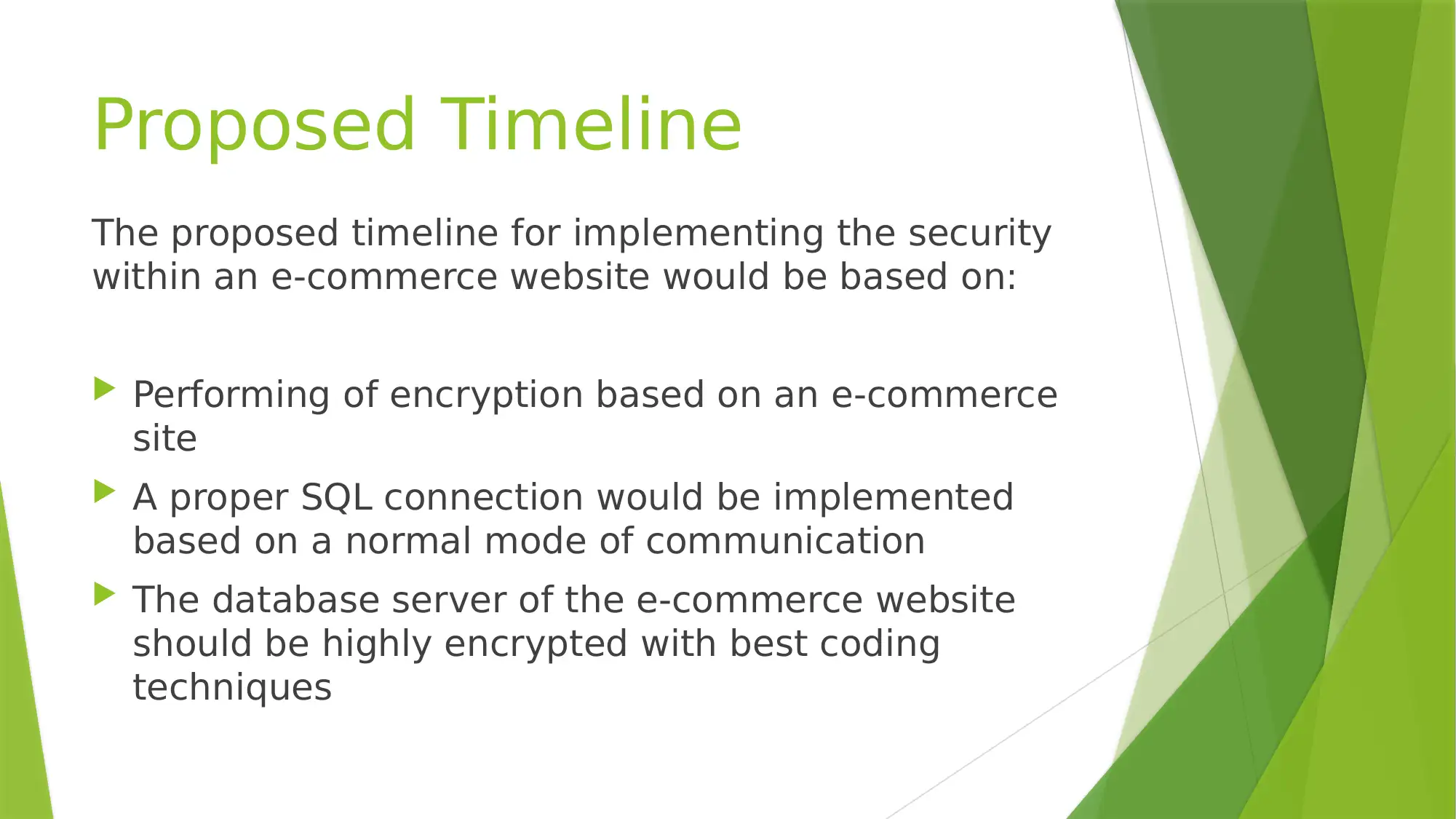
Proposed Timeline
The proposed timeline for implementing the security
within an e-commerce website would be based on:
Performing of encryption based on an e-commerce
site
A proper SQL connection would be implemented
based on a normal mode of communication
The database server of the e-commerce website
should be highly encrypted with best coding
techniques
tabler-icon-diamond-filled.svg

Paraphrase This Document

Need a fresh take? Get an instant paraphrase of this document with our AI Paraphraser
Document Page
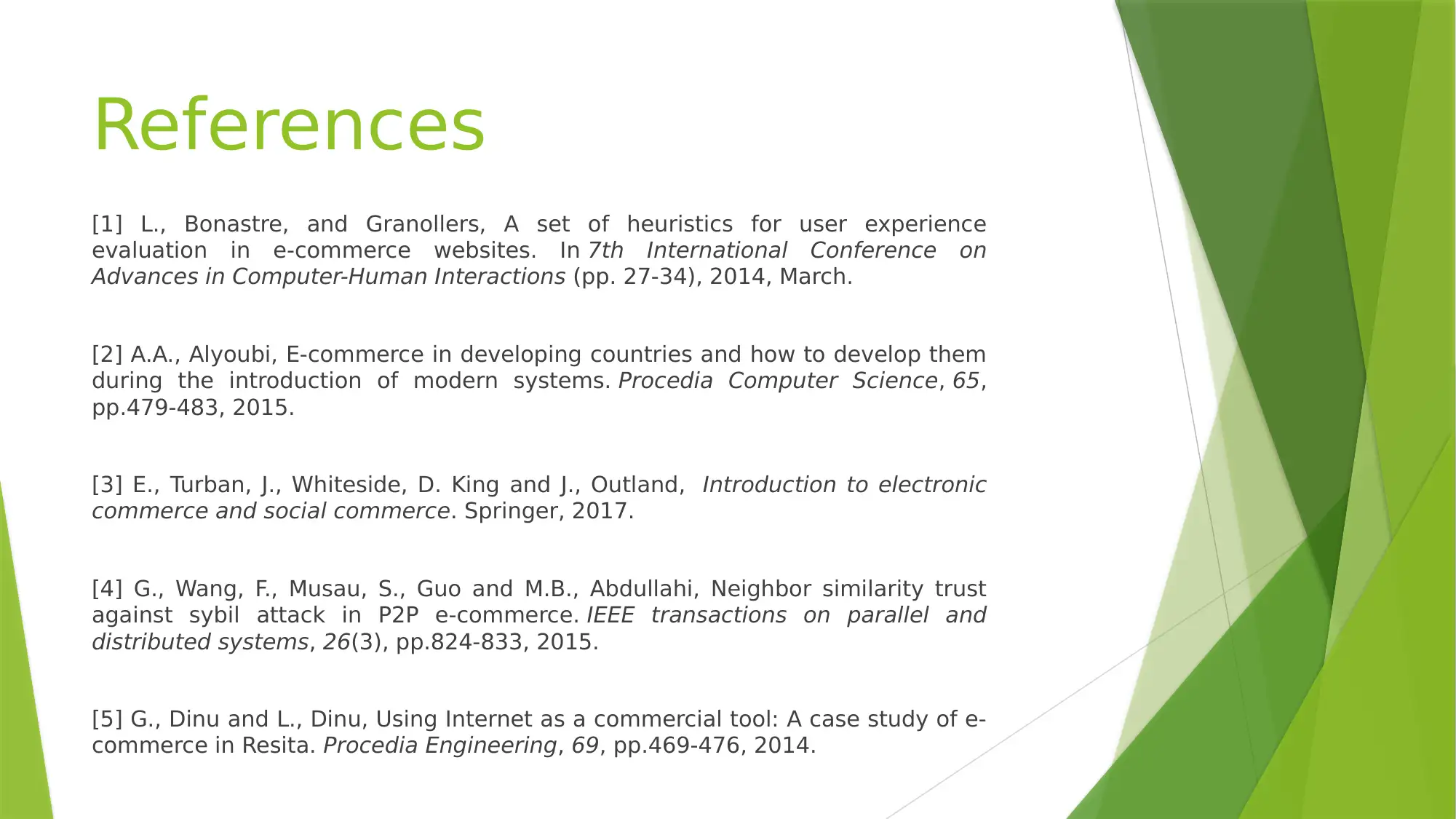
References
[1] L., Bonastre, and Granollers, A set of heuristics for user experience
evaluation in e-commerce websites. In 7th International Conference on
Advances in Computer-Human Interactions (pp. 27-34), 2014, March.
[2] A.A., Alyoubi, E-commerce in developing countries and how to develop them
during the introduction of modern systems. Procedia Computer Science, 65,
pp.479-483, 2015.
[3] E., Turban, J., Whiteside, D. King and J., Outland, Introduction to electronic
commerce and social commerce. Springer, 2017.
[4] G., Wang, F., Musau, S., Guo and M.B., Abdullahi, Neighbor similarity trust
against sybil attack in P2P e-commerce. IEEE transactions on parallel and
distributed systems, 26(3), pp.824-833, 2015.
[5] G., Dinu and L., Dinu, Using Internet as a commercial tool: A case study of e-
commerce in Resita. Procedia Engineering, 69, pp.469-476, 2014.
Document Page
Thank You
chevron_up_icon
1 out of 9
circle_padding
hide_on_mobile
zoom_out_icon
[object Object]