Does Self-Assessment Aid Literary Analysis Learning? PGCE English
VerifiedAdded on 2021/04/21
|30
|7335
|95
Report
AI Summary
This research report, conducted for a PGCE English module, investigates the impact of student self-assessment on their ability to learn and write literary analysis over a short period. The study aims to identify activities that encourage self-evaluation, determine if self-assessment aids in immediate and future learning, and recommend strategies for skill development. The research utilizes a questionnaire with 19 participants to gather primary data, analyzing themes such as assessing work, opportunities for assessment, and the perceived benefits of self-assessment. The report reviews relevant literature, including the PETERC paragraph framework and various self-assessment tools like checklists and rubrics. The findings suggest that self-assessment positively influences learning outcomes. The report concludes with recommendations for enhancing students' self-evaluation skills in literary analysis.
Running head: PGCE ENGLISH
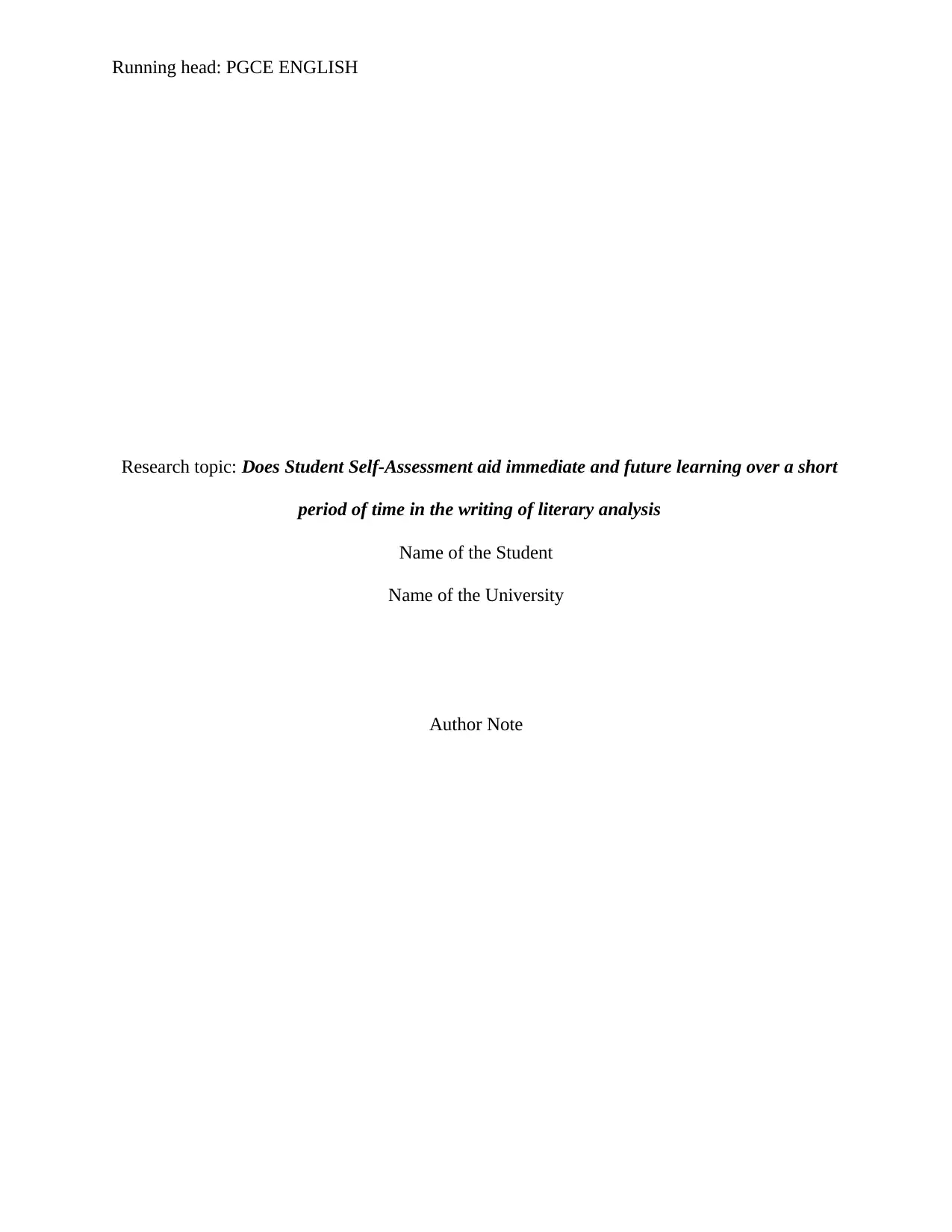
Research topic: Does Student Self-Assessment aid immediate and future learning over a short
period of time in the writing of literary analysis
Name of the Student
Name of the University
Author Note
Research topic: Does Student Self-Assessment aid immediate and future learning over a short
period of time in the writing of literary analysis
Name of the Student
Name of the University
Author Note

Paraphrase This Document
Need a fresh take? Get an instant paraphrase of this document with our AI Paraphraser
1PGCE ENGLISH
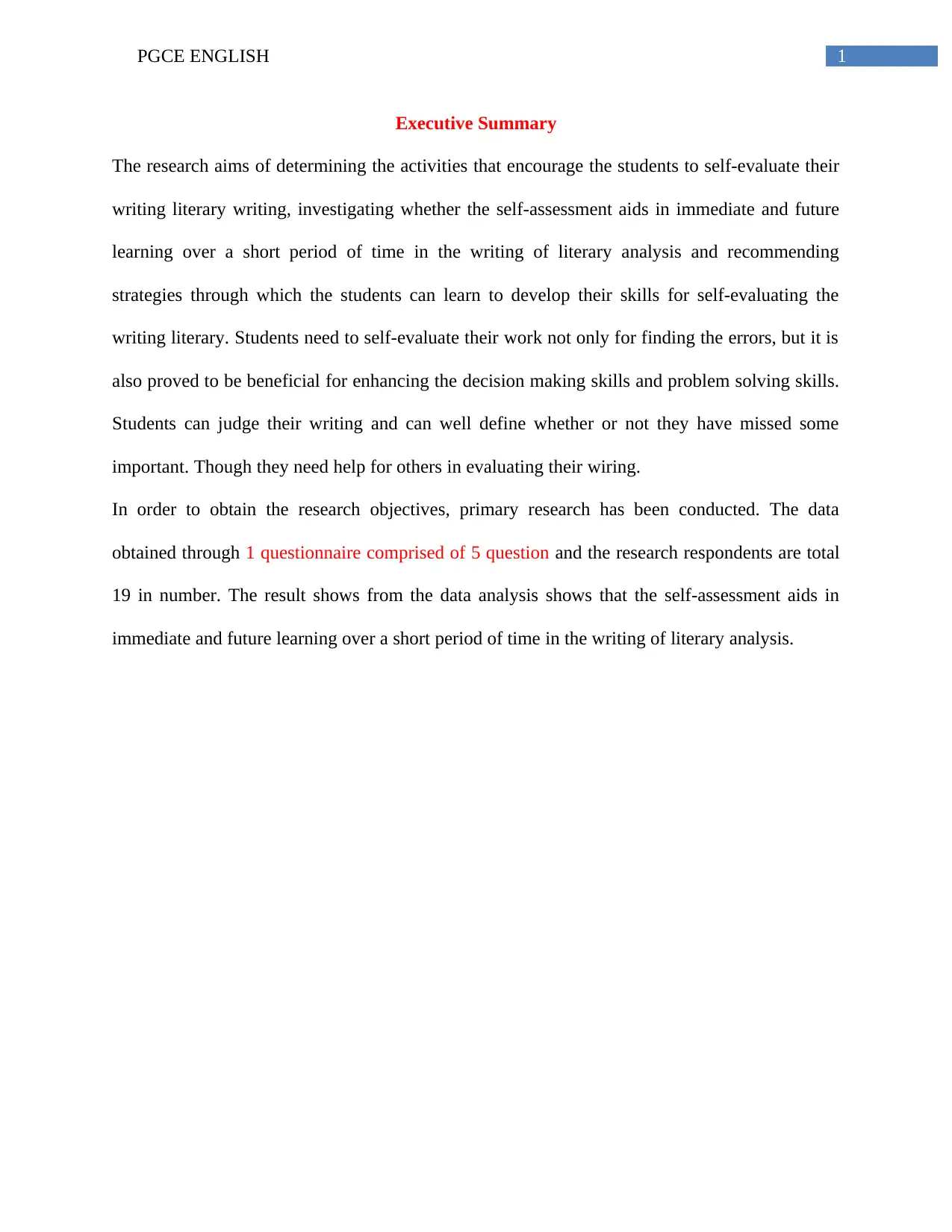
Executive Summary
The research aims of determining the activities that encourage the students to self-evaluate their
writing literary writing, investigating whether the self-assessment aids in immediate and future
learning over a short period of time in the writing of literary analysis and recommending
strategies through which the students can learn to develop their skills for self-evaluating the
writing literary. Students need to self-evaluate their work not only for finding the errors, but it is
also proved to be beneficial for enhancing the decision making skills and problem solving skills.
Students can judge their writing and can well define whether or not they have missed some
important. Though they need help for others in evaluating their wiring.
In order to obtain the research objectives, primary research has been conducted. The data
obtained through 1 questionnaire comprised of 5 question and the research respondents are total
19 in number. The result shows from the data analysis shows that the self-assessment aids in
immediate and future learning over a short period of time in the writing of literary analysis.
Executive Summary
The research aims of determining the activities that encourage the students to self-evaluate their
writing literary writing, investigating whether the self-assessment aids in immediate and future
learning over a short period of time in the writing of literary analysis and recommending
strategies through which the students can learn to develop their skills for self-evaluating the
writing literary. Students need to self-evaluate their work not only for finding the errors, but it is
also proved to be beneficial for enhancing the decision making skills and problem solving skills.
Students can judge their writing and can well define whether or not they have missed some
important. Though they need help for others in evaluating their wiring.
In order to obtain the research objectives, primary research has been conducted. The data
obtained through 1 questionnaire comprised of 5 question and the research respondents are total
19 in number. The result shows from the data analysis shows that the self-assessment aids in
immediate and future learning over a short period of time in the writing of literary analysis.
2PGCE ENGLISH
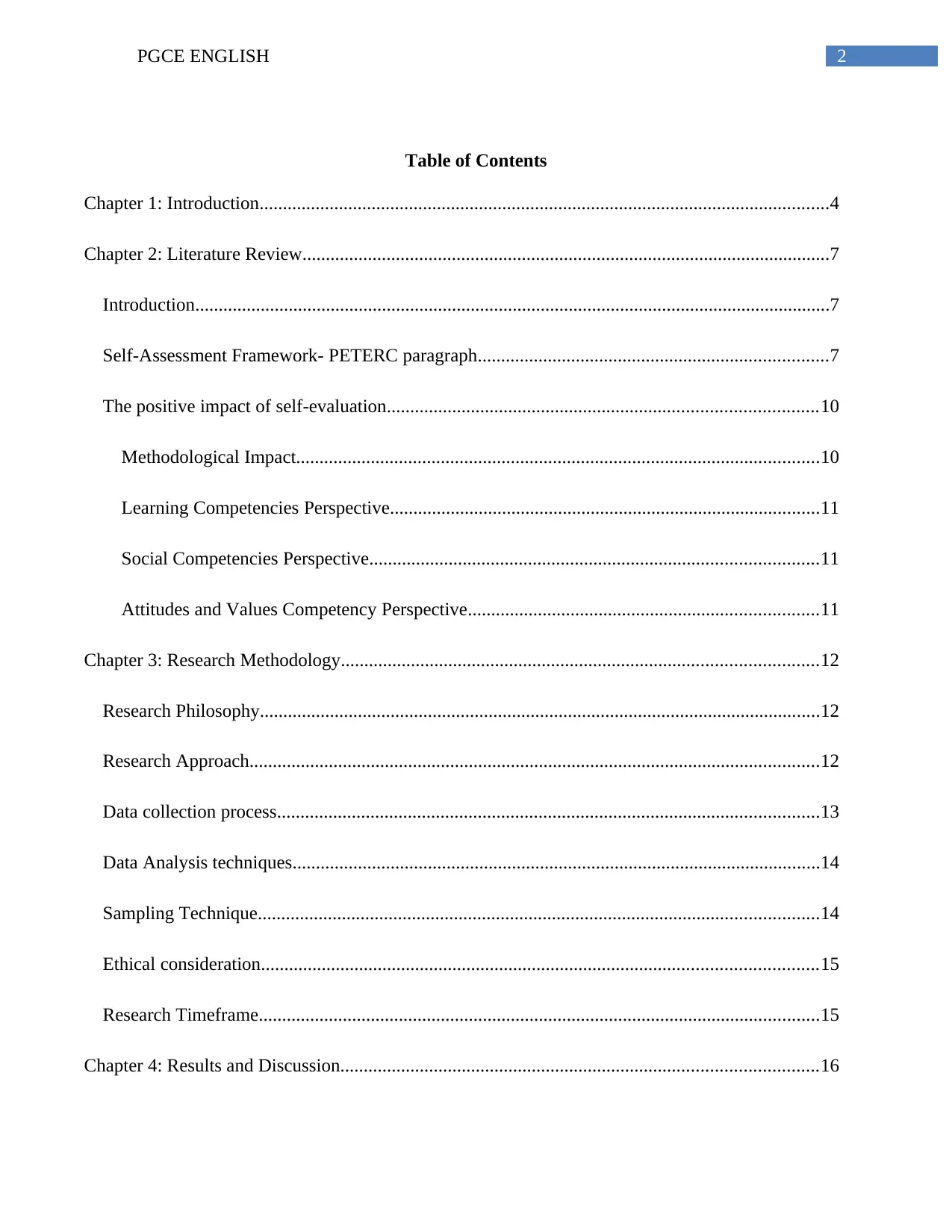
Table of Contents
Chapter 1: Introduction..........................................................................................................................4
Chapter 2: Literature Review.................................................................................................................7
Introduction........................................................................................................................................7
Self-Assessment Framework- PETERC paragraph...........................................................................7
The positive impact of self-evaluation............................................................................................10
Methodological Impact................................................................................................................10
Learning Competencies Perspective............................................................................................11
Social Competencies Perspective................................................................................................11
Attitudes and Values Competency Perspective...........................................................................11
Chapter 3: Research Methodology......................................................................................................12
Research Philosophy........................................................................................................................12
Research Approach..........................................................................................................................12
Data collection process....................................................................................................................13
Data Analysis techniques.................................................................................................................14
Sampling Technique........................................................................................................................14
Ethical consideration.......................................................................................................................15
Research Timeframe........................................................................................................................15
Chapter 4: Results and Discussion......................................................................................................16
Table of Contents
Chapter 1: Introduction..........................................................................................................................4
Chapter 2: Literature Review.................................................................................................................7
Introduction........................................................................................................................................7
Self-Assessment Framework- PETERC paragraph...........................................................................7
The positive impact of self-evaluation............................................................................................10
Methodological Impact................................................................................................................10
Learning Competencies Perspective............................................................................................11
Social Competencies Perspective................................................................................................11
Attitudes and Values Competency Perspective...........................................................................11
Chapter 3: Research Methodology......................................................................................................12
Research Philosophy........................................................................................................................12
Research Approach..........................................................................................................................12
Data collection process....................................................................................................................13
Data Analysis techniques.................................................................................................................14
Sampling Technique........................................................................................................................14
Ethical consideration.......................................................................................................................15
Research Timeframe........................................................................................................................15
Chapter 4: Results and Discussion......................................................................................................16
⊘ This is a preview!⊘
Do you want full access?
Subscribe today to unlock all pages.

Trusted by 1+ million students worldwide
3PGCE ENGLISH
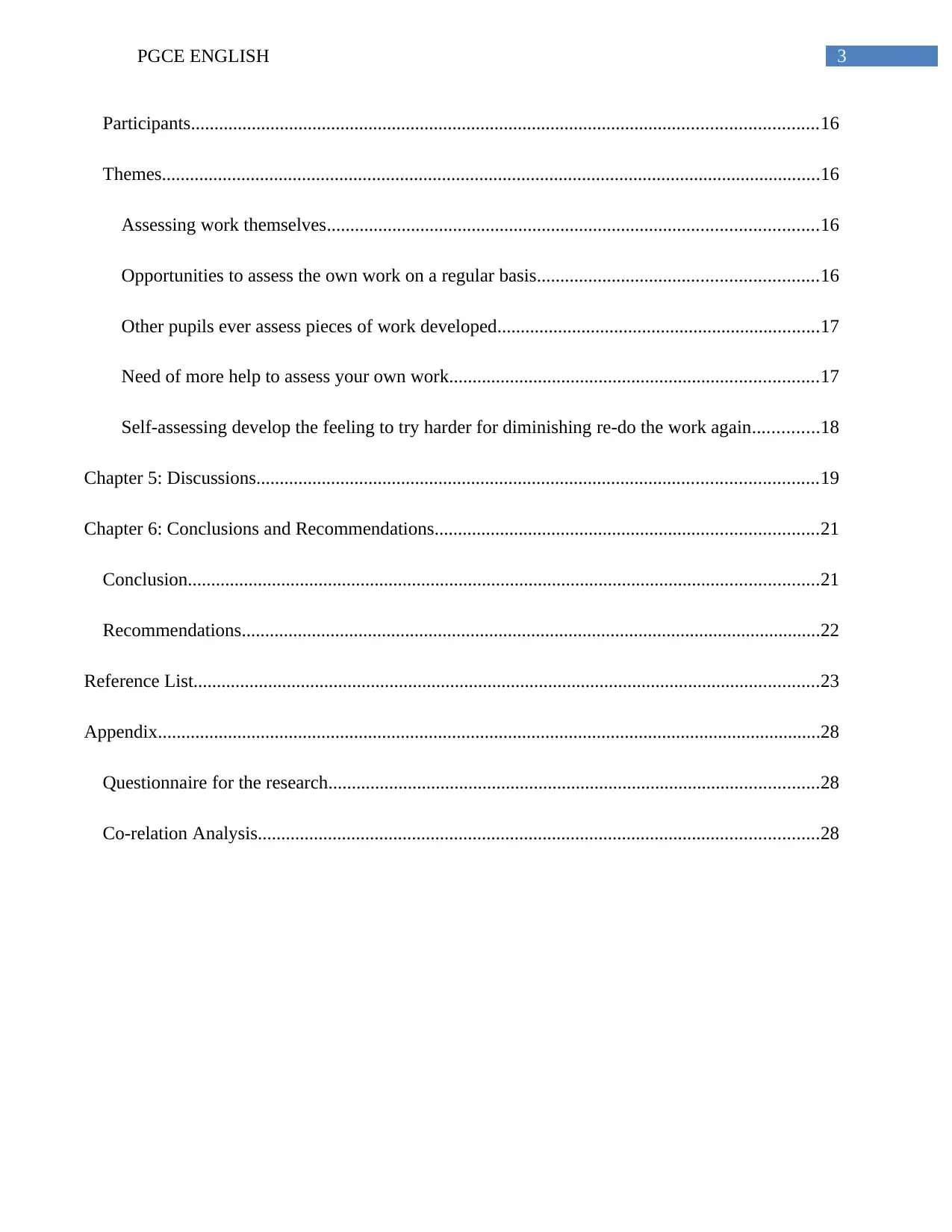
Participants......................................................................................................................................16
Themes.............................................................................................................................................16
Assessing work themselves.........................................................................................................16
Opportunities to assess the own work on a regular basis............................................................16
Other pupils ever assess pieces of work developed.....................................................................17
Need of more help to assess your own work...............................................................................17
Self-assessing develop the feeling to try harder for diminishing re-do the work again..............18
Chapter 5: Discussions........................................................................................................................19
Chapter 6: Conclusions and Recommendations..................................................................................21
Conclusion.......................................................................................................................................21
Recommendations............................................................................................................................22
Reference List......................................................................................................................................23
Appendix..............................................................................................................................................28
Questionnaire for the research.........................................................................................................28
Co-relation Analysis........................................................................................................................28
Participants......................................................................................................................................16
Themes.............................................................................................................................................16
Assessing work themselves.........................................................................................................16
Opportunities to assess the own work on a regular basis............................................................16
Other pupils ever assess pieces of work developed.....................................................................17
Need of more help to assess your own work...............................................................................17
Self-assessing develop the feeling to try harder for diminishing re-do the work again..............18
Chapter 5: Discussions........................................................................................................................19
Chapter 6: Conclusions and Recommendations..................................................................................21
Conclusion.......................................................................................................................................21
Recommendations............................................................................................................................22
Reference List......................................................................................................................................23
Appendix..............................................................................................................................................28
Questionnaire for the research.........................................................................................................28
Co-relation Analysis........................................................................................................................28
Paraphrase This Document
Need a fresh take? Get an instant paraphrase of this document with our AI Paraphraser
4PGCE ENGLISH
Chapter 1: Introduction
In their article “Training self-assessment and task-selection skills: A cognitive approach
to improving self-regulated learning” Kostons et al. stated that the self-assessment is important
for the students in order to develop their problem solving skills, decision making ability and
finding scope for future improvements (Kostons et al. 2012, pp. pp.121-132). Students need to
follow all the requirements prior evaluating whether or not all the asked theories and procedure
are addressed. The self-assessment allows the students to identify their faults or the missing
points that they have not been addressed. In the article “Self-esteem and self-evaluation: Feeling
is believing. Psychological perspectives on the self” Brown depicted that this evaluation is also
beneficial in judging their work against the quality factors, assessing owns efforts and setting
personal goals (Brown 2014, pp.27-58). This research highlights the self assessment skills for the
student in developing literacy writing over a short period of time.
Self evaluation of the accomplished work allows the person to evaluate the impact of the
various aspects of the performance including identifying the strength and weakness of the skills.
In the research work “The role of video for self-evaluation in early field experiences” Baecher et
al. furthermore stated that self-evaluation provides an opportunity to think, reflect and write the
problems along with the constraints (Baecher et al. 2013, pp.189-197). This approach also
improves the ability to predict the main targets and setting blueprint for accomplishing the work
within desired time. In their article, “The importance of self-assessment in students’ use of
tutors’ feedback: A qualitative study of high and non-high achieving biology undergraduates”,
Orsmond and Merry depicted that self-evaluation is beneficial as students can easily assess their
progress chart and consider past performance to set future targets and the role of the peer
discussion also allow the students to understand their drawbacks develop themselves (Orsmond
Chapter 1: Introduction
In their article “Training self-assessment and task-selection skills: A cognitive approach
to improving self-regulated learning” Kostons et al. stated that the self-assessment is important
for the students in order to develop their problem solving skills, decision making ability and
finding scope for future improvements (Kostons et al. 2012, pp. pp.121-132). Students need to
follow all the requirements prior evaluating whether or not all the asked theories and procedure
are addressed. The self-assessment allows the students to identify their faults or the missing
points that they have not been addressed. In the article “Self-esteem and self-evaluation: Feeling
is believing. Psychological perspectives on the self” Brown depicted that this evaluation is also
beneficial in judging their work against the quality factors, assessing owns efforts and setting
personal goals (Brown 2014, pp.27-58). This research highlights the self assessment skills for the
student in developing literacy writing over a short period of time.
Self evaluation of the accomplished work allows the person to evaluate the impact of the
various aspects of the performance including identifying the strength and weakness of the skills.
In the research work “The role of video for self-evaluation in early field experiences” Baecher et
al. furthermore stated that self-evaluation provides an opportunity to think, reflect and write the
problems along with the constraints (Baecher et al. 2013, pp.189-197). This approach also
improves the ability to predict the main targets and setting blueprint for accomplishing the work
within desired time. In their article, “The importance of self-assessment in students’ use of
tutors’ feedback: A qualitative study of high and non-high achieving biology undergraduates”,
Orsmond and Merry depicted that self-evaluation is beneficial as students can easily assess their
progress chart and consider past performance to set future targets and the role of the peer
discussion also allow the students to understand their drawbacks develop themselves (Orsmond
5PGCE ENGLISH
and Merry 2013). This will furthermore help in developing their academic performance and
career.
In the book “Motivating students to learn” Brophy presented a viewpoint that when
another person is evaluating one's task, not in every case, they share their concern genuinely
(Brophy 2013). As a result, the student cannot identify the scope of improvement for reducing
the error that they have committed. Thus, the best alternative is to evaluate the task themselves.
Kostons et al. (2012) highlight that through this approach, students can assess the section that
they feel is not correct. Students on self-evaluating their written piece of work can identify which
section they intentionally missed out and which information can be incorporated for enhancing
the quality of the job. Thus, this research aims for finding out the answer for whether or not the
self-evaluation procedure of the task is helpful for the students for immediate and future learning
regarding the writing of literary analysis over a short period of time.
This research aims at finding the aspects that whether or not self-assessment aids the
students in immediate and future learning over a short period of time in the writing of literary
analysis.
This research study focuses on the following set of objectives:
To determine the activities that encourage the students to self-evaluated their writing
literary writing
To investigate whether the self-assessment aids in immediate and future learning over a
short period of time in the writing of literary analysis
To recommend a strategy for making students motivated regarding self-evaluating their
writing of literary analysis
and Merry 2013). This will furthermore help in developing their academic performance and
career.
In the book “Motivating students to learn” Brophy presented a viewpoint that when
another person is evaluating one's task, not in every case, they share their concern genuinely
(Brophy 2013). As a result, the student cannot identify the scope of improvement for reducing
the error that they have committed. Thus, the best alternative is to evaluate the task themselves.
Kostons et al. (2012) highlight that through this approach, students can assess the section that
they feel is not correct. Students on self-evaluating their written piece of work can identify which
section they intentionally missed out and which information can be incorporated for enhancing
the quality of the job. Thus, this research aims for finding out the answer for whether or not the
self-evaluation procedure of the task is helpful for the students for immediate and future learning
regarding the writing of literary analysis over a short period of time.
This research aims at finding the aspects that whether or not self-assessment aids the
students in immediate and future learning over a short period of time in the writing of literary
analysis.
This research study focuses on the following set of objectives:
To determine the activities that encourage the students to self-evaluated their writing
literary writing
To investigate whether the self-assessment aids in immediate and future learning over a
short period of time in the writing of literary analysis
To recommend a strategy for making students motivated regarding self-evaluating their
writing of literary analysis
⊘ This is a preview!⊘
Do you want full access?
Subscribe today to unlock all pages.
Trusted by 1+ million students worldwide
6PGCE ENGLISH
Based on the research objectives of the research, following research questions have been
designed:
What are the activities that encourage the students to self-evaluated their writing literary
writing
Whether the self-assessment aids in immediate and future learning over a short period of
time in the writing of literary analysis
Based on the research objectives of the research, following research questions have been
designed:
What are the activities that encourage the students to self-evaluated their writing literary
writing
Whether the self-assessment aids in immediate and future learning over a short period of
time in the writing of literary analysis
Paraphrase This Document
Need a fresh take? Get an instant paraphrase of this document with our AI Paraphraser
7PGCE ENGLISH
Chapter 2: Literature Review
Introduction
In the article “Language assessment literacy as self-awareness: Understanding the role of
interpretation in assessment and in teacher learning” Scarino stated that the importance of self
assessment enhances the ability to clarify the given roles and responsibility with a better
understanding of learning intentions (Scarino, 2013, pp.309-327). This will help the decision
making and judgment skills of the students and allow them to judge whether or not the selected
procedure and the developed written excerpt is appropriate. In the articles “Widening
participation and English language proficiency: a convergence with implications for assessment
practices in higher education” Murray furthermore depicted that students can also participate for
their progress by self evaluating their written piece (Murray 2013, pp.299-311). In this chapter,
the analysis of the impact of the self-assessment for writing a literary analysis on immediate and
future learning of the students over a short period of time is highlighted. The student’s self-
assessment according to the PETERC paragraph is the main key term for evaluating the Critical
analysis of the theories related to student’s self assessment is also analyzed in-depth.
Self-Assessment Framework- PETERC paragraph
In the article, “The study, evaluation, and improvement of university student self-
efficacy”, Bartimote-Aufflick et al. stated that metacognition, the locus of control, intrinsic
motivation are the other factors of self-efficacy (Bartimote-Aufflick et al. 2016, pp.1918-1942).
Moreover, on the website of the Abraham Darby Academy, details of PEA Paragraph is present
which is utilized for writing an essay which provides explanation of each point that has been
summarized. These three factors include point, evidence and analysis that allow students to point
Chapter 2: Literature Review
Introduction
In the article “Language assessment literacy as self-awareness: Understanding the role of
interpretation in assessment and in teacher learning” Scarino stated that the importance of self
assessment enhances the ability to clarify the given roles and responsibility with a better
understanding of learning intentions (Scarino, 2013, pp.309-327). This will help the decision
making and judgment skills of the students and allow them to judge whether or not the selected
procedure and the developed written excerpt is appropriate. In the articles “Widening
participation and English language proficiency: a convergence with implications for assessment
practices in higher education” Murray furthermore depicted that students can also participate for
their progress by self evaluating their written piece (Murray 2013, pp.299-311). In this chapter,
the analysis of the impact of the self-assessment for writing a literary analysis on immediate and
future learning of the students over a short period of time is highlighted. The student’s self-
assessment according to the PETERC paragraph is the main key term for evaluating the Critical
analysis of the theories related to student’s self assessment is also analyzed in-depth.
Self-Assessment Framework- PETERC paragraph
In the article, “The study, evaluation, and improvement of university student self-
efficacy”, Bartimote-Aufflick et al. stated that metacognition, the locus of control, intrinsic
motivation are the other factors of self-efficacy (Bartimote-Aufflick et al. 2016, pp.1918-1942).
Moreover, on the website of the Abraham Darby Academy, details of PEA Paragraph is present
which is utilized for writing an essay which provides explanation of each point that has been
summarized. These three factors include point, evidence and analysis that allow students to point
8PGCE ENGLISH
out some evidence, giving examples that arguments are correct and analyze the meaning of the
quotations given for the arguments (Abraham Darby Academy, 2015).
The PETERC paragraph is an analysis procedure for the students to check whether or not they
have met all the requirements that are provided to them This concerned paragraph writing skill
comprises of six components and each one of them has a sound significance in the process of self
evaluation of the writing the literary analysis.
Point- In the article “Online self-assessment and students' success in higher education
institutions” Cukusic et al. stated that students should highlight the important points in the given
literature and listed down with appropriate points (Cukusic et al. 2014, pp.100-109). The point
should be specific and can be used in identifying the nature of the characters like good or bad in
the written piece of literature by other research scholars (Bbc.co. UK, 2013).
Evidence- Students should analyze why they have pointed out some characters as good or bad
(Broadbent and Poon 2015). In the article “The future of self-assessment in classroom practice:
Reframing self-assessment as a core competency” Brown and Harris stated that students have to
collect evidence in form of quotation about what they have said or their actions in the literature
based on which students have made such points (Brown and Harris 2014, pp.22-30). This will
help the student to cross-check their decision and make necessary changes if required.
Technique- In “Knowing what students know and can do: The current state of student learning
outcomes assessment in US colleges and universities” Kuh et al. depict that in order to critically
analyze literature, it is necessary for the students to understand the writer’s perspective (Kuh et
al. 2014). Thus, whether the writer presented a view in favor of the given topic or presents an
argument against the subjects allow the students to assess the critically (Murray 2013). Taken for
out some evidence, giving examples that arguments are correct and analyze the meaning of the
quotations given for the arguments (Abraham Darby Academy, 2015).
The PETERC paragraph is an analysis procedure for the students to check whether or not they
have met all the requirements that are provided to them This concerned paragraph writing skill
comprises of six components and each one of them has a sound significance in the process of self
evaluation of the writing the literary analysis.
Point- In the article “Online self-assessment and students' success in higher education
institutions” Cukusic et al. stated that students should highlight the important points in the given
literature and listed down with appropriate points (Cukusic et al. 2014, pp.100-109). The point
should be specific and can be used in identifying the nature of the characters like good or bad in
the written piece of literature by other research scholars (Bbc.co. UK, 2013).
Evidence- Students should analyze why they have pointed out some characters as good or bad
(Broadbent and Poon 2015). In the article “The future of self-assessment in classroom practice:
Reframing self-assessment as a core competency” Brown and Harris stated that students have to
collect evidence in form of quotation about what they have said or their actions in the literature
based on which students have made such points (Brown and Harris 2014, pp.22-30). This will
help the student to cross-check their decision and make necessary changes if required.
Technique- In “Knowing what students know and can do: The current state of student learning
outcomes assessment in US colleges and universities” Kuh et al. depict that in order to critically
analyze literature, it is necessary for the students to understand the writer’s perspective (Kuh et
al. 2014). Thus, whether the writer presented a view in favor of the given topic or presents an
argument against the subjects allow the students to assess the critically (Murray 2013). Taken for
⊘ This is a preview!⊘
Do you want full access?
Subscribe today to unlock all pages.
Trusted by 1+ million students worldwide
9PGCE ENGLISH
instance, some writer uses metaphor or dramatic irony; while some of them use repetitive
sentences and evidence (Bbc.co. UK, 2013).
Effect- Students, in this case, have to analyze the good or bad impact of the technique used by
the writer in the literature. Cukusic et al. (2014) stated that this would allow the students to find
the gap and recommend some strategy that helps them to enhance their understandability and the
decision for choosing the best alternative.
Rest- Murray (2013) highlighted that in this phase students should write their perception either in
a positive or negative way based on which aspect they want the reader to perceive. The students
should relate their perspective with the rest of the text.
Context- This aspect is similar to give the evidence why the writer of the literature considers the
character to be good or bad. In this section, it is the students, who have to give evidence or
comment why their considered perspective is justified (Brown and Harris 2014). Cukusic et al.
(2014) thus stated that this process would allow the students to prove their decisions and improve
their skills is making an appropriate judgment.
Self Assessment Tools
Two tools can be used for promoting the self-evaluation of the completed job roles by the
students that are- problem solving checklist and student’s rubric.
Peacock in “Classroom skills in English teaching: A self-appraisal framework” (2017)
stated that student has to underline the fact in the problem of the written piece of literature. A
student can prepare a checklist mentioning the aspects that they have to address in their analysis
like- include examples to the theories, preparation of the tables and charts, selection of the
keywords identified in the main literature or presentation of arguments comparing other literature
based on the same topic (Villa and Thousand 2016).
instance, some writer uses metaphor or dramatic irony; while some of them use repetitive
sentences and evidence (Bbc.co. UK, 2013).
Effect- Students, in this case, have to analyze the good or bad impact of the technique used by
the writer in the literature. Cukusic et al. (2014) stated that this would allow the students to find
the gap and recommend some strategy that helps them to enhance their understandability and the
decision for choosing the best alternative.
Rest- Murray (2013) highlighted that in this phase students should write their perception either in
a positive or negative way based on which aspect they want the reader to perceive. The students
should relate their perspective with the rest of the text.
Context- This aspect is similar to give the evidence why the writer of the literature considers the
character to be good or bad. In this section, it is the students, who have to give evidence or
comment why their considered perspective is justified (Brown and Harris 2014). Cukusic et al.
(2014) thus stated that this process would allow the students to prove their decisions and improve
their skills is making an appropriate judgment.
Self Assessment Tools
Two tools can be used for promoting the self-evaluation of the completed job roles by the
students that are- problem solving checklist and student’s rubric.
Peacock in “Classroom skills in English teaching: A self-appraisal framework” (2017)
stated that student has to underline the fact in the problem of the written piece of literature. A
student can prepare a checklist mentioning the aspects that they have to address in their analysis
like- include examples to the theories, preparation of the tables and charts, selection of the
keywords identified in the main literature or presentation of arguments comparing other literature
based on the same topic (Villa and Thousand 2016).
Paraphrase This Document
Need a fresh take? Get an instant paraphrase of this document with our AI Paraphraser
10PGCE ENGLISH
Moreover, in terms of Student’s Rubric, Panadero and Romero in the article “To rubric or
not to rubric? The effects of self-assessment on self-regulation, performance and self-efficacy”
Panadero and Romero 2014 stated that rubric refers to the term authoritative rule that is given to
the students for cross-checking their written analysis with the requirements (Panadero and
Romero, 2014, pp.1264-1268). This process will improve the comparative analysis of the
students and improve their decisions skills for evaluating their written analysis. Brown (2014)
furthermore stated that these points highlighted in the marking rubrics could also be included in
the checklist in order to evaluate their writing.
The positive impact of self-evaluation
Methodological Impact
Some of the positive impacts of self-evaluation is considered- Methodological Impact,
Learning Competencies Perspective, Social Competencies Perspective and Attitudes and Values
Competency Perspective
In the context of Methodological Impact, Brown (2014) stated that through self-
evaluation of owns work allow the students to deal with different perspective and justification of
the writers. The self evaluation also offers them the opportunity to analyze the situations and
improve decision making skills. In the article “The Inclusive Education Checklist:: A Self-
Assessment of Best Practices” Villa and Thousand depicted that incorporating student's own
perspective also improve the ability to draw on experience and interpret situation appropriately
(Villa and Thousand 2016). The ability for the self-organization and time-management also gets
improved as the students can assess the best in which section they need more time to investigate
for highlighting the key points.
Moreover, in terms of Student’s Rubric, Panadero and Romero in the article “To rubric or
not to rubric? The effects of self-assessment on self-regulation, performance and self-efficacy”
Panadero and Romero 2014 stated that rubric refers to the term authoritative rule that is given to
the students for cross-checking their written analysis with the requirements (Panadero and
Romero, 2014, pp.1264-1268). This process will improve the comparative analysis of the
students and improve their decisions skills for evaluating their written analysis. Brown (2014)
furthermore stated that these points highlighted in the marking rubrics could also be included in
the checklist in order to evaluate their writing.
The positive impact of self-evaluation
Methodological Impact
Some of the positive impacts of self-evaluation is considered- Methodological Impact,
Learning Competencies Perspective, Social Competencies Perspective and Attitudes and Values
Competency Perspective
In the context of Methodological Impact, Brown (2014) stated that through self-
evaluation of owns work allow the students to deal with different perspective and justification of
the writers. The self evaluation also offers them the opportunity to analyze the situations and
improve decision making skills. In the article “The Inclusive Education Checklist:: A Self-
Assessment of Best Practices” Villa and Thousand depicted that incorporating student's own
perspective also improve the ability to draw on experience and interpret situation appropriately
(Villa and Thousand 2016). The ability for the self-organization and time-management also gets
improved as the students can assess the best in which section they need more time to investigate
for highlighting the key points.
11PGCE ENGLISH
Learning Competencies Perspective
Moreover, for learning competencies perspective, Peacock (2017) highlighted that on self
evaluating owns work, allow the students to improve their self learning ability, critical and
reflective abilities and in-depth analysis of controversial issues. All these analysis aspects will
help the student to understand the ability and area of improvements for preparing an accurate and
error-free solution.
Social Competencies Perspective
Related to the concept of social competencies perspective, the benefit that students can
attain from social competencies perspectives in the written analysis are the ability to co-operate
the required aspects of the literature, self-projection of the main concept identified from the
papers, ability to manage conflicts and improving negotiation skills (Jiang and Jiang 2015). Their
ability to understand everyone’s point of view and arguments can also be obtained.
Attitudes and Values Competency Perspective
Lastly, for Attitudes and Values Competency Perspective, In the article “Self-theories:
Their role in motivation, personality, and development” Dweck stated that the acceptance of self-
responsibility, positive attitude towards change, ability to foster confidence and trust, rising of
micro-political awareness and demonstrating commitment are some of the benefits which the
students can acquire through the self evaluation (Dweck 2013). Brown and Harris (2014) stated
that through acceptability of the self-responsibility and change allow them to learn in every
aspect in order to improve themselves.
Learning Competencies Perspective
Moreover, for learning competencies perspective, Peacock (2017) highlighted that on self
evaluating owns work, allow the students to improve their self learning ability, critical and
reflective abilities and in-depth analysis of controversial issues. All these analysis aspects will
help the student to understand the ability and area of improvements for preparing an accurate and
error-free solution.
Social Competencies Perspective
Related to the concept of social competencies perspective, the benefit that students can
attain from social competencies perspectives in the written analysis are the ability to co-operate
the required aspects of the literature, self-projection of the main concept identified from the
papers, ability to manage conflicts and improving negotiation skills (Jiang and Jiang 2015). Their
ability to understand everyone’s point of view and arguments can also be obtained.
Attitudes and Values Competency Perspective
Lastly, for Attitudes and Values Competency Perspective, In the article “Self-theories:
Their role in motivation, personality, and development” Dweck stated that the acceptance of self-
responsibility, positive attitude towards change, ability to foster confidence and trust, rising of
micro-political awareness and demonstrating commitment are some of the benefits which the
students can acquire through the self evaluation (Dweck 2013). Brown and Harris (2014) stated
that through acceptability of the self-responsibility and change allow them to learn in every
aspect in order to improve themselves.
⊘ This is a preview!⊘
Do you want full access?
Subscribe today to unlock all pages.
Trusted by 1+ million students worldwide

1 out of 30


Related Documents


Your All-in-One AI-Powered Toolkit for Academic Success.
+13062052269
info@desklib.com
Available 24*7 on WhatsApp / Email
![[object Object]](/_next/static/media/star-bottom.7253800d.svg)
Unlock your academic potential
Copyright © 2020–2026 A2Z Services. All Rights Reserved. Developed and managed by ZUCOL.