Female Characters in Literature: A Comparative Analysis Project
VerifiedAdded on 2022/08/20
|13
|3408
|18
Project
AI Summary
This graduation project presents a comprehensive comparative analysis of female characters in literature, focusing on Shakespeare's Lady Macbeth and Harold Pinter's Ruth from 'The Homecoming'. The research delves into the evolution of women's representation across the Elizabethan and modern periods, highlighting the shift from submissive roles to strong, independent figures. The project examines the similarities and differences between Lady Macbeth and Ruth, exploring their ambition, dominance, and the challenges they face within patriarchal societies. It includes a literature review, significance of the research, research questions, methodology, ethical considerations, limitations, and expected results, providing a detailed exploration of the two characters and their significance in literature. The project also discusses the writing styles of Shakespeare and Pinter, the use of language, and the portrayal of women in their respective eras. The project follows the structure of a research proposal, including an abstract, introduction, literature review, methodology, ethical considerations, limitations, expected results, and references. The project aims to contribute to the understanding of female character development in literature and the changing societal expectations of women.
Running head: RESEARCH PROPOSAL
RESEARCH PROPOSAL
Name of the Student
Name of the University
Author Note
RESEARCH PROPOSAL
Name of the Student
Name of the University
Author Note

Paraphrase This Document
Need a fresh take? Get an instant paraphrase of this document with our AI Paraphraser
1
RESEARCH PROPOSAL
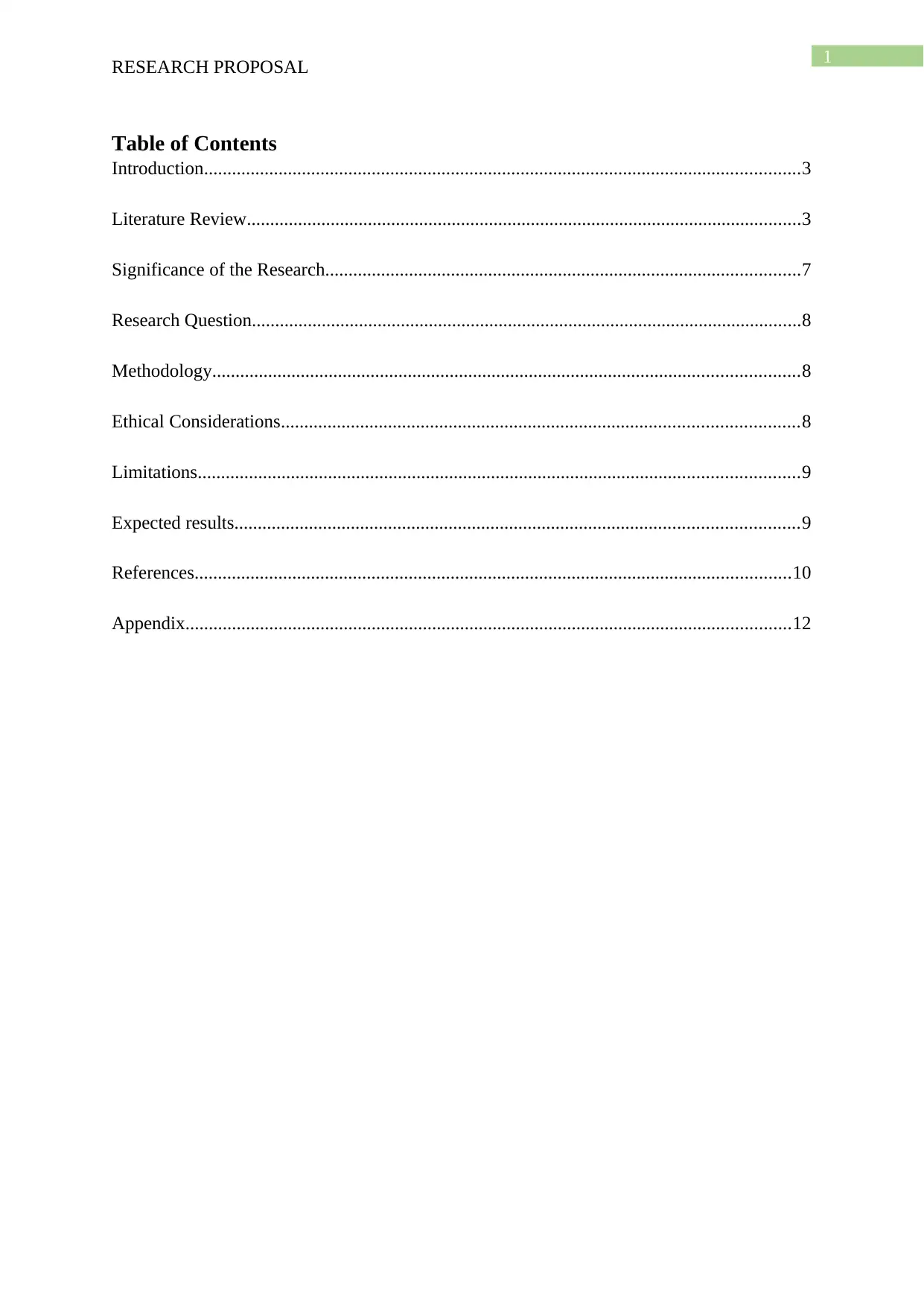
Table of Contents
Introduction................................................................................................................................3
Literature Review.......................................................................................................................3
Significance of the Research......................................................................................................7
Research Question......................................................................................................................8
Methodology..............................................................................................................................8
Ethical Considerations...............................................................................................................8
Limitations.................................................................................................................................9
Expected results.........................................................................................................................9
References................................................................................................................................10
Appendix..................................................................................................................................12
RESEARCH PROPOSAL
Table of Contents
Introduction................................................................................................................................3
Literature Review.......................................................................................................................3
Significance of the Research......................................................................................................7
Research Question......................................................................................................................8
Methodology..............................................................................................................................8
Ethical Considerations...............................................................................................................8
Limitations.................................................................................................................................9
Expected results.........................................................................................................................9
References................................................................................................................................10
Appendix..................................................................................................................................12
2
RESEARCH PROPOSAL
Abstract
The paper aims to make a comparison as well as a contrast between Shakespeare’s Lady
Macbeth and Harold Pinter’s Ruth from ‘The Homecoming’. The paper talks about literature
during the Elizabethan age and literature during the modern period. It tries to make a
comparison between the treatment of women in both the periods. The research will further
explore the character of Lady Macbeth as well as Ruth and discuss why they are important
characters to discuss. The paper further states the ethical considerations that followed during
the research along with some limitations.
RESEARCH PROPOSAL
Abstract
The paper aims to make a comparison as well as a contrast between Shakespeare’s Lady
Macbeth and Harold Pinter’s Ruth from ‘The Homecoming’. The paper talks about literature
during the Elizabethan age and literature during the modern period. It tries to make a
comparison between the treatment of women in both the periods. The research will further
explore the character of Lady Macbeth as well as Ruth and discuss why they are important
characters to discuss. The paper further states the ethical considerations that followed during
the research along with some limitations.
⊘ This is a preview!⊘
Do you want full access?
Subscribe today to unlock all pages.

Trusted by 1+ million students worldwide
3
RESEARCH PROPOSAL
Introduction
The presentation of women in literature has gone through a lot of changes over time.
Earlier women were shown to be submissive and were victims of patriarchy. In the past
books were primarily written by men and therefore their portrayal of women had to be biased.
Society at that time was dominated by males so the plays too portrayed the unfair treatment
of women (Rubik, 2016). Female characters in the early plays were shown to be submissive
and without a voice. Even the characters who played the part of women were males as
women were not allowed to socialize. Most of the playwrights denoted their women
characters with witchcraft and black magic (Rubik, 2016). Earlier women were only expected
to play the role of a wife, mother and daughter. They were not respected for their hard work.
There were also very less female writers and even when they wrote they often disguised
themselves under the pseudonym of men. Women were always regarded as weak as well as
evil (Weliver, 2016). Therefore, the playwrights during this time portrayed women as one
who were subservient to men without any voice. However, the female characters within
Shakespeare’s plays were often strong who went against the traditional norms as well as
expectations of men and society (Finney, 2019). This can be proved with the portrayal of
Lady Macbeth as a strong woman who was clear with her ambitions. During the modern
period there were more women writers who came up with new form of literature as well as
writings that portrayed the struggle that they had to go through (Finney, 2019). Pinter too was
a modern playwright who portrayed his female characters as submissive. However, in his
play ‘The Homecoming’ Pinter portrays Ruth the only female character in his play as a strong
woman who speaks her mind.
RESEARCH PROPOSAL
Introduction
The presentation of women in literature has gone through a lot of changes over time.
Earlier women were shown to be submissive and were victims of patriarchy. In the past
books were primarily written by men and therefore their portrayal of women had to be biased.
Society at that time was dominated by males so the plays too portrayed the unfair treatment
of women (Rubik, 2016). Female characters in the early plays were shown to be submissive
and without a voice. Even the characters who played the part of women were males as
women were not allowed to socialize. Most of the playwrights denoted their women
characters with witchcraft and black magic (Rubik, 2016). Earlier women were only expected
to play the role of a wife, mother and daughter. They were not respected for their hard work.
There were also very less female writers and even when they wrote they often disguised
themselves under the pseudonym of men. Women were always regarded as weak as well as
evil (Weliver, 2016). Therefore, the playwrights during this time portrayed women as one
who were subservient to men without any voice. However, the female characters within
Shakespeare’s plays were often strong who went against the traditional norms as well as
expectations of men and society (Finney, 2019). This can be proved with the portrayal of
Lady Macbeth as a strong woman who was clear with her ambitions. During the modern
period there were more women writers who came up with new form of literature as well as
writings that portrayed the struggle that they had to go through (Finney, 2019). Pinter too was
a modern playwright who portrayed his female characters as submissive. However, in his
play ‘The Homecoming’ Pinter portrays Ruth the only female character in his play as a strong
woman who speaks her mind.
Paraphrase This Document
Need a fresh take? Get an instant paraphrase of this document with our AI Paraphraser
4
RESEARCH PROPOSAL
Literature Review
Lady Macbeth as well as Ruth are strong women of their time who have been
portrayed brilliantly by their respective playwright. The research will show how Lady
Macbeth as well as Ruth are similar to each other yet at the same time there is a stark
difference between the two.
Lady Macbeth is one of Shakespeare’s fierce as well as frightening portrayal of
women during the Elizabethan times. She is one of the most ambitious woman in the
Shakespearean plays. She is shown to be more ruthless as well as cruel than her husband
Macbeth. She is an opportunist unlike other women who were portrayed during the
Elizabethan period (Beribeche & Zohra 2019). From her first entry itself the audience can
realise that she is one woman who will dominate the entire play and is someone who is as
strong as her male counterpart. She is signified as the epitome of evil and she proves her
evilness many times in the play. It is she who is able to persuade the valiant as well as loyal
Macbeth into murdering Duncan for the sake of the kingdom of Scotland (Im, 2016).
Shakespeare did not depict Lady Macbeth as an evil character but he placed her in such
situations that she was compelled to adopt the path of cruelty as the situation that was
presented to her was a challenging one. She is even more determined in killing Duncan a it
has already been predicted by the three witches who meets Macbeth while his return after the
war (Shakespeare, 2013). She is an opportunistic and this is evident when Duncan decides to
visit Macbeth’s place and she plans to murder the king in her own house. She does not want
to miss the opportunity and tries every possible way to persuade her husband to commit the
murder. One of the most typical qualities of Lady Macbeth is her persistence and it shown on
the night of Duncan’s murder where she mocks, argues as well as challenges Macbeth’s
manhood so that he does not hesitate to murder Duncan (Shakespeare, 2013). However, in the
other half of the play Shakespeare portrays Lady Macbeth as a guilty woman who repents the
RESEARCH PROPOSAL
Literature Review
Lady Macbeth as well as Ruth are strong women of their time who have been
portrayed brilliantly by their respective playwright. The research will show how Lady
Macbeth as well as Ruth are similar to each other yet at the same time there is a stark
difference between the two.
Lady Macbeth is one of Shakespeare’s fierce as well as frightening portrayal of
women during the Elizabethan times. She is one of the most ambitious woman in the
Shakespearean plays. She is shown to be more ruthless as well as cruel than her husband
Macbeth. She is an opportunist unlike other women who were portrayed during the
Elizabethan period (Beribeche & Zohra 2019). From her first entry itself the audience can
realise that she is one woman who will dominate the entire play and is someone who is as
strong as her male counterpart. She is signified as the epitome of evil and she proves her
evilness many times in the play. It is she who is able to persuade the valiant as well as loyal
Macbeth into murdering Duncan for the sake of the kingdom of Scotland (Im, 2016).
Shakespeare did not depict Lady Macbeth as an evil character but he placed her in such
situations that she was compelled to adopt the path of cruelty as the situation that was
presented to her was a challenging one. She is even more determined in killing Duncan a it
has already been predicted by the three witches who meets Macbeth while his return after the
war (Shakespeare, 2013). She is an opportunistic and this is evident when Duncan decides to
visit Macbeth’s place and she plans to murder the king in her own house. She does not want
to miss the opportunity and tries every possible way to persuade her husband to commit the
murder. One of the most typical qualities of Lady Macbeth is her persistence and it shown on
the night of Duncan’s murder where she mocks, argues as well as challenges Macbeth’s
manhood so that he does not hesitate to murder Duncan (Shakespeare, 2013). However, in the
other half of the play Shakespeare portrays Lady Macbeth as a guilty woman who repents the
5
RESEARCH PROPOSAL
mistakes that she has committed. She is no longer able to sleep and hallucinates the night of
Duncan’s murder. In the end she sinks to spiritual as well as moral collapse (Ferdous, 2017).
Shakespeare, thus shows the feminine as well as the soft side of Lady Macbeth who was a
victim of her over ambitions and desires. He makes her more humane by the end of the play.
Her character will always remain complex yet interesting (Ferdous, 2017).
Pinter on the other hand depicted his female characters in an ambiguous manner with
a past that all his female characters want to hide. Most of his female characters are shown to
be submissive and fearful of their male counterpart (Burkman, 2017). However, Ruth in ‘The
Homecoming’ is one of Pinter’s ambiguous and confusing characters. It is difficult to
understand Ruth. When she first makes her appearance in the play she is depicted as a quiet
and silent character who responds in short phrases. But gradually she becomes an aggressive
character who starts dominating the male in the house (Burkman, 2017). Initially audience
believes that Ruth too is one of Pinter’s submissive female characters who lives at the mercy
of her husband. However, soon she portrays herself as a strong and ambivalent character
different from Pinter’s other female characters (Pinter, 1994). The choices that she makes in
the play is inexplicable. When she was in England her husband Teddy never tried to
understand her or treat her as her equal. When she comes to his her in-law’s house she
realizes that she can have her way in this house as everything is already disrupted and in
chaos (Pinter, 1994). She even realizes that the males are filled with lustful desires and
therefore decides to dominate the men. It is quite shocking for the audience to accept this
transformation of Ruth from a submissive character to a person who starts dominating the
men in the house by using her female asset (Pinter, 1994). Her dialogue with other men has
an overtly sexual tone and again leaves the audience amazed as such language was not used
in theatre before (Hall, 2018). However there is still ambiguity at the end whether Ruth will
stay with the family members or not as she asks for an unconditional demand that the men
RESEARCH PROPOSAL
mistakes that she has committed. She is no longer able to sleep and hallucinates the night of
Duncan’s murder. In the end she sinks to spiritual as well as moral collapse (Ferdous, 2017).
Shakespeare, thus shows the feminine as well as the soft side of Lady Macbeth who was a
victim of her over ambitions and desires. He makes her more humane by the end of the play.
Her character will always remain complex yet interesting (Ferdous, 2017).
Pinter on the other hand depicted his female characters in an ambiguous manner with
a past that all his female characters want to hide. Most of his female characters are shown to
be submissive and fearful of their male counterpart (Burkman, 2017). However, Ruth in ‘The
Homecoming’ is one of Pinter’s ambiguous and confusing characters. It is difficult to
understand Ruth. When she first makes her appearance in the play she is depicted as a quiet
and silent character who responds in short phrases. But gradually she becomes an aggressive
character who starts dominating the male in the house (Burkman, 2017). Initially audience
believes that Ruth too is one of Pinter’s submissive female characters who lives at the mercy
of her husband. However, soon she portrays herself as a strong and ambivalent character
different from Pinter’s other female characters (Pinter, 1994). The choices that she makes in
the play is inexplicable. When she was in England her husband Teddy never tried to
understand her or treat her as her equal. When she comes to his her in-law’s house she
realizes that she can have her way in this house as everything is already disrupted and in
chaos (Pinter, 1994). She even realizes that the males are filled with lustful desires and
therefore decides to dominate the men. It is quite shocking for the audience to accept this
transformation of Ruth from a submissive character to a person who starts dominating the
men in the house by using her female asset (Pinter, 1994). Her dialogue with other men has
an overtly sexual tone and again leaves the audience amazed as such language was not used
in theatre before (Hall, 2018). However there is still ambiguity at the end whether Ruth will
stay with the family members or not as she asks for an unconditional demand that the men
⊘ This is a preview!⊘
Do you want full access?
Subscribe today to unlock all pages.
Trusted by 1+ million students worldwide
6
RESEARCH PROPOSAL
needs to fulfill in order to win her (Hall, 2018). Thus, Pinter depicted Ruth as a clever woman
who waited silently to assert her dominance as well as power. She is the one who will be
intimidating the family members instead of being intimidated (Pinter, 1994).
Thus from the above discussion it is clear that there are many similarities between
Lady Macbeth as well as Ruth. Both are strong and know how to speak their mind. None of
them are submissive rather both dominates their men in their sphere. Both are opportunistic
that is Lady Macbeth does not miss the opportunity of murdering Duncan when he visits her
place and on the other hand Ruth too does not miss the opportunity to assert her
independence when she realises that she is surrounded by men who are weak (Vairavan,
2019). Both the characters use love as a ploy to gain the power that they have always desired.
Lady Macbeth and Ruth both alters authority and challenges the p atriarchal society that
views women as submissive. Each of them has an aura when they are present in the stage and
have powerful vibes (Tahmasebi, 2018). It should also be noted that though they are strong at
one point of time in the play they are portrayed as submissive character. This happens when
guilt overcomes Lady Macbeth and she repents of being over ambitious (Tahmasebi, 2018).
Ruth too in her flashback is shown to be submissive who has to follow the rules and
regulations set by her husband and adopt her husband’s way of life where she has no say
(Alogaili, 2018). Lady Macbeth too after a certain point of time loses her importance in
Macbeth’s life where he no longer takes her into consideration while making decisions.
However, along with similarities there are stark differences between the two
characters. Lady Macbeth uses poetic language to express her feelings as well as dominance.
She uses too many proverbs to convince Macbeth (Mohammed, 2016). However, Ruth uses
naturalistic language that is simple and straightforward. Ruth is not as cruel as Lady Macbeth
as she never convinces anyone to commit murder for her sake that is done by lady Macbeth
as it has been discussed above (DADKHAH, 2018). There is realization at the end for Lady
RESEARCH PROPOSAL
needs to fulfill in order to win her (Hall, 2018). Thus, Pinter depicted Ruth as a clever woman
who waited silently to assert her dominance as well as power. She is the one who will be
intimidating the family members instead of being intimidated (Pinter, 1994).
Thus from the above discussion it is clear that there are many similarities between
Lady Macbeth as well as Ruth. Both are strong and know how to speak their mind. None of
them are submissive rather both dominates their men in their sphere. Both are opportunistic
that is Lady Macbeth does not miss the opportunity of murdering Duncan when he visits her
place and on the other hand Ruth too does not miss the opportunity to assert her
independence when she realises that she is surrounded by men who are weak (Vairavan,
2019). Both the characters use love as a ploy to gain the power that they have always desired.
Lady Macbeth and Ruth both alters authority and challenges the p atriarchal society that
views women as submissive. Each of them has an aura when they are present in the stage and
have powerful vibes (Tahmasebi, 2018). It should also be noted that though they are strong at
one point of time in the play they are portrayed as submissive character. This happens when
guilt overcomes Lady Macbeth and she repents of being over ambitious (Tahmasebi, 2018).
Ruth too in her flashback is shown to be submissive who has to follow the rules and
regulations set by her husband and adopt her husband’s way of life where she has no say
(Alogaili, 2018). Lady Macbeth too after a certain point of time loses her importance in
Macbeth’s life where he no longer takes her into consideration while making decisions.
However, along with similarities there are stark differences between the two
characters. Lady Macbeth uses poetic language to express her feelings as well as dominance.
She uses too many proverbs to convince Macbeth (Mohammed, 2016). However, Ruth uses
naturalistic language that is simple and straightforward. Ruth is not as cruel as Lady Macbeth
as she never convinces anyone to commit murder for her sake that is done by lady Macbeth
as it has been discussed above (DADKHAH, 2018). There is realization at the end for Lady
Paraphrase This Document
Need a fresh take? Get an instant paraphrase of this document with our AI Paraphraser
7
RESEARCH PROPOSAL
Macbeth whereas Ruth on the other hand wants Teddy to realise his mistake of taking her for
granted. Lady Macbeth is compared as the fourth witch whereas Ruth is not associated with
any evil characters. Lady Macbeth does not use sexual overtone in her speeches whereas
Ruth’s dialogues are filled with sexual overtones (Davis, 2016). This is one of the major
difference between Elizabethan and modern drama. The latter was more real where people
could connect with the characters as it happened in their daily lives (Alogaili, 2018). Lady
Macbeth gradually seems to be dominated by her husband but Ruth does not accept the
dominance of any male member. Lady Macbeth is greedy who wants to be the queen of
Scotland (Mohammed, 2016). On the other hand Ruth is fighting to gain the basic rights as a
woman so that en do not treat her as objects.
Significance of the Research
The research is conducted to show how women changed with time and how literature
too was different from the literature that was written in the Elizabethan periods. The research
also throws light to the writing style of both Shakespeare as well as Pinter. Shakespeare wrote
long plays with a proper beginning middle and end and also maintained the three unities of
time with proper catharsis as well as hamartia (Mann, 2017). Plays in modern period had
changed drastically. The plays of Pinter was short without any hamartia as he wanted his play
to be more real. Even the dialogues between the two periods has a vast difference (Eisen et
al., 2018). Shakespeare used long speeches to make his play look more dramatic something
that the audience too expected from the playwright. Modern plays on the other hand had short
dialogues with a lot of meaning. The plays also did not have many characters unlike
Shakespearean plays (Eisen et al., 2018). However, in both the periods the playwrights
wanted to portray the state of women in their society. They were trying to give a voice to the
females who still feared to speak their mind (Hertel, 2016). Even though both the plays were
not written at the same time it showed the powerful determination of women during their
RESEARCH PROPOSAL
Macbeth whereas Ruth on the other hand wants Teddy to realise his mistake of taking her for
granted. Lady Macbeth is compared as the fourth witch whereas Ruth is not associated with
any evil characters. Lady Macbeth does not use sexual overtone in her speeches whereas
Ruth’s dialogues are filled with sexual overtones (Davis, 2016). This is one of the major
difference between Elizabethan and modern drama. The latter was more real where people
could connect with the characters as it happened in their daily lives (Alogaili, 2018). Lady
Macbeth gradually seems to be dominated by her husband but Ruth does not accept the
dominance of any male member. Lady Macbeth is greedy who wants to be the queen of
Scotland (Mohammed, 2016). On the other hand Ruth is fighting to gain the basic rights as a
woman so that en do not treat her as objects.
Significance of the Research
The research is conducted to show how women changed with time and how literature
too was different from the literature that was written in the Elizabethan periods. The research
also throws light to the writing style of both Shakespeare as well as Pinter. Shakespeare wrote
long plays with a proper beginning middle and end and also maintained the three unities of
time with proper catharsis as well as hamartia (Mann, 2017). Plays in modern period had
changed drastically. The plays of Pinter was short without any hamartia as he wanted his play
to be more real. Even the dialogues between the two periods has a vast difference (Eisen et
al., 2018). Shakespeare used long speeches to make his play look more dramatic something
that the audience too expected from the playwright. Modern plays on the other hand had short
dialogues with a lot of meaning. The plays also did not have many characters unlike
Shakespearean plays (Eisen et al., 2018). However, in both the periods the playwrights
wanted to portray the state of women in their society. They were trying to give a voice to the
females who still feared to speak their mind (Hertel, 2016). Even though both the plays were
not written at the same time it showed the powerful determination of women during their
8
RESEARCH PROPOSAL
time. Though the literature as well as the characters were different between both the periods
yet they were similar in many aspects (Hertel, 2016). The last significance of the research is
to make it different from other research as none of them has made a comparison between the
characters that has been chosen for this research.
Research Question
1. How is Lady Macbeth different from Ruth yet at the same time just like her?
2. How were females depicted in the Elizabethan and Modern period?
Methodology
Secondary research has been used to conduct the research. Many previous research
has been used to conduct the above research. The opinions of critics were considered while
making a comparison and contrast of the above two characters. Previous literature reviews
were also taken into consideration while conducting the research. Biographies of the authors
were read extensively to understand their style of writing as well as their portrayal of women.
The research is completely qualitative in nature where textbooks have also been used to make
the research more credible as well as authentic. Primary data collection has also been used to
conduct the research. Thirty literature students from the university were selected to fill the
questionnaire that was given to them. The questionnaire has ten questions related to the
character of Lady Macbeth and Ruth.
Ethical Considerations
The presentation of the characters by their playwright have not been changed. The
characters were used for analyzing and are not shown in the negative light. The credibility of
sources has been maintained. None of the sources have been misinterpreted while conducting
this research. Even the characters are not misrepresented and maintains their aura and
RESEARCH PROPOSAL
time. Though the literature as well as the characters were different between both the periods
yet they were similar in many aspects (Hertel, 2016). The last significance of the research is
to make it different from other research as none of them has made a comparison between the
characters that has been chosen for this research.
Research Question
1. How is Lady Macbeth different from Ruth yet at the same time just like her?
2. How were females depicted in the Elizabethan and Modern period?
Methodology
Secondary research has been used to conduct the research. Many previous research
has been used to conduct the above research. The opinions of critics were considered while
making a comparison and contrast of the above two characters. Previous literature reviews
were also taken into consideration while conducting the research. Biographies of the authors
were read extensively to understand their style of writing as well as their portrayal of women.
The research is completely qualitative in nature where textbooks have also been used to make
the research more credible as well as authentic. Primary data collection has also been used to
conduct the research. Thirty literature students from the university were selected to fill the
questionnaire that was given to them. The questionnaire has ten questions related to the
character of Lady Macbeth and Ruth.
Ethical Considerations
The presentation of the characters by their playwright have not been changed. The
characters were used for analyzing and are not shown in the negative light. The credibility of
sources has been maintained. None of the sources have been misinterpreted while conducting
this research. Even the characters are not misrepresented and maintains their aura and
⊘ This is a preview!⊘
Do you want full access?
Subscribe today to unlock all pages.
Trusted by 1+ million students worldwide
9
RESEARCH PROPOSAL
significance. Since primary research was also conducted therefore the name of the
participants were not disclosed and were kept private.
Limitations
One of the limitation of the research is that only two characters from two different
texts could be compared and contrasted. This is therefore not enough to come at a definite
conclusion. There were even time constraints to conduct the research. Both Elizabethan as
well as Modern drama are vast however, only two playwrights were used for exploration.
Even the primary research that was conducted did not include all the literature students and
were confined to a handful of students from one university. If more university students could
be involved then the research would have been more accurate.
Expected results
It is expected that this research will shed a light on both Elizabethan and modern
drama with special focus on the two characters that has been discussed above. The study will
show that though Ruth being a modern protagonist is not as famous as Lady Macbeth since
she portrays everything that was expected by the playwright as well as the audience.
However, further research should be conducted in this area to explore the character of Ruth in
details.
RESEARCH PROPOSAL
significance. Since primary research was also conducted therefore the name of the
participants were not disclosed and were kept private.
Limitations
One of the limitation of the research is that only two characters from two different
texts could be compared and contrasted. This is therefore not enough to come at a definite
conclusion. There were even time constraints to conduct the research. Both Elizabethan as
well as Modern drama are vast however, only two playwrights were used for exploration.
Even the primary research that was conducted did not include all the literature students and
were confined to a handful of students from one university. If more university students could
be involved then the research would have been more accurate.
Expected results
It is expected that this research will shed a light on both Elizabethan and modern
drama with special focus on the two characters that has been discussed above. The study will
show that though Ruth being a modern protagonist is not as famous as Lady Macbeth since
she portrays everything that was expected by the playwright as well as the audience.
However, further research should be conducted in this area to explore the character of Ruth in
details.
Paraphrase This Document
Need a fresh take? Get an instant paraphrase of this document with our AI Paraphraser
10
RESEARCH PROPOSAL
References
Alogaili, K. J. (2018). Dominance of sexual authority in Pinter's The Homecoming. The
islamic college university journal, (45), 63-76.
Beribeche, B. Z., & Zohra, K. F. (2019). The Impact of the Evil Character of lady Macbeth in
Shakespeare's Play macbeth (Doctoral dissertation, الوادي جامعة University of
Eloued).
Burkman, K. H. (2017). In Time with Harold Pinter: The Homecoming. The Harold Pinter
Review, 1, 76-84.
DADKHAH, T. M. (2018). Feminine Character in The Homecoming: Women in Harold
Pinter’s Plays.
Davis, K. (2016). Ordinary Pain: Torture as Domestic Power Struggle in Harold Pinter’s The
Homecoming. In Cultural Experiences of Fear, Horror and Terror (pp. 43-50). Brill.
Eisen, M., Ribeiro, A., Segarra, S., & Egan, G. (2018). Stylometric analysis of Early Modern
period English plays. Digital Scholarship in the Humanities, 33(3), 500-528.
Ferdous, M. (2017). The Values of Masculinity in William Shakespeare’s
Macbeth. Advances in Language and Literary Studies, 8(2), 22-25.
Finney, G. (2019). Women in Modern Drama: Freud, Feminism, and European Theater at
the Turn of the Century. Cornell University Press.
RESEARCH PROPOSAL
References
Alogaili, K. J. (2018). Dominance of sexual authority in Pinter's The Homecoming. The
islamic college university journal, (45), 63-76.
Beribeche, B. Z., & Zohra, K. F. (2019). The Impact of the Evil Character of lady Macbeth in
Shakespeare's Play macbeth (Doctoral dissertation, الوادي جامعة University of
Eloued).
Burkman, K. H. (2017). In Time with Harold Pinter: The Homecoming. The Harold Pinter
Review, 1, 76-84.
DADKHAH, T. M. (2018). Feminine Character in The Homecoming: Women in Harold
Pinter’s Plays.
Davis, K. (2016). Ordinary Pain: Torture as Domestic Power Struggle in Harold Pinter’s The
Homecoming. In Cultural Experiences of Fear, Horror and Terror (pp. 43-50). Brill.
Eisen, M., Ribeiro, A., Segarra, S., & Egan, G. (2018). Stylometric analysis of Early Modern
period English plays. Digital Scholarship in the Humanities, 33(3), 500-528.
Ferdous, M. (2017). The Values of Masculinity in William Shakespeare’s
Macbeth. Advances in Language and Literary Studies, 8(2), 22-25.
Finney, G. (2019). Women in Modern Drama: Freud, Feminism, and European Theater at
the Turn of the Century. Cornell University Press.
11
RESEARCH PROPOSAL
Hall, A. C. (2018). Drowning in Your Own Blood: Embodiment in Pinter's The
Homecoming. The Harold Pinter Review, 2(1), 22-25.
Hertel, R. (2016). Staging England in the Elizabethan History Play: Performing National
Identity. Routledge.
Im, Y. (2016). Beyond the Gender Divide: Looking for Shakespeare in Han Tae-Sook’s Lady
Macbeth. New Theatre Quarterly, 32(1), 19-30.
Mann, D. A. (2017). The Elizabethan Player: Contemporary Stage Representation.
Routledge.
Mohammed, S. A. (2016). “Unsex me here” Lady Macbeth as a Disruptive Force in
Macbeth. Journal of University of Human Development, 2(1), 479-489.
Pinter, H. (1994). The Homecoming (p. 82). Groove Press.
Rubik, M. (2016). Early Women Dramatists 1550–1801. Macmillan International Higher
Education.
Shakespeare, W. (2013). Macbeth (2nd ed., p. 416). W. W. Norton & Company.
Tahmasebi, A. L. L. (2018). Psychological Transformation in Macbeth Macbeth and Lady
Macbeth. Qalaai Zanist Journal, 3(3), 746-753.
Vairavan, C. (2019). Picturesque of Validity, Simplicity and Strength in the Characters of
Pinter‟ s The Homecoming. Pramana Research Journal, 9(2), 169-176.
Weliver, P. (2016). Women musicians in Victorian fiction, 1860-1900: representations of
music, science and gender in the leisured home. Routledge.
RESEARCH PROPOSAL
Hall, A. C. (2018). Drowning in Your Own Blood: Embodiment in Pinter's The
Homecoming. The Harold Pinter Review, 2(1), 22-25.
Hertel, R. (2016). Staging England in the Elizabethan History Play: Performing National
Identity. Routledge.
Im, Y. (2016). Beyond the Gender Divide: Looking for Shakespeare in Han Tae-Sook’s Lady
Macbeth. New Theatre Quarterly, 32(1), 19-30.
Mann, D. A. (2017). The Elizabethan Player: Contemporary Stage Representation.
Routledge.
Mohammed, S. A. (2016). “Unsex me here” Lady Macbeth as a Disruptive Force in
Macbeth. Journal of University of Human Development, 2(1), 479-489.
Pinter, H. (1994). The Homecoming (p. 82). Groove Press.
Rubik, M. (2016). Early Women Dramatists 1550–1801. Macmillan International Higher
Education.
Shakespeare, W. (2013). Macbeth (2nd ed., p. 416). W. W. Norton & Company.
Tahmasebi, A. L. L. (2018). Psychological Transformation in Macbeth Macbeth and Lady
Macbeth. Qalaai Zanist Journal, 3(3), 746-753.
Vairavan, C. (2019). Picturesque of Validity, Simplicity and Strength in the Characters of
Pinter‟ s The Homecoming. Pramana Research Journal, 9(2), 169-176.
Weliver, P. (2016). Women musicians in Victorian fiction, 1860-1900: representations of
music, science and gender in the leisured home. Routledge.
⊘ This is a preview!⊘
Do you want full access?
Subscribe today to unlock all pages.
Trusted by 1+ million students worldwide

1 out of 13


Your All-in-One AI-Powered Toolkit for Academic Success.
+13062052269
info@desklib.com
Available 24*7 on WhatsApp / Email
![[object Object]](/_next/static/media/star-bottom.7253800d.svg)
Unlock your academic potential
Copyright © 2020–2026 A2Z Services. All Rights Reserved. Developed and managed by ZUCOL.