Oil and Gas Management: Shale Gas Revolution in the USA (2007-2017)
VerifiedAdded on 2020/04/15
|74
|15681
|435
Project
AI Summary
This project provides a comprehensive analysis of the shale gas revolution in the United States from 2007 to 2017. It begins with an introduction to the background of the study, its significance, rationale, and objectives. The research delves into the history of energy sources, highlighting the shift from traditional sources to shale gas. The study explores the technologies of horizontal drilling and hydraulic fracturing and their impact on the industry. It then examines the implications of the shale gas revolution, including price drops, the global LNG market, energy policies, and the strategies of energy companies. Furthermore, the project investigates the environmental and economic impacts of the shale gas revolution. The research methodology section outlines the research philosophy, approach, data collection, and analysis techniques. The data analysis chapter presents the findings, including demographic data and responses to quantitative questions. The conclusion summarizes the key findings, linking them back to the research objectives. The project includes tables, charts, and images to support the analysis, along with a detailed reference list and appendices. The project highlights the revolution in the oil and gas industry.
Running head: OIL AND GAS MANAGEMENT
Research Topic: CRITICAL EVALUATION OF THE SHALE GAS REVOLUTION IN THE
UNITED STATES OF AMERICA FROM 2007 – 2017
Name of the Student
Name of the University
Author Note
Research Topic: CRITICAL EVALUATION OF THE SHALE GAS REVOLUTION IN THE
UNITED STATES OF AMERICA FROM 2007 – 2017
Name of the Student
Name of the University
Author Note

Paraphrase This Document
Need a fresh take? Get an instant paraphrase of this document with our AI Paraphraser

1OIL AND GAS MANAGEMENT
Acknowledgement
I am grateful to my principal Mr./Mrs./Ms.____________________________ for giving me the
opportunity to be a student of their university.
I also want to express my gratitude to my mentor Mr./Mrs./Ms.________________________ for
guiding me to complete my research study on the topic Critical Evaluation of the Shale Gas
Revolution in the United States of America from 2007 – 2017.
I also want to thank my friends and classmates who have supported me throughout the journey to
accomplish the project.
Last but not the least, I am very grateful to my parents, who have supported and encouraged me
continuously and without which I have never been able to accomplish the research on time.
Acknowledgement
I am grateful to my principal Mr./Mrs./Ms.____________________________ for giving me the
opportunity to be a student of their university.
I also want to express my gratitude to my mentor Mr./Mrs./Ms.________________________ for
guiding me to complete my research study on the topic Critical Evaluation of the Shale Gas
Revolution in the United States of America from 2007 – 2017.
I also want to thank my friends and classmates who have supported me throughout the journey to
accomplish the project.
Last but not the least, I am very grateful to my parents, who have supported and encouraged me
continuously and without which I have never been able to accomplish the research on time.
2OIL AND GAS MANAGEMENT
Abstract
In recent times, United States is considered as a major source of energy source as the
organization is able to produce shale gas since 2000. The production of the shale gas has been
increased to a significance amount by the year 2004. Several energy source country have lost
their one of the most crucial client that is United States as they themselves support themselves
from the resources and are able to fulfill their nation’s requirement for gas for more 60 years.
This immense power of having the energy sources is termed as shale gas revolution by the oil
and gas industry experts. More Asian countries also imported energy source of shale gas from
US. In spite of such a great invention, this revolution resulted in many environment
consequences that is greater climate change and global warming, contamination of water and
reason for raising the adverse impact on the earth’s surface.
This research is mainly emphasized on finding some research objectives that are to
evaluate the importance of gas revolution for shale gas, to find out the implications of the shale
gas revolution and to find out what is the result that shale gas attains from this gas revolution in
United States of America. The sample size that is taken into consideration for the research study
is 50 from Royal Dutch Shell. The research shows that in spite of many controversies, shale gas
foundations are actually a revolution as this revolution triggers another gas revolution according
to the oil and gas industry experts.
Abstract
In recent times, United States is considered as a major source of energy source as the
organization is able to produce shale gas since 2000. The production of the shale gas has been
increased to a significance amount by the year 2004. Several energy source country have lost
their one of the most crucial client that is United States as they themselves support themselves
from the resources and are able to fulfill their nation’s requirement for gas for more 60 years.
This immense power of having the energy sources is termed as shale gas revolution by the oil
and gas industry experts. More Asian countries also imported energy source of shale gas from
US. In spite of such a great invention, this revolution resulted in many environment
consequences that is greater climate change and global warming, contamination of water and
reason for raising the adverse impact on the earth’s surface.
This research is mainly emphasized on finding some research objectives that are to
evaluate the importance of gas revolution for shale gas, to find out the implications of the shale
gas revolution and to find out what is the result that shale gas attains from this gas revolution in
United States of America. The sample size that is taken into consideration for the research study
is 50 from Royal Dutch Shell. The research shows that in spite of many controversies, shale gas
foundations are actually a revolution as this revolution triggers another gas revolution according
to the oil and gas industry experts.
⊘ This is a preview!⊘
Do you want full access?
Subscribe today to unlock all pages.

Trusted by 1+ million students worldwide
3OIL AND GAS MANAGEMENT
Table of Contents
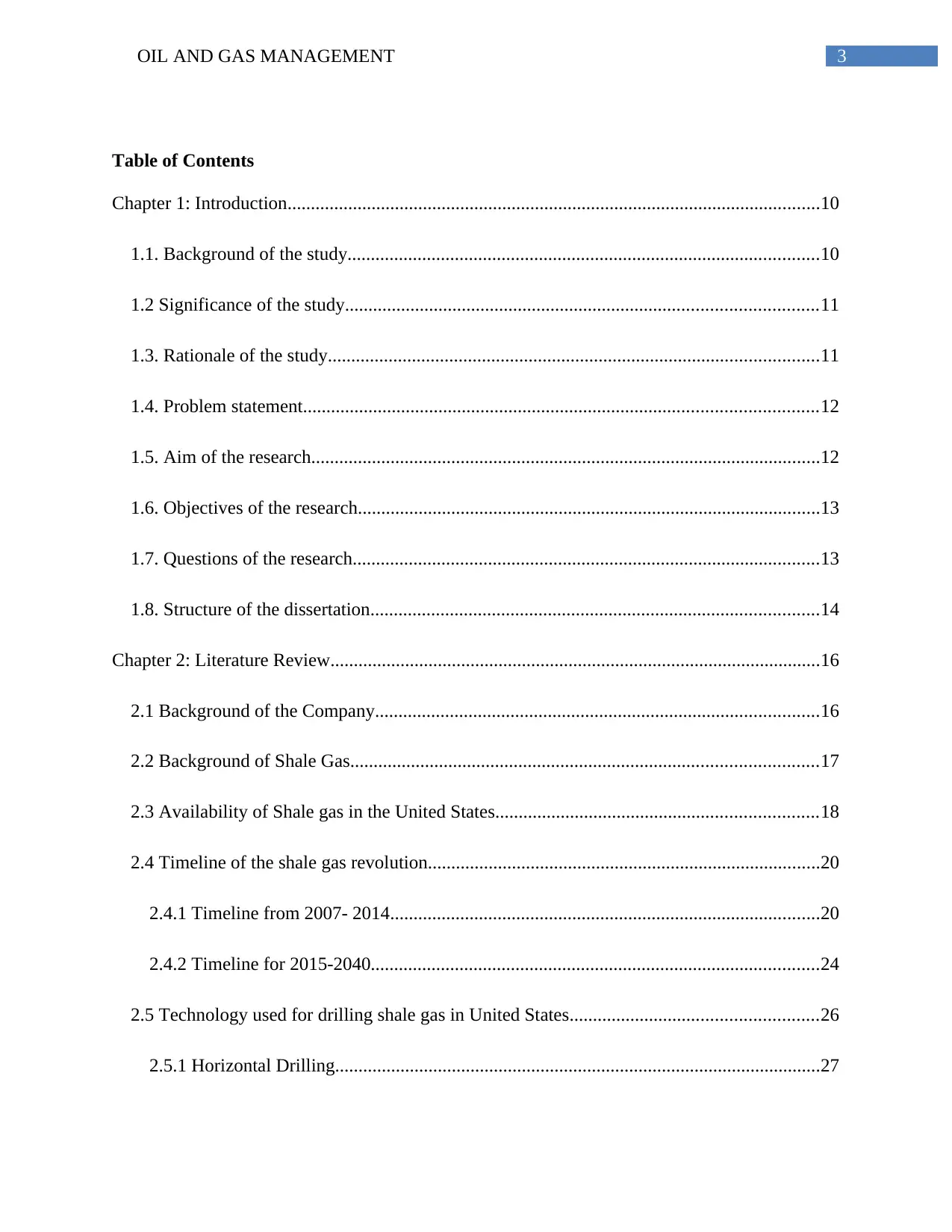
Chapter 1: Introduction..................................................................................................................10
1.1. Background of the study.....................................................................................................10
1.2 Significance of the study.....................................................................................................11
1.3. Rationale of the study.........................................................................................................11
1.4. Problem statement..............................................................................................................12
1.5. Aim of the research.............................................................................................................12
1.6. Objectives of the research...................................................................................................13
1.7. Questions of the research....................................................................................................13
1.8. Structure of the dissertation................................................................................................14
Chapter 2: Literature Review.........................................................................................................16
2.1 Background of the Company...............................................................................................16
2.2 Background of Shale Gas....................................................................................................17
2.3 Availability of Shale gas in the United States.....................................................................18
2.4 Timeline of the shale gas revolution....................................................................................20
2.4.1 Timeline from 2007- 2014............................................................................................20
2.4.2 Timeline for 2015-2040................................................................................................24
2.5 Technology used for drilling shale gas in United States.....................................................26
2.5.1 Horizontal Drilling........................................................................................................27
Table of Contents
Chapter 1: Introduction..................................................................................................................10
1.1. Background of the study.....................................................................................................10
1.2 Significance of the study.....................................................................................................11
1.3. Rationale of the study.........................................................................................................11
1.4. Problem statement..............................................................................................................12
1.5. Aim of the research.............................................................................................................12
1.6. Objectives of the research...................................................................................................13
1.7. Questions of the research....................................................................................................13
1.8. Structure of the dissertation................................................................................................14
Chapter 2: Literature Review.........................................................................................................16
2.1 Background of the Company...............................................................................................16
2.2 Background of Shale Gas....................................................................................................17
2.3 Availability of Shale gas in the United States.....................................................................18
2.4 Timeline of the shale gas revolution....................................................................................20
2.4.1 Timeline from 2007- 2014............................................................................................20
2.4.2 Timeline for 2015-2040................................................................................................24
2.5 Technology used for drilling shale gas in United States.....................................................26
2.5.1 Horizontal Drilling........................................................................................................27
Paraphrase This Document
Need a fresh take? Get an instant paraphrase of this document with our AI Paraphraser
4OIL AND GAS MANAGEMENT
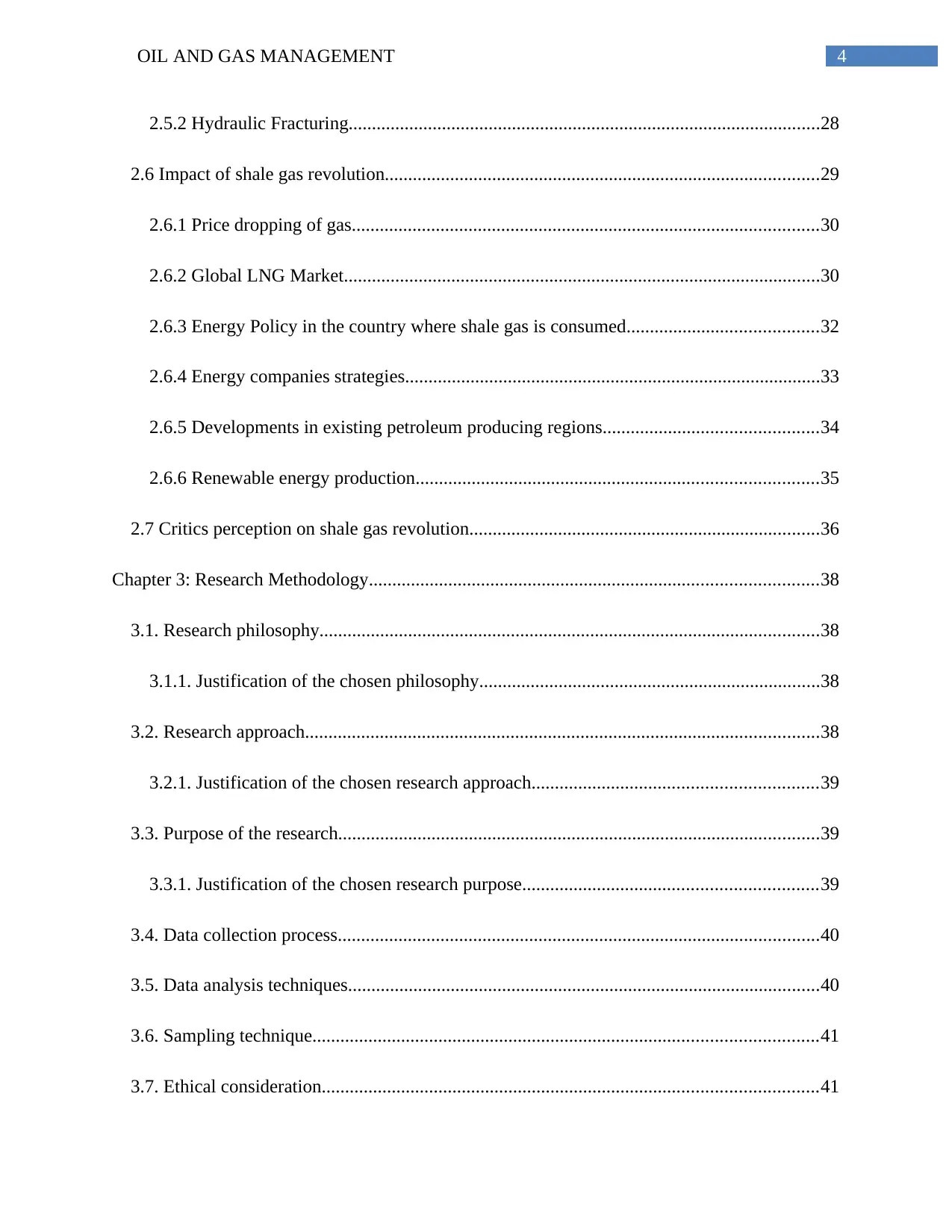
2.5.2 Hydraulic Fracturing.....................................................................................................28
2.6 Impact of shale gas revolution.............................................................................................29
2.6.1 Price dropping of gas....................................................................................................30
2.6.2 Global LNG Market......................................................................................................30
2.6.3 Energy Policy in the country where shale gas is consumed.........................................32
2.6.4 Energy companies strategies.........................................................................................33
2.6.5 Developments in existing petroleum producing regions..............................................34
2.6.6 Renewable energy production......................................................................................35
2.7 Critics perception on shale gas revolution...........................................................................36
Chapter 3: Research Methodology................................................................................................38
3.1. Research philosophy...........................................................................................................38
3.1.1. Justification of the chosen philosophy.........................................................................38
3.2. Research approach..............................................................................................................38
3.2.1. Justification of the chosen research approach.............................................................39
3.3. Purpose of the research.......................................................................................................39
3.3.1. Justification of the chosen research purpose...............................................................39
3.4. Data collection process.......................................................................................................40
3.5. Data analysis techniques.....................................................................................................40
3.6. Sampling technique............................................................................................................41
3.7. Ethical consideration..........................................................................................................41
2.5.2 Hydraulic Fracturing.....................................................................................................28
2.6 Impact of shale gas revolution.............................................................................................29
2.6.1 Price dropping of gas....................................................................................................30
2.6.2 Global LNG Market......................................................................................................30
2.6.3 Energy Policy in the country where shale gas is consumed.........................................32
2.6.4 Energy companies strategies.........................................................................................33
2.6.5 Developments in existing petroleum producing regions..............................................34
2.6.6 Renewable energy production......................................................................................35
2.7 Critics perception on shale gas revolution...........................................................................36
Chapter 3: Research Methodology................................................................................................38
3.1. Research philosophy...........................................................................................................38
3.1.1. Justification of the chosen philosophy.........................................................................38
3.2. Research approach..............................................................................................................38
3.2.1. Justification of the chosen research approach.............................................................39
3.3. Purpose of the research.......................................................................................................39
3.3.1. Justification of the chosen research purpose...............................................................39
3.4. Data collection process.......................................................................................................40
3.5. Data analysis techniques.....................................................................................................40
3.6. Sampling technique............................................................................................................41
3.7. Ethical consideration..........................................................................................................41
5OIL AND GAS MANAGEMENT
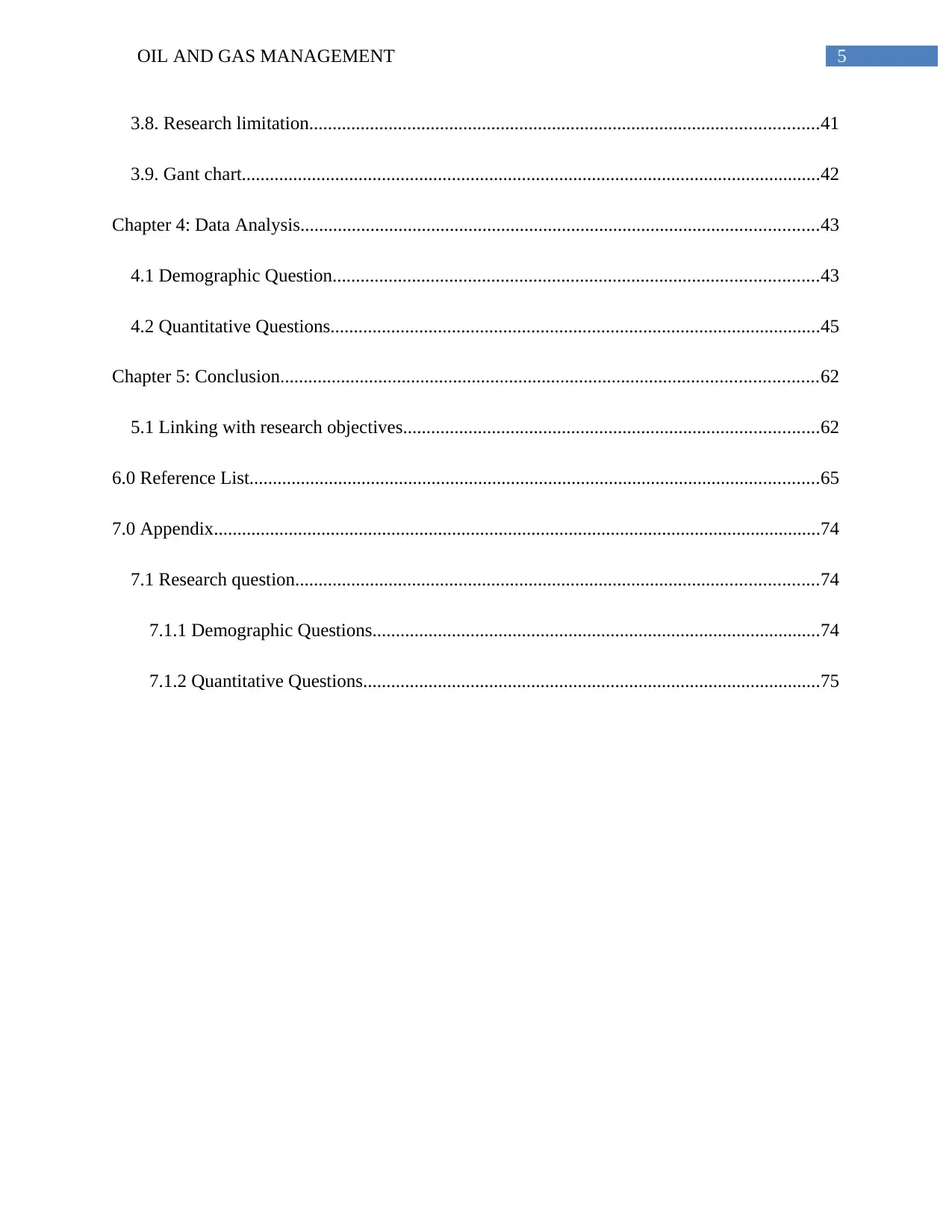
3.8. Research limitation.............................................................................................................41
3.9. Gant chart............................................................................................................................42
Chapter 4: Data Analysis...............................................................................................................43
4.1 Demographic Question........................................................................................................43
4.2 Quantitative Questions.........................................................................................................45
Chapter 5: Conclusion...................................................................................................................62
5.1 Linking with research objectives.........................................................................................62
6.0 Reference List..........................................................................................................................65
7.0 Appendix..................................................................................................................................74
7.1 Research question................................................................................................................74
7.1.1 Demographic Questions................................................................................................74
7.1.2 Quantitative Questions..................................................................................................75
3.8. Research limitation.............................................................................................................41
3.9. Gant chart............................................................................................................................42
Chapter 4: Data Analysis...............................................................................................................43
4.1 Demographic Question........................................................................................................43
4.2 Quantitative Questions.........................................................................................................45
Chapter 5: Conclusion...................................................................................................................62
5.1 Linking with research objectives.........................................................................................62
6.0 Reference List..........................................................................................................................65
7.0 Appendix..................................................................................................................................74
7.1 Research question................................................................................................................74
7.1.1 Demographic Questions................................................................................................74
7.1.2 Quantitative Questions..................................................................................................75
⊘ This is a preview!⊘
Do you want full access?
Subscribe today to unlock all pages.
Trusted by 1+ million students worldwide
6OIL AND GAS MANAGEMENT
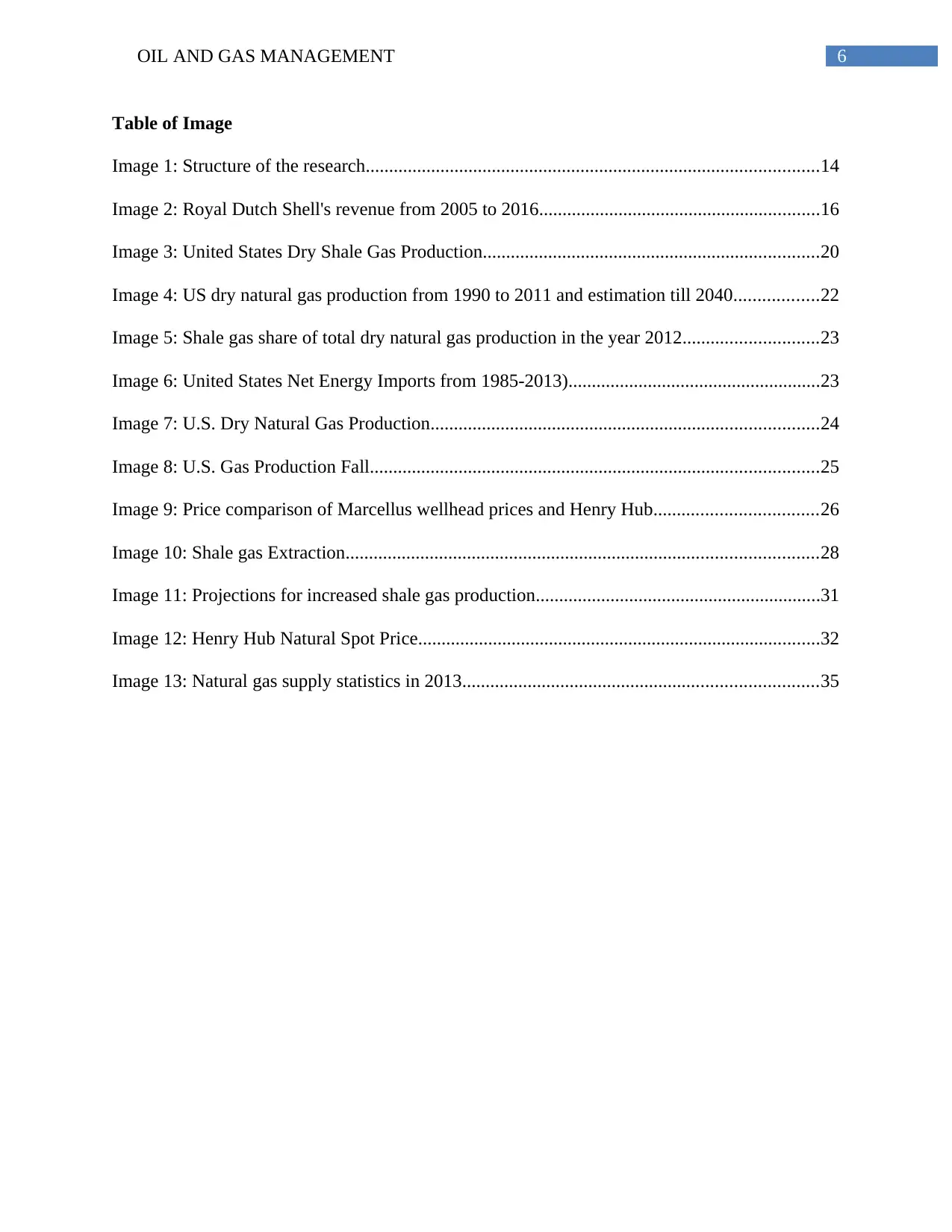
Table of Image
Image 1: Structure of the research.................................................................................................14
Image 2: Royal Dutch Shell's revenue from 2005 to 2016............................................................16
Image 3: United States Dry Shale Gas Production........................................................................20
Image 4: US dry natural gas production from 1990 to 2011 and estimation till 2040..................22
Image 5: Shale gas share of total dry natural gas production in the year 2012.............................23
Image 6: United States Net Energy Imports from 1985-2013)......................................................23
Image 7: U.S. Dry Natural Gas Production...................................................................................24
Image 8: U.S. Gas Production Fall................................................................................................25
Image 9: Price comparison of Marcellus wellhead prices and Henry Hub...................................26
Image 10: Shale gas Extraction.....................................................................................................28
Image 11: Projections for increased shale gas production.............................................................31
Image 12: Henry Hub Natural Spot Price......................................................................................32
Image 13: Natural gas supply statistics in 2013............................................................................35
Table of Image
Image 1: Structure of the research.................................................................................................14
Image 2: Royal Dutch Shell's revenue from 2005 to 2016............................................................16
Image 3: United States Dry Shale Gas Production........................................................................20
Image 4: US dry natural gas production from 1990 to 2011 and estimation till 2040..................22
Image 5: Shale gas share of total dry natural gas production in the year 2012.............................23
Image 6: United States Net Energy Imports from 1985-2013)......................................................23
Image 7: U.S. Dry Natural Gas Production...................................................................................24
Image 8: U.S. Gas Production Fall................................................................................................25
Image 9: Price comparison of Marcellus wellhead prices and Henry Hub...................................26
Image 10: Shale gas Extraction.....................................................................................................28
Image 11: Projections for increased shale gas production.............................................................31
Image 12: Henry Hub Natural Spot Price......................................................................................32
Image 13: Natural gas supply statistics in 2013............................................................................35
Paraphrase This Document
Need a fresh take? Get an instant paraphrase of this document with our AI Paraphraser
7OIL AND GAS MANAGEMENT
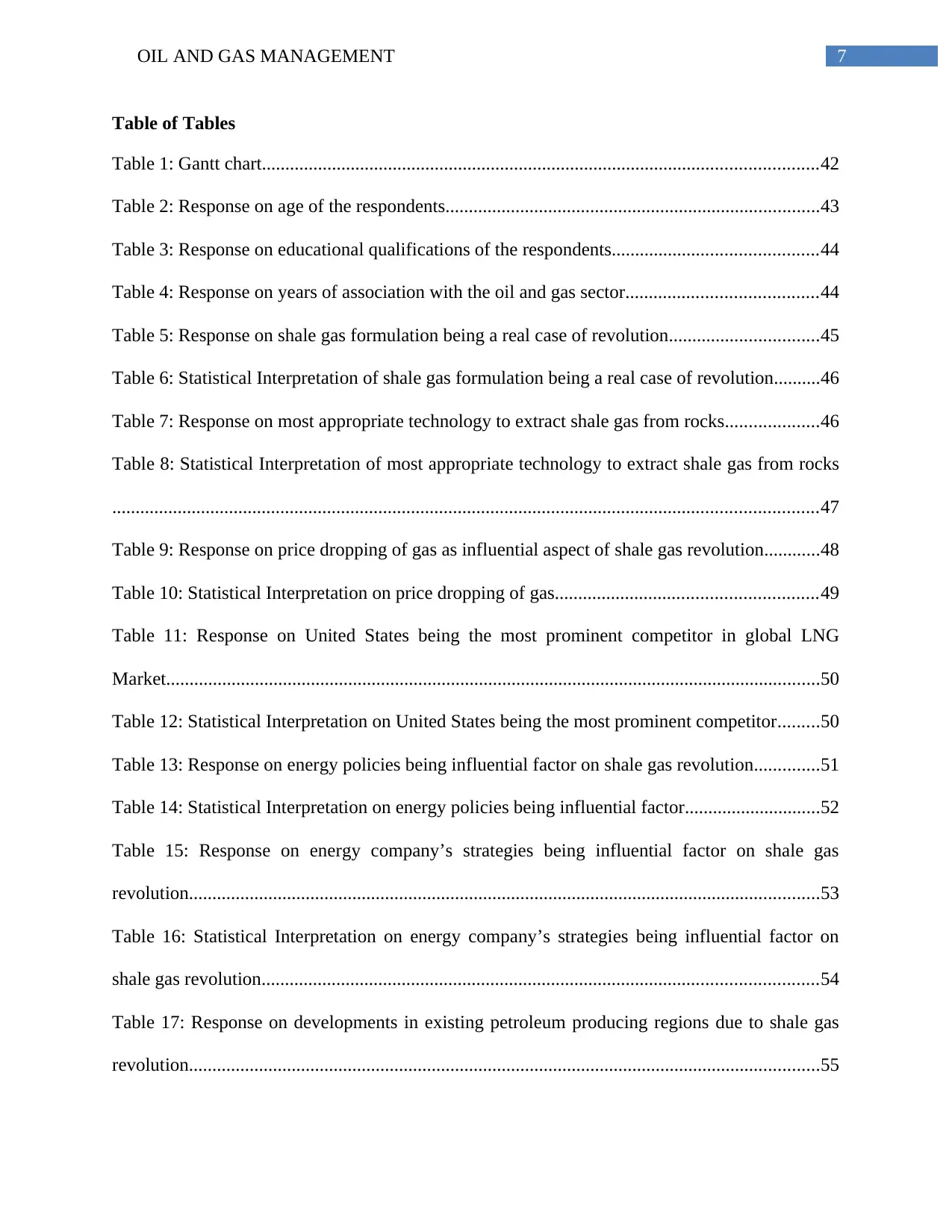
Table of Tables
Table 1: Gantt chart.......................................................................................................................42
Table 2: Response on age of the respondents................................................................................43
Table 3: Response on educational qualifications of the respondents............................................44
Table 4: Response on years of association with the oil and gas sector.........................................44
Table 5: Response on shale gas formulation being a real case of revolution................................45
Table 6: Statistical Interpretation of shale gas formulation being a real case of revolution..........46
Table 7: Response on most appropriate technology to extract shale gas from rocks....................46
Table 8: Statistical Interpretation of most appropriate technology to extract shale gas from rocks
.......................................................................................................................................................47
Table 9: Response on price dropping of gas as influential aspect of shale gas revolution............48
Table 10: Statistical Interpretation on price dropping of gas........................................................49
Table 11: Response on United States being the most prominent competitor in global LNG
Market............................................................................................................................................50
Table 12: Statistical Interpretation on United States being the most prominent competitor.........50
Table 13: Response on energy policies being influential factor on shale gas revolution..............51
Table 14: Statistical Interpretation on energy policies being influential factor.............................52
Table 15: Response on energy company’s strategies being influential factor on shale gas
revolution.......................................................................................................................................53
Table 16: Statistical Interpretation on energy company’s strategies being influential factor on
shale gas revolution.......................................................................................................................54
Table 17: Response on developments in existing petroleum producing regions due to shale gas
revolution.......................................................................................................................................55
Table of Tables
Table 1: Gantt chart.......................................................................................................................42
Table 2: Response on age of the respondents................................................................................43
Table 3: Response on educational qualifications of the respondents............................................44
Table 4: Response on years of association with the oil and gas sector.........................................44
Table 5: Response on shale gas formulation being a real case of revolution................................45
Table 6: Statistical Interpretation of shale gas formulation being a real case of revolution..........46
Table 7: Response on most appropriate technology to extract shale gas from rocks....................46
Table 8: Statistical Interpretation of most appropriate technology to extract shale gas from rocks
.......................................................................................................................................................47
Table 9: Response on price dropping of gas as influential aspect of shale gas revolution............48
Table 10: Statistical Interpretation on price dropping of gas........................................................49
Table 11: Response on United States being the most prominent competitor in global LNG
Market............................................................................................................................................50
Table 12: Statistical Interpretation on United States being the most prominent competitor.........50
Table 13: Response on energy policies being influential factor on shale gas revolution..............51
Table 14: Statistical Interpretation on energy policies being influential factor.............................52
Table 15: Response on energy company’s strategies being influential factor on shale gas
revolution.......................................................................................................................................53
Table 16: Statistical Interpretation on energy company’s strategies being influential factor on
shale gas revolution.......................................................................................................................54
Table 17: Response on developments in existing petroleum producing regions due to shale gas
revolution.......................................................................................................................................55
8OIL AND GAS MANAGEMENT
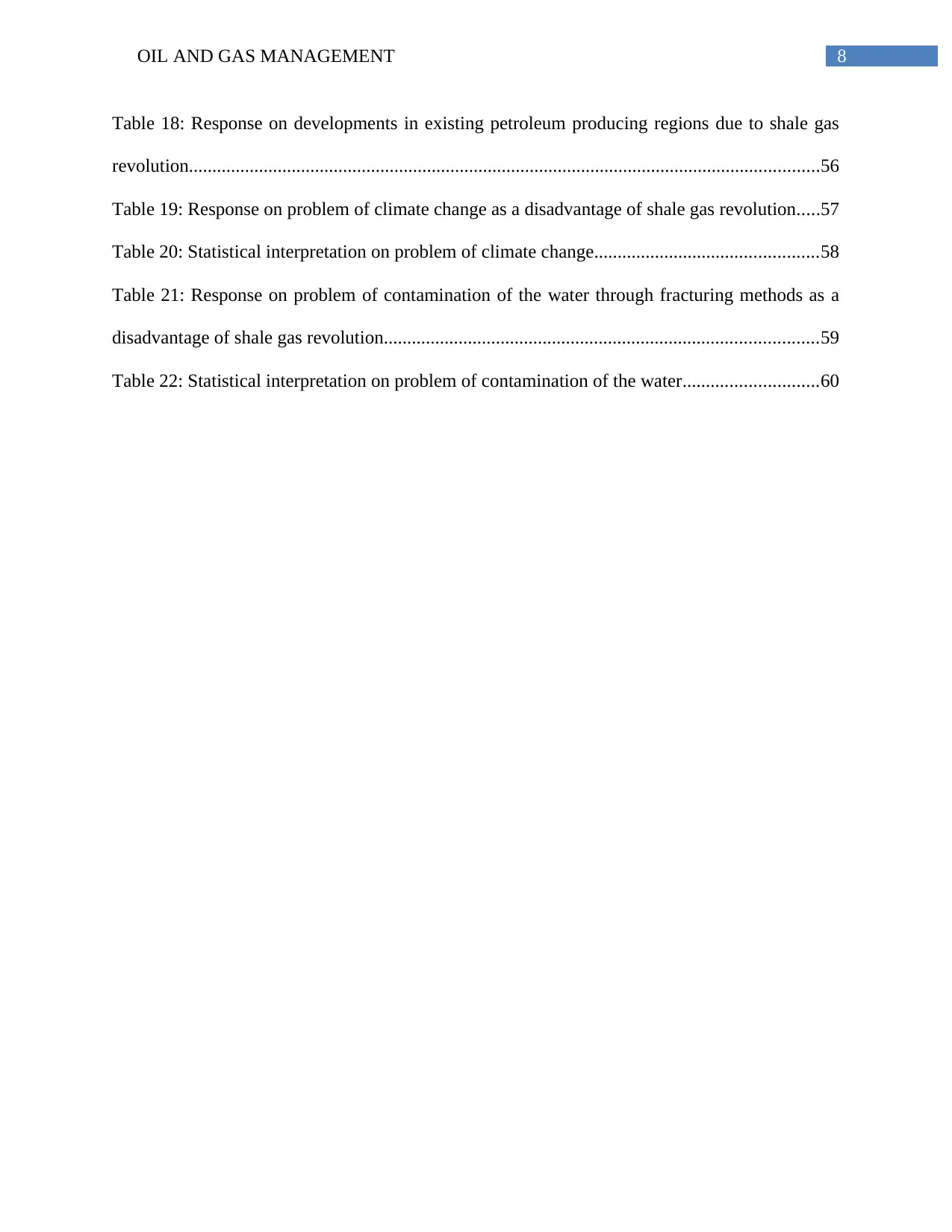
Table 18: Response on developments in existing petroleum producing regions due to shale gas
revolution.......................................................................................................................................56
Table 19: Response on problem of climate change as a disadvantage of shale gas revolution.....57
Table 20: Statistical interpretation on problem of climate change................................................58
Table 21: Response on problem of contamination of the water through fracturing methods as a
disadvantage of shale gas revolution.............................................................................................59
Table 22: Statistical interpretation on problem of contamination of the water.............................60
Table 18: Response on developments in existing petroleum producing regions due to shale gas
revolution.......................................................................................................................................56
Table 19: Response on problem of climate change as a disadvantage of shale gas revolution.....57
Table 20: Statistical interpretation on problem of climate change................................................58
Table 21: Response on problem of contamination of the water through fracturing methods as a
disadvantage of shale gas revolution.............................................................................................59
Table 22: Statistical interpretation on problem of contamination of the water.............................60
⊘ This is a preview!⊘
Do you want full access?
Subscribe today to unlock all pages.
Trusted by 1+ million students worldwide
9OIL AND GAS MANAGEMENT
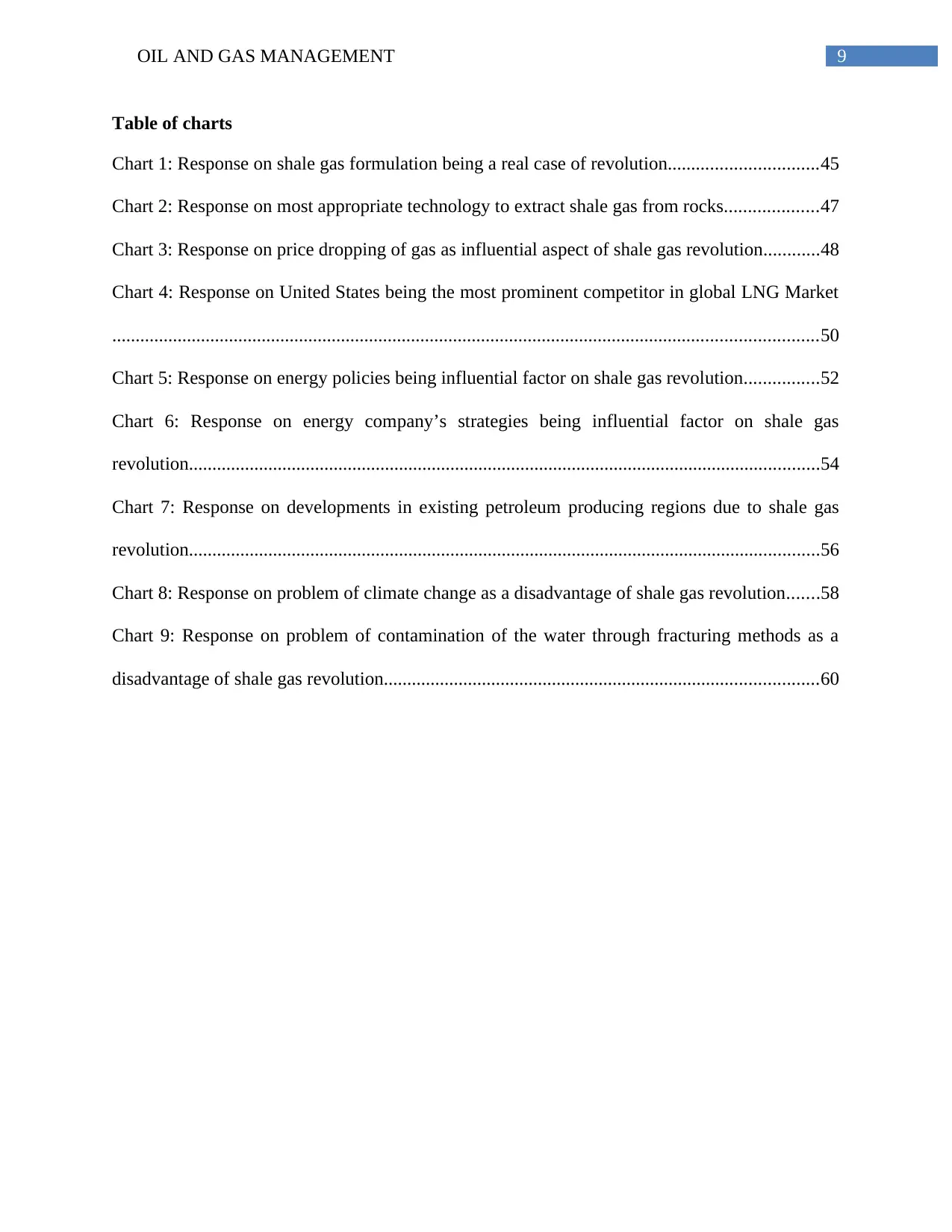
Table of charts
Chart 1: Response on shale gas formulation being a real case of revolution................................45
Chart 2: Response on most appropriate technology to extract shale gas from rocks....................47
Chart 3: Response on price dropping of gas as influential aspect of shale gas revolution............48
Chart 4: Response on United States being the most prominent competitor in global LNG Market
.......................................................................................................................................................50
Chart 5: Response on energy policies being influential factor on shale gas revolution................52
Chart 6: Response on energy company’s strategies being influential factor on shale gas
revolution.......................................................................................................................................54
Chart 7: Response on developments in existing petroleum producing regions due to shale gas
revolution.......................................................................................................................................56
Chart 8: Response on problem of climate change as a disadvantage of shale gas revolution.......58
Chart 9: Response on problem of contamination of the water through fracturing methods as a
disadvantage of shale gas revolution.............................................................................................60
Table of charts
Chart 1: Response on shale gas formulation being a real case of revolution................................45
Chart 2: Response on most appropriate technology to extract shale gas from rocks....................47
Chart 3: Response on price dropping of gas as influential aspect of shale gas revolution............48
Chart 4: Response on United States being the most prominent competitor in global LNG Market
.......................................................................................................................................................50
Chart 5: Response on energy policies being influential factor on shale gas revolution................52
Chart 6: Response on energy company’s strategies being influential factor on shale gas
revolution.......................................................................................................................................54
Chart 7: Response on developments in existing petroleum producing regions due to shale gas
revolution.......................................................................................................................................56
Chart 8: Response on problem of climate change as a disadvantage of shale gas revolution.......58
Chart 9: Response on problem of contamination of the water through fracturing methods as a
disadvantage of shale gas revolution.............................................................................................60
Paraphrase This Document
Need a fresh take? Get an instant paraphrase of this document with our AI Paraphraser
10OIL AND GAS MANAGEMENT
Chapter 1: Introduction
1.1. Background of the study
Hughes (2013) portray that revolution is important for bringing change and improvement
in the existing improvement. The prime reason for revolution is to formulate ideas that bring ease
and effectiveness in the process. One of the most crucial things in this world is energy source
based on which human get electricity for residential, commercial, transportation, and industrial
sectors. One such industry liable for providing this source is oil and gas industry. In 18th
century, muscular and biomass sources mainly firewood are the only source of energy (Murray
and Hansen 2013). On the other hand, in the mid 19th century, usage of coal brought a major
shift in energy sources and is mainly use for power plants. The discovery of oil brings revolution
in the early 20th century which was used for of oil-powered ships and internal combustion
engines (Stevens 2012). However, in the late 20th century, petroleum products are mainly used
as energy sources. However, in the 21st century, coal and oil brings the major shifts in energy
sources (Kilian 2016). The process of converting these energy sources also changes during this
revolution that result in extraction of more resources in lesser time with low risks of oil spillage.
In addition to that, the shale oil revolution is the main reason due to which the evolution of U.S.
crude oil and gasoline prices are also shaped (Materka 2012). After revolution it put a significant
impact on the historical perspective and it is estimated that the United States can be the next
Saudi Arabia in terms of oil and gas production. This research will explain the shale gas
revolution which is unlikely compared to shale oil revolution and become the reason of U.S.
boom in gas industries along with the implication of the gas revolution for the U.S. economy.
Chapter 1: Introduction
1.1. Background of the study
Hughes (2013) portray that revolution is important for bringing change and improvement
in the existing improvement. The prime reason for revolution is to formulate ideas that bring ease
and effectiveness in the process. One of the most crucial things in this world is energy source
based on which human get electricity for residential, commercial, transportation, and industrial
sectors. One such industry liable for providing this source is oil and gas industry. In 18th
century, muscular and biomass sources mainly firewood are the only source of energy (Murray
and Hansen 2013). On the other hand, in the mid 19th century, usage of coal brought a major
shift in energy sources and is mainly use for power plants. The discovery of oil brings revolution
in the early 20th century which was used for of oil-powered ships and internal combustion
engines (Stevens 2012). However, in the late 20th century, petroleum products are mainly used
as energy sources. However, in the 21st century, coal and oil brings the major shifts in energy
sources (Kilian 2016). The process of converting these energy sources also changes during this
revolution that result in extraction of more resources in lesser time with low risks of oil spillage.
In addition to that, the shale oil revolution is the main reason due to which the evolution of U.S.
crude oil and gasoline prices are also shaped (Materka 2012). After revolution it put a significant
impact on the historical perspective and it is estimated that the United States can be the next
Saudi Arabia in terms of oil and gas production. This research will explain the shale gas
revolution which is unlikely compared to shale oil revolution and become the reason of U.S.
boom in gas industries along with the implication of the gas revolution for the U.S. economy.
11OIL AND GAS MANAGEMENT
1.2 Significance of the study
There are many research papers on oil and gas energy sector and it highlight the issue of
oil spillage, the process of oil extraction or the approach used for identifying the oil reservoirs.
However, research on the revolution of any such sector in terms of innovation or oil production
technology is not found in such papers. The significance of the study is that it highlight on the
revolution of the shale gas revolution in the United States of America from 2007 – 2017. The
terms ‘shale gas revolution’ highlight the approaches related to the domestic gas supply. The
supply of the gas is defined for the United States. The discovery of the presence of the gas was
found from stratigraphical traps by the boundary of gas and water in the discrete fields or pools
present in the discrete fields or pools. The organization also adapts technology for making the
distinction of the existing more or less independently water columns through drilling system of
the conventional gas. Gas flow is also made through the same well for a huge quantity which is
also known as commercial quantity. This research thus explains the process that is used for
obtaining the unconventional gas and then transfer is to a usable form so that it can be used
properly. The study also highlights the impact of the shale gas evolution which is not present in
the compact form in research study developed by other research scholar.
1.3. Rationale of the study
Research papers earlier developed in oil and gas industry is majorly focused on oil
exploration and revolution. However, research papers with the details of gas revolution are not
found properly. The major fact that is considered in energy sector research paper is the process
how gas is getting extracted or the technology used to do such process. However the revolution
in technology used for oil extracted is never been highlighted. Shale had utilized two major
technologies for extracting gas from the surface of the earth. These technologies are the reason
1.2 Significance of the study
There are many research papers on oil and gas energy sector and it highlight the issue of
oil spillage, the process of oil extraction or the approach used for identifying the oil reservoirs.
However, research on the revolution of any such sector in terms of innovation or oil production
technology is not found in such papers. The significance of the study is that it highlight on the
revolution of the shale gas revolution in the United States of America from 2007 – 2017. The
terms ‘shale gas revolution’ highlight the approaches related to the domestic gas supply. The
supply of the gas is defined for the United States. The discovery of the presence of the gas was
found from stratigraphical traps by the boundary of gas and water in the discrete fields or pools
present in the discrete fields or pools. The organization also adapts technology for making the
distinction of the existing more or less independently water columns through drilling system of
the conventional gas. Gas flow is also made through the same well for a huge quantity which is
also known as commercial quantity. This research thus explains the process that is used for
obtaining the unconventional gas and then transfer is to a usable form so that it can be used
properly. The study also highlights the impact of the shale gas evolution which is not present in
the compact form in research study developed by other research scholar.
1.3. Rationale of the study
Research papers earlier developed in oil and gas industry is majorly focused on oil
exploration and revolution. However, research papers with the details of gas revolution are not
found properly. The major fact that is considered in energy sector research paper is the process
how gas is getting extracted or the technology used to do such process. However the revolution
in technology used for oil extracted is never been highlighted. Shale had utilized two major
technologies for extracting gas from the surface of the earth. These technologies are the reason
⊘ This is a preview!⊘
Do you want full access?
Subscribe today to unlock all pages.
Trusted by 1+ million students worldwide

1 out of 74


Related Documents


Your All-in-One AI-Powered Toolkit for Academic Success.
+13062052269
info@desklib.com
Available 24*7 on WhatsApp / Email
![[object Object]](/_next/static/media/star-bottom.7253800d.svg)
Unlock your academic potential
Copyright © 2020–2026 A2Z Services. All Rights Reserved. Developed and managed by ZUCOL.