SIT717 Enterprise Business Intelligence: Data Mining Presentation

Verified

Added on  2023/06/15

|8
|321
|265
Presentation
AI Summary
This presentation delves into various data mining approaches and the critical issue of reliability in knowledge discovery. It addresses questions such as the reliability of discovered knowledge and its effectiveness in reflecting regularities in transaction data. Key factors affecting reliability, including data quality (noise, incompleteness, and class imbalance), knowledge granularity, and the dynamic nature of information over time, are discussed. The presentation also touches upon methods for measuring reliability, such as repeating tests and assessing consistency across different test scores, along with association-based, clustering-based, and classification-based approaches. References to relevant studies are included, emphasizing the importance of dynamic knowledge discovery to ensure data reliability. Desklib provides access to similar presentations and study resources for students.

Document Page
Name:
Institutional Affiliation:
tabler-icon-diamond-filled.svg

Paraphrase This Document

Need a fresh take? Get an instant paraphrase of this document with our AI Paraphraser
Document Page
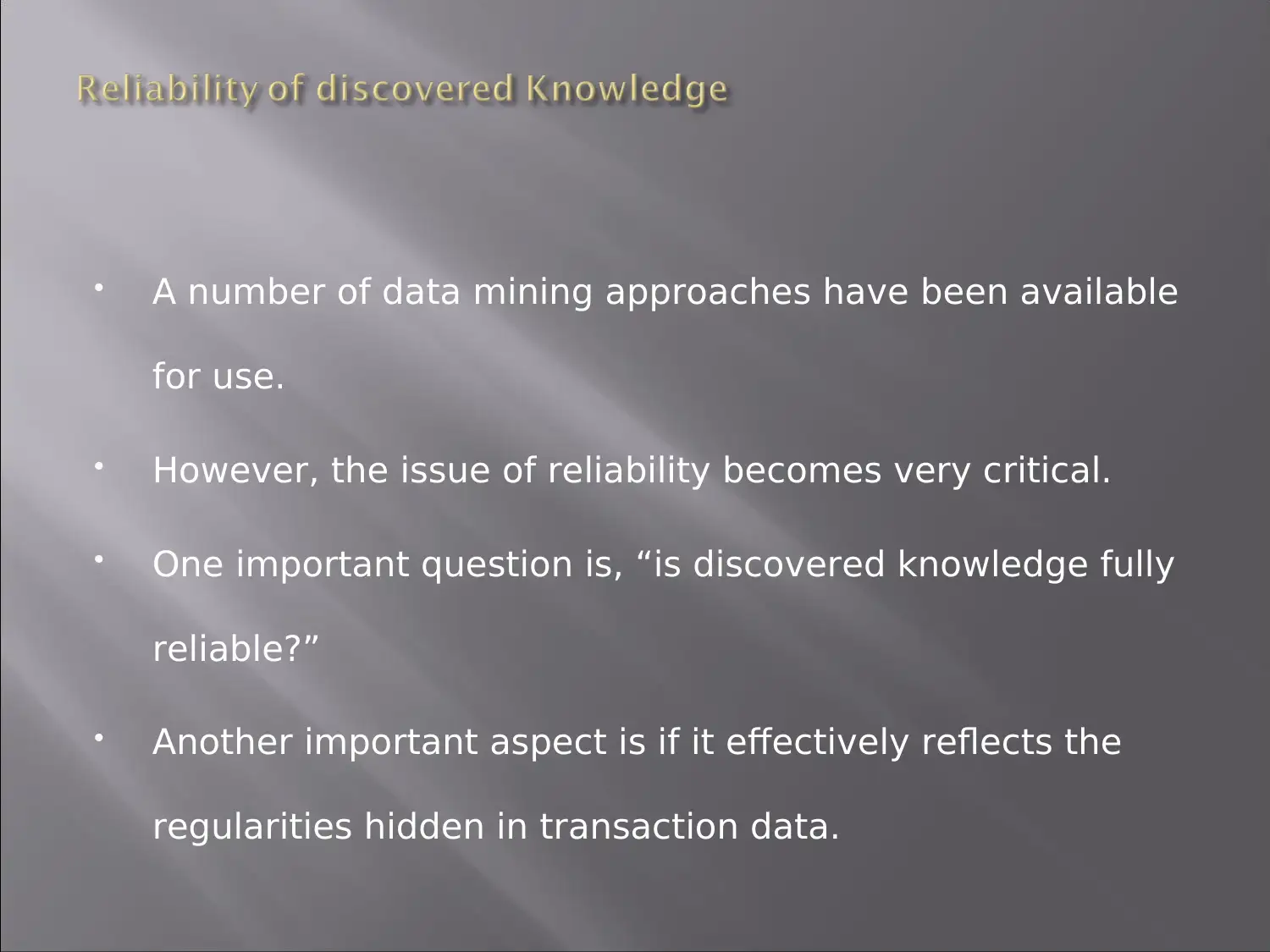
A number of data mining approaches have been available
for use.
However, the issue of reliability becomes very critical.
One important question is, “is discovered knowledge fully
reliable?”
Another important aspect is if it effectively reflects the
regularities hidden in transaction data.
Document Page
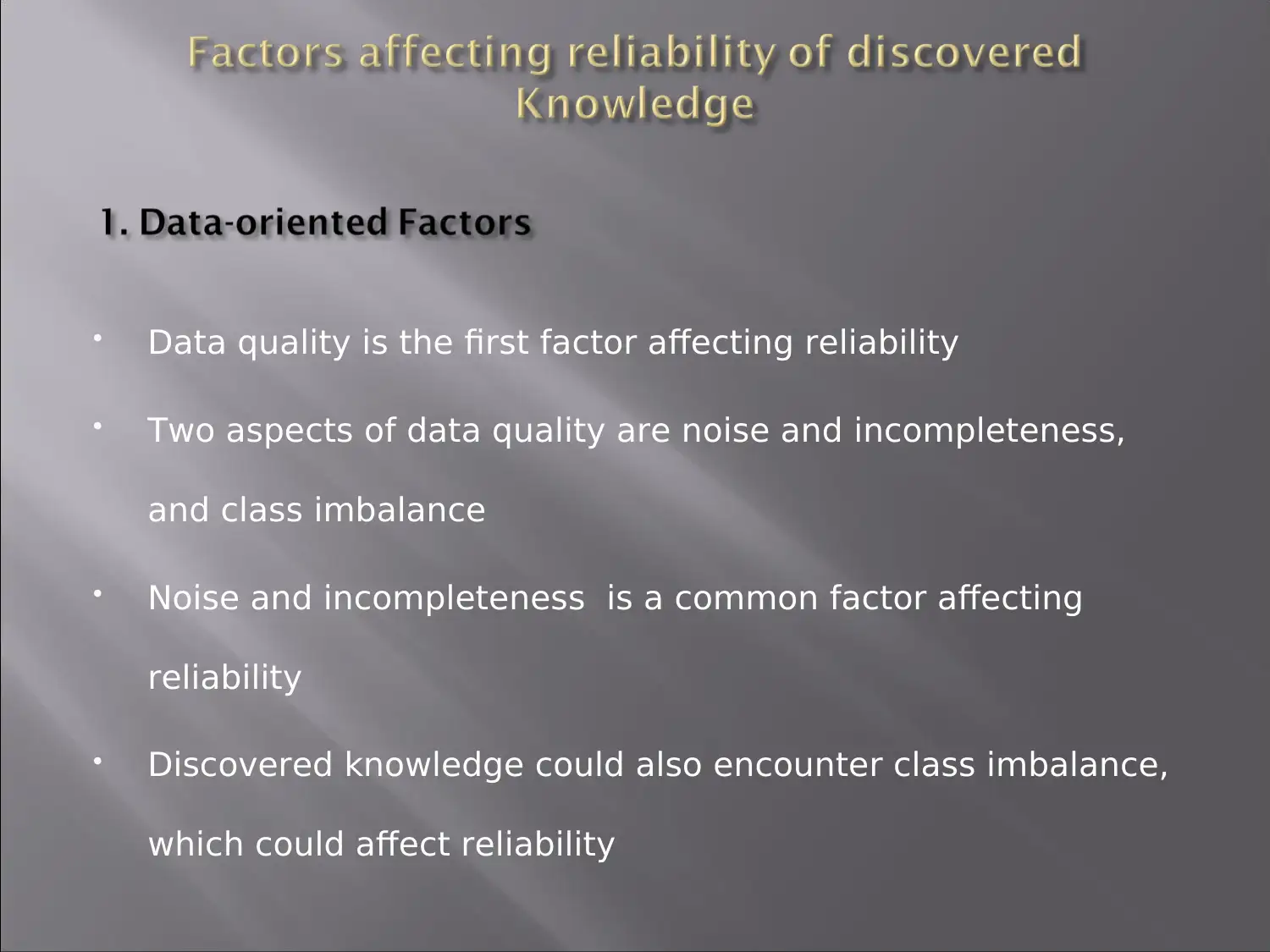
Data quality is the first factor affecting reliability
Two aspects of data quality are noise and incompleteness,
and class imbalance
Noise and incompleteness is a common factor affecting
reliability
Discovered knowledge could also encounter class imbalance,
which could affect reliability
Document Page
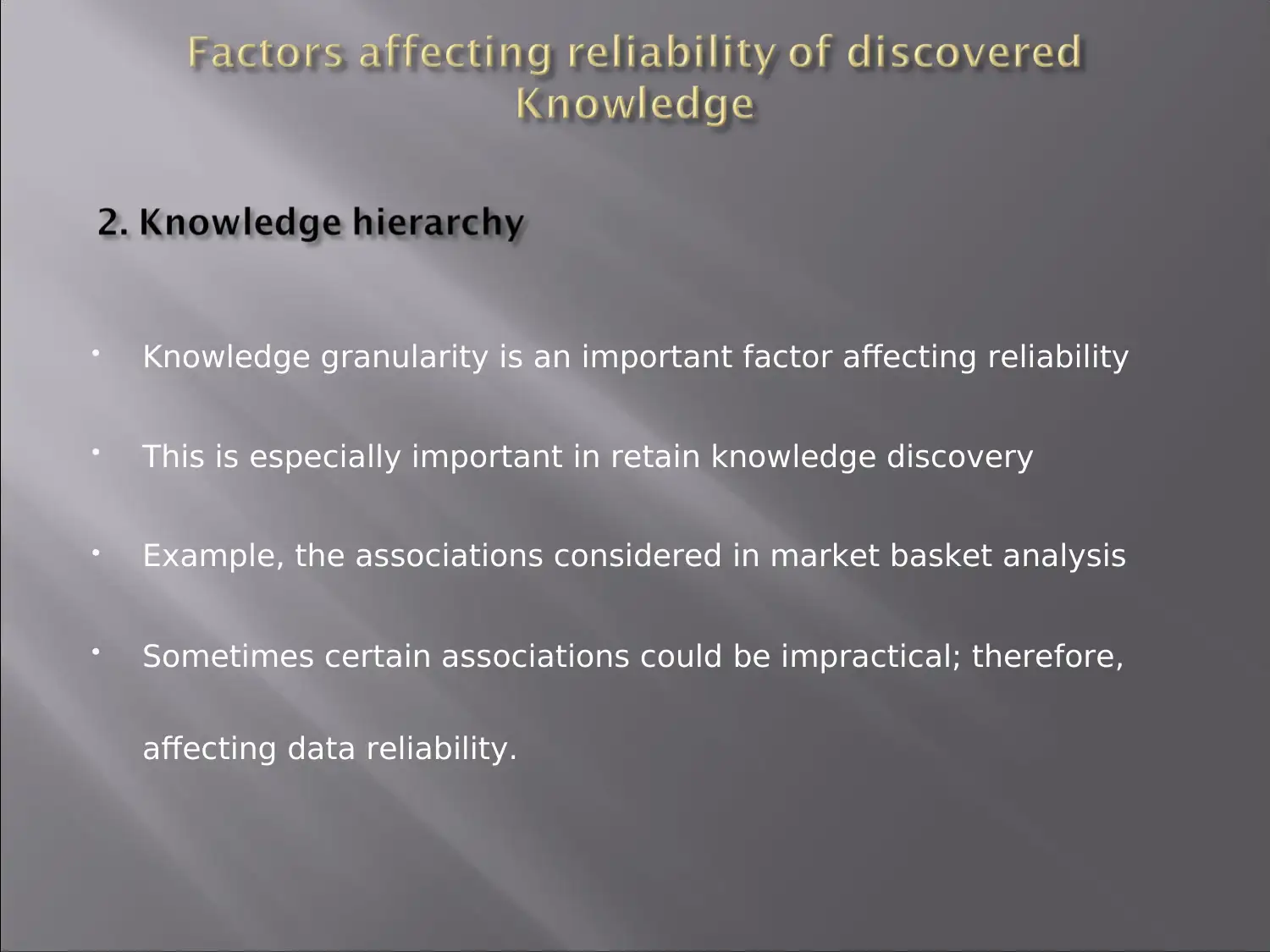
Knowledge granularity is an important factor affecting reliability
This is especially important in retain knowledge discovery
Example, the associations considered in market basket analysis
Sometimes certain associations could be impractical; therefore,
affecting data reliability.
tabler-icon-diamond-filled.svg

Paraphrase This Document

Need a fresh take? Get an instant paraphrase of this document with our AI Paraphraser
Document Page
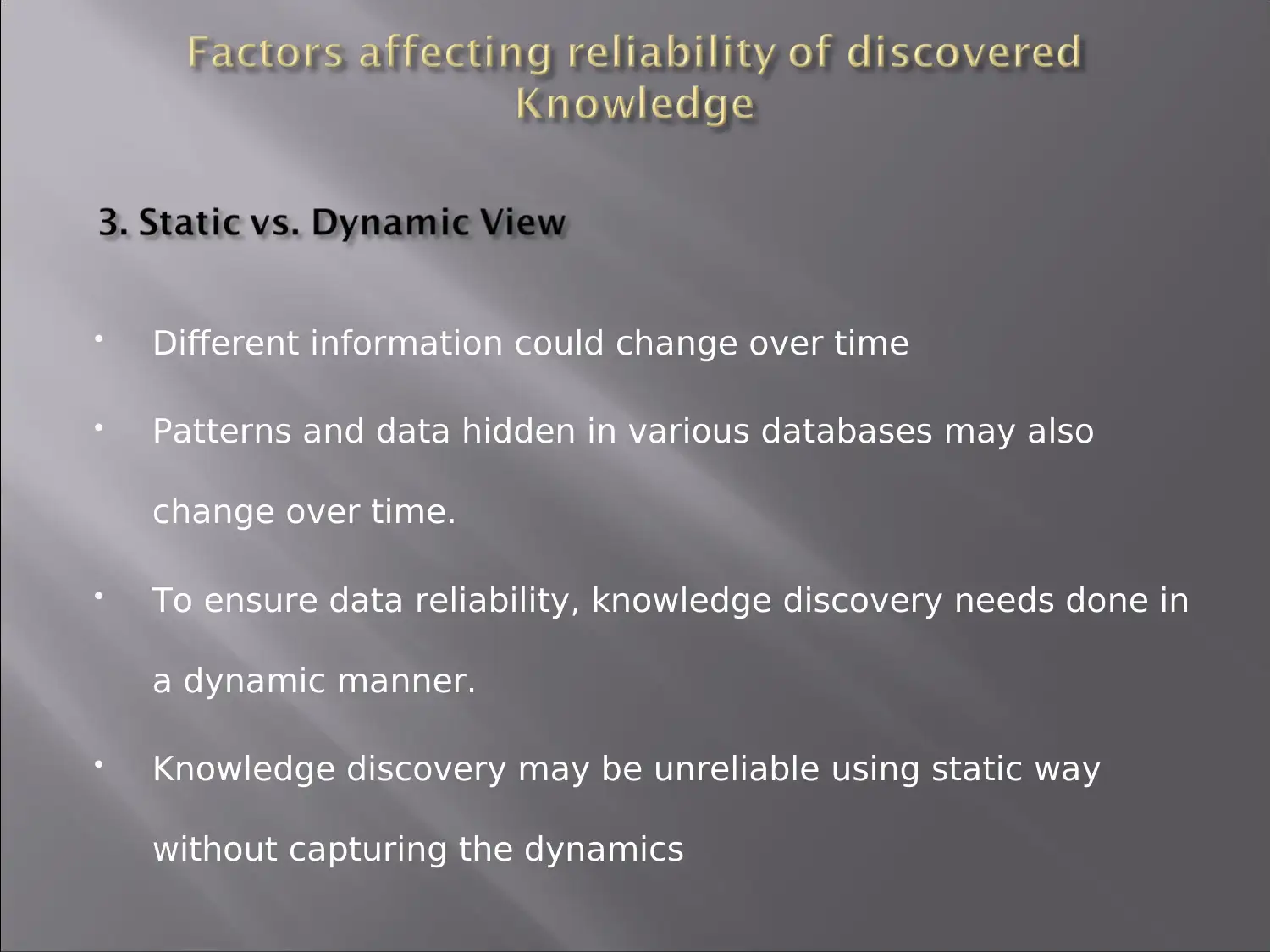
Different information could change over time
Patterns and data hidden in various databases may also
change over time.
To ensure data reliability, knowledge discovery needs done in
a dynamic manner.
Knowledge discovery may be unreliable using static way
without capturing the dynamics
Document Page
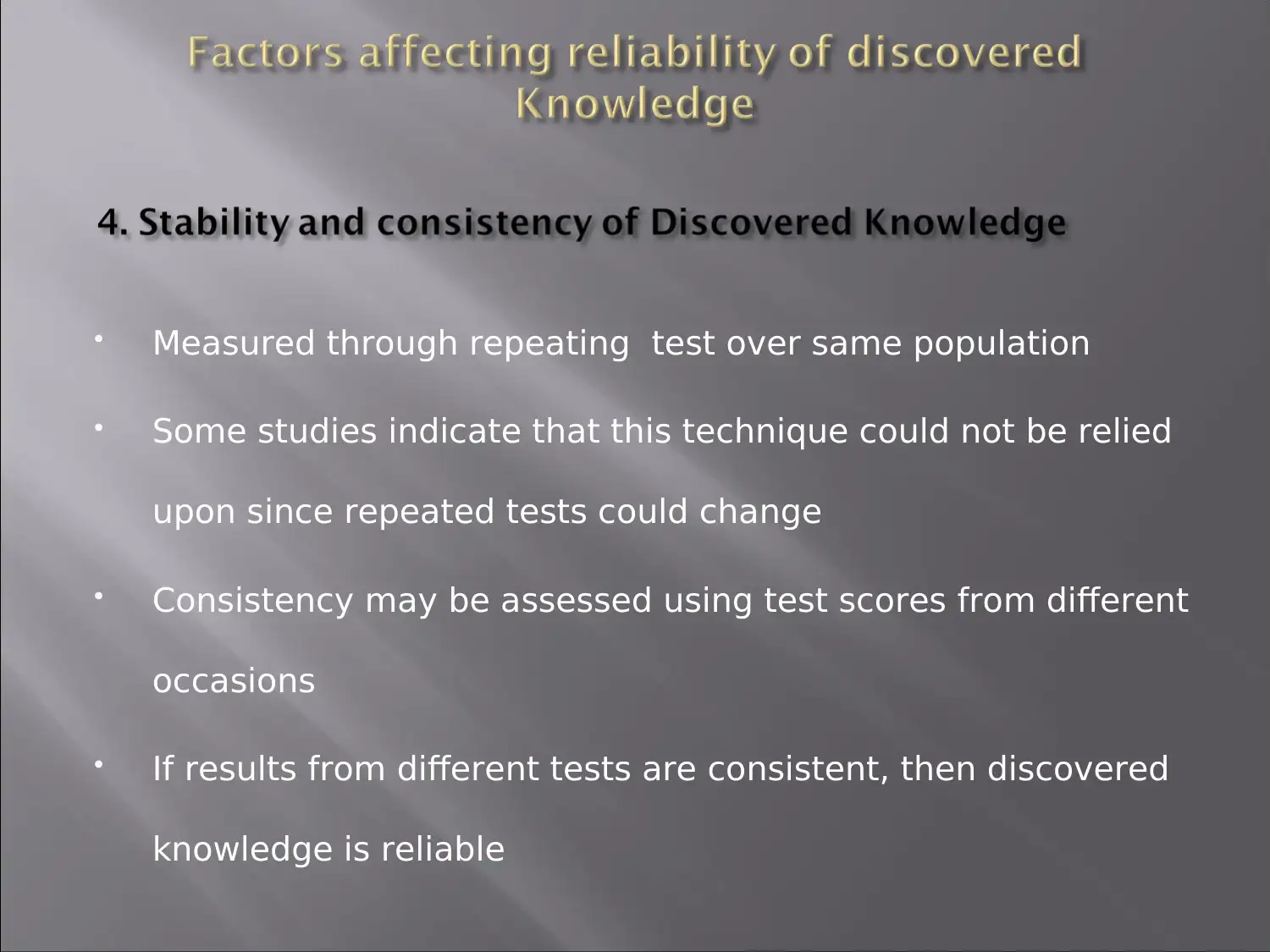
Measured through repeating test over same population
Some studies indicate that this technique could not be relied
upon since repeated tests could change
Consistency may be assessed using test scores from different
occasions
If results from different tests are consistent, then discovered
knowledge is reliable
Document Page
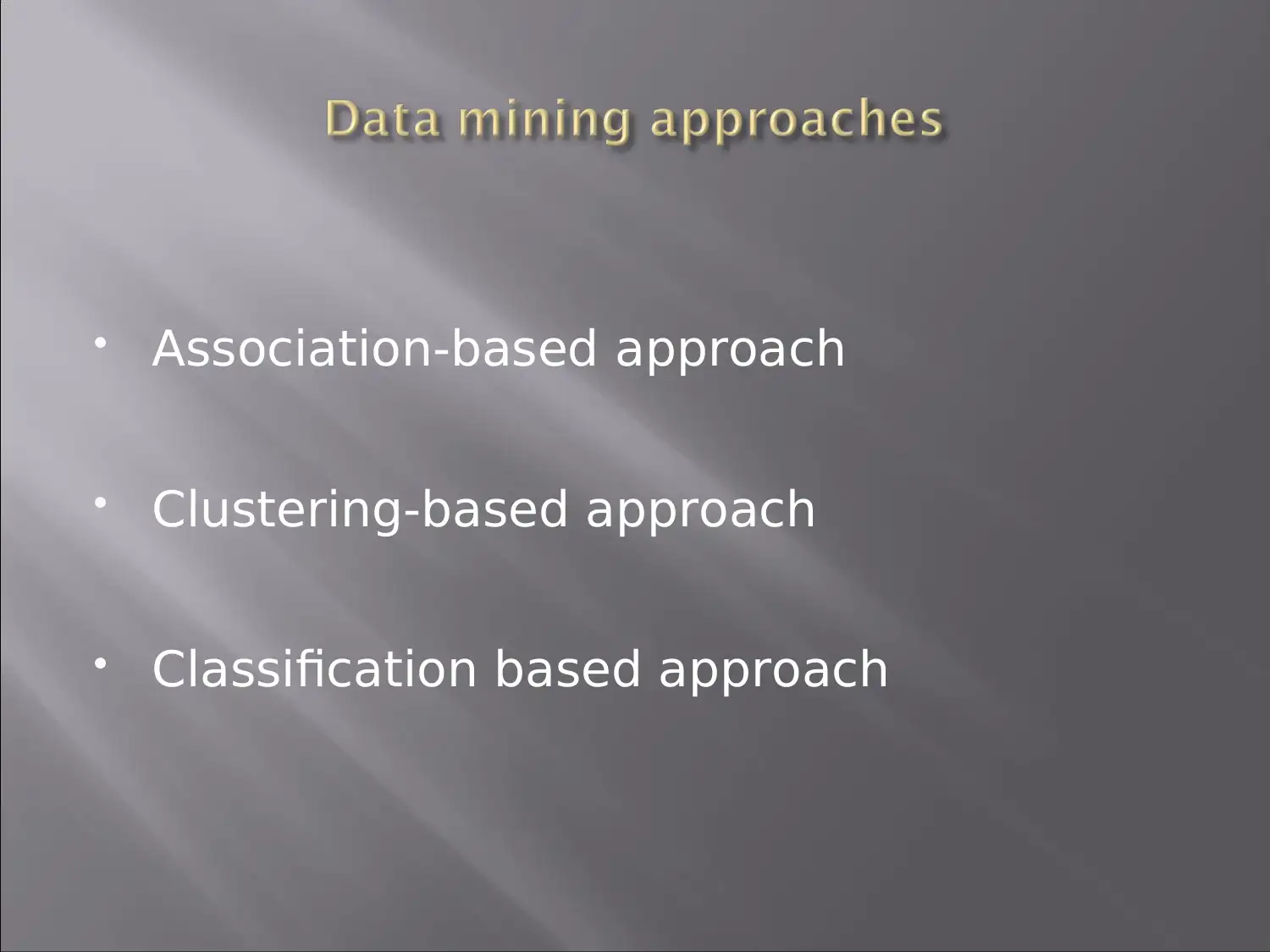
Association-based approach
Clustering-based approach
Classification based approach
tabler-icon-diamond-filled.svg

Paraphrase This Document

Need a fresh take? Get an instant paraphrase of this document with our AI Paraphraser
Document Page
Dai, H., Liu, J. N. K., & Smirnov, E. (2012). Reliable
knowledge discovery. New York: Springer.
Holsheimer, M., & Siebes, A. P. J. M. (1994). Data mining:
The search for knowledge in databases. Amsterdam, the
Netherlands: Centrum voor Wiskunde en Informatica.
chevron_up_icon
1 out of 8
circle_padding
hide_on_mobile
zoom_out_icon
[object Object]