SITXFSA001 - Implementing Hygienic Practices for Food Safety Standards
VerifiedAdded on 2023/06/11
|10
|2031
|200
Practical Assignment
AI Summary
This assignment solution focuses on SITXFSA001, detailing the use of hygienic practices for food safety. It covers various aspects such as the role of local authorities in enforcing food safety, good personal hygiene practices for staff, handling wounds, handwashing techniques, and critical times for handwashing. The document also discusses biological, physical, and chemical contamination sources, cross-contamination examples, responsibilities under the Food Act, ramifications of poor hygiene, and factors affecting food safety. Policies and procedures related to personal hygiene, food safety, cleaning, and training are outlined, along with temperature danger zones for food, instances of true or false hygiene practices, egg handling guidelines, cross-contamination prevention, gluten-free food preparation, health issues related to hygiene risks, hygienic work practices, and hazard analysis. Desklib provides similar resources and solved assignments for students.
SITXFSA001 Use hygienic
practices for food safety
1
practices for food safety
1

Paraphrase This Document
Need a fresh take? Get an instant paraphrase of this document with our AI Paraphraser
Table of Contents
1..............................................................................................................................................1
2..............................................................................................................................................1
4..............................................................................................................................................1
5..............................................................................................................................................2
6..............................................................................................................................................2
7..............................................................................................................................................2
9..............................................................................................................................................3
10............................................................................................................................................3
11............................................................................................................................................3
12............................................................................................................................................4
13............................................................................................................................................4
14............................................................................................................................................5
15............................................................................................................................................5
16............................................................................................................................................6
17............................................................................................................................................6
18............................................................................................................................................6
19............................................................................................................................................6
20............................................................................................................................................7
21............................................................................................................................................7
22............................................................................................................................................7
REFERENCES................................................................................................................................7
2
1..............................................................................................................................................1
2..............................................................................................................................................1
4..............................................................................................................................................1
5..............................................................................................................................................2
6..............................................................................................................................................2
7..............................................................................................................................................2
9..............................................................................................................................................3
10............................................................................................................................................3
11............................................................................................................................................3
12............................................................................................................................................4
13............................................................................................................................................4
14............................................................................................................................................5
15............................................................................................................................................5
16............................................................................................................................................6
17............................................................................................................................................6
18............................................................................................................................................6
19............................................................................................................................................6
20............................................................................................................................................7
21............................................................................................................................................7
22............................................................................................................................................7
REFERENCES................................................................................................................................7
2
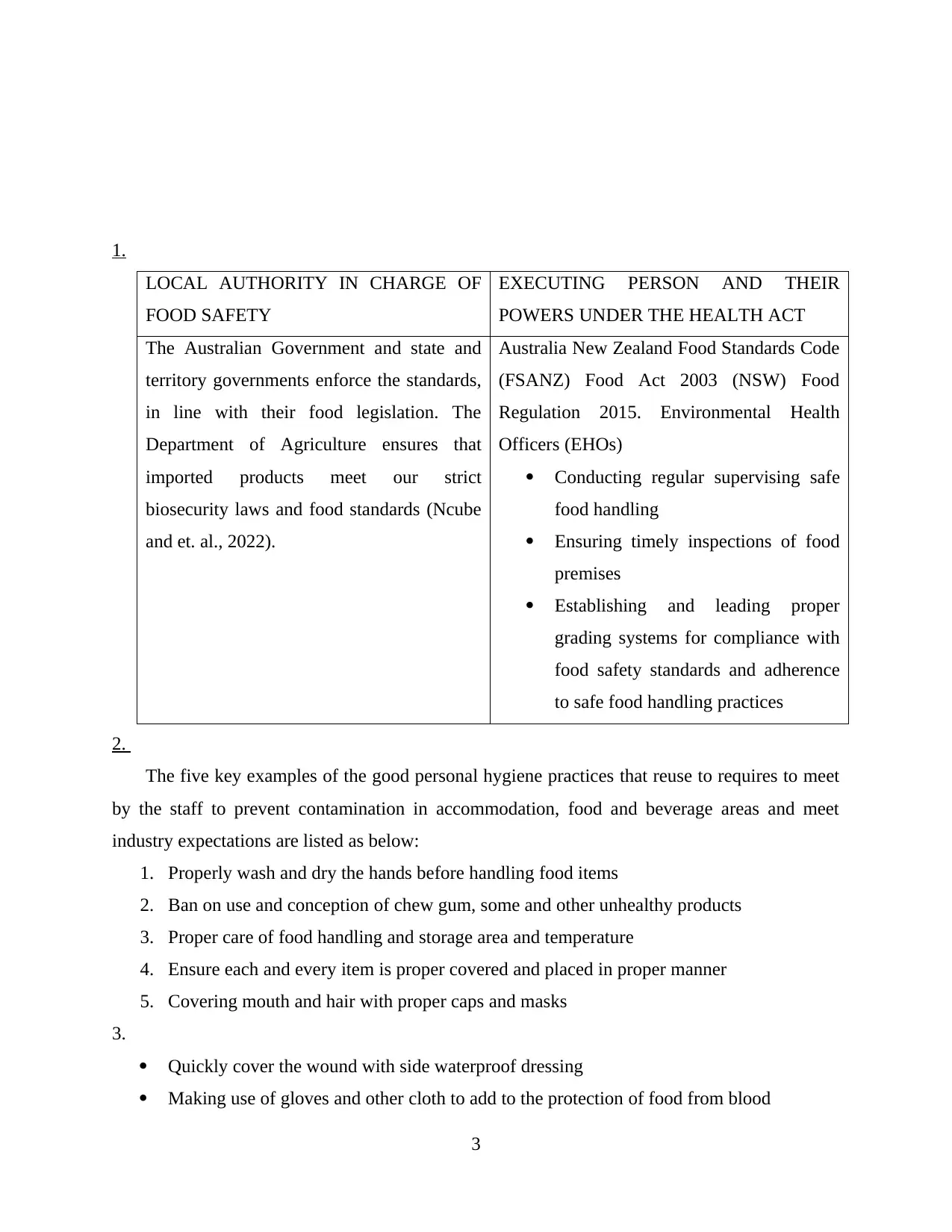
1.
LOCAL AUTHORITY IN CHARGE OF
FOOD SAFETY
EXECUTING PERSON AND THEIR
POWERS UNDER THE HEALTH ACT
The Australian Government and state and
territory governments enforce the standards,
in line with their food legislation. The
Department of Agriculture ensures that
imported products meet our strict
biosecurity laws and food standards (Ncube
and et. al., 2022).
Australia New Zealand Food Standards Code
(FSANZ) Food Act 2003 (NSW) Food
Regulation 2015. Environmental Health
Officers (EHOs)
Conducting regular supervising safe
food handling
Ensuring timely inspections of food
premises
Establishing and leading proper
grading systems for compliance with
food safety standards and adherence
to safe food handling practices
2.
The five key examples of the good personal hygiene practices that reuse to requires to meet
by the staff to prevent contamination in accommodation, food and beverage areas and meet
industry expectations are listed as below:
1. Properly wash and dry the hands before handling food items
2. Ban on use and conception of chew gum, some and other unhealthy products
3. Proper care of food handling and storage area and temperature
4. Ensure each and every item is proper covered and placed in proper manner
5. Covering mouth and hair with proper caps and masks
3.
Quickly cover the wound with side waterproof dressing
Making use of gloves and other cloth to add to the protection of food from blood
3
LOCAL AUTHORITY IN CHARGE OF
FOOD SAFETY
EXECUTING PERSON AND THEIR
POWERS UNDER THE HEALTH ACT
The Australian Government and state and
territory governments enforce the standards,
in line with their food legislation. The
Department of Agriculture ensures that
imported products meet our strict
biosecurity laws and food standards (Ncube
and et. al., 2022).
Australia New Zealand Food Standards Code
(FSANZ) Food Act 2003 (NSW) Food
Regulation 2015. Environmental Health
Officers (EHOs)
Conducting regular supervising safe
food handling
Ensuring timely inspections of food
premises
Establishing and leading proper
grading systems for compliance with
food safety standards and adherence
to safe food handling practices
2.
The five key examples of the good personal hygiene practices that reuse to requires to meet
by the staff to prevent contamination in accommodation, food and beverage areas and meet
industry expectations are listed as below:
1. Properly wash and dry the hands before handling food items
2. Ban on use and conception of chew gum, some and other unhealthy products
3. Proper care of food handling and storage area and temperature
4. Ensure each and every item is proper covered and placed in proper manner
5. Covering mouth and hair with proper caps and masks
3.
Quickly cover the wound with side waterproof dressing
Making use of gloves and other cloth to add to the protection of food from blood
3
⊘ This is a preview!⊘
Do you want full access?
Subscribe today to unlock all pages.

Trusted by 1+ million students worldwide
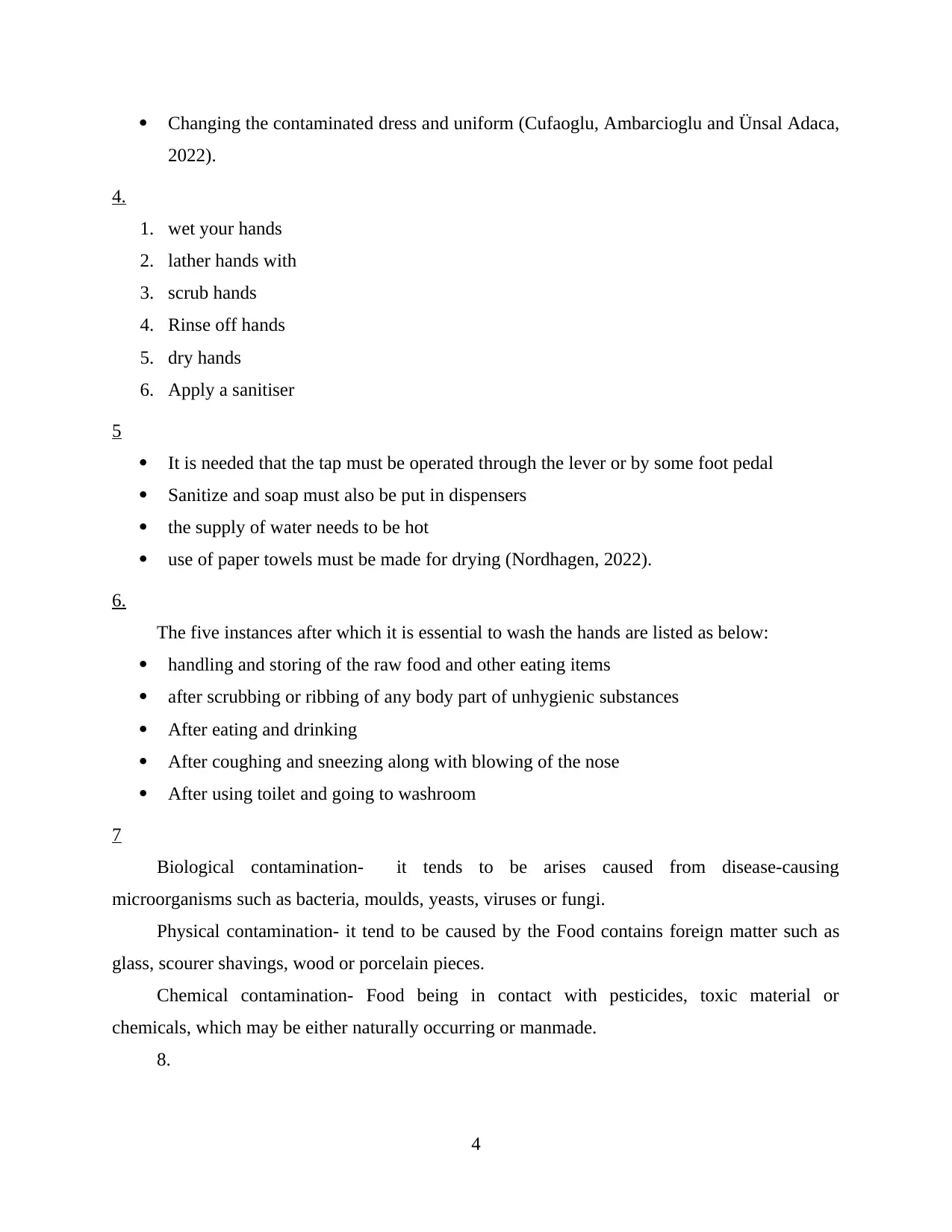
Changing the contaminated dress and uniform (Cufaoglu, Ambarcioglu and Ünsal Adaca,
2022).
4.
1. wet your hands
2. lather hands with
3. scrub hands
4. Rinse off hands
5. dry hands
6. Apply a sanitiser
5
It is needed that the tap must be operated through the lever or by some foot pedal
Sanitize and soap must also be put in dispensers
the supply of water needs to be hot
use of paper towels must be made for drying (Nordhagen, 2022).
6.
The five instances after which it is essential to wash the hands are listed as below:
handling and storing of the raw food and other eating items
after scrubbing or ribbing of any body part of unhygienic substances
After eating and drinking
After coughing and sneezing along with blowing of the nose
After using toilet and going to washroom
7
Biological contamination- it tends to be arises caused from disease-causing
microorganisms such as bacteria, moulds, yeasts, viruses or fungi.
Physical contamination- it tend to be caused by the Food contains foreign matter such as
glass, scourer shavings, wood or porcelain pieces.
Chemical contamination- Food being in contact with pesticides, toxic material or
chemicals, which may be either naturally occurring or manmade.
8.
4
2022).
4.
1. wet your hands
2. lather hands with
3. scrub hands
4. Rinse off hands
5. dry hands
6. Apply a sanitiser
5
It is needed that the tap must be operated through the lever or by some foot pedal
Sanitize and soap must also be put in dispensers
the supply of water needs to be hot
use of paper towels must be made for drying (Nordhagen, 2022).
6.
The five instances after which it is essential to wash the hands are listed as below:
handling and storing of the raw food and other eating items
after scrubbing or ribbing of any body part of unhygienic substances
After eating and drinking
After coughing and sneezing along with blowing of the nose
After using toilet and going to washroom
7
Biological contamination- it tends to be arises caused from disease-causing
microorganisms such as bacteria, moulds, yeasts, viruses or fungi.
Physical contamination- it tend to be caused by the Food contains foreign matter such as
glass, scourer shavings, wood or porcelain pieces.
Chemical contamination- Food being in contact with pesticides, toxic material or
chemicals, which may be either naturally occurring or manmade.
8.
4
Paraphrase This Document
Need a fresh take? Get an instant paraphrase of this document with our AI Paraphraser
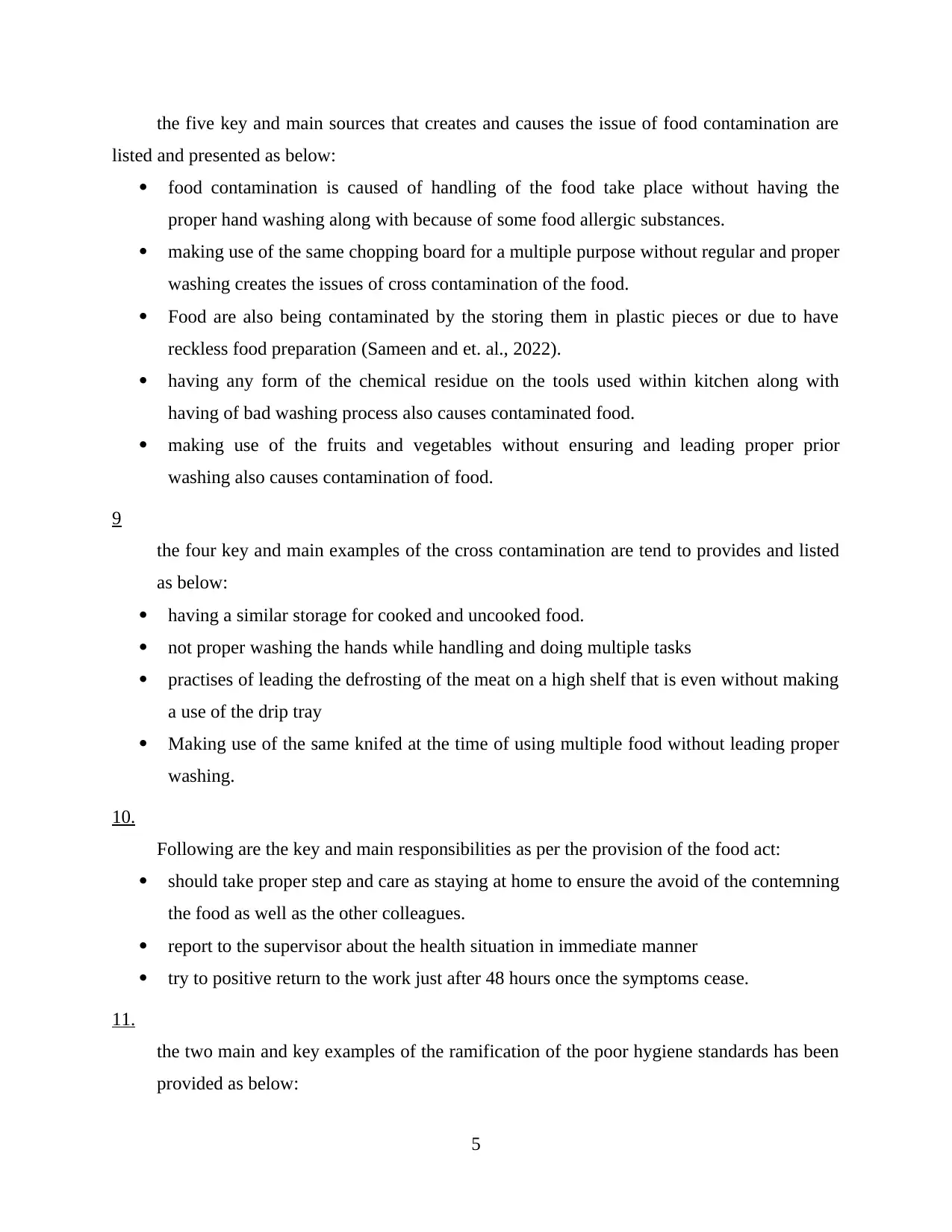
the five key and main sources that creates and causes the issue of food contamination are
listed and presented as below:
food contamination is caused of handling of the food take place without having the
proper hand washing along with because of some food allergic substances.
making use of the same chopping board for a multiple purpose without regular and proper
washing creates the issues of cross contamination of the food.
Food are also being contaminated by the storing them in plastic pieces or due to have
reckless food preparation (Sameen and et. al., 2022).
having any form of the chemical residue on the tools used within kitchen along with
having of bad washing process also causes contaminated food.
making use of the fruits and vegetables without ensuring and leading proper prior
washing also causes contamination of food.
9
the four key and main examples of the cross contamination are tend to provides and listed
as below:
having a similar storage for cooked and uncooked food.
not proper washing the hands while handling and doing multiple tasks
practises of leading the defrosting of the meat on a high shelf that is even without making
a use of the drip tray
Making use of the same knifed at the time of using multiple food without leading proper
washing.
10.
Following are the key and main responsibilities as per the provision of the food act:
should take proper step and care as staying at home to ensure the avoid of the contemning
the food as well as the other colleagues.
report to the supervisor about the health situation in immediate manner
try to positive return to the work just after 48 hours once the symptoms cease.
11.
the two main and key examples of the ramification of the poor hygiene standards has been
provided as below:
5
listed and presented as below:
food contamination is caused of handling of the food take place without having the
proper hand washing along with because of some food allergic substances.
making use of the same chopping board for a multiple purpose without regular and proper
washing creates the issues of cross contamination of the food.
Food are also being contaminated by the storing them in plastic pieces or due to have
reckless food preparation (Sameen and et. al., 2022).
having any form of the chemical residue on the tools used within kitchen along with
having of bad washing process also causes contaminated food.
making use of the fruits and vegetables without ensuring and leading proper prior
washing also causes contamination of food.
9
the four key and main examples of the cross contamination are tend to provides and listed
as below:
having a similar storage for cooked and uncooked food.
not proper washing the hands while handling and doing multiple tasks
practises of leading the defrosting of the meat on a high shelf that is even without making
a use of the drip tray
Making use of the same knifed at the time of using multiple food without leading proper
washing.
10.
Following are the key and main responsibilities as per the provision of the food act:
should take proper step and care as staying at home to ensure the avoid of the contemning
the food as well as the other colleagues.
report to the supervisor about the health situation in immediate manner
try to positive return to the work just after 48 hours once the symptoms cease.
11.
the two main and key examples of the ramification of the poor hygiene standards has been
provided as below:
5
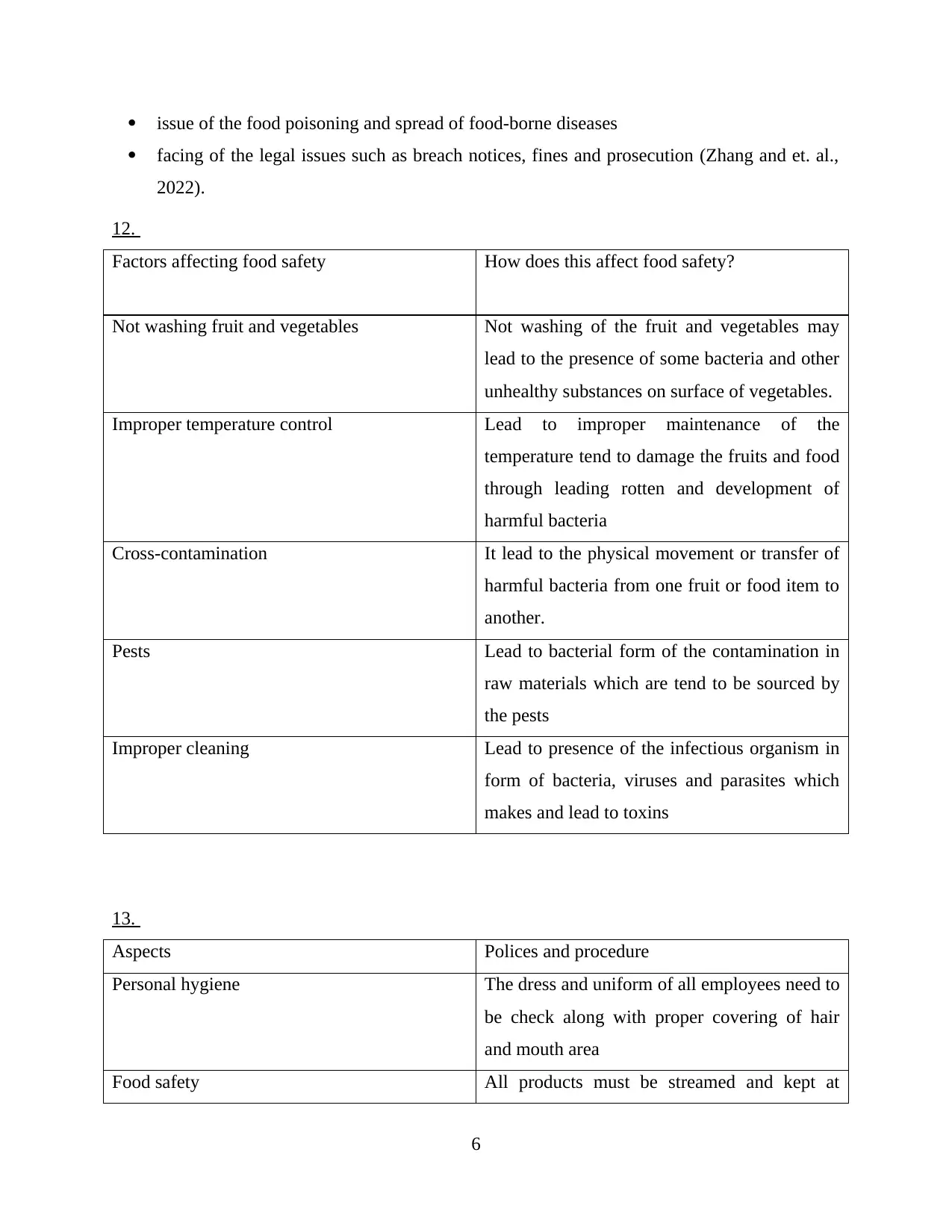
issue of the food poisoning and spread of food-borne diseases
facing of the legal issues such as breach notices, fines and prosecution (Zhang and et. al.,
2022).
12.
Factors affecting food safety How does this affect food safety?
Not washing fruit and vegetables Not washing of the fruit and vegetables may
lead to the presence of some bacteria and other
unhealthy substances on surface of vegetables.
Improper temperature control Lead to improper maintenance of the
temperature tend to damage the fruits and food
through leading rotten and development of
harmful bacteria
Cross-contamination It lead to the physical movement or transfer of
harmful bacteria from one fruit or food item to
another.
Pests Lead to bacterial form of the contamination in
raw materials which are tend to be sourced by
the pests
Improper cleaning Lead to presence of the infectious organism in
form of bacteria, viruses and parasites which
makes and lead to toxins
13.
Aspects Polices and procedure
Personal hygiene The dress and uniform of all employees need to
be check along with proper covering of hair
and mouth area
Food safety All products must be streamed and kept at
6
facing of the legal issues such as breach notices, fines and prosecution (Zhang and et. al.,
2022).
12.
Factors affecting food safety How does this affect food safety?
Not washing fruit and vegetables Not washing of the fruit and vegetables may
lead to the presence of some bacteria and other
unhealthy substances on surface of vegetables.
Improper temperature control Lead to improper maintenance of the
temperature tend to damage the fruits and food
through leading rotten and development of
harmful bacteria
Cross-contamination It lead to the physical movement or transfer of
harmful bacteria from one fruit or food item to
another.
Pests Lead to bacterial form of the contamination in
raw materials which are tend to be sourced by
the pests
Improper cleaning Lead to presence of the infectious organism in
form of bacteria, viruses and parasites which
makes and lead to toxins
13.
Aspects Polices and procedure
Personal hygiene The dress and uniform of all employees need to
be check along with proper covering of hair
and mouth area
Food safety All products must be streamed and kept at
6
⊘ This is a preview!⊘
Do you want full access?
Subscribe today to unlock all pages.
Trusted by 1+ million students worldwide
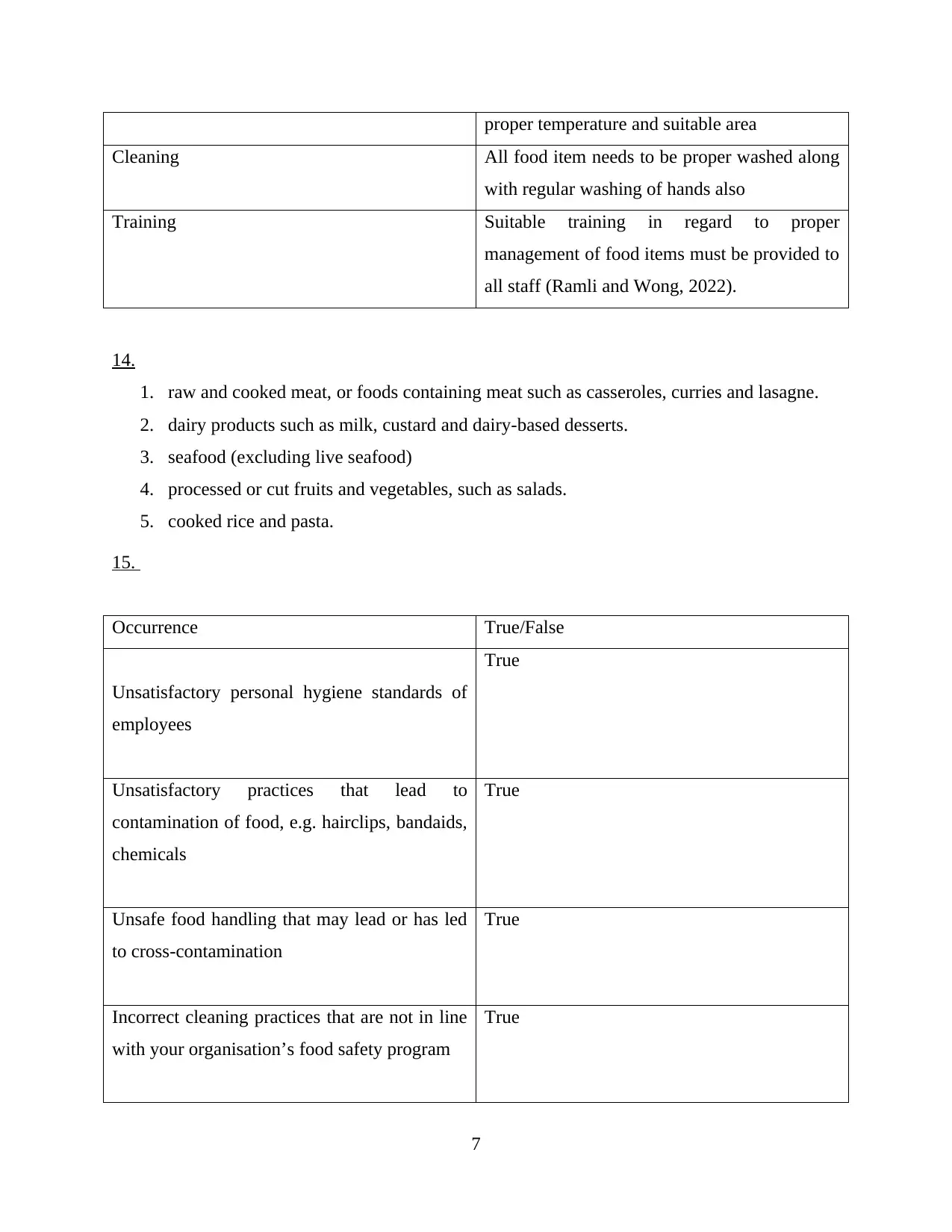
proper temperature and suitable area
Cleaning All food item needs to be proper washed along
with regular washing of hands also
Training Suitable training in regard to proper
management of food items must be provided to
all staff (Ramli and Wong, 2022).
14.
1. raw and cooked meat, or foods containing meat such as casseroles, curries and lasagne.
2. dairy products such as milk, custard and dairy‐based desserts.
3. seafood (excluding live seafood)
4. processed or cut fruits and vegetables, such as salads.
5. cooked rice and pasta.
15.
Occurrence True/False
Unsatisfactory personal hygiene standards of
employees
True
Unsatisfactory practices that lead to
contamination of food, e.g. hairclips, bandaids,
chemicals
True
Unsafe food handling that may lead or has led
to cross-contamination
True
Incorrect cleaning practices that are not in line
with your organisation’s food safety program
True
7
Cleaning All food item needs to be proper washed along
with regular washing of hands also
Training Suitable training in regard to proper
management of food items must be provided to
all staff (Ramli and Wong, 2022).
14.
1. raw and cooked meat, or foods containing meat such as casseroles, curries and lasagne.
2. dairy products such as milk, custard and dairy‐based desserts.
3. seafood (excluding live seafood)
4. processed or cut fruits and vegetables, such as salads.
5. cooked rice and pasta.
15.
Occurrence True/False
Unsatisfactory personal hygiene standards of
employees
True
Unsatisfactory practices that lead to
contamination of food, e.g. hairclips, bandaids,
chemicals
True
Unsafe food handling that may lead or has led
to cross-contamination
True
Incorrect cleaning practices that are not in line
with your organisation’s food safety program
True
7
Paraphrase This Document
Need a fresh take? Get an instant paraphrase of this document with our AI Paraphraser
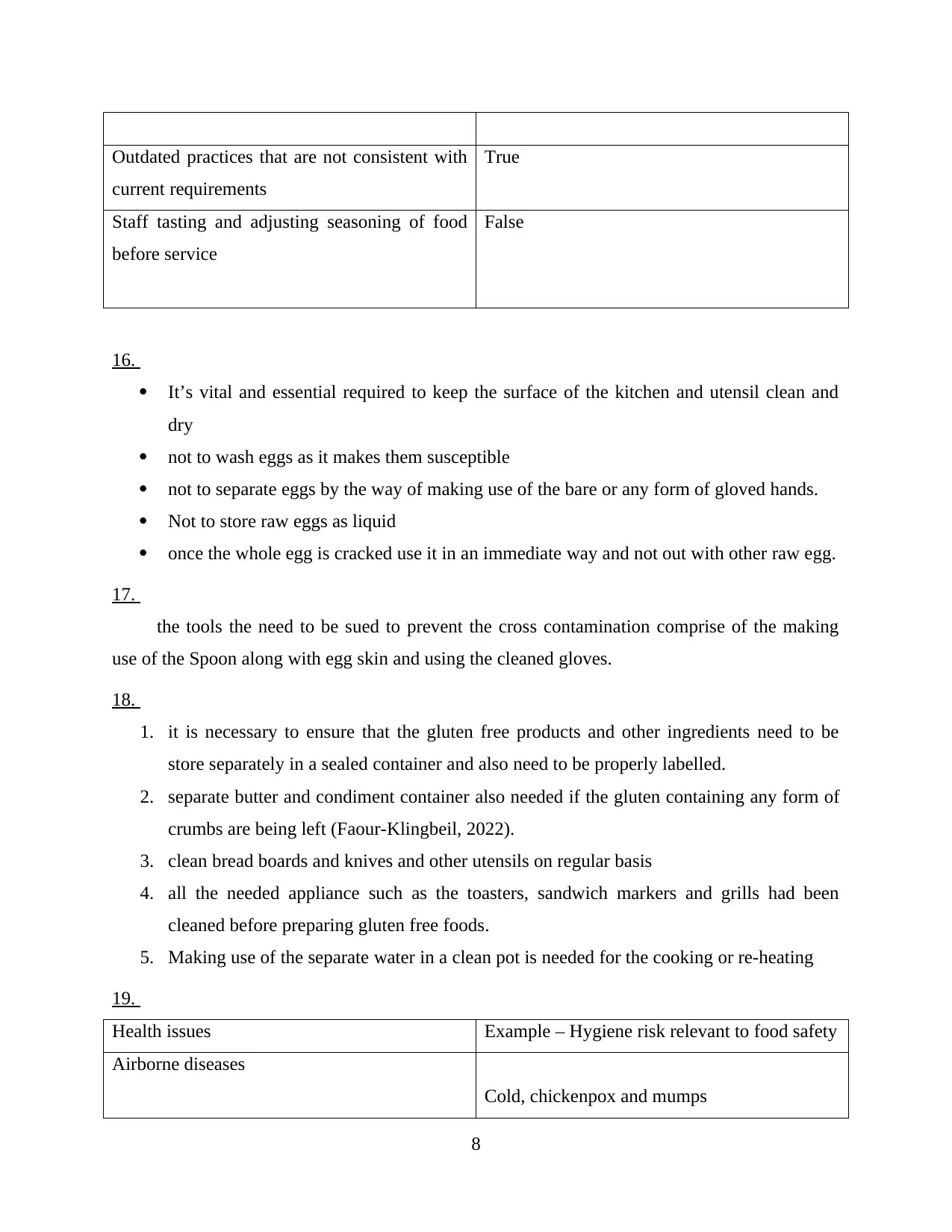
Outdated practices that are not consistent with
current requirements
True
Staff tasting and adjusting seasoning of food
before service
False
16.
It’s vital and essential required to keep the surface of the kitchen and utensil clean and
dry
not to wash eggs as it makes them susceptible
not to separate eggs by the way of making use of the bare or any form of gloved hands.
Not to store raw eggs as liquid
once the whole egg is cracked use it in an immediate way and not out with other raw egg.
17.
the tools the need to be sued to prevent the cross contamination comprise of the making
use of the Spoon along with egg skin and using the cleaned gloves.
18.
1. it is necessary to ensure that the gluten free products and other ingredients need to be
store separately in a sealed container and also need to be properly labelled.
2. separate butter and condiment container also needed if the gluten containing any form of
crumbs are being left (Faour-Klingbeil, 2022).
3. clean bread boards and knives and other utensils on regular basis
4. all the needed appliance such as the toasters, sandwich markers and grills had been
cleaned before preparing gluten free foods.
5. Making use of the separate water in a clean pot is needed for the cooking or re-heating
19.
Health issues Example – Hygiene risk relevant to food safety
Airborne diseases
Cold, chickenpox and mumps
8
current requirements
True
Staff tasting and adjusting seasoning of food
before service
False
16.
It’s vital and essential required to keep the surface of the kitchen and utensil clean and
dry
not to wash eggs as it makes them susceptible
not to separate eggs by the way of making use of the bare or any form of gloved hands.
Not to store raw eggs as liquid
once the whole egg is cracked use it in an immediate way and not out with other raw egg.
17.
the tools the need to be sued to prevent the cross contamination comprise of the making
use of the Spoon along with egg skin and using the cleaned gloves.
18.
1. it is necessary to ensure that the gluten free products and other ingredients need to be
store separately in a sealed container and also need to be properly labelled.
2. separate butter and condiment container also needed if the gluten containing any form of
crumbs are being left (Faour-Klingbeil, 2022).
3. clean bread boards and knives and other utensils on regular basis
4. all the needed appliance such as the toasters, sandwich markers and grills had been
cleaned before preparing gluten free foods.
5. Making use of the separate water in a clean pot is needed for the cooking or re-heating
19.
Health issues Example – Hygiene risk relevant to food safety
Airborne diseases
Cold, chickenpox and mumps
8
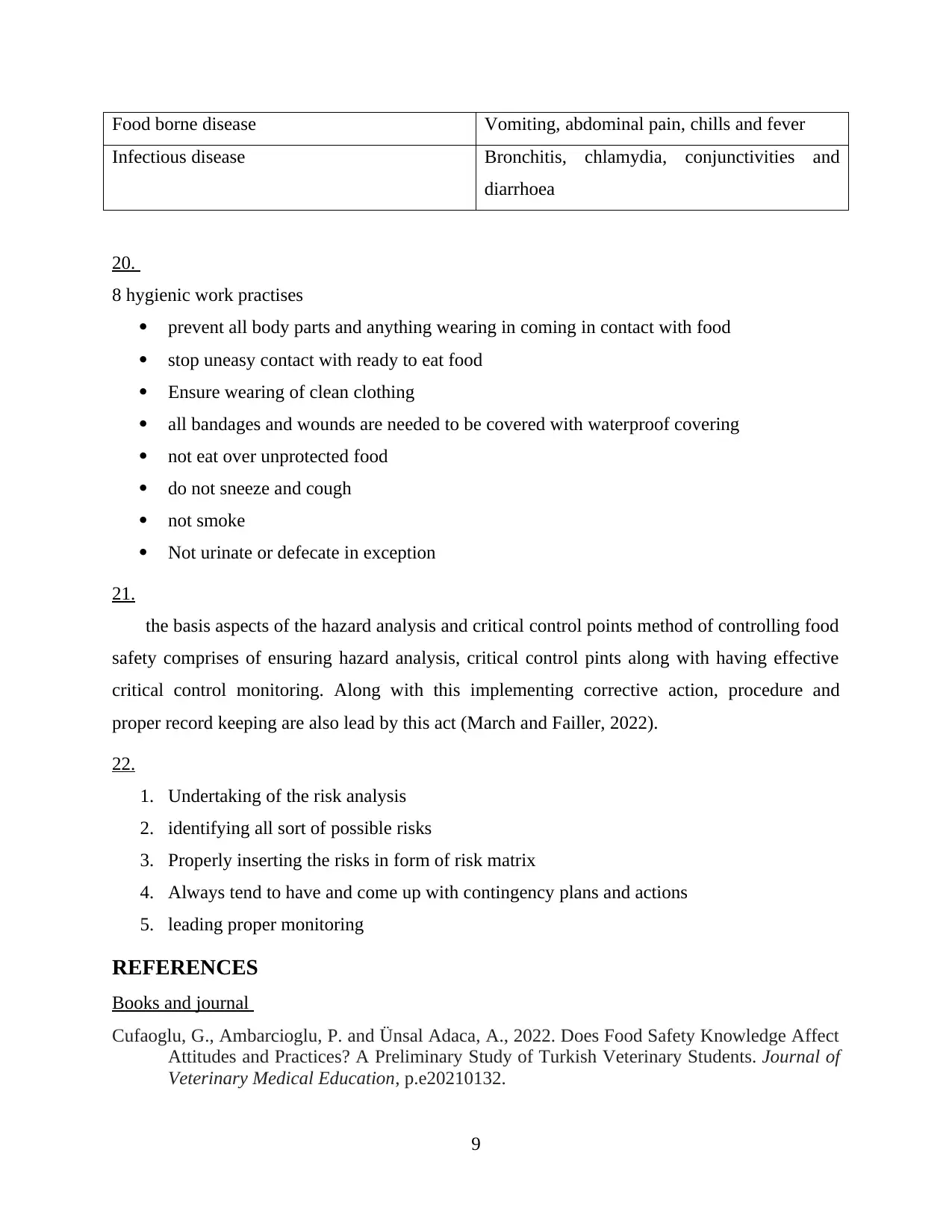
Food borne disease Vomiting, abdominal pain, chills and fever
Infectious disease Bronchitis, chlamydia, conjunctivities and
diarrhoea
20.
8 hygienic work practises
prevent all body parts and anything wearing in coming in contact with food
stop uneasy contact with ready to eat food
Ensure wearing of clean clothing
all bandages and wounds are needed to be covered with waterproof covering
not eat over unprotected food
do not sneeze and cough
not smoke
Not urinate or defecate in exception
21.
the basis aspects of the hazard analysis and critical control points method of controlling food
safety comprises of ensuring hazard analysis, critical control pints along with having effective
critical control monitoring. Along with this implementing corrective action, procedure and
proper record keeping are also lead by this act (March and Failler, 2022).
22.
1. Undertaking of the risk analysis
2. identifying all sort of possible risks
3. Properly inserting the risks in form of risk matrix
4. Always tend to have and come up with contingency plans and actions
5. leading proper monitoring
REFERENCES
Books and journal
Cufaoglu, G., Ambarcioglu, P. and Ünsal Adaca, A., 2022. Does Food Safety Knowledge Affect
Attitudes and Practices? A Preliminary Study of Turkish Veterinary Students. Journal of
Veterinary Medical Education, p.e20210132.
9
Infectious disease Bronchitis, chlamydia, conjunctivities and
diarrhoea
20.
8 hygienic work practises
prevent all body parts and anything wearing in coming in contact with food
stop uneasy contact with ready to eat food
Ensure wearing of clean clothing
all bandages and wounds are needed to be covered with waterproof covering
not eat over unprotected food
do not sneeze and cough
not smoke
Not urinate or defecate in exception
21.
the basis aspects of the hazard analysis and critical control points method of controlling food
safety comprises of ensuring hazard analysis, critical control pints along with having effective
critical control monitoring. Along with this implementing corrective action, procedure and
proper record keeping are also lead by this act (March and Failler, 2022).
22.
1. Undertaking of the risk analysis
2. identifying all sort of possible risks
3. Properly inserting the risks in form of risk matrix
4. Always tend to have and come up with contingency plans and actions
5. leading proper monitoring
REFERENCES
Books and journal
Cufaoglu, G., Ambarcioglu, P. and Ünsal Adaca, A., 2022. Does Food Safety Knowledge Affect
Attitudes and Practices? A Preliminary Study of Turkish Veterinary Students. Journal of
Veterinary Medical Education, p.e20210132.
9
⊘ This is a preview!⊘
Do you want full access?
Subscribe today to unlock all pages.
Trusted by 1+ million students worldwide
Faour-Klingbeil, D., 2022. Food safety knowledge, attitudes, and practices among food handlers
in foodservice establishments in the Arab countries of the Middle East. In Food Safety in
the Middle East (pp. 227-273). Academic Press.
March, A. and Failler, P., 2022. Small-scale fisheries development in Africa: Lessons learned
and best practices for enhancing food security and livelihoods. Marine Policy, 136,
p.104925.
Ncube, F and et. al., 2022. Risk factors for food poisoning among self-catering university
students. International Journal of Environmental Health Research, 32(1), pp.29-39.
Nordhagen, S., 2022. Food safety perspectives and practices of consumers and vendors in
Nigeria: A review. Food Control, 134, p.108693.
Ramli, S. and Wong, J.X., 2022. Standard Food Safety Practices From Receiving to Cleaning in
the Restaurant. In Food Safety Practices in the Restaurant Industry (pp. 123-150). IGI
Global.
Sameen, A. and et. al., 2022. Food Microbial Hazards, Safety, and Quality Control: A Strategic
Approach. In Food Safety Practices in the Restaurant Industry (pp. 67-98). IGI Global.
Zhang, Y. and et. al., 2022. Assessing the impact of perceptions of hygiene on tourists' attitudinal
loyalty to ethnic food. British Food Journal.
10
in foodservice establishments in the Arab countries of the Middle East. In Food Safety in
the Middle East (pp. 227-273). Academic Press.
March, A. and Failler, P., 2022. Small-scale fisheries development in Africa: Lessons learned
and best practices for enhancing food security and livelihoods. Marine Policy, 136,
p.104925.
Ncube, F and et. al., 2022. Risk factors for food poisoning among self-catering university
students. International Journal of Environmental Health Research, 32(1), pp.29-39.
Nordhagen, S., 2022. Food safety perspectives and practices of consumers and vendors in
Nigeria: A review. Food Control, 134, p.108693.
Ramli, S. and Wong, J.X., 2022. Standard Food Safety Practices From Receiving to Cleaning in
the Restaurant. In Food Safety Practices in the Restaurant Industry (pp. 123-150). IGI
Global.
Sameen, A. and et. al., 2022. Food Microbial Hazards, Safety, and Quality Control: A Strategic
Approach. In Food Safety Practices in the Restaurant Industry (pp. 67-98). IGI Global.
Zhang, Y. and et. al., 2022. Assessing the impact of perceptions of hygiene on tourists' attitudinal
loyalty to ethnic food. British Food Journal.
10

1 out of 10


Related Documents


Your All-in-One AI-Powered Toolkit for Academic Success.
+13062052269
info@desklib.com
Available 24*7 on WhatsApp / Email
![[object Object]](/_next/static/media/star-bottom.7253800d.svg)
Unlock your academic potential
Copyright © 2020–2026 A2Z Services. All Rights Reserved. Developed and managed by ZUCOL.