Age Estimation Report: Forensic Anthropology Techniques and Methods

Verified

Added on  2022/10/07

|10
|615
|333
Report
AI Summary
This report delves into the methodologies employed for age estimation using skeletal remains, a crucial aspect of forensic anthropology. It highlights the significance of skeletal analysis in determining the age of individuals, emphasizing the importance of assessing the pubic symphysis, a key indicator for age at death. The report discusses various techniques, including the examination of morphological changes, the use of skeletal measurements, and the assessment of bone structures like osteons. It underscores the necessity of considering multiple factors and conducting thorough analyses to ensure accurate age estimations. Furthermore, the report emphasizes the importance of referencing established literature and considering the limitations of each method to provide a comprehensive understanding of the age determination process in skeletal remains. The report concludes with a summary of the key methods and their applications in forensic science.
Document Page
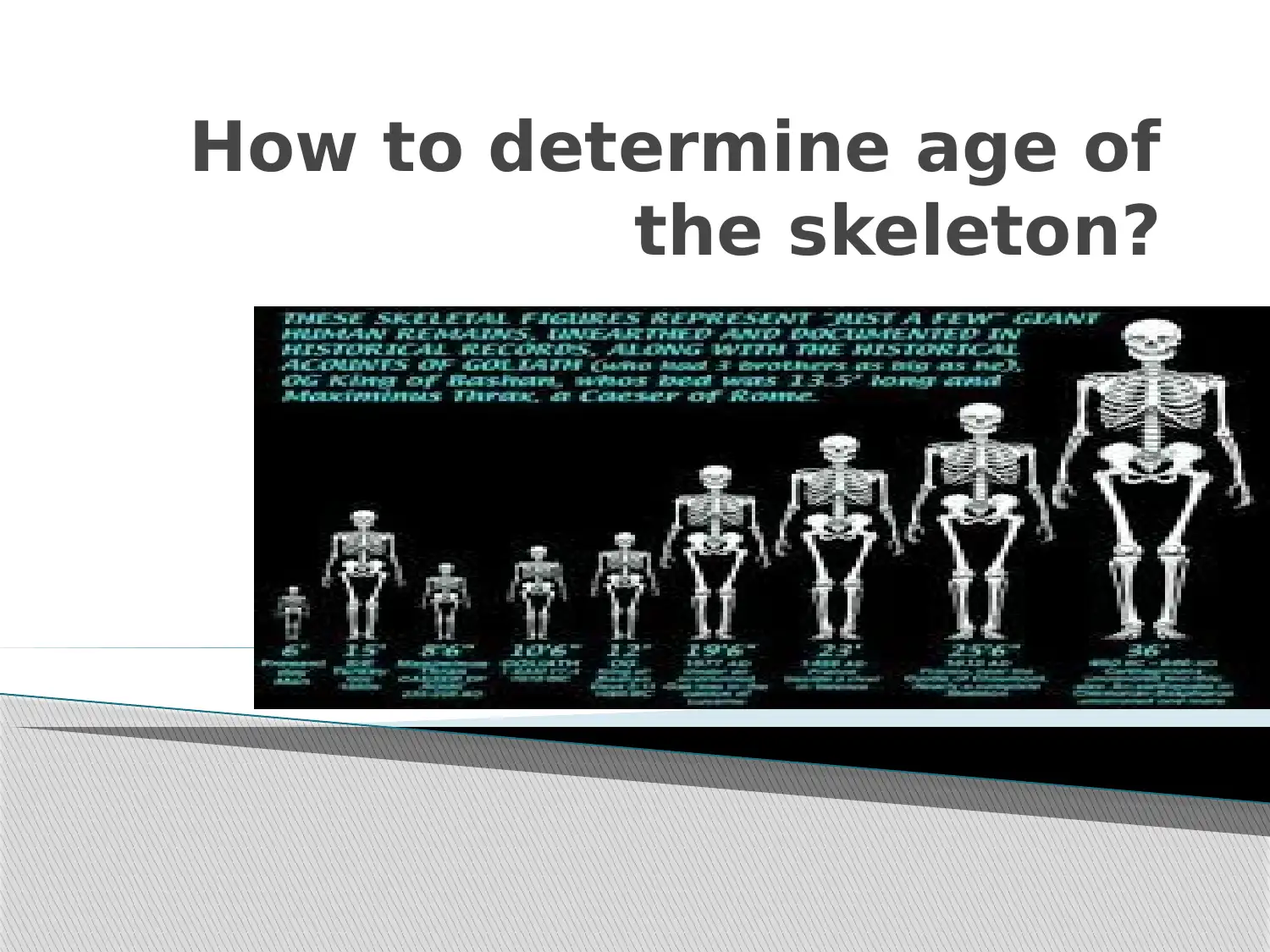
How to determine age of
the skeleton?
tabler-icon-diamond-filled.svg

Paraphrase This Document

Need a fresh take? Get an instant paraphrase of this document with our AI Paraphraser
Document Page
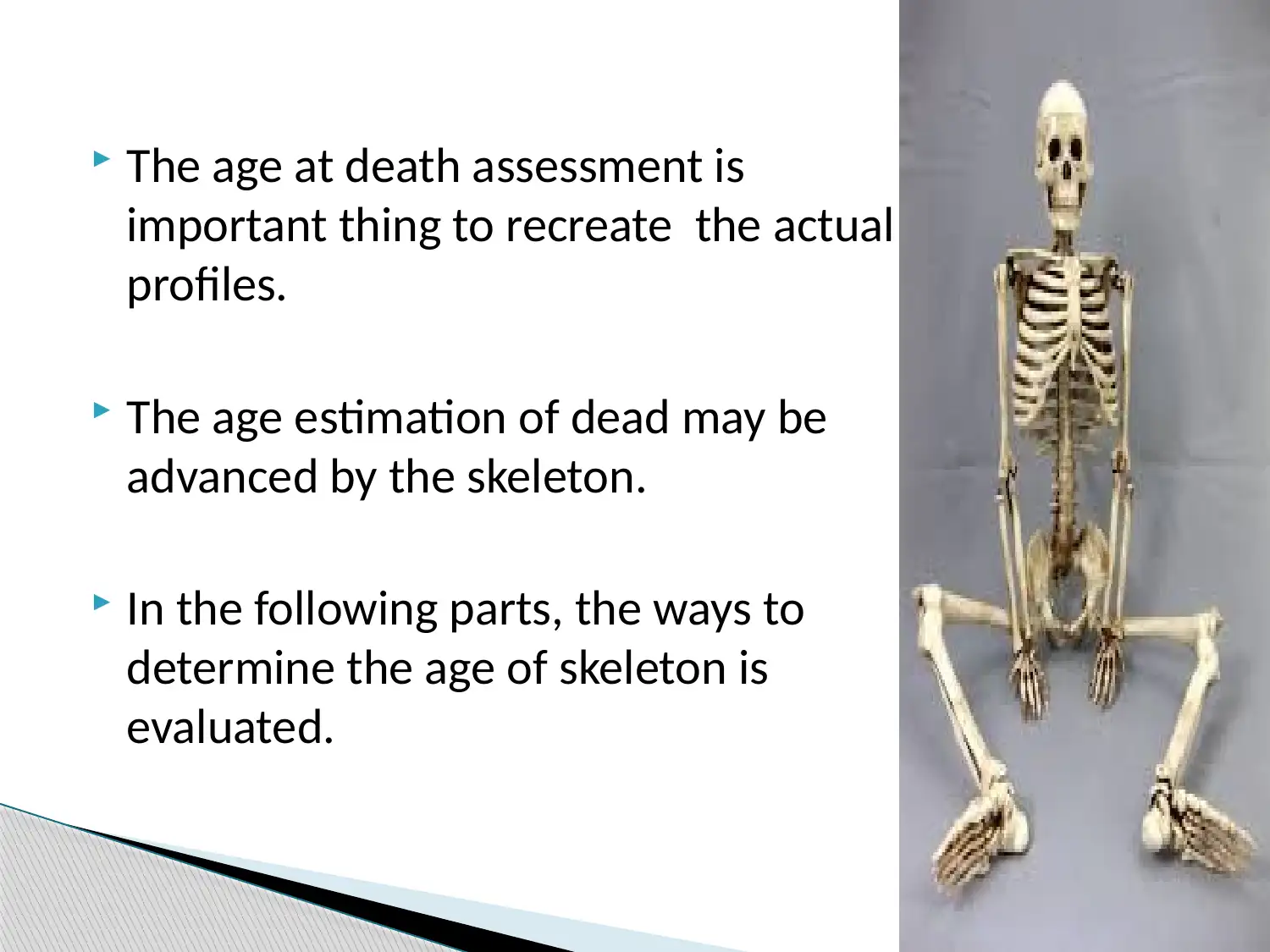
The age at death assessment is
important thing to recreate the actual
profiles.
The age estimation of dead may be
advanced by the skeleton.
In the following parts, the ways to
determine the age of skeleton is
evaluated.
Document Page
Generally, the pubic symphysis is regarded as the most reliable
indicator of the age at death in skeletal leftovers.
various researches studied the morphological modifications.
These morphological changes can occur throughout the lives of
people. Various standards for assessing the age at death have
been established.
Introduction
Document Page
How to determine age of skeleton?
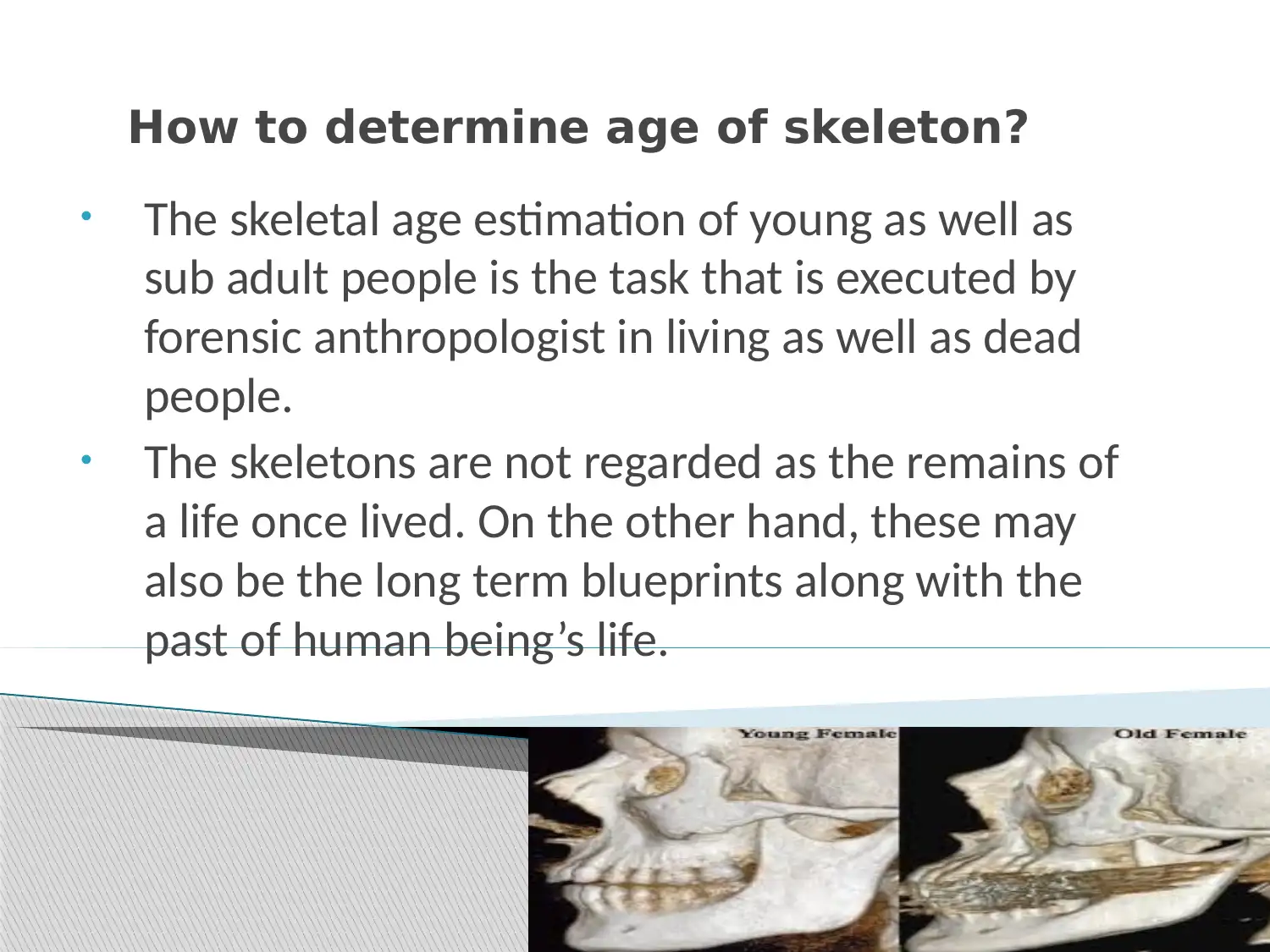
The skeletal age estimation of young as well as
sub adult people is the task that is executed by
forensic anthropologist in living as well as dead
people.
The skeletons are not regarded as the remains of
a life once lived. On the other hand, these may
also be the long term blueprints along with the
past of human being’s life.
tabler-icon-diamond-filled.svg

Paraphrase This Document

Need a fresh take? Get an instant paraphrase of this document with our AI Paraphraser
Document Page
There are two ages for conducting the age’s
assessment.
These two ages include the age at demise and the
whole age.
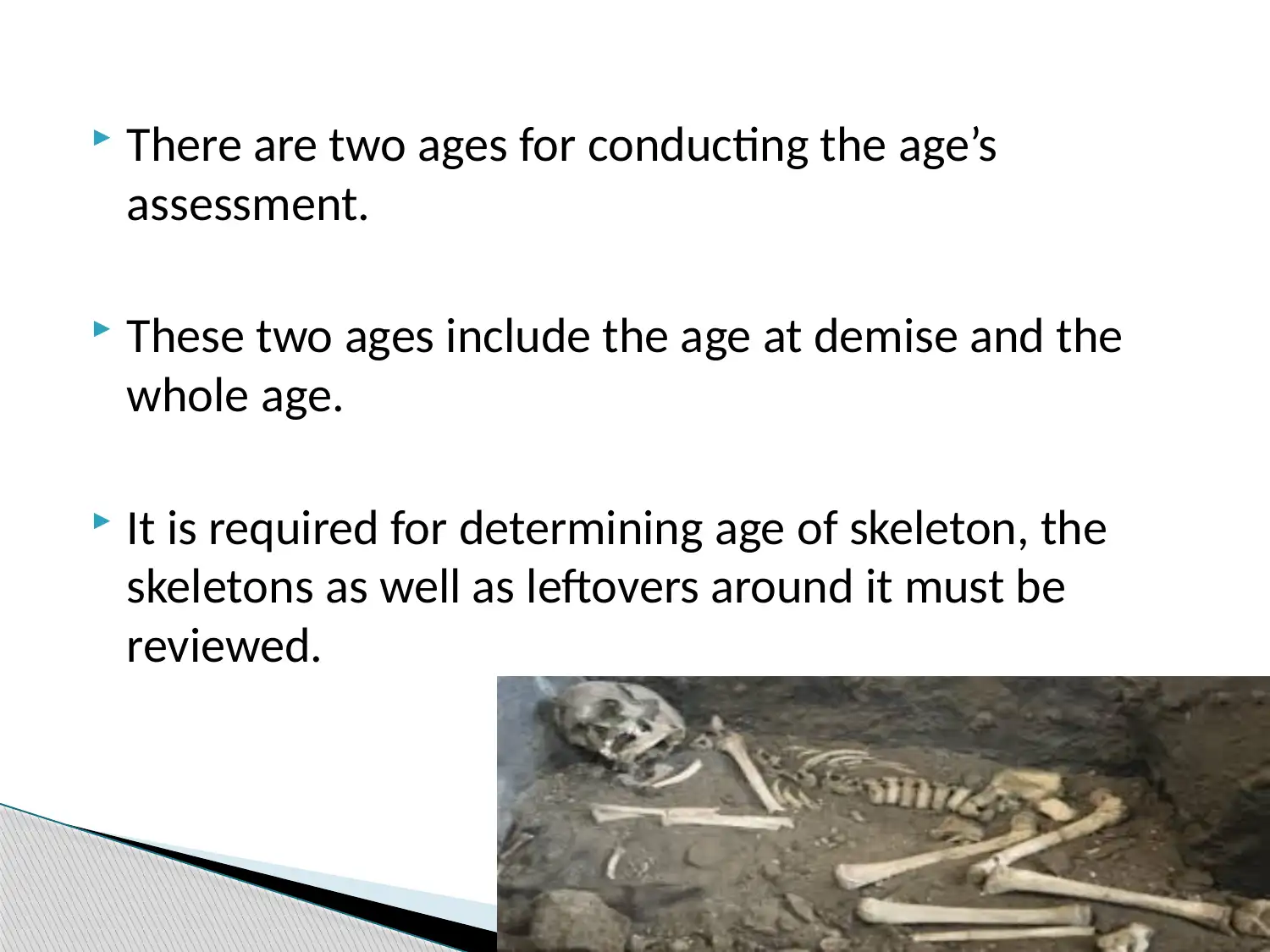
It is required for determining age of skeleton, the
skeletons as well as leftovers around it must be
reviewed.
Document Page
At a first step, it is required to decide if the skeleton is of
animal or human being.
Further, it is required to consider the development as well as
breakdowns for the better assessment of age.
Furthermore, it is required to make the measurement of the
skeletons.
Document Page
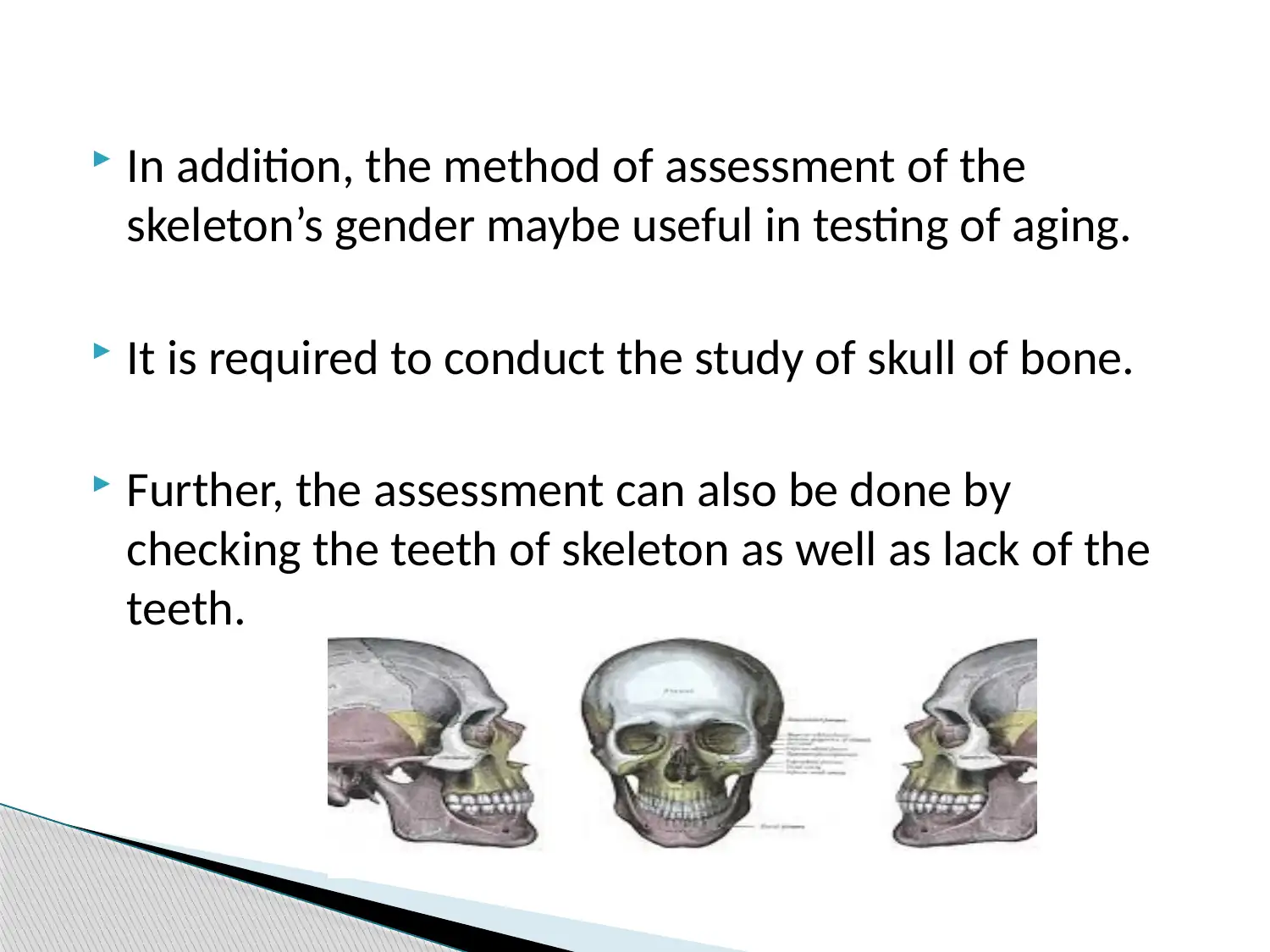
In addition, the method of assessment of the
skeleton’s gender maybe useful in testing of aging.
It is required to conduct the study of skull of bone.
Further, the assessment can also be done by
checking the teeth of skeleton as well as lack of the
teeth.
tabler-icon-diamond-filled.svg

Paraphrase This Document

Need a fresh take? Get an instant paraphrase of this document with our AI Paraphraser
Document Page
The procedures of the age estimation range from
the evaluation of the forms, altering morphology, as
well as final fusion of ossification center in dry bone
groups and in imaging study to evaluation of bones
metrics as well as the comparison with recognized
literature norms.
It is required to consider the different elements to
conduct the process of determination of age of
skeletons.
Document Page
Conclusion
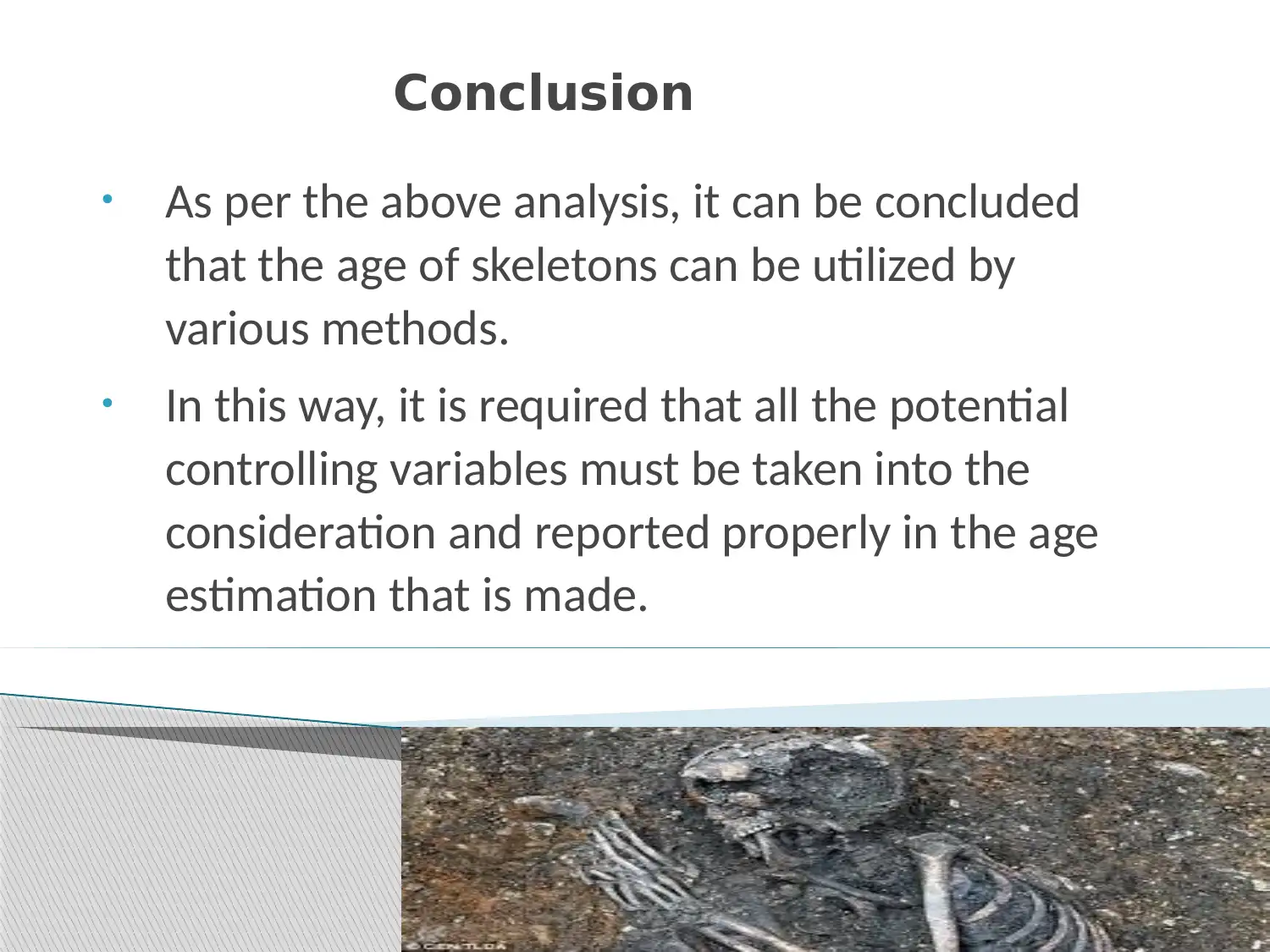
As per the above analysis, it can be concluded
that the age of skeletons can be utilized by
various methods.
In this way, it is required that all the potential
controlling variables must be taken into the
consideration and reported properly in the age
estimation that is made.
Document Page
Devlin‐Durante, M. K., Miller, M. W., Caribbean Acropora Research
Group, Precht, W. F., Baums, I. B., Carne, L., & Fogarty, N. D. (2016).
How old are you? Genet age estimates in a clonal animal. Molecular
ecology, 25(22), 5628-5646
Goliath, J. R., Stewart, M. C., & Stout, S. D. (2016). Variation in osteon
histomorphometrics and their impact on age-at-death estimation in
older individuals. Forensic science international, 262, 282-e1.
Liversidge, H. M., Buckberry, J., & Marquez-Grant, N. (2015). Age
estimation. Annals of human biology, 42(4), 299-301
Miranker, M. (2016). A comparison of different age estimation
methods of the adult pelvis. Journal of forensic sciences, 61(5), 1173-
1179.
References
chevron_up_icon
1 out of 10
circle_padding
hide_on_mobile
zoom_out_icon
[object Object]