Report: Skills for Tomorrow (SFT) - Analyzing Harrisburg's Performance
VerifiedAdded on 2020/05/16
|5
|886
|138
Report
AI Summary
This report analyzes the performance of Skills for Tomorrow (SFT) in Harrisburg, focusing on the issues affecting employee morale and organizational productivity. The report, written from the perspective of a management consultant, details the problems faced by the Harrisburg location, including poor team spirit, lack of employee motivation, resistance to change, and interpersonal issues among employees and directors. It references Abraham Maslow's theory of motivation to suggest solutions, such as addressing physiological, safety, social, esteem, and self-actualization needs to improve employee engagement and overall organizational success. The report highlights the importance of fostering a positive work environment and addressing personal conflicts to enhance the quality of service provided by SFT and ensure its long-term success.
Running head: SKILLS FOR TOMORROW (SFT) - AN ANALYSIS
Skills For Tomorrow (SFT) - An Analysis
Name of the Student
Name of the University
Author Note
Skills For Tomorrow (SFT) - An Analysis
Name of the Student
Name of the University
Author Note
Paraphrase This Document
Need a fresh take? Get an instant paraphrase of this document with our AI Paraphraser

SKILLS FOR TOMORROW (SFT) - AN ANALYSIS 1
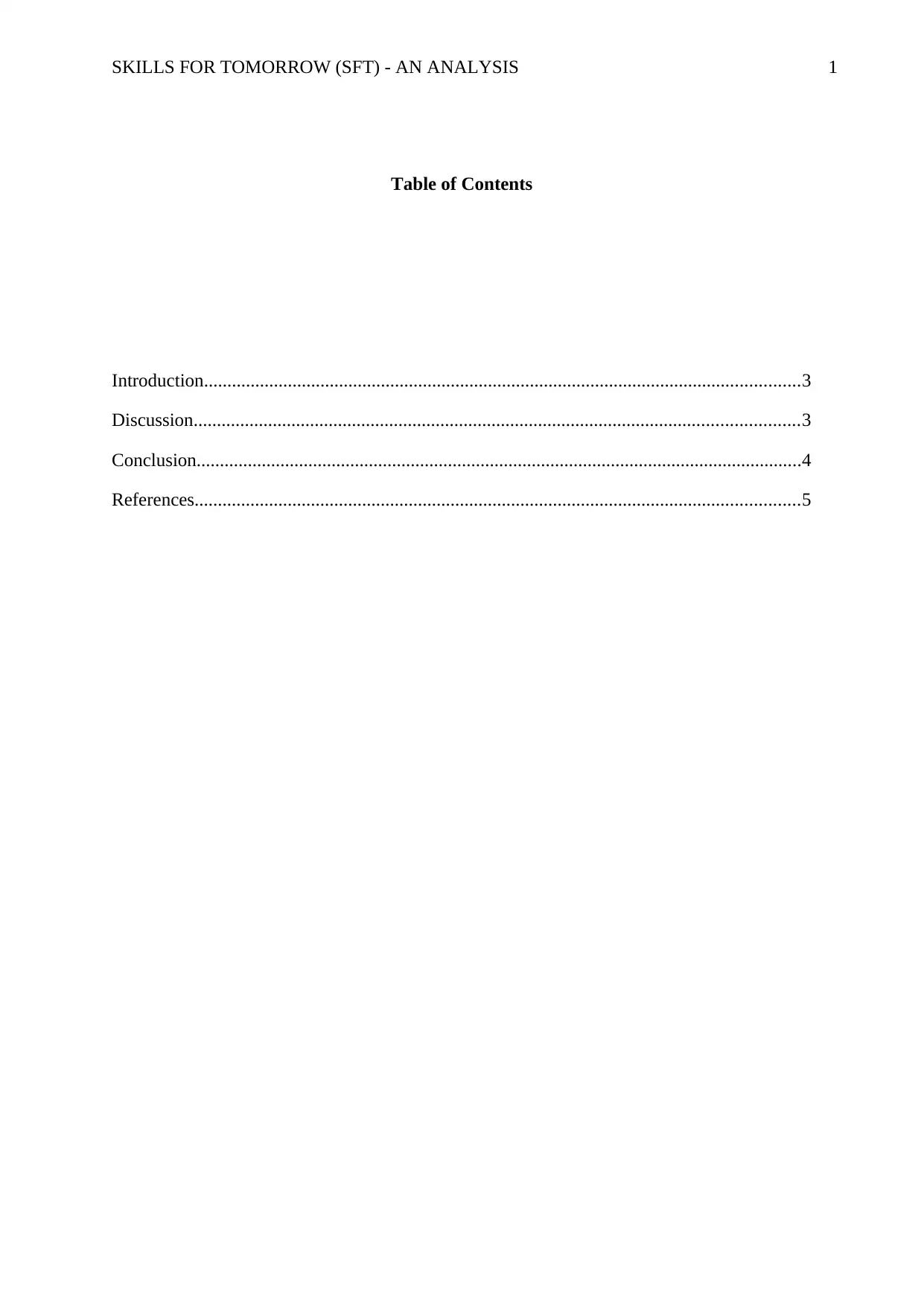
Table of Contents
Introduction................................................................................................................................3
Discussion..................................................................................................................................3
Conclusion..................................................................................................................................4
References..................................................................................................................................5
Table of Contents
Introduction................................................................................................................................3
Discussion..................................................................................................................................3
Conclusion..................................................................................................................................4
References..................................................................................................................................5

SKILLS FOR TOMORROW (SFT) - AN ANALYSIS 2
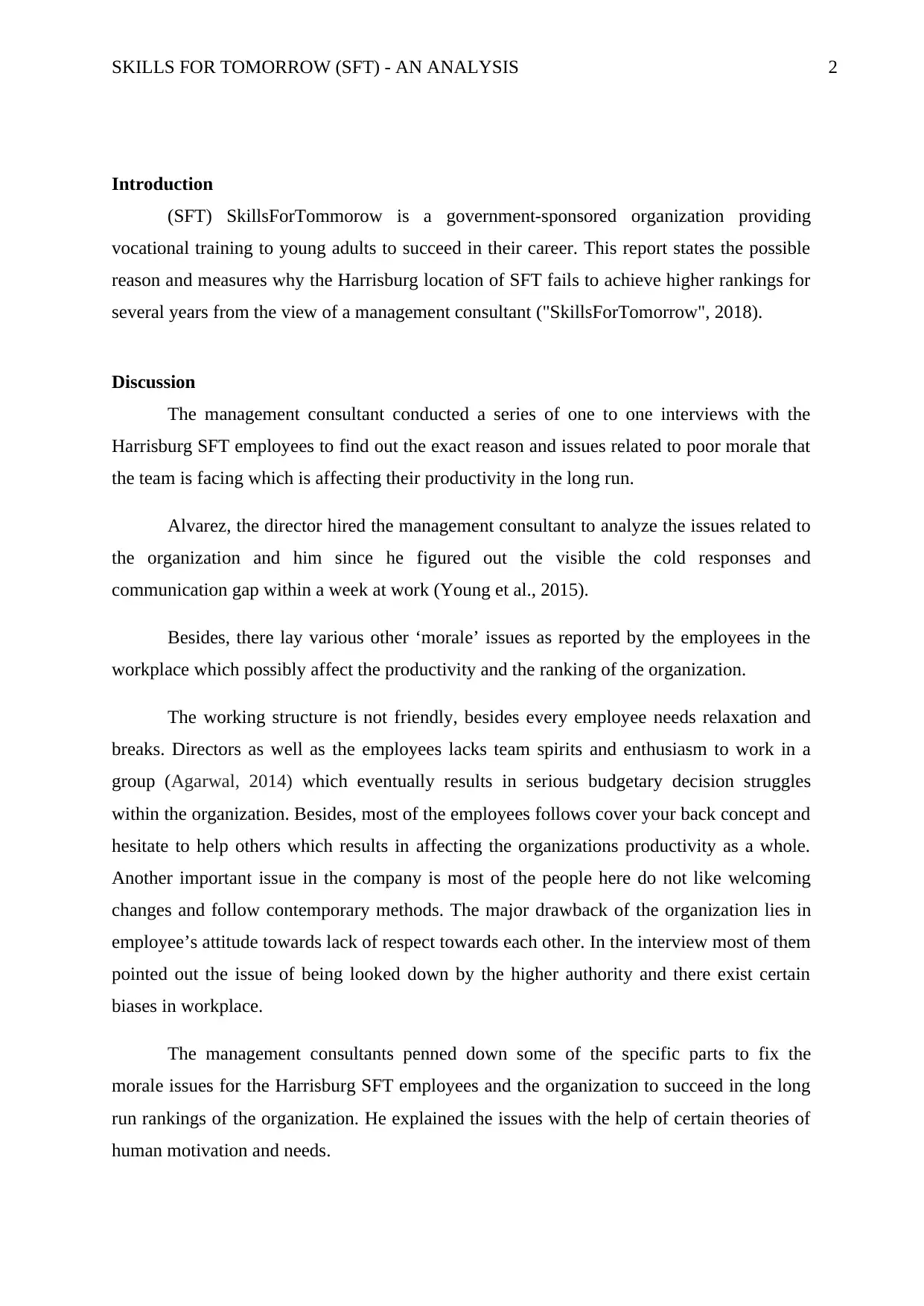
Introduction
(SFT) SkillsForTommorow is a government-sponsored organization providing
vocational training to young adults to succeed in their career. This report states the possible
reason and measures why the Harrisburg location of SFT fails to achieve higher rankings for
several years from the view of a management consultant ("SkillsForTomorrow", 2018).
Discussion
The management consultant conducted a series of one to one interviews with the
Harrisburg SFT employees to find out the exact reason and issues related to poor morale that
the team is facing which is affecting their productivity in the long run.
Alvarez, the director hired the management consultant to analyze the issues related to
the organization and him since he figured out the visible the cold responses and
communication gap within a week at work (Young et al., 2015).
Besides, there lay various other ‘morale’ issues as reported by the employees in the
workplace which possibly affect the productivity and the ranking of the organization.
The working structure is not friendly, besides every employee needs relaxation and
breaks. Directors as well as the employees lacks team spirits and enthusiasm to work in a
group (Agarwal, 2014) which eventually results in serious budgetary decision struggles
within the organization. Besides, most of the employees follows cover your back concept and
hesitate to help others which results in affecting the organizations productivity as a whole.
Another important issue in the company is most of the people here do not like welcoming
changes and follow contemporary methods. The major drawback of the organization lies in
employee’s attitude towards lack of respect towards each other. In the interview most of them
pointed out the issue of being looked down by the higher authority and there exist certain
biases in workplace.
The management consultants penned down some of the specific parts to fix the
morale issues for the Harrisburg SFT employees and the organization to succeed in the long
run rankings of the organization. He explained the issues with the help of certain theories of
human motivation and needs.
Introduction
(SFT) SkillsForTommorow is a government-sponsored organization providing
vocational training to young adults to succeed in their career. This report states the possible
reason and measures why the Harrisburg location of SFT fails to achieve higher rankings for
several years from the view of a management consultant ("SkillsForTomorrow", 2018).
Discussion
The management consultant conducted a series of one to one interviews with the
Harrisburg SFT employees to find out the exact reason and issues related to poor morale that
the team is facing which is affecting their productivity in the long run.
Alvarez, the director hired the management consultant to analyze the issues related to
the organization and him since he figured out the visible the cold responses and
communication gap within a week at work (Young et al., 2015).
Besides, there lay various other ‘morale’ issues as reported by the employees in the
workplace which possibly affect the productivity and the ranking of the organization.
The working structure is not friendly, besides every employee needs relaxation and
breaks. Directors as well as the employees lacks team spirits and enthusiasm to work in a
group (Agarwal, 2014) which eventually results in serious budgetary decision struggles
within the organization. Besides, most of the employees follows cover your back concept and
hesitate to help others which results in affecting the organizations productivity as a whole.
Another important issue in the company is most of the people here do not like welcoming
changes and follow contemporary methods. The major drawback of the organization lies in
employee’s attitude towards lack of respect towards each other. In the interview most of them
pointed out the issue of being looked down by the higher authority and there exist certain
biases in workplace.
The management consultants penned down some of the specific parts to fix the
morale issues for the Harrisburg SFT employees and the organization to succeed in the long
run rankings of the organization. He explained the issues with the help of certain theories of
human motivation and needs.
⊘ This is a preview!⊘
Do you want full access?
Subscribe today to unlock all pages.

Trusted by 1+ million students worldwide

SKILLS FOR TOMORROW (SFT) - AN ANALYSIS 3
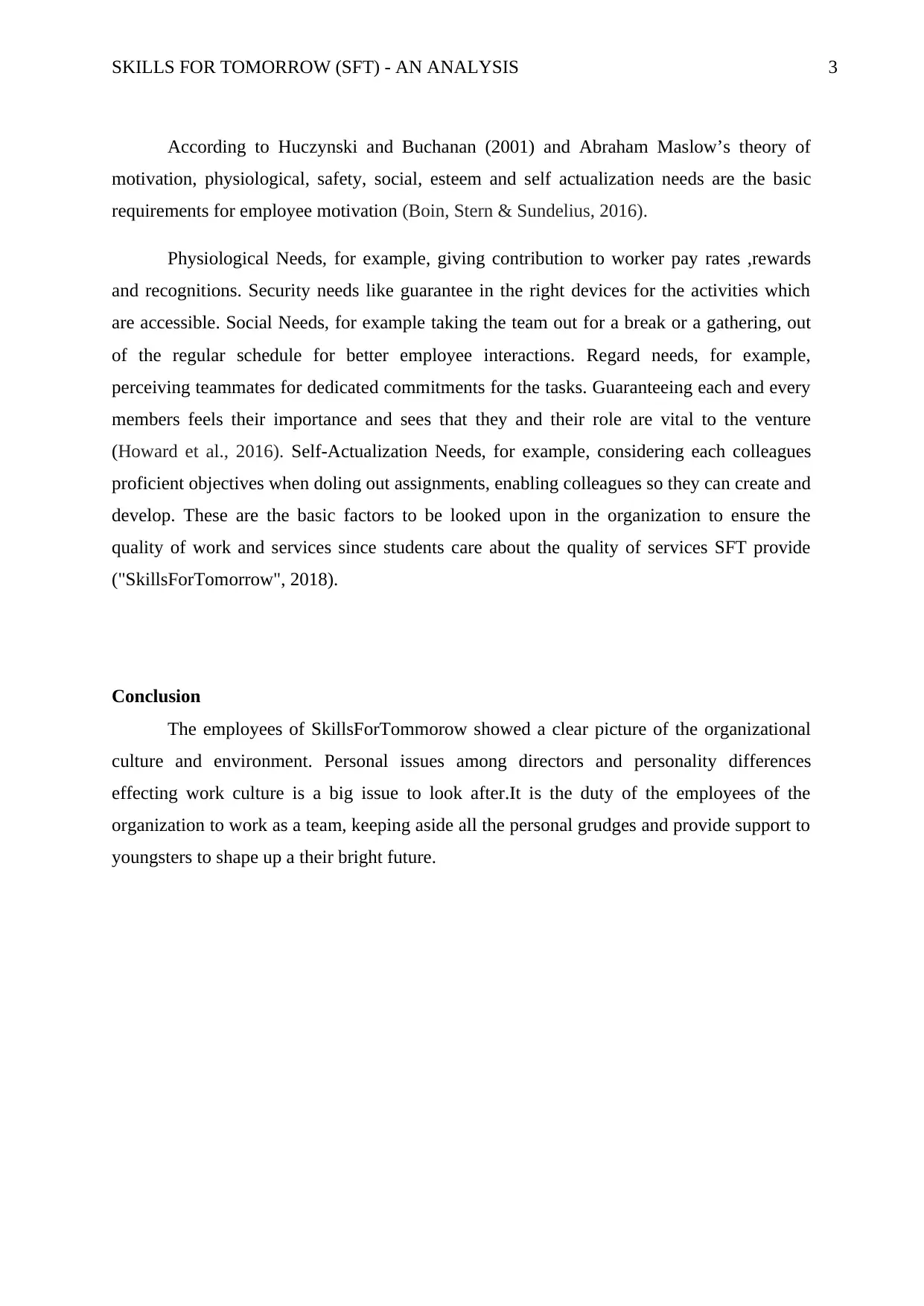
According to Huczynski and Buchanan (2001) and Abraham Maslow’s theory of
motivation, physiological, safety, social, esteem and self actualization needs are the basic
requirements for employee motivation (Boin, Stern & Sundelius, 2016).
Physiological Needs, for example, giving contribution to worker pay rates ,rewards
and recognitions. Security needs like guarantee in the right devices for the activities which
are accessible. Social Needs, for example taking the team out for a break or a gathering, out
of the regular schedule for better employee interactions. Regard needs, for example,
perceiving teammates for dedicated commitments for the tasks. Guaranteeing each and every
members feels their importance and sees that they and their role are vital to the venture
(Howard et al., 2016). Self-Actualization Needs, for example, considering each colleagues
proficient objectives when doling out assignments, enabling colleagues so they can create and
develop. These are the basic factors to be looked upon in the organization to ensure the
quality of work and services since students care about the quality of services SFT provide
("SkillsForTomorrow", 2018).
Conclusion
The employees of SkillsForTommorow showed a clear picture of the organizational
culture and environment. Personal issues among directors and personality differences
effecting work culture is a big issue to look after.It is the duty of the employees of the
organization to work as a team, keeping aside all the personal grudges and provide support to
youngsters to shape up a their bright future.
According to Huczynski and Buchanan (2001) and Abraham Maslow’s theory of
motivation, physiological, safety, social, esteem and self actualization needs are the basic
requirements for employee motivation (Boin, Stern & Sundelius, 2016).
Physiological Needs, for example, giving contribution to worker pay rates ,rewards
and recognitions. Security needs like guarantee in the right devices for the activities which
are accessible. Social Needs, for example taking the team out for a break or a gathering, out
of the regular schedule for better employee interactions. Regard needs, for example,
perceiving teammates for dedicated commitments for the tasks. Guaranteeing each and every
members feels their importance and sees that they and their role are vital to the venture
(Howard et al., 2016). Self-Actualization Needs, for example, considering each colleagues
proficient objectives when doling out assignments, enabling colleagues so they can create and
develop. These are the basic factors to be looked upon in the organization to ensure the
quality of work and services since students care about the quality of services SFT provide
("SkillsForTomorrow", 2018).
Conclusion
The employees of SkillsForTommorow showed a clear picture of the organizational
culture and environment. Personal issues among directors and personality differences
effecting work culture is a big issue to look after.It is the duty of the employees of the
organization to work as a team, keeping aside all the personal grudges and provide support to
youngsters to shape up a their bright future.
Paraphrase This Document
Need a fresh take? Get an instant paraphrase of this document with our AI Paraphraser

SKILLS FOR TOMORROW (SFT) - AN ANALYSIS 4
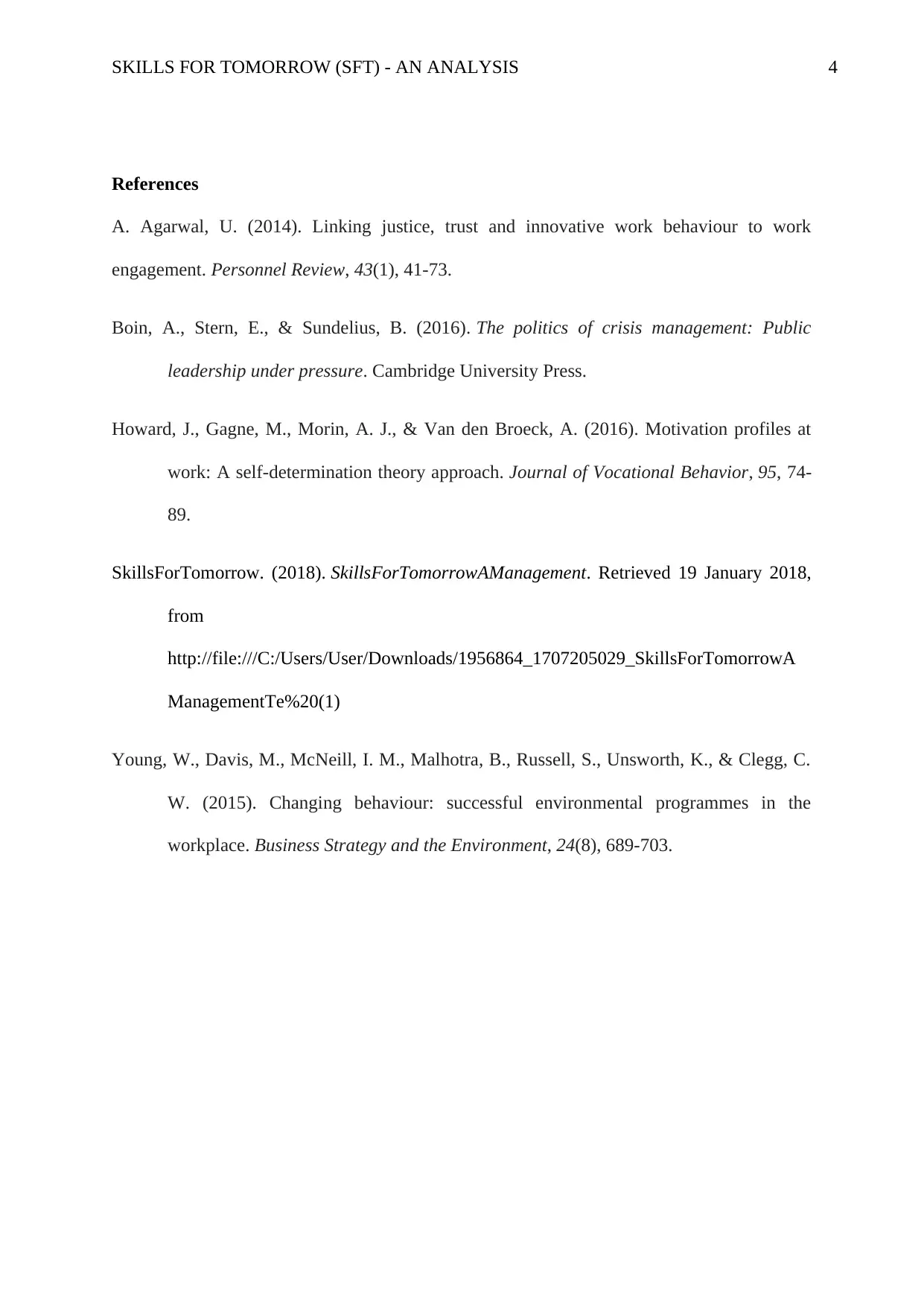
References
A. Agarwal, U. (2014). Linking justice, trust and innovative work behaviour to work
engagement. Personnel Review, 43(1), 41-73.
Boin, A., Stern, E., & Sundelius, B. (2016). The politics of crisis management: Public
leadership under pressure. Cambridge University Press.
Howard, J., Gagne, M., Morin, A. J., & Van den Broeck, A. (2016). Motivation profiles at
work: A self-determination theory approach. Journal of Vocational Behavior, 95, 74-
89.
SkillsForTomorrow. (2018). SkillsForTomorrowAManagement. Retrieved 19 January 2018,
from
http://file:///C:/Users/User/Downloads/1956864_1707205029_SkillsForTomorrowA
ManagementTe%20(1)
Young, W., Davis, M., McNeill, I. M., Malhotra, B., Russell, S., Unsworth, K., & Clegg, C.
W. (2015). Changing behaviour: successful environmental programmes in the
workplace. Business Strategy and the Environment, 24(8), 689-703.
References
A. Agarwal, U. (2014). Linking justice, trust and innovative work behaviour to work
engagement. Personnel Review, 43(1), 41-73.
Boin, A., Stern, E., & Sundelius, B. (2016). The politics of crisis management: Public
leadership under pressure. Cambridge University Press.
Howard, J., Gagne, M., Morin, A. J., & Van den Broeck, A. (2016). Motivation profiles at
work: A self-determination theory approach. Journal of Vocational Behavior, 95, 74-
89.
SkillsForTomorrow. (2018). SkillsForTomorrowAManagement. Retrieved 19 January 2018,
from
http://file:///C:/Users/User/Downloads/1956864_1707205029_SkillsForTomorrowA
ManagementTe%20(1)
Young, W., Davis, M., McNeill, I. M., Malhotra, B., Russell, S., Unsworth, K., & Clegg, C.
W. (2015). Changing behaviour: successful environmental programmes in the
workplace. Business Strategy and the Environment, 24(8), 689-703.
1 out of 5
Your All-in-One AI-Powered Toolkit for Academic Success.
+13062052269
info@desklib.com
Available 24*7 on WhatsApp / Email
Unlock your academic potential
Copyright © 2020–2026 A2Z Services. All Rights Reserved. Developed and managed by ZUCOL.