University IoT Project: Smart City Solutions and Implementation
VerifiedAdded on 2020/03/04
|8
|1255
|324
Project
AI Summary
This project delves into the realm of the Internet of Things (IoT) and its transformative potential in creating smart city solutions. It begins with an introduction to IoT, defining it as an ecosystem connecting physical objects via the Internet to reduce human intervention. The project identifies key urban problems, such as inefficient traffic management and waste disposal, which can be automated using IoT. The solution proposed involves implementing smart traffic signals with sensors to regulate traffic flow and smart waste management systems using sensors in trash cans. The project further explores the working of these systems, including smart parking, facial recognition for security, and smart home lighting. The project also provides a detailed diagram illustrating the smart city concept and outlines the pros of IoT, such as automation, optimization, and better management, while acknowledging potential cons like internet failure and technical faults. The project concludes by emphasizing the crucial role of IoT in shaping the future through automation and advancements in various sectors, highlighting its significance for smart cities, agriculture, and vehicle simulation. The project is a comprehensive overview of IoT and its practical applications in modern urban environments.

Running head: INTERNET OF THINGS
Project Title: Internet Of Things
Name of the student:
Name of the University:
Author Note:
Project Title: Internet Of Things
Name of the student:
Name of the University:
Author Note:
Paraphrase This Document
Need a fresh take? Get an instant paraphrase of this document with our AI Paraphraser

1INTERNET OF THINGS
Table of Contents
Introduction......................................................................................................................................1
Problem definition...........................................................................................................................1
Solution with features......................................................................................................................1
Diagram...........................................................................................................................................2
Working of the project.....................................................................................................................3
Pros and Cons..................................................................................................................................4
Conclusion.......................................................................................................................................4
References........................................................................................................................................6
Table of Contents
Introduction......................................................................................................................................1
Problem definition...........................................................................................................................1
Solution with features......................................................................................................................1
Diagram...........................................................................................................................................2
Working of the project.....................................................................................................................3
Pros and Cons..................................................................................................................................4
Conclusion.......................................................................................................................................4
References........................................................................................................................................6

2INTERNET OF THINGS
Introduction
Internet of Things (IoT) is one of the latest technologies that the world is working on and
developing in order to eliminate human intervention. IoT could be defined as an ecosystem that
connects all physical objects that are accessible through the Internet. The “things”, as defined by
IoT, could be anything that is accessible using Internet (Beyene et al., 2017). The “things” ranges
from a human heart that is controlled by the Internet or an entire city with sensors to automate its
activities. This assignment highlights the problem that are faced by cities and the work that could
be automated using IoT to reduce manual labour. The solution is provided in this assignment,
along with in-depth understanding of how it works its pros and cons.
Problem definition
In most of the cities, there are various activities that could be easily controlled by the
Internet and sensors, without any human intervention. For example, the control of the traffic
signals could be done by using sensors (Byun et al.,2016). The sensors are devised to track the
flow of traffic and regulate the signals according to that, without human intervention. Moreover,
baggage tracking, trash collecting are also some of the activities that could be easily automated.
Solution with features
Traffic signal maintenance is one of the major issues in big cities, as the population of the
traffic is high and during office hours, it becomes quite impossible for manual control of the
traffic signals. However, using IoT technology, the traffic lights could be devised with sensors.
These sensors are able to track the flow of traffic and then set the traffic signals accordingly.
Moreover, the waste management is also a major issue in big cities. The trashcans are often
cleared from time to time. Use of smart trash can has sensors in them. When the cans are filled to
Introduction
Internet of Things (IoT) is one of the latest technologies that the world is working on and
developing in order to eliminate human intervention. IoT could be defined as an ecosystem that
connects all physical objects that are accessible through the Internet. The “things”, as defined by
IoT, could be anything that is accessible using Internet (Beyene et al., 2017). The “things” ranges
from a human heart that is controlled by the Internet or an entire city with sensors to automate its
activities. This assignment highlights the problem that are faced by cities and the work that could
be automated using IoT to reduce manual labour. The solution is provided in this assignment,
along with in-depth understanding of how it works its pros and cons.
Problem definition
In most of the cities, there are various activities that could be easily controlled by the
Internet and sensors, without any human intervention. For example, the control of the traffic
signals could be done by using sensors (Byun et al.,2016). The sensors are devised to track the
flow of traffic and regulate the signals according to that, without human intervention. Moreover,
baggage tracking, trash collecting are also some of the activities that could be easily automated.
Solution with features
Traffic signal maintenance is one of the major issues in big cities, as the population of the
traffic is high and during office hours, it becomes quite impossible for manual control of the
traffic signals. However, using IoT technology, the traffic lights could be devised with sensors.
These sensors are able to track the flow of traffic and then set the traffic signals accordingly.
Moreover, the waste management is also a major issue in big cities. The trashcans are often
cleared from time to time. Use of smart trash can has sensors in them. When the cans are filled to
⊘ This is a preview!⊘
Do you want full access?
Subscribe today to unlock all pages.

Trusted by 1+ million students worldwide

3INTERNET OF THINGS
certain level, the municipality departments are informed such that they can send their vehicles to
replace the cans immediately and prevent overflow of garbage (Byun et al.,2016). Another major
sector that needs a lot of human intervention is the security guards in the office buildings. Facial
recognition doors could replace this manual labour (Wortmann & Flüchter, 2015). While only
the people with registered facial configurations could be allowed inside the premises, the need of
a security guard to restrict access could be eliminated.
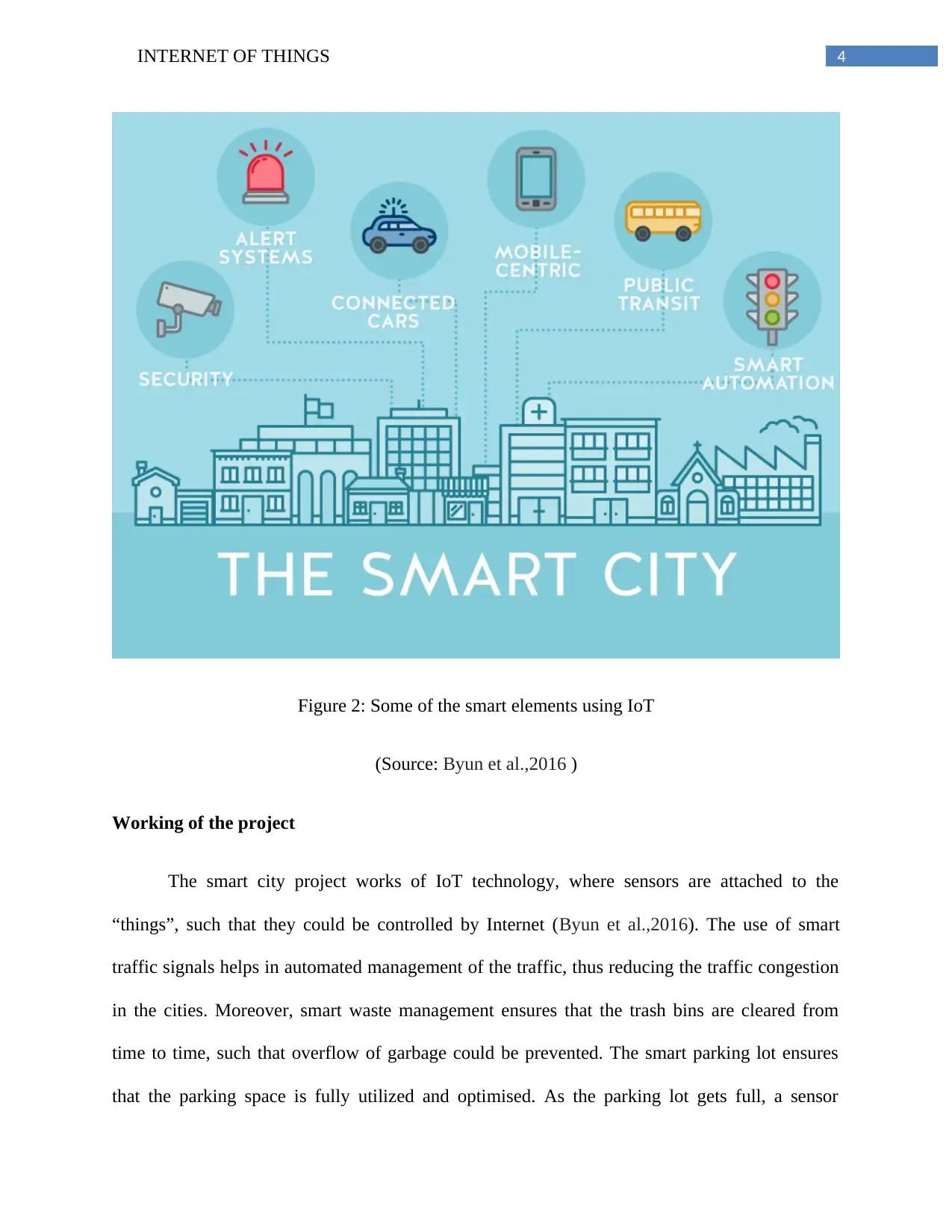
Diagram
Figure 1: Smart City using IoT
(Source: Beyene et al., 2017)
certain level, the municipality departments are informed such that they can send their vehicles to
replace the cans immediately and prevent overflow of garbage (Byun et al.,2016). Another major
sector that needs a lot of human intervention is the security guards in the office buildings. Facial
recognition doors could replace this manual labour (Wortmann & Flüchter, 2015). While only
the people with registered facial configurations could be allowed inside the premises, the need of
a security guard to restrict access could be eliminated.
Diagram
Figure 1: Smart City using IoT
(Source: Beyene et al., 2017)
Paraphrase This Document
Need a fresh take? Get an instant paraphrase of this document with our AI Paraphraser

4INTERNET OF THINGS
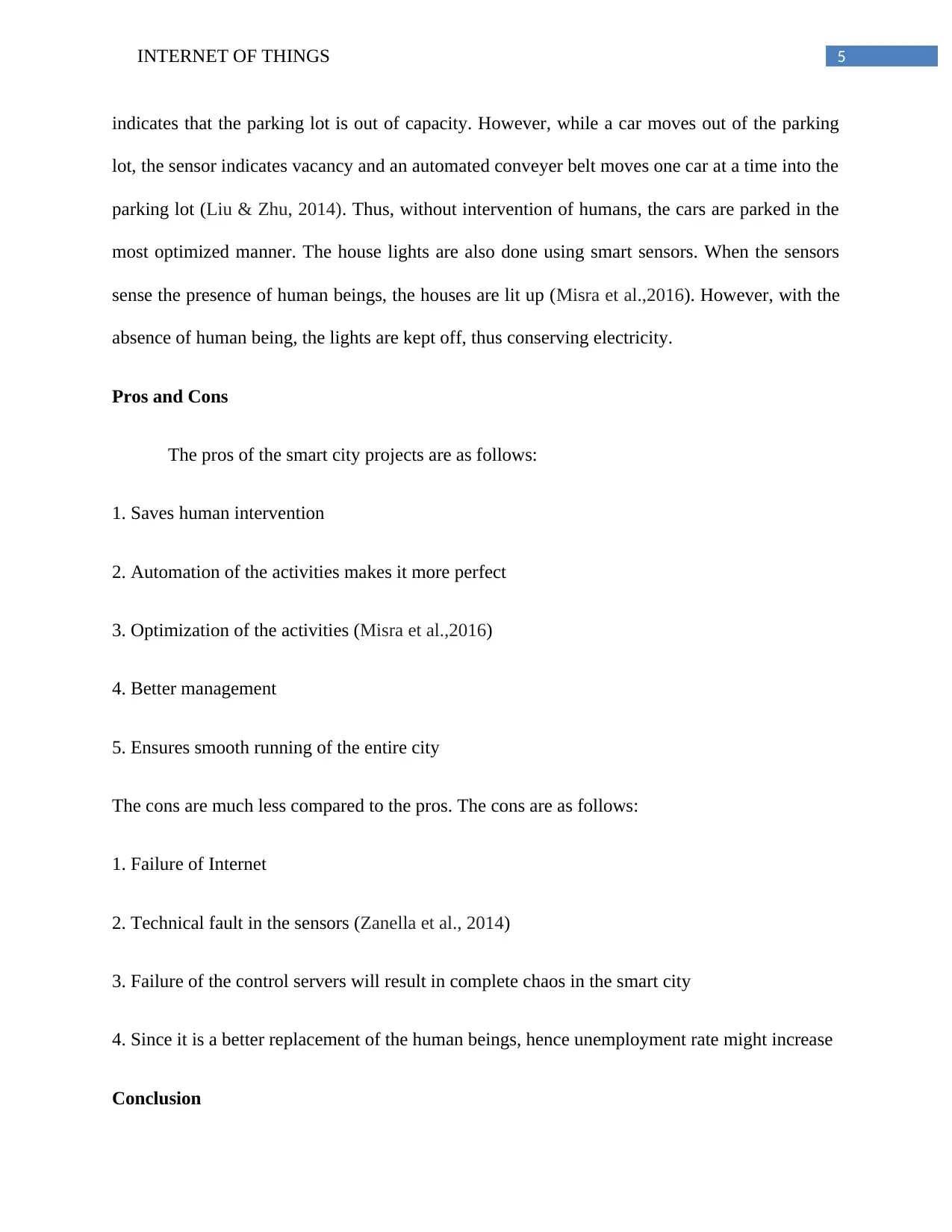
Figure 2: Some of the smart elements using IoT
(Source: Byun et al.,2016 )
Working of the project
The smart city project works of IoT technology, where sensors are attached to the
“things”, such that they could be controlled by Internet (Byun et al.,2016). The use of smart
traffic signals helps in automated management of the traffic, thus reducing the traffic congestion
in the cities. Moreover, smart waste management ensures that the trash bins are cleared from
time to time, such that overflow of garbage could be prevented. The smart parking lot ensures
that the parking space is fully utilized and optimised. As the parking lot gets full, a sensor
Figure 2: Some of the smart elements using IoT
(Source: Byun et al.,2016 )
Working of the project
The smart city project works of IoT technology, where sensors are attached to the
“things”, such that they could be controlled by Internet (Byun et al.,2016). The use of smart
traffic signals helps in automated management of the traffic, thus reducing the traffic congestion
in the cities. Moreover, smart waste management ensures that the trash bins are cleared from
time to time, such that overflow of garbage could be prevented. The smart parking lot ensures
that the parking space is fully utilized and optimised. As the parking lot gets full, a sensor

5INTERNET OF THINGS
indicates that the parking lot is out of capacity. However, while a car moves out of the parking
lot, the sensor indicates vacancy and an automated conveyer belt moves one car at a time into the
parking lot (Liu & Zhu, 2014). Thus, without intervention of humans, the cars are parked in the
most optimized manner. The house lights are also done using smart sensors. When the sensors
sense the presence of human beings, the houses are lit up (Misra et al.,2016). However, with the
absence of human being, the lights are kept off, thus conserving electricity.
Pros and Cons
The pros of the smart city projects are as follows:
1. Saves human intervention
2. Automation of the activities makes it more perfect
3. Optimization of the activities (Misra et al.,2016)
4. Better management
5. Ensures smooth running of the entire city
The cons are much less compared to the pros. The cons are as follows:
1. Failure of Internet
2. Technical fault in the sensors (Zanella et al., 2014)
3. Failure of the control servers will result in complete chaos in the smart city
4. Since it is a better replacement of the human beings, hence unemployment rate might increase
Conclusion
indicates that the parking lot is out of capacity. However, while a car moves out of the parking
lot, the sensor indicates vacancy and an automated conveyer belt moves one car at a time into the
parking lot (Liu & Zhu, 2014). Thus, without intervention of humans, the cars are parked in the
most optimized manner. The house lights are also done using smart sensors. When the sensors
sense the presence of human beings, the houses are lit up (Misra et al.,2016). However, with the
absence of human being, the lights are kept off, thus conserving electricity.
Pros and Cons
The pros of the smart city projects are as follows:
1. Saves human intervention
2. Automation of the activities makes it more perfect
3. Optimization of the activities (Misra et al.,2016)
4. Better management
5. Ensures smooth running of the entire city
The cons are much less compared to the pros. The cons are as follows:
1. Failure of Internet
2. Technical fault in the sensors (Zanella et al., 2014)
3. Failure of the control servers will result in complete chaos in the smart city
4. Since it is a better replacement of the human beings, hence unemployment rate might increase
Conclusion
⊘ This is a preview!⊘
Do you want full access?
Subscribe today to unlock all pages.

Trusted by 1+ million students worldwide

6INTERNET OF THINGS
IoT is the ultimate future that the world is looking forward. With the IoT technology,
most of the activities that are periodic and does not need much customization could be
automated. The IoT technology is inevitable for the advancements all around the world. Smart
cities, smart agriculture, vehicle simulation, automated waste management are some of the
features of a smart city. Thus, the IoT technology is essential for the advancements in the world.
IoT is the ultimate future that the world is looking forward. With the IoT technology,
most of the activities that are periodic and does not need much customization could be
automated. The IoT technology is inevitable for the advancements all around the world. Smart
cities, smart agriculture, vehicle simulation, automated waste management are some of the
features of a smart city. Thus, the IoT technology is essential for the advancements in the world.
Paraphrase This Document
Need a fresh take? Get an instant paraphrase of this document with our AI Paraphraser

7INTERNET OF THINGS
References
Beyene, Y. D., Jantti, R., Tirkkonen, O., Ruttik, K., Iraji, S., Larmo, A., ... & Torsner, J. (2017).
NB-IoT technology overview and experience from cloud-RAN implementation. IEEE
Wireless Communications, 24(3), 26-32.
Byun, J., Kim, S., Sa, J., Kim, S., Shin, Y. T., & Kim, J. B. (2016). Smart City Implementation
Models Based on IoT Technology. T. Shin, J.-B. Kim//Advanced Science and Technology
Letters, 129, 209-212.
Liu, S. J., & Zhu, G. Q. (2014). The application of GIS and IOT technology on building fire
evacuation. Procedia engineering, 71, 577-582.
Misra, G., Kumar, V., Agarwal, A., & Agarwal, K. (2016). Internet of things (iot)–a
technological analysis and survey on vision, concepts, challenges, innovation directions,
technologies, and applications (an upcoming or future generation computer
communication system technology). American Journal of Electrical and Electronic
Engineering, 4(1), 23-32.
Wortmann, F., & Flüchter, K. (2015). Internet of things. Business & Information Systems
Engineering, 57(3), 221-224.
Zanella, A., Bui, N., Castellani, A., Vangelista, L., & Zorzi, M. (2014). Internet of things for
smart cities. IEEE Internet of Things journal, 1(1), 22-32.
References
Beyene, Y. D., Jantti, R., Tirkkonen, O., Ruttik, K., Iraji, S., Larmo, A., ... & Torsner, J. (2017).
NB-IoT technology overview and experience from cloud-RAN implementation. IEEE
Wireless Communications, 24(3), 26-32.
Byun, J., Kim, S., Sa, J., Kim, S., Shin, Y. T., & Kim, J. B. (2016). Smart City Implementation
Models Based on IoT Technology. T. Shin, J.-B. Kim//Advanced Science and Technology
Letters, 129, 209-212.
Liu, S. J., & Zhu, G. Q. (2014). The application of GIS and IOT technology on building fire
evacuation. Procedia engineering, 71, 577-582.
Misra, G., Kumar, V., Agarwal, A., & Agarwal, K. (2016). Internet of things (iot)–a
technological analysis and survey on vision, concepts, challenges, innovation directions,
technologies, and applications (an upcoming or future generation computer
communication system technology). American Journal of Electrical and Electronic
Engineering, 4(1), 23-32.
Wortmann, F., & Flüchter, K. (2015). Internet of things. Business & Information Systems
Engineering, 57(3), 221-224.
Zanella, A., Bui, N., Castellani, A., Vangelista, L., & Zorzi, M. (2014). Internet of things for
smart cities. IEEE Internet of Things journal, 1(1), 22-32.
1 out of 8
Related Documents
Your All-in-One AI-Powered Toolkit for Academic Success.
+13062052269
info@desklib.com
Available 24*7 on WhatsApp / Email
Unlock your academic potential
Copyright © 2020–2025 A2Z Services. All Rights Reserved. Developed and managed by ZUCOL.