Business Proposal: Smart Home Solutions for Hotels in Malta
VerifiedAdded on 2021/02/18
|50
|15035
|21
Project
AI Summary
This business proposal outlines a plan to establish a smart home development business in Malta, targeting hotels and other buildings. The proposal begins with an executive summary and introduction, highlighting the rationale for the business idea, which is to capitalize on the growing demand for smart technology in the construction sector and Malta's tourism industry. The report includes a segmentation, targeting, and positioning (STP) analysis, focusing on geographical and demographic segmentation, and targets high-income individuals and hotels with over 50 rooms. The feasibility research assesses product, industry, market, organizational, and financial aspects, identifying competitors like V&C contractors and entry barriers in the construction industry. The business model emphasizes differentiation through advanced technology and energy efficiency, detailing core strategies, competitive advantages, and marketing plans. The business plan covers market analysis, financial projections, and operational strategies, including supply chain management and sustainability measures. The proposal anticipates an initial investment of £50,000, with a projected 16% return on investment within the first year, and highlights key partnerships and critical success factors for the business's viability in the Maltese market.

Business Development
Proposal
Proposal

Paraphrase This Document
Need a fresh take? Get an instant paraphrase of this document with our AI Paraphraser

Executive summary
In this business proposal it has been described about a business that is based on building
smart homes. Technology has significant impact on operations or activities of each and every
business, no matter the size of the organisation. This business will target all people regardless on
basis of their age, gender or demographic segment and firm has targeted hotel that is having
more than 50 rooms. The smart buildings are considered as highly preferred approach to
conserve the energy in construction activities. The market for smart homes is increasing every
year with more and more people getting aware of the smart technologies. At initial level, the
concept followed in this is moderate and then it will be high with growth and development in
business. Qualitative analysis was conducted to evaluate the feasibility of smart building and for
this several sustainability reports, journals and articles were analysed and reviewed.
Further, different secondary sources it has been analysed that certain features of smart
buildings are found to be attractive to almost all types of buildings. Moreover, there are several
competitors which were identified are V&C contractors, Schneider, Miema and Vassallo.
Company has innovative and advanced ideas to make buildings more smart and energy efficient.
The management and staff members of the company have good experience which can help them
to develop more effective and qualitative projects. But on the contrary, at present, company is
providing same services there is not innovation or differentiation. Further, in construction
industry, the entry cost is too high which is one of the benefit for the organisations as they did
not face the threat of competition. There are some success factors is discussed as well which
show how business will operate in the market of Malta. In addition to it, segmentation, targeting
and positioning of business has been explained in report.
Construction industry does not suffer from the threats of substitution in terms of any
product. The buildings cannot be replaced by any other product and the bargains power is also
limited to 10 percent. Moreover, it has also been analysed that project will start with an initial
investment of £50000. The cash flow will continue as 25% of amount will be received as
advance from the clients and it is estimated to have 16% return on investment within one year.
Vodafone telecommunication, Green Homes Limited and construction company are the key
partners in the construction industry.
In this business proposal it has been described about a business that is based on building
smart homes. Technology has significant impact on operations or activities of each and every
business, no matter the size of the organisation. This business will target all people regardless on
basis of their age, gender or demographic segment and firm has targeted hotel that is having
more than 50 rooms. The smart buildings are considered as highly preferred approach to
conserve the energy in construction activities. The market for smart homes is increasing every
year with more and more people getting aware of the smart technologies. At initial level, the
concept followed in this is moderate and then it will be high with growth and development in
business. Qualitative analysis was conducted to evaluate the feasibility of smart building and for
this several sustainability reports, journals and articles were analysed and reviewed.
Further, different secondary sources it has been analysed that certain features of smart
buildings are found to be attractive to almost all types of buildings. Moreover, there are several
competitors which were identified are V&C contractors, Schneider, Miema and Vassallo.
Company has innovative and advanced ideas to make buildings more smart and energy efficient.
The management and staff members of the company have good experience which can help them
to develop more effective and qualitative projects. But on the contrary, at present, company is
providing same services there is not innovation or differentiation. Further, in construction
industry, the entry cost is too high which is one of the benefit for the organisations as they did
not face the threat of competition. There are some success factors is discussed as well which
show how business will operate in the market of Malta. In addition to it, segmentation, targeting
and positioning of business has been explained in report.
Construction industry does not suffer from the threats of substitution in terms of any
product. The buildings cannot be replaced by any other product and the bargains power is also
limited to 10 percent. Moreover, it has also been analysed that project will start with an initial
investment of £50000. The cash flow will continue as 25% of amount will be received as
advance from the clients and it is estimated to have 16% return on investment within one year.
Vodafone telecommunication, Green Homes Limited and construction company are the key
partners in the construction industry.

Table of Contents
Executive summary.........................................................................................................................2
Chapter 1..........................................................................................................................................1
Introduction..................................................................................................................................1
1.1 Background............................................................................................................................1
1.3 Rationale for business idea....................................................................................................1
1.5 Methodology and sources of information..............................................................................2
1.6 Business proposal structure...................................................................................................2
1.8 Timescale...............................................................................................................................2
1.9 Structure of report..................................................................................................................2
Chapter 2..........................................................................................................................................4
Business concept..............................................................................................................................4
2.1 Segmentation, targeting and positioning...............................................................................4
2.1.1 Geographical segmentation................................................................................................4
2.1.2 Demographic segmentation................................................................................................4
2.2 Special features......................................................................................................................5
2.3 Critical success factors..........................................................................................................5
Chapter 3..........................................................................................................................................7
Feasibility research..........................................................................................................................7
3.1 Product feasibility..................................................................................................................7
3.1.1 Data collection..........................................................................................................8
3.1.2 Results....................................................................................................................10
3.2 Industry feasibility...............................................................................................................10
3.2.1 Competitors............................................................................................................11
3.2.2 Industry competitors...............................................................................................12
3.2.3 Entry cost................................................................................................................13
3.2.4 Entry barriers..........................................................................................................13
3.2.5 Substitutes...............................................................................................................14
3.2.6 Bargain power.........................................................................................................14
3.3 Market feasibility.................................................................................................................15
Executive summary.........................................................................................................................2
Chapter 1..........................................................................................................................................1
Introduction..................................................................................................................................1
1.1 Background............................................................................................................................1
1.3 Rationale for business idea....................................................................................................1
1.5 Methodology and sources of information..............................................................................2
1.6 Business proposal structure...................................................................................................2
1.8 Timescale...............................................................................................................................2
1.9 Structure of report..................................................................................................................2
Chapter 2..........................................................................................................................................4
Business concept..............................................................................................................................4
2.1 Segmentation, targeting and positioning...............................................................................4
2.1.1 Geographical segmentation................................................................................................4
2.1.2 Demographic segmentation................................................................................................4
2.2 Special features......................................................................................................................5
2.3 Critical success factors..........................................................................................................5
Chapter 3..........................................................................................................................................7
Feasibility research..........................................................................................................................7
3.1 Product feasibility..................................................................................................................7
3.1.1 Data collection..........................................................................................................8
3.1.2 Results....................................................................................................................10
3.2 Industry feasibility...............................................................................................................10
3.2.1 Competitors............................................................................................................11
3.2.2 Industry competitors...............................................................................................12
3.2.3 Entry cost................................................................................................................13
3.2.4 Entry barriers..........................................................................................................13
3.2.5 Substitutes...............................................................................................................14
3.2.6 Bargain power.........................................................................................................14
3.3 Market feasibility.................................................................................................................15
⊘ This is a preview!⊘
Do you want full access?
Subscribe today to unlock all pages.

Trusted by 1+ million students worldwide

3.4 Organisational feasibility....................................................................................................16
3.5 Financial feasibility.............................................................................................................16
3.6 Ambition Vs Ability............................................................................................................17
Chapter 4........................................................................................................................................19
Business Model..............................................................................................................................19
4.1 Core strategy........................................................................................................................19
4.1.1 Differentiation basis and identifying competitive advantage.................................19
4.1.2 Sales and marketing................................................................................................19
4.1.3 Services...................................................................................................................19
4.1.4 Competitive positioning and Porter Generic strategy.............................................20
4.2 Competitive advantage and self evaluation.........................................................................21
4.3 Mission................................................................................................................................21
4.4 Core competencies and resource requirements....................................................................21
4.5 Ways to connect customers groups and partnership network..............................................21
4.6 Deliverable values to customers..........................................................................................22
4.7 Improvements in business model.........................................................................................22
Chapter 5........................................................................................................................................23
Business plan.................................................................................................................................23
5.1 Executive summary.............................................................................................................23
5.2 Industry, company and product...............................................................................................26
5.3 The product / service concept..................................................................................................27
5.4 Key success factors..................................................................................................................28
5.5 Market, market analysis and research......................................................................................28
5.6 COST / VOLUME / PROFIT ANALYSIS.............................................................................30
5.10 Marketing plan.......................................................................................................................30
5.10.2 Customer relationship management...................................................................................31
5.12. Management Team...............................................................................................................31
5.13 Operation plan...................................................................................................................32
5.13.1 Business location..................................................................................................32
5.13.2 Supply chain management....................................................................................32
5.13.3 Operating cycle.....................................................................................................33
3.5 Financial feasibility.............................................................................................................16
3.6 Ambition Vs Ability............................................................................................................17
Chapter 4........................................................................................................................................19
Business Model..............................................................................................................................19
4.1 Core strategy........................................................................................................................19
4.1.1 Differentiation basis and identifying competitive advantage.................................19
4.1.2 Sales and marketing................................................................................................19
4.1.3 Services...................................................................................................................19
4.1.4 Competitive positioning and Porter Generic strategy.............................................20
4.2 Competitive advantage and self evaluation.........................................................................21
4.3 Mission................................................................................................................................21
4.4 Core competencies and resource requirements....................................................................21
4.5 Ways to connect customers groups and partnership network..............................................21
4.6 Deliverable values to customers..........................................................................................22
4.7 Improvements in business model.........................................................................................22
Chapter 5........................................................................................................................................23
Business plan.................................................................................................................................23
5.1 Executive summary.............................................................................................................23
5.2 Industry, company and product...............................................................................................26
5.3 The product / service concept..................................................................................................27
5.4 Key success factors..................................................................................................................28
5.5 Market, market analysis and research......................................................................................28
5.6 COST / VOLUME / PROFIT ANALYSIS.............................................................................30
5.10 Marketing plan.......................................................................................................................30
5.10.2 Customer relationship management...................................................................................31
5.12. Management Team...............................................................................................................31
5.13 Operation plan...................................................................................................................32
5.13.1 Business location..................................................................................................32
5.13.2 Supply chain management....................................................................................32
5.13.3 Operating cycle.....................................................................................................33
Paraphrase This Document
Need a fresh take? Get an instant paraphrase of this document with our AI Paraphraser
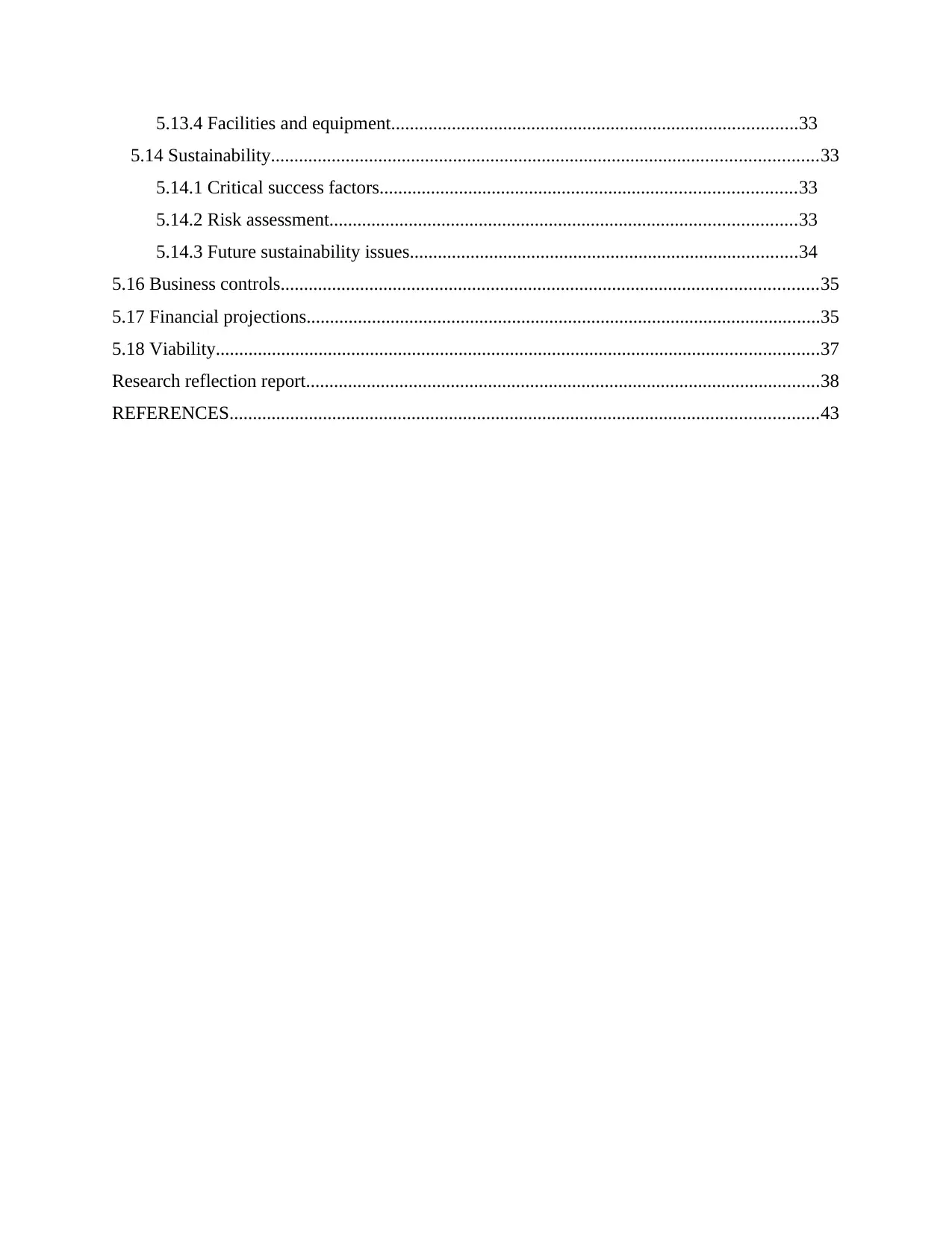
5.13.4 Facilities and equipment.......................................................................................33
5.14 Sustainability.....................................................................................................................33
5.14.1 Critical success factors.........................................................................................33
5.14.2 Risk assessment....................................................................................................33
5.14.3 Future sustainability issues...................................................................................34
5.16 Business controls...................................................................................................................35
5.17 Financial projections..............................................................................................................35
5.18 Viability.................................................................................................................................37
Research reflection report..............................................................................................................38
REFERENCES..............................................................................................................................43
5.14 Sustainability.....................................................................................................................33
5.14.1 Critical success factors.........................................................................................33
5.14.2 Risk assessment....................................................................................................33
5.14.3 Future sustainability issues...................................................................................34
5.16 Business controls...................................................................................................................35
5.17 Financial projections..............................................................................................................35
5.18 Viability.................................................................................................................................37
Research reflection report..............................................................................................................38
REFERENCES..............................................................................................................................43

Chapter 1
Introduction
1.1 Background
With frequent technological advancement it is necessary for country to improve their
infrastructure so that economic growth can be boosted. Also, it has become essential to maintain
sustainability in building homes so that green atmosphere can be developed. In recent times,
there has been transformation in construction sector. Now, technology is been used by
companies in every industry. This has resulted in rise in competition due to emerging of new
business concepts and ideas. Moreover, companies are finding out new market to expand their
operations.
Technology has significant impact on operations or activities of each and every business,
no matter the size of the organisation (Hardin and McCool, 2015). Technology has tangible as
well as intangible benefits that will assist the organisation in making money and produce the
outcomes that are demanded by customers. Technological infrastructure influences the
efficiency, culture and relationships of an organisation or business. The development in
technology had a great impact on the growth of business as it helped in bringing and
implementing new & unique ideas.
1.3 Rationale for business idea
Malta is tourist place where there is large number of hotels. The ease of doing business is
also easy with few laws and legislation to be followed.
The business idea is to convert and built smart homes in Malta. The company emphasis on
converting hotels, lounge, resort, etc. into smart homes by installing advance technological
devices (Adams and et.al., 2017). Besides this, goal of business is to provide smart homes to
tourist and local people. This will enable in improving the infrastructure in Malta.
Mission – To become recognized and reputed company in Malta for developing smart homes.
to increase life span of building by installing technology
to become a leader in maintaining sustainability in smart home industry
Vision- to provide highly advance smart homes and to make living beautiful
Aims
To convert traditional buildings and hotels into smart homes.
1
Introduction
1.1 Background
With frequent technological advancement it is necessary for country to improve their
infrastructure so that economic growth can be boosted. Also, it has become essential to maintain
sustainability in building homes so that green atmosphere can be developed. In recent times,
there has been transformation in construction sector. Now, technology is been used by
companies in every industry. This has resulted in rise in competition due to emerging of new
business concepts and ideas. Moreover, companies are finding out new market to expand their
operations.
Technology has significant impact on operations or activities of each and every business,
no matter the size of the organisation (Hardin and McCool, 2015). Technology has tangible as
well as intangible benefits that will assist the organisation in making money and produce the
outcomes that are demanded by customers. Technological infrastructure influences the
efficiency, culture and relationships of an organisation or business. The development in
technology had a great impact on the growth of business as it helped in bringing and
implementing new & unique ideas.
1.3 Rationale for business idea
Malta is tourist place where there is large number of hotels. The ease of doing business is
also easy with few laws and legislation to be followed.
The business idea is to convert and built smart homes in Malta. The company emphasis on
converting hotels, lounge, resort, etc. into smart homes by installing advance technological
devices (Adams and et.al., 2017). Besides this, goal of business is to provide smart homes to
tourist and local people. This will enable in improving the infrastructure in Malta.
Mission – To become recognized and reputed company in Malta for developing smart homes.
to increase life span of building by installing technology
to become a leader in maintaining sustainability in smart home industry
Vision- to provide highly advance smart homes and to make living beautiful
Aims
To convert traditional buildings and hotels into smart homes.
1
⊘ This is a preview!⊘
Do you want full access?
Subscribe today to unlock all pages.
Trusted by 1+ million students worldwide

To create a business that provides solution to use and implement technology in homes
Making a difference in building homes and hotels in Malta.
1.5 Methodology and sources of information
The data is been collected through secondary method. In this books, articles, etc. are
searched and analyzed (Javed and et.al., 2016. ). This has helped in gathering relevant data and
information regarding previous ventures, number of buildings constructed, market condition, etc.
here, data is been gathered through energy efficiency, statistical information, etc.
1.6 Business proposal structure
The overall report is divided into five chapters that are as follows :-
Description of business concept – In this chapter it will be described about what business idea
is and why it has been chosen. Also, it will be discussed about types of service provided by
business.
Feasibility research – this chapter relates to feasibility of business idea and concept. It means
that what are various aspects related to market, services, industry, financial feasibility, etc. It will
give insight about what
Development of business model – In this chapter it is described about competitive advantage a
business idea and how it has lead to development of model.
The business plan – this chapter describes overall business function and how operations will be
done in 5 years. Moreover, what are the factor which makes this business successful. Also, what
are the risks and challenges involved in it. The chapter also contains detail about goals and
objectives of business.
1.8 Timescale
After report is been developed the business operations can be started. The report provides
brief information about business concept and plan. Also, it is important that business should
commence as soon as possible. Therefore, in this business operations are planned to start within
3 months.
1.9 Structure of report
In present report, there will be five chapters and each one will be based provide a brief
description (Ok and et.al., 2015). The chapters are as follows :-
2
Making a difference in building homes and hotels in Malta.
1.5 Methodology and sources of information
The data is been collected through secondary method. In this books, articles, etc. are
searched and analyzed (Javed and et.al., 2016. ). This has helped in gathering relevant data and
information regarding previous ventures, number of buildings constructed, market condition, etc.
here, data is been gathered through energy efficiency, statistical information, etc.
1.6 Business proposal structure
The overall report is divided into five chapters that are as follows :-
Description of business concept – In this chapter it will be described about what business idea
is and why it has been chosen. Also, it will be discussed about types of service provided by
business.
Feasibility research – this chapter relates to feasibility of business idea and concept. It means
that what are various aspects related to market, services, industry, financial feasibility, etc. It will
give insight about what
Development of business model – In this chapter it is described about competitive advantage a
business idea and how it has lead to development of model.
The business plan – this chapter describes overall business function and how operations will be
done in 5 years. Moreover, what are the factor which makes this business successful. Also, what
are the risks and challenges involved in it. The chapter also contains detail about goals and
objectives of business.
1.8 Timescale
After report is been developed the business operations can be started. The report provides
brief information about business concept and plan. Also, it is important that business should
commence as soon as possible. Therefore, in this business operations are planned to start within
3 months.
1.9 Structure of report
In present report, there will be five chapters and each one will be based provide a brief
description (Ok and et.al., 2015). The chapters are as follows :-
2
Paraphrase This Document
Need a fresh take? Get an instant paraphrase of this document with our AI Paraphraser

Introduction – It consists of introduction of business that include background of industry and
brief description of Green Homes limited. Also, it will include mission and vision of business
along with aims. The rationale and scope of business is also defined in it.
Business opportunity – In this chapter there will be entire information what are the features of
Green Homes limited products and services. Moreover, how different factors will impact on
growth and development of business in industry.
Feasibility research- This is the third chapter which contain secondary data and information
about industry and product feasibility, market and financial feasibility. By this it will be easy to
analyse business idea and its growth.
Business model – The fourth chapter contains theories and models related to business. In this
strategy and plans of differentiated factors of product is included.
Business plan – The chapter contains all information from executive summary to business
opportunity. Furthermore, the information related to HR, financial analysis, marketing, etc. are
included in chapter as well.
3
brief description of Green Homes limited. Also, it will include mission and vision of business
along with aims. The rationale and scope of business is also defined in it.
Business opportunity – In this chapter there will be entire information what are the features of
Green Homes limited products and services. Moreover, how different factors will impact on
growth and development of business in industry.
Feasibility research- This is the third chapter which contain secondary data and information
about industry and product feasibility, market and financial feasibility. By this it will be easy to
analyse business idea and its growth.
Business model – The fourth chapter contains theories and models related to business. In this
strategy and plans of differentiated factors of product is included.
Business plan – The chapter contains all information from executive summary to business
opportunity. Furthermore, the information related to HR, financial analysis, marketing, etc. are
included in chapter as well.
3

Chapter 2
Business concept
2.1 Segmentation, targeting and positioning
As stated by (Jia and et.al., 2018) the main purpose of business is to identify targeted
market so that their needs can be fulfilled. Moreover, it enables business to focus on specific
people and they are able to market products in effective way.
2.1.1 Geographical segmentation
It refers to segmenting on basis of geography of country. Here, the business will be
started in the capital city of Malta that is Valletta. It is a major tourist destination for people
where large number of hotels and buildings exists. In addition to it, company will expand its
services in St. Paul’s Bay which is the largest town. These both places are best for company for
initial start up. In addition to it, there are many hotels and buildings as well.
In future business will focus on other towns and city of Malta. Beside this, services will
be provided in neighbouring countries as well such as Italy and Tunisia. By this it will be easy
for people to make convert homes into smart ones. With this it there will be other potential areas
open for company to expand.
2.1.2 Demographic segmentation
The services of company offer people to use technology and modify their homes. It also
provides consultancy to people who are willing to implement technology (Vanus and et.al.,
2016). Thus, services are available for those who want to build smart homes.
Demographic segmentation refers to segment market on basis of criteria that is age,
gender, sex, etc. Thus, this business will target all people regardless on basis of their age, gender,
etc. Here, services will be offered to all those who want to convert traditional into smart homes.
Targeting
After segmentation, businesses have to determine targeted people. Here, company will
target those people who are high class. It means people whose income level is high and they are
easily able to built smart homes. Furthermore, firm will target hotel that is having more than 50
rooms.
4
Business concept
2.1 Segmentation, targeting and positioning
As stated by (Jia and et.al., 2018) the main purpose of business is to identify targeted
market so that their needs can be fulfilled. Moreover, it enables business to focus on specific
people and they are able to market products in effective way.
2.1.1 Geographical segmentation
It refers to segmenting on basis of geography of country. Here, the business will be
started in the capital city of Malta that is Valletta. It is a major tourist destination for people
where large number of hotels and buildings exists. In addition to it, company will expand its
services in St. Paul’s Bay which is the largest town. These both places are best for company for
initial start up. In addition to it, there are many hotels and buildings as well.
In future business will focus on other towns and city of Malta. Beside this, services will
be provided in neighbouring countries as well such as Italy and Tunisia. By this it will be easy
for people to make convert homes into smart ones. With this it there will be other potential areas
open for company to expand.
2.1.2 Demographic segmentation
The services of company offer people to use technology and modify their homes. It also
provides consultancy to people who are willing to implement technology (Vanus and et.al.,
2016). Thus, services are available for those who want to build smart homes.
Demographic segmentation refers to segment market on basis of criteria that is age,
gender, sex, etc. Thus, this business will target all people regardless on basis of their age, gender,
etc. Here, services will be offered to all those who want to convert traditional into smart homes.
Targeting
After segmentation, businesses have to determine targeted people. Here, company will
target those people who are high class. It means people whose income level is high and they are
easily able to built smart homes. Furthermore, firm will target hotel that is having more than 50
rooms.
4
⊘ This is a preview!⊘
Do you want full access?
Subscribe today to unlock all pages.
Trusted by 1+ million students worldwide

Positioning
It refers to positioning of product and services which means that how its identity and brand
image will be developed in the mind of consumer. For this company will position it by showing
3 –D model of smart homes. Alongside it, people mind set will be developed by promoting
services.
2.2 Special features
There are some special features of services of Green Homes limited which are described below :-
Latest technological devices
The company will provide latest technological devices to customers. It will help in
building of smart homes. Also, converting old homes into smart one will help in generating
value.
Smart homes solutions-
The business will provide smart solution to convert buildings into smart homes. The
solutions are installing software, etc.
2.3 Critical success factors
There are some success factors of business which is described below :
The consultancy will support people to implement technological tools and devices in their
homes. This will help in conserving energy and maintaining sustainability.
Building smart homes will assist contractors and engineers to adopt a new concept and
model of infrastructure. It will attract people to built smart homes. In that hotels and
resorts that are yet to be constructed can also be developed as smart hotels.
By providing consultancy services will attract in transforming homes and building into
smart ones. So, it will help in generating awareness among them to get an idea about new
concept.
The neighbouring country such as Italy is also a tourist destination. So, in that nation as
well company can expand its operations.
By taking people feedback after installation of technology company can make changes or
improvements in their services and products (Vanus and et.al., 2016). It will help them to
retain customer and built a strong customer base in Malta.
The business can earn commission from by collaborating with construction companies.
Hence, extra income can be generated from it as well.
5
It refers to positioning of product and services which means that how its identity and brand
image will be developed in the mind of consumer. For this company will position it by showing
3 –D model of smart homes. Alongside it, people mind set will be developed by promoting
services.
2.2 Special features
There are some special features of services of Green Homes limited which are described below :-
Latest technological devices
The company will provide latest technological devices to customers. It will help in
building of smart homes. Also, converting old homes into smart one will help in generating
value.
Smart homes solutions-
The business will provide smart solution to convert buildings into smart homes. The
solutions are installing software, etc.
2.3 Critical success factors
There are some success factors of business which is described below :
The consultancy will support people to implement technological tools and devices in their
homes. This will help in conserving energy and maintaining sustainability.
Building smart homes will assist contractors and engineers to adopt a new concept and
model of infrastructure. It will attract people to built smart homes. In that hotels and
resorts that are yet to be constructed can also be developed as smart hotels.
By providing consultancy services will attract in transforming homes and building into
smart ones. So, it will help in generating awareness among them to get an idea about new
concept.
The neighbouring country such as Italy is also a tourist destination. So, in that nation as
well company can expand its operations.
By taking people feedback after installation of technology company can make changes or
improvements in their services and products (Vanus and et.al., 2016). It will help them to
retain customer and built a strong customer base in Malta.
The business can earn commission from by collaborating with construction companies.
Hence, extra income can be generated from it as well.
5
Paraphrase This Document
Need a fresh take? Get an instant paraphrase of this document with our AI Paraphraser

Therefore, these are the success factors through which Green Homes limited can be
successful in Malta. It will allow them to become a leader in smart home industry. Also, firm can
maximise their revenue. They can also develop relationship with hotel chain which will allow
them to expand operations in other countries. In such a competitive business environment it has
been difficult for companies to survive. There are many businesses expanding in other countries
due to which competition level as risen. The main purpose of this business is to convert
commercial and residential buildings into smart ones by installing devices and technology (Kiel
and et.al., 2017). The devices and appliances will be installed in homes as well. It will also offer
consultancy and services to home owners and helping for best automation system. By this energy
consumption will reduce which will support in sustainability of building. It will be easy for
business to provide services to build smart homes.
6
successful in Malta. It will allow them to become a leader in smart home industry. Also, firm can
maximise their revenue. They can also develop relationship with hotel chain which will allow
them to expand operations in other countries. In such a competitive business environment it has
been difficult for companies to survive. There are many businesses expanding in other countries
due to which competition level as risen. The main purpose of this business is to convert
commercial and residential buildings into smart ones by installing devices and technology (Kiel
and et.al., 2017). The devices and appliances will be installed in homes as well. It will also offer
consultancy and services to home owners and helping for best automation system. By this energy
consumption will reduce which will support in sustainability of building. It will be easy for
business to provide services to build smart homes.
6

Chapter 3
Feasibility research
3.1 Product feasibility
The market for smart homes is increasing every year with more and more people getting
aware of the smart technologies. The smart building appliances provide smart household utility
and monitoring devices The smart technology in buildings is not only limited to commercial
buildings instead it is also possible to implement in residential, manufacturing, public
infrastructures and all other types of building. The key drivers which encourages the use of smart
technologies is advanced technologies, easy availability of support services and smart household
applications (Madani, Daim and Weng, 2017). The increasing role of government towards
sustainability, increased awareness and anticipation of the electricity cost are also making the
services popular among people. However limited training and low penetration of the service
providers are barriers for the services.
Similarly, in order to become market leader it is important to use technology. There are
organisations which is offering services via internet. The use of technology has ease business
operations. Green Homes limited has come up with same concept in which they offer service of
installing application and software in buildings. This is done to bring sustainability in
construction sector and efficient utilisation of energy. Apart from it, any issues related to
buildings are been solved.
In addition to it, Malta is a developing country where large number of tourist visit every
year. Also, infrastructure of country is developed and it is connected to other parts of world as
well. With technological development the government has supported by reducing tax rate. Apart
from it, local people are using smart phones (Ness and et.al., 2015). The telecommunication
companies having strengthened their network and improved infrastructure.
These changes has enabled in using technology in building smart homes. They are able to
monitor homes and reduce use of energy consumption. The concept followed in this is moderate
at initial level and then it will be high with growth and development in business.
7
Feasibility research
3.1 Product feasibility
The market for smart homes is increasing every year with more and more people getting
aware of the smart technologies. The smart building appliances provide smart household utility
and monitoring devices The smart technology in buildings is not only limited to commercial
buildings instead it is also possible to implement in residential, manufacturing, public
infrastructures and all other types of building. The key drivers which encourages the use of smart
technologies is advanced technologies, easy availability of support services and smart household
applications (Madani, Daim and Weng, 2017). The increasing role of government towards
sustainability, increased awareness and anticipation of the electricity cost are also making the
services popular among people. However limited training and low penetration of the service
providers are barriers for the services.
Similarly, in order to become market leader it is important to use technology. There are
organisations which is offering services via internet. The use of technology has ease business
operations. Green Homes limited has come up with same concept in which they offer service of
installing application and software in buildings. This is done to bring sustainability in
construction sector and efficient utilisation of energy. Apart from it, any issues related to
buildings are been solved.
In addition to it, Malta is a developing country where large number of tourist visit every
year. Also, infrastructure of country is developed and it is connected to other parts of world as
well. With technological development the government has supported by reducing tax rate. Apart
from it, local people are using smart phones (Ness and et.al., 2015). The telecommunication
companies having strengthened their network and improved infrastructure.
These changes has enabled in using technology in building smart homes. They are able to
monitor homes and reduce use of energy consumption. The concept followed in this is moderate
at initial level and then it will be high with growth and development in business.
7
⊘ This is a preview!⊘
Do you want full access?
Subscribe today to unlock all pages.
Trusted by 1+ million students worldwide

1 out of 50


Related Documents


Your All-in-One AI-Powered Toolkit for Academic Success.
+13062052269
info@desklib.com
Available 24*7 on WhatsApp / Email
![[object Object]](/_next/static/media/star-bottom.7253800d.svg)
Unlock your academic potential
Copyright © 2020–2026 A2Z Services. All Rights Reserved. Developed and managed by ZUCOL.