Support Work in Social Care: Roles of Non-Direct Workers and Skills

Verified

Added on  2023/03/22

|8
|404
|24
Report
AI Summary
This report provides an overview of support work within the social care sector, focusing on the roles of non-direct care workers. It begins with an introduction to health and social care organizations and their objectives. The report then details the specific roles of non-direct care workers, including receptionists, maintenance staff, and catering staff, highlighting their respective responsibilities within a care environment. A key section of the report emphasizes the importance of interpersonal skills for these workers, discussing how effective communication, active listening, and appropriate body language are essential for interacting with clients and colleagues. The report emphasizes the importance of these skills for each role, illustrating how they contribute to the overall quality of care provided. The report concludes with a list of references used to support the information presented.
Document Page
TASK 1
Support Work in
Social Care
tabler-icon-diamond-filled.svg

Paraphrase This Document

Need a fresh take? Get an instant paraphrase of this document with our AI Paraphraser
Document Page
Covered Content
Introduction
Roles of non direct care workers
Interpersonal skills required for non direct care workers
References
Document Page
Introduction
Health and social care organisations are institutions which
are involved in creating improved treatment for the people
and make them aware about administrating a healthy lifest
yle.
To carry out operations in health and social sector, there ar
e people involved in direct and indirect manner.
Document Page
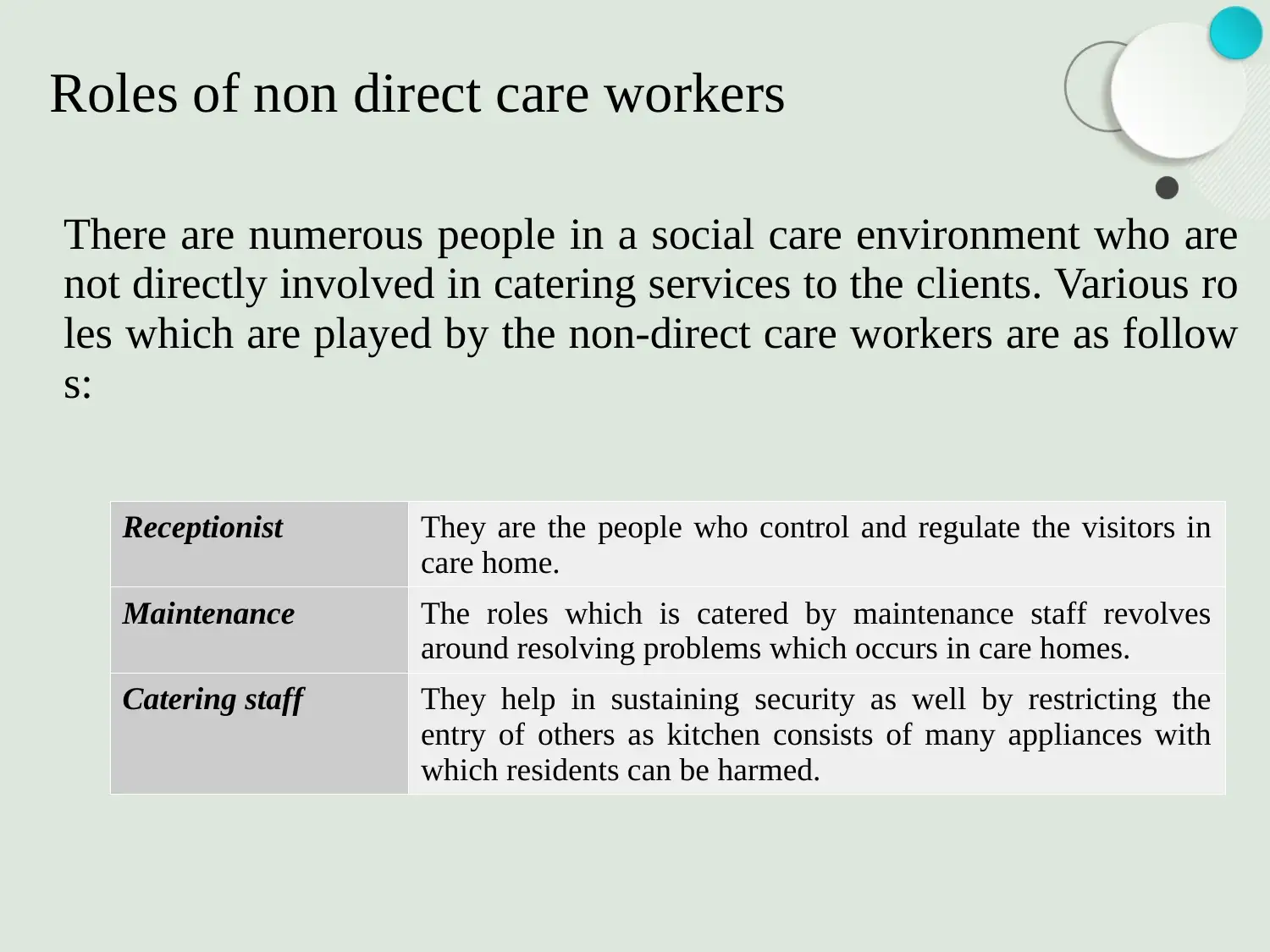
Roles of non direct care workers
There are numerous people in a social care environment who are
not directly involved in catering services to the clients. Various ro
les which are played by the non-direct care workers are as follow
s:
Receptionist They are the people who control and regulate the visitors in
care home.
Maintenance The roles which is catered by maintenance staff revolves
around resolving problems which occurs in care homes.
Catering staff They help in sustaining security as well by restricting the
entry of others as kitchen consists of many appliances with
which residents can be harmed.
tabler-icon-diamond-filled.svg

Paraphrase This Document

Need a fresh take? Get an instant paraphrase of this document with our AI Paraphraser
Document Page
Interpersonal skills required for non direct workers
Interpersonal skills are defined to be a medium through w
hich feelings and queries can be conveyed from one perso
n to another.
The ability to effectively listen is also considered in interp
ersonal skills therefore needs to be nourished by non-direc
t workers.
Document Page
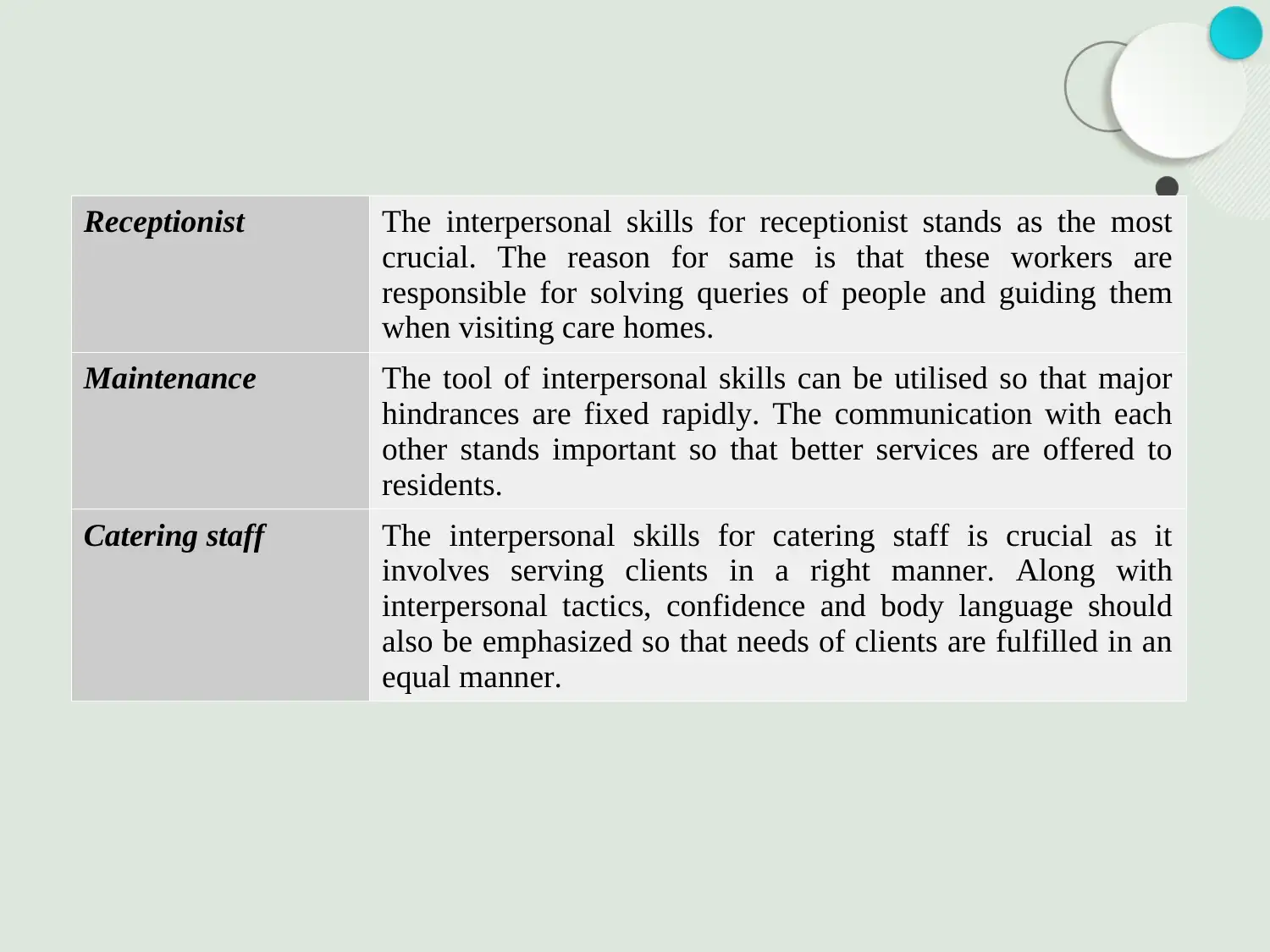
Receptionist The interpersonal skills for receptionist stands as the most
crucial. The reason for same is that these workers are
responsible for solving queries of people and guiding them
when visiting care homes.
Maintenance The tool of interpersonal skills can be utilised so that major
hindrances are fixed rapidly. The communication with each
other stands important so that better services are offered to
residents.
Catering staff The interpersonal skills for catering staff is crucial as it
involves serving clients in a right manner. Along with
interpersonal tactics, confidence and body language should
also be emphasized so that needs of clients are fulfilled in an
equal manner.
Document Page
References
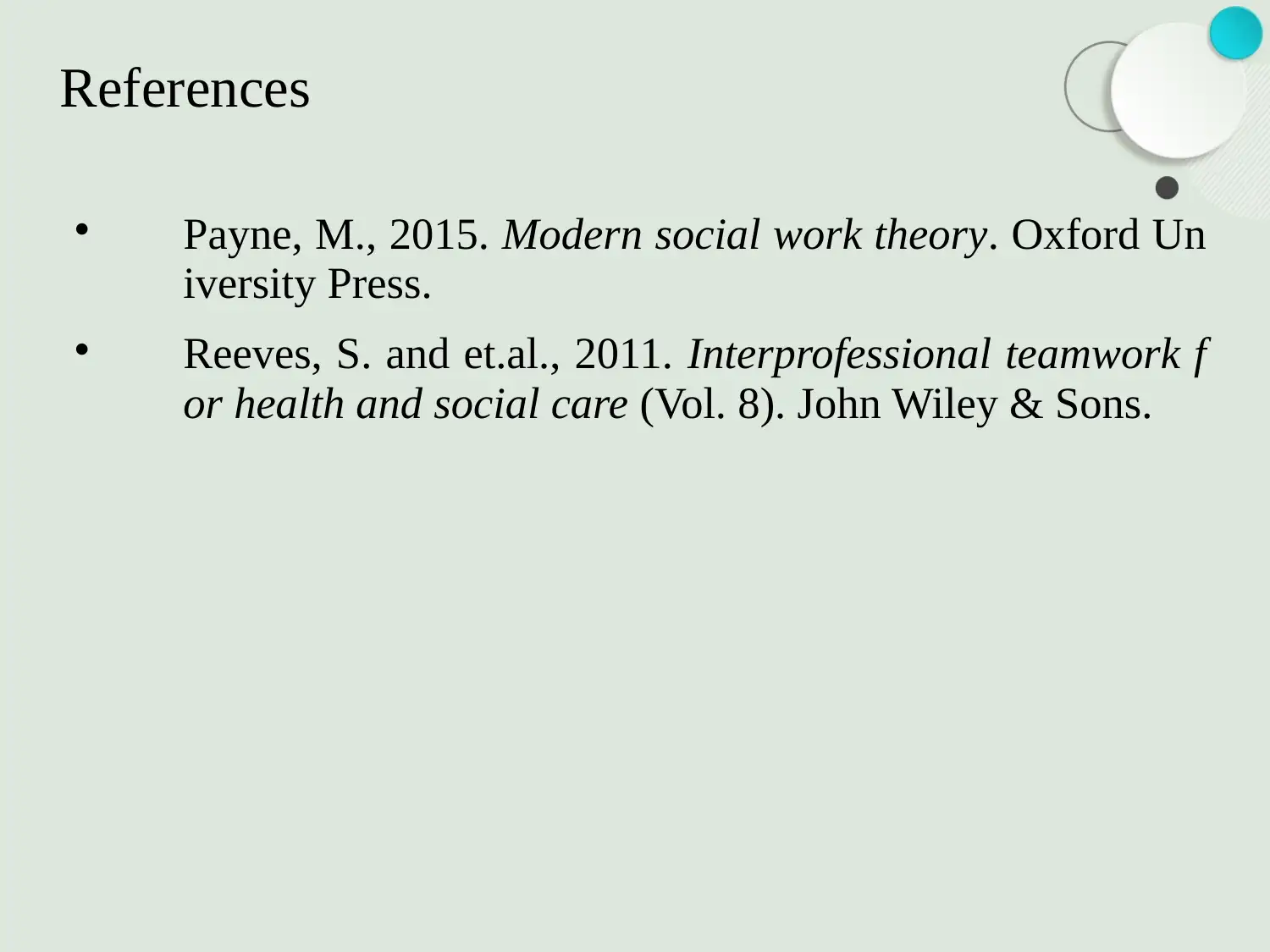
Payne, M., 2015. Modern social work theory. Oxford Un
iversity Press.
Reeves, S. and et.al., 2011. Interprofessional teamwork f
or health and social care (Vol. 8). John Wiley & Sons.
tabler-icon-diamond-filled.svg

Paraphrase This Document

Need a fresh take? Get an instant paraphrase of this document with our AI Paraphraser
Document Page
Thank You!!
chevron_up_icon
1 out of 8
circle_padding
hide_on_mobile
zoom_out_icon
[object Object]