MNG81001 Report: Analyzing Sunshine 100's Social Media Policy Impact
VerifiedAdded on 2023/04/21
|13
|1340
|406
Report
AI Summary
This report analyzes the social media policy of Sunshine 100, a company specializing in responsible foods, focusing on the advantages and disadvantages of social media usage within the organization. The report examines the impact of employee behaviors on brand image, emphasizing the need for a detailed social media policy to manage employee conduct and protect the company's reputation. It covers aspects such as social media interaction covered by the policy, communication strategies to disseminate the policy effectively, and the overall influence of social media on the company's brand identity and communication processes. The analysis includes recommendations for improving social media platform usage and ensuring responsible information sharing among employees. The report concludes by summarizing the key findings and implications of social media engagement on Sunshine 100's business functions, highlighting the importance of a well-defined policy for maintaining a positive brand image and effective communication.
Running head: MARKETING
Marketing
Name of student
Name of University
Author note
Marketing
Name of student
Name of University
Author note
Paraphrase This Document
Need a fresh take? Get an instant paraphrase of this document with our AI Paraphraser

1MARKETING
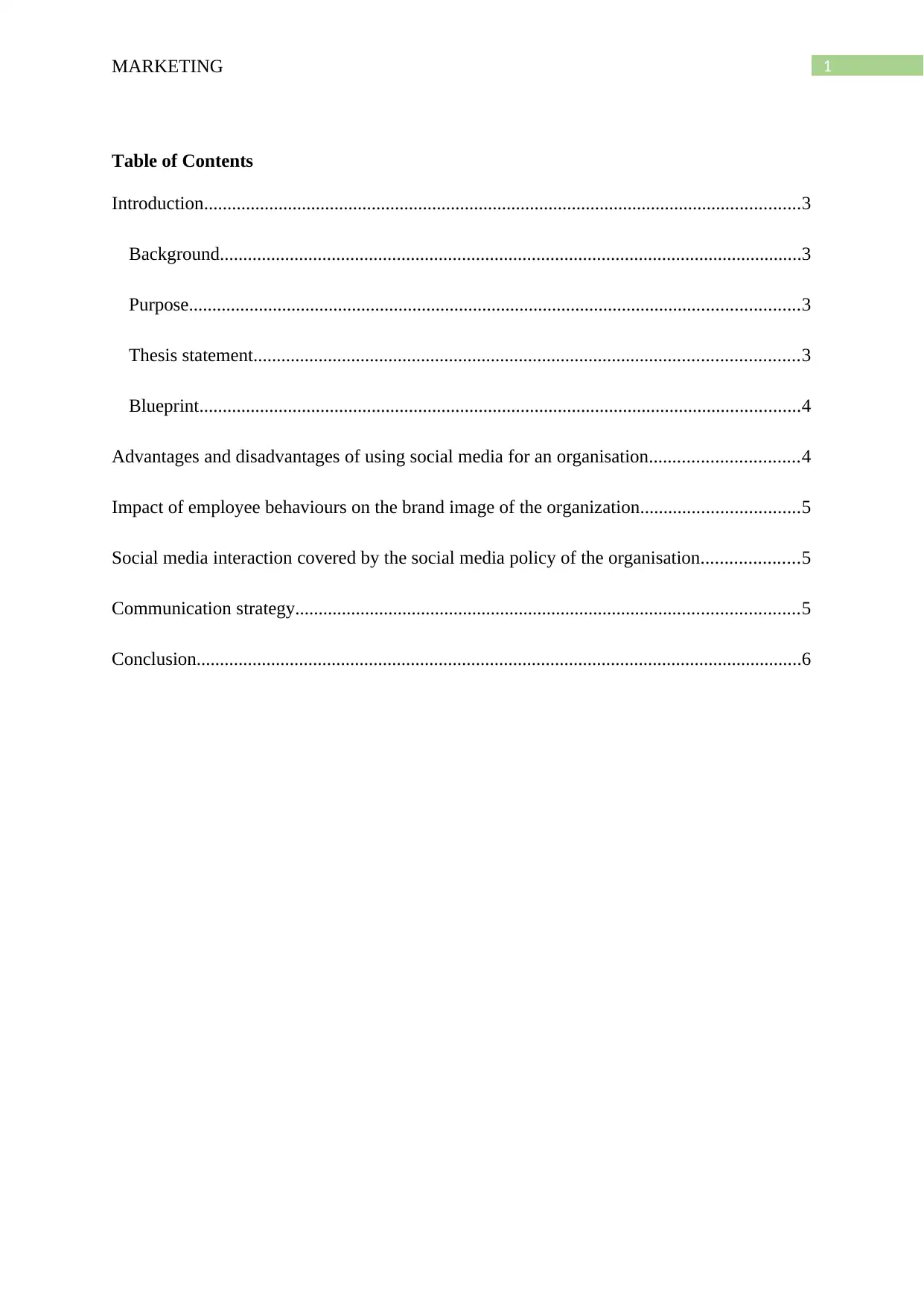
Table of Contents
Introduction................................................................................................................................3
Background.............................................................................................................................3
Purpose...................................................................................................................................3
Thesis statement.....................................................................................................................3
Blueprint.................................................................................................................................4
Advantages and disadvantages of using social media for an organisation................................4
Impact of employee behaviours on the brand image of the organization..................................5
Social media interaction covered by the social media policy of the organisation.....................5
Communication strategy............................................................................................................5
Conclusion..................................................................................................................................6
Table of Contents
Introduction................................................................................................................................3
Background.............................................................................................................................3
Purpose...................................................................................................................................3
Thesis statement.....................................................................................................................3
Blueprint.................................................................................................................................4
Advantages and disadvantages of using social media for an organisation................................4
Impact of employee behaviours on the brand image of the organization..................................5
Social media interaction covered by the social media policy of the organisation.....................5
Communication strategy............................................................................................................5
Conclusion..................................................................................................................................6

2MARKETING
To: Paul Morgan, CEO, Sunshine 100
From: Jane Wilson, Director of Social Media
Date: 4th January 2019
Subject: Sunshine 100’s social media policy
Introduction
Background
The background of the topic demonstrates the social media policy that can allow the
company to manage its employees online and at the same time, protect the brand image,
reputation and ensure sharing or exchange of information within the workplace (Peattie and
Belz 2013). The social media policy is implemented to facilitate the communication process
and ensures sharing the messages and information among the employees of the organisation.
Purpose
The purpose is to understand how the social media policy and use of social media
platforms have helped in improving the communication process. This assures delivering the
right messages and information and ensure that the social media platforms are used for
official purposes within the workplace. The negative consequences that might appear include
usage of social media for personal purposes along with hampering the workforce efficiency
too (Perrin 2015).
Thesis statement
The social media impact is huge within the workplace as it not only enhances the
transmission of messages and information and ensures that employees share information in a
responsible manner at Sunshine 100. This is useful for enhancing the brand image, identity
and improves the brand reputation too, furthermore deals with negative issues like poor
To: Paul Morgan, CEO, Sunshine 100
From: Jane Wilson, Director of Social Media
Date: 4th January 2019
Subject: Sunshine 100’s social media policy
Introduction
Background
The background of the topic demonstrates the social media policy that can allow the
company to manage its employees online and at the same time, protect the brand image,
reputation and ensure sharing or exchange of information within the workplace (Peattie and
Belz 2013). The social media policy is implemented to facilitate the communication process
and ensures sharing the messages and information among the employees of the organisation.
Purpose
The purpose is to understand how the social media policy and use of social media
platforms have helped in improving the communication process. This assures delivering the
right messages and information and ensure that the social media platforms are used for
official purposes within the workplace. The negative consequences that might appear include
usage of social media for personal purposes along with hampering the workforce efficiency
too (Perrin 2015).
Thesis statement
The social media impact is huge within the workplace as it not only enhances the
transmission of messages and information and ensures that employees share information in a
responsible manner at Sunshine 100. This is useful for enhancing the brand image, identity
and improves the brand reputation too, furthermore deals with negative issues like poor
⊘ This is a preview!⊘
Do you want full access?
Subscribe today to unlock all pages.

Trusted by 1+ million students worldwide

3MARKETING
communication and lack of proper transmission of messages to the people (Armstrong et al.
2015).
Blueprint
What are the advantages and disadvantages of using social media within the organisation’s
workplace?
How can the social media involvement create an impact on the brand reputation of Sunshine
100?
How can social media engagement help in responsible sharing and exchange of information
and messages?
What are the suitable measures recommended for improving the use f social media platforms
in Sunshine 100?
Advantages and disadvantages of using social media for an organisation
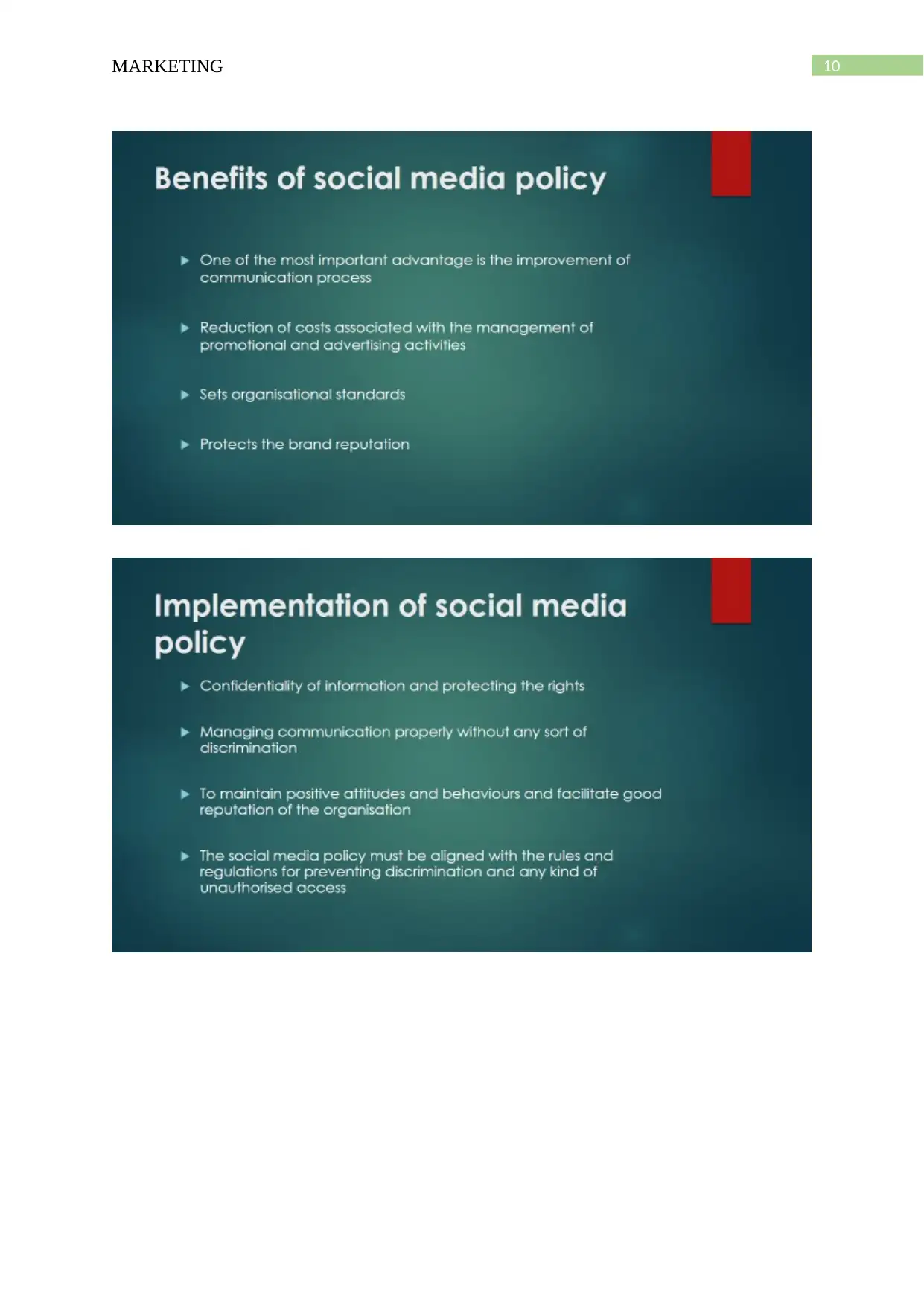
The advantages include advertising and promotional activities managed at a much
lesser cost and it creates ease for managing the marketing techniques. The social media
involvement improves the communication process efficiency and can all0w the messages to
get transferred from one person to another quickly and reliably. The reduced costs of
marketing activities and increased sales revenue are few of the benefits attained by using
social media at Sunshine 100 (Aral, Dellarocas and Godes 2013).
The disadvantages include increase risks due to the involvement of hackers,
detractors, spammers and even virus attacks. There is need of managing additional resources
to create a good online presence whereas the negative feedbacks, information leaks and
hacking activities could further contribute to poor brand image and hampering the reputation
of the organisation as a whole (Shin 2013).
communication and lack of proper transmission of messages to the people (Armstrong et al.
2015).
Blueprint
What are the advantages and disadvantages of using social media within the organisation’s
workplace?
How can the social media involvement create an impact on the brand reputation of Sunshine
100?
How can social media engagement help in responsible sharing and exchange of information
and messages?
What are the suitable measures recommended for improving the use f social media platforms
in Sunshine 100?
Advantages and disadvantages of using social media for an organisation
The advantages include advertising and promotional activities managed at a much
lesser cost and it creates ease for managing the marketing techniques. The social media
involvement improves the communication process efficiency and can all0w the messages to
get transferred from one person to another quickly and reliably. The reduced costs of
marketing activities and increased sales revenue are few of the benefits attained by using
social media at Sunshine 100 (Aral, Dellarocas and Godes 2013).
The disadvantages include increase risks due to the involvement of hackers,
detractors, spammers and even virus attacks. There is need of managing additional resources
to create a good online presence whereas the negative feedbacks, information leaks and
hacking activities could further contribute to poor brand image and hampering the reputation
of the organisation as a whole (Shin 2013).
Paraphrase This Document
Need a fresh take? Get an instant paraphrase of this document with our AI Paraphraser

4MARKETING
Impact of employee behaviours on the brand image of the organization
The employee behaviours could either promote the positive image of the brand or
even deteriorate or damage the brand reputation largely. Thus, it is essential for managing
proper employee behaviours within Sunshine 100 and keep them encouraged to perform to
their potential. Often employees post feedbacks and opinions on the social networking
websites managed by the company where they have been working for (Mulhern 2013). The
positive feedbacks often arouse interest among the targeted audiences and they are influenced
to make purchases of services while the negative feedbacks could often deter them to get
inclined with the organisation.
Social media interaction covered by the social media policy of the organisation
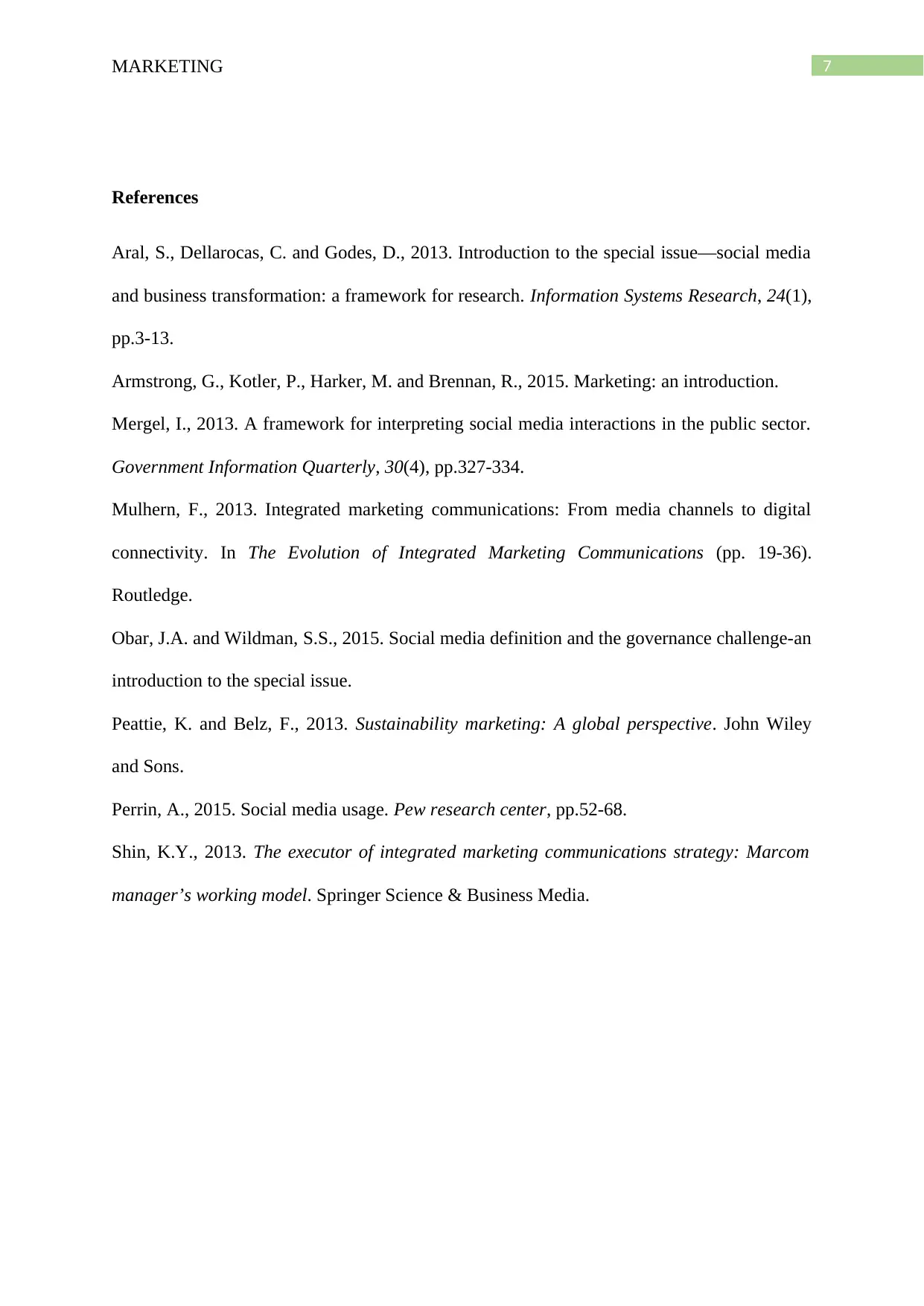
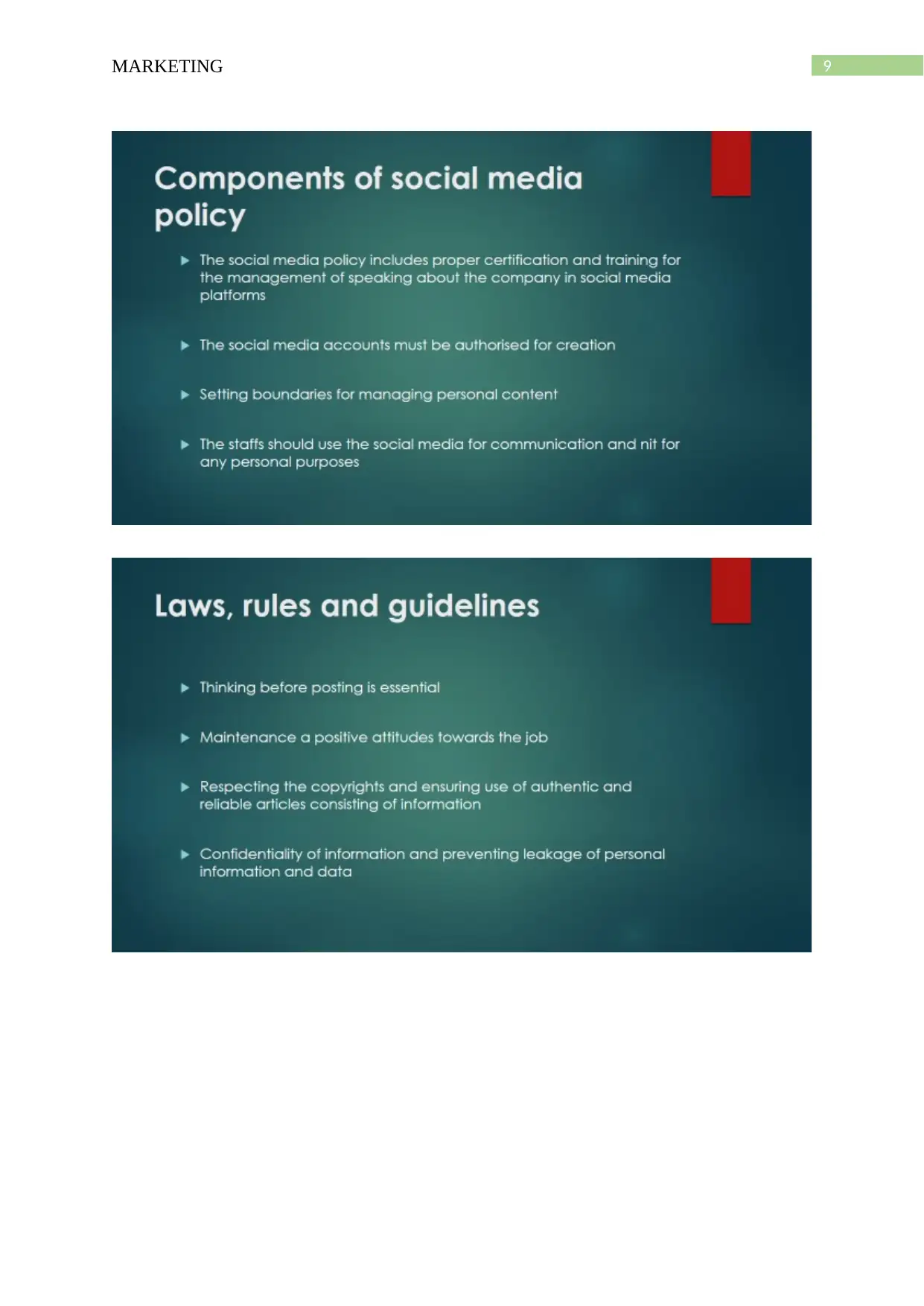
A social media policy includes various laws, rules and regulations along with the roles
and responsibilities that are associated with the use of social media within the workplace of
Sunshine 100. The social media policy includes laws, rules and regulations that shape the
business functioning. The policy is aimed at establishing positive attitudes among the
employees and maintaining friendly and polite behaviours to ensure that the reputation of the
organisation is not damaged (Mergel 2013). The guidelines also include protecting the
copyrights and preventing exposure or leak of sensitive information. The information should
be kept confidential and should be prevented from any unauthorised access too.
Communication strategy
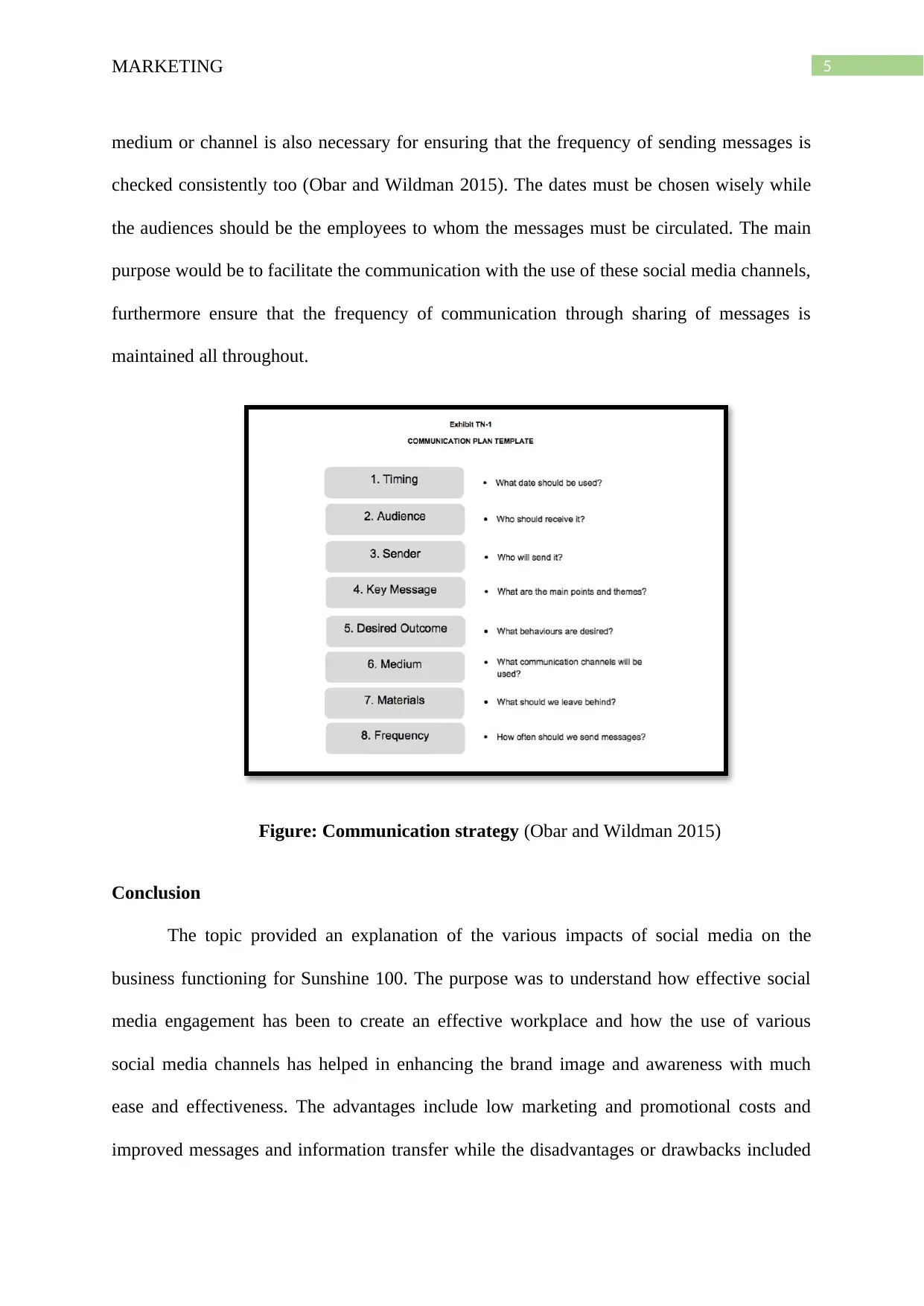
The Director of social media must implement an effective communication strategy for
ensuring that the social media policies, laws and guidelines are communicated with the staffs
properly. This also ensures managing proper time to deliver the messages and information,
select the right target audience, sender as well as the key messages and information to be
delivered. The messages desired to be sent must be understood and selection of the right
Impact of employee behaviours on the brand image of the organization
The employee behaviours could either promote the positive image of the brand or
even deteriorate or damage the brand reputation largely. Thus, it is essential for managing
proper employee behaviours within Sunshine 100 and keep them encouraged to perform to
their potential. Often employees post feedbacks and opinions on the social networking
websites managed by the company where they have been working for (Mulhern 2013). The
positive feedbacks often arouse interest among the targeted audiences and they are influenced
to make purchases of services while the negative feedbacks could often deter them to get
inclined with the organisation.
Social media interaction covered by the social media policy of the organisation
A social media policy includes various laws, rules and regulations along with the roles
and responsibilities that are associated with the use of social media within the workplace of
Sunshine 100. The social media policy includes laws, rules and regulations that shape the
business functioning. The policy is aimed at establishing positive attitudes among the
employees and maintaining friendly and polite behaviours to ensure that the reputation of the
organisation is not damaged (Mergel 2013). The guidelines also include protecting the
copyrights and preventing exposure or leak of sensitive information. The information should
be kept confidential and should be prevented from any unauthorised access too.
Communication strategy
The Director of social media must implement an effective communication strategy for
ensuring that the social media policies, laws and guidelines are communicated with the staffs
properly. This also ensures managing proper time to deliver the messages and information,
select the right target audience, sender as well as the key messages and information to be
delivered. The messages desired to be sent must be understood and selection of the right

5MARKETING
medium or channel is also necessary for ensuring that the frequency of sending messages is
checked consistently too (Obar and Wildman 2015). The dates must be chosen wisely while
the audiences should be the employees to whom the messages must be circulated. The main
purpose would be to facilitate the communication with the use of these social media channels,
furthermore ensure that the frequency of communication through sharing of messages is
maintained all throughout.
Figure: Communication strategy (Obar and Wildman 2015)
Conclusion
The topic provided an explanation of the various impacts of social media on the
business functioning for Sunshine 100. The purpose was to understand how effective social
media engagement has been to create an effective workplace and how the use of various
social media channels has helped in enhancing the brand image and awareness with much
ease and effectiveness. The advantages include low marketing and promotional costs and
improved messages and information transfer while the disadvantages or drawbacks included
medium or channel is also necessary for ensuring that the frequency of sending messages is
checked consistently too (Obar and Wildman 2015). The dates must be chosen wisely while
the audiences should be the employees to whom the messages must be circulated. The main
purpose would be to facilitate the communication with the use of these social media channels,
furthermore ensure that the frequency of communication through sharing of messages is
maintained all throughout.
Figure: Communication strategy (Obar and Wildman 2015)
Conclusion
The topic provided an explanation of the various impacts of social media on the
business functioning for Sunshine 100. The purpose was to understand how effective social
media engagement has been to create an effective workplace and how the use of various
social media channels has helped in enhancing the brand image and awareness with much
ease and effectiveness. The advantages include low marketing and promotional costs and
improved messages and information transfer while the disadvantages or drawbacks included
⊘ This is a preview!⊘
Do you want full access?
Subscribe today to unlock all pages.

Trusted by 1+ million students worldwide

6MARKETING
the negative feedbacks and comments posted on the social network websites, contributing to
the poor brand image. The social media consisted of various guidelines associated with the
management of copyrights and ensuring that the sensitive information must not be leaked for
maintaining confidentiality.
the negative feedbacks and comments posted on the social network websites, contributing to
the poor brand image. The social media consisted of various guidelines associated with the
management of copyrights and ensuring that the sensitive information must not be leaked for
maintaining confidentiality.
Paraphrase This Document
Need a fresh take? Get an instant paraphrase of this document with our AI Paraphraser

7MARKETING
References
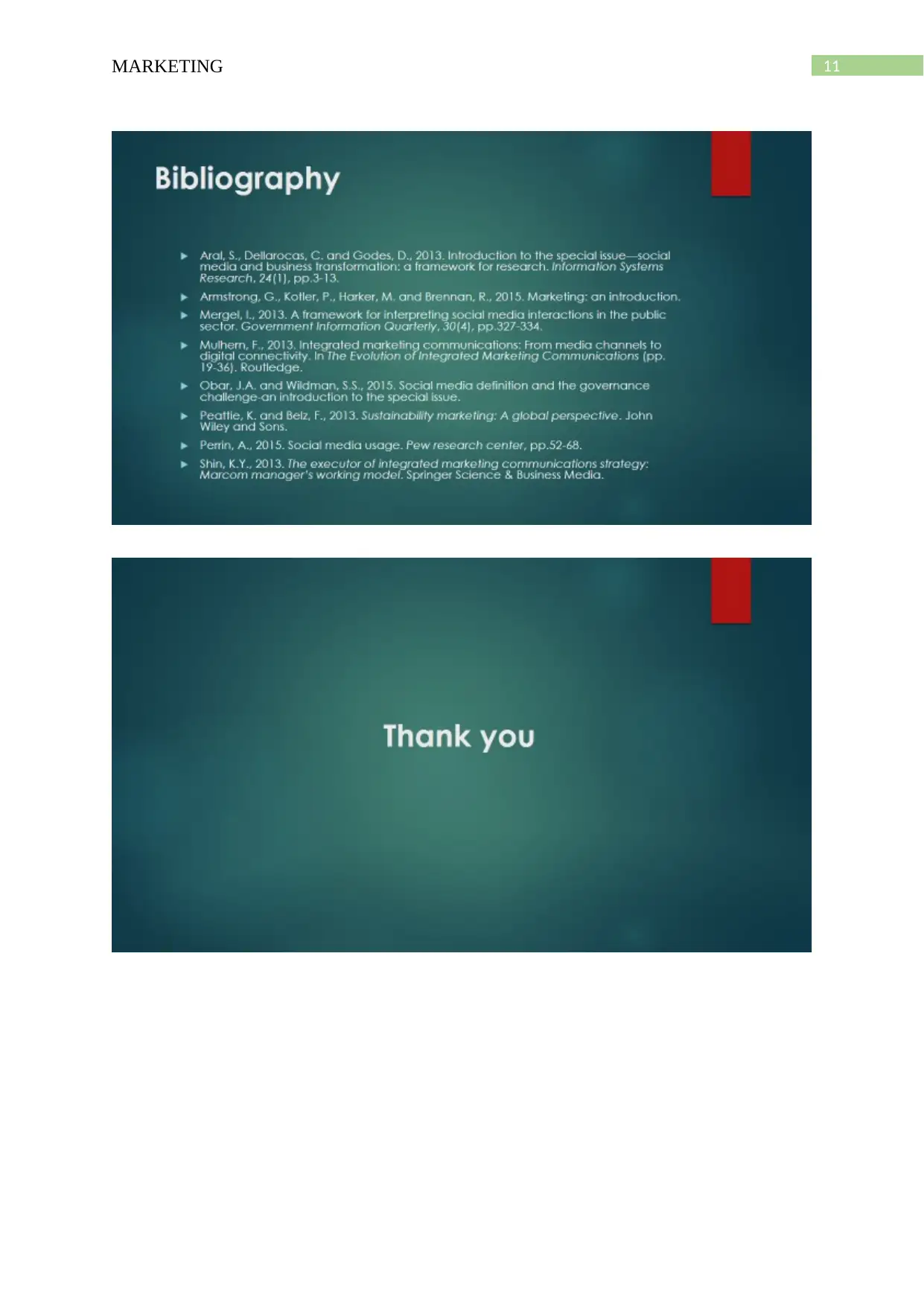
Aral, S., Dellarocas, C. and Godes, D., 2013. Introduction to the special issue—social media
and business transformation: a framework for research. Information Systems Research, 24(1),
pp.3-13.
Armstrong, G., Kotler, P., Harker, M. and Brennan, R., 2015. Marketing: an introduction.
Mergel, I., 2013. A framework for interpreting social media interactions in the public sector.
Government Information Quarterly, 30(4), pp.327-334.
Mulhern, F., 2013. Integrated marketing communications: From media channels to digital
connectivity. In The Evolution of Integrated Marketing Communications (pp. 19-36).
Routledge.
Obar, J.A. and Wildman, S.S., 2015. Social media definition and the governance challenge-an
introduction to the special issue.
Peattie, K. and Belz, F., 2013. Sustainability marketing: A global perspective. John Wiley
and Sons.
Perrin, A., 2015. Social media usage. Pew research center, pp.52-68.
Shin, K.Y., 2013. The executor of integrated marketing communications strategy: Marcom
manager’s working model. Springer Science & Business Media.
References
Aral, S., Dellarocas, C. and Godes, D., 2013. Introduction to the special issue—social media
and business transformation: a framework for research. Information Systems Research, 24(1),
pp.3-13.
Armstrong, G., Kotler, P., Harker, M. and Brennan, R., 2015. Marketing: an introduction.
Mergel, I., 2013. A framework for interpreting social media interactions in the public sector.
Government Information Quarterly, 30(4), pp.327-334.
Mulhern, F., 2013. Integrated marketing communications: From media channels to digital
connectivity. In The Evolution of Integrated Marketing Communications (pp. 19-36).
Routledge.
Obar, J.A. and Wildman, S.S., 2015. Social media definition and the governance challenge-an
introduction to the special issue.
Peattie, K. and Belz, F., 2013. Sustainability marketing: A global perspective. John Wiley
and Sons.
Perrin, A., 2015. Social media usage. Pew research center, pp.52-68.
Shin, K.Y., 2013. The executor of integrated marketing communications strategy: Marcom
manager’s working model. Springer Science & Business Media.

8MARKETING
⊘ This is a preview!⊘
Do you want full access?
Subscribe today to unlock all pages.

Trusted by 1+ million students worldwide

9MARKETING
Paraphrase This Document
Need a fresh take? Get an instant paraphrase of this document with our AI Paraphraser

10MARKETING

11MARKETING
⊘ This is a preview!⊘
Do you want full access?
Subscribe today to unlock all pages.

Trusted by 1+ million students worldwide
1 out of 13
Related Documents
Your All-in-One AI-Powered Toolkit for Academic Success.
+13062052269
info@desklib.com
Available 24*7 on WhatsApp / Email
Unlock your academic potential
Copyright © 2020–2025 A2Z Services. All Rights Reserved. Developed and managed by ZUCOL.