Social Reporting: Mercedes-Benz and Toyota's CSR Strategies
VerifiedAdded on 2021/05/30
|13
|2692
|481
Report
AI Summary
This report provides a comparative analysis of the social reporting practices of Mercedes-Benz and Toyota Motor Corporation. It begins with an introduction to social reporting, emphasizing the increasing pressure on companies to be transparent about their environmental and social impacts. The report then describes the two companies, their products, and their social initiatives, including their focus on community development, environmental protection, and human rights. It examines the differences in their reporting approaches, highlighting variations in the range and depth of coverage on social, environmental, and economic issues. The report also assesses the strengths and weaknesses of their reporting, noting their adoption of the Global Reporting Initiative (GRI) and suggesting areas for improvement to align with GRI guidelines. Furthermore, it explores the relevance of Sustainable Development Goals (SDGs) to Germany and Japan, where the companies operate, and how these goals are addressed by Mercedes-Benz and Toyota. The analysis includes an evaluation of the quality of their social accounting approaches, the key reporting principles they meet, and those they fail to meet. The report concludes by emphasizing the importance of social reporting for managing environmental and social impacts, promoting transparency, and fostering accountability, while also considering the role of public pressure in driving corporate social responsibility.
Running head: SOCIAL REPORTING 1
Social Reporting
Name
Institution
Social Reporting
Name
Institution

Paraphrase This Document
Need a fresh take? Get an instant paraphrase of this document with our AI Paraphraser
SOCIAL REPORTING 2
Social reporting
Introduction
A company can be defined as a voluntary association organized and formed to carry
on a profitable business. People establish companies with an aim of carrying out business to
make profit. Since 1990s, companies are required to be transparent about environmental and
social impact of their production and business activities (Zsolnai, 2011, p. 25). This pressure
comes from different stakeholders: employees, communities, consumers, shareholders, Non-
Government organizations and Governments. This papers looks at social responsibilities of
two automobile companies; Mercedes-Benz in Germany and Toyota in Japan.
Companies’ description
Mercedes-Benz is a global automobile company found in Germany. The company
traces its origin when Karl Benz created the first petrol-driven car. The company which has
its headquarters in Stuttgart Germany is famous for making luxury vehicles. The company
main products are: International combustion engines, buses, trucks, and luxury vehicles. The
company also offers automobile repair and financial services to their customers.
Mercedes-Benz social report indicates that the company has put great emphasis on the
social issues whereby it ensures that the communities are sustained and benefits from projects
undertaken by the company. The company engages local communities in the projects to
ensure successful implementation. The key motives of the company is to improve quality of
education, facilitate provision of safe and clean water, improve on communities health and
provide improved infrastructure facilities. The company which boost of being an environment
sensitive organization has been keen to give back to the nature. The company’s report
indicate that the company has predominantly worked to ensure that it protects the
environment in which it thrives.
Social reporting
Introduction
A company can be defined as a voluntary association organized and formed to carry
on a profitable business. People establish companies with an aim of carrying out business to
make profit. Since 1990s, companies are required to be transparent about environmental and
social impact of their production and business activities (Zsolnai, 2011, p. 25). This pressure
comes from different stakeholders: employees, communities, consumers, shareholders, Non-
Government organizations and Governments. This papers looks at social responsibilities of
two automobile companies; Mercedes-Benz in Germany and Toyota in Japan.
Companies’ description
Mercedes-Benz is a global automobile company found in Germany. The company
traces its origin when Karl Benz created the first petrol-driven car. The company which has
its headquarters in Stuttgart Germany is famous for making luxury vehicles. The company
main products are: International combustion engines, buses, trucks, and luxury vehicles. The
company also offers automobile repair and financial services to their customers.
Mercedes-Benz social report indicates that the company has put great emphasis on the
social issues whereby it ensures that the communities are sustained and benefits from projects
undertaken by the company. The company engages local communities in the projects to
ensure successful implementation. The key motives of the company is to improve quality of
education, facilitate provision of safe and clean water, improve on communities health and
provide improved infrastructure facilities. The company which boost of being an environment
sensitive organization has been keen to give back to the nature. The company’s report
indicate that the company has predominantly worked to ensure that it protects the
environment in which it thrives.
SOCIAL REPORTING 3
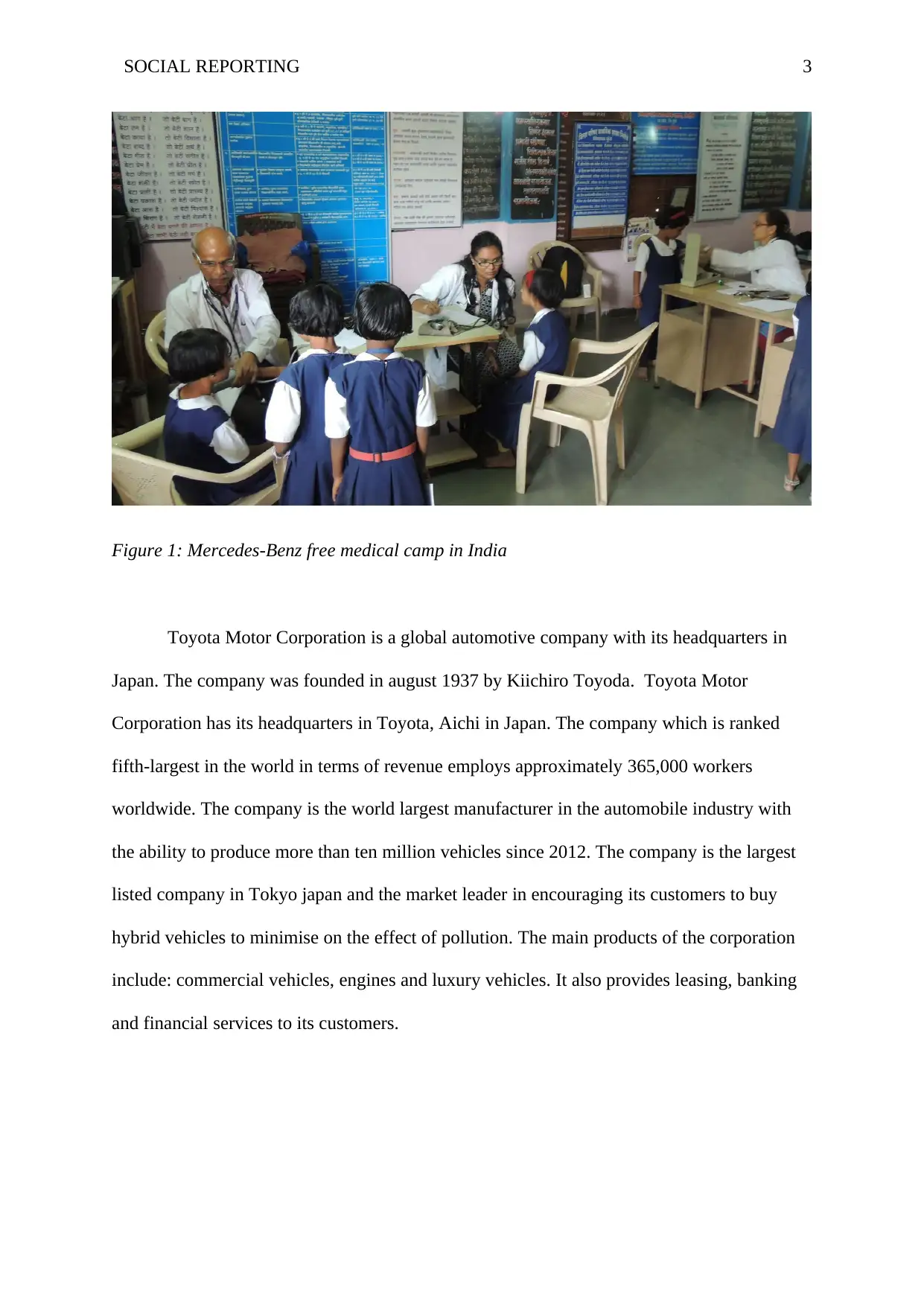
Figure 1: Mercedes-Benz free medical camp in India
Toyota Motor Corporation is a global automotive company with its headquarters in
Japan. The company was founded in august 1937 by Kiichiro Toyoda. Toyota Motor
Corporation has its headquarters in Toyota, Aichi in Japan. The company which is ranked
fifth-largest in the world in terms of revenue employs approximately 365,000 workers
worldwide. The company is the world largest manufacturer in the automobile industry with
the ability to produce more than ten million vehicles since 2012. The company is the largest
listed company in Tokyo japan and the market leader in encouraging its customers to buy
hybrid vehicles to minimise on the effect of pollution. The main products of the corporation
include: commercial vehicles, engines and luxury vehicles. It also provides leasing, banking
and financial services to its customers.
Figure 1: Mercedes-Benz free medical camp in India
Toyota Motor Corporation is a global automotive company with its headquarters in
Japan. The company was founded in august 1937 by Kiichiro Toyoda. Toyota Motor
Corporation has its headquarters in Toyota, Aichi in Japan. The company which is ranked
fifth-largest in the world in terms of revenue employs approximately 365,000 workers
worldwide. The company is the world largest manufacturer in the automobile industry with
the ability to produce more than ten million vehicles since 2012. The company is the largest
listed company in Tokyo japan and the market leader in encouraging its customers to buy
hybrid vehicles to minimise on the effect of pollution. The main products of the corporation
include: commercial vehicles, engines and luxury vehicles. It also provides leasing, banking
and financial services to its customers.
⊘ This is a preview!⊘
Do you want full access?
Subscribe today to unlock all pages.

Trusted by 1+ million students worldwide
SOCIAL REPORTING 4
Figure 2: 220px-Toyoda_Standard_Sedan_AA_1936.
The social report by Toyota Motor Corporation indicate that the company has been
working hard to contribute to a sustainable advancement of the society. The organization has
set traffic safety, education, health and the environment as their priority initiatives in addition
to social contribution through their main business.
Figure3: Toyota motors workers planting tree in Xiaobazi Township in 2015
Figure 2: 220px-Toyoda_Standard_Sedan_AA_1936.
The social report by Toyota Motor Corporation indicate that the company has been
working hard to contribute to a sustainable advancement of the society. The organization has
set traffic safety, education, health and the environment as their priority initiatives in addition
to social contribution through their main business.
Figure3: Toyota motors workers planting tree in Xiaobazi Township in 2015
Paraphrase This Document
Need a fresh take? Get an instant paraphrase of this document with our AI Paraphraser
SOCIAL REPORTING 5
Differences evident between the two companies in terms of the range of social,
environmental and economic issues dealt with in their reports and the depth of the
coverage on specific reports
The social reports of the two automotive companies have taken into consideration
social, environmental and economic issues. The two reports have touched talked on common
issues regarding: community, human rights, environment, management approach, governance
and safety. The two reports however differ in terms of reporting. While Toyota has used eight
chapters in the report (society, environment, economy, sustainability mobility, back-up,
indicators, CSR projects) Mercedes-Benz have used have used six chapters (social
contribution, Benz CSR, customer satisfaction, management, environment and respect for the
society)
Management approach: while Mercedes-Benz have covered the management
approach in seven pages, Toyota have covered the approach in five pages.
Community practise and Human rights: Mercedes-Benz have covered two topics here, the
two topics are community practise and human rights. On the other hand, Toyota have have
only covered about human rights at the work place.
Strengths and weaknesses of reporting evident in the reports.
The two organizations adopted Global Reporting Initiative (GRI) in their reporting which is
accepted globally. However, the reports are not in accordance with the structure and
guidelines of GRI framework. The companies need to adjust their report as per the guidelines
so that readers can navigate through the reports easily.
Differences evident between the two companies in terms of the range of social,
environmental and economic issues dealt with in their reports and the depth of the
coverage on specific reports
The social reports of the two automotive companies have taken into consideration
social, environmental and economic issues. The two reports have touched talked on common
issues regarding: community, human rights, environment, management approach, governance
and safety. The two reports however differ in terms of reporting. While Toyota has used eight
chapters in the report (society, environment, economy, sustainability mobility, back-up,
indicators, CSR projects) Mercedes-Benz have used have used six chapters (social
contribution, Benz CSR, customer satisfaction, management, environment and respect for the
society)
Management approach: while Mercedes-Benz have covered the management
approach in seven pages, Toyota have covered the approach in five pages.
Community practise and Human rights: Mercedes-Benz have covered two topics here, the
two topics are community practise and human rights. On the other hand, Toyota have have
only covered about human rights at the work place.
Strengths and weaknesses of reporting evident in the reports.
The two organizations adopted Global Reporting Initiative (GRI) in their reporting which is
accepted globally. However, the reports are not in accordance with the structure and
guidelines of GRI framework. The companies need to adjust their report as per the guidelines
so that readers can navigate through the reports easily.
SOCIAL REPORTING 6
Sustainable development goals
Sustainable development goals (SDGs) are 17 goals that cover social economic issues
that were set by the United Nations (Gehman, Lefsrud, & Fast, 2017, p. 7). Though the goals
are interrelated, each one has its own targets to achieve. Social economic issues covered
under SDGs include water, climate change, poverty, health, education, hunger, energy,
sanitation, environment, urbanization, and social justice. The relevance of SDGs varies with
countries, industries and companies.
Sustainable development goals relevant to Japan
According to Japan SDGs headquarters, the five priorities areas among the targets and
goals of SDGs are: urbanization, good health, energy, environment conservation, and climate
change. Being an industrial country, Japan has prioritized on sustainable development goals
which mainly focus on human health, energy and environment. Companies are associated
with huge consumption of energy. If the government does not take necessary measure to
ensure that the country have enough and regular energy supply, the country production might
be affected in future with an increase in the number of big industries. Given the number of
industries in Japan it is evident that the environment of the country is at risk (Mohan, 2016, p.
208). This would lead to a change in climate affecting the country’s ecological systems.
Industrialization is highly associated with urbanization, most people tend to move to urban
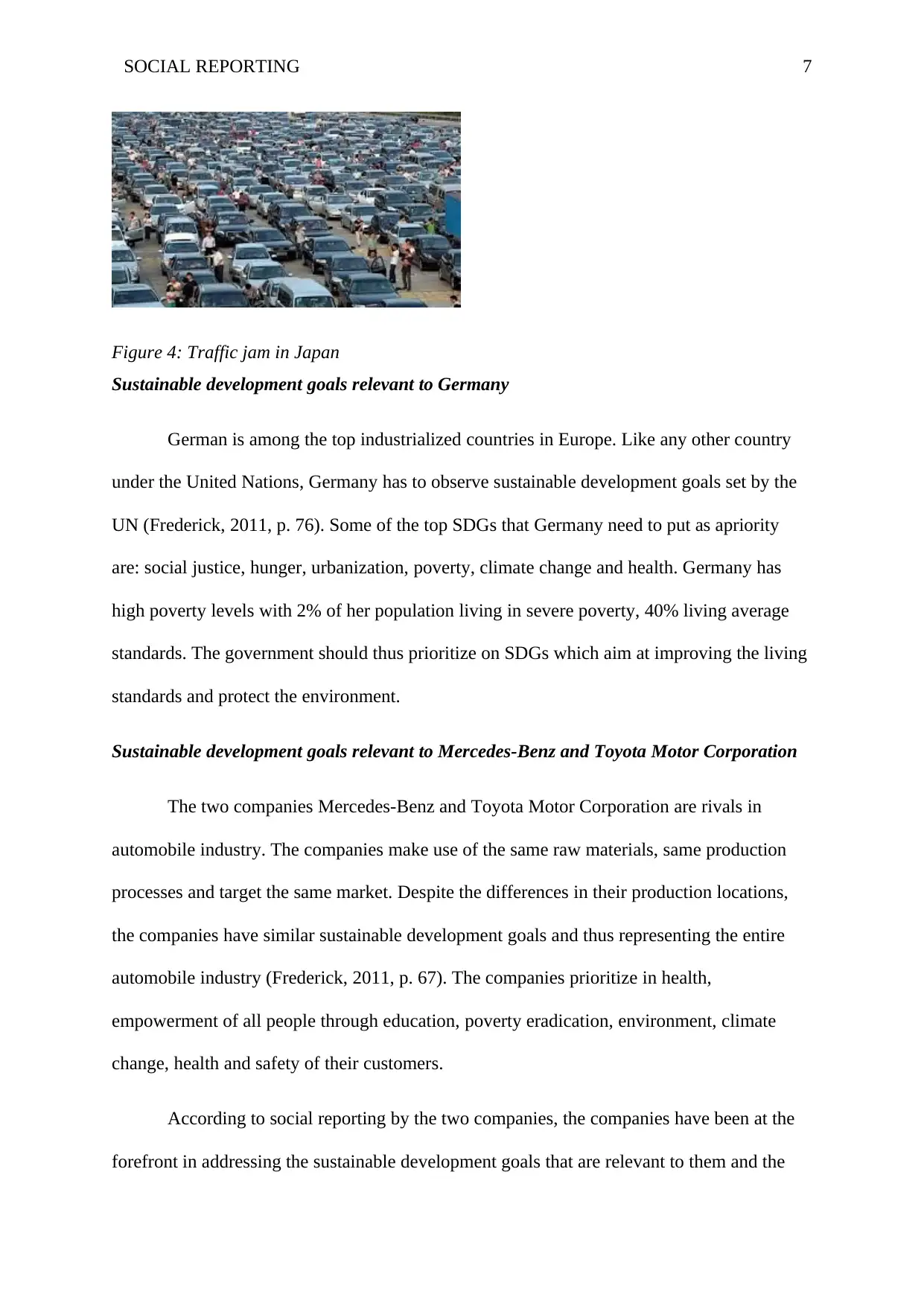
areas in search of better jobs. This causes problems in housing and create huge traffic jams as
it is evident in Japan.
Sustainable development goals
Sustainable development goals (SDGs) are 17 goals that cover social economic issues
that were set by the United Nations (Gehman, Lefsrud, & Fast, 2017, p. 7). Though the goals
are interrelated, each one has its own targets to achieve. Social economic issues covered
under SDGs include water, climate change, poverty, health, education, hunger, energy,
sanitation, environment, urbanization, and social justice. The relevance of SDGs varies with
countries, industries and companies.
Sustainable development goals relevant to Japan
According to Japan SDGs headquarters, the five priorities areas among the targets and
goals of SDGs are: urbanization, good health, energy, environment conservation, and climate
change. Being an industrial country, Japan has prioritized on sustainable development goals
which mainly focus on human health, energy and environment. Companies are associated
with huge consumption of energy. If the government does not take necessary measure to
ensure that the country have enough and regular energy supply, the country production might
be affected in future with an increase in the number of big industries. Given the number of
industries in Japan it is evident that the environment of the country is at risk (Mohan, 2016, p.
208). This would lead to a change in climate affecting the country’s ecological systems.
Industrialization is highly associated with urbanization, most people tend to move to urban
areas in search of better jobs. This causes problems in housing and create huge traffic jams as
it is evident in Japan.
⊘ This is a preview!⊘
Do you want full access?
Subscribe today to unlock all pages.
Trusted by 1+ million students worldwide
SOCIAL REPORTING 7
Figure 4: Traffic jam in Japan
Sustainable development goals relevant to Germany
German is among the top industrialized countries in Europe. Like any other country
under the United Nations, Germany has to observe sustainable development goals set by the
UN (Frederick, 2011, p. 76). Some of the top SDGs that Germany need to put as apriority
are: social justice, hunger, urbanization, poverty, climate change and health. Germany has
high poverty levels with 2% of her population living in severe poverty, 40% living average
standards. The government should thus prioritize on SDGs which aim at improving the living
standards and protect the environment.
Sustainable development goals relevant to Mercedes-Benz and Toyota Motor Corporation
The two companies Mercedes-Benz and Toyota Motor Corporation are rivals in
automobile industry. The companies make use of the same raw materials, same production
processes and target the same market. Despite the differences in their production locations,
the companies have similar sustainable development goals and thus representing the entire
automobile industry (Frederick, 2011, p. 67). The companies prioritize in health,
empowerment of all people through education, poverty eradication, environment, climate
change, health and safety of their customers.
According to social reporting by the two companies, the companies have been at the
forefront in addressing the sustainable development goals that are relevant to them and the
Figure 4: Traffic jam in Japan
Sustainable development goals relevant to Germany
German is among the top industrialized countries in Europe. Like any other country
under the United Nations, Germany has to observe sustainable development goals set by the
UN (Frederick, 2011, p. 76). Some of the top SDGs that Germany need to put as apriority
are: social justice, hunger, urbanization, poverty, climate change and health. Germany has
high poverty levels with 2% of her population living in severe poverty, 40% living average
standards. The government should thus prioritize on SDGs which aim at improving the living
standards and protect the environment.
Sustainable development goals relevant to Mercedes-Benz and Toyota Motor Corporation
The two companies Mercedes-Benz and Toyota Motor Corporation are rivals in
automobile industry. The companies make use of the same raw materials, same production
processes and target the same market. Despite the differences in their production locations,
the companies have similar sustainable development goals and thus representing the entire
automobile industry (Frederick, 2011, p. 67). The companies prioritize in health,
empowerment of all people through education, poverty eradication, environment, climate
change, health and safety of their customers.
According to social reporting by the two companies, the companies have been at the
forefront in addressing the sustainable development goals that are relevant to them and the
Paraphrase This Document
Need a fresh take? Get an instant paraphrase of this document with our AI Paraphraser
SOCIAL REPORTING 8
industry in an effective way. According to Mercedes-Benz social report, the company have
focused on providing skill development and quality education to underprivileged students in
in India. This has greatly helped to improve lives and empower underprivileged Indians. On
the other hand, Toyota Motor Corporation is run in accordance with the belief of Japanese
people that “Monozukuri” is all about helping people to develop. According to Toyota’s
social report, the company haa been providing support across the globe to develop human
resource through education (Firm, 2013, p. 34).
Mercedes-Benz has helped in promotion of health and sanitation in India. The
company believes in the slogan “Think healthy, think wealthy”, the company promotes
healthy living by providing clean drinking water, medical camps and promoting sanitation.
Mercedes-Benz through their safe roads campaign have saved lives by ensuring that drivers
and pedestrians observe road rules and regulations. In their social report, Toyota has reported
to participate in promotion of health and sanitation across the globe. According to the report,
The Company have also helped to save lives but promoting traffic safety. The company has
addressed the issues of traffic safety by integrating cars, people and the traffic environment
with an aim of saving lives by eliminating traffic casualties. This awareness which has been
run since 1960 has targeted pedestrians and drivers educating them about traffic safety
The automobile industry has also been effective in addressing the issues of
environment. Germany and India are some of the fastest growing countries but slow in
preserving the ecology and the environment. The major changes that have brought about
changes in the environment of the two countries according to Mercedes social report are:
climate change, increasing population, natural calamities, deforestation and loss of
biodiversity. Mercedes-Benz has thus being at the forefront to ensure that the environment of
the two countries have been resettled by funding planting of tress and educating people on the
importance of preserving tress. Toyota on the other hand has helped in conservation of the
industry in an effective way. According to Mercedes-Benz social report, the company have
focused on providing skill development and quality education to underprivileged students in
in India. This has greatly helped to improve lives and empower underprivileged Indians. On
the other hand, Toyota Motor Corporation is run in accordance with the belief of Japanese
people that “Monozukuri” is all about helping people to develop. According to Toyota’s
social report, the company haa been providing support across the globe to develop human
resource through education (Firm, 2013, p. 34).
Mercedes-Benz has helped in promotion of health and sanitation in India. The
company believes in the slogan “Think healthy, think wealthy”, the company promotes
healthy living by providing clean drinking water, medical camps and promoting sanitation.
Mercedes-Benz through their safe roads campaign have saved lives by ensuring that drivers
and pedestrians observe road rules and regulations. In their social report, Toyota has reported
to participate in promotion of health and sanitation across the globe. According to the report,
The Company have also helped to save lives but promoting traffic safety. The company has
addressed the issues of traffic safety by integrating cars, people and the traffic environment
with an aim of saving lives by eliminating traffic casualties. This awareness which has been
run since 1960 has targeted pedestrians and drivers educating them about traffic safety
The automobile industry has also been effective in addressing the issues of
environment. Germany and India are some of the fastest growing countries but slow in
preserving the ecology and the environment. The major changes that have brought about
changes in the environment of the two countries according to Mercedes social report are:
climate change, increasing population, natural calamities, deforestation and loss of
biodiversity. Mercedes-Benz has thus being at the forefront to ensure that the environment of
the two countries have been resettled by funding planting of tress and educating people on the
importance of preserving tress. Toyota on the other hand has helped in conservation of the
SOCIAL REPORTING 9
environment in Japan and abroad by providing environment education, undertaking
reforestation and supporting environmental programs through their workers volunteer
activities (Mendel, 2016., p. 56)
Quality of social accounting approach utilized by each company
Social reporting should ensure that an organization performs its social duties and
promotes accountability (Gwartney, 2016., p. 78). The quality of social reporting approach
adopted by an organization is influenced by clarity of the information that the organization
provides. It is the duty of an organization to provide the stakeholders with all the relevant
information they require. An organisation must provide a balance between the corporate
responsibilities and the corporation powers. From the analysis of social reports by the two
automotive companies; Mercedes-Benz and Toyota Motor Corporation, it is evident that the
two companies have presented their reports in accordance with the criteria identified
(Baumann-Pauly & Nolan, 2016, p. 143).
Key principles met by each company’s reporting
Mercedes-Benz
Comparability-the company has applied social reporting policies and standards
consistently from one point to the other (Zsolnai, 2011, p. 23).
Completeness- Mercedes-Benz social report contained all the relevant parts in a social report.
Disclosure- the Company has disclosed all the information about their activities concerning
helping the society.
Continuous Improvement- every year, the company improves on the manner in which it
participate in helping the society and reporting as in accordance to the laid out criteria.
environment in Japan and abroad by providing environment education, undertaking
reforestation and supporting environmental programs through their workers volunteer
activities (Mendel, 2016., p. 56)
Quality of social accounting approach utilized by each company
Social reporting should ensure that an organization performs its social duties and
promotes accountability (Gwartney, 2016., p. 78). The quality of social reporting approach
adopted by an organization is influenced by clarity of the information that the organization
provides. It is the duty of an organization to provide the stakeholders with all the relevant
information they require. An organisation must provide a balance between the corporate
responsibilities and the corporation powers. From the analysis of social reports by the two
automotive companies; Mercedes-Benz and Toyota Motor Corporation, it is evident that the
two companies have presented their reports in accordance with the criteria identified
(Baumann-Pauly & Nolan, 2016, p. 143).
Key principles met by each company’s reporting
Mercedes-Benz
Comparability-the company has applied social reporting policies and standards
consistently from one point to the other (Zsolnai, 2011, p. 23).
Completeness- Mercedes-Benz social report contained all the relevant parts in a social report.
Disclosure- the Company has disclosed all the information about their activities concerning
helping the society.
Continuous Improvement- every year, the company improves on the manner in which it
participate in helping the society and reporting as in accordance to the laid out criteria.
⊘ This is a preview!⊘
Do you want full access?
Subscribe today to unlock all pages.
Trusted by 1+ million students worldwide
SOCIAL REPORTING 10
The company has also observed Evolution, Management policies and systems and External
verification in their report.
Toyota Motor Corporation
Inclusivity, external verification, comparability, evolution, management policies,
systems, completeness, continuous improvement and disclosure.
Key reporting principles which have not been met
Mercedes-Benz
Inclusivity- Mercedes-Benz has not been inclusive in its environmental and social impact
activities meant to help the society. From the report, it is evident that the company has only
concentrated in providing social help in India and Germany. (Vásquez, 2016., p. 56).
Conclusion
Giving a report on social performance enables organizations to manage their
environmental and social impact developed in the course of doing their business. Problems
coming about as a result of sustainable development are enormous, and it is clearly evident
that organizations have ability and responsibility to bring about positive change on the state
of environmental, social conditions and the world's economy.
By providing social report organizations are able to track, measure and improve their
performance. By measuring the potential business risks, the Organizations are able to
manage the issues. By taking a proactive role to analyse, collect, and report steps taken by the
organization to reduce risk, companies are able to control the message they want delivered to
the shareholders. Public pressure by different shareholders has proven to be a successful tool
for promoting Transparency and social responsibilities.
The company has also observed Evolution, Management policies and systems and External
verification in their report.
Toyota Motor Corporation
Inclusivity, external verification, comparability, evolution, management policies,
systems, completeness, continuous improvement and disclosure.
Key reporting principles which have not been met
Mercedes-Benz
Inclusivity- Mercedes-Benz has not been inclusive in its environmental and social impact
activities meant to help the society. From the report, it is evident that the company has only
concentrated in providing social help in India and Germany. (Vásquez, 2016., p. 56).
Conclusion
Giving a report on social performance enables organizations to manage their
environmental and social impact developed in the course of doing their business. Problems
coming about as a result of sustainable development are enormous, and it is clearly evident
that organizations have ability and responsibility to bring about positive change on the state
of environmental, social conditions and the world's economy.
By providing social report organizations are able to track, measure and improve their
performance. By measuring the potential business risks, the Organizations are able to
manage the issues. By taking a proactive role to analyse, collect, and report steps taken by the
organization to reduce risk, companies are able to control the message they want delivered to
the shareholders. Public pressure by different shareholders has proven to be a successful tool
for promoting Transparency and social responsibilities.
Paraphrase This Document
Need a fresh take? Get an instant paraphrase of this document with our AI Paraphraser
SOCIAL REPORTING 11
Public pressure has also helped organizations to manage their impacts. Social reporting
promotes accountability and transparency. This is because organizations are made to disclose
information to the public. This enables stakeholders to track an organization's performance
with regard to environmental conservation and labour conditions in the production area and
compare the performance of an organizations with the performance of others on social
performance.
Public pressure has also helped organizations to manage their impacts. Social reporting
promotes accountability and transparency. This is because organizations are made to disclose
information to the public. This enables stakeholders to track an organization's performance
with regard to environmental conservation and labour conditions in the production area and
compare the performance of an organizations with the performance of others on social
performance.
SOCIAL REPORTING 12
Bibliography
Firm, G. (2013). Encyclopedia of management. Detroit: Gale, Cengage Learning,.
Baumann-Pauly, D., & Nolan, J. (2016). Business and human rights : from principles to. .
London ; New York : Routledge, cop.
English, F. W. (2007). Encyclopedia of educational leadership and administration .
Thousand Oaks, Calif. : Sage,.
Frederick, R. (2011). A companion to business ethics. Oxford: Blackwell.
Friedman, M. (2009). Capitalism and Freedom. Chicago: University of Chicago.
Gehman, J., Lefsrud, L. M., & Fast, S. (2017). Social license to operate: Legitimacy by
another name? Canadian: Canadian Public Administration, v60 n2.
Gwartney, J. R. (2016.). Economic Freedom of the World: 2015. Vancouver: Fraser Institute.
Locke, J. (2012). The Second Treatise of Government: And, A Letter Concerning Toleration.
N.Y: Dover Publications, .
Mendel, S. ( 2016., June 1). Roles of Government, Nonprofit Sector, Business and Family
and Their Interaction in Democracy. Urban Publications Paper , p. 381 .
Mitchell-Brown, J. (2016. June 05). Revitalizing the First-Suburbs: The Importance of the
Social Capital Community Development Link in Suburban Neighborhood
Revitalization-A. Journal of Community Engagement and Scholarship, p. 24.
Mohan, M. (2016). Business and human rights in Southeast Asia; . Abingdon, Oxfordshire :
Routledge,.
Moon, J. (2014). Corporate Social Responsibility: A Very Short Introduction. Oxford :
Oxford University Press.
Bibliography
Firm, G. (2013). Encyclopedia of management. Detroit: Gale, Cengage Learning,.
Baumann-Pauly, D., & Nolan, J. (2016). Business and human rights : from principles to. .
London ; New York : Routledge, cop.
English, F. W. (2007). Encyclopedia of educational leadership and administration .
Thousand Oaks, Calif. : Sage,.
Frederick, R. (2011). A companion to business ethics. Oxford: Blackwell.
Friedman, M. (2009). Capitalism and Freedom. Chicago: University of Chicago.
Gehman, J., Lefsrud, L. M., & Fast, S. (2017). Social license to operate: Legitimacy by
another name? Canadian: Canadian Public Administration, v60 n2.
Gwartney, J. R. (2016.). Economic Freedom of the World: 2015. Vancouver: Fraser Institute.
Locke, J. (2012). The Second Treatise of Government: And, A Letter Concerning Toleration.
N.Y: Dover Publications, .
Mendel, S. ( 2016., June 1). Roles of Government, Nonprofit Sector, Business and Family
and Their Interaction in Democracy. Urban Publications Paper , p. 381 .
Mitchell-Brown, J. (2016. June 05). Revitalizing the First-Suburbs: The Importance of the
Social Capital Community Development Link in Suburban Neighborhood
Revitalization-A. Journal of Community Engagement and Scholarship, p. 24.
Mohan, M. (2016). Business and human rights in Southeast Asia; . Abingdon, Oxfordshire :
Routledge,.
Moon, J. (2014). Corporate Social Responsibility: A Very Short Introduction. Oxford :
Oxford University Press.
⊘ This is a preview!⊘
Do you want full access?
Subscribe today to unlock all pages.
Trusted by 1+ million students worldwide

1 out of 13


Related Documents


Your All-in-One AI-Powered Toolkit for Academic Success.
+13062052269
info@desklib.com
Available 24*7 on WhatsApp / Email
![[object Object]](/_next/static/media/star-bottom.7253800d.svg)
Unlock your academic potential
Copyright © 2020–2026 A2Z Services. All Rights Reserved. Developed and managed by ZUCOL.