Indian Culture and Social Work: Opportunities and Considerations

Verified

Added on  2023/06/18

|9
|406
|61
Presentation
AI Summary
This presentation provides an introduction to social work in India, emphasizing its scope encompassing individuals, families, groups, and communities with the goal of improving social functioning and overall well-being. It highlights that while social work education has been present in India for 80 years, it's still striving for full professional recognition by key entities like the government. The presentation also underscores the significance of Indian culture, noting its vastness and diversity across 28 states and 8 union territories, each with unique cultural identities. Key aspects of Indian culture discussed include the tradition of joint families, where extended family members live together under the leadership of the eldest male, and the influence of local culture, geography, and climate on traditional attire. In conclusion, the presentation emphasizes the variety of social work opportunities presented by Indian culture, which is defined by a multitude of cultural practices including those of Hindus, Muslims, and Christians.
Document Page
Introduction to
social work
tabler-icon-diamond-filled.svg

Paraphrase This Document

Need a fresh take? Get an instant paraphrase of this document with our AI Paraphraser
Document Page
Introduction
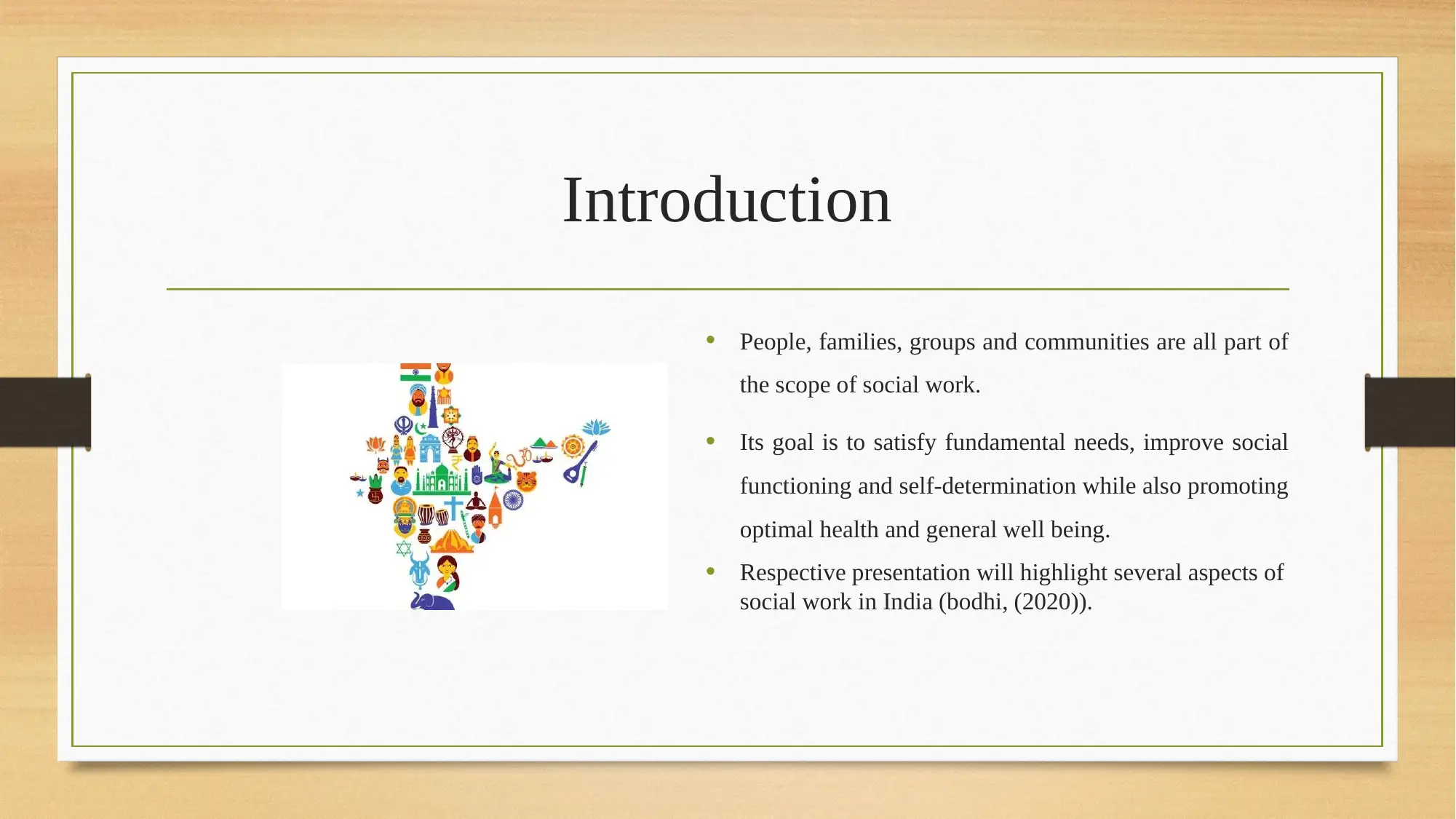
People, families, groups and communities are all part of
the scope of social work.
Its goal is to satisfy fundamental needs, improve social
functioning and self-determination while also promoting
optimal health and general well being.
Respective presentation will highlight several aspects of
social work in India (bodhi, (2020)).
Document Page
Social work in India
It has been 80 years since the first social work course was
taught in India,
Yet it has not been acknowledged as a profession by the key
players, notably the government
Document Page
Indian culture
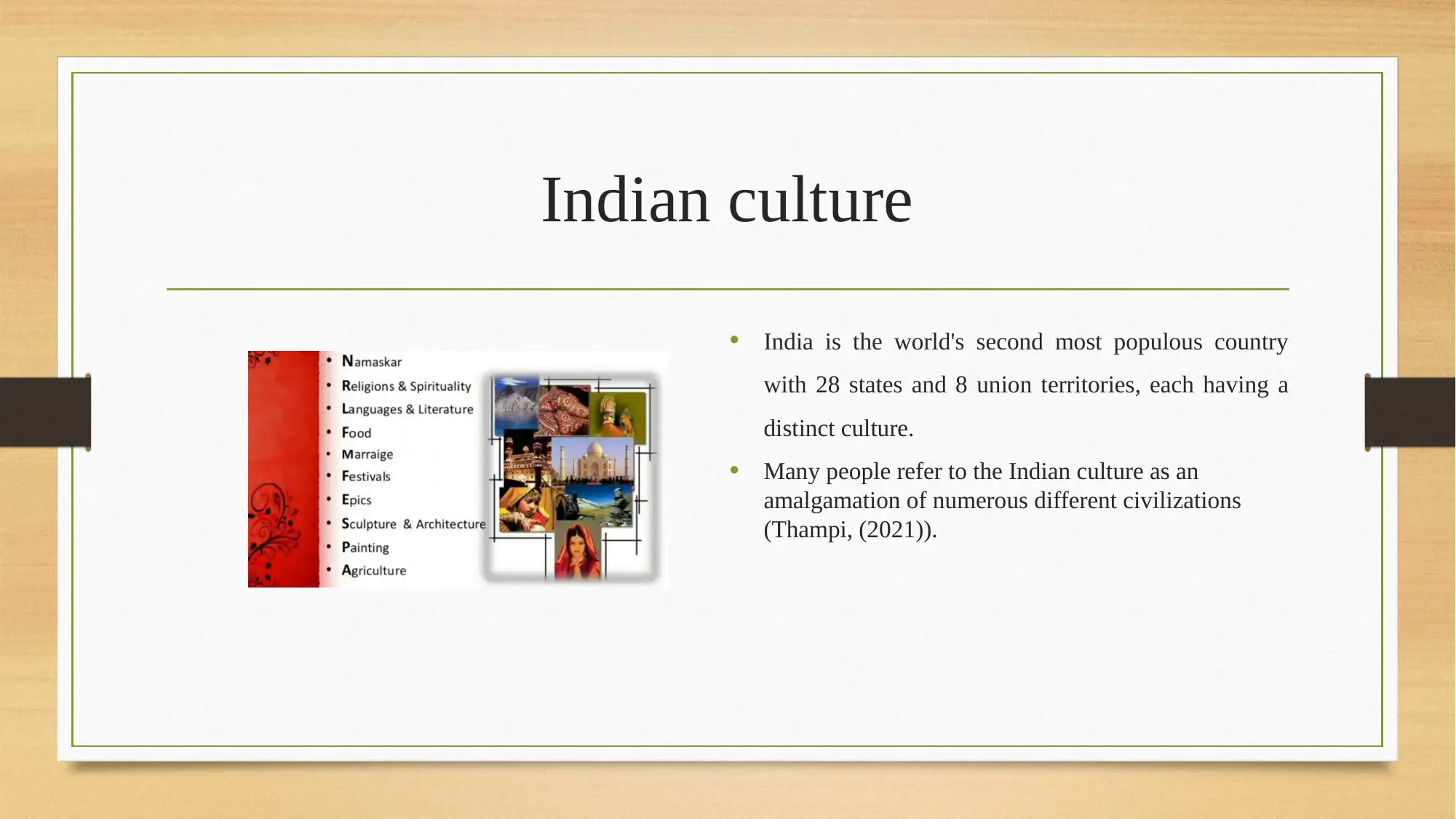
India is the world's second most populous country
with 28 states and 8 union territories, each having a
distinct culture.
Many people refer to the Indian culture as an
amalgamation of numerous different civilizations
(Thampi, (2021)).
tabler-icon-diamond-filled.svg

Paraphrase This Document

Need a fresh take? Get an instant paraphrase of this document with our AI Paraphraser
Document Page
Family culture
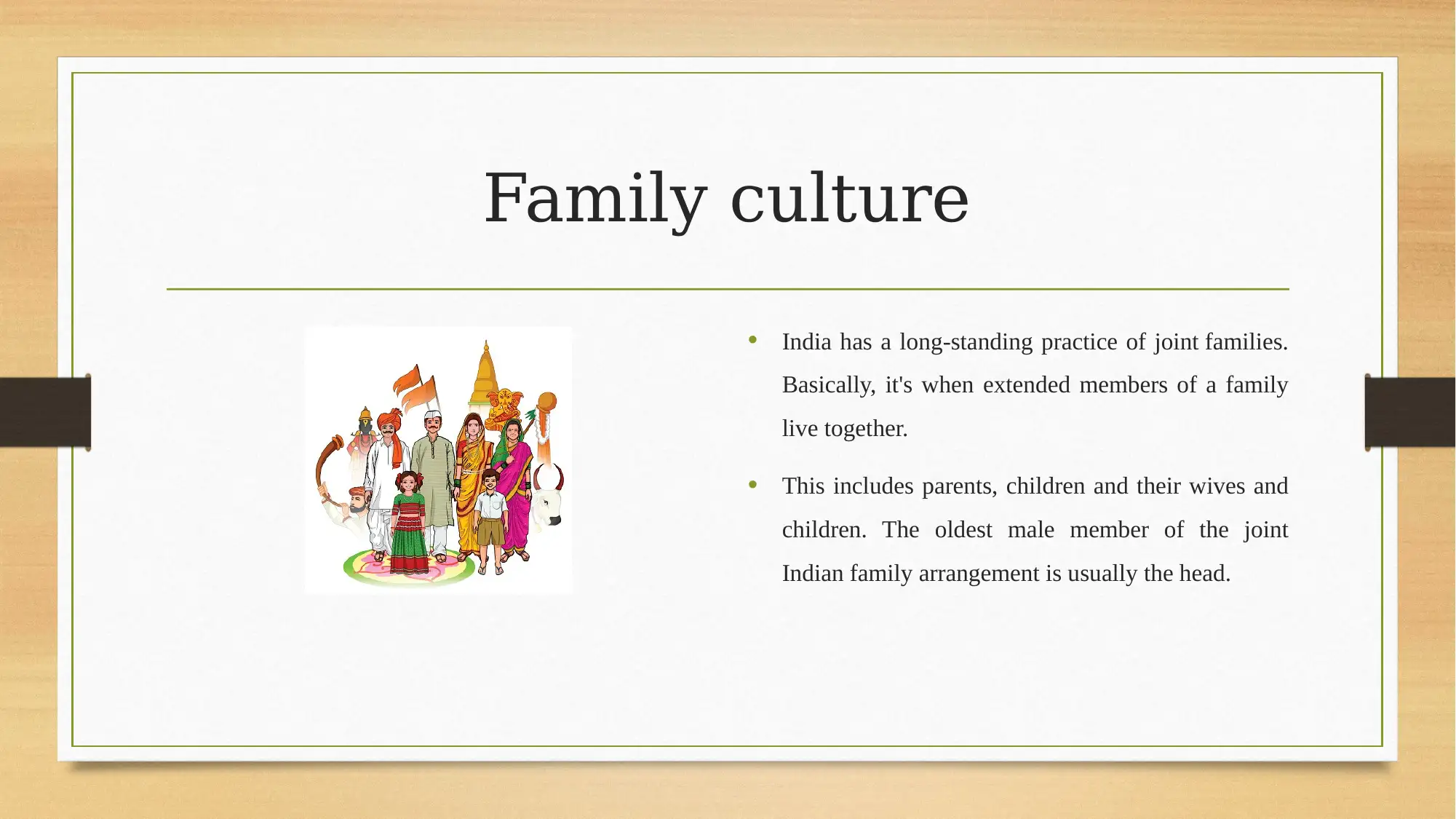
India has a long-standing practice of joint families.
Basically, it's when extended members of a family
live together.
This includes parents, children and their wives and
children. The oldest male member of the joint
Indian family arrangement is usually the head.
Document Page
Traditional values
In India, local culture, geography, climate, and
rural/urban settings have a significant impact on
traditional attire.
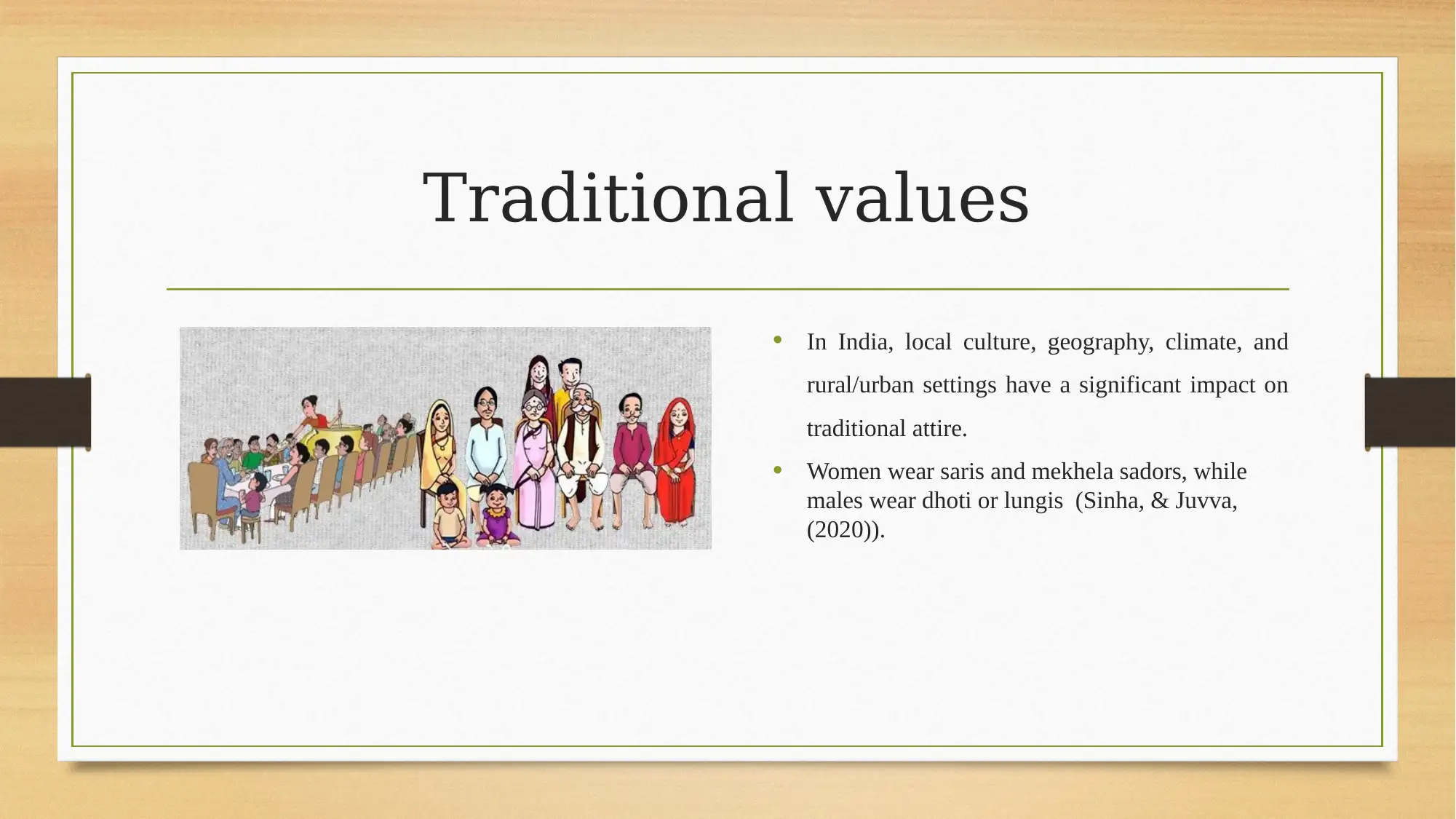
Women wear saris and mekhela sadors, while
males wear dhoti or lungis (Sinha, & Juvva,
(2020)).
Document Page
Conclusion
The given presentation on Indian culture presents variety of social work opportunities to a willing individual.
It can be concluded that Indian culture is defined through various culture being followed including Hindus,
Muslims, Christian etc.
tabler-icon-diamond-filled.svg

Paraphrase This Document

Need a fresh take? Get an instant paraphrase of this document with our AI Paraphraser
Document Page
References
bodhi, S. R. (2020). Tribes and State Policy in India: Revisiting Governing Principles from a Decolonial Social
Work Perspective. The British Journal of Social Work, 50(8), 2372-2388.
Thampi, K. (2021). Internationalization of social work education in India through student exchanges: challenges
and prospects. Social Work Education, 1-16.
Sinha, R., & Juvva, S. (2020). Social work praxis in policy: Reflections from India. The British Journal of
Social Work, 50(8), 2319-2334.
Document Page
Thank-You
chevron_up_icon
1 out of 9
circle_padding
hide_on_mobile
zoom_out_icon
[object Object]