Sociology of Aging: Image Analysis, Article Summary and Discussion

Verified

Added on  2021/06/15

|5
|550
|59
Report
AI Summary
This report delves into the sociology of aging, beginning with an analysis of images depicting elderly individuals. The images, depicting an elderly man playing alone, a group of elderly people, and an elderly man in isolation, highlight common stereotypes of loneliness and lack of care often associated with aging. The report then summarizes an article that discusses the role of media in shaping negative perceptions towards the elderly, emphasizing the neglect and loneliness they often experience. The report concludes by examining how these media portrayals influence societal attitudes towards aging, highlighting that treatment of the elderly depends on societal values and the support they receive. The provided references include relevant scholarly sources for further research on the topic.
Document Page
Running head: Sociology of aging 1
Sociology of ageing
Name of Student
Name of Institution
Name of Course
Name of Instructor
Date of Submission
tabler-icon-diamond-filled.svg

Paraphrase This Document

Need a fresh take? Get an instant paraphrase of this document with our AI Paraphraser
Document Page
Sociology of Ageing 2
Images depicting elderly people
Image 1
Image 2
Image 3
Document Page
Sociology of Ageing 3
Description and analysis
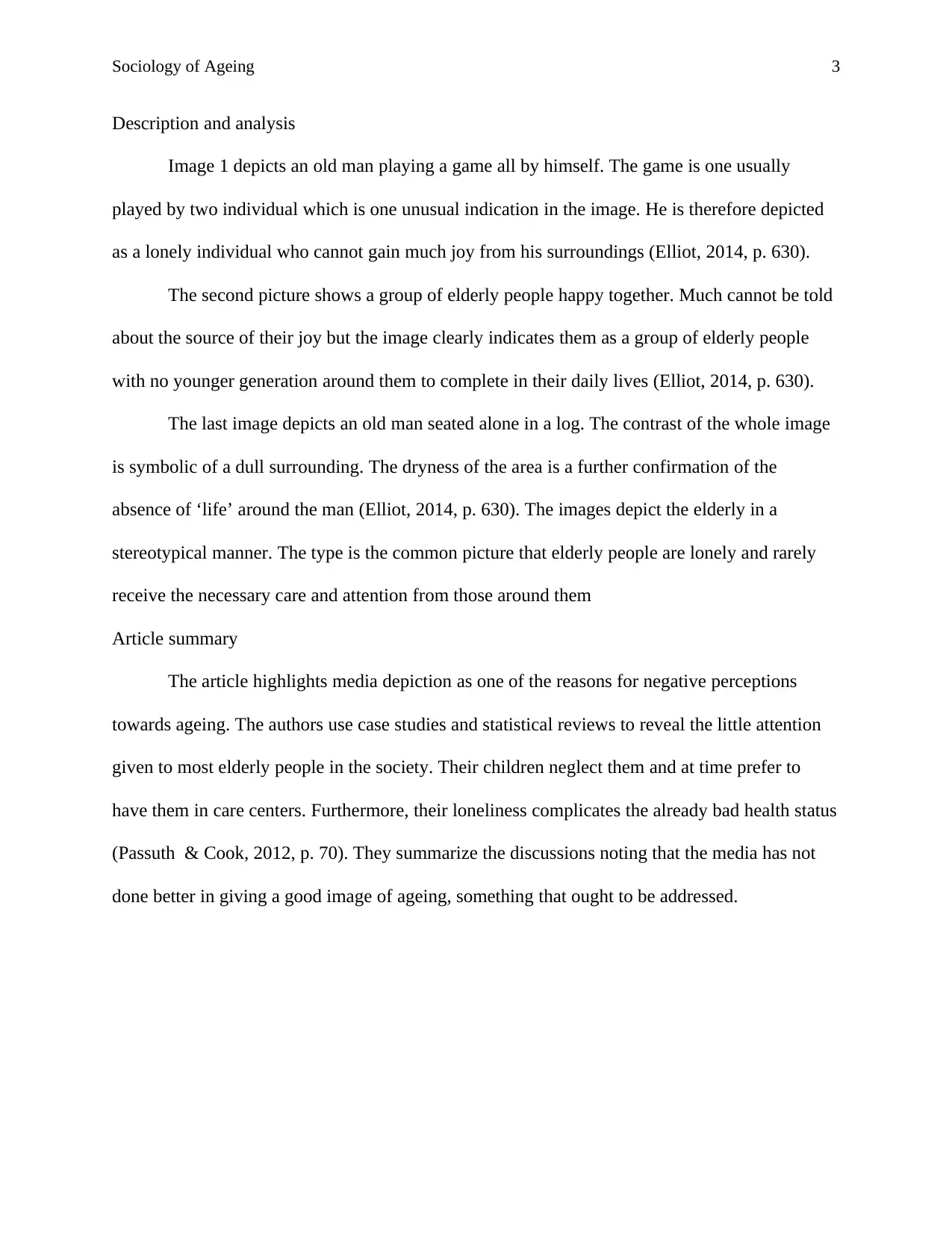
Image 1 depicts an old man playing a game all by himself. The game is one usually
played by two individual which is one unusual indication in the image. He is therefore depicted
as a lonely individual who cannot gain much joy from his surroundings (Elliot, 2014, p. 630).
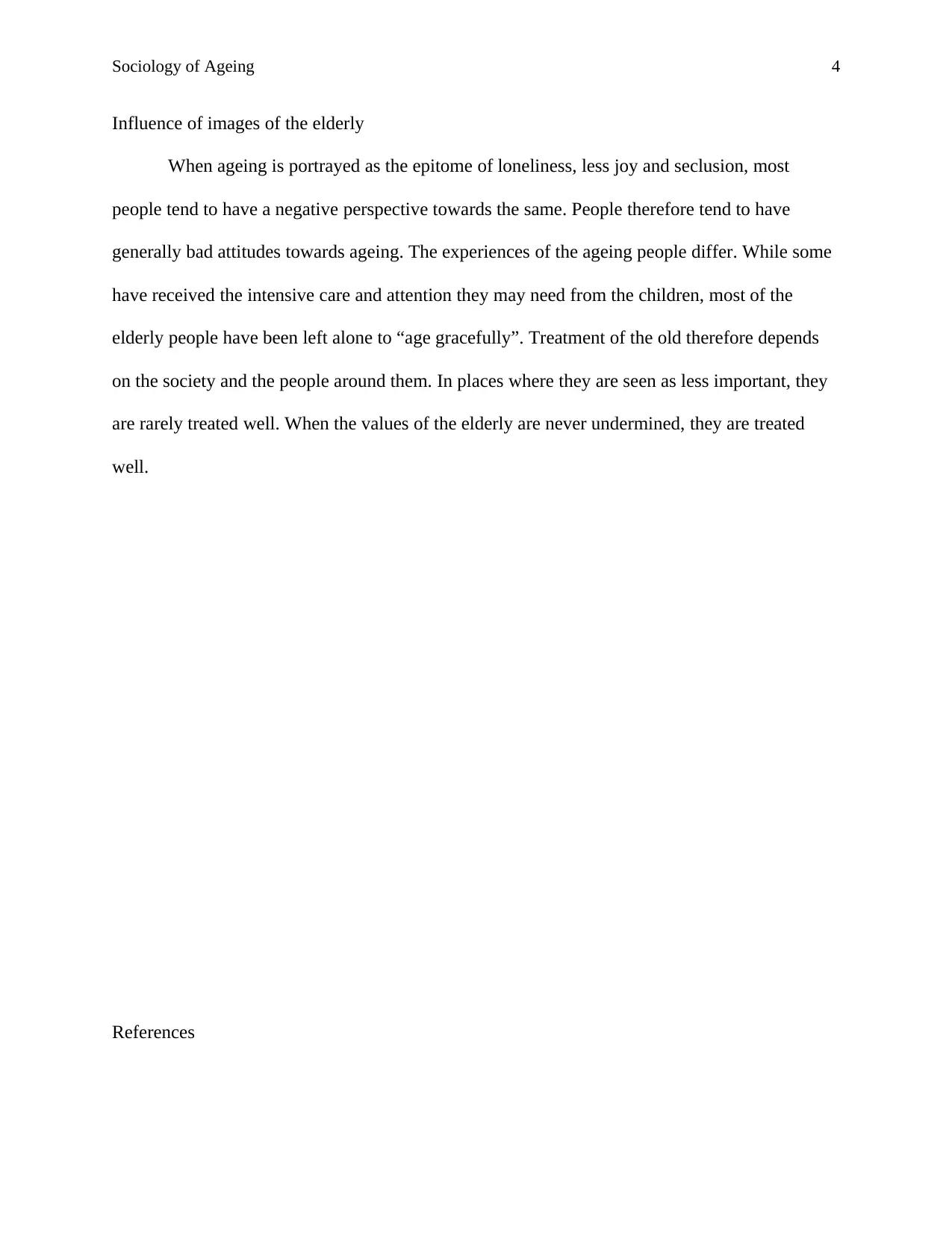
The second picture shows a group of elderly people happy together. Much cannot be told
about the source of their joy but the image clearly indicates them as a group of elderly people
with no younger generation around them to complete in their daily lives (Elliot, 2014, p. 630).
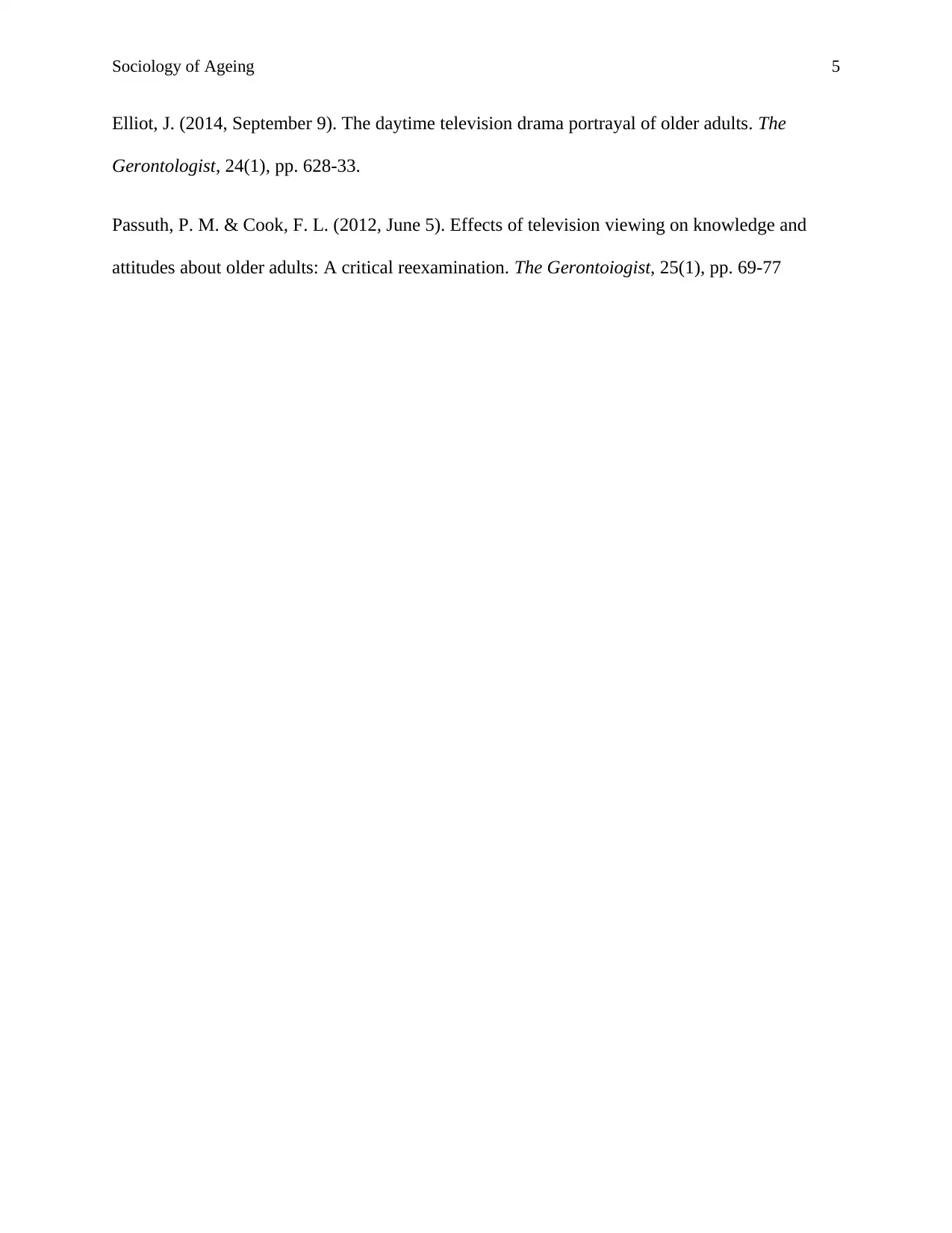
The last image depicts an old man seated alone in a log. The contrast of the whole image
is symbolic of a dull surrounding. The dryness of the area is a further confirmation of the
absence of ‘life’ around the man (Elliot, 2014, p. 630). The images depict the elderly in a
stereotypical manner. The type is the common picture that elderly people are lonely and rarely
receive the necessary care and attention from those around them
Article summary
The article highlights media depiction as one of the reasons for negative perceptions
towards ageing. The authors use case studies and statistical reviews to reveal the little attention
given to most elderly people in the society. Their children neglect them and at time prefer to
have them in care centers. Furthermore, their loneliness complicates the already bad health status
(Passuth & Cook, 2012, p. 70). They summarize the discussions noting that the media has not
done better in giving a good image of ageing, something that ought to be addressed.
Document Page
Sociology of Ageing 4
Influence of images of the elderly
When ageing is portrayed as the epitome of loneliness, less joy and seclusion, most
people tend to have a negative perspective towards the same. People therefore tend to have
generally bad attitudes towards ageing. The experiences of the ageing people differ. While some
have received the intensive care and attention they may need from the children, most of the
elderly people have been left alone to “age gracefully”. Treatment of the old therefore depends
on the society and the people around them. In places where they are seen as less important, they
are rarely treated well. When the values of the elderly are never undermined, they are treated
well.
References
tabler-icon-diamond-filled.svg

Paraphrase This Document

Need a fresh take? Get an instant paraphrase of this document with our AI Paraphraser
Document Page
Sociology of Ageing 5
Elliot, J. (2014, September 9). The daytime television drama portrayal of older adults. The
Gerontologist, 24(1), pp. 628-33.
Passuth, P. M. & Cook, F. L. (2012, June 5). Effects of television viewing on knowledge and
attitudes about older adults: A critical reexamination. The Gerontoiogist, 25(1), pp. 69-77
chevron_up_icon
1 out of 5
circle_padding
hide_on_mobile
zoom_out_icon
[object Object]