Sociology Assignment: Symbolism, Iconography, Tribal Masks, Rituals

Verified

Added on  2022/09/13

|4
|701
|52
Homework Assignment
AI Summary
This sociology assignment explores the concepts of symbolism and iconography, defining each and highlighting their differences. Symbolism is presented as the use of symbols to represent ideas, while iconography is described as the analysis of themes and subjects within an artistic work. The assignment then delves into the use of tribal masks in rituals across various cultures, including China, India, and Africa. It emphasizes the masks' significance in religious and social ceremonies, acting as essential components of cultural expression, often linked to spiritual entities and used for discipline. The assignment highlights the masks' roles in meditation, dance, and masquerades, and concludes by summarizing their importance in different parts of the world.
Document Page
SOCIOLOGY
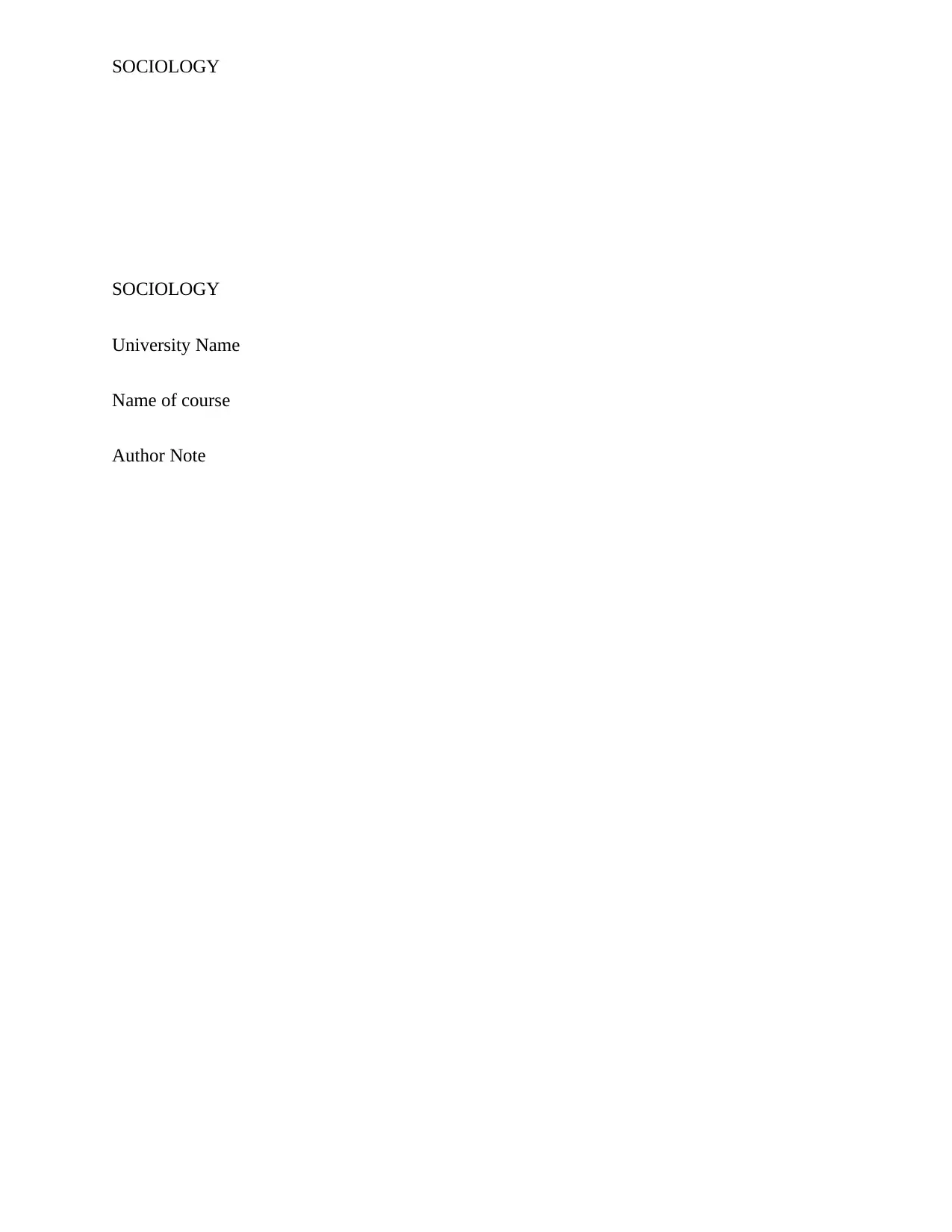
SOCIOLOGY
University Name
Name of course
Author Note
tabler-icon-diamond-filled.svg

Paraphrase This Document

Need a fresh take? Get an instant paraphrase of this document with our AI Paraphraser
Document Page
SOCIOLOGY
Define symbolism and iconography and describe the difference between them.
Symbolism is the application of specific figurative symbols and naturalistic pictures or abstract
graphic signs with a common sense in society. These are the use of symbols to indicate ideas and
values, to give them different symbolic meanings than actual senses (Cosgrove, Daniels &
Baker, 1988). Iconography is the more general analysis and representation of themes and
pictorial subjects inside an artistic work. It includes implicated concepts and symbols used to
express the shared sense and past of the community like its documented myths and narratives.
Iconography refers and implies to the icons used in a piece of art (Sachant et al., 2016). The
difference between symbolism and iconography is that the context of symbolism represents the
concept through symbols and underlying meaning related to qualities. The iconography, on the
other hand, is an entire set of traditional or specific symbolic forms that are associated with the
theme or the subject of the stylized art genre (Ben-Shlomo, 2010). Another specific difference
among these two is that iconography includes the exact portrayal of what is represented while
symbolism generally represents a place, idea, and actions. The context of symbolism can be
traced back to the human history origins where the most influential symbol was Egyptian
Hieroglyphs which represented sounds and images. The iconography, on the other hand, had
historical origin in religious figures that depicted important figures.
Describe the use of tribal masks for rituals in different cultures.
Masks were used in numerous social and religious ceremonies around the world for their
expressive ability. Masking practices and ceremonies have significant religious and cultural
significance in China, India, and Africa (Napier, 1986). Although tribal masks itself are exquisite
works of art, they exist in the social culture of the society at a somewhat higher standard. The
Document Page
SOCIOLOGY
tribal masks are seen as a vital component for a social, intellectual as well as an art piece, not just
as an insignificant entity alone. Although Western culture might consider this as an artistic
expression, the item or tribal mask has a range of symbolic significances to various tribal
cultures (Pollock, 1995). For thousands of years, tribal masks have always been a prominent part
of prehistoric culture in China. The tribal mask-making functions were related to mystical rituals
revolving around meditation, dance, and music. Tribal and festival masks in India are called
deities, divine beings, animals or spirits. Such iconic characters get a significant position for the
tribal culture. Tribal masks are used in Masquerades including religious ceremonial festivals in
Africa (Lommel, 1972). Most of those African tribal masks are related to supernatural entities or
spirits. Thus it can be summarized that tribal masks played an important role and were used as a
means for discipline in several parts of the world.
Document Page
SOCIOLOGY
References
Ben-Shlomo, D. (2010). Philistine Iconography: A Wealth of Style and Symbolism (Vol. 241).
Saint-Paul.
Cosgrove, D., Daniels, S., & Baker, A. R. (Eds.). (1988). The iconography of landscape: essays
on the symbolic representation, design and use of past environments (Vol. 9).
Cambridge University Press.
Lommel, A. (1972). Masks: their meaning and function. McGraw-Hill.
Napier, A. D. (1986). Masks, transformation, and paradox. Univ of California Press.
Pollock, D. (1995). Masks and the Semiotics of Identity. Journal of the Royal Anthropological
Institute, 581-597.
Sachant, P., Blood, P., LeMieux, J., & Tekippe, R. (2016). Introduction to Art: Design, Context,
and Meaning.
chevron_up_icon
1 out of 4
circle_padding
hide_on_mobile
zoom_out_icon
[object Object]