Software Design and Analysis of a Text-Based Maze Game Project
VerifiedAdded on 2022/11/17
|19
|1742
|109
Project
AI Summary
This project presents the design and analysis of a text-based maze game implemented in Java, drawing inspiration from the Dungeons and Dragons role-playing system. The game incorporates player characters, weapons, item details, scoring, and attacking mechanisms. Players begin by entering their names and navigating the maze using text commands, with short keywords for gameplay continuation. The game features multiple levels, with points awarded at each stage and a final score displayed upon completion. The project details the use case model, encompassing player movement, item usage, and level progression. Class and domain models are also included, illustrating the relationships between game components such as players, monsters, rooms, and items. The design model incorporates a maze builder, sequence diagrams, and reflections on the game's design and implementation. The project concludes with a successful implementation, demonstrating the application of software engineering principles in the creation of a text-based adventure game. The project also contains references to the literature used for the project.
Software Design and
Analysis
Analysis
Paraphrase This Document
Need a fresh take? Get an instant paraphrase of this document with our AI Paraphraser

Table of Contents
Introduction.........................................................................................................................................3
Stories...................................................................................................................................................3
Use Case model 1.................................................................................................................................3
Use Case model 2.................................................................................................................................5
Class Model 1.......................................................................................................................................6
Class model 2.......................................................................................................................................6
Domain Model 1...................................................................................................................................6
Domain Model 2...................................................................................................................................8
Domain Rules.......................................................................................................................................9
Design Model 1.....................................................................................................................................9
Design Model 2.....................................................................................................................................9
Sequence Diagram 1..........................................................................................................................10
Sequence Diagram 2..........................................................................................................................11
Reflection 1.........................................................................................................................................12
Reflection 2.........................................................................................................................................12
Conclusion..........................................................................................................................................13
References..........................................................................................................................................14
Introduction.........................................................................................................................................3
Stories...................................................................................................................................................3
Use Case model 1.................................................................................................................................3
Use Case model 2.................................................................................................................................5
Class Model 1.......................................................................................................................................6
Class model 2.......................................................................................................................................6
Domain Model 1...................................................................................................................................6
Domain Model 2...................................................................................................................................8
Domain Rules.......................................................................................................................................9
Design Model 1.....................................................................................................................................9
Design Model 2.....................................................................................................................................9
Sequence Diagram 1..........................................................................................................................10
Sequence Diagram 2..........................................................................................................................11
Reflection 1.........................................................................................................................................12
Reflection 2.........................................................................................................................................12
Conclusion..........................................................................................................................................13
References..........................................................................................................................................14

Introduction
In this project we will implement the text based maze game using java. The game is
based on the dungeons and dragons role paying system which was developed by using java
programming language. The game contains player’s character, weapons, character’s, item
details, score and attack character. The players enter their name and start the game using text.
It has the short keyword for continue the game. Give the command for playing an attacking
player and also for the game (Malik, 2014). It displays the points for every game and finally
when the player exits the game. It has one more level based on the player’s performance. If
the player completes one level then the player goes to the next level. Points are added at
every level and in the end the final score is displayed.
Stories
Player - It has two types of players such as the player’s character - non-player
character and attack player character.
Move Party - The player moves from one position to another position. If the player
completes one level then it goes to the next level. If the player does not complete the
game then the player will have to exit the game.
Weapon -Different players use different weapons.
Location -Players play the game in a certain location. They can select from different
locations.
Item - It contains the pickup item, buy an item, use an item and look for an item.
Use item - The player use the items to attack other players.
Buy item- Player buy the items after paying certain amount.
Sell Item - Player can sell the item to another player.
Unlock – When a player completes a particular level then the next level is
automatically unlocked.
Join party - The player starts the game using keyword
Leave Party – The player has to return back to the new location
Hold weapon - The player holds all the weapons. The player sells the weapon to
another player and buys the weapon from another player.
Use Case model 1
In this project we will implement the text based maze game using java. The game is
based on the dungeons and dragons role paying system which was developed by using java
programming language. The game contains player’s character, weapons, character’s, item
details, score and attack character. The players enter their name and start the game using text.
It has the short keyword for continue the game. Give the command for playing an attacking
player and also for the game (Malik, 2014). It displays the points for every game and finally
when the player exits the game. It has one more level based on the player’s performance. If
the player completes one level then the player goes to the next level. Points are added at
every level and in the end the final score is displayed.
Stories
Player - It has two types of players such as the player’s character - non-player
character and attack player character.
Move Party - The player moves from one position to another position. If the player
completes one level then it goes to the next level. If the player does not complete the
game then the player will have to exit the game.
Weapon -Different players use different weapons.
Location -Players play the game in a certain location. They can select from different
locations.
Item - It contains the pickup item, buy an item, use an item and look for an item.
Use item - The player use the items to attack other players.
Buy item- Player buy the items after paying certain amount.
Sell Item - Player can sell the item to another player.
Unlock – When a player completes a particular level then the next level is
automatically unlocked.
Join party - The player starts the game using keyword
Leave Party – The player has to return back to the new location
Hold weapon - The player holds all the weapons. The player sells the weapon to
another player and buys the weapon from another player.
Use Case model 1
⊘ This is a preview!⊘
Do you want full access?
Subscribe today to unlock all pages.

Trusted by 1+ million students worldwide

Paraphrase This Document
Need a fresh take? Get an instant paraphrase of this document with our AI Paraphraser

Use Case model 2
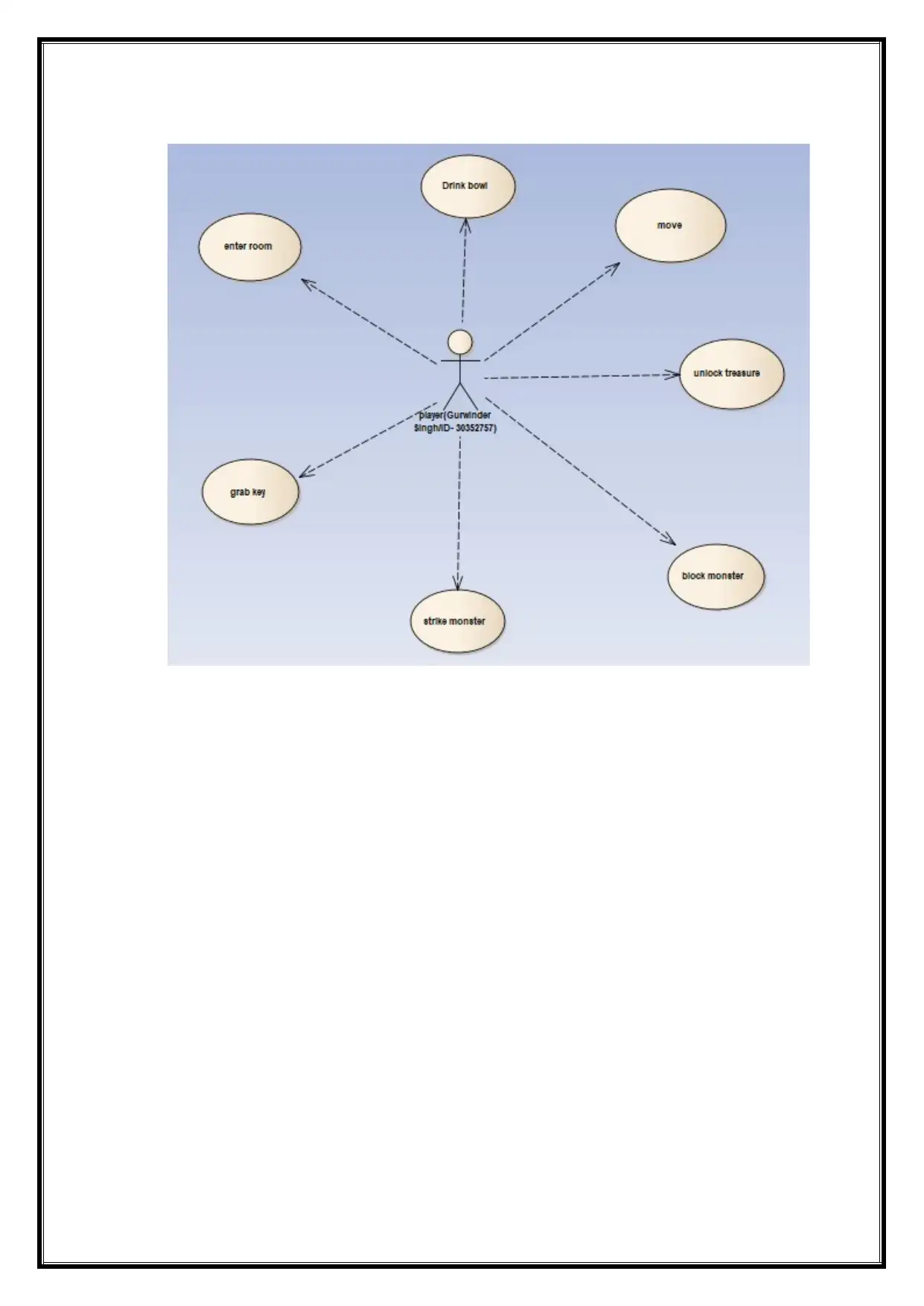
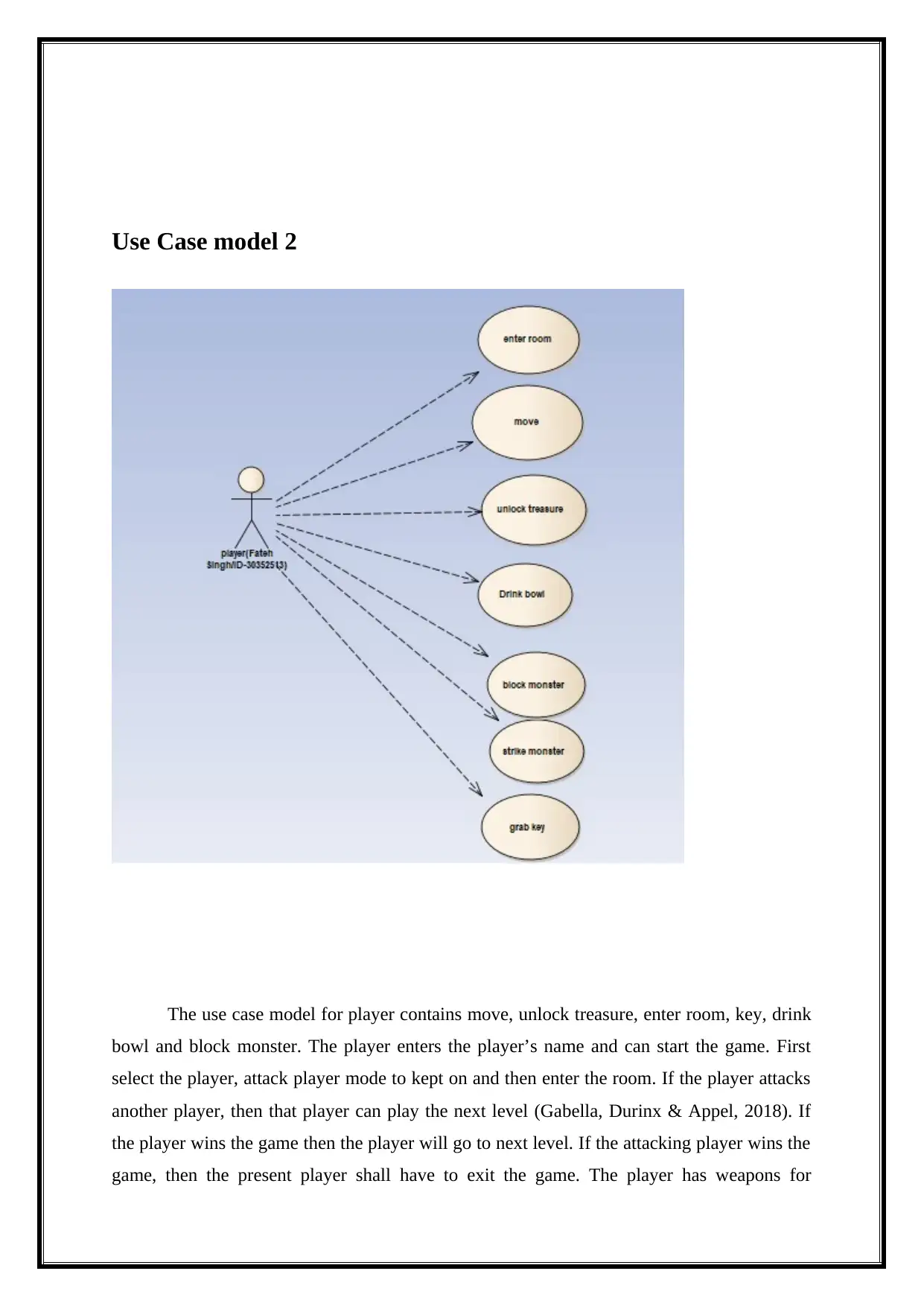
The use case model for player contains move, unlock treasure, enter room, key, drink
bowl and block monster. The player enters the player’s name and can start the game. First
select the player, attack player mode to kept on and then enter the room. If the player attacks
another player, then that player can play the next level (Gabella, Durinx & Appel, 2018). If
the player wins the game then the player will go to next level. If the attacking player wins the
game, then the present player shall have to exit the game. The player has weapons for
The use case model for player contains move, unlock treasure, enter room, key, drink
bowl and block monster. The player enters the player’s name and can start the game. First
select the player, attack player mode to kept on and then enter the room. If the player attacks
another player, then that player can play the next level (Gabella, Durinx & Appel, 2018). If
the player wins the game then the player will go to next level. If the attacking player wins the
game, then the present player shall have to exit the game. The player has weapons for

attacking the other player. It has the option for selling/ buying any items. Move to the next
level which has been unlocked. The customizer builds the maze, customizes the hero,
customizes the room and customizes the monster (Mehm, Göbel & Steinmetz, 2013).
Customize extension can customize the room, monster and maze game with specific details
with appearance and behaviour.
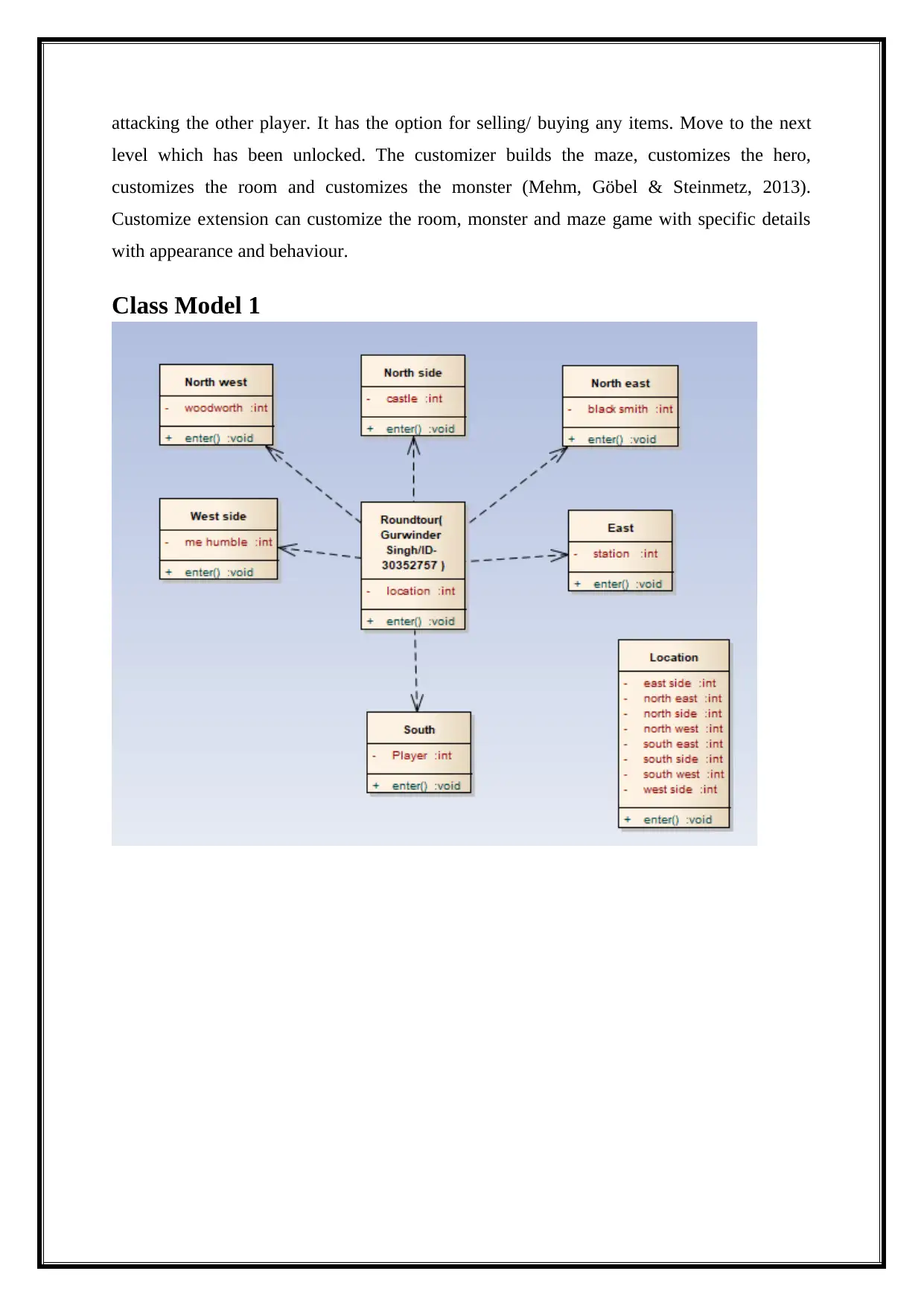
Class Model 1
level which has been unlocked. The customizer builds the maze, customizes the hero,
customizes the room and customizes the monster (Mehm, Göbel & Steinmetz, 2013).
Customize extension can customize the room, monster and maze game with specific details
with appearance and behaviour.
Class Model 1
⊘ This is a preview!⊘
Do you want full access?
Subscribe today to unlock all pages.

Trusted by 1+ million students worldwide

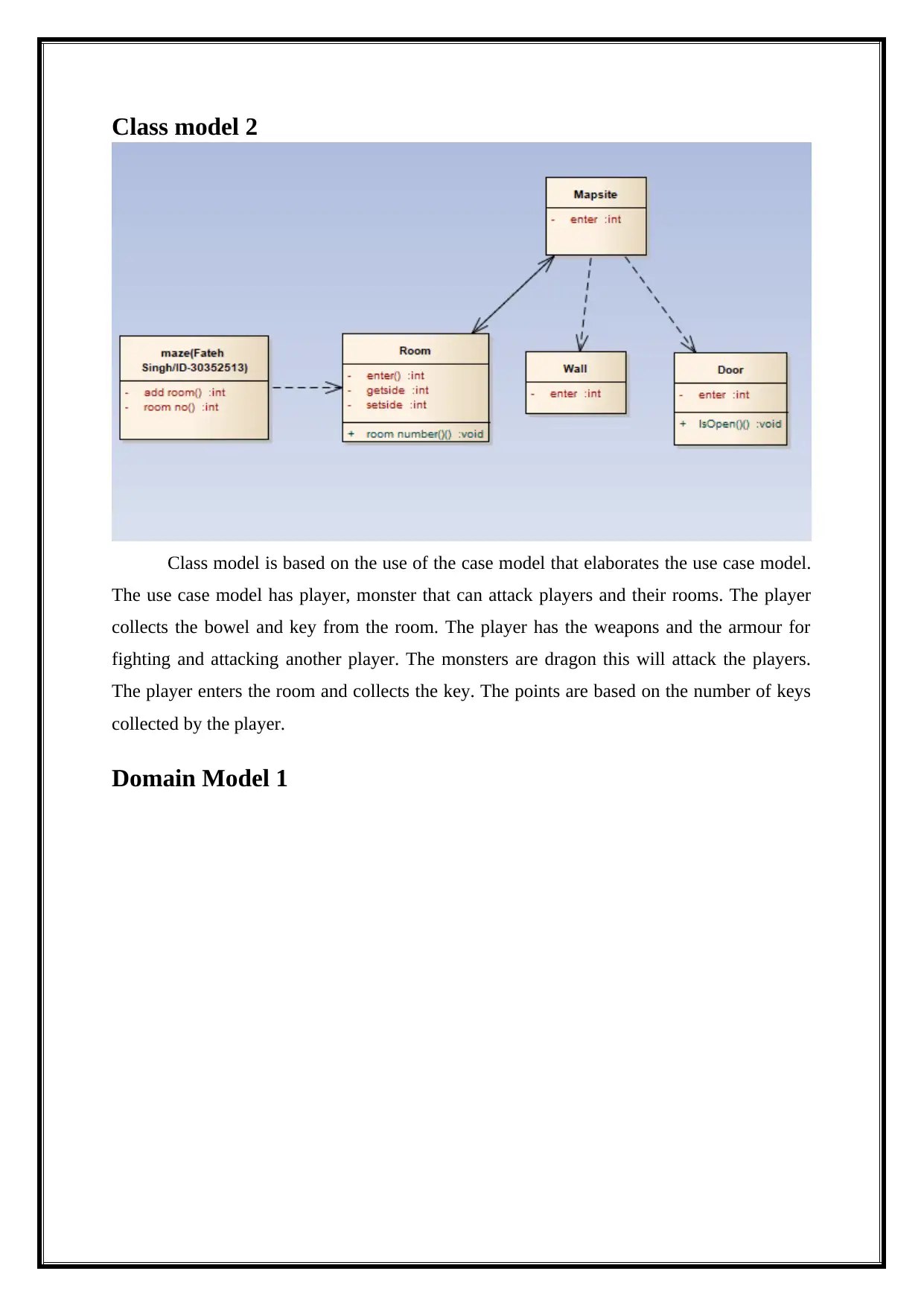
Class model 2
Class model is based on the use of the case model that elaborates the use case model.
The use case model has player, monster that can attack players and their rooms. The player
collects the bowel and key from the room. The player has the weapons and the armour for
fighting and attacking another player. The monsters are dragon this will attack the players.
The player enters the room and collects the key. The points are based on the number of keys
collected by the player.
Domain Model 1
Class model is based on the use of the case model that elaborates the use case model.
The use case model has player, monster that can attack players and their rooms. The player
collects the bowel and key from the room. The player has the weapons and the armour for
fighting and attacking another player. The monsters are dragon this will attack the players.
The player enters the room and collects the key. The points are based on the number of keys
collected by the player.
Domain Model 1
Paraphrase This Document
Need a fresh take? Get an instant paraphrase of this document with our AI Paraphraser


Domain Model 2
⊘ This is a preview!⊘
Do you want full access?
Subscribe today to unlock all pages.

Trusted by 1+ million students worldwide

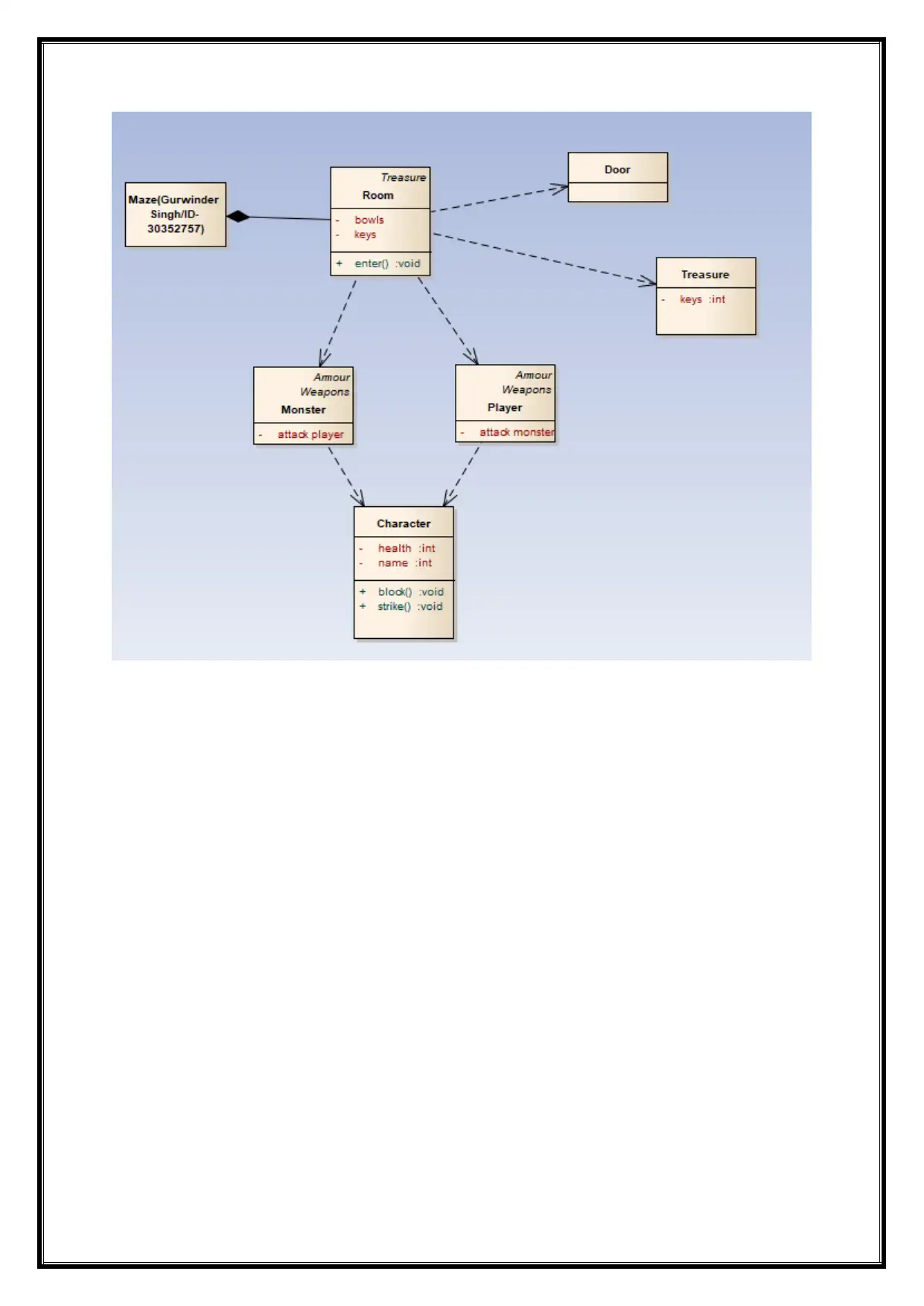
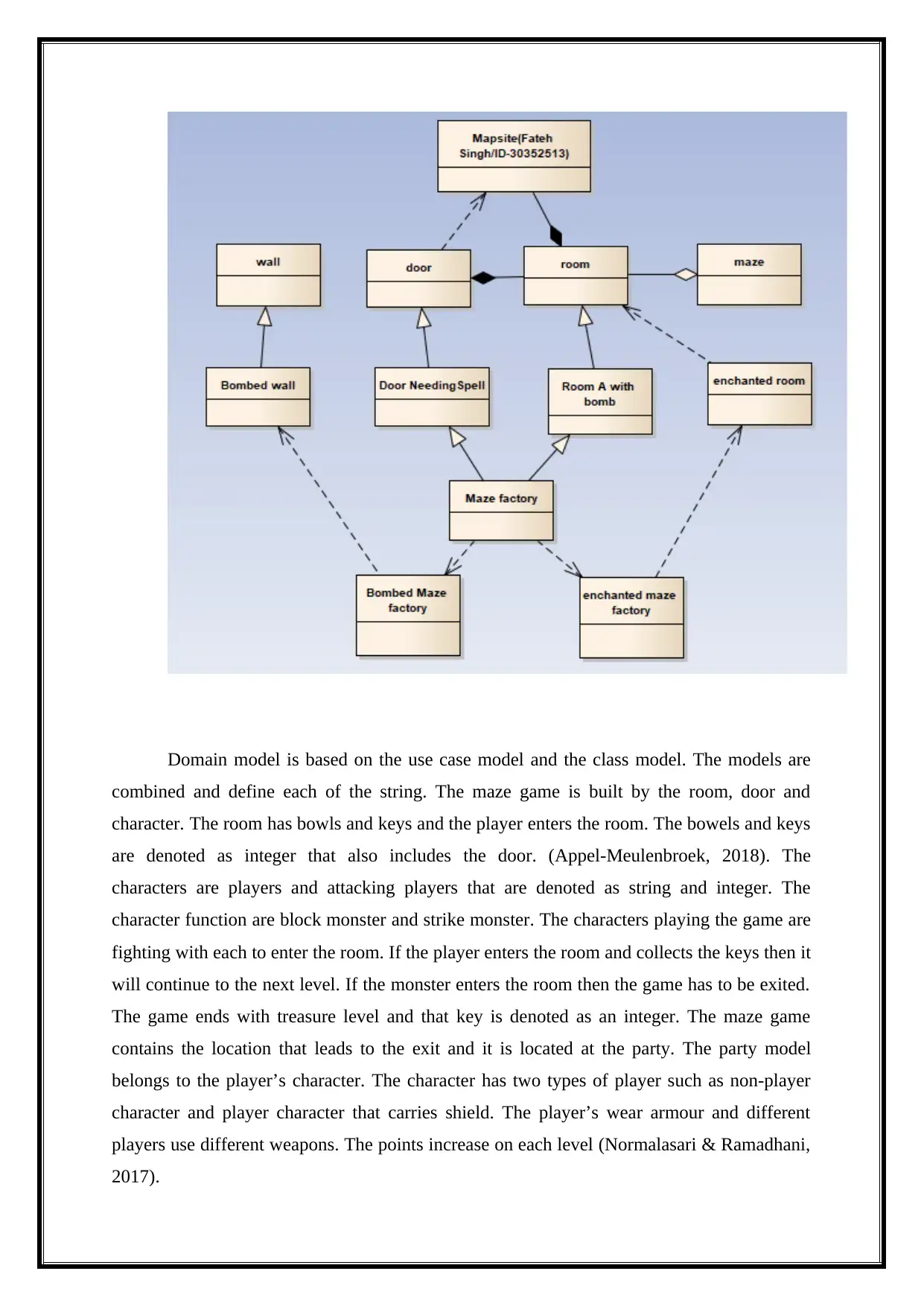
Domain model is based on the use case model and the class model. The models are
combined and define each of the string. The maze game is built by the room, door and
character. The room has bowls and keys and the player enters the room. The bowels and keys
are denoted as integer that also includes the door. (Appel-Meulenbroek, 2018). The
characters are players and attacking players that are denoted as string and integer. The
character function are block monster and strike monster. The characters playing the game are
fighting with each to enter the room. If the player enters the room and collects the keys then it
will continue to the next level. If the monster enters the room then the game has to be exited.
The game ends with treasure level and that key is denoted as an integer. The maze game
contains the location that leads to the exit and it is located at the party. The party model
belongs to the player’s character. The character has two types of player such as non-player
character and player character that carries shield. The player’s wear armour and different
players use different weapons. The points increase on each level (Normalasari & Ramadhani,
2017).
combined and define each of the string. The maze game is built by the room, door and
character. The room has bowls and keys and the player enters the room. The bowels and keys
are denoted as integer that also includes the door. (Appel-Meulenbroek, 2018). The
characters are players and attacking players that are denoted as string and integer. The
character function are block monster and strike monster. The characters playing the game are
fighting with each to enter the room. If the player enters the room and collects the keys then it
will continue to the next level. If the monster enters the room then the game has to be exited.
The game ends with treasure level and that key is denoted as an integer. The maze game
contains the location that leads to the exit and it is located at the party. The party model
belongs to the player’s character. The character has two types of player such as non-player
character and player character that carries shield. The player’s wear armour and different
players use different weapons. The points increase on each level (Normalasari & Ramadhani,
2017).
Paraphrase This Document
Need a fresh take? Get an instant paraphrase of this document with our AI Paraphraser

Domain Rules
The game has certain rules for playing the game. Each character has different
weapons and characters wear armour. The players attack other players by using the weapons.
Non players have character and additional attributes that are conservation and hostile to the
other players. Each location contains exits, description, items and non player characters. The
player controls a party which contains player, current location and NPC who have joined the
layers quest. If bought players pay as per the weapons and the player receives the value listed
on the weapons. The items are used to solve the problem, restore the life points and unlock
doors.
Design Model 1
Design Model 2
The game has certain rules for playing the game. Each character has different
weapons and characters wear armour. The players attack other players by using the weapons.
Non players have character and additional attributes that are conservation and hostile to the
other players. Each location contains exits, description, items and non player characters. The
player controls a party which contains player, current location and NPC who have joined the
layers quest. If bought players pay as per the weapons and the player receives the value listed
on the weapons. The items are used to solve the problem, restore the life points and unlock
doors.
Design Model 1
Design Model 2

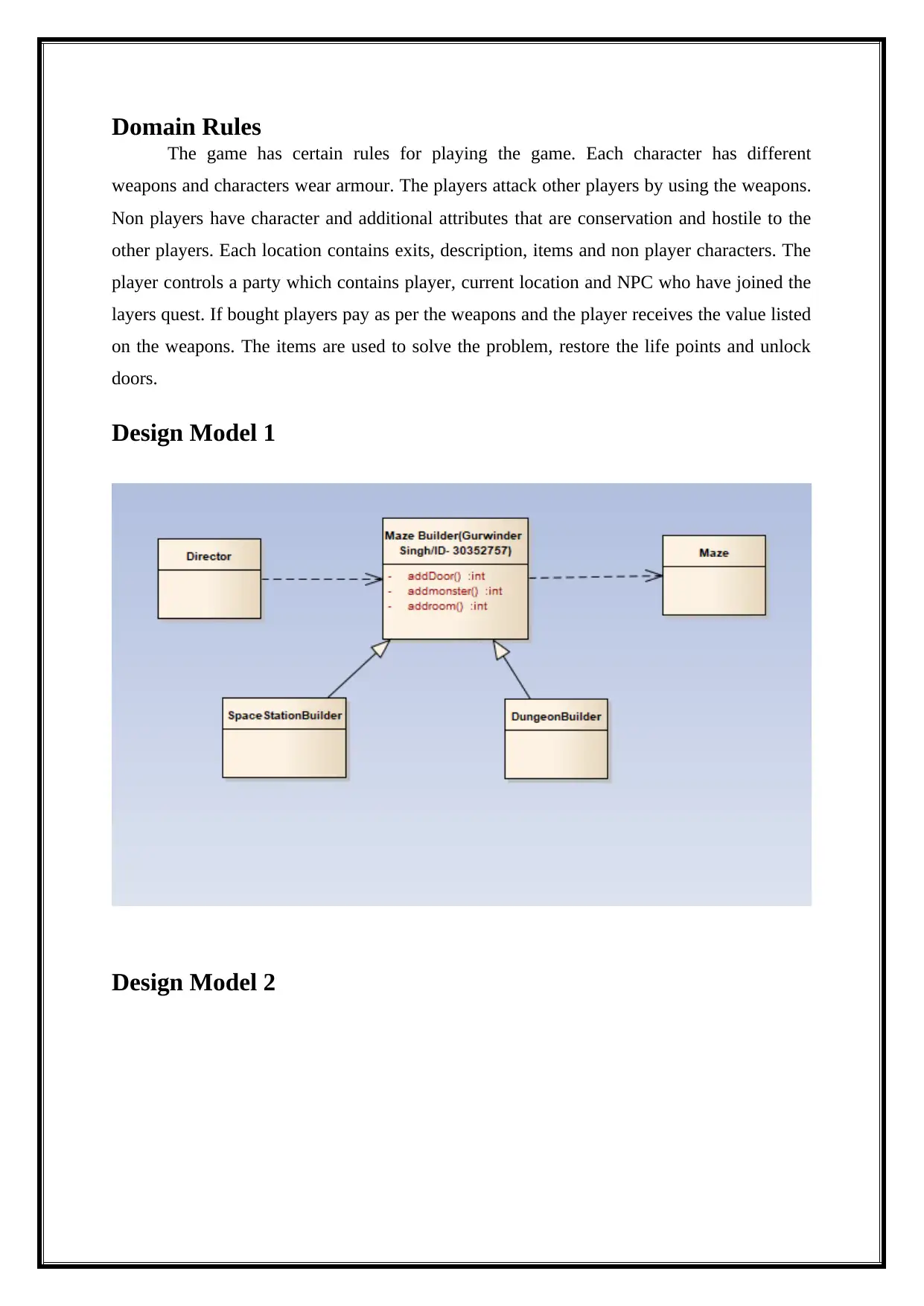
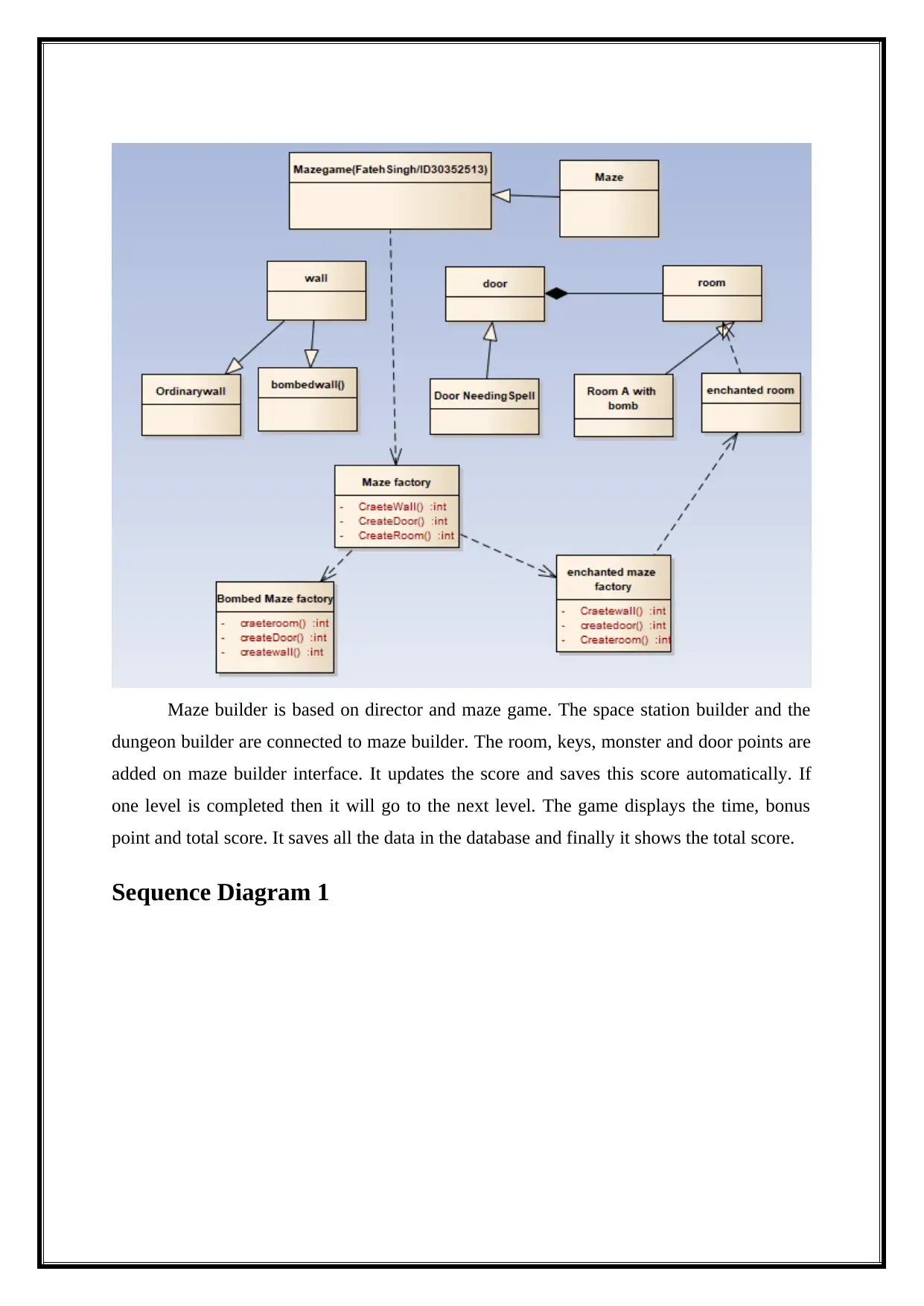
Maze builder is based on director and maze game. The space station builder and the
dungeon builder are connected to maze builder. The room, keys, monster and door points are
added on maze builder interface. It updates the score and saves this score automatically. If
one level is completed then it will go to the next level. The game displays the time, bonus
point and total score. It saves all the data in the database and finally it shows the total score.
Sequence Diagram 1
dungeon builder are connected to maze builder. The room, keys, monster and door points are
added on maze builder interface. It updates the score and saves this score automatically. If
one level is completed then it will go to the next level. The game displays the time, bonus
point and total score. It saves all the data in the database and finally it shows the total score.
Sequence Diagram 1
⊘ This is a preview!⊘
Do you want full access?
Subscribe today to unlock all pages.

Trusted by 1+ million students worldwide
1 out of 19
Related Documents
Your All-in-One AI-Powered Toolkit for Academic Success.
+13062052269
info@desklib.com
Available 24*7 on WhatsApp / Email
Unlock your academic potential
Copyright © 2020–2025 A2Z Services. All Rights Reserved. Developed and managed by ZUCOL.