Business Finance Report: Comparing Budgeting Systems at St. Emilia
VerifiedAdded on 2020/01/07
|12
|3933
|151
Report
AI Summary
This report provides a comprehensive analysis of business finance, focusing on budgeting systems within the context of St. Emilia Hospital, a private healthcare organization in the UK. It begins with an introduction to business finance and its importance in managing financial transactions and records. The report then delves into Task 1, examining the purpose of budgeting, its role in future forecasting, and the application of traditional budgeting within St. Emilia, highlighting its advantages and disadvantages, including the use of incremental budgeting. Task 2 explores alternative budgeting systems, contrasting the traditional incremental approach with zero-based budgeting, activity-based budgeting (ABB), and rolling budget systems. The report emphasizes the challenges and limitations of traditional budgeting and the potential benefits of alternative methods in improving financial management and resource allocation within the hospital. The conclusion summarizes the key findings and implications for financial planning and decision-making at St. Emilia Hospital.

BUSINESS FINANACE
1
1

Paraphrase This Document
Need a fresh take? Get an instant paraphrase of this document with our AI Paraphraser
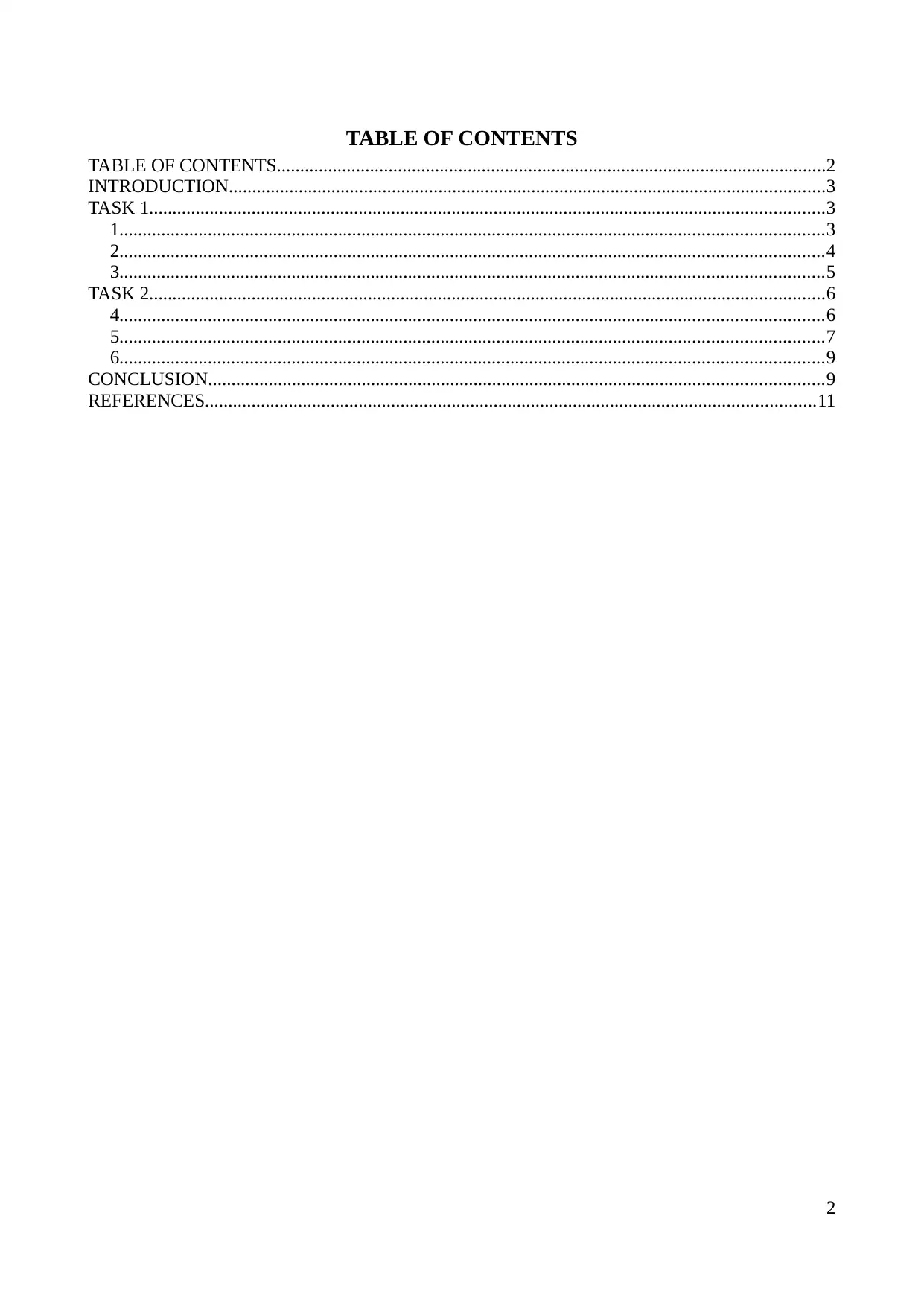
TABLE OF CONTENTS
TABLE OF CONTENTS......................................................................................................................2
INTRODUCTION................................................................................................................................3
TASK 1.................................................................................................................................................3
1.......................................................................................................................................................3
2.......................................................................................................................................................4
3.......................................................................................................................................................5
TASK 2.................................................................................................................................................6
4.......................................................................................................................................................6
5.......................................................................................................................................................7
6.......................................................................................................................................................9
CONCLUSION....................................................................................................................................9
REFERENCES...................................................................................................................................11
2
TABLE OF CONTENTS......................................................................................................................2
INTRODUCTION................................................................................................................................3
TASK 1.................................................................................................................................................3
1.......................................................................................................................................................3
2.......................................................................................................................................................4
3.......................................................................................................................................................5
TASK 2.................................................................................................................................................6
4.......................................................................................................................................................6
5.......................................................................................................................................................7
6.......................................................................................................................................................9
CONCLUSION....................................................................................................................................9
REFERENCES...................................................................................................................................11
2
INTRODUCTION
Business finance is a term that encompasses a large numbers of activities and disciplines
revolving around the management of money and other valuable assets. This is the key element for
these types of the organisation. Each and every task which perform by the organisation is need of
the finance so they have to use effective strategies in the organisation. This is very important term in
order manage in the income and outcomes, profit and loss of the business organisation. In every
business enterprise, business finance play a very crucial role in order to manage the financial
transaction and keep the records of profit and loss of company (Ezzamel., Robson. and Stapleton.,
2012. ). In this project report St. Emila Hospital is the organisation which is a located in the UK,
purpose and objective a budget for business has been included. In addition to this traditional
budgeting system has been also addressed. The present report is containing the budgetary systems
and how they will applicable in the St. Emila Hospital. The organisation is using the traditional
budgetary system and what are the alternative are available for traditional is the core part of the
given below report. Moreover, this project provides a depth understanding of alternative budget
systems.
TASK 1
1
It helps in future forecasting for the comparing post budget with current budget for the
organisation like St. Emila. Various measure have been taken to make estimate budget various
statistical measure should have been adopted such as regression, correlation etc. Through budget
ratio analysis of various project is compared. It help in taking correct action. Standard performance
of different employee is also judge based on this criteria. Financial budget are prefer in comparison
to operational budget because it deal with monetary aspect .Various technique have been adopted
for preparing financial report. Budget help in identifying bottleneck activity in the organization. It
help in allocating resources in the organization.
Assumption: Various assumption have been kept in mind while preparing budget. It is very
useful in revenue forecasting technique. Budget have much wider goal and objective. They have got
huge scope. It help in measuring performance of individual employee. It reveal financial position of
an entity. It help in identifying bottleneck activity in St. Emila. All activity are judged from zero
level of activity.
It reveal financial implication of entity such as cash flow statement, fund flow statement. It is
useful for project planning and control. It identify various cost at different level. It is useful source
3
Business finance is a term that encompasses a large numbers of activities and disciplines
revolving around the management of money and other valuable assets. This is the key element for
these types of the organisation. Each and every task which perform by the organisation is need of
the finance so they have to use effective strategies in the organisation. This is very important term in
order manage in the income and outcomes, profit and loss of the business organisation. In every
business enterprise, business finance play a very crucial role in order to manage the financial
transaction and keep the records of profit and loss of company (Ezzamel., Robson. and Stapleton.,
2012. ). In this project report St. Emila Hospital is the organisation which is a located in the UK,
purpose and objective a budget for business has been included. In addition to this traditional
budgeting system has been also addressed. The present report is containing the budgetary systems
and how they will applicable in the St. Emila Hospital. The organisation is using the traditional
budgetary system and what are the alternative are available for traditional is the core part of the
given below report. Moreover, this project provides a depth understanding of alternative budget
systems.
TASK 1
1
It helps in future forecasting for the comparing post budget with current budget for the
organisation like St. Emila. Various measure have been taken to make estimate budget various
statistical measure should have been adopted such as regression, correlation etc. Through budget
ratio analysis of various project is compared. It help in taking correct action. Standard performance
of different employee is also judge based on this criteria. Financial budget are prefer in comparison
to operational budget because it deal with monetary aspect .Various technique have been adopted
for preparing financial report. Budget help in identifying bottleneck activity in the organization. It
help in allocating resources in the organization.
Assumption: Various assumption have been kept in mind while preparing budget. It is very
useful in revenue forecasting technique. Budget have much wider goal and objective. They have got
huge scope. It help in measuring performance of individual employee. It reveal financial position of
an entity. It help in identifying bottleneck activity in St. Emila. All activity are judged from zero
level of activity.
It reveal financial implication of entity such as cash flow statement, fund flow statement. It is
useful for project planning and control. It identify various cost at different level. It is useful source
3
⊘ This is a preview!⊘
Do you want full access?
Subscribe today to unlock all pages.

Trusted by 1+ million students worldwide
for revenue forecasting. It help in measuring performance of entity. Ratio analysis technique is been
used for comparing various budget, actual standard performance of individual could be judged by
this technique. Various manager in different entity have been following technique for cost control.
Suitable remedial action could be taken from time to time. Past budged are to ignored here. Various
statical measure should be adopted for comparing purpose. Performance analysis appraisal report
has been prepared for this purpose. This is one of important technique for budgeting
Purpose of budgeting
• It is useful for resource allocation purpose.
• For laying down the planning activity of entity
• Useful tool for decision making$ controlling technique
• It help in identifying motivational level of employee.
• Useful tool for monitoring and controlling purpose.
2
St. Emilia is a private hospital who is indulged into practices of delivering non urgent
outpatient treatment. Clinic delivers different type of diagnostic, psychiatric along with the clinic
services as per the requirement of patients. At present traditional budgeting process has been
undertaken by business. But on the other hand different challenges are faced while undertaking this
approach such as many of the overheads including reception, administration, IT, utilities etc. are
shared between multiple profit centres which are delivering different treatment. Implementation of
traditional budgeting approach within St. Emilia can take place with the help of proper planning
where it indicates the actual amount of money being allotted in a set period of time for financial
obligations such as rent, entertainment etc. Application of traditional budgeting in the business can
allow to focus on accounting standards(Joyce., 2011.). Further, main focus is on previous level of
expenditure and reducing its level with the motive to enhance profitability level. Managers of
Emilia can inflate their budget requires so that after the cut they are able to obtain one which they
expect. Further, its application will support organization in deciding whether particular amount can
be spent on specific business unit or not. It is a kind of routine approach which allows business in
strengthening its overall operations. This approach is most commonly employed in many public
organizations due to the presence of framework of control. Through its applicability St. Emilia can
utilize its financial resources in proper manner and in turn desired objectives of the business can be
accomplished easily. St. Emilia can easily coordinate all the range of activities and loopholes can be
identified where organization is not performing efficiently. Traditional approach to budgeting can
support in decentralization where operations of the company can be carried out efficiently and in
4
used for comparing various budget, actual standard performance of individual could be judged by
this technique. Various manager in different entity have been following technique for cost control.
Suitable remedial action could be taken from time to time. Past budged are to ignored here. Various
statical measure should be adopted for comparing purpose. Performance analysis appraisal report
has been prepared for this purpose. This is one of important technique for budgeting
Purpose of budgeting
• It is useful for resource allocation purpose.
• For laying down the planning activity of entity
• Useful tool for decision making$ controlling technique
• It help in identifying motivational level of employee.
• Useful tool for monitoring and controlling purpose.
2
St. Emilia is a private hospital who is indulged into practices of delivering non urgent
outpatient treatment. Clinic delivers different type of diagnostic, psychiatric along with the clinic
services as per the requirement of patients. At present traditional budgeting process has been
undertaken by business. But on the other hand different challenges are faced while undertaking this
approach such as many of the overheads including reception, administration, IT, utilities etc. are
shared between multiple profit centres which are delivering different treatment. Implementation of
traditional budgeting approach within St. Emilia can take place with the help of proper planning
where it indicates the actual amount of money being allotted in a set period of time for financial
obligations such as rent, entertainment etc. Application of traditional budgeting in the business can
allow to focus on accounting standards(Joyce., 2011.). Further, main focus is on previous level of
expenditure and reducing its level with the motive to enhance profitability level. Managers of
Emilia can inflate their budget requires so that after the cut they are able to obtain one which they
expect. Further, its application will support organization in deciding whether particular amount can
be spent on specific business unit or not. It is a kind of routine approach which allows business in
strengthening its overall operations. This approach is most commonly employed in many public
organizations due to the presence of framework of control. Through its applicability St. Emilia can
utilize its financial resources in proper manner and in turn desired objectives of the business can be
accomplished easily. St. Emilia can easily coordinate all the range of activities and loopholes can be
identified where organization is not performing efficiently. Traditional approach to budgeting can
support in decentralization where operations of the company can be carried out efficiently and in
4
Paraphrase This Document
Need a fresh take? Get an instant paraphrase of this document with our AI Paraphraser
turn profit margin can be enhanced up to extent.
Without employing traditional approach it is not at all possible for St. Emilia to focus on
optimum utilization of its financial resources and sometime it may lead to unfavourable results for
company. On the other hand some limitations associated with this type of budgeting is present
which business is required to undertake such as inefficiency where its applicability can consume
large amount of time along with the resources which are crucial for business(Kilfoyle. and
Richardson., 2011.). Apart from this some other limitations involve prone to data entry errors,
difficulty in devising appropriate formulations etc. Further, this approach sometime fails in
motivating desirable behaviours as it encourages vertical control and this highlights the
undervaluation of people associated with St. Emilia. Therefore, in this case considering the
limitations of traditional approach is must where it can adversely influence efficiency of Emilia.
3
St Emilia’s Healthcare Management Ltd is a private hospital and they are using the
traditional budgeting system in the organisation to perform their financial activities. This is a big
structured organisation and it have to make the budget for a particular financial year. The St.
Emilia’s is believe in the use of traditional budgeting method for the whole organisation. The
hospital is having various department in it like; reception, administration, IT and staff members etc.
These are the sprite of the St Emilia’s and they give the strength to work in a proper way(Truong.,
Partington. and Peat., 2008.). So they have to a lot a sufficient budget to each and every department
to do their activities without any problem. Finance budgeting is a hard task to allot it in a proper and
sufficient way in each department.
Incremental Budgeting System:
St Emilia’s is using the traditional format of budgeting, they are using the incremental budgeting
system. In this type of budget, an organisation have to assume their previous finance year budget as
a base and they have to divide their budget on the basis of the previous budget.
Advantage and Disadvantage of Incremental Budgeting System:
They have to prepare their current year budget focusing on the last year budget and they can make
changes in this according to the inflation rate, consumer demands and market changes etc. Previous
year's revenues, cost and expenses are taken as base and it gives an idea for the current year. St
Emilia’s is using this perfectly in the organisation, they are maintaining the finance data which is
divided in the various departments and they are using this as a base for particular department. For
example; IT department have various expenses to do their activities so the organisation assumes the
5
Without employing traditional approach it is not at all possible for St. Emilia to focus on
optimum utilization of its financial resources and sometime it may lead to unfavourable results for
company. On the other hand some limitations associated with this type of budgeting is present
which business is required to undertake such as inefficiency where its applicability can consume
large amount of time along with the resources which are crucial for business(Kilfoyle. and
Richardson., 2011.). Apart from this some other limitations involve prone to data entry errors,
difficulty in devising appropriate formulations etc. Further, this approach sometime fails in
motivating desirable behaviours as it encourages vertical control and this highlights the
undervaluation of people associated with St. Emilia. Therefore, in this case considering the
limitations of traditional approach is must where it can adversely influence efficiency of Emilia.
3
St Emilia’s Healthcare Management Ltd is a private hospital and they are using the
traditional budgeting system in the organisation to perform their financial activities. This is a big
structured organisation and it have to make the budget for a particular financial year. The St.
Emilia’s is believe in the use of traditional budgeting method for the whole organisation. The
hospital is having various department in it like; reception, administration, IT and staff members etc.
These are the sprite of the St Emilia’s and they give the strength to work in a proper way(Truong.,
Partington. and Peat., 2008.). So they have to a lot a sufficient budget to each and every department
to do their activities without any problem. Finance budgeting is a hard task to allot it in a proper and
sufficient way in each department.
Incremental Budgeting System:
St Emilia’s is using the traditional format of budgeting, they are using the incremental budgeting
system. In this type of budget, an organisation have to assume their previous finance year budget as
a base and they have to divide their budget on the basis of the previous budget.
Advantage and Disadvantage of Incremental Budgeting System:
They have to prepare their current year budget focusing on the last year budget and they can make
changes in this according to the inflation rate, consumer demands and market changes etc. Previous
year's revenues, cost and expenses are taken as base and it gives an idea for the current year. St
Emilia’s is using this perfectly in the organisation, they are maintaining the finance data which is
divided in the various departments and they are using this as a base for particular department. For
example; IT department have various expenses to do their activities so the organisation assumes the
5
previous year expenses to make the budget and to allot the finance for the current year.
Appropriation in the current form of the business:
The traditional method of budgeting is good for the small structured organisation and there
is many alternatives are available like; Zero Base budgeting etc. The traditional method is not
appropriate in the present form because they have to make an extra effort in the organisation to
make further steps in make consumers and services for them(Brown., Evans. and Moser., 2009.).
Traditional budgeting method is having some threats and risks because it is based on the previous
finance year. In the present time, situations and conditions may totally different from the previous
so there is a risk behind it.
To make a traditional budget, St Emilia’s have to use an experienced person which can assume the
fluctuation and changes in the previous year and current year. In the current situations of St Emilia
hospital, there is a new finance officer is appointed so this is not an easy task to make a incremental
budget for Nadia(new finance officer). They have to use their full ability and to make the budget to
St Emilia hospital. They have to use previous year data and they can adopt and take suggestions of
the owners and management of the organisation.
TASK 2
4
Alternative budget system against traditional incremental approach
Budget planning and its use in application of allocation of funds is a very complex task that
requires great deal of sincere efforts by the budgetary planning committee. Unlike the traditional
method of budgeting, this modern approach of budgeting that includes the use of zero based
budgeting being time consuming has definite targeted achievements and attainment of objectives of
the St. Emilia(Miller. and O’leary., 2007.). Whatever be the choice of system, it is necessary to
make sure that the budget is a concrete one which cannot be changed for the remaining fiscal year.
This section reflects the alternative against traditional method that is zero based budgeting.
Zero Base Budgeting: In zero based budget it is required to sincerely analyse the present
financial condition of the company and allocate the resources accordingly. Here the
managers play an important role in obtaining required funds for their department. On the
basis of presentation of required funds made by the managers, the activities are listed
starting with the activities most influencing upon the profit margin. The activities arranged
with decreasing requirement of funds help the budget department to get a better
understanding on how to prioritise there allocation of resources and funds. In zero based
budgeting the expenses are incurred till they match with the income. This means that
6
Appropriation in the current form of the business:
The traditional method of budgeting is good for the small structured organisation and there
is many alternatives are available like; Zero Base budgeting etc. The traditional method is not
appropriate in the present form because they have to make an extra effort in the organisation to
make further steps in make consumers and services for them(Brown., Evans. and Moser., 2009.).
Traditional budgeting method is having some threats and risks because it is based on the previous
finance year. In the present time, situations and conditions may totally different from the previous
so there is a risk behind it.
To make a traditional budget, St Emilia’s have to use an experienced person which can assume the
fluctuation and changes in the previous year and current year. In the current situations of St Emilia
hospital, there is a new finance officer is appointed so this is not an easy task to make a incremental
budget for Nadia(new finance officer). They have to use their full ability and to make the budget to
St Emilia hospital. They have to use previous year data and they can adopt and take suggestions of
the owners and management of the organisation.
TASK 2
4
Alternative budget system against traditional incremental approach
Budget planning and its use in application of allocation of funds is a very complex task that
requires great deal of sincere efforts by the budgetary planning committee. Unlike the traditional
method of budgeting, this modern approach of budgeting that includes the use of zero based
budgeting being time consuming has definite targeted achievements and attainment of objectives of
the St. Emilia(Miller. and O’leary., 2007.). Whatever be the choice of system, it is necessary to
make sure that the budget is a concrete one which cannot be changed for the remaining fiscal year.
This section reflects the alternative against traditional method that is zero based budgeting.
Zero Base Budgeting: In zero based budget it is required to sincerely analyse the present
financial condition of the company and allocate the resources accordingly. Here the
managers play an important role in obtaining required funds for their department. On the
basis of presentation of required funds made by the managers, the activities are listed
starting with the activities most influencing upon the profit margin. The activities arranged
with decreasing requirement of funds help the budget department to get a better
understanding on how to prioritise there allocation of resources and funds. In zero based
budgeting the expenses are incurred till they match with the income. This means that
6
⊘ This is a preview!⊘
Do you want full access?
Subscribe today to unlock all pages.
Trusted by 1+ million students worldwide
whatever be the income of the company it is used completely after funding the financial
activities until nothing is remaining (Gervais., Heaton. and Odean., 2011.). All of this
requires dedication of sincere attempts to adjust the budget with the changing market or
economic condition. Zero based budgeting does not take into account the previous
performances and just focuses on present situation. The employees are therefore motivated
to perform better and achieve higher profit margins which thereby increases the satisfaction
of shareholders which would then eventually result with increased collection of funds in
future.
Activity based budgeting (ABB): For following this type of system, it is necessary to
analyse the efficiency of each of the activity and which costs are incurred on similar basis in
almost all of the activities. It undertakes the importance of each of the activities and thereby
works in coordination for the attainment of overall objectives of the company. This type of
budgeting helps in keeping control over the different activities of the company and helping
the budget work in hand with the organizational goals and objectives.
Rolling System Of Budget: The another budget system that can be adopted is rolling
system of budget. This type of budget is updated and policies are framed according to the
required changes. It proves to be a connectivity of previous or present financial period with
that of future. In simple sense it is just an incremental extension of existing period(Libby.
and Lindsay., 2010.). It acquires more attention as compared to the other systems as some
activities needs to be considered repeatedly. This type of finance model needs to be attended
constantly and the assumptions drawn for previous incremental year need to be answered to.
5
All of the above given the alternative methods of the budget systems are based on the
modern techniques and environment of the organisation. Each of these alternatives have some
advantage and disadvantage so on the basis of the St. Emilia can adopt the alternatives. Zero base
budgeting, Activity Based budgeting and Rolling Budget are the methods which is developed for
the modern environment and for the modern work culture(Wampler., 2010.). Here is the advantage
and disadvantage of the alternative methods of the budgeting:
Zero Base Budgeting:
Advantage of the Zero base budgeting;
It gives a stress on manager to use the alternatives of the work and effects on the different
levels of the expending.
It reduce the expenditures of the organisation and develop a cost effective process chain.
7
activities until nothing is remaining (Gervais., Heaton. and Odean., 2011.). All of this
requires dedication of sincere attempts to adjust the budget with the changing market or
economic condition. Zero based budgeting does not take into account the previous
performances and just focuses on present situation. The employees are therefore motivated
to perform better and achieve higher profit margins which thereby increases the satisfaction
of shareholders which would then eventually result with increased collection of funds in
future.
Activity based budgeting (ABB): For following this type of system, it is necessary to
analyse the efficiency of each of the activity and which costs are incurred on similar basis in
almost all of the activities. It undertakes the importance of each of the activities and thereby
works in coordination for the attainment of overall objectives of the company. This type of
budgeting helps in keeping control over the different activities of the company and helping
the budget work in hand with the organizational goals and objectives.
Rolling System Of Budget: The another budget system that can be adopted is rolling
system of budget. This type of budget is updated and policies are framed according to the
required changes. It proves to be a connectivity of previous or present financial period with
that of future. In simple sense it is just an incremental extension of existing period(Libby.
and Lindsay., 2010.). It acquires more attention as compared to the other systems as some
activities needs to be considered repeatedly. This type of finance model needs to be attended
constantly and the assumptions drawn for previous incremental year need to be answered to.
5
All of the above given the alternative methods of the budget systems are based on the
modern techniques and environment of the organisation. Each of these alternatives have some
advantage and disadvantage so on the basis of the St. Emilia can adopt the alternatives. Zero base
budgeting, Activity Based budgeting and Rolling Budget are the methods which is developed for
the modern environment and for the modern work culture(Wampler., 2010.). Here is the advantage
and disadvantage of the alternative methods of the budgeting:
Zero Base Budgeting:
Advantage of the Zero base budgeting;
It gives a stress on manager to use the alternatives of the work and effects on the different
levels of the expending.
It reduce the expenditures of the organisation and develop a cost effective process chain.
7
Paraphrase This Document
Need a fresh take? Get an instant paraphrase of this document with our AI Paraphraser
This is give a reason to make communication in between management and employees.
This concept of budgeting requires a manager to link the expenses to their activities.
Disadvantage of the Zero Base Budgeting:
It creates the chances of the bureaucracy in the organisation.
Some managers may attempt to skew their budget reports to concentrate expenditures under
the most vital activities, thereby ensuring that their budgets will not be reduced.
Managers requires a lot of training for the zero base budgeting(Sintomer., Herzberg. and
Röcke., 2008.).
Activity Based Budgeting:
Advantageous;
Data based on this system is more accurate which helps to take decision making.
Another advantages of this system is that this system adopt unit cost as compare to total
cost.
Data based on this system is is easily understandable by everyone.
This system is provide better understand on the overhead expenditure.
Disadvantage;
ABC system has a major limitation is that it requires substantial resources. So that data
collection from various sources is tough and more costly. It takes more time consuming
activity.
ABC based data have a disadvantage is that it can can misinterpreted when the manager take
decision based on these data(Hope. and Fraser., 2013.).
Information based on this system do not follow GAAP principles. Which is most important
for managers.
Rolling Based Budget:
Advantage;
It includes or takes into account the effect of elements of industry and economy in which the
organization is working in with.
It extends the existing fiscal period to future fiscal period. Thereby giving importance to the
activities of present operational plan(Phillips. and Costa., 2007.).
Rolling budget system improves to be dynamic one where it accepts the changing business
environmental effects and frames the policies accordingly.
Rolling system of budget is the blueprint of success for future budgetary planning.
Disadvantage:
It requires to incur huge costs upon analysing the changing market and economy conditions.
8
This concept of budgeting requires a manager to link the expenses to their activities.
Disadvantage of the Zero Base Budgeting:
It creates the chances of the bureaucracy in the organisation.
Some managers may attempt to skew their budget reports to concentrate expenditures under
the most vital activities, thereby ensuring that their budgets will not be reduced.
Managers requires a lot of training for the zero base budgeting(Sintomer., Herzberg. and
Röcke., 2008.).
Activity Based Budgeting:
Advantageous;
Data based on this system is more accurate which helps to take decision making.
Another advantages of this system is that this system adopt unit cost as compare to total
cost.
Data based on this system is is easily understandable by everyone.
This system is provide better understand on the overhead expenditure.
Disadvantage;
ABC system has a major limitation is that it requires substantial resources. So that data
collection from various sources is tough and more costly. It takes more time consuming
activity.
ABC based data have a disadvantage is that it can can misinterpreted when the manager take
decision based on these data(Hope. and Fraser., 2013.).
Information based on this system do not follow GAAP principles. Which is most important
for managers.
Rolling Based Budget:
Advantage;
It includes or takes into account the effect of elements of industry and economy in which the
organization is working in with.
It extends the existing fiscal period to future fiscal period. Thereby giving importance to the
activities of present operational plan(Phillips. and Costa., 2007.).
Rolling budget system improves to be dynamic one where it accepts the changing business
environmental effects and frames the policies accordingly.
Rolling system of budget is the blueprint of success for future budgetary planning.
Disadvantage:
It requires to incur huge costs upon analysing the changing market and economy conditions.
8
The activities of competitors need to be monitored constantly to decide upon the importance
of allocation of more funds in required promotional activities.
It is a very complex system as it involves coordination and efforts from all the senior most
managers.
6
Performance budgeting will be beneficial for Emilia’s.
Transparency of budget is the major advantage of this system, it will support to see the
actual results during the budgeting cycle. And according to this company will be able to
modify the plans(Lee Jr., Johnson. and Joyce., 2012.).
Through this Emilia’s will be able to evaluate the performance easily so that its operations
and efficiency will get improved, if organization uses this budgeting system in the
workplace.
Traditional budgeting system are time consuming and there are chances of errors. But with
this system Emilia’s will be able to improve efficiency of the workplace. Data error, control
functions will be managed effectively.
It is linked with objective of the firm so Emilia’s will be able to achieve its goal with the
help of performance budgeting system.
It would be beneficial for the service firm in improving the budget formation process and it
will support in reducing the overall operational cost of the Emilia’s.
It helps to improve legislative review as it is prepared by presenting a comprehensive view
of several departments of health care organization. So it first ensures that budget plan will be
worthwhile or not. By this way Emilia’s will be able to accomplish its objective.
It enhances efficiency of workplace thus, hospital will be able to develop strong relationship
with the patients. This will increase reputation of the organization(Bierman Jr. and Smidt.,
2012.).
It helps to estimate the potential consequences of the new funding decision. And after
collective in depth information finally prepare plan of budget.
• It supports management to regulate and operate each activity according to the pre-determine
standards. By this way Emilia’s will be able to maintain service standards in the workplace.
This will enhance confidence and trust of patients on the health care organization.
Performance budgeting will be the best suitable system for the Emilia’s Healthcare
Management Ltd and it will support to accomp0lish the objective of the firm in shorter time
duration.
9
of allocation of more funds in required promotional activities.
It is a very complex system as it involves coordination and efforts from all the senior most
managers.
6
Performance budgeting will be beneficial for Emilia’s.
Transparency of budget is the major advantage of this system, it will support to see the
actual results during the budgeting cycle. And according to this company will be able to
modify the plans(Lee Jr., Johnson. and Joyce., 2012.).
Through this Emilia’s will be able to evaluate the performance easily so that its operations
and efficiency will get improved, if organization uses this budgeting system in the
workplace.
Traditional budgeting system are time consuming and there are chances of errors. But with
this system Emilia’s will be able to improve efficiency of the workplace. Data error, control
functions will be managed effectively.
It is linked with objective of the firm so Emilia’s will be able to achieve its goal with the
help of performance budgeting system.
It would be beneficial for the service firm in improving the budget formation process and it
will support in reducing the overall operational cost of the Emilia’s.
It helps to improve legislative review as it is prepared by presenting a comprehensive view
of several departments of health care organization. So it first ensures that budget plan will be
worthwhile or not. By this way Emilia’s will be able to accomplish its objective.
It enhances efficiency of workplace thus, hospital will be able to develop strong relationship
with the patients. This will increase reputation of the organization(Bierman Jr. and Smidt.,
2012.).
It helps to estimate the potential consequences of the new funding decision. And after
collective in depth information finally prepare plan of budget.
• It supports management to regulate and operate each activity according to the pre-determine
standards. By this way Emilia’s will be able to maintain service standards in the workplace.
This will enhance confidence and trust of patients on the health care organization.
Performance budgeting will be the best suitable system for the Emilia’s Healthcare
Management Ltd and it will support to accomp0lish the objective of the firm in shorter time
duration.
9
⊘ This is a preview!⊘
Do you want full access?
Subscribe today to unlock all pages.
Trusted by 1+ million students worldwide
CONCLUSION
The entire study being carried out has supported to understand about the concept of budgeting
where different budgets are being used by business in order to control its major expenses and
enhancing profitability level. Further, the main purpose behind preparation of budget is optimum
utilization of resources where adequate amount of funds are being present with business that can be
used for development purpose. Apart from this, it is also used for future planning purpose where
Emilia can easily focus on its expansion plans and in turn customers can be delivered right services
as per their expectations. Moreover, other alternative methods of budgeting involve performance
based, output budgeting etc. where its attributes differs from one another. In case of Emilia business
can employ. How the alternatives are more effective for the St. Emila and how they can use the
alternatives in the proper way is given. The organisation's believes and changes to adopt these
budget system is also given in the above. The present report is having that how an organisation can
make the traditional budget and what are the helping elements of the budgetary systems. So the
given St. Emila hospital using the old one and what are the changes made by them to use the
alternative methods of the budget.
10
The entire study being carried out has supported to understand about the concept of budgeting
where different budgets are being used by business in order to control its major expenses and
enhancing profitability level. Further, the main purpose behind preparation of budget is optimum
utilization of resources where adequate amount of funds are being present with business that can be
used for development purpose. Apart from this, it is also used for future planning purpose where
Emilia can easily focus on its expansion plans and in turn customers can be delivered right services
as per their expectations. Moreover, other alternative methods of budgeting involve performance
based, output budgeting etc. where its attributes differs from one another. In case of Emilia business
can employ. How the alternatives are more effective for the St. Emila and how they can use the
alternatives in the proper way is given. The organisation's believes and changes to adopt these
budget system is also given in the above. The present report is having that how an organisation can
make the traditional budget and what are the helping elements of the budgetary systems. So the
given St. Emila hospital using the old one and what are the changes made by them to use the
alternative methods of the budget.
10
Paraphrase This Document
Need a fresh take? Get an instant paraphrase of this document with our AI Paraphraser
REFERENCES
Books and Journals
Bierman Jr, H. and Smidt, S., 2012. The capital budgeting decision: economic analysis of
investment projects. Routledge.
Wampler, B., 2010. Participatory budgeting in Brazil: Contestation, cooperation, and
accountability. Penn State Press.
Hope, J. and Fraser, R., 2013. Beyond budgeting: how managers can break free from the annual
performance trap. Harvard Business Press.
Lee Jr, R.D., Johnson, R.W. and Joyce, P.G., 2012. Public budgeting systems. Jones & Bartlett
Publishers.
Phillips, L.D. and e Costa, C.A.B., 2007. Transparent prioritisation, budgeting and resource
allocation with multi-criteria decision analysis and decision conferencing. Annals of
Operations Research. 154(1). pp.51-68.
Sintomer, Y., Herzberg, C. and Röcke, A., 2008. Participatory budgeting in Europe: potentials and
challenges. International Journal of Urban and Regional Research. 32(1). pp.164-178.
Libby, T. and Lindsay, R.M., 2010. Beyond budgeting or budgeting reconsidered? A survey of
North-American budgeting practice. Management Accounting Research. 21(1). pp.56-75.
Gervais, S., Heaton, J.B. and Odean, T., 2011. Overconfidence, compensation contracts, and capital
budgeting. The Journal of Finance. 66(5). pp.1735-1777.
Miller, P. and O’leary, T., 2007. Mediating instruments and making markets: Capital budgeting,
science and the economy. Accounting, organizations and society. 32(7). pp.701-734.
Brown, J.L., Evans III, J.H. and Moser, D.V., 2009. Agency theory and participative budgeting
experiments. Journal of Management Accounting Research. 21(1). pp.317-345.
Truong, G., Partington, G. and Peat, M., 2008. Cost-of-capital estimation and capital-budgeting
practice in Australia. Australian journal of management. 33(1). pp.95-121.
Kilfoyle, E. and Richardson, A.J., 2011. Agency and structure in budgeting: thesis, antithesis and
synthesis. Critical Perspectives on Accounting. 22(2). pp.183-199.
Joyce, P.G., 2011. The Obama Administration and PBB: Building on the Legacy of Federal
Performance-Informed Budgeting?. Public Administration Review. 71(3). pp.356-367.
Ezzamel, M., Robson, K. and Stapleton, P., 2012. The logics of budgeting: Theorization and
practice variation in the educational field. Accounting, organizations and society. 37(5).
pp.281-303.
Online
What is Budgeting? What is a Budget?. 2016. [online]. Available
through<http://www.mymoneycoach.ca/budgeting/what-is-a-budget-planning-forecasting>.
[Accessed on 26th November 2016].
Budgeting. 2016. [online]. Available
through<http://www.practicalmoneyskills.com/personalfinance/savingspending/budgeting/>.
[Accessed on 26th November 2016].
11
Books and Journals
Bierman Jr, H. and Smidt, S., 2012. The capital budgeting decision: economic analysis of
investment projects. Routledge.
Wampler, B., 2010. Participatory budgeting in Brazil: Contestation, cooperation, and
accountability. Penn State Press.
Hope, J. and Fraser, R., 2013. Beyond budgeting: how managers can break free from the annual
performance trap. Harvard Business Press.
Lee Jr, R.D., Johnson, R.W. and Joyce, P.G., 2012. Public budgeting systems. Jones & Bartlett
Publishers.
Phillips, L.D. and e Costa, C.A.B., 2007. Transparent prioritisation, budgeting and resource
allocation with multi-criteria decision analysis and decision conferencing. Annals of
Operations Research. 154(1). pp.51-68.
Sintomer, Y., Herzberg, C. and Röcke, A., 2008. Participatory budgeting in Europe: potentials and
challenges. International Journal of Urban and Regional Research. 32(1). pp.164-178.
Libby, T. and Lindsay, R.M., 2010. Beyond budgeting or budgeting reconsidered? A survey of
North-American budgeting practice. Management Accounting Research. 21(1). pp.56-75.
Gervais, S., Heaton, J.B. and Odean, T., 2011. Overconfidence, compensation contracts, and capital
budgeting. The Journal of Finance. 66(5). pp.1735-1777.
Miller, P. and O’leary, T., 2007. Mediating instruments and making markets: Capital budgeting,
science and the economy. Accounting, organizations and society. 32(7). pp.701-734.
Brown, J.L., Evans III, J.H. and Moser, D.V., 2009. Agency theory and participative budgeting
experiments. Journal of Management Accounting Research. 21(1). pp.317-345.
Truong, G., Partington, G. and Peat, M., 2008. Cost-of-capital estimation and capital-budgeting
practice in Australia. Australian journal of management. 33(1). pp.95-121.
Kilfoyle, E. and Richardson, A.J., 2011. Agency and structure in budgeting: thesis, antithesis and
synthesis. Critical Perspectives on Accounting. 22(2). pp.183-199.
Joyce, P.G., 2011. The Obama Administration and PBB: Building on the Legacy of Federal
Performance-Informed Budgeting?. Public Administration Review. 71(3). pp.356-367.
Ezzamel, M., Robson, K. and Stapleton, P., 2012. The logics of budgeting: Theorization and
practice variation in the educational field. Accounting, organizations and society. 37(5).
pp.281-303.
Online
What is Budgeting? What is a Budget?. 2016. [online]. Available
through<http://www.mymoneycoach.ca/budgeting/what-is-a-budget-planning-forecasting>.
[Accessed on 26th November 2016].
Budgeting. 2016. [online]. Available
through<http://www.practicalmoneyskills.com/personalfinance/savingspending/budgeting/>.
[Accessed on 26th November 2016].
11

12
⊘ This is a preview!⊘
Do you want full access?
Subscribe today to unlock all pages.
Trusted by 1+ million students worldwide

1 out of 12


Related Documents


Your All-in-One AI-Powered Toolkit for Academic Success.
+13062052269
info@desklib.com
Available 24*7 on WhatsApp / Email
![[object Object]](/_next/static/media/star-bottom.7253800d.svg)
Unlock your academic potential
Copyright © 2020–2026 A2Z Services. All Rights Reserved. Developed and managed by ZUCOL.