Quality Management and Service Improvement at Starbucks

Verified

Added on  2023/03/30

|10
|379
|301
Report
AI Summary
This report examines the quality management strategies employed by Starbucks, focusing on key aspects such as self-assessment, communication, and record keeping. It explores the significance of these elements in maintaining organizational health and improving customer service. The report also delves into the stages of staff consultation, outlining the processes involved in implementing changes and improvements within the company. Furthermore, it provides insights into how modifications to existing systems can enhance service quality, including the use of incentives to motivate employees. The conclusion highlights the importance of quality management in achieving organizational effectiveness and the benefits of effective staff consultation. References to relevant academic sources are also included.
Document Page
Quality Management
In Starbucks
tabler-icon-diamond-filled.svg

Paraphrase This Document

Need a fresh take? Get an instant paraphrase of this document with our AI Paraphraser
Document Page
Content
Introduction
Role of self assessment to determine an organization's current
‘state of health
Significance of communication and record keeping
Stages of staff consultation
Modifications to existing systems to improve service
Conclusion
References
Document Page
Introduction
Quality management helps to an organisation to determine
quality of their products and services. Main four element
includes in it which are quality planning, quality assurance,
quality control and quality improvement. Starbucks has to use
quality management to make a better services for their
targeted customers.
Document Page
4.1 Role of self assessment to determine an
organisation’s current ‘state of
health
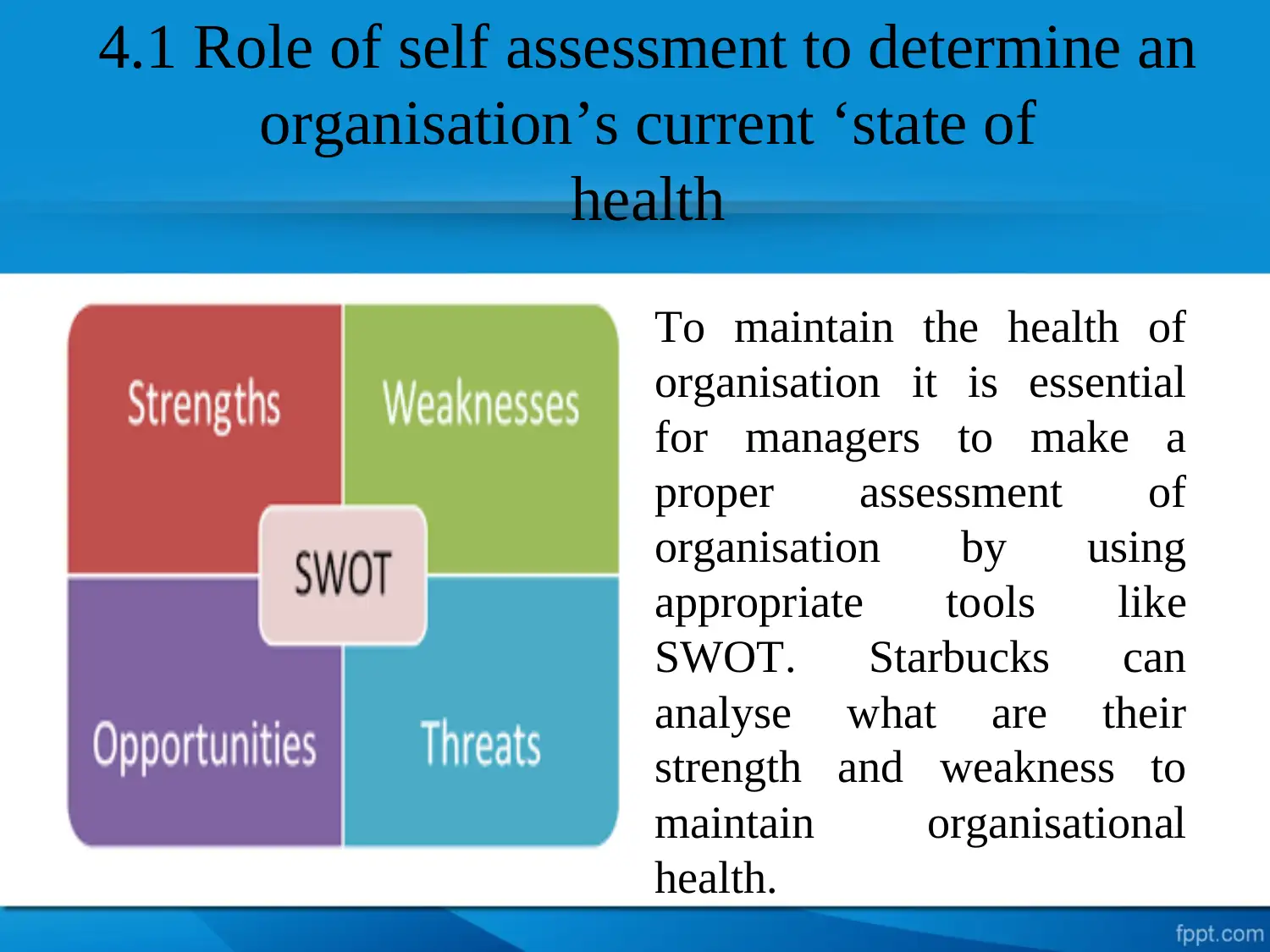
To maintain the health of
organisation it is essential
for managers to make a
proper assessment of
organisation by using
appropriate tools like
SWOT. Starbucks can
analyse what are their
strength and weakness to
maintain organisational
health.
tabler-icon-diamond-filled.svg

Paraphrase This Document

Need a fresh take? Get an instant paraphrase of this document with our AI Paraphraser
Document Page
4.2 Significance of communication
and record keeping
Some points are here to describe significance of
communication and record keeping:
For making any effective relation with customer.
To provide quality services to users.
To avoid disturbance in an organisation working.
Company can take beneficial decision by record keeping.
Document Page
4.3 Stages of staff
consultation necessary for effective
implementation of a quality scheme
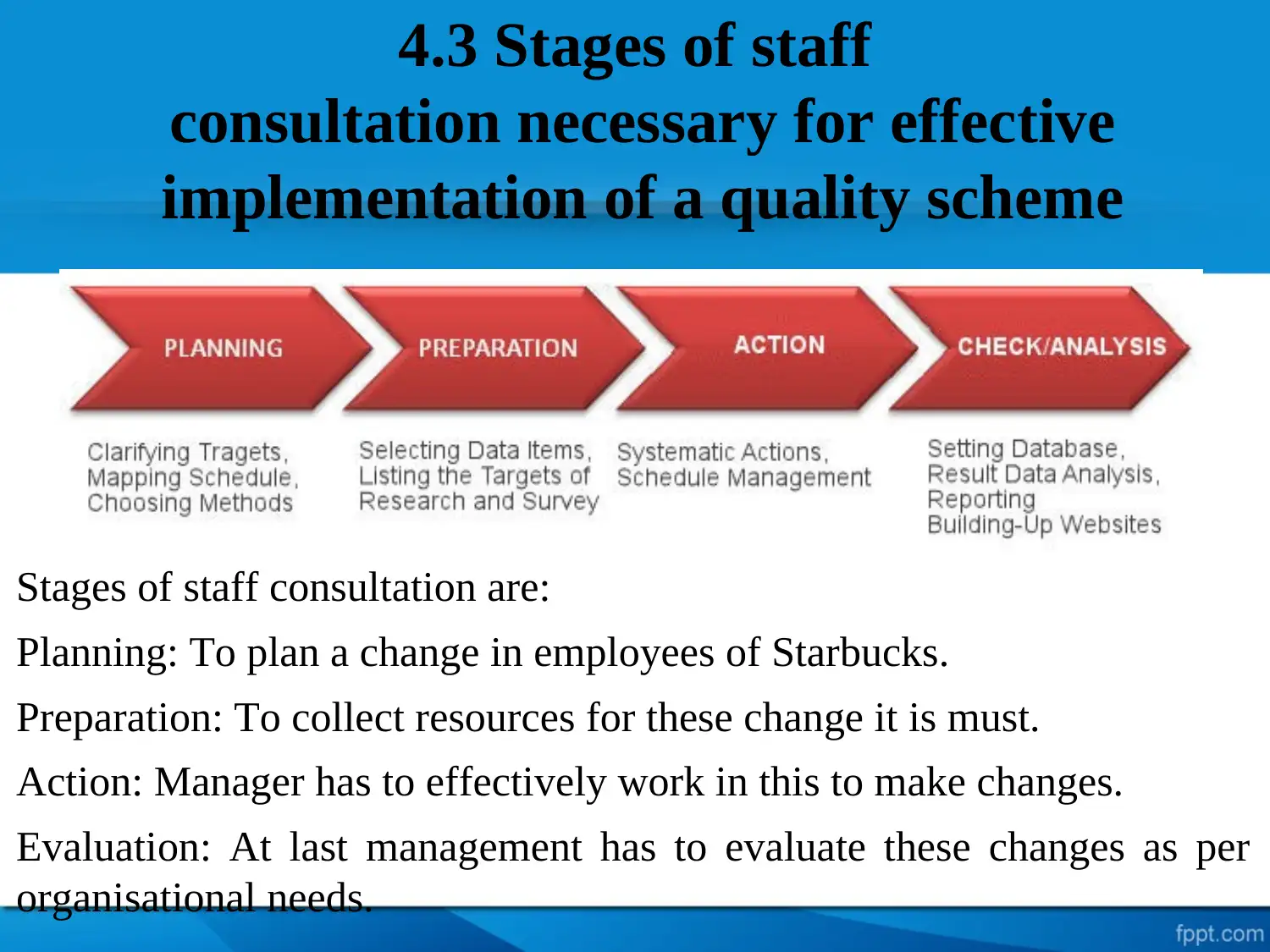
Stages of staff consultation are:
Planning: To plan a change in employees of Starbucks.
Preparation: To collect resources for these change it is must.
Action: Manager has to effectively work in this to make changes.
Evaluation: At last management has to evaluate these changes as per
organisational needs.
Document Page
4.4 Modifications to
existing systems to improve service
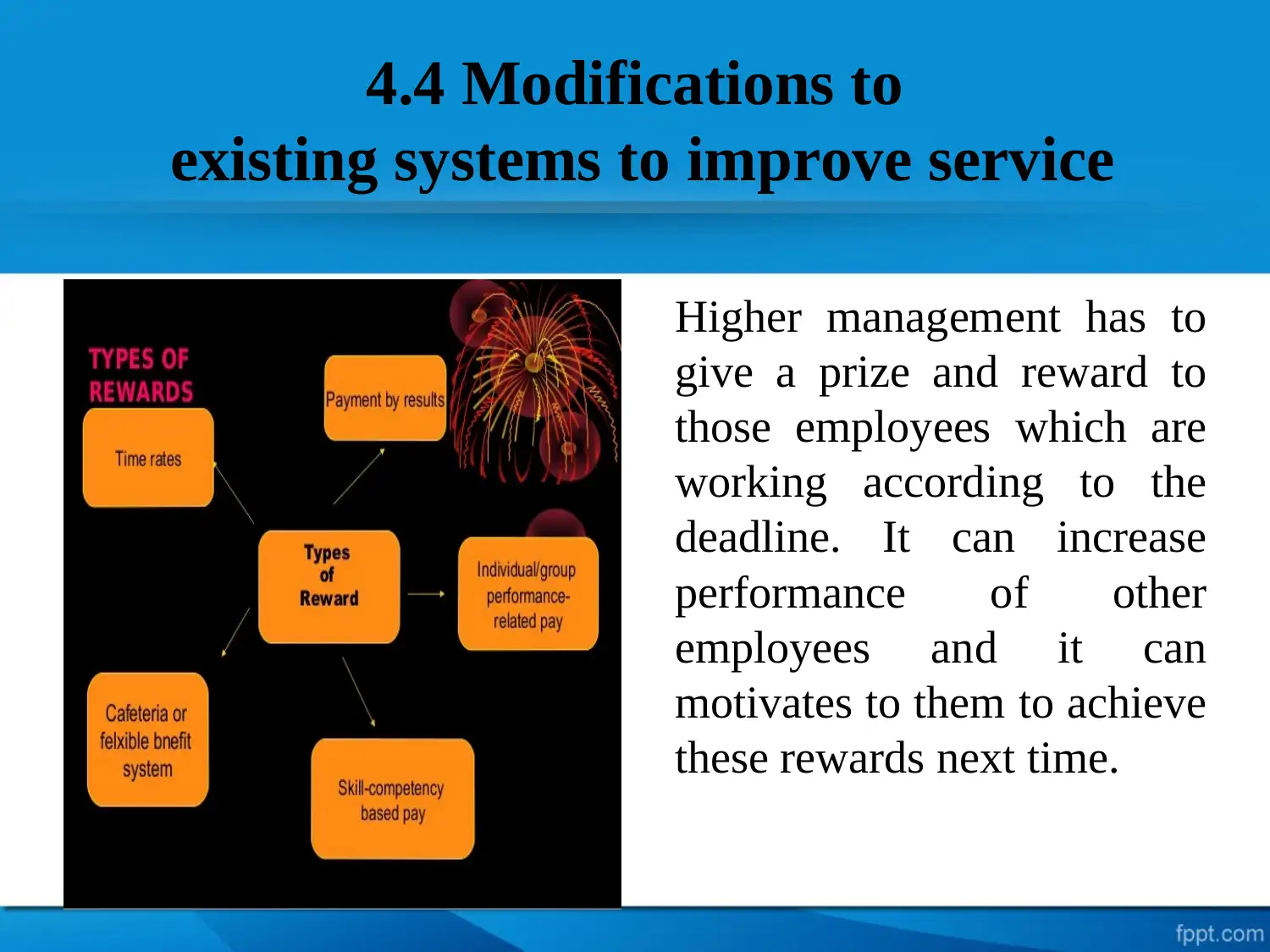
Higher management has to
give a prize and reward to
those employees which are
working according to the
deadline. It can increase
performance of other
employees and it can
motivates to them to achieve
these rewards next time.
tabler-icon-diamond-filled.svg

Paraphrase This Document

Need a fresh take? Get an instant paraphrase of this document with our AI Paraphraser
Document Page
Conclusion
Quality is an essential element for any organisation to
enhance their effectiveness towards their customers. Stages of
staff consultation can help to company to make a better
change in their staff which can help to increase quality
services.
Document Page
References
Aaker, D.A., 2012.Building strong brands. Simon and
Schuster.
Fuller, S., 2012. Knowledge management foundations.
Routledge.
Gillis, W.E., Combs, J.G. and Ketchen, D.J., 2014. Using
resource‐based theory to help explain plural form
franchising. Entrepreneurship Theory and Practice. 38(3).
pp.449-472.
Document Page
Thank You
chevron_up_icon
1 out of 10
circle_padding
hide_on_mobile
zoom_out_icon
[object Object]