MNGT3002: Strategic Knowledge Management Report on NAB's KM
VerifiedAdded on 2022/11/11
|17
|5566
|408
Report
AI Summary
This report offers a comprehensive analysis of the strategic knowledge management (KM) practices within the National Australia Bank (NAB). It begins with an introduction to KM, emphasizing its significance in organizational success and productivity. The report provides an overview of NAB's background, including its financial and managerial aspects, and highlights a significant system failure in 2010 that impacted account processing. The current situation section delves into two key incidents: NAB's involvement with fossil fuels and an employee's illegal recommendations to BSI Corporation. A literature review examines essential KM concepts and theories, including the relationship between KM and human resource management, and the impact of KM in the banking sector, with models like Frid’s and McAdams and McCreedy's detailed. The discussion section applies these theories and models to NAB, using Wiig KM matrix and others. The report identifies NAB's KM needs, capacity, and analysis and provides recommendations for improvements and implementation steps. The conclusion emphasizes the importance of enhanced knowledge management for improved productivity at NAB.
Running head: STRATEGIC KNOWLEDGE MANAGEMENT
MNGT3002: Knowledge Management
Assessment 2: Strategic Knowledge Management
Student Name:
University Name:
Student ID:
MNGT3002: Knowledge Management
Assessment 2: Strategic Knowledge Management
Student Name:
University Name:
Student ID:

Paraphrase This Document
Need a fresh take? Get an instant paraphrase of this document with our AI Paraphraser
1STRATEGIC KNOWLEDGE MANAGEMENT
Executive summary
This report is based on knowledge management. The organisation taken for this report is the
National Australia Bank. A brief introduction has been given on knowledge management. It
explains the importance of knowledge management in an organisation. There is a brief
explanation of the organisation National Australia Bank where there are the financial and the
managerial information is included. The bank is quite famous in the nation and the organisation
uses the best CRM but due to some system malfunctioning, some failure in the account
processing occurred in the year 2010 which has affected it gruesomely. There are two incidents
of the organisation is described where one is fossil fuel related with the bank and another one is
some illegal recommendations of a number of the national Australian bank members to the BSI
corporation by the bank employee Paul Drakos. In the literature review part, there are some key
concepts and the key theories related to knowledge management where the main factors were the
relationship between the knowledge management and the human resource management and the
effect of KM in the banking industry. Some models like Frid’s model, McAdams and McCreedy
model are also described in detail for understanding. A proper discussion is done on KM of
National Australia Bank. Different matrix and models have been used for NAB. Wiig KM
matrix, McAdams and McCreedy model and Frid’s models have been discussed. These are quite
beneficial for the bank in long runs. The KM needs, capacity and analysis have been clearly
shown. NAB uses the knowledge sharing tool and further, they are planning to implement other
tools. A set of recommendations has been provided to the bank and steps of implementation have
been shown. It will be beneficial for the bank in long terms. Conclusion combines everything of
NAB along with KM. It explains that NAB should improve their management of knowledge and
hence gain productivity through it.
Executive summary
This report is based on knowledge management. The organisation taken for this report is the
National Australia Bank. A brief introduction has been given on knowledge management. It
explains the importance of knowledge management in an organisation. There is a brief
explanation of the organisation National Australia Bank where there are the financial and the
managerial information is included. The bank is quite famous in the nation and the organisation
uses the best CRM but due to some system malfunctioning, some failure in the account
processing occurred in the year 2010 which has affected it gruesomely. There are two incidents
of the organisation is described where one is fossil fuel related with the bank and another one is
some illegal recommendations of a number of the national Australian bank members to the BSI
corporation by the bank employee Paul Drakos. In the literature review part, there are some key
concepts and the key theories related to knowledge management where the main factors were the
relationship between the knowledge management and the human resource management and the
effect of KM in the banking industry. Some models like Frid’s model, McAdams and McCreedy
model are also described in detail for understanding. A proper discussion is done on KM of
National Australia Bank. Different matrix and models have been used for NAB. Wiig KM
matrix, McAdams and McCreedy model and Frid’s models have been discussed. These are quite
beneficial for the bank in long runs. The KM needs, capacity and analysis have been clearly
shown. NAB uses the knowledge sharing tool and further, they are planning to implement other
tools. A set of recommendations has been provided to the bank and steps of implementation have
been shown. It will be beneficial for the bank in long terms. Conclusion combines everything of
NAB along with KM. It explains that NAB should improve their management of knowledge and
hence gain productivity through it.
2STRATEGIC KNOWLEDGE MANAGEMENT
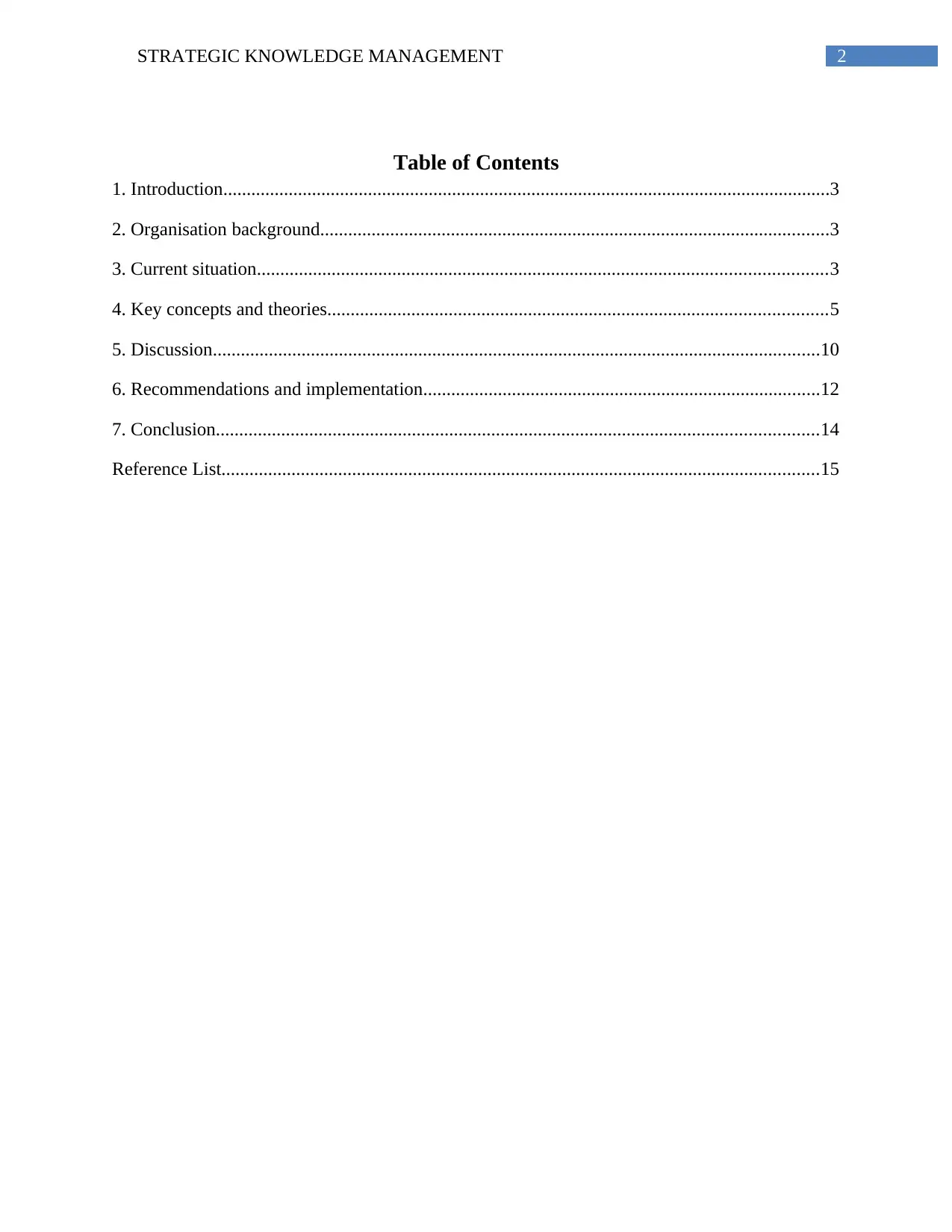
Table of Contents
1. Introduction..................................................................................................................................3
2. Organisation background.............................................................................................................3
3. Current situation..........................................................................................................................3
4. Key concepts and theories...........................................................................................................5
5. Discussion..................................................................................................................................10
6. Recommendations and implementation.....................................................................................12
7. Conclusion.................................................................................................................................14
Reference List................................................................................................................................15
Table of Contents
1. Introduction..................................................................................................................................3
2. Organisation background.............................................................................................................3
3. Current situation..........................................................................................................................3
4. Key concepts and theories...........................................................................................................5
5. Discussion..................................................................................................................................10
6. Recommendations and implementation.....................................................................................12
7. Conclusion.................................................................................................................................14
Reference List................................................................................................................................15
⊘ This is a preview!⊘
Do you want full access?
Subscribe today to unlock all pages.

Trusted by 1+ million students worldwide
3STRATEGIC KNOWLEDGE MANAGEMENT
1. Introduction
Knowledge Management is a method of making, sharing, managing and using the information
and knowledge of an organisation (Alavi & Leidner, 2001). This is a multidisciplinary approach
so that the organisational objectives can be met. It enhances the learning process of people in an
organisation. Knowledge management is of different types and they are toolkits, intranets,
research databases, practice community and knowledge sharing events. The efficiency and
productivity of the organisation are improved through knowledge management. All kinds of
business information or knowledge are updated, shared and accessed through this management.
Correct information should be available to the correct person in case of knowledge management.
This report is based on the knowledge management of a particular company. Here the National
Australia Bank is taken. The background of the company will be seen. The current situation and
knowledge management discussion will be done. The bank will be linked with the theories and
models of KM. It will show the importance of those models in the banking sector of Australia.
2. Organisation background
The National Australia Bank is well known and considered as one of the four largest financial
institutions situated in Australia. At the year of 1982, the organisation was founded and the
headquarter is situated at the Bourke Street of Docklands Melbourne Australia. The organisation
is now led by the chairman Kenneth R Henry and chairman Andrew Thorburn. The NAB is the
biggest user of the Teradata and Siebel customer relationship management systems. Although the
organisation uses the best CRM due to some system malfunctioning, some failure in the account
processing occurred at the year 2010 and around 60000 banking transactions were lost and
resulted in the manual labour of the accumulation of those data. This issue is considered one of
the biggest failures in the Australian banking system. The revenue of the organisation is 20.176
billion Australian dollars at the end of the year 2017 and the total asset is 945 billion Australian
dollars in the year 2018.
1. Introduction
Knowledge Management is a method of making, sharing, managing and using the information
and knowledge of an organisation (Alavi & Leidner, 2001). This is a multidisciplinary approach
so that the organisational objectives can be met. It enhances the learning process of people in an
organisation. Knowledge management is of different types and they are toolkits, intranets,
research databases, practice community and knowledge sharing events. The efficiency and
productivity of the organisation are improved through knowledge management. All kinds of
business information or knowledge are updated, shared and accessed through this management.
Correct information should be available to the correct person in case of knowledge management.
This report is based on the knowledge management of a particular company. Here the National
Australia Bank is taken. The background of the company will be seen. The current situation and
knowledge management discussion will be done. The bank will be linked with the theories and
models of KM. It will show the importance of those models in the banking sector of Australia.
2. Organisation background
The National Australia Bank is well known and considered as one of the four largest financial
institutions situated in Australia. At the year of 1982, the organisation was founded and the
headquarter is situated at the Bourke Street of Docklands Melbourne Australia. The organisation
is now led by the chairman Kenneth R Henry and chairman Andrew Thorburn. The NAB is the
biggest user of the Teradata and Siebel customer relationship management systems. Although the
organisation uses the best CRM due to some system malfunctioning, some failure in the account
processing occurred at the year 2010 and around 60000 banking transactions were lost and
resulted in the manual labour of the accumulation of those data. This issue is considered one of
the biggest failures in the Australian banking system. The revenue of the organisation is 20.176
billion Australian dollars at the end of the year 2017 and the total asset is 945 billion Australian
dollars in the year 2018.
Paraphrase This Document
Need a fresh take? Get an instant paraphrase of this document with our AI Paraphraser
4STRATEGIC KNOWLEDGE MANAGEMENT
3. Current situation
The NAB is the multinational bank situated in Australia and operates in America, New Zealand
and in some Asian countries and the current rank of the organisation are 21 on a worldwide
basis. Mainly recent 2 scandals regarding the behaviour of the chairman and the key
performances indicate about the poor management system in the organisation. The detailed
description of these scandalous points will help in understanding the poor quality of the
knowledge management inside the company and need attention.
The first one is the recent situation. Since the year 2008, it has been estimated that National
Australian Bank has loaned the 11.2 billion Australian dollars from the fossil fuel industry of the
nation Australia and it has helped the organisation to be positioned as the third largest lender in
this regard. The loans and the renewable energies can be estimated of 2.2 billion Australian
dollars at that time period which is considered as the 20% of the fossil fuel amount (Campanella,
Derhy & Gangi, 2019). The NAB is the part of the big four Australian Banks and it has been
estimated that one-third of the loan is estimated to be provided by the NAB in the fossil fuel
industry. This finance is concerned about the significance of Australian contribution to the
increasing global warming issues and is led to many responses from Australian society. This
incorporates the fossil fuel free creation superannuation as well as the investment products which
have helped in excluding the national Australian bank from the investment area. The
shareholders of the bank asked for the emissions disclosure and the finance was reduced in fossil
fuels. The ATM screens were covered by the protest group and the fear of natural degradation
has been conducted through the awareness raising. The result was escalated up to certain points
where the NAB customers moved the money to those banks which has a portfolio of lesser
financed emission.
Through another investigation it has been found out that in between the years 1997 and 2001 the
financial products seller of the organisation Paul Drakos who was working in the Sydney Branch
made some illegal recommendations of a number of the national Australian bank members as
well as customers to invest in the BSI corporations which entity is considered as NAB non
approved investment productions. From the report of ASIC, it was evident that 6.2 million
dollars were transferred from the accounts in overseas to some private company account of the
Dominican Republic. The account was controlled byte same Paul Drakos only (Campanella,
3. Current situation
The NAB is the multinational bank situated in Australia and operates in America, New Zealand
and in some Asian countries and the current rank of the organisation are 21 on a worldwide
basis. Mainly recent 2 scandals regarding the behaviour of the chairman and the key
performances indicate about the poor management system in the organisation. The detailed
description of these scandalous points will help in understanding the poor quality of the
knowledge management inside the company and need attention.
The first one is the recent situation. Since the year 2008, it has been estimated that National
Australian Bank has loaned the 11.2 billion Australian dollars from the fossil fuel industry of the
nation Australia and it has helped the organisation to be positioned as the third largest lender in
this regard. The loans and the renewable energies can be estimated of 2.2 billion Australian
dollars at that time period which is considered as the 20% of the fossil fuel amount (Campanella,
Derhy & Gangi, 2019). The NAB is the part of the big four Australian Banks and it has been
estimated that one-third of the loan is estimated to be provided by the NAB in the fossil fuel
industry. This finance is concerned about the significance of Australian contribution to the
increasing global warming issues and is led to many responses from Australian society. This
incorporates the fossil fuel free creation superannuation as well as the investment products which
have helped in excluding the national Australian bank from the investment area. The
shareholders of the bank asked for the emissions disclosure and the finance was reduced in fossil
fuels. The ATM screens were covered by the protest group and the fear of natural degradation
has been conducted through the awareness raising. The result was escalated up to certain points
where the NAB customers moved the money to those banks which has a portfolio of lesser
financed emission.
Through another investigation it has been found out that in between the years 1997 and 2001 the
financial products seller of the organisation Paul Drakos who was working in the Sydney Branch
made some illegal recommendations of a number of the national Australian bank members as
well as customers to invest in the BSI corporations which entity is considered as NAB non
approved investment productions. From the report of ASIC, it was evident that 6.2 million
dollars were transferred from the accounts in overseas to some private company account of the
Dominican Republic. The account was controlled byte same Paul Drakos only (Campanella,
5STRATEGIC KNOWLEDGE MANAGEMENT
Derhy & Gangi, 2019). Various funds were applied from this account as well as disguised loans
investment to any number of failed business opportunities. Although the BSI had no relation
with the NAB the funds are transferred back to the strategic investment group of the
organisation.
Using the 7c’s model in case of knowledge management the key areas are highlighted and the
two issues which need to be keeping in attention are discussed.
4. Key concepts and theories
Relationship between knowledge management and HR strategy
It can be said that there is a significant amount of correlation between knowledge management
and human resource management. The knowledge management helps in improving the
performances of the employees rapidly. With the help of proper planning, the performance of the
employees can be improved based on the knowledge and it is very easy to predict the further
condition of the organisation. When the knowledge is passed then it is known as the information
and this information includes facts, deceptions and the concepts and the views. The organisation
can take the proper benefits from these factors and the knowledge management helps in creating
proper plans and improving the employee performance by removing the barriers in the
organisation (Gorelick, Milton & April, 2002). It is evident there is a positive relationship
between knowledge management and the organisational strategy along with the occupational
involvement of the organisation’s employees. In the case of knowledge management, there are
three main factors which need to be developed and those are new skills, products and better ideas
for the productivity growth of the organisation. In the case of the banking industry, there is the
optimal use of the process and development of knowledge management is the help of
information technology in the qualitative and quantitative measurement.
Knowledge management in the banking industry
In every nation or every state or the corporate society or in case of the individual also there is
continuous run always going on. Either these people are trying to pursue the targets or are
continuously being chased by the higher authorities of the organisation for achieving the stiff
targets. It is required for them to be in fast track constantly. It is evident that these people are
Derhy & Gangi, 2019). Various funds were applied from this account as well as disguised loans
investment to any number of failed business opportunities. Although the BSI had no relation
with the NAB the funds are transferred back to the strategic investment group of the
organisation.
Using the 7c’s model in case of knowledge management the key areas are highlighted and the
two issues which need to be keeping in attention are discussed.
4. Key concepts and theories
Relationship between knowledge management and HR strategy
It can be said that there is a significant amount of correlation between knowledge management
and human resource management. The knowledge management helps in improving the
performances of the employees rapidly. With the help of proper planning, the performance of the
employees can be improved based on the knowledge and it is very easy to predict the further
condition of the organisation. When the knowledge is passed then it is known as the information
and this information includes facts, deceptions and the concepts and the views. The organisation
can take the proper benefits from these factors and the knowledge management helps in creating
proper plans and improving the employee performance by removing the barriers in the
organisation (Gorelick, Milton & April, 2002). It is evident there is a positive relationship
between knowledge management and the organisational strategy along with the occupational
involvement of the organisation’s employees. In the case of knowledge management, there are
three main factors which need to be developed and those are new skills, products and better ideas
for the productivity growth of the organisation. In the case of the banking industry, there is the
optimal use of the process and development of knowledge management is the help of
information technology in the qualitative and quantitative measurement.
Knowledge management in the banking industry
In every nation or every state or the corporate society or in case of the individual also there is
continuous run always going on. Either these people are trying to pursue the targets or are
continuously being chased by the higher authorities of the organisation for achieving the stiff
targets. It is required for them to be in fast track constantly. It is evident that these people are
⊘ This is a preview!⊘
Do you want full access?
Subscribe today to unlock all pages.
Trusted by 1+ million students worldwide
6STRATEGIC KNOWLEDGE MANAGEMENT
always running against time. Achievement of something extraordinary is essential. It is arising a
question for the survival of the fittest and in this case, the knowledge management is addressing
many issues and finding the solution which will energize the work culture and the workforce.
The bankers always find themselves at the hot seat. They are always under the pressure of the
delivery. They are entrusted with an enormous amount of workload and represent themselves
under the firm grip of the fear in case of taking the decisions on having large financial
implications. The knowledge management should be able to address these kinds of issues in case
of finding the solutions for the encouragement of the decisions and the refinement of the staff
lacks as well as their accountability for being more objective oriented without being subjective
(Pant et al., 2018).
The knowledge management is considered very important in case of the banking industry due to
the simplification of the delivery in time along with the effective information about the
processing planning controlling and lastly the decision making of the organisation. This always
helps the managers in case of formulating the strategic tactical and lastly the operational
activities in the perfect way in order of the achievement of the organisations desires about the
objectives (Denning, 2006).
The modern type banking always investigates about the value importance in case of knowledge
management in the business practice of the banking industry. The knowledge always covers the
entire range of the banking organisation internal capital for the data heel in case of the customer's
transactions.
Banking sector always has the target of improving the satisfaction level of the customers which
result in the increment of revenue. It becomes essential in case of the banking industry to know
about the knowledge process, creation and storage as well as the dispersion of it (Denning,
2006).
The very common fields of knowledge management in the banking industry are risk
management, customer relationship, marketing management and lastly performance
management. Data mining, decision support systems are known as the major bank investments in
case of knowledge management (Denning, 2006).
always running against time. Achievement of something extraordinary is essential. It is arising a
question for the survival of the fittest and in this case, the knowledge management is addressing
many issues and finding the solution which will energize the work culture and the workforce.
The bankers always find themselves at the hot seat. They are always under the pressure of the
delivery. They are entrusted with an enormous amount of workload and represent themselves
under the firm grip of the fear in case of taking the decisions on having large financial
implications. The knowledge management should be able to address these kinds of issues in case
of finding the solutions for the encouragement of the decisions and the refinement of the staff
lacks as well as their accountability for being more objective oriented without being subjective
(Pant et al., 2018).
The knowledge management is considered very important in case of the banking industry due to
the simplification of the delivery in time along with the effective information about the
processing planning controlling and lastly the decision making of the organisation. This always
helps the managers in case of formulating the strategic tactical and lastly the operational
activities in the perfect way in order of the achievement of the organisations desires about the
objectives (Denning, 2006).
The modern type banking always investigates about the value importance in case of knowledge
management in the business practice of the banking industry. The knowledge always covers the
entire range of the banking organisation internal capital for the data heel in case of the customer's
transactions.
Banking sector always has the target of improving the satisfaction level of the customers which
result in the increment of revenue. It becomes essential in case of the banking industry to know
about the knowledge process, creation and storage as well as the dispersion of it (Denning,
2006).
The very common fields of knowledge management in the banking industry are risk
management, customer relationship, marketing management and lastly performance
management. Data mining, decision support systems are known as the major bank investments in
case of knowledge management (Denning, 2006).
Paraphrase This Document
Need a fresh take? Get an instant paraphrase of this document with our AI Paraphraser
7STRATEGIC KNOWLEDGE MANAGEMENT
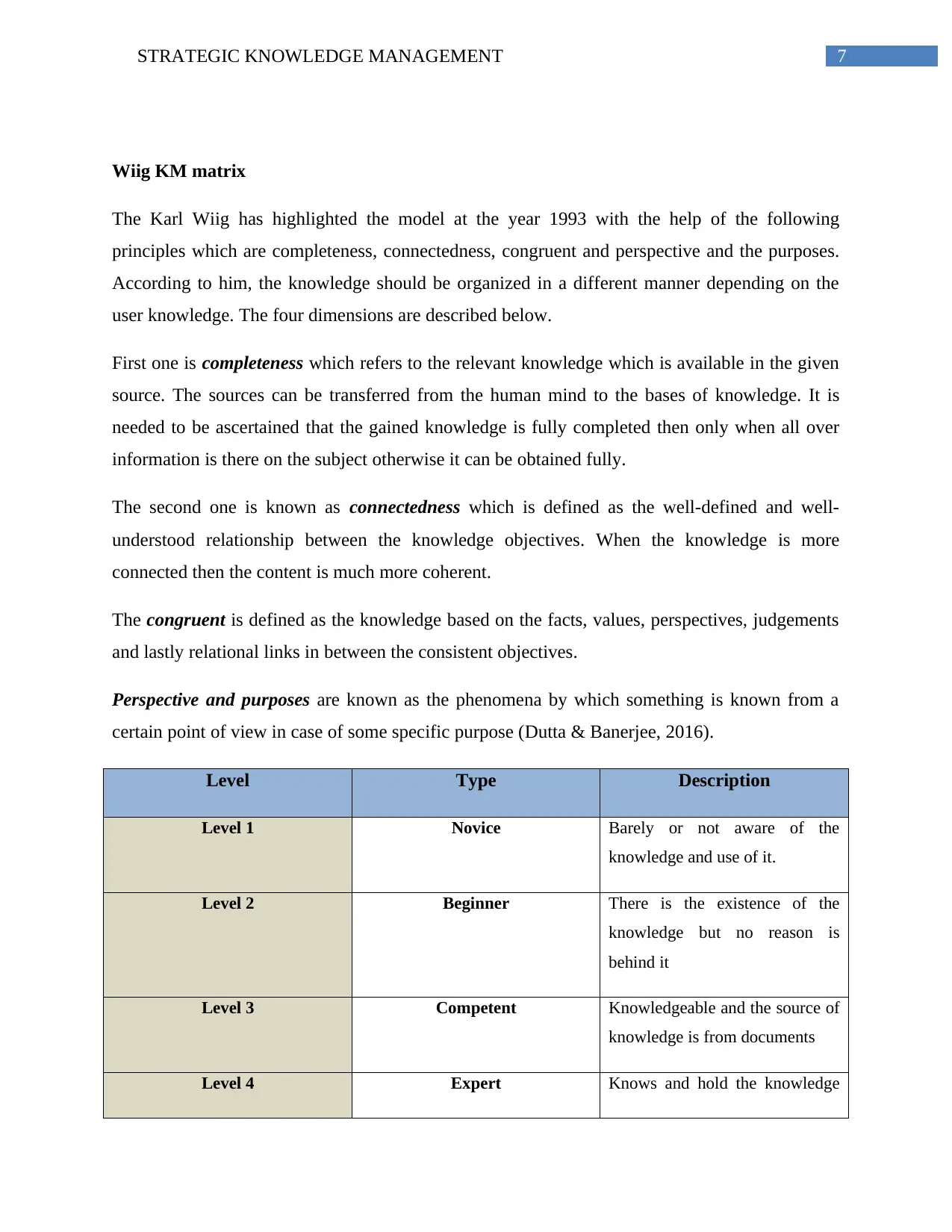
Wiig KM matrix
The Karl Wiig has highlighted the model at the year 1993 with the help of the following
principles which are completeness, connectedness, congruent and perspective and the purposes.
According to him, the knowledge should be organized in a different manner depending on the
user knowledge. The four dimensions are described below.
First one is completeness which refers to the relevant knowledge which is available in the given
source. The sources can be transferred from the human mind to the bases of knowledge. It is
needed to be ascertained that the gained knowledge is fully completed then only when all over
information is there on the subject otherwise it can be obtained fully.
The second one is known as connectedness which is defined as the well-defined and well-
understood relationship between the knowledge objectives. When the knowledge is more
connected then the content is much more coherent.
The congruent is defined as the knowledge based on the facts, values, perspectives, judgements
and lastly relational links in between the consistent objectives.
Perspective and purposes are known as the phenomena by which something is known from a
certain point of view in case of some specific purpose (Dutta & Banerjee, 2016).
Level Type Description
Level 1 Novice Barely or not aware of the
knowledge and use of it.
Level 2 Beginner There is the existence of the
knowledge but no reason is
behind it
Level 3 Competent Knowledgeable and the source of
knowledge is from documents
Level 4 Expert Knows and hold the knowledge
Wiig KM matrix
The Karl Wiig has highlighted the model at the year 1993 with the help of the following
principles which are completeness, connectedness, congruent and perspective and the purposes.
According to him, the knowledge should be organized in a different manner depending on the
user knowledge. The four dimensions are described below.
First one is completeness which refers to the relevant knowledge which is available in the given
source. The sources can be transferred from the human mind to the bases of knowledge. It is
needed to be ascertained that the gained knowledge is fully completed then only when all over
information is there on the subject otherwise it can be obtained fully.
The second one is known as connectedness which is defined as the well-defined and well-
understood relationship between the knowledge objectives. When the knowledge is more
connected then the content is much more coherent.
The congruent is defined as the knowledge based on the facts, values, perspectives, judgements
and lastly relational links in between the consistent objectives.
Perspective and purposes are known as the phenomena by which something is known from a
certain point of view in case of some specific purpose (Dutta & Banerjee, 2016).
Level Type Description
Level 1 Novice Barely or not aware of the
knowledge and use of it.
Level 2 Beginner There is the existence of the
knowledge but no reason is
behind it
Level 3 Competent Knowledgeable and the source of
knowledge is from documents
Level 4 Expert Knows and hold the knowledge
8STRATEGIC KNOWLEDGE MANAGEMENT
in memory and understand the
place to apply.
Level 5 Master Has the deep knowledge and
understanding it properly apply
in the perfect place.
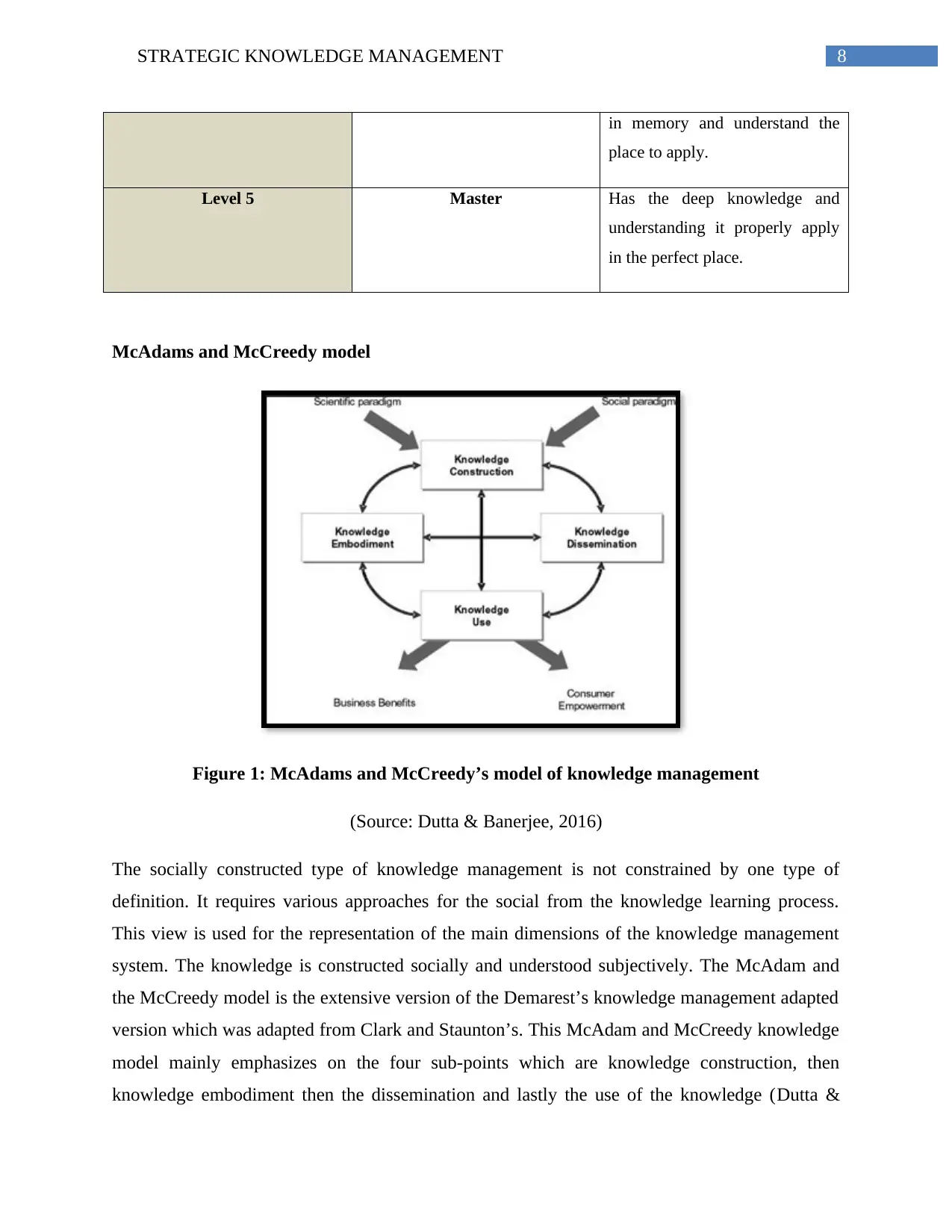
McAdams and McCreedy model
Figure 1: McAdams and McCreedy’s model of knowledge management
(Source: Dutta & Banerjee, 2016)
The socially constructed type of knowledge management is not constrained by one type of
definition. It requires various approaches for the social from the knowledge learning process.
This view is used for the representation of the main dimensions of the knowledge management
system. The knowledge is constructed socially and understood subjectively. The McAdam and
the McCreedy model is the extensive version of the Demarest’s knowledge management adapted
version which was adapted from Clark and Staunton’s. This McAdam and McCreedy knowledge
model mainly emphasizes on the four sub-points which are knowledge construction, then
knowledge embodiment then the dissemination and lastly the use of the knowledge (Dutta &
in memory and understand the
place to apply.
Level 5 Master Has the deep knowledge and
understanding it properly apply
in the perfect place.
McAdams and McCreedy model
Figure 1: McAdams and McCreedy’s model of knowledge management
(Source: Dutta & Banerjee, 2016)
The socially constructed type of knowledge management is not constrained by one type of
definition. It requires various approaches for the social from the knowledge learning process.
This view is used for the representation of the main dimensions of the knowledge management
system. The knowledge is constructed socially and understood subjectively. The McAdam and
the McCreedy model is the extensive version of the Demarest’s knowledge management adapted
version which was adapted from Clark and Staunton’s. This McAdam and McCreedy knowledge
model mainly emphasizes on the four sub-points which are knowledge construction, then
knowledge embodiment then the dissemination and lastly the use of the knowledge (Dutta &
⊘ This is a preview!⊘
Do you want full access?
Subscribe today to unlock all pages.
Trusted by 1+ million students worldwide
9STRATEGIC KNOWLEDGE MANAGEMENT
Banerjee, 2016). But it also needs to keep in mind that emancipator enhancements also get
included in this model through the use of employee knowledge usages and the subsequential
empowerment. This model is mainly adopted for the customer focus for the exploration of the
consumers’ empowerment using the gained knowledge.
Frid’s model
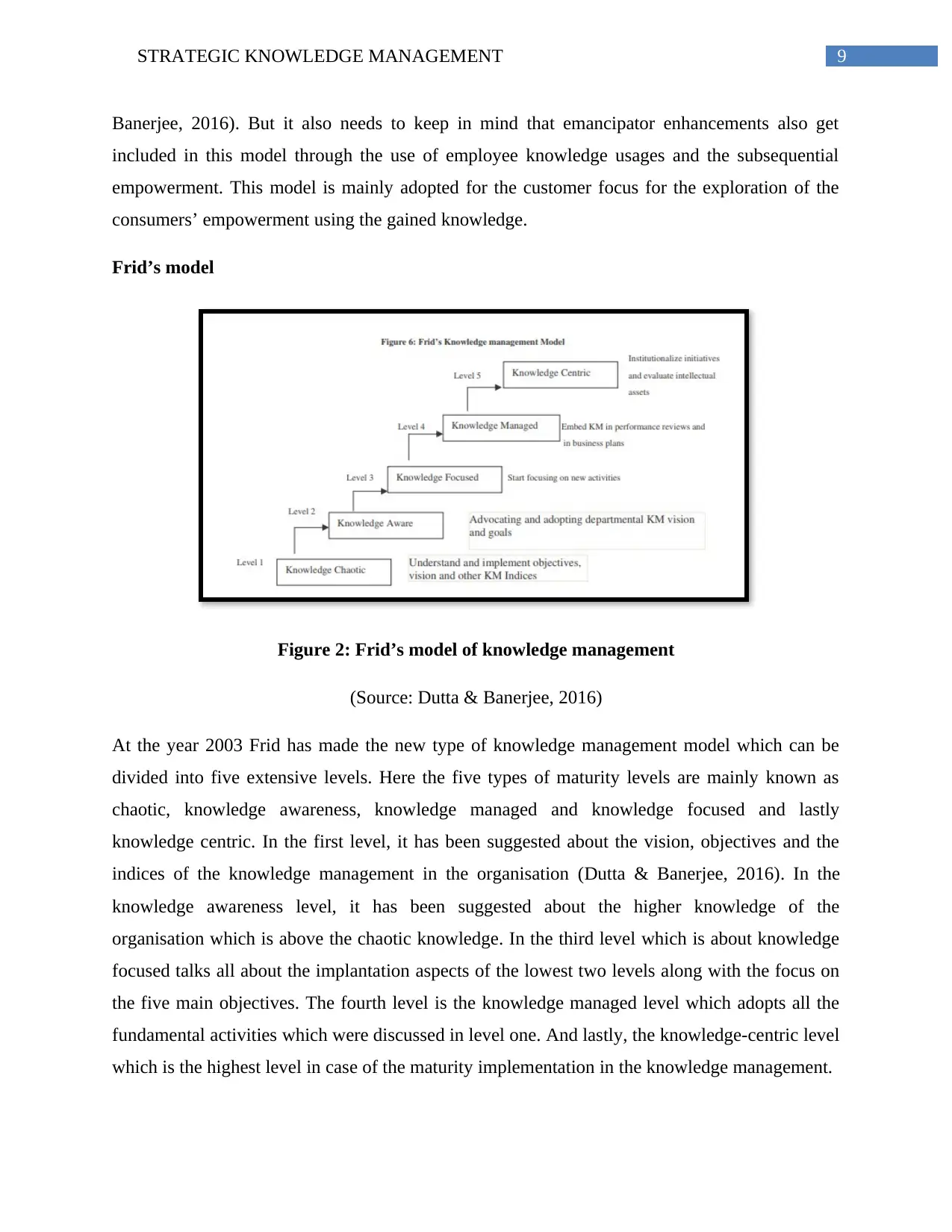
Figure 2: Frid’s model of knowledge management
(Source: Dutta & Banerjee, 2016)
At the year 2003 Frid has made the new type of knowledge management model which can be
divided into five extensive levels. Here the five types of maturity levels are mainly known as
chaotic, knowledge awareness, knowledge managed and knowledge focused and lastly
knowledge centric. In the first level, it has been suggested about the vision, objectives and the
indices of the knowledge management in the organisation (Dutta & Banerjee, 2016). In the
knowledge awareness level, it has been suggested about the higher knowledge of the
organisation which is above the chaotic knowledge. In the third level which is about knowledge
focused talks all about the implantation aspects of the lowest two levels along with the focus on
the five main objectives. The fourth level is the knowledge managed level which adopts all the
fundamental activities which were discussed in level one. And lastly, the knowledge-centric level
which is the highest level in case of the maturity implementation in the knowledge management.
Banerjee, 2016). But it also needs to keep in mind that emancipator enhancements also get
included in this model through the use of employee knowledge usages and the subsequential
empowerment. This model is mainly adopted for the customer focus for the exploration of the
consumers’ empowerment using the gained knowledge.
Frid’s model
Figure 2: Frid’s model of knowledge management
(Source: Dutta & Banerjee, 2016)
At the year 2003 Frid has made the new type of knowledge management model which can be
divided into five extensive levels. Here the five types of maturity levels are mainly known as
chaotic, knowledge awareness, knowledge managed and knowledge focused and lastly
knowledge centric. In the first level, it has been suggested about the vision, objectives and the
indices of the knowledge management in the organisation (Dutta & Banerjee, 2016). In the
knowledge awareness level, it has been suggested about the higher knowledge of the
organisation which is above the chaotic knowledge. In the third level which is about knowledge
focused talks all about the implantation aspects of the lowest two levels along with the focus on
the five main objectives. The fourth level is the knowledge managed level which adopts all the
fundamental activities which were discussed in level one. And lastly, the knowledge-centric level
which is the highest level in case of the maturity implementation in the knowledge management.
Paraphrase This Document
Need a fresh take? Get an instant paraphrase of this document with our AI Paraphraser
10STRATEGIC KNOWLEDGE MANAGEMENT
5. Discussion
In the above section of Knowledge Management, there are different matrix and models that have
been discussed. According to the Wiig KM matrix, all the information and the knowledge in
NAB is kept safely. This helps in accessing the information when needed the most. There are
many entry and exit paths for the retrieving or accessing the knowledge. There are four
dimensions of Wiig Model that is kept in mind and they are connectedness, completeness,
congruency and purpose and perspective. It helps the bank to keep all the public, personal and
shared knowledge carefully. The four types of knowledge under this matrix are factual,
conceptual, expectational and methodological. In Knowledge Management a model took that
will be helpful for NAB is McAdams and McCreedy model. This creates a link between
knowledge and its social and learning process. The main focus of this model is on the customers.
This model is quite useful for NAB because their priority is customers. The model has four
stages of knowledge management. They are Construction of knowledge, Dissemination of
knowledge, Use of knowledge and Embodiment of knowledge. NAB will be gaining a lot of
benefits through this model. There is a scientific and social paradigm. Through this model, NAB
will get consumer empowerment and business benefits. As the banking system stores a large
amount of information hence, they need to follow knowledge management (Bartol & Srivastava,
2002). Customer is the main asset of the bank and hence they cannot be lost. This model ensures
that a proper cycle is followed in maintaining the knowledge and information of the bank.
Another model of knowledge management taken is Frid’s KM model. This model is usually
implemented by most of the organisations. There are five levels to this model. The organisations
have to implement all the level given. The five levels are knowledge chaotic, knowledge aware,
knowledge focused, knowledge managed and knowledge centric. The first level suggests that
NAB is in the process of implementing Frid’s framework (Grant, 1996). The next level suggests
that they are one step ahead. The visions and goals of the company can be achieved. A road map
of KM is developed at this stage by NAB. In the third level, all the implementation aspects of
knowledge should be covered that were left in the last two levels. The five new activities should
be started by the company. This can be applied to their process, services, training and
5. Discussion
In the above section of Knowledge Management, there are different matrix and models that have
been discussed. According to the Wiig KM matrix, all the information and the knowledge in
NAB is kept safely. This helps in accessing the information when needed the most. There are
many entry and exit paths for the retrieving or accessing the knowledge. There are four
dimensions of Wiig Model that is kept in mind and they are connectedness, completeness,
congruency and purpose and perspective. It helps the bank to keep all the public, personal and
shared knowledge carefully. The four types of knowledge under this matrix are factual,
conceptual, expectational and methodological. In Knowledge Management a model took that
will be helpful for NAB is McAdams and McCreedy model. This creates a link between
knowledge and its social and learning process. The main focus of this model is on the customers.
This model is quite useful for NAB because their priority is customers. The model has four
stages of knowledge management. They are Construction of knowledge, Dissemination of
knowledge, Use of knowledge and Embodiment of knowledge. NAB will be gaining a lot of
benefits through this model. There is a scientific and social paradigm. Through this model, NAB
will get consumer empowerment and business benefits. As the banking system stores a large
amount of information hence, they need to follow knowledge management (Bartol & Srivastava,
2002). Customer is the main asset of the bank and hence they cannot be lost. This model ensures
that a proper cycle is followed in maintaining the knowledge and information of the bank.
Another model of knowledge management taken is Frid’s KM model. This model is usually
implemented by most of the organisations. There are five levels to this model. The organisations
have to implement all the level given. The five levels are knowledge chaotic, knowledge aware,
knowledge focused, knowledge managed and knowledge centric. The first level suggests that
NAB is in the process of implementing Frid’s framework (Grant, 1996). The next level suggests
that they are one step ahead. The visions and goals of the company can be achieved. A road map
of KM is developed at this stage by NAB. In the third level, all the implementation aspects of
knowledge should be covered that were left in the last two levels. The five new activities should
be started by the company. This can be applied to their process, services, training and
11STRATEGIC KNOWLEDGE MANAGEMENT
infrastructure. All the fundamental activities are adopted and managed. The last level of
knowledge is the highest level and it suggests that NAB should focus on initiatives that can be
successful and institutionalized. Equal importance should be given to each level of knowledge.
This will help NAB to focus on important information rather than random ones. NAB will also
get to understand the process of knowledge management through this model. All these matrix
and models are playing a vital role in NAB.
With the help of knowledge management NAB are upgrading their services. They are gaining IT
projects due to the improvement of KM. All the information is stored in two data warehouses so
that staffs can easily access it. There will be a sudden increase of 25,800 in the static page
document which is there on NAB intranet (NAB.com, 2019). Knowledge management is helping
NAB to create business units that focus on customers. They are coming with better solutions as
they replaced a short-term solution of $400. They are mapping their content of management
system and fields of databases. The data can be found through Autonomy. This allows the NAB
index database in the two warehouses of data.
Knowledge management is needed in NAB due to many reasons. The bank can speed up their
process of accessing knowledge and information. This also increases the productivity and the
efficiency of the bank. People can work easily. In knowledge management, the decision-making
process improves. The different tools of KM have collaborated with different people. The bank
can see changes in their culture and innovation is promoted. Employees are given encouragement
so that they can share their ideas and innovation. This can bring a cultural change in the
organisation so that the needs of the business are fulfilled. Knowledge Management is helpful in
increasing customer satisfaction. This is the most important requirement of the National
Australia Bank. In today’s world technology plays a vital role in business and hence to get the
best solutions it is required to make use of knowledge management.
Knowledge sharing is a tool for knowledge management (Liao, 2008). This is described as the
push or pull. Knowledge activities are gained from sources of knowledge. However, in the other
case, the user is pushed onto knowledge. Sharing tool completely depends on the worker’s
willingness or habits. There should be a presence of incentives and the right culture. There is
explicit knowledge sharing and they are determined through certain criteria. They are awareness,
articulation, access, completeness and guidance. NAB uses this knowledge sharing tool for the
infrastructure. All the fundamental activities are adopted and managed. The last level of
knowledge is the highest level and it suggests that NAB should focus on initiatives that can be
successful and institutionalized. Equal importance should be given to each level of knowledge.
This will help NAB to focus on important information rather than random ones. NAB will also
get to understand the process of knowledge management through this model. All these matrix
and models are playing a vital role in NAB.
With the help of knowledge management NAB are upgrading their services. They are gaining IT
projects due to the improvement of KM. All the information is stored in two data warehouses so
that staffs can easily access it. There will be a sudden increase of 25,800 in the static page
document which is there on NAB intranet (NAB.com, 2019). Knowledge management is helping
NAB to create business units that focus on customers. They are coming with better solutions as
they replaced a short-term solution of $400. They are mapping their content of management
system and fields of databases. The data can be found through Autonomy. This allows the NAB
index database in the two warehouses of data.
Knowledge management is needed in NAB due to many reasons. The bank can speed up their
process of accessing knowledge and information. This also increases the productivity and the
efficiency of the bank. People can work easily. In knowledge management, the decision-making
process improves. The different tools of KM have collaborated with different people. The bank
can see changes in their culture and innovation is promoted. Employees are given encouragement
so that they can share their ideas and innovation. This can bring a cultural change in the
organisation so that the needs of the business are fulfilled. Knowledge Management is helpful in
increasing customer satisfaction. This is the most important requirement of the National
Australia Bank. In today’s world technology plays a vital role in business and hence to get the
best solutions it is required to make use of knowledge management.
Knowledge sharing is a tool for knowledge management (Liao, 2008). This is described as the
push or pull. Knowledge activities are gained from sources of knowledge. However, in the other
case, the user is pushed onto knowledge. Sharing tool completely depends on the worker’s
willingness or habits. There should be a presence of incentives and the right culture. There is
explicit knowledge sharing and they are determined through certain criteria. They are awareness,
articulation, access, completeness and guidance. NAB uses this knowledge sharing tool for the
⊘ This is a preview!⊘
Do you want full access?
Subscribe today to unlock all pages.
Trusted by 1+ million students worldwide

1 out of 17


Related Documents


Your All-in-One AI-Powered Toolkit for Academic Success.
+13062052269
info@desklib.com
Available 24*7 on WhatsApp / Email
![[object Object]](/_next/static/media/star-bottom.7253800d.svg)
Unlock your academic potential
Copyright © 2020–2026 A2Z Services. All Rights Reserved. Developed and managed by ZUCOL.