Strategic Plan Evaluation and Recommendations for Hoosier Media, Inc.

Verified

Added on  2023/06/07

|15
|1382
|322
Presentation
AI Summary
This presentation evaluates the strategic plan of Hoosier Media, Inc., a media company facing challenges from social media. It outlines criteria for evaluating strategic plans, emphasizing consistency with the environment, internal consistency, resource allocation, risk assessment, and time horizons. The presentation details corrective actions for aligning operations with the strategic plan, including organizational capabilities, budgeting, support systems, incentives, and cultural alignment. It provides methods for measuring organizational performance through clear performance measures, communication, and avoiding a silo approach. The presentation also addresses measuring progress toward objectives, focusing on efficiency, quality, and accuracy. Furthermore, it specifies criteria for ensuring objectives are measurable and verifiable, including specificity, measurability, and attainability. Finally, the presentation recommends changes to reposition Hoosier Media competitively, such as rethinking the business model, focusing on niche markets, and transitioning from a content provider to a service and experience company.
Document Page
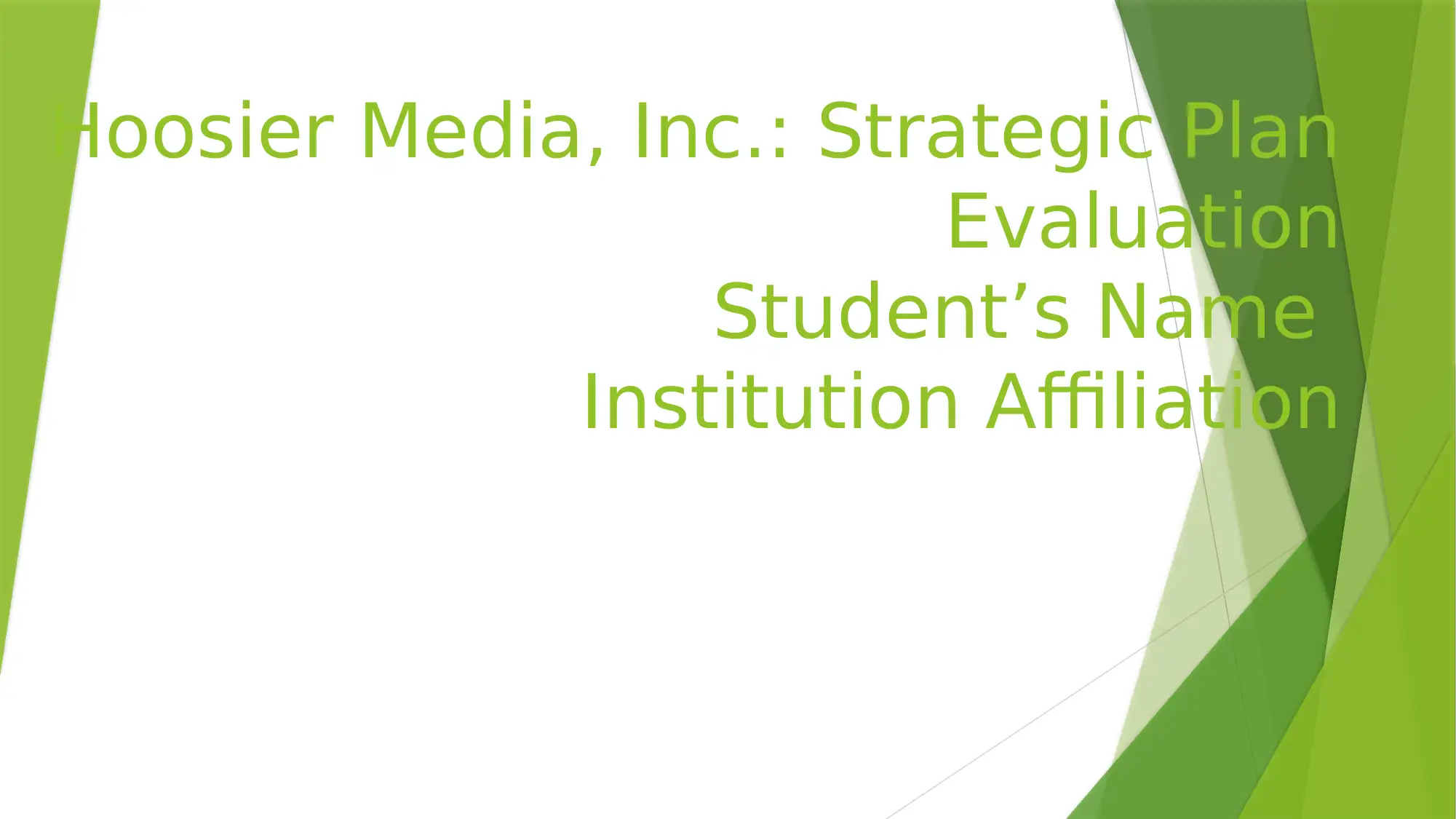
Hoosier Media, Inc.: Strategic Plan
Evaluation
Student’s Name
Institution Affiliation
tabler-icon-diamond-filled.svg

Paraphrase This Document

Need a fresh take? Get an instant paraphrase of this document with our AI Paraphraser
Document Page
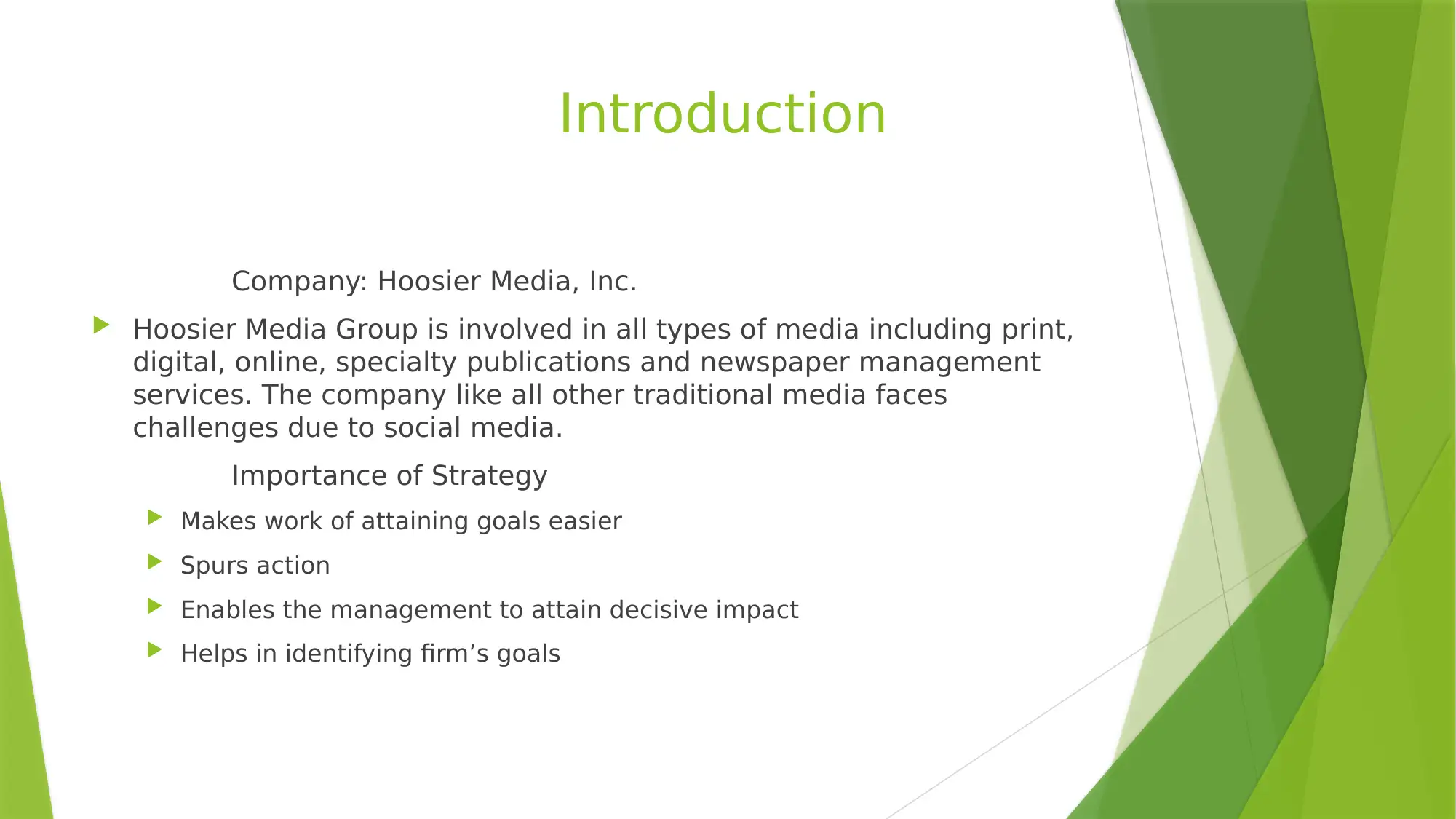
Introduction
Company: Hoosier Media, Inc.
Hoosier Media Group is involved in all types of media including print,
digital, online, specialty publications and newspaper management
services. The company like all other traditional media faces
challenges due to social media.
Importance of Strategy
Makes work of attaining goals easier
Spurs action
Enables the management to attain decisive impact
Helps in identifying firm’s goals
Document Page
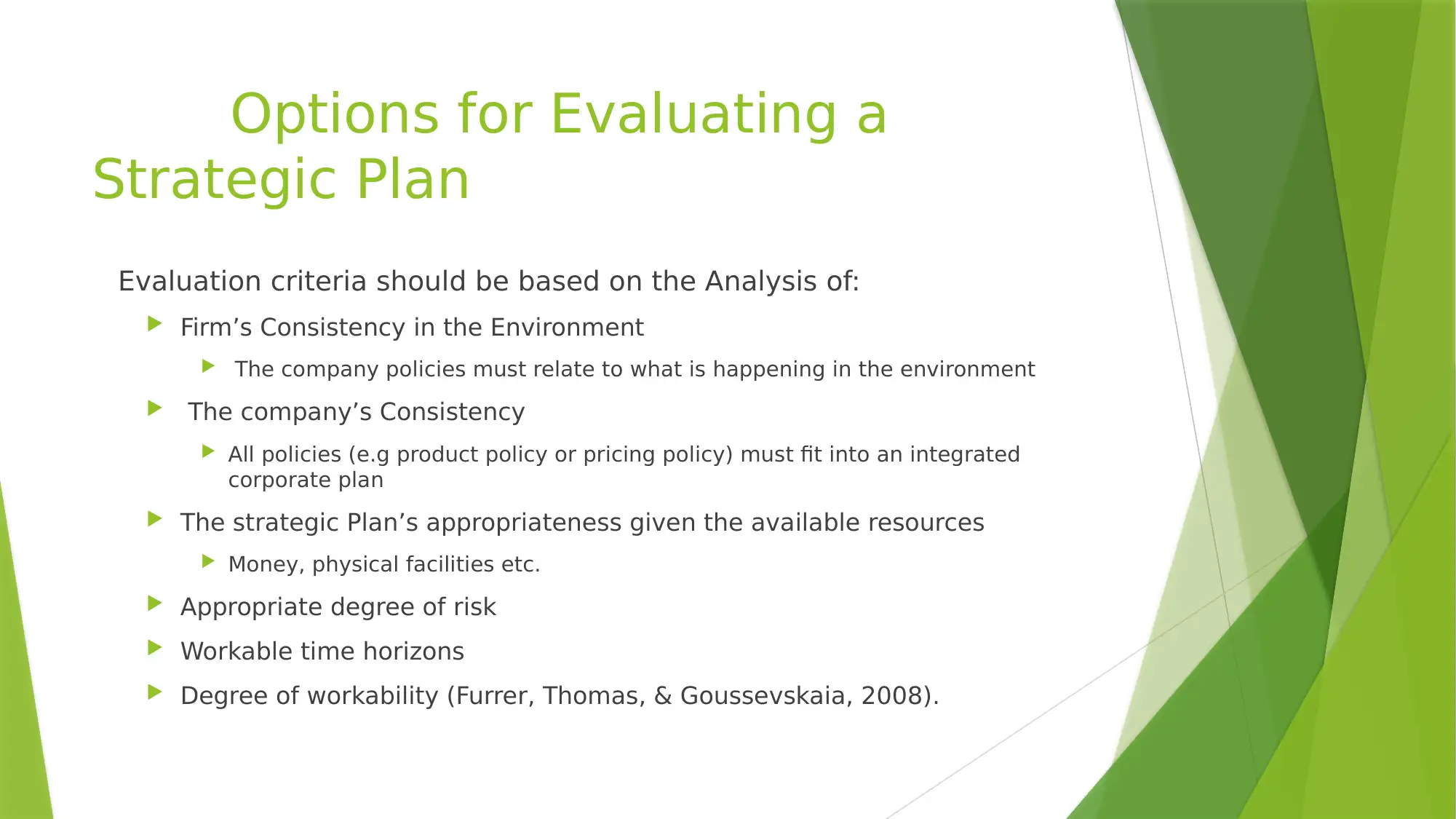
Options for Evaluating a
Strategic Plan
Evaluation criteria should be based on the Analysis of:
Firm’s Consistency in the Environment
The company policies must relate to what is happening in the environment
The company’s Consistency
All policies (e.g product policy or pricing policy) must fit into an integrated
corporate plan
The strategic Plan’s appropriateness given the available resources
Money, physical facilities etc.
Appropriate degree of risk
Workable time horizons
Degree of workability (Furrer, Thomas, & Goussevskaia, 2008).
Document Page
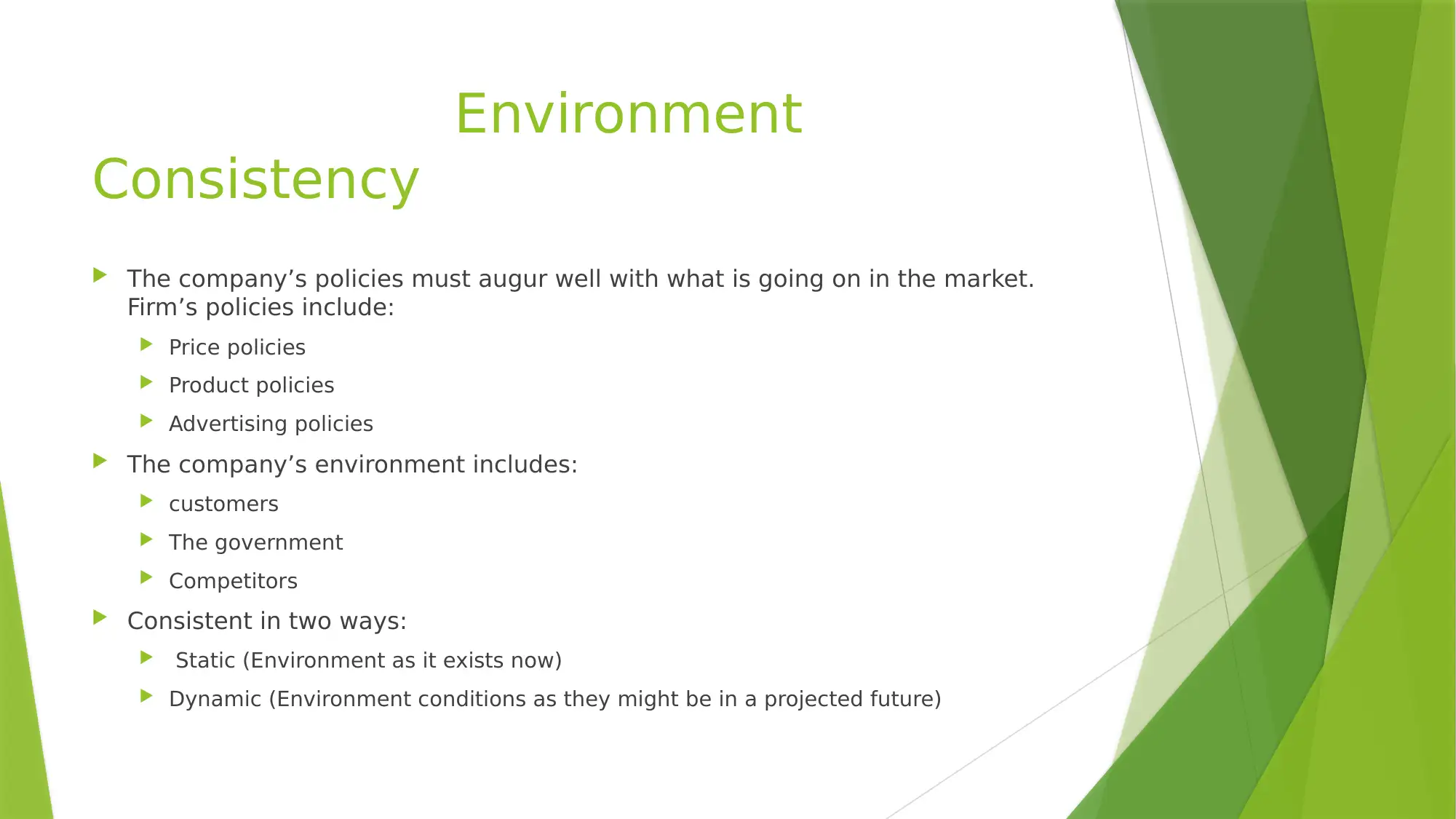
Environment
Consistency
The company’s policies must augur well with what is going on in the market.
Firm’s policies include:
Price policies
Product policies
Advertising policies
The company’s environment includes:
customers
The government
Competitors
Consistent in two ways:
Static (Environment as it exists now)
Dynamic (Environment conditions as they might be in a projected future)
tabler-icon-diamond-filled.svg

Paraphrase This Document

Need a fresh take? Get an instant paraphrase of this document with our AI Paraphraser
Document Page
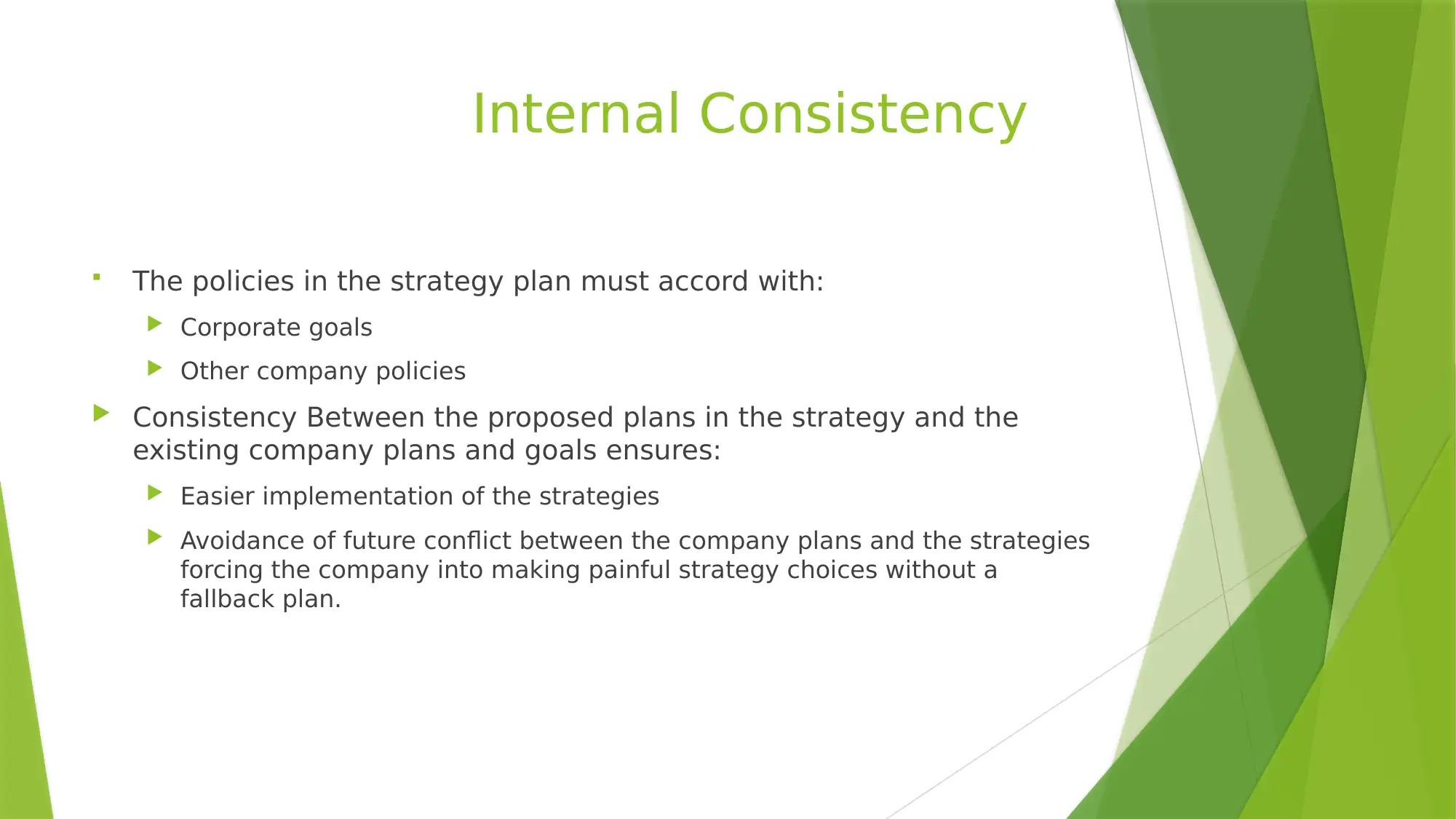
Internal Consistency
The policies in the strategy plan must accord with:
Corporate goals
Other company policies
Consistency Between the proposed plans in the strategy and the
existing company plans and goals ensures:
Easier implementation of the strategies
Avoidance of future conflict between the company plans and the strategies
forcing the company into making painful strategy choices without a
fallback plan.
Document Page
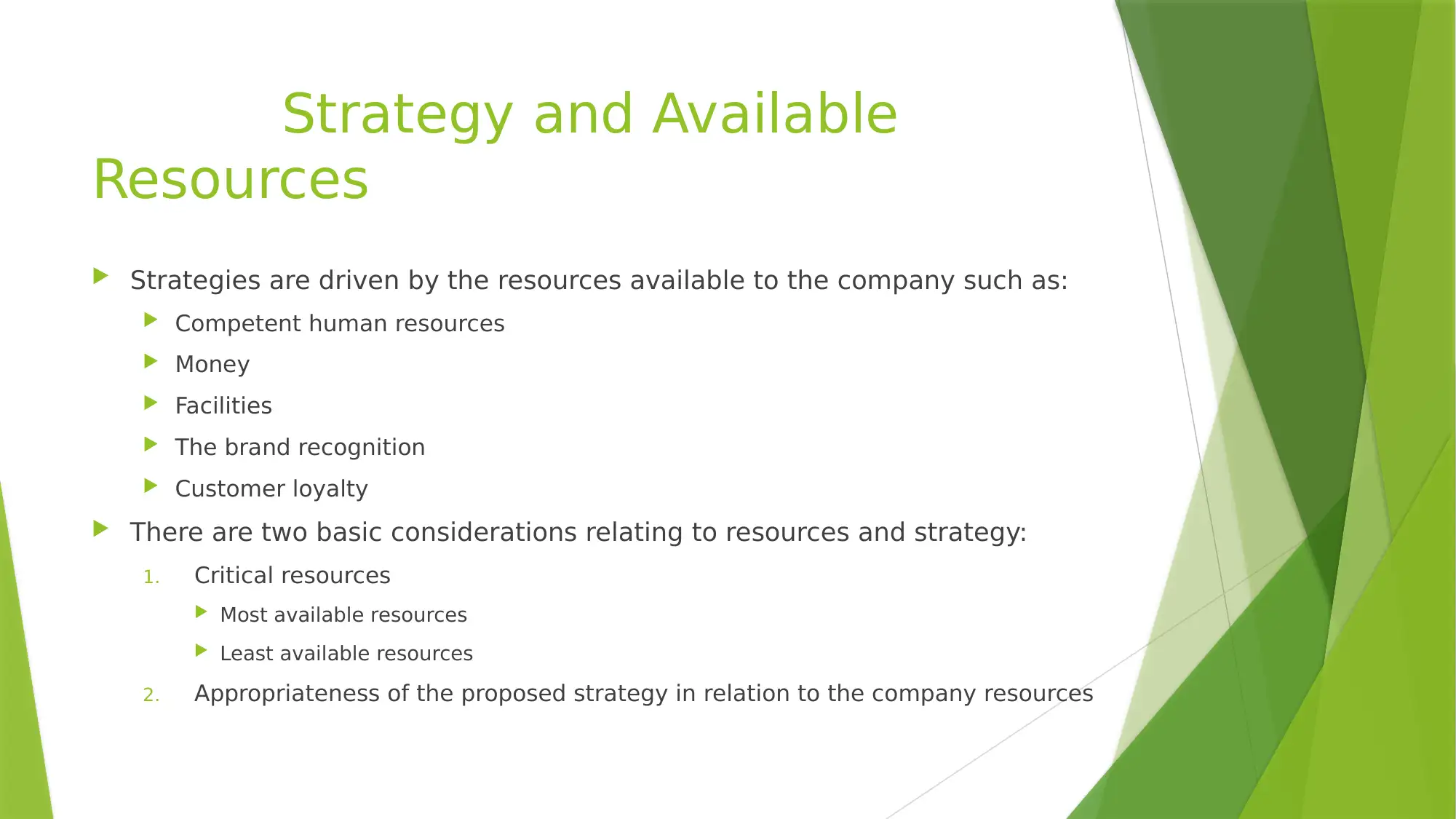
Strategy and Available
Resources
Strategies are driven by the resources available to the company such as:
Competent human resources
Money
Facilities
The brand recognition
Customer loyalty
There are two basic considerations relating to resources and strategy:
1. Critical resources
Most available resources
Least available resources
2. Appropriateness of the proposed strategy in relation to the company resources
Document Page
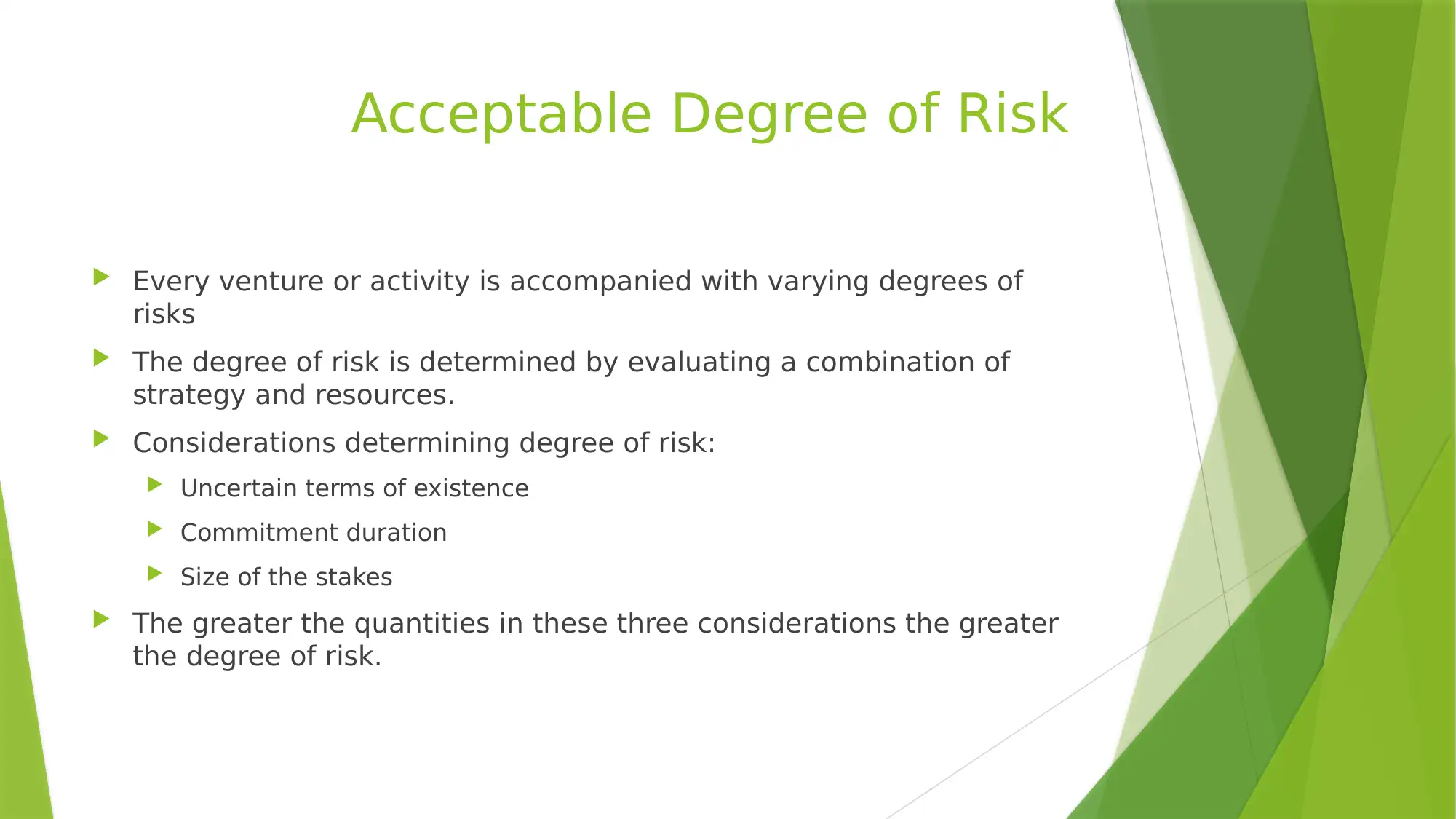
Acceptable Degree of Risk
Every venture or activity is accompanied with varying degrees of
risks
The degree of risk is determined by evaluating a combination of
strategy and resources.
Considerations determining degree of risk:
Uncertain terms of existence
Commitment duration
Size of the stakes
The greater the quantities in these three considerations the greater
the degree of risk.
tabler-icon-diamond-filled.svg

Paraphrase This Document

Need a fresh take? Get an instant paraphrase of this document with our AI Paraphraser
Document Page
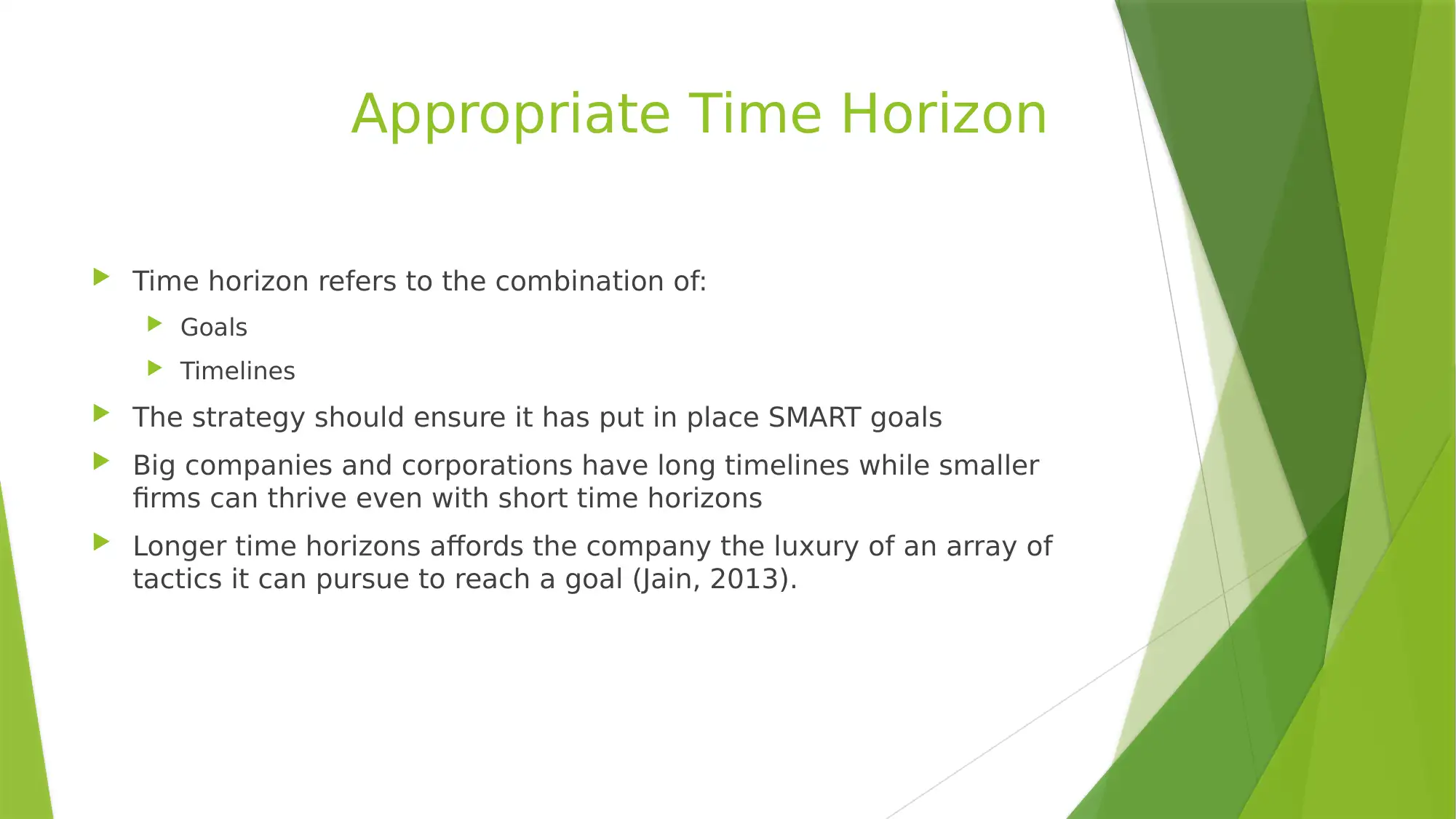
Appropriate Time Horizon
Time horizon refers to the combination of:
Goals
Timelines
The strategy should ensure it has put in place SMART goals
Big companies and corporations have long timelines while smaller
firms can thrive even with short time horizons
Longer time horizons affords the company the luxury of an array of
tactics it can pursue to reach a goal (Jain, 2013).
Document Page
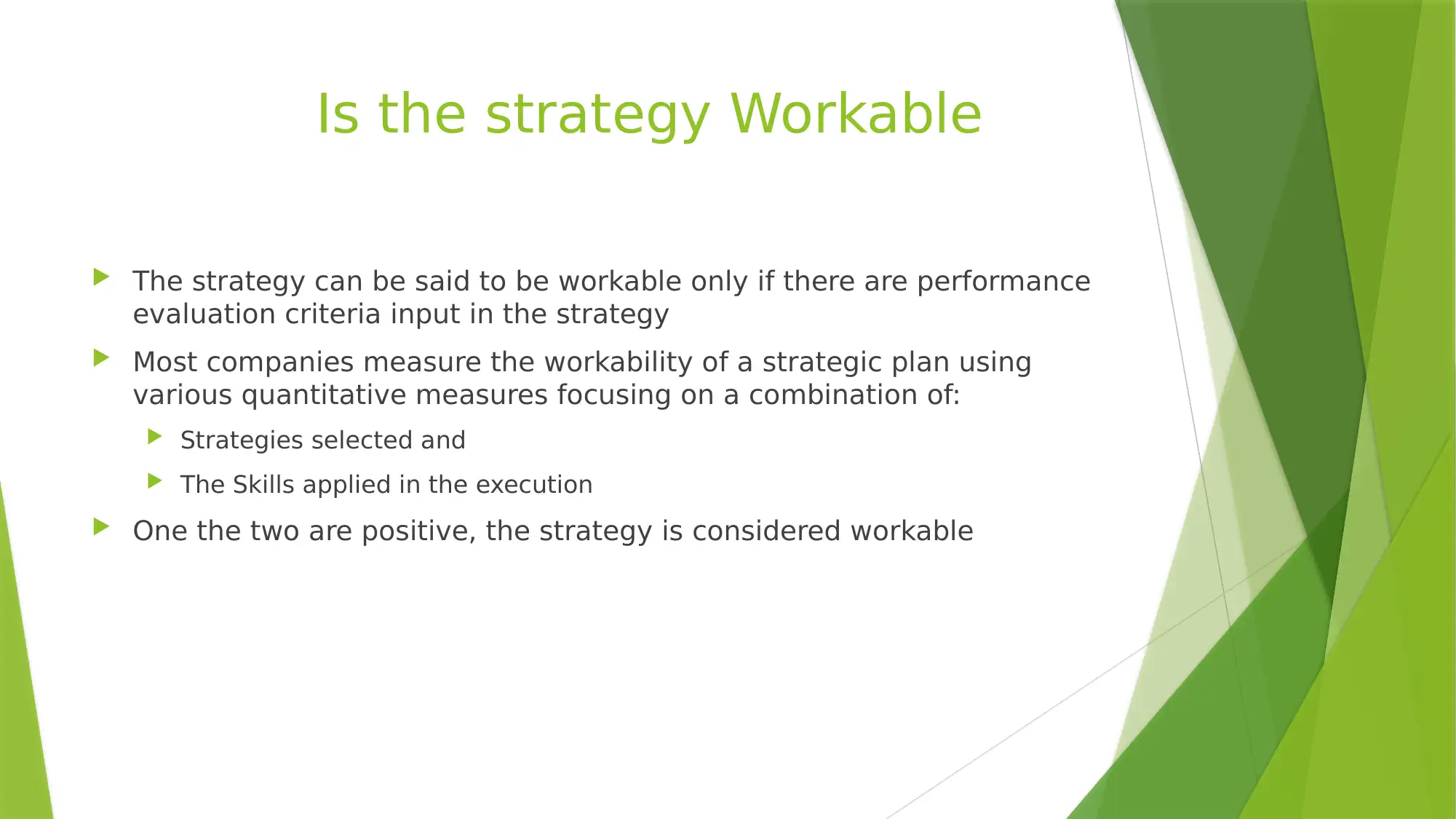
Is the strategy Workable
The strategy can be said to be workable only if there are performance
evaluation criteria input in the strategy
Most companies measure the workability of a strategic plan using
various quantitative measures focusing on a combination of:
Strategies selected and
The Skills applied in the execution
One the two are positive, the strategy is considered workable
Document Page
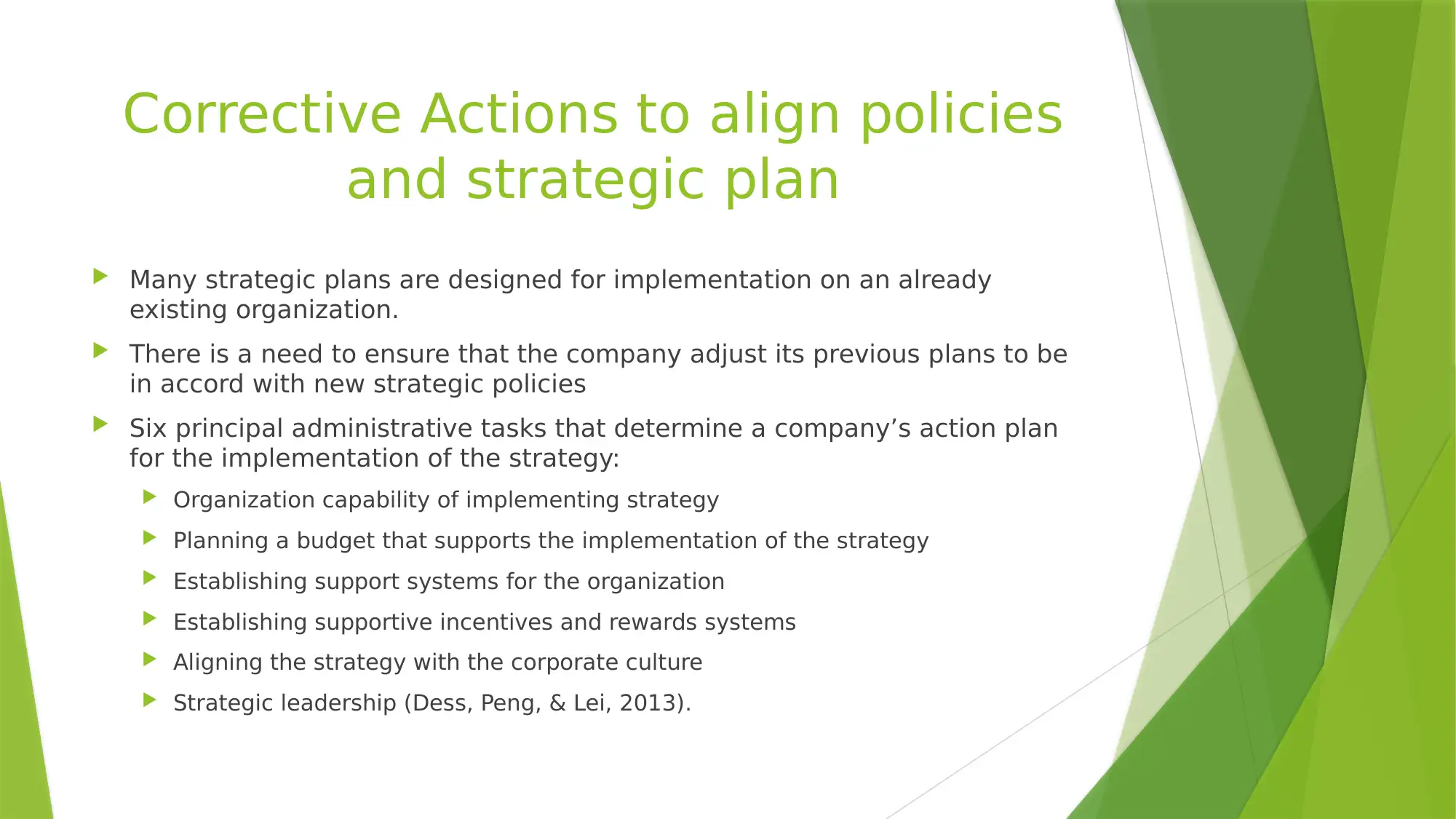
Corrective Actions to align policies
and strategic plan
Many strategic plans are designed for implementation on an already
existing organization.
There is a need to ensure that the company adjust its previous plans to be
in accord with new strategic policies
Six principal administrative tasks that determine a company’s action plan
for the implementation of the strategy:
Organization capability of implementing strategy
Planning a budget that supports the implementation of the strategy
Establishing support systems for the organization
Establishing supportive incentives and rewards systems
Aligning the strategy with the corporate culture
Strategic leadership (Dess, Peng, & Lei, 2013).
tabler-icon-diamond-filled.svg

Paraphrase This Document

Need a fresh take? Get an instant paraphrase of this document with our AI Paraphraser
Document Page
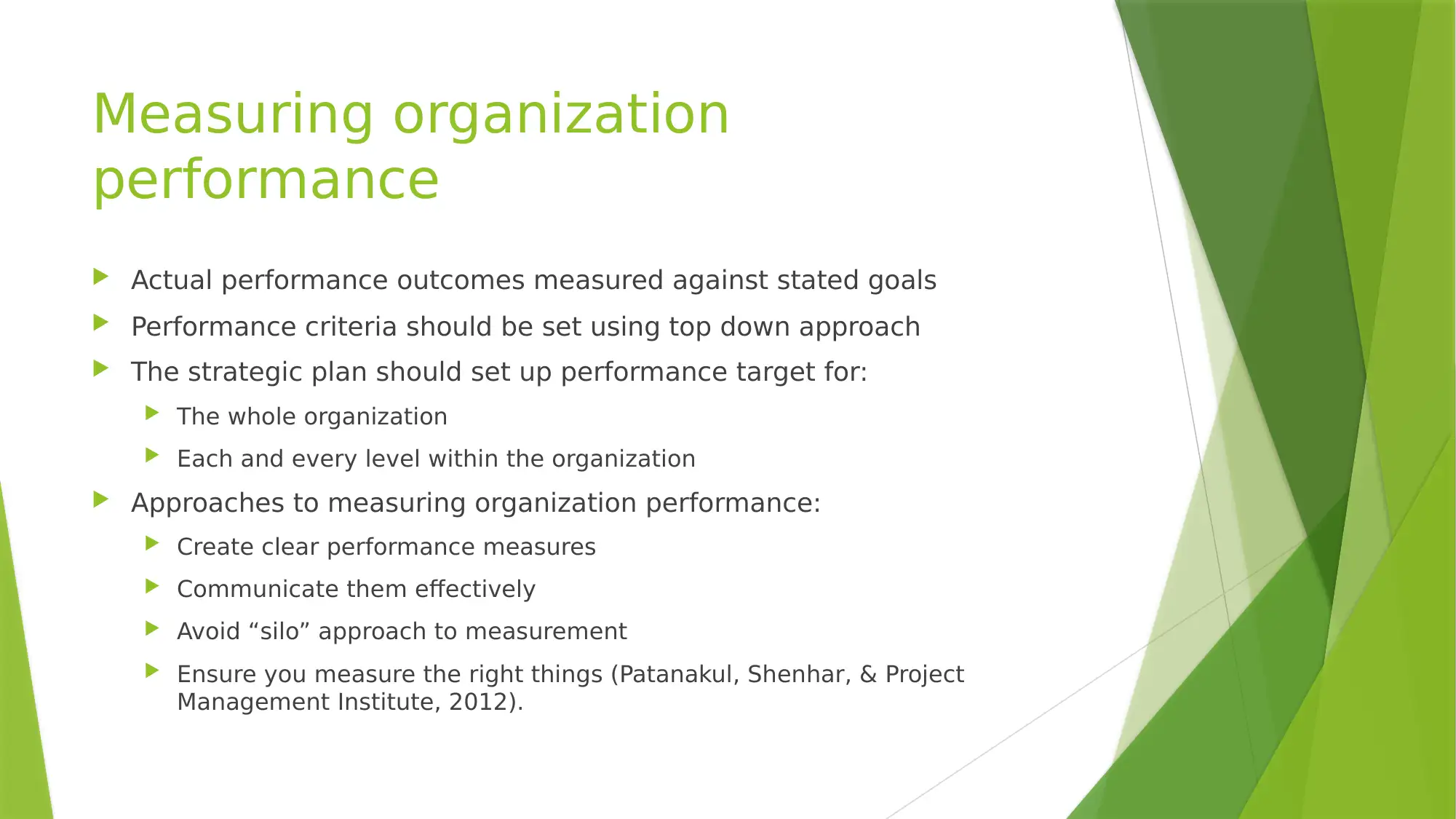
Measuring organization
performance
Actual performance outcomes measured against stated goals
Performance criteria should be set using top down approach
The strategic plan should set up performance target for:
The whole organization
Each and every level within the organization
Approaches to measuring organization performance:
Create clear performance measures
Communicate them effectively
Avoid “silo” approach to measurement
Ensure you measure the right things (Patanakul, Shenhar, & Project
Management Institute, 2012).
Document Page
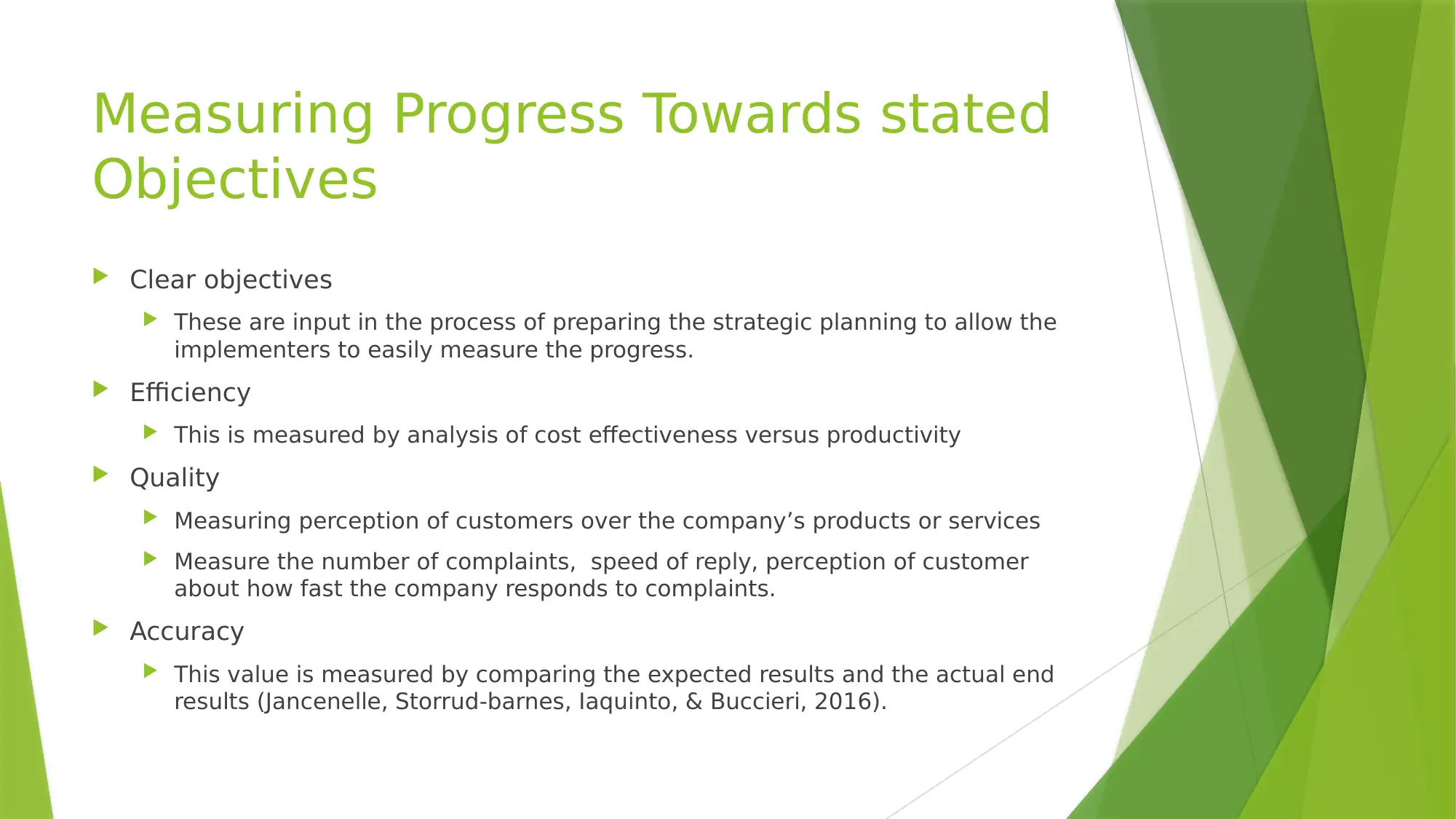
Measuring Progress Towards stated
Objectives
Clear objectives
These are input in the process of preparing the strategic planning to allow the
implementers to easily measure the progress.
Efficiency
This is measured by analysis of cost effectiveness versus productivity
Quality
Measuring perception of customers over the company’s products or services
Measure the number of complaints, speed of reply, perception of customer
about how fast the company responds to complaints.
Accuracy
This value is measured by comparing the expected results and the actual end
results (Jancenelle, Storrud-barnes, Iaquinto, & Buccieri, 2016).
chevron_up_icon
1 out of 15
circle_padding
hide_on_mobile
zoom_out_icon
[object Object]