Strategic Business Project and Program Management for SB Technology
VerifiedAdded on 2022/04/08
|25
|5060
|23
Project
AI Summary
This project analyzes SB Technology's strategic changes, focusing on project and program management. It begins with a business case outlining SB's shift towards international growth, diversification into software and mobile systems, and challenges like the WN acquisition and manufacturing policy decisions. The project assesses the scope and deliverables of four key projects: WN integration, manufacturing strategy, new product development, and a center of excellence. It details product development phases from idea generation to commercialization, including agile methodologies. A time estimation and scheduling analysis is provided for each project, along with a program risk management assessment. The project also considers organizational governance, stakeholder management, and contracting. Finally, it compares different project management frameworks and justifies the chosen approach, culminating in a conclusion and references.
Business project and programmed
management
1
management
1

Paraphrase This Document
Need a fresh take? Get an instant paraphrase of this document with our AI Paraphraser
Table of Contents
Part-1..........................................................................................................................................3
Business case..........................................................................................................................3
Scope and deliverable assessment..........................................................................................4
Programs and projects activity based time estimation and scheduling..................................6
Programme risk management...............................................................................................14
Organisational governance and structure and stakeholder management.............................16
Program Control...................................................................................................................20
Contracting and Supplier Management................................................................................21
Part 2........................................................................................................................................21
Comparison of different frameworks...................................................................................21
Justification..........................................................................................................................22
Conclusion............................................................................................................................23
Reference..................................................................................................................................24
2
Part-1..........................................................................................................................................3
Business case..........................................................................................................................3
Scope and deliverable assessment..........................................................................................4
Programs and projects activity based time estimation and scheduling..................................6
Programme risk management...............................................................................................14
Organisational governance and structure and stakeholder management.............................16
Program Control...................................................................................................................20
Contracting and Supplier Management................................................................................21
Part 2........................................................................................................................................21
Comparison of different frameworks...................................................................................21
Justification..........................................................................................................................22
Conclusion............................................................................................................................23
Reference..................................................................................................................................24
2
Part-1
Business case
The current project management case study of SB is about a technology hardware business
which has recently changed their long term strategy approach to grow in the international
technology market further. The organisation current sales their product at lower cost but at
the same time provides good quality. The business has strong position in the technology
hardware business but is now diversifying their business into software industry and also the
mobile system industry (Soltanizadeh et al., 2016). the goal to develop bespoke software for
their international high value clients needs higher level fo competency within the organisation
and in lacking of that SB decided to take the acquisition or partnership like faster capacity
and capability building process (Soltanizadeh et al., 2016). The organisation also at the same
time is aiming to develop centre of excellence for their software product development. On the
other hand the manufacturing policy of the business shifted in recent time in the form of
outsourcing from the places far east region of the world but the quality issue is influencing
them to bring backs those works in USA. Thus selecting other low cost region with
appropriate quality delivery or staying in USA needs to be resolved in this new strategic
approach. In this greater strategic change process the objectives are as follows.
Developing new mobile system and software by following higher quality and lower
principle
Diversifying the business for the future growth process
Selecting low cost and good quality production based manufacturing policy
Building the new business image as the ‘integrated quality technology system’
developer for the customers
Managing the organisational change process effectively to maximise the strategic
change benefits
The business case of SB in its strategic change process is witnessing some important
challenges and those needs to be understood to discuss greater project and programme
management. The capacity and competencies building process started with acquiring WN
and mobile phone integrated manufacturer from Europe. This strategy provided much needed
integrated software product development and soft skills required for their diversification
strategy. But this acquisition is still is in red tape and final clearance is pending. This new
3
Business case
The current project management case study of SB is about a technology hardware business
which has recently changed their long term strategy approach to grow in the international
technology market further. The organisation current sales their product at lower cost but at
the same time provides good quality. The business has strong position in the technology
hardware business but is now diversifying their business into software industry and also the
mobile system industry (Soltanizadeh et al., 2016). the goal to develop bespoke software for
their international high value clients needs higher level fo competency within the organisation
and in lacking of that SB decided to take the acquisition or partnership like faster capacity
and capability building process (Soltanizadeh et al., 2016). The organisation also at the same
time is aiming to develop centre of excellence for their software product development. On the
other hand the manufacturing policy of the business shifted in recent time in the form of
outsourcing from the places far east region of the world but the quality issue is influencing
them to bring backs those works in USA. Thus selecting other low cost region with
appropriate quality delivery or staying in USA needs to be resolved in this new strategic
approach. In this greater strategic change process the objectives are as follows.
Developing new mobile system and software by following higher quality and lower
principle
Diversifying the business for the future growth process
Selecting low cost and good quality production based manufacturing policy
Building the new business image as the ‘integrated quality technology system’
developer for the customers
Managing the organisational change process effectively to maximise the strategic
change benefits
The business case of SB in its strategic change process is witnessing some important
challenges and those needs to be understood to discuss greater project and programme
management. The capacity and competencies building process started with acquiring WN
and mobile phone integrated manufacturer from Europe. This strategy provided much needed
integrated software product development and soft skills required for their diversification
strategy. But this acquisition is still is in red tape and final clearance is pending. This new
3
⊘ This is a preview!⊘
Do you want full access?
Subscribe today to unlock all pages.

Trusted by 1+ million students worldwide
acquisition needs to be integrated within the existing capability of SB and for that
organisational structure and job role oriented change is needed. On the other hand the some
of the excess workforce after this acquisition would have to be released and that is expected
to cause political issue because of the job loss scenario. Thus a strong stakeholder
management aspect is needed (Heagney, 2016). On the other hand the manufacturing strategy
must decision must meet the quality and low cost proposition. In case of the software develop
earlier experience of SB, partnering with DCC for the table computer software develop was
inappropriate and poorly managed. There the Agile working process was not effectively
implemented. Thus flexible, low cost and high quality software development is challenging
for SB. On the other hand the new centre of excellence needs a location in Western Europe
that needs to be low cost but high in working environment.
Scope and deliverable assessment
In the first project the core aim is to successfully acquire and integrated WN with greater
operation of SB. Thus in this process the scope and deliverables are limited with this
legislative aspect, operational aspect of margin different capabilities and formalising
operational process, changing organisational structure to better integrated WN with the
existing operation of SB, managing stakeholder relationship to deliver best outcomes,
delivering mobile technology product development competencies to complement and bring
synergy the earlier computer hardware capability (Turner, 2016).
The second project of manufacturing policy and strategic choice making and final
implementation also has other scope and deliverables. This project is having the scope in
relation to the hardware product manufacturing process only in that the selection and
implementation of the in-house or outsourcing manufacturing process development would be
in the central (Heagney, 2016). The deliverables are low cost and higher quality of
manufactured product, managing the change in this process successfully, allocating the
necessary resources, margin WN manufacturing capacity with SB’s capacity, better
stakeholder management.
The third project is about new products development. This projects scope would be related
only with mobile technology software and other computer hardware software development
only. This project would thus deliver bespoke software, mobile devices interface software,
implementing agile framework of project management, lower developmental cost but timely
quality products development capability and competencies (Turner, 2016).
4
organisational structure and job role oriented change is needed. On the other hand the some
of the excess workforce after this acquisition would have to be released and that is expected
to cause political issue because of the job loss scenario. Thus a strong stakeholder
management aspect is needed (Heagney, 2016). On the other hand the manufacturing strategy
must decision must meet the quality and low cost proposition. In case of the software develop
earlier experience of SB, partnering with DCC for the table computer software develop was
inappropriate and poorly managed. There the Agile working process was not effectively
implemented. Thus flexible, low cost and high quality software development is challenging
for SB. On the other hand the new centre of excellence needs a location in Western Europe
that needs to be low cost but high in working environment.
Scope and deliverable assessment
In the first project the core aim is to successfully acquire and integrated WN with greater
operation of SB. Thus in this process the scope and deliverables are limited with this
legislative aspect, operational aspect of margin different capabilities and formalising
operational process, changing organisational structure to better integrated WN with the
existing operation of SB, managing stakeholder relationship to deliver best outcomes,
delivering mobile technology product development competencies to complement and bring
synergy the earlier computer hardware capability (Turner, 2016).
The second project of manufacturing policy and strategic choice making and final
implementation also has other scope and deliverables. This project is having the scope in
relation to the hardware product manufacturing process only in that the selection and
implementation of the in-house or outsourcing manufacturing process development would be
in the central (Heagney, 2016). The deliverables are low cost and higher quality of
manufactured product, managing the change in this process successfully, allocating the
necessary resources, margin WN manufacturing capacity with SB’s capacity, better
stakeholder management.
The third project is about new products development. This projects scope would be related
only with mobile technology software and other computer hardware software development
only. This project would thus deliver bespoke software, mobile devices interface software,
implementing agile framework of project management, lower developmental cost but timely
quality products development capability and competencies (Turner, 2016).
4
Paraphrase This Document
Need a fresh take? Get an instant paraphrase of this document with our AI Paraphraser
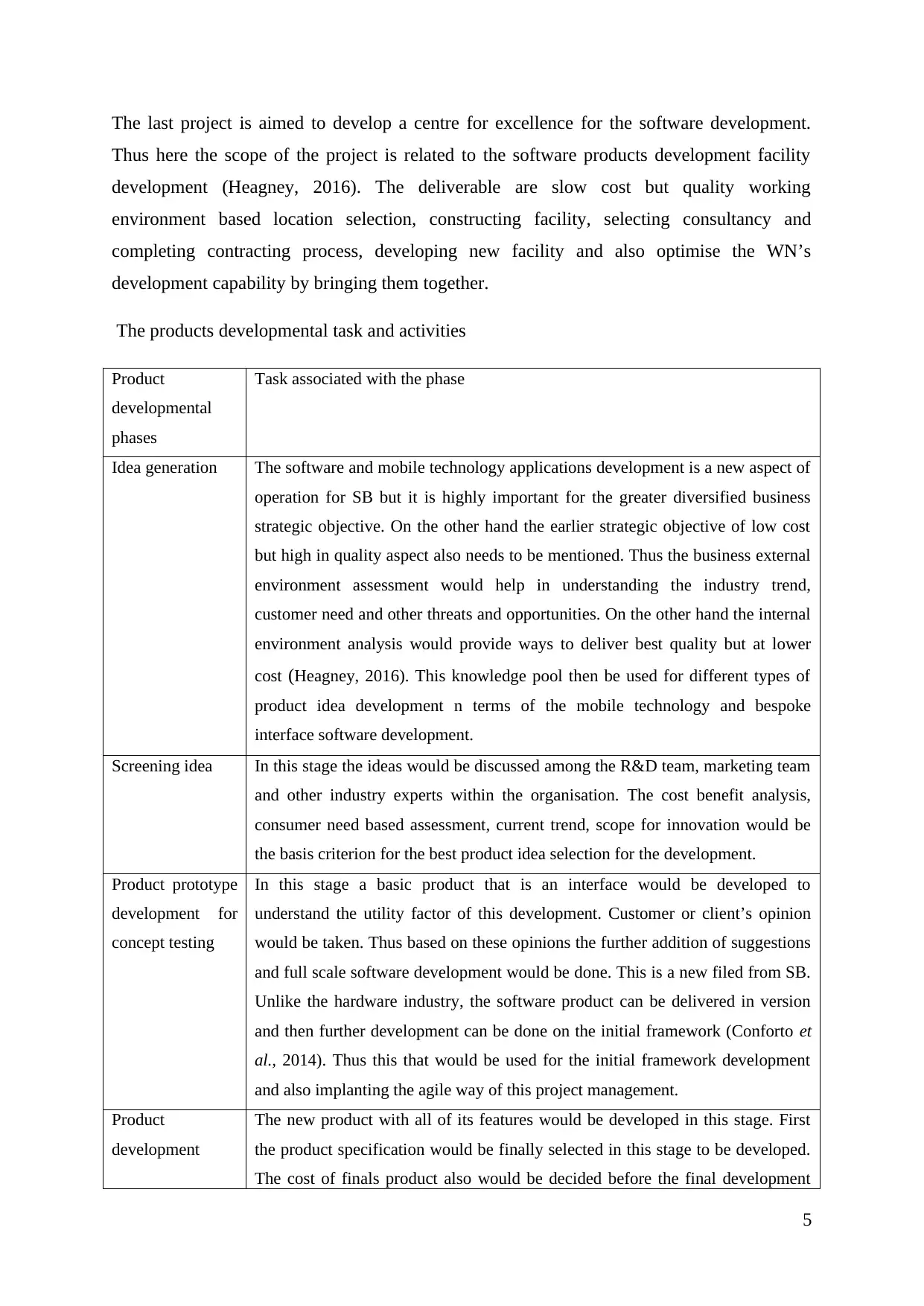
The last project is aimed to develop a centre for excellence for the software development.
Thus here the scope of the project is related to the software products development facility
development (Heagney, 2016). The deliverable are slow cost but quality working
environment based location selection, constructing facility, selecting consultancy and
completing contracting process, developing new facility and also optimise the WN’s
development capability by bringing them together.
The products developmental task and activities
Product
developmental
phases
Task associated with the phase
Idea generation The software and mobile technology applications development is a new aspect of
operation for SB but it is highly important for the greater diversified business
strategic objective. On the other hand the earlier strategic objective of low cost
but high in quality aspect also needs to be mentioned. Thus the business external
environment assessment would help in understanding the industry trend,
customer need and other threats and opportunities. On the other hand the internal
environment analysis would provide ways to deliver best quality but at lower
cost (Heagney, 2016). This knowledge pool then be used for different types of
product idea development n terms of the mobile technology and bespoke
interface software development.
Screening idea In this stage the ideas would be discussed among the R&D team, marketing team
and other industry experts within the organisation. The cost benefit analysis,
consumer need based assessment, current trend, scope for innovation would be
the basis criterion for the best product idea selection for the development.
Product prototype
development for
concept testing
In this stage a basic product that is an interface would be developed to
understand the utility factor of this development. Customer or client’s opinion
would be taken. Thus based on these opinions the further addition of suggestions
and full scale software development would be done. This is a new filed from SB.
Unlike the hardware industry, the software product can be delivered in version
and then further development can be done on the initial framework (Conforto et
al., 2014). Thus this that would be used for the initial framework development
and also implanting the agile way of this project management.
Product
development
The new product with all of its features would be developed in this stage. First
the product specification would be finally selected in this stage to be developed.
The cost of finals product also would be decided before the final development
5
Thus here the scope of the project is related to the software products development facility
development (Heagney, 2016). The deliverable are slow cost but quality working
environment based location selection, constructing facility, selecting consultancy and
completing contracting process, developing new facility and also optimise the WN’s
development capability by bringing them together.
The products developmental task and activities
Product
developmental
phases
Task associated with the phase
Idea generation The software and mobile technology applications development is a new aspect of
operation for SB but it is highly important for the greater diversified business
strategic objective. On the other hand the earlier strategic objective of low cost
but high in quality aspect also needs to be mentioned. Thus the business external
environment assessment would help in understanding the industry trend,
customer need and other threats and opportunities. On the other hand the internal
environment analysis would provide ways to deliver best quality but at lower
cost (Heagney, 2016). This knowledge pool then be used for different types of
product idea development n terms of the mobile technology and bespoke
interface software development.
Screening idea In this stage the ideas would be discussed among the R&D team, marketing team
and other industry experts within the organisation. The cost benefit analysis,
consumer need based assessment, current trend, scope for innovation would be
the basis criterion for the best product idea selection for the development.
Product prototype
development for
concept testing
In this stage a basic product that is an interface would be developed to
understand the utility factor of this development. Customer or client’s opinion
would be taken. Thus based on these opinions the further addition of suggestions
and full scale software development would be done. This is a new filed from SB.
Unlike the hardware industry, the software product can be delivered in version
and then further development can be done on the initial framework (Conforto et
al., 2014). Thus this that would be used for the initial framework development
and also implanting the agile way of this project management.
Product
development
The new product with all of its features would be developed in this stage. First
the product specification would be finally selected in this stage to be developed.
The cost of finals product also would be decided before the final development
5
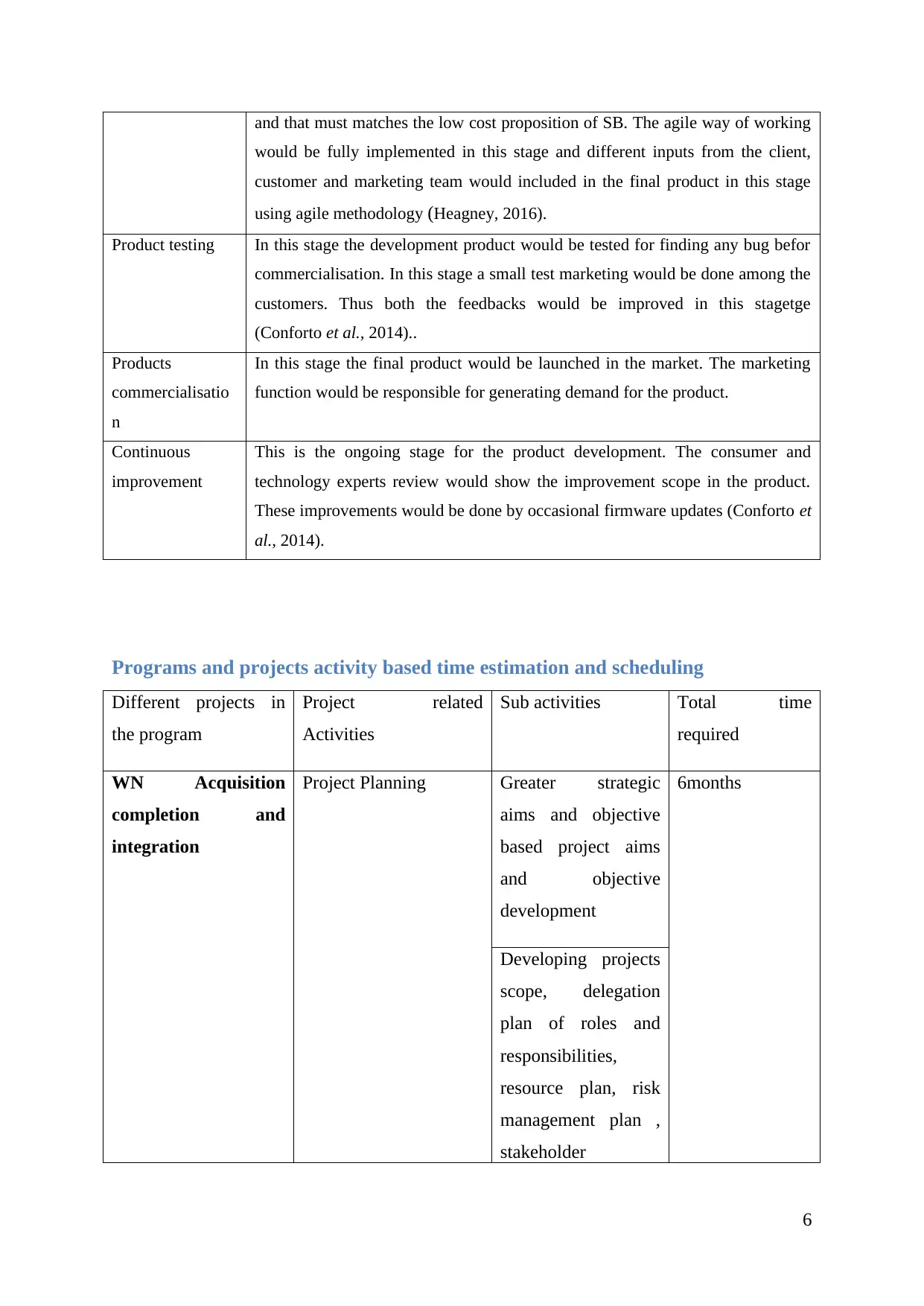
and that must matches the low cost proposition of SB. The agile way of working
would be fully implemented in this stage and different inputs from the client,
customer and marketing team would included in the final product in this stage
using agile methodology (Heagney, 2016).
Product testing In this stage the development product would be tested for finding any bug befor
commercialisation. In this stage a small test marketing would be done among the
customers. Thus both the feedbacks would be improved in this stagetge
(Conforto et al., 2014)..
Products
commercialisatio
n
In this stage the final product would be launched in the market. The marketing
function would be responsible for generating demand for the product.
Continuous
improvement
This is the ongoing stage for the product development. The consumer and
technology experts review would show the improvement scope in the product.
These improvements would be done by occasional firmware updates (Conforto et
al., 2014).
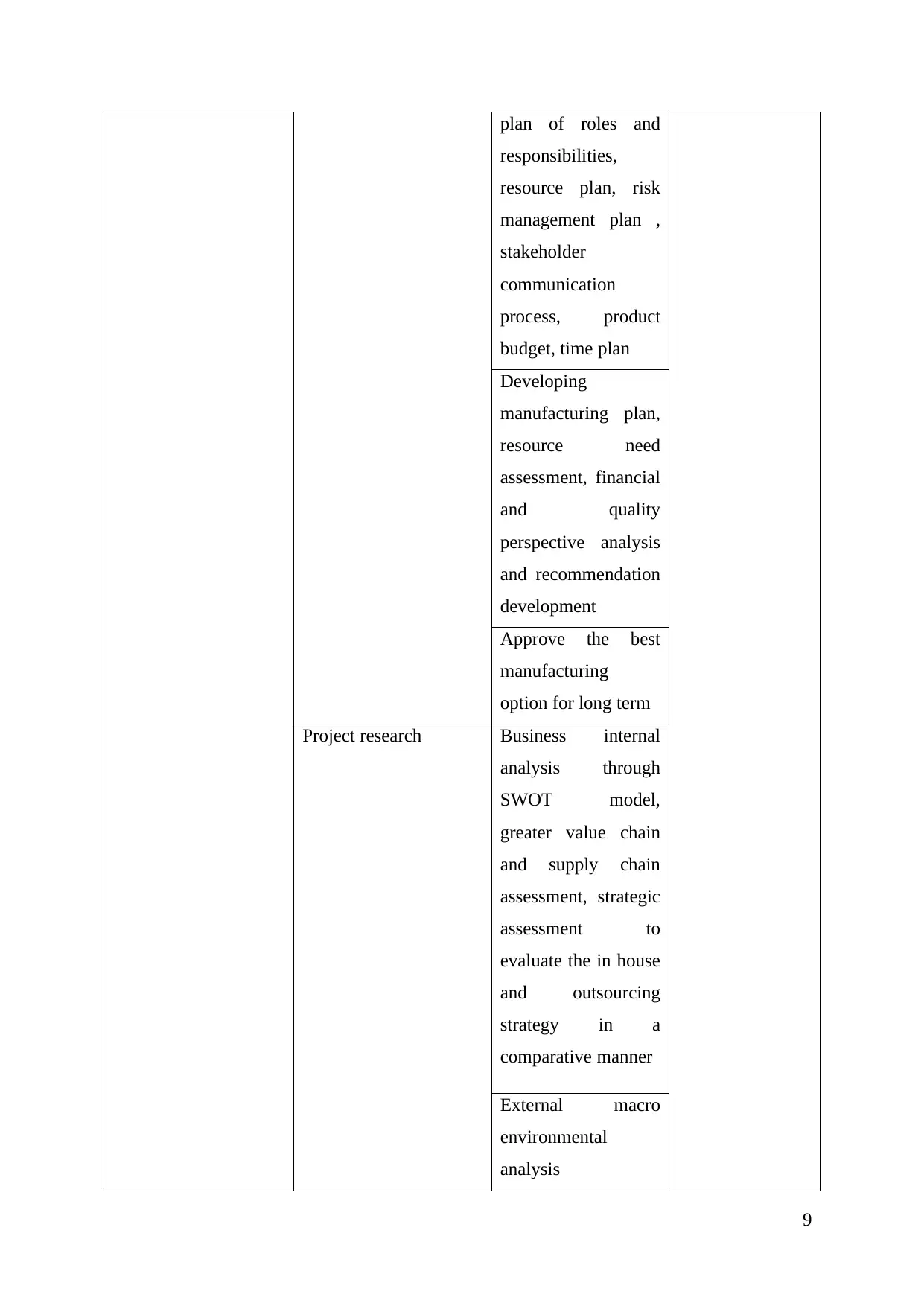
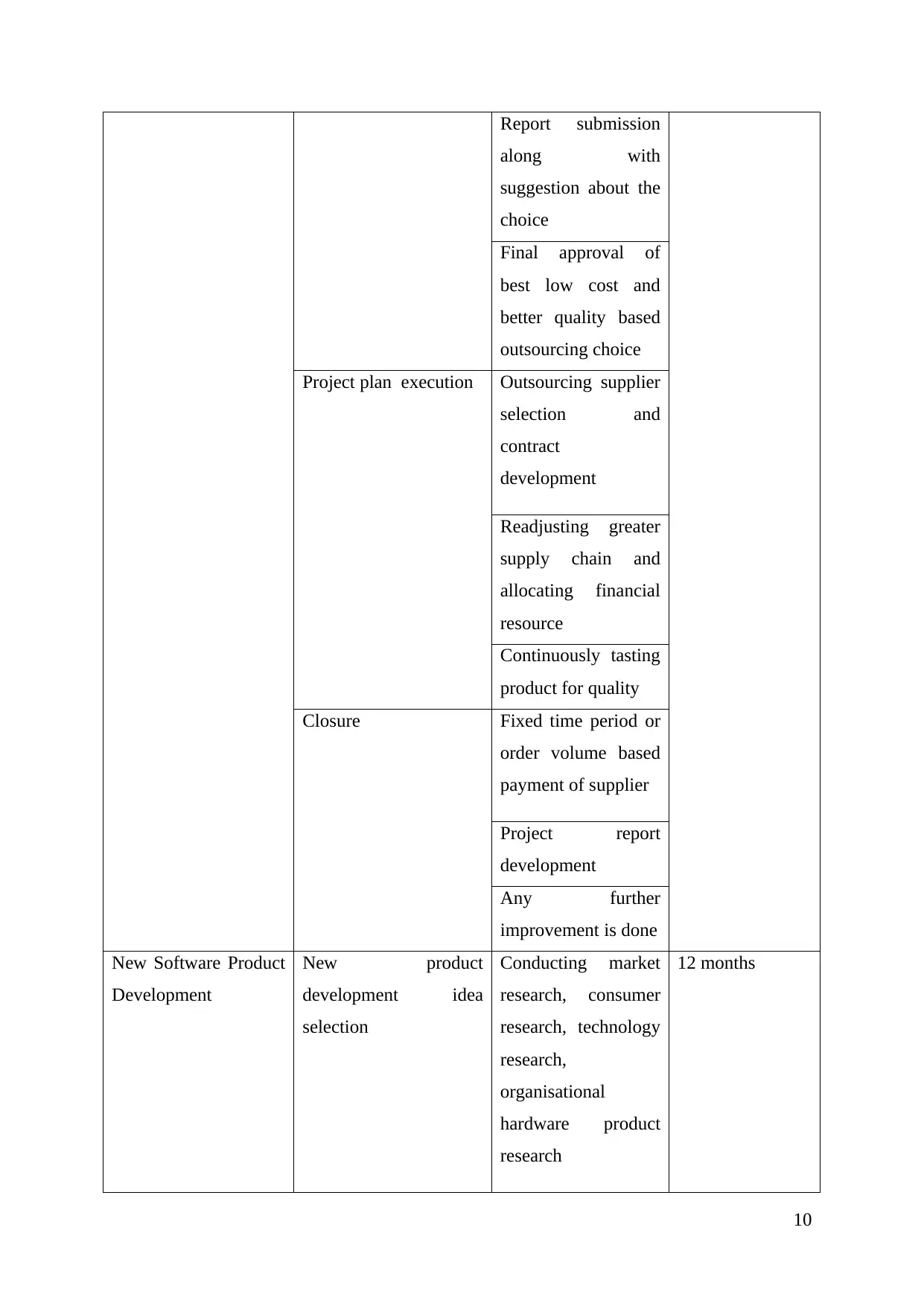
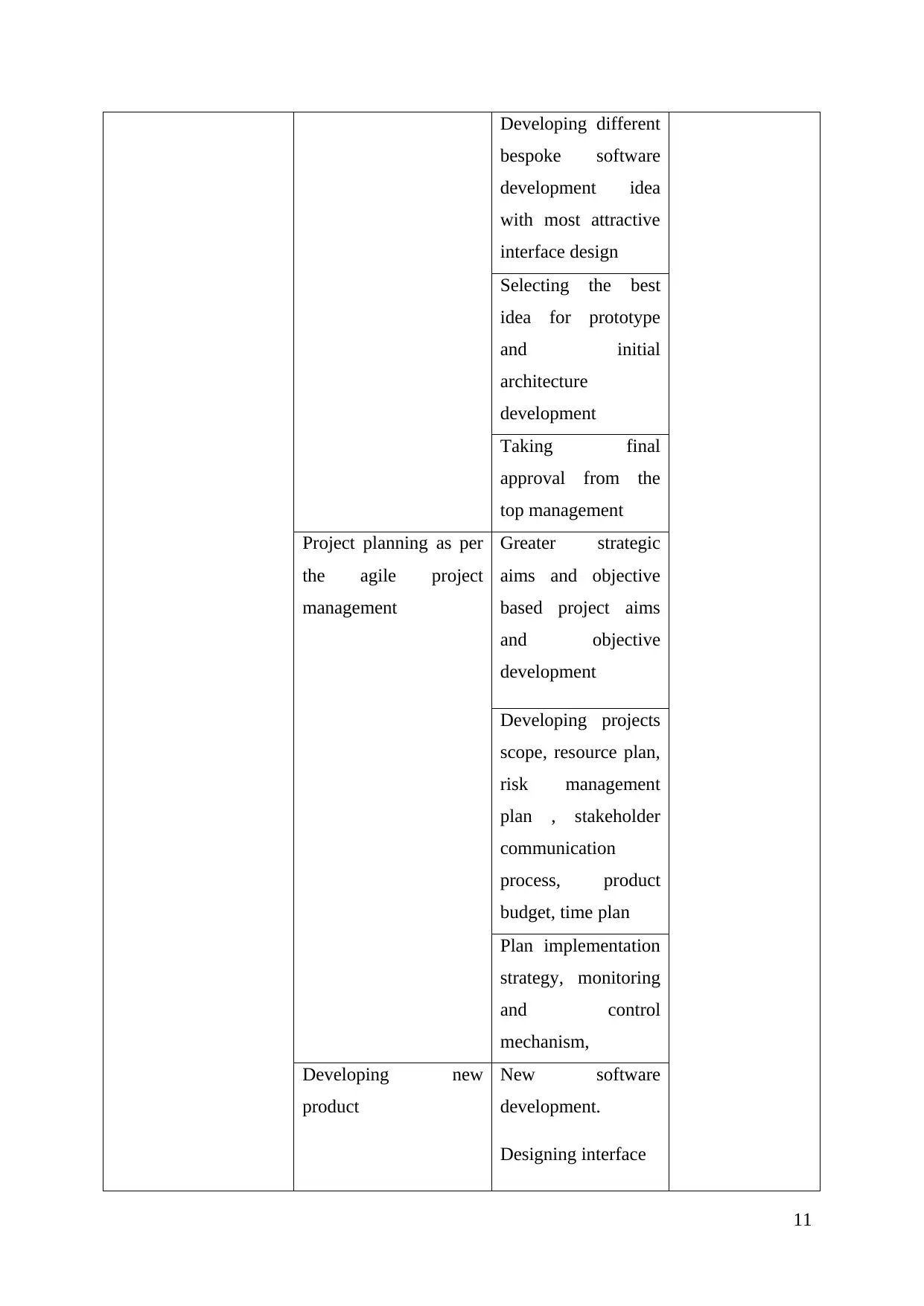
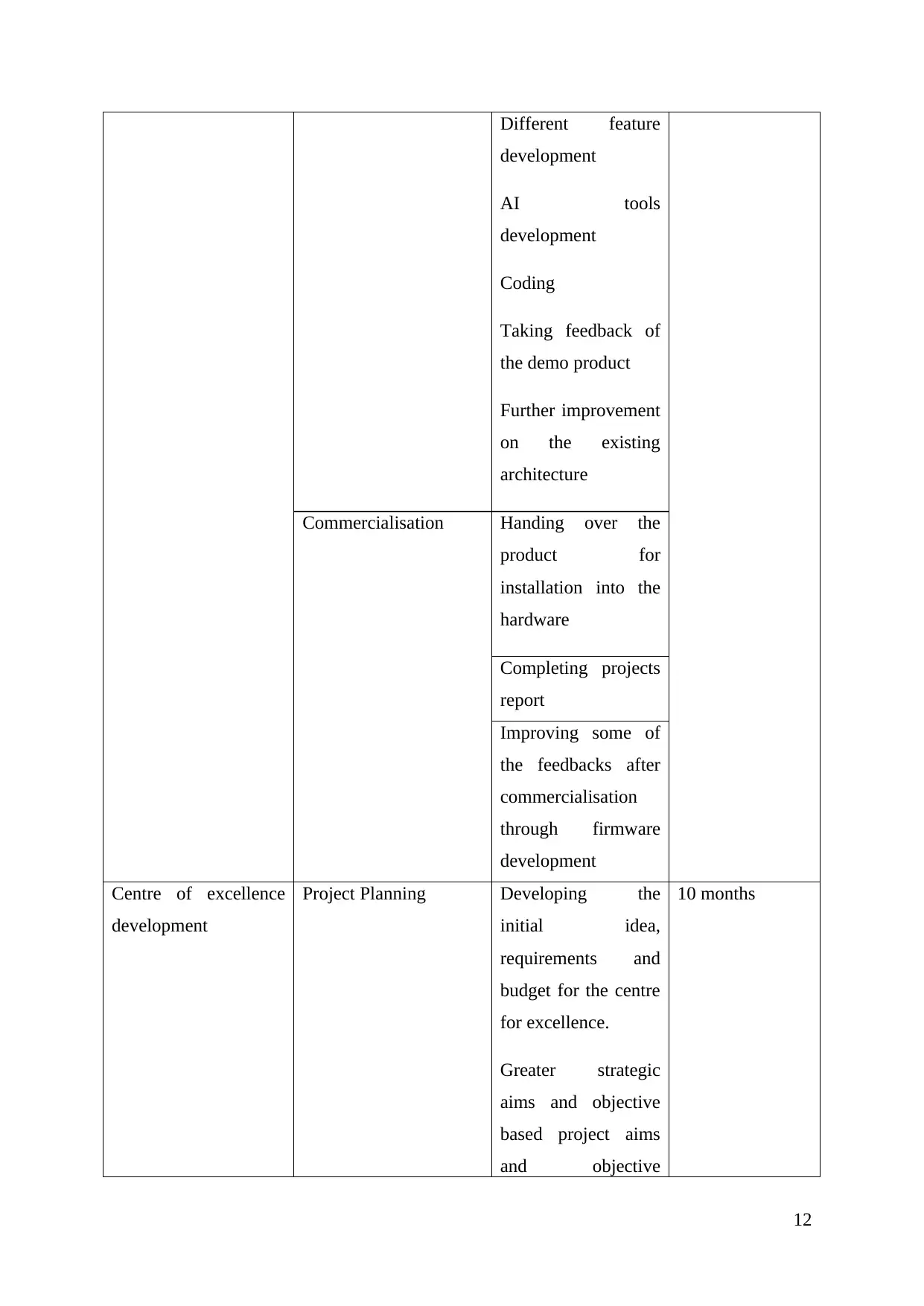
Programs and projects activity based time estimation and scheduling
Different projects in
the program
Project related
Activities
Sub activities Total time
required
WN Acquisition
completion and
integration
Project Planning Greater strategic
aims and objective
based project aims
and objective
development
6months
Developing projects
scope, delegation
plan of roles and
responsibilities,
resource plan, risk
management plan ,
stakeholder
6
would be fully implemented in this stage and different inputs from the client,
customer and marketing team would included in the final product in this stage
using agile methodology (Heagney, 2016).
Product testing In this stage the development product would be tested for finding any bug befor
commercialisation. In this stage a small test marketing would be done among the
customers. Thus both the feedbacks would be improved in this stagetge
(Conforto et al., 2014)..
Products
commercialisatio
n
In this stage the final product would be launched in the market. The marketing
function would be responsible for generating demand for the product.
Continuous
improvement
This is the ongoing stage for the product development. The consumer and
technology experts review would show the improvement scope in the product.
These improvements would be done by occasional firmware updates (Conforto et
al., 2014).
Programs and projects activity based time estimation and scheduling
Different projects in
the program
Project related
Activities
Sub activities Total time
required
WN Acquisition
completion and
integration
Project Planning Greater strategic
aims and objective
based project aims
and objective
development
6months
Developing projects
scope, delegation
plan of roles and
responsibilities,
resource plan, risk
management plan ,
stakeholder
6
⊘ This is a preview!⊘
Do you want full access?
Subscribe today to unlock all pages.
Trusted by 1+ million students worldwide
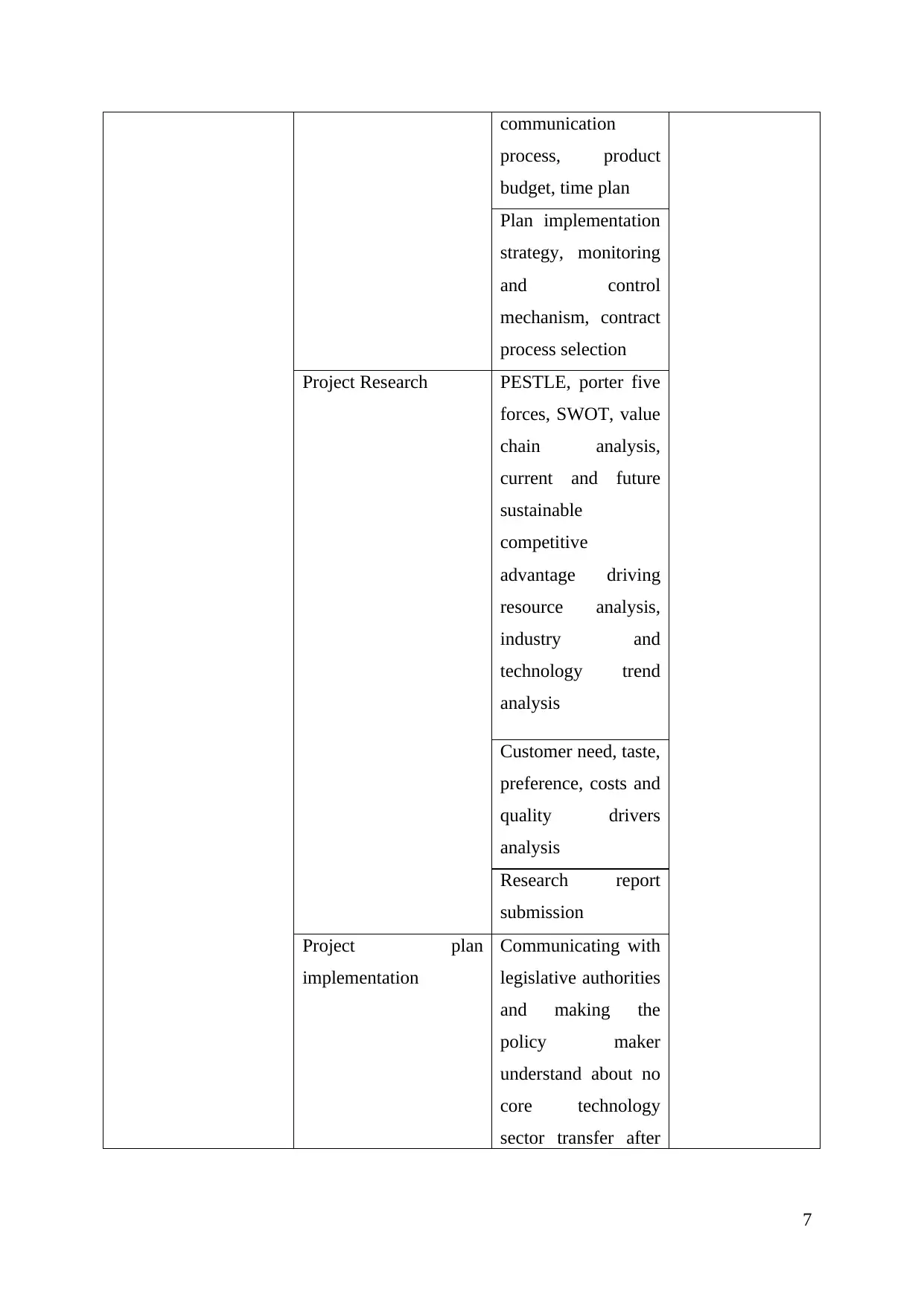
communication
process, product
budget, time plan
Plan implementation
strategy, monitoring
and control
mechanism, contract
process selection
Project Research PESTLE, porter five
forces, SWOT, value
chain analysis,
current and future
sustainable
competitive
advantage driving
resource analysis,
industry and
technology trend
analysis
Customer need, taste,
preference, costs and
quality drivers
analysis
Research report
submission
Project plan
implementation
Communicating with
legislative authorities
and making the
policy maker
understand about no
core technology
sector transfer after
7
process, product
budget, time plan
Plan implementation
strategy, monitoring
and control
mechanism, contract
process selection
Project Research PESTLE, porter five
forces, SWOT, value
chain analysis,
current and future
sustainable
competitive
advantage driving
resource analysis,
industry and
technology trend
analysis
Customer need, taste,
preference, costs and
quality drivers
analysis
Research report
submission
Project plan
implementation
Communicating with
legislative authorities
and making the
policy maker
understand about no
core technology
sector transfer after
7
Paraphrase This Document
Need a fresh take? Get an instant paraphrase of this document with our AI Paraphraser
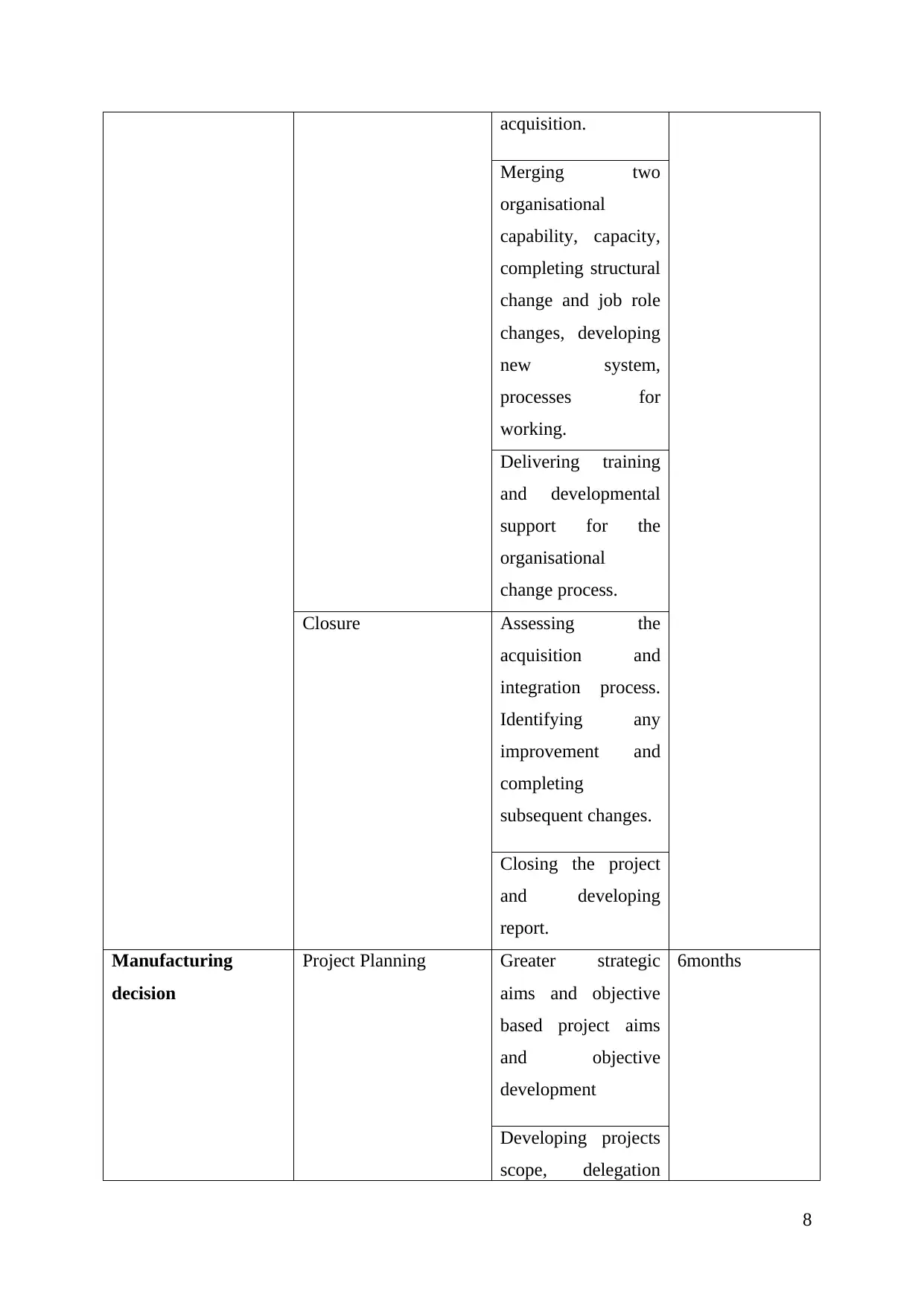
acquisition.
Merging two
organisational
capability, capacity,
completing structural
change and job role
changes, developing
new system,
processes for
working.
Delivering training
and developmental
support for the
organisational
change process.
Closure Assessing the
acquisition and
integration process.
Identifying any
improvement and
completing
subsequent changes.
Closing the project
and developing
report.
Manufacturing
decision
Project Planning Greater strategic
aims and objective
based project aims
and objective
development
6months
Developing projects
scope, delegation
8
Merging two
organisational
capability, capacity,
completing structural
change and job role
changes, developing
new system,
processes for
working.
Delivering training
and developmental
support for the
organisational
change process.
Closure Assessing the
acquisition and
integration process.
Identifying any
improvement and
completing
subsequent changes.
Closing the project
and developing
report.
Manufacturing
decision
Project Planning Greater strategic
aims and objective
based project aims
and objective
development
6months
Developing projects
scope, delegation
8
plan of roles and
responsibilities,
resource plan, risk
management plan ,
stakeholder
communication
process, product
budget, time plan
Developing
manufacturing plan,
resource need
assessment, financial
and quality
perspective analysis
and recommendation
development
Approve the best
manufacturing
option for long term
Project research Business internal
analysis through
SWOT model,
greater value chain
and supply chain
assessment, strategic
assessment to
evaluate the in house
and outsourcing
strategy in a
comparative manner
External macro
environmental
analysis
9
responsibilities,
resource plan, risk
management plan ,
stakeholder
communication
process, product
budget, time plan
Developing
manufacturing plan,
resource need
assessment, financial
and quality
perspective analysis
and recommendation
development
Approve the best
manufacturing
option for long term
Project research Business internal
analysis through
SWOT model,
greater value chain
and supply chain
assessment, strategic
assessment to
evaluate the in house
and outsourcing
strategy in a
comparative manner
External macro
environmental
analysis
9
⊘ This is a preview!⊘
Do you want full access?
Subscribe today to unlock all pages.
Trusted by 1+ million students worldwide
Report submission
along with
suggestion about the
choice
Final approval of
best low cost and
better quality based
outsourcing choice
Project plan execution Outsourcing supplier
selection and
contract
development
Readjusting greater
supply chain and
allocating financial
resource
Continuously tasting
product for quality
Closure Fixed time period or
order volume based
payment of supplier
Project report
development
Any further
improvement is done
New Software Product
Development
New product
development idea
selection
Conducting market
research, consumer
research, technology
research,
organisational
hardware product
research
12 months
10
along with
suggestion about the
choice
Final approval of
best low cost and
better quality based
outsourcing choice
Project plan execution Outsourcing supplier
selection and
contract
development
Readjusting greater
supply chain and
allocating financial
resource
Continuously tasting
product for quality
Closure Fixed time period or
order volume based
payment of supplier
Project report
development
Any further
improvement is done
New Software Product
Development
New product
development idea
selection
Conducting market
research, consumer
research, technology
research,
organisational
hardware product
research
12 months
10
Paraphrase This Document
Need a fresh take? Get an instant paraphrase of this document with our AI Paraphraser
Developing different
bespoke software
development idea
with most attractive
interface design
Selecting the best
idea for prototype
and initial
architecture
development
Taking final
approval from the
top management
Project planning as per
the agile project
management
Greater strategic
aims and objective
based project aims
and objective
development
Developing projects
scope, resource plan,
risk management
plan , stakeholder
communication
process, product
budget, time plan
Plan implementation
strategy, monitoring
and control
mechanism,
Developing new
product
New software
development.
Designing interface
11
bespoke software
development idea
with most attractive
interface design
Selecting the best
idea for prototype
and initial
architecture
development
Taking final
approval from the
top management
Project planning as per
the agile project
management
Greater strategic
aims and objective
based project aims
and objective
development
Developing projects
scope, resource plan,
risk management
plan , stakeholder
communication
process, product
budget, time plan
Plan implementation
strategy, monitoring
and control
mechanism,
Developing new
product
New software
development.
Designing interface
11
Different feature
development
AI tools
development
Coding
Taking feedback of
the demo product
Further improvement
on the existing
architecture
Commercialisation Handing over the
product for
installation into the
hardware
Completing projects
report
Improving some of
the feedbacks after
commercialisation
through firmware
development
Centre of excellence
development
Project Planning Developing the
initial idea,
requirements and
budget for the centre
for excellence.
Greater strategic
aims and objective
based project aims
and objective
10 months
12
development
AI tools
development
Coding
Taking feedback of
the demo product
Further improvement
on the existing
architecture
Commercialisation Handing over the
product for
installation into the
hardware
Completing projects
report
Improving some of
the feedbacks after
commercialisation
through firmware
development
Centre of excellence
development
Project Planning Developing the
initial idea,
requirements and
budget for the centre
for excellence.
Greater strategic
aims and objective
based project aims
and objective
10 months
12
⊘ This is a preview!⊘
Do you want full access?
Subscribe today to unlock all pages.
Trusted by 1+ million students worldwide

1 out of 25


Related Documents


Your All-in-One AI-Powered Toolkit for Academic Success.
+13062052269
info@desklib.com
Available 24*7 on WhatsApp / Email
![[object Object]](/_next/static/media/star-bottom.7253800d.svg)
Unlock your academic potential
Copyright © 2020–2026 A2Z Services. All Rights Reserved. Developed and managed by ZUCOL.