La Trobe University PHSA: Mental Health Awareness Campaign Grant
VerifiedAdded on 2023/06/11
|12
|2784
|242
Report
AI Summary
This document presents a grant application for funding to support a mental health awareness campaign, titled 'By Students for Students,' organized by the Public Health Students’ Association (PHSA) at La Trobe University. The campaign aims to assist first-year students experiencing mental health challenges, focusing on diagnostic categories like bipolar disorder, personality disorder, and schizophrenia. Utilizing a strength-based, salutogenic approach, the program incorporates various activities such as thought recording through cognitive behavioral therapy, physiotherapy with emotional faces, and mood trackers. The campaign seeks to provide mental health support, stress reduction strategies, and improved communication with parents, ultimately fostering self-confidence and resilience among students. The requested funding of $20,000 will enable the PHSA to implement this vital program, addressing the increasing concerns over student mental health and adjustment issues, particularly among international students.
GRANT APPLICATION: MENTAL HEALTH AWARENESS
CAMPAIGN
By Students for Students
CAMPAIGN
By Students for Students

Paraphrase This Document
Need a fresh take? Get an instant paraphrase of this document with our AI Paraphraser
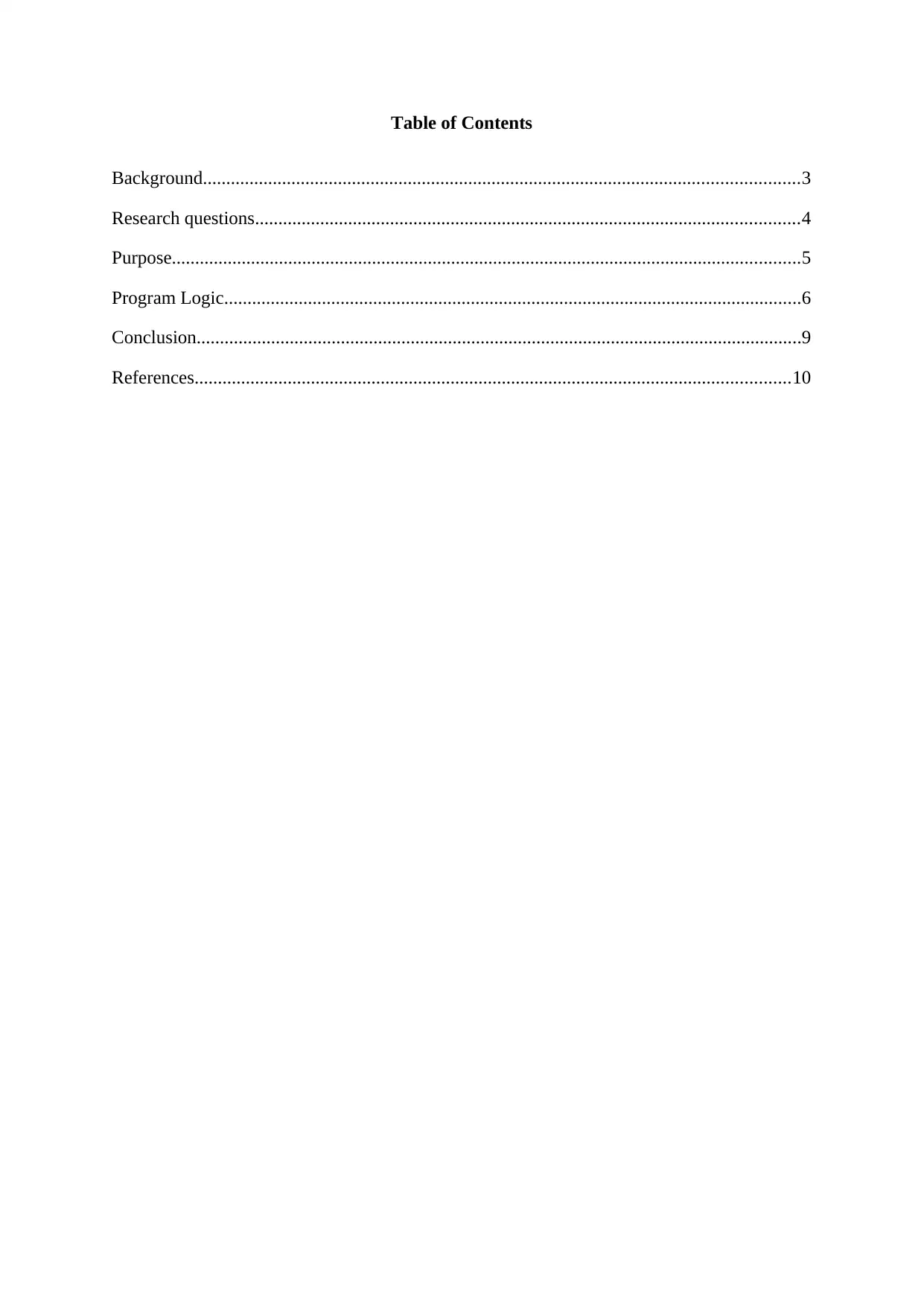
Table of Contents
Background................................................................................................................................3
Research questions.....................................................................................................................4
Purpose.......................................................................................................................................5
Program Logic............................................................................................................................6
Conclusion..................................................................................................................................9
References................................................................................................................................10
Background................................................................................................................................3
Research questions.....................................................................................................................4
Purpose.......................................................................................................................................5
Program Logic............................................................................................................................6
Conclusion..................................................................................................................................9
References................................................................................................................................10
Background
Mental health issues have recently become more prominent as a public concern and
many mental health campaigns have been launched to address these problems. This
assignment is a grant application for funding to enable the Public Health Students’
Association (PHSA) to organize a mental health awareness campaign for first year students at
the Melbourne/Bundoora campus of La Trobe University. The PHSA already runs many
events to assist new students but the proposed program, titled ‘By Students for Students’, is
specifically designed to help first year students who have problems with mental disorders.
$20,000 is the funding required to organize the program which is a mental health awareness
camp using a strength-based approach.
An increasing concern over the mental health and adjustment issues of students in
Australia has been reflected in many media reports. As Australia is the hosting country for lot
of students an age favorable for mental illness, this concern becomes more important.
Studying in foreign countries is associated with the difficulties of relocating and change in
the study environment. All these difficulties push the boundaries of new students beyond
their limits. In many cases this push to the students leads them to the mental illness or
depression. Students being in a new and unfamiliar culture may experience anxiety,
disorientation, bewilderment, confusion, suspicion, perplexity and sometimes they feel an
intense desire of being somewhere else. In this context they need to adjust with the
practicality that they are the part of minority sector in the country and they have to face
difficulties associated with the fact that they are in a completely different culture or living in
a different country (Forbes-Mewett and Nyland, 2008).
When it comes to the adjustments made for such issues major adjustment involves the
negotiation in the existing health care system of the hosting country. To identify such
Mental health issues have recently become more prominent as a public concern and
many mental health campaigns have been launched to address these problems. This
assignment is a grant application for funding to enable the Public Health Students’
Association (PHSA) to organize a mental health awareness campaign for first year students at
the Melbourne/Bundoora campus of La Trobe University. The PHSA already runs many
events to assist new students but the proposed program, titled ‘By Students for Students’, is
specifically designed to help first year students who have problems with mental disorders.
$20,000 is the funding required to organize the program which is a mental health awareness
camp using a strength-based approach.
An increasing concern over the mental health and adjustment issues of students in
Australia has been reflected in many media reports. As Australia is the hosting country for lot
of students an age favorable for mental illness, this concern becomes more important.
Studying in foreign countries is associated with the difficulties of relocating and change in
the study environment. All these difficulties push the boundaries of new students beyond
their limits. In many cases this push to the students leads them to the mental illness or
depression. Students being in a new and unfamiliar culture may experience anxiety,
disorientation, bewilderment, confusion, suspicion, perplexity and sometimes they feel an
intense desire of being somewhere else. In this context they need to adjust with the
practicality that they are the part of minority sector in the country and they have to face
difficulties associated with the fact that they are in a completely different culture or living in
a different country (Forbes-Mewett and Nyland, 2008).
When it comes to the adjustments made for such issues major adjustment involves the
negotiation in the existing health care system of the hosting country. To identify such
⊘ This is a preview!⊘
Do you want full access?
Subscribe today to unlock all pages.

Trusted by 1+ million students worldwide
adjustments Australian study involves conducting different interview with the parents of
international students that express their concern for the provision of health care facilities for
their children as well as their health care insurance. Some studies shows that some of the
students do not have a complete health security in new country and some of them are not
understood well about the health insurance policies entails with their study programs. Along
all these it has been observed that the students moving to a new country for their studies have
a lack of knowledge and preparedness during their pre-departure, arrival and even at the
orientation stage (Forbes-Mewett, 2011).
Issues related to mental health are part of the responsibilities undertaken by members
of the Public Health Students’ Association. The planned program is targeted at vulnerable
new students at the university. It is focused on some diagnostic categories like bipolar
disorder, personality disorder and schizophrenia. The symptoms and pathologies of affected
students are based on the criteria of diagnostic diseases for mental disorders. There are many
types of illnesses which are considered chronic that cause changes in the brain and some
deficits with the processing of information. There are some medical models which influence
the mental health of a person (Bakker & Van 2018). Salutogenesis is one such approach.
According to Ruohomäki et al. (2015), it is an approach to mental health that concentrates on
factors that support mental health and well-being rather than on factors that cause the disease
(pathogenesis). This type of approach focusses on the individual’s attributes that promote
health instead of the symptoms and pathologies that induce illness.
Research questions
international students that express their concern for the provision of health care facilities for
their children as well as their health care insurance. Some studies shows that some of the
students do not have a complete health security in new country and some of them are not
understood well about the health insurance policies entails with their study programs. Along
all these it has been observed that the students moving to a new country for their studies have
a lack of knowledge and preparedness during their pre-departure, arrival and even at the
orientation stage (Forbes-Mewett, 2011).
Issues related to mental health are part of the responsibilities undertaken by members
of the Public Health Students’ Association. The planned program is targeted at vulnerable
new students at the university. It is focused on some diagnostic categories like bipolar
disorder, personality disorder and schizophrenia. The symptoms and pathologies of affected
students are based on the criteria of diagnostic diseases for mental disorders. There are many
types of illnesses which are considered chronic that cause changes in the brain and some
deficits with the processing of information. There are some medical models which influence
the mental health of a person (Bakker & Van 2018). Salutogenesis is one such approach.
According to Ruohomäki et al. (2015), it is an approach to mental health that concentrates on
factors that support mental health and well-being rather than on factors that cause the disease
(pathogenesis). This type of approach focusses on the individual’s attributes that promote
health instead of the symptoms and pathologies that induce illness.
Research questions
Paraphrase This Document
Need a fresh take? Get an instant paraphrase of this document with our AI Paraphraser
Questions that have been considered by the camp organizers are as follows
What are the locations in which the campaign can be conducted?
Which theory or model is important to follow in conducting this campaign?
Which group of vulnerable students is to be targeted by the campaign
program.
The association has decided that the most suitable approach in devising a program for
students with mental health issues is the salutogenic approach.
Purpose
The main role of this campaign is to provide mental health support to the students.
The Public Health Students’ Association is a group of students who are interested in helping
other students. They can easily relate to the mentality of other students and can understand
the problems of their peers. The campaign provides mental support for students with mental
problems by providing strategies to relax, stress less and sometimes help to reduce depression
(Wang 2018). They can communicate with those students who need help in their lives. This
program is necessary for student wellbeing. Mental health issues are serious and the staff
who will be running the program will need suitable training. Campaigns of this kind can
provide many opportunities for students to gain the skills that will enable them to improve
their behavioural, mental and emotional problems. The main purpose of this campaign is to
train the students to acknowledge their mental problems and observe them without
judgement. This campaign also takes into consideration ways of facilitating communication
with the parents of the students with mental illness.
What are the locations in which the campaign can be conducted?
Which theory or model is important to follow in conducting this campaign?
Which group of vulnerable students is to be targeted by the campaign
program.
The association has decided that the most suitable approach in devising a program for
students with mental health issues is the salutogenic approach.
Purpose
The main role of this campaign is to provide mental health support to the students.
The Public Health Students’ Association is a group of students who are interested in helping
other students. They can easily relate to the mentality of other students and can understand
the problems of their peers. The campaign provides mental support for students with mental
problems by providing strategies to relax, stress less and sometimes help to reduce depression
(Wang 2018). They can communicate with those students who need help in their lives. This
program is necessary for student wellbeing. Mental health issues are serious and the staff
who will be running the program will need suitable training. Campaigns of this kind can
provide many opportunities for students to gain the skills that will enable them to improve
their behavioural, mental and emotional problems. The main purpose of this campaign is to
train the students to acknowledge their mental problems and observe them without
judgement. This campaign also takes into consideration ways of facilitating communication
with the parents of the students with mental illness.
Program Logic
According to Gaebel (2016), the phase of developing a framework for a campaign
includes the process of designing a program matrix. Gaebel states that a campaign manager is
necessary for plan implementation. Lindstom (2018) states that the salutogenis orientation
approach is the departure of the paradigmatic axiom which is then shared by downstream and
upstream efforts and he discusses the fact that this is used in highlighting varied factors that
support human pathogenesis. The list of activities for the mental health campaign includes
the process of thought recording through cognitive behavioural therapy. Kaur states that this
tool is used in the process of identifying the negative thoughts of patients or clients that leads
to the NTAs of negative automatic thoughts as well as negative emotions. This tool is
regarded as the fundamental physiological cognitive tool that helps to identify negative
thoughts that are linked with different thoughts and emotions. Furthermore, it is the opinion
of Pilgrim (2017) that these negative thoughts and emotions are used in the process of
examining the selected NTAs of individuals. This tool helps the process of logging the
emotions of an individual that further helps in the process of backing up the automatic
thoughts of the individual.
Roy (2017) provides a list of logical programs which includes the tool of
physiotherapy with the help of emotional faces. This helps by depicting several emotions on
individual faces. He later explains that this help helps to understand the variations of mental
states in an individual. The salutogenic orientation approach includes six models of universal
emotions – disgust, happiness, fear, anger, sadness and surprise. Clement et al. (2015)
comments that this tool is regarded as one of the best, as it directly links the outcomes of
therapy with the mental state of the individual.
According to Gaebel (2016), the phase of developing a framework for a campaign
includes the process of designing a program matrix. Gaebel states that a campaign manager is
necessary for plan implementation. Lindstom (2018) states that the salutogenis orientation
approach is the departure of the paradigmatic axiom which is then shared by downstream and
upstream efforts and he discusses the fact that this is used in highlighting varied factors that
support human pathogenesis. The list of activities for the mental health campaign includes
the process of thought recording through cognitive behavioural therapy. Kaur states that this
tool is used in the process of identifying the negative thoughts of patients or clients that leads
to the NTAs of negative automatic thoughts as well as negative emotions. This tool is
regarded as the fundamental physiological cognitive tool that helps to identify negative
thoughts that are linked with different thoughts and emotions. Furthermore, it is the opinion
of Pilgrim (2017) that these negative thoughts and emotions are used in the process of
examining the selected NTAs of individuals. This tool helps the process of logging the
emotions of an individual that further helps in the process of backing up the automatic
thoughts of the individual.
Roy (2017) provides a list of logical programs which includes the tool of
physiotherapy with the help of emotional faces. This helps by depicting several emotions on
individual faces. He later explains that this help helps to understand the variations of mental
states in an individual. The salutogenic orientation approach includes six models of universal
emotions – disgust, happiness, fear, anger, sadness and surprise. Clement et al. (2015)
comments that this tool is regarded as one of the best, as it directly links the outcomes of
therapy with the mental state of the individual.
⊘ This is a preview!⊘
Do you want full access?
Subscribe today to unlock all pages.
Trusted by 1+ million students worldwide
In support of this approach, Ruohomaki, Lahtinen, & Reijula (2015) have included
the factor of a mood tracker as a process of mitigating mental health issues. The tool is used
to record the mood alteration of an individual. It considers the timing of mood changes.
Bakker & Van (2018) state that this is a powerful and easy tool that helps to track the
emotions and triggering situations in an individual. Similarly, Swan et al. (2018) added the
concept of mental health relapse, which can have serious consequences for the individual. He
explains that through the process of identifying a mental health relapse, there is an
understanding of the differences in emotional responses in good times and setback times. A
relapse, according to Taylor, Leslie & Boddie (2017), can lead to the discontinuation of
meditation techniques, relationship breakdowns, alcohol issues and misuse of drugs.
Friedrich, Hoffmann &Bauer (2015), recommend the Stop Stigma Survey, the
purpose of which is to eradicate society pressures on mental health issues and leads to the
identification of what and how attitudes need to change.
Inputs
A checklist the mental health of students needs to be proposed by the delegates.
According to Swan et al. (2015) there is increasing community and government recognition
of mental health as a serious social issue. The Public Health Students’ Association (PHSA) of
La Trobe University has organized a two-hour campaign for helping address this issue in a
tertiary education context. There are many other campaigns organized by the PHSA like
‘Stressless Week and ‘Feeling Good’ which help promote good student mental health.
The Public Health Students’ Association (PHSA) is normally a group of students and
is open for all. They organize social, fun, exciting and creative programs which promote
student health and well-being. According to Taylor et al (2015), there are many reasons for
students being vulnerable to mental health issues. These include the pressures of assessed
the factor of a mood tracker as a process of mitigating mental health issues. The tool is used
to record the mood alteration of an individual. It considers the timing of mood changes.
Bakker & Van (2018) state that this is a powerful and easy tool that helps to track the
emotions and triggering situations in an individual. Similarly, Swan et al. (2018) added the
concept of mental health relapse, which can have serious consequences for the individual. He
explains that through the process of identifying a mental health relapse, there is an
understanding of the differences in emotional responses in good times and setback times. A
relapse, according to Taylor, Leslie & Boddie (2017), can lead to the discontinuation of
meditation techniques, relationship breakdowns, alcohol issues and misuse of drugs.
Friedrich, Hoffmann &Bauer (2015), recommend the Stop Stigma Survey, the
purpose of which is to eradicate society pressures on mental health issues and leads to the
identification of what and how attitudes need to change.
Inputs
A checklist the mental health of students needs to be proposed by the delegates.
According to Swan et al. (2015) there is increasing community and government recognition
of mental health as a serious social issue. The Public Health Students’ Association (PHSA) of
La Trobe University has organized a two-hour campaign for helping address this issue in a
tertiary education context. There are many other campaigns organized by the PHSA like
‘Stressless Week and ‘Feeling Good’ which help promote good student mental health.
The Public Health Students’ Association (PHSA) is normally a group of students and
is open for all. They organize social, fun, exciting and creative programs which promote
student health and well-being. According to Taylor et al (2015), there are many reasons for
students being vulnerable to mental health issues. These include the pressures of assessed
Paraphrase This Document
Need a fresh take? Get an instant paraphrase of this document with our AI Paraphraser
performance, the uncertainty about career and life pathways, and the necessity of managing
practical life matters like accommodation and finances.
Outputs
There are always difficulties associated with discussing one’s mental health problems
with others. However, there are some creative activities that can help resolve this problem
and raise awareness and understanding for these issues (Friedrich et al. 2015). This type of
campaign helps students to learn about them in an active way eg mindfulness exercises and
the Stop Stigma Survey. Mindfulness exercises help calm the mind and body. According to
Robinson et al. (2015), this helps young people to value the process of stilling the mind and
also provides an easy way of moving into more health related issues.
Anticipated Outcomes
Mindfulness activities help students to think in a broad way and helps mitigate
problems related to stress. There are several lesson plans that can be used to introduce
students to mental health problems. According to Salter (2016), they can teach students that
mental health problems are like physical issues and they don’t need to panic. Useful mental
practices can be used as a way of resolving their issues. The use of quizzes and tests can
solidify learning. Assignments with a mental health focus can also be used to enable students
to gain even deeper understandings of issues. (Kayrouz et al. 2015). A quiz about suicide is
suitable for tertiary students. It has multiple choice answers and is more specific than the Stop
Stigma Survey (Clement et al. 2015), which is a good way for students to assess their current
knowledge of their own state of health and also helps them to learn about some other
normally uncomfortable subjects.
practical life matters like accommodation and finances.
Outputs
There are always difficulties associated with discussing one’s mental health problems
with others. However, there are some creative activities that can help resolve this problem
and raise awareness and understanding for these issues (Friedrich et al. 2015). This type of
campaign helps students to learn about them in an active way eg mindfulness exercises and
the Stop Stigma Survey. Mindfulness exercises help calm the mind and body. According to
Robinson et al. (2015), this helps young people to value the process of stilling the mind and
also provides an easy way of moving into more health related issues.
Anticipated Outcomes
Mindfulness activities help students to think in a broad way and helps mitigate
problems related to stress. There are several lesson plans that can be used to introduce
students to mental health problems. According to Salter (2016), they can teach students that
mental health problems are like physical issues and they don’t need to panic. Useful mental
practices can be used as a way of resolving their issues. The use of quizzes and tests can
solidify learning. Assignments with a mental health focus can also be used to enable students
to gain even deeper understandings of issues. (Kayrouz et al. 2015). A quiz about suicide is
suitable for tertiary students. It has multiple choice answers and is more specific than the Stop
Stigma Survey (Clement et al. 2015), which is a good way for students to assess their current
knowledge of their own state of health and also helps them to learn about some other
normally uncomfortable subjects.
Conclusion
The development and implementation of the ‘By Student for Students’ camp program
for first year students experiencing mental health issues is an important addition to student
activities. It will help students to develop self-confidence and resilience strategies that will
equip them to meet the many challenges ahead in their personal and academic lives.
The development and implementation of the ‘By Student for Students’ camp program
for first year students experiencing mental health issues is an important addition to student
activities. It will help students to develop self-confidence and resilience strategies that will
equip them to meet the many challenges ahead in their personal and academic lives.
⊘ This is a preview!⊘
Do you want full access?
Subscribe today to unlock all pages.
Trusted by 1+ million students worldwide
References
Books
Gaebel, W. (2016). The Stigma of Mental Illness-End of the Story?. W. Rössler, & N.
Sartorius (Eds.). Berlin: Springer.
Pilgrim, D. (2017). Key concepts in mental health. Newcastle upon Tyne: Sage.
Journals
Bakker, A. B., & van Woerkom, M. (2018). Strengths use in organizations: A positive
approach of occupational health. Canadian Psychology/Psychologie
canadienne, 59(1), 38.
Clement, S., Schauman, O., Graham, T., Maggioni, F., Evans-Lacko, S., Bezborodovs, N., ...
& Thornicroft, G. (2015). What is the impact of mental health-related stigma on help-
seeking? A systematic review of quantitative and qualitative studies. Psychological
medicine, 45(1), 11-27.
Forbes-Mewett, H. (2011) ‘International Education Preparation: Minimising Risk and
Furthering Security’. International Journal of Contemporary Sociology 48: 61-92.
Forbes-Mewett, H., C. Nyland and S. Shao (2010) ‘International Student Security: A View
from Beijing’, International Studies in Sociology of Education 20: 355-373.
Friedrich, V., Hoffmann, S., & Bauer, G. (2015). Strategies of active dissemination of
workplace health promotion. International Journal of Workplace Health
Management, 8(1), 3-14.
Books
Gaebel, W. (2016). The Stigma of Mental Illness-End of the Story?. W. Rössler, & N.
Sartorius (Eds.). Berlin: Springer.
Pilgrim, D. (2017). Key concepts in mental health. Newcastle upon Tyne: Sage.
Journals
Bakker, A. B., & van Woerkom, M. (2018). Strengths use in organizations: A positive
approach of occupational health. Canadian Psychology/Psychologie
canadienne, 59(1), 38.
Clement, S., Schauman, O., Graham, T., Maggioni, F., Evans-Lacko, S., Bezborodovs, N., ...
& Thornicroft, G. (2015). What is the impact of mental health-related stigma on help-
seeking? A systematic review of quantitative and qualitative studies. Psychological
medicine, 45(1), 11-27.
Forbes-Mewett, H. (2011) ‘International Education Preparation: Minimising Risk and
Furthering Security’. International Journal of Contemporary Sociology 48: 61-92.
Forbes-Mewett, H., C. Nyland and S. Shao (2010) ‘International Student Security: A View
from Beijing’, International Studies in Sociology of Education 20: 355-373.
Friedrich, V., Hoffmann, S., & Bauer, G. (2015). Strategies of active dissemination of
workplace health promotion. International Journal of Workplace Health
Management, 8(1), 3-14.
Paraphrase This Document
Need a fresh take? Get an instant paraphrase of this document with our AI Paraphraser
Kayrouz, R., Dear, B. F., Johnston, L., Keyrouz, L., Nehme, E., Laube, R., & Titov, N.
(2015). Intergenerational and cross-cultural differences in emotional wellbeing,
mental health service utilisation, treatment-seeking preferences and acceptability of
psychological treatments for Arab Australians. International journal of social
psychiatry, 61(5), 484-491.
Robinson, M., Raine, G., Robertson, S., Steen, M., & Day, R. (2015). Peer support as a
resilience building practice with men. Journal of Public Mental Health, 14(4), 196-
204.
Ruohomäki, V., Lahtinen, M., & Reijula, K. (2015). Salutogenic and user-centred approach
for workplace design. Intelligent Buildings International, 7(4), 184-197.
Salter, M. (2016). Men's Rights or Men's Needs? Anti-Feminism in Australian Men's Health
Promotion. Canadian Journal of Women and the Law, 28(1), 69-90.
Swan, E., Bouwman, L., Hiddink, G. J., Aarts, N., & Koelen, M. (2015). Applying the
salutogenic framework to nutrition research and practice. American Journal of Health
Promotion, 30(2), 71-73.
Taylor, A., Leslie, S., & Boddie, K. (2017, July). Promoting mental wellbeing in young
people aged 12--18 years: opportunities for design. In Proceedings of the 31st British
Computer Society Human Computer Interaction Conference(p. 33). BCS Learning &
Development Ltd..
Wang, R., Liaukonyte, J., & Kaiser, H. M. (2018). Does Advertising Content Matter?
Impacts of Healthy Eating and Anti-Obesity Advertising on Willingness to Pay by
Consumer Body Mass Index. Agricultural and Resource Economics Review, 47(1), 1-
31.
(2015). Intergenerational and cross-cultural differences in emotional wellbeing,
mental health service utilisation, treatment-seeking preferences and acceptability of
psychological treatments for Arab Australians. International journal of social
psychiatry, 61(5), 484-491.
Robinson, M., Raine, G., Robertson, S., Steen, M., & Day, R. (2015). Peer support as a
resilience building practice with men. Journal of Public Mental Health, 14(4), 196-
204.
Ruohomäki, V., Lahtinen, M., & Reijula, K. (2015). Salutogenic and user-centred approach
for workplace design. Intelligent Buildings International, 7(4), 184-197.
Salter, M. (2016). Men's Rights or Men's Needs? Anti-Feminism in Australian Men's Health
Promotion. Canadian Journal of Women and the Law, 28(1), 69-90.
Swan, E., Bouwman, L., Hiddink, G. J., Aarts, N., & Koelen, M. (2015). Applying the
salutogenic framework to nutrition research and practice. American Journal of Health
Promotion, 30(2), 71-73.
Taylor, A., Leslie, S., & Boddie, K. (2017, July). Promoting mental wellbeing in young
people aged 12--18 years: opportunities for design. In Proceedings of the 31st British
Computer Society Human Computer Interaction Conference(p. 33). BCS Learning &
Development Ltd..
Wang, R., Liaukonyte, J., & Kaiser, H. M. (2018). Does Advertising Content Matter?
Impacts of Healthy Eating and Anti-Obesity Advertising on Willingness to Pay by
Consumer Body Mass Index. Agricultural and Resource Economics Review, 47(1), 1-
31.
Article
Kaur, M., Jindal, R., Dua, R., Gautam, A., & Kaur, R. (2017). Salutogenesis: A new
approach toward oral health promotion. Contemporary clinical dentistry, [Online]
8(3), 387. Retrieved on: <https://www.ncbi.nlm.nih.gov/pmc/articles/PMC5643994/>
Lindström, B. (2018). Workshop salutogenesis and the future of health promotion and public
health. Scandinavian journal of public health, [Online] 46(20_suppl), 94-98.
Retrieved on: <http://journals.sagepub.com/doi/full/10.1177/1403494817743902>
Roy, P., Tremblay, G., Robertson, S., & Houle, J. (2017). “Do it all by myself”: A
salutogenic approach of masculine health practice among farming men coping with
stress. American journal of men's health, [Online] 11(5), 1536-1546. Retrieved on:
https://www.ncbi.nlm.nih.gov/pmc/articles/PMC5675206/
Kaur, M., Jindal, R., Dua, R., Gautam, A., & Kaur, R. (2017). Salutogenesis: A new
approach toward oral health promotion. Contemporary clinical dentistry, [Online]
8(3), 387. Retrieved on: <https://www.ncbi.nlm.nih.gov/pmc/articles/PMC5643994/>
Lindström, B. (2018). Workshop salutogenesis and the future of health promotion and public
health. Scandinavian journal of public health, [Online] 46(20_suppl), 94-98.
Retrieved on: <http://journals.sagepub.com/doi/full/10.1177/1403494817743902>
Roy, P., Tremblay, G., Robertson, S., & Houle, J. (2017). “Do it all by myself”: A
salutogenic approach of masculine health practice among farming men coping with
stress. American journal of men's health, [Online] 11(5), 1536-1546. Retrieved on:
https://www.ncbi.nlm.nih.gov/pmc/articles/PMC5675206/
⊘ This is a preview!⊘
Do you want full access?
Subscribe today to unlock all pages.
Trusted by 1+ million students worldwide

1 out of 12


Related Documents


Your All-in-One AI-Powered Toolkit for Academic Success.
+13062052269
info@desklib.com
Available 24*7 on WhatsApp / Email
![[object Object]](/_next/static/media/star-bottom.7253800d.svg)
Unlock your academic potential
Copyright © 2020–2026 A2Z Services. All Rights Reserved. Developed and managed by ZUCOL.