Analysis of Canadian Legal Cases: CRIM 1107, Summer 2019
VerifiedAdded on  2022/11/29
|6
|1303
|69
Report
AI Summary
This report provides a comprehensive analysis of two Supreme Court of Canada cases, focusing on the interpretation and application of Section 2(a) of the Canadian Charter of Rights and Freedoms, which pertains to fundamental freedoms. The analysis examines Hutterian Brethren of Wilson Colony v. Alberta and Markovitz v. Bruker, contrasting the court's approach to religious freedom and moral obligations. The report delves into the relationship between legal operations, religious beliefs, and basic human rights, highlighting how these factors are considered in judicial decision-making. It explores the impact of these cases on the legal framework, emphasizing the importance of maintaining basic rights of freedom and equality. The analysis also considers the historical context of these regulations and their impact on society. The report draws on legal precedents and academic literature to support its arguments, providing a thorough examination of the legal and social implications of the cases discussed.
Running head: Case study
Case study
Case study
Paraphrase This Document
Need a fresh take? Get an instant paraphrase of this document with our AI Paraphraser

2
Case study
Table of contents
Introduction......................................................................................................................................3
Case law...........................................................................................................................................3
Analysis...........................................................................................................................................3
Conclusion.......................................................................................................................................5
References:......................................................................................................................................6
Case study
Table of contents
Introduction......................................................................................................................................3
Case law...........................................................................................................................................3
Analysis...........................................................................................................................................3
Conclusion.......................................................................................................................................5
References:......................................................................................................................................6

3
Case study
Introduction
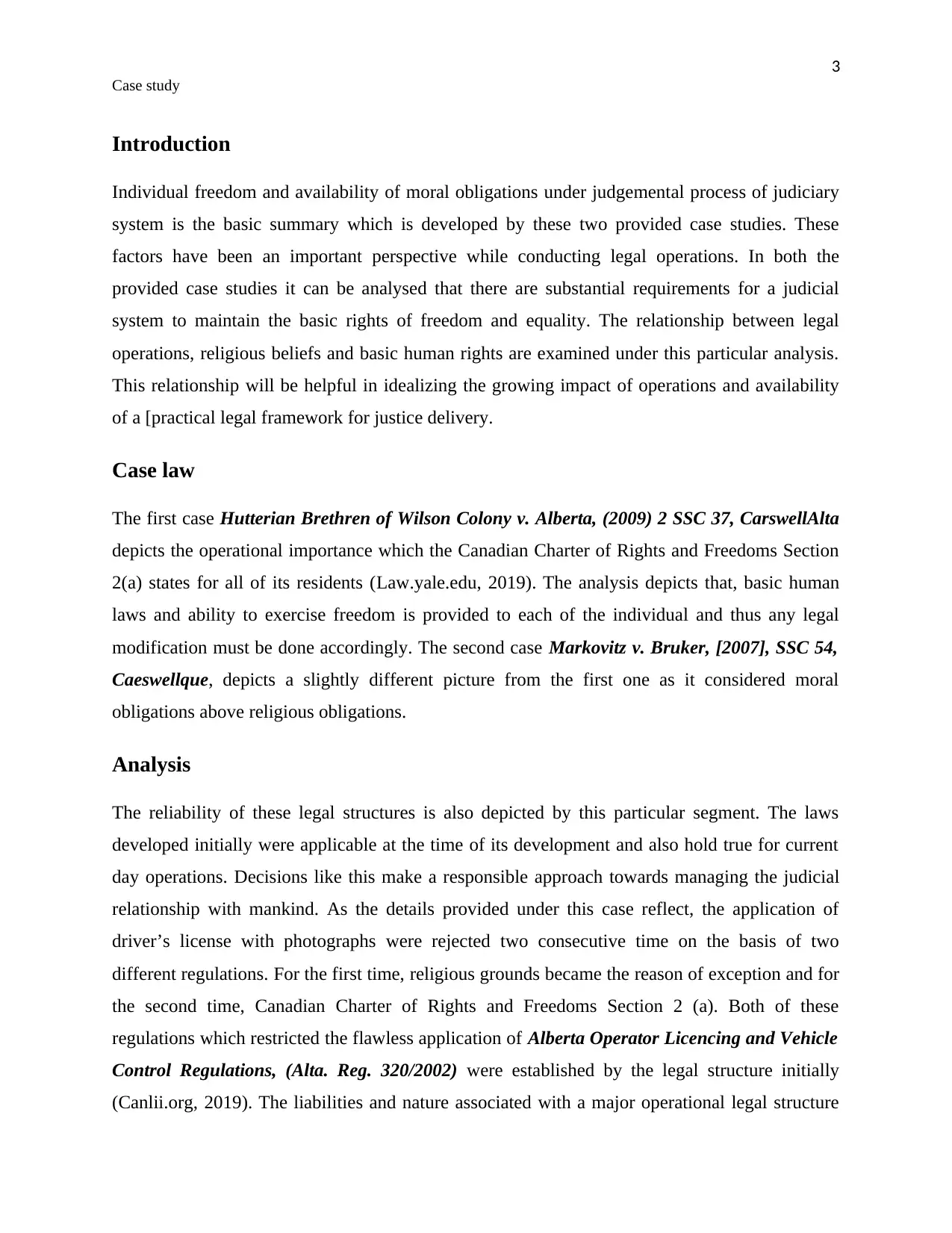
Individual freedom and availability of moral obligations under judgemental process of judiciary
system is the basic summary which is developed by these two provided case studies. These
factors have been an important perspective while conducting legal operations. In both the
provided case studies it can be analysed that there are substantial requirements for a judicial
system to maintain the basic rights of freedom and equality. The relationship between legal
operations, religious beliefs and basic human rights are examined under this particular analysis.
This relationship will be helpful in idealizing the growing impact of operations and availability
of a [practical legal framework for justice delivery.
Case law
The first case Hutterian Brethren of Wilson Colony v. Alberta, (2009) 2 SSC 37, CarswellAlta
depicts the operational importance which the Canadian Charter of Rights and Freedoms Section
2(a) states for all of its residents (Law.yale.edu, 2019). The analysis depicts that, basic human
laws and ability to exercise freedom is provided to each of the individual and thus any legal
modification must be done accordingly. The second case Markovitz v. Bruker, [2007], SSC 54,
Caeswellque, depicts a slightly different picture from the first one as it considered moral
obligations above religious obligations.
Analysis
The reliability of these legal structures is also depicted by this particular segment. The laws
developed initially were applicable at the time of its development and also hold true for current
day operations. Decisions like this make a responsible approach towards managing the judicial
relationship with mankind. As the details provided under this case reflect, the application of
driver’s license with photographs were rejected two consecutive time on the basis of two
different regulations. For the first time, religious grounds became the reason of exception and for
the second time, Canadian Charter of Rights and Freedoms Section 2 (a). Both of these
regulations which restricted the flawless application of Alberta Operator Licencing and Vehicle
Control Regulations, (Alta. Reg. 320/2002) were established by the legal structure initially
(Canlii.org, 2019). The liabilities and nature associated with a major operational legal structure
Case study
Introduction
Individual freedom and availability of moral obligations under judgemental process of judiciary
system is the basic summary which is developed by these two provided case studies. These
factors have been an important perspective while conducting legal operations. In both the
provided case studies it can be analysed that there are substantial requirements for a judicial
system to maintain the basic rights of freedom and equality. The relationship between legal
operations, religious beliefs and basic human rights are examined under this particular analysis.
This relationship will be helpful in idealizing the growing impact of operations and availability
of a [practical legal framework for justice delivery.
Case law
The first case Hutterian Brethren of Wilson Colony v. Alberta, (2009) 2 SSC 37, CarswellAlta
depicts the operational importance which the Canadian Charter of Rights and Freedoms Section
2(a) states for all of its residents (Law.yale.edu, 2019). The analysis depicts that, basic human
laws and ability to exercise freedom is provided to each of the individual and thus any legal
modification must be done accordingly. The second case Markovitz v. Bruker, [2007], SSC 54,
Caeswellque, depicts a slightly different picture from the first one as it considered moral
obligations above religious obligations.
Analysis
The reliability of these legal structures is also depicted by this particular segment. The laws
developed initially were applicable at the time of its development and also hold true for current
day operations. Decisions like this make a responsible approach towards managing the judicial
relationship with mankind. As the details provided under this case reflect, the application of
driver’s license with photographs were rejected two consecutive time on the basis of two
different regulations. For the first time, religious grounds became the reason of exception and for
the second time, Canadian Charter of Rights and Freedoms Section 2 (a). Both of these
regulations which restricted the flawless application of Alberta Operator Licencing and Vehicle
Control Regulations, (Alta. Reg. 320/2002) were established by the legal structure initially
(Canlii.org, 2019). The liabilities and nature associated with a major operational legal structure
⊘ This is a preview!⊘
Do you want full access?
Subscribe today to unlock all pages.

Trusted by 1+ million students worldwide

4
Case study
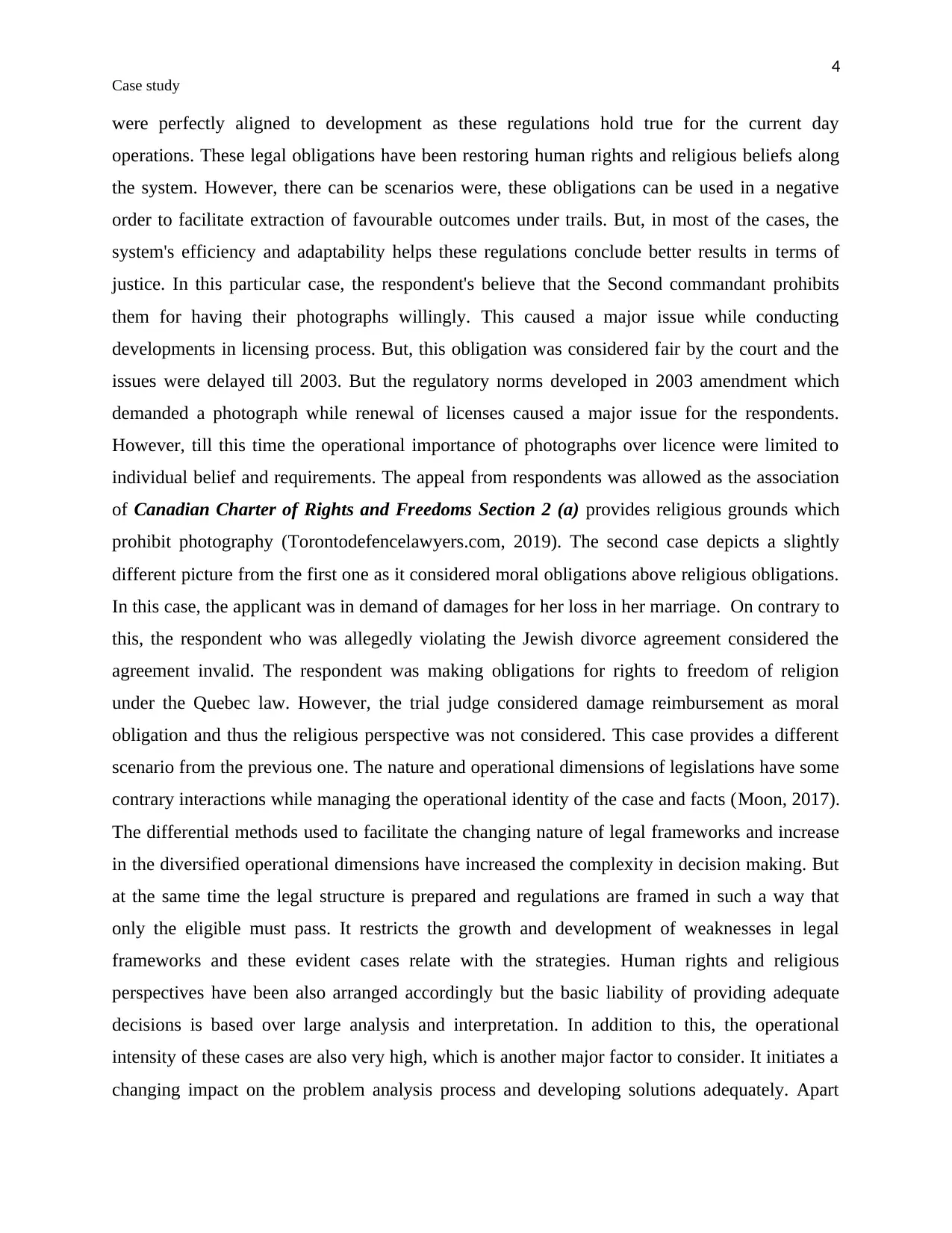
were perfectly aligned to development as these regulations hold true for the current day
operations. These legal obligations have been restoring human rights and religious beliefs along
the system. However, there can be scenarios were, these obligations can be used in a negative
order to facilitate extraction of favourable outcomes under trails. But, in most of the cases, the
system's efficiency and adaptability helps these regulations conclude better results in terms of
justice. In this particular case, the respondent's believe that the Second commandant prohibits
them for having their photographs willingly. This caused a major issue while conducting
developments in licensing process. But, this obligation was considered fair by the court and the
issues were delayed till 2003. But the regulatory norms developed in 2003 amendment which
demanded a photograph while renewal of licenses caused a major issue for the respondents.
However, till this time the operational importance of photographs over licence were limited to
individual belief and requirements. The appeal from respondents was allowed as the association
of Canadian Charter of Rights and Freedoms Section 2 (a) provides religious grounds which
prohibit photography (Torontodefencelawyers.com, 2019). The second case depicts a slightly
different picture from the first one as it considered moral obligations above religious obligations.
In this case, the applicant was in demand of damages for her loss in her marriage. On contrary to
this, the respondent who was allegedly violating the Jewish divorce agreement considered the
agreement invalid. The respondent was making obligations for rights to freedom of religion
under the Quebec law. However, the trial judge considered damage reimbursement as moral
obligation and thus the religious perspective was not considered. This case provides a different
scenario from the previous one. The nature and operational dimensions of legislations have some
contrary interactions while managing the operational identity of the case and facts (Moon, 2017).
The differential methods used to facilitate the changing nature of legal frameworks and increase
in the diversified operational dimensions have increased the complexity in decision making. But
at the same time the legal structure is prepared and regulations are framed in such a way that
only the eligible must pass. It restricts the growth and development of weaknesses in legal
frameworks and these evident cases relate with the strategies. Human rights and religious
perspectives have been also arranged accordingly but the basic liability of providing adequate
decisions is based over large analysis and interpretation. In addition to this, the operational
intensity of these cases are also very high, which is another major factor to consider. It initiates a
changing impact on the problem analysis process and developing solutions adequately. Apart
Case study
were perfectly aligned to development as these regulations hold true for the current day
operations. These legal obligations have been restoring human rights and religious beliefs along
the system. However, there can be scenarios were, these obligations can be used in a negative
order to facilitate extraction of favourable outcomes under trails. But, in most of the cases, the
system's efficiency and adaptability helps these regulations conclude better results in terms of
justice. In this particular case, the respondent's believe that the Second commandant prohibits
them for having their photographs willingly. This caused a major issue while conducting
developments in licensing process. But, this obligation was considered fair by the court and the
issues were delayed till 2003. But the regulatory norms developed in 2003 amendment which
demanded a photograph while renewal of licenses caused a major issue for the respondents.
However, till this time the operational importance of photographs over licence were limited to
individual belief and requirements. The appeal from respondents was allowed as the association
of Canadian Charter of Rights and Freedoms Section 2 (a) provides religious grounds which
prohibit photography (Torontodefencelawyers.com, 2019). The second case depicts a slightly
different picture from the first one as it considered moral obligations above religious obligations.
In this case, the applicant was in demand of damages for her loss in her marriage. On contrary to
this, the respondent who was allegedly violating the Jewish divorce agreement considered the
agreement invalid. The respondent was making obligations for rights to freedom of religion
under the Quebec law. However, the trial judge considered damage reimbursement as moral
obligation and thus the religious perspective was not considered. This case provides a different
scenario from the previous one. The nature and operational dimensions of legislations have some
contrary interactions while managing the operational identity of the case and facts (Moon, 2017).
The differential methods used to facilitate the changing nature of legal frameworks and increase
in the diversified operational dimensions have increased the complexity in decision making. But
at the same time the legal structure is prepared and regulations are framed in such a way that
only the eligible must pass. It restricts the growth and development of weaknesses in legal
frameworks and these evident cases relate with the strategies. Human rights and religious
perspectives have been also arranged accordingly but the basic liability of providing adequate
decisions is based over large analysis and interpretation. In addition to this, the operational
intensity of these cases are also very high, which is another major factor to consider. It initiates a
changing impact on the problem analysis process and developing solutions adequately. Apart
Paraphrase This Document
Need a fresh take? Get an instant paraphrase of this document with our AI Paraphraser

5
Case study
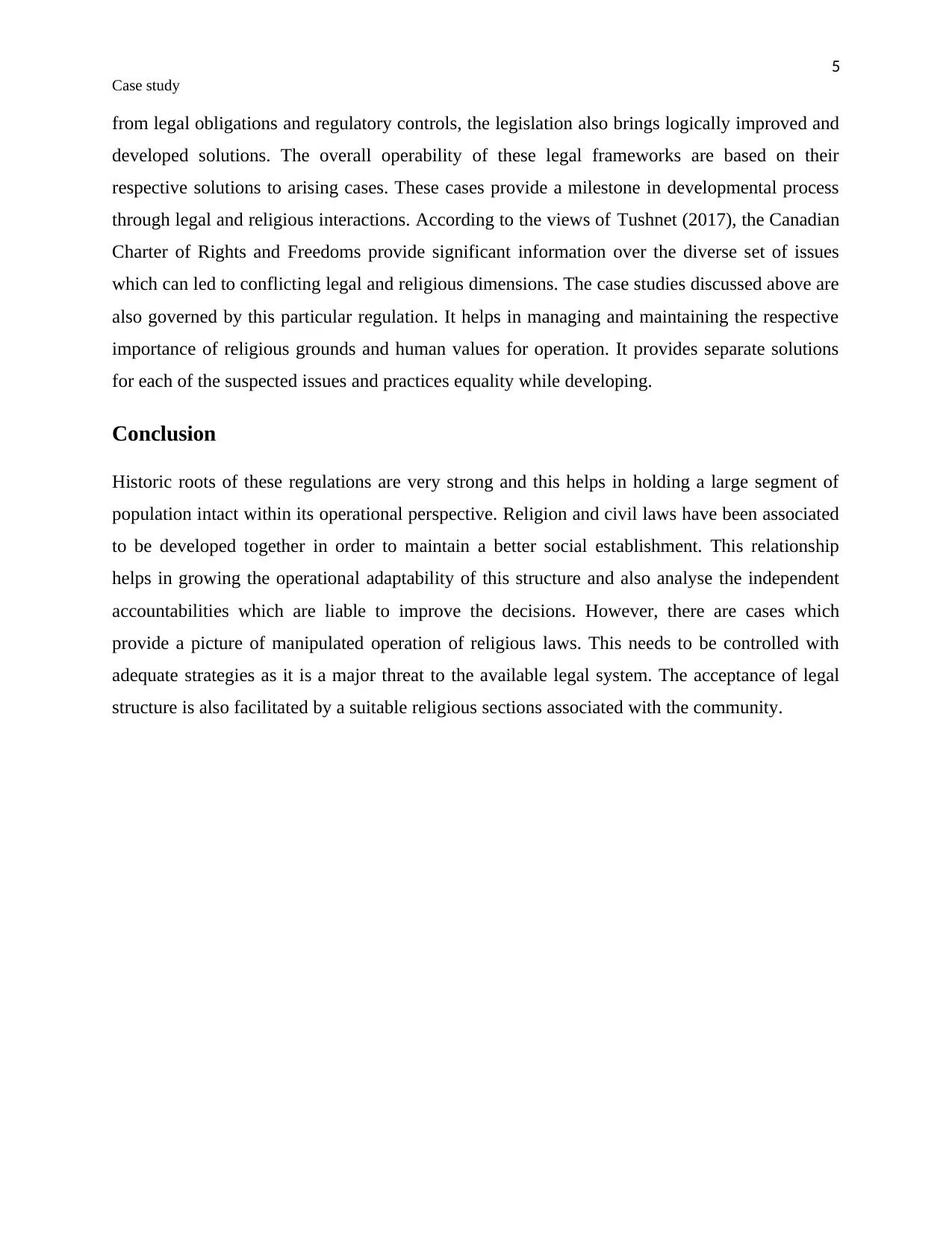
from legal obligations and regulatory controls, the legislation also brings logically improved and
developed solutions. The overall operability of these legal frameworks are based on their
respective solutions to arising cases. These cases provide a milestone in developmental process
through legal and religious interactions. According to the views of Tushnet (2017), the Canadian
Charter of Rights and Freedoms provide significant information over the diverse set of issues
which can led to conflicting legal and religious dimensions. The case studies discussed above are
also governed by this particular regulation. It helps in managing and maintaining the respective
importance of religious grounds and human values for operation. It provides separate solutions
for each of the suspected issues and practices equality while developing.
Conclusion
Historic roots of these regulations are very strong and this helps in holding a large segment of
population intact within its operational perspective. Religion and civil laws have been associated
to be developed together in order to maintain a better social establishment. This relationship
helps in growing the operational adaptability of this structure and also analyse the independent
accountabilities which are liable to improve the decisions. However, there are cases which
provide a picture of manipulated operation of religious laws. This needs to be controlled with
adequate strategies as it is a major threat to the available legal system. The acceptance of legal
structure is also facilitated by a suitable religious sections associated with the community.
Case study
from legal obligations and regulatory controls, the legislation also brings logically improved and
developed solutions. The overall operability of these legal frameworks are based on their
respective solutions to arising cases. These cases provide a milestone in developmental process
through legal and religious interactions. According to the views of Tushnet (2017), the Canadian
Charter of Rights and Freedoms provide significant information over the diverse set of issues
which can led to conflicting legal and religious dimensions. The case studies discussed above are
also governed by this particular regulation. It helps in managing and maintaining the respective
importance of religious grounds and human values for operation. It provides separate solutions
for each of the suspected issues and practices equality while developing.
Conclusion
Historic roots of these regulations are very strong and this helps in holding a large segment of
population intact within its operational perspective. Religion and civil laws have been associated
to be developed together in order to maintain a better social establishment. This relationship
helps in growing the operational adaptability of this structure and also analyse the independent
accountabilities which are liable to improve the decisions. However, there are cases which
provide a picture of manipulated operation of religious laws. This needs to be controlled with
adequate strategies as it is a major threat to the available legal system. The acceptance of legal
structure is also facilitated by a suitable religious sections associated with the community.

6
Case study
References:
Canlii.org (2019), Vehicle Equipment Regulation, Alta Reg 122/2009, Retrieved on 01 July 2019,
Retrieved from https://www.canlii.org/en/ab/laws/regu/alta-reg-122-2009/latest/alta-reg-
122-2009.html
Law.yale.edu (2019), Alberta v. Hutterian Brethren of Wilson Colony, 2009 SCC 37, [2009] 2
S.C.R. 567, Retrieved on 01 July 2019, Retrieved from
https://law.yale.edu/system/files/documents/pdf/Intellectual_Life/
Alberta_v._Hutterian_Brethen_of_Wilson_Colony.pdf
Moon, R. (2017). Limits on Constitutional Rights: The Marginal Role of Proportionality
Analysis. Israel Law Review, 50(1), 49-68.
Torontodefencelawyers.com (2019), Section 2 of The Canadian Charter of Rights and
Freedoms: The Fundamental Freedoms, Retrieved on 01 July 2019, Retrieved from
https://www.torontodefencelawyers.com/blog/general-category/section-2-canadian-
charter-rights-freedoms-fundamental-freedoms/
Tushnet, M. (2017). New forms of judicial review and the persistence of rights-and democracy-
based worries. In Bills of Rights (pp. 265-290). Routledge.
Case study
References:
Canlii.org (2019), Vehicle Equipment Regulation, Alta Reg 122/2009, Retrieved on 01 July 2019,
Retrieved from https://www.canlii.org/en/ab/laws/regu/alta-reg-122-2009/latest/alta-reg-
122-2009.html
Law.yale.edu (2019), Alberta v. Hutterian Brethren of Wilson Colony, 2009 SCC 37, [2009] 2
S.C.R. 567, Retrieved on 01 July 2019, Retrieved from
https://law.yale.edu/system/files/documents/pdf/Intellectual_Life/
Alberta_v._Hutterian_Brethen_of_Wilson_Colony.pdf
Moon, R. (2017). Limits on Constitutional Rights: The Marginal Role of Proportionality
Analysis. Israel Law Review, 50(1), 49-68.
Torontodefencelawyers.com (2019), Section 2 of The Canadian Charter of Rights and
Freedoms: The Fundamental Freedoms, Retrieved on 01 July 2019, Retrieved from
https://www.torontodefencelawyers.com/blog/general-category/section-2-canadian-
charter-rights-freedoms-fundamental-freedoms/
Tushnet, M. (2017). New forms of judicial review and the persistence of rights-and democracy-
based worries. In Bills of Rights (pp. 265-290). Routledge.
⊘ This is a preview!⊘
Do you want full access?
Subscribe today to unlock all pages.

Trusted by 1+ million students worldwide
1 out of 6
Related Documents
Your All-in-One AI-Powered Toolkit for Academic Success.
 +13062052269
info@desklib.com
Available 24*7 on WhatsApp / Email
Unlock your academic potential
Copyright © 2020–2025 A2Z Services. All Rights Reserved. Developed and managed by ZUCOL.