Developing Sustainable Strategies for Enhanced Resource Efficiency
VerifiedAdded on 2020/04/15
|14
|3511
|66
AI Summary
The research paper aims to explore a comprehensive range of strategies that organizations can adopt to enhance their sustainable practices and improve resource efficiency. It delves into how these strategies not only contribute to environmental conservation but also bolster organizational performance. The discussion includes evaluating the role of leadership in sustainability, analyzing feedback loops from stakeholders, and monitoring resource utilization through key performance indicators. Additionally, it examines the development and implementation of carbon management plans to reduce emissions. By integrating external and internal contexts along with business and human resources considerations, organizations can formulate effective sustainable strategies that align with their long-term goals. The paper also emphasizes the importance of regular demonstration of resource efficiency and minimal waste production as part of these sustainability initiatives.
Assignment on Business Research Methodology

Paraphrase This Document
Need a fresh take? Get an instant paraphrase of this document with our AI Paraphraser
Contents
Task 1:........................................................................................................................................2
Resource Identification Table:...............................................................................................2
Environmental Monitoring table:...........................................................................................3
Purchasing strategies Table:...................................................................................................4
Regulation Table:...................................................................................................................5
Task 2:........................................................................................................................................6
Summary:...............................................................................................................................6
Efficiency targets Plan:...........................................................................................................8
Implementation plan:..............................................................................................................8
Tools and techniques assisted to team:...................................................................................9
Measurement of Resource Use:............................................................................................10
Task 3:......................................................................................................................................10
Meeting Notes......................................................................................................................10
Summary of the result of consultation:................................................................................11
References:...............................................................................................................................12
1
Task 1:........................................................................................................................................2
Resource Identification Table:...............................................................................................2
Environmental Monitoring table:...........................................................................................3
Purchasing strategies Table:...................................................................................................4
Regulation Table:...................................................................................................................5
Task 2:........................................................................................................................................6
Summary:...............................................................................................................................6
Efficiency targets Plan:...........................................................................................................8
Implementation plan:..............................................................................................................8
Tools and techniques assisted to team:...................................................................................9
Measurement of Resource Use:............................................................................................10
Task 3:......................................................................................................................................10
Meeting Notes......................................................................................................................10
Summary of the result of consultation:................................................................................11
References:...............................................................................................................................12
1
Task 1:
The sustainability is the crucial requirement of every industry so that they can sustain long in
the global market with the limited use of available requirement. In this paper we are working
on the organization named as “Reliance Petroleum Limited” to predict the transformation
required in the current working structure of the organization to achieve sustainability of the
resources used in the refining of the petroleum. The company is looking forward to deploy
the strategy in the curriculum of the organization to make limited use of corresponding
resources in the manufacturing of the refined petroleum. The top executives want to provide
health and safe working environment to the employees during their working hours (Mink,
2012). The adaptation of the eco-friendly methodology helps in reducing the hazardous waste
produced by the organization in the locality which can cause contamination in the lakes,
rivers, and others. The new market policies should be taken under consideration to achieve
green environment for the Reliance petroleum plant. “The development of the strategy
involves the active participation of the team members to set the plan for the organization to
conquer the green environment” (Basiago, 2014). The views and opinion placed by the
stakeholders helps in knowing the gaps which exists with the current working structure of the
firm. The objective of the research paper is to develop the eco-friendly environment with the
effective utilization of the resources (Walls, 2013). “The analysis of the stakeholders and the
inclusion of performance indicators are the two main strategies which are used for achieving
sustainability in the utilization of the resources” (Ostrom, 2010).
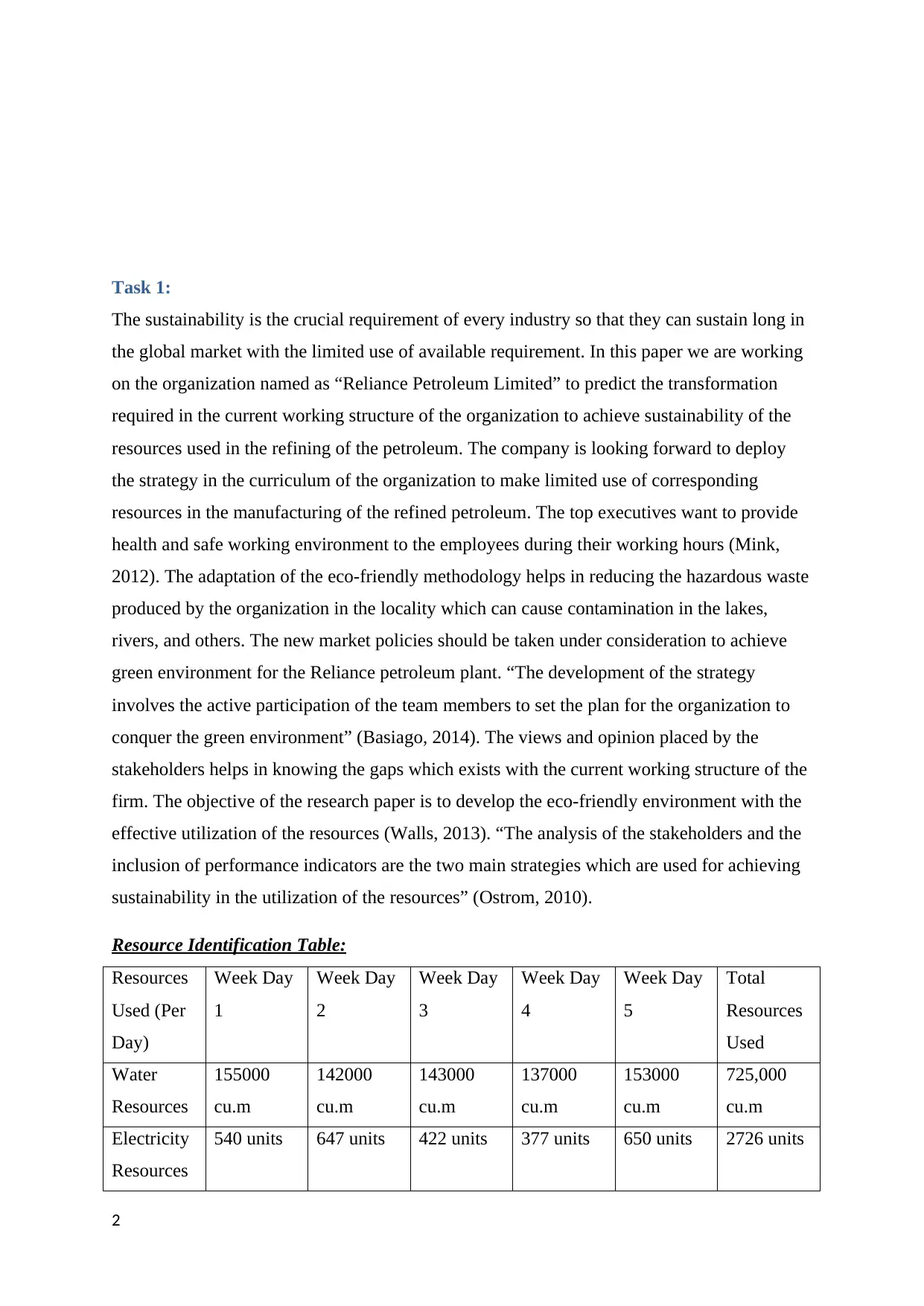
Resource Identification Table:
Resources
Used (Per
Day)
Week Day
1
Week Day
2
Week Day
3
Week Day
4
Week Day
5
Total
Resources
Used
Water
Resources
155000
cu.m
142000
cu.m
143000
cu.m
137000
cu.m
153000
cu.m
725,000
cu.m
Electricity
Resources
540 units 647 units 422 units 377 units 650 units 2726 units
2
The sustainability is the crucial requirement of every industry so that they can sustain long in
the global market with the limited use of available requirement. In this paper we are working
on the organization named as “Reliance Petroleum Limited” to predict the transformation
required in the current working structure of the organization to achieve sustainability of the
resources used in the refining of the petroleum. The company is looking forward to deploy
the strategy in the curriculum of the organization to make limited use of corresponding
resources in the manufacturing of the refined petroleum. The top executives want to provide
health and safe working environment to the employees during their working hours (Mink,
2012). The adaptation of the eco-friendly methodology helps in reducing the hazardous waste
produced by the organization in the locality which can cause contamination in the lakes,
rivers, and others. The new market policies should be taken under consideration to achieve
green environment for the Reliance petroleum plant. “The development of the strategy
involves the active participation of the team members to set the plan for the organization to
conquer the green environment” (Basiago, 2014). The views and opinion placed by the
stakeholders helps in knowing the gaps which exists with the current working structure of the
firm. The objective of the research paper is to develop the eco-friendly environment with the
effective utilization of the resources (Walls, 2013). “The analysis of the stakeholders and the
inclusion of performance indicators are the two main strategies which are used for achieving
sustainability in the utilization of the resources” (Ostrom, 2010).
Resource Identification Table:
Resources
Used (Per
Day)
Week Day
1
Week Day
2
Week Day
3
Week Day
4
Week Day
5
Total
Resources
Used
Water
Resources
155000
cu.m
142000
cu.m
143000
cu.m
137000
cu.m
153000
cu.m
725,000
cu.m
Electricity
Resources
540 units 647 units 422 units 377 units 650 units 2726 units
2
⊘ This is a preview!⊘
Do you want full access?
Subscribe today to unlock all pages.

Trusted by 1+ million students worldwide
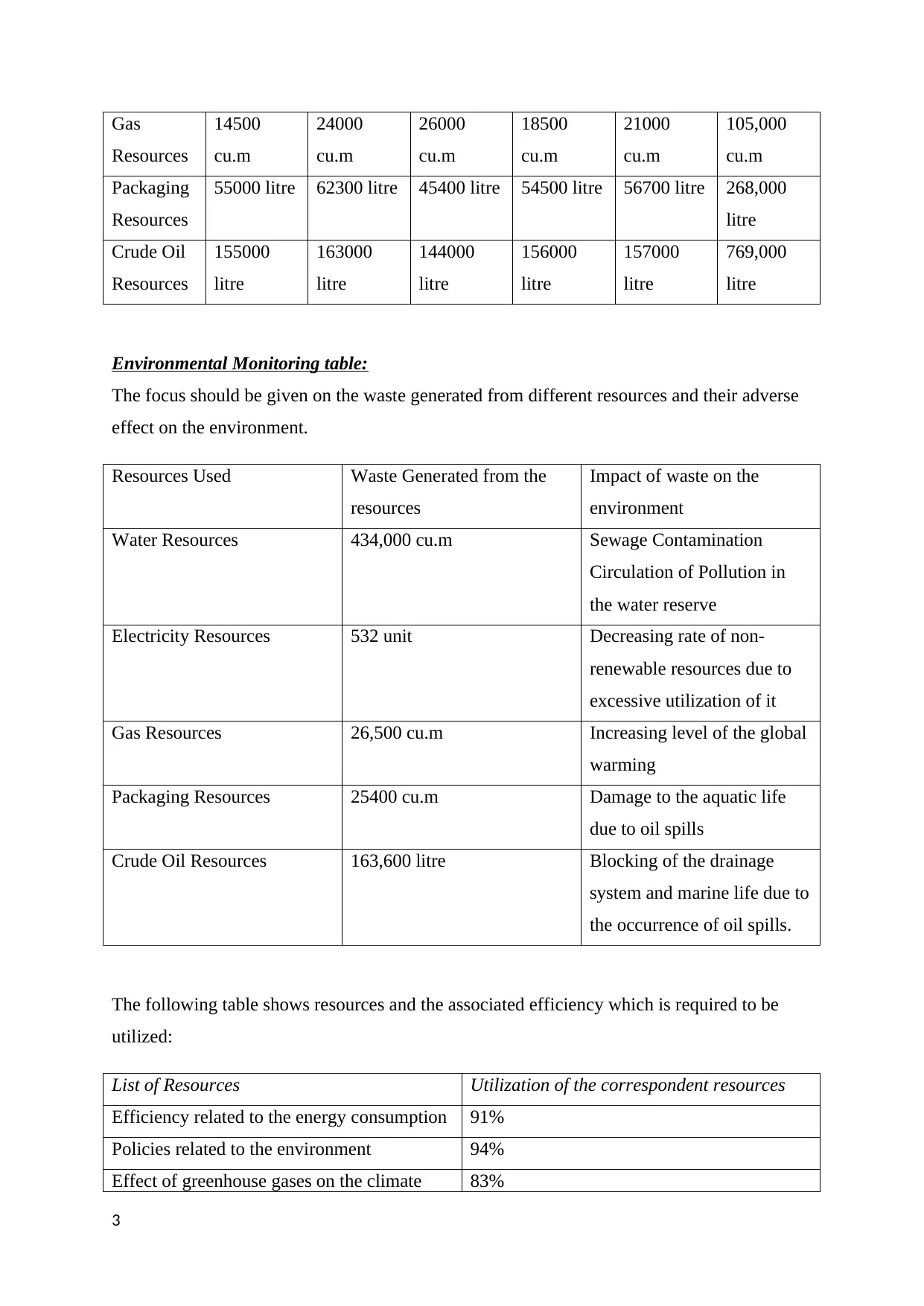
Gas
Resources
14500
cu.m
24000
cu.m
26000
cu.m
18500
cu.m
21000
cu.m
105,000
cu.m
Packaging
Resources
55000 litre 62300 litre 45400 litre 54500 litre 56700 litre 268,000
litre
Crude Oil
Resources
155000
litre
163000
litre
144000
litre
156000
litre
157000
litre
769,000
litre
Environmental Monitoring table:
The focus should be given on the waste generated from different resources and their adverse
effect on the environment.
Resources Used Waste Generated from the
resources
Impact of waste on the
environment
Water Resources 434,000 cu.m Sewage Contamination
Circulation of Pollution in
the water reserve
Electricity Resources 532 unit Decreasing rate of non-
renewable resources due to
excessive utilization of it
Gas Resources 26,500 cu.m Increasing level of the global
warming
Packaging Resources 25400 cu.m Damage to the aquatic life
due to oil spills
Crude Oil Resources 163,600 litre Blocking of the drainage
system and marine life due to
the occurrence of oil spills.
The following table shows resources and the associated efficiency which is required to be
utilized:
List of Resources Utilization of the correspondent resources
Efficiency related to the energy consumption 91%
Policies related to the environment 94%
Effect of greenhouse gases on the climate 83%
3
Resources
14500
cu.m
24000
cu.m
26000
cu.m
18500
cu.m
21000
cu.m
105,000
cu.m
Packaging
Resources
55000 litre 62300 litre 45400 litre 54500 litre 56700 litre 268,000
litre
Crude Oil
Resources
155000
litre
163000
litre
144000
litre
156000
litre
157000
litre
769,000
litre
Environmental Monitoring table:
The focus should be given on the waste generated from different resources and their adverse
effect on the environment.
Resources Used Waste Generated from the
resources
Impact of waste on the
environment
Water Resources 434,000 cu.m Sewage Contamination
Circulation of Pollution in
the water reserve
Electricity Resources 532 unit Decreasing rate of non-
renewable resources due to
excessive utilization of it
Gas Resources 26,500 cu.m Increasing level of the global
warming
Packaging Resources 25400 cu.m Damage to the aquatic life
due to oil spills
Crude Oil Resources 163,600 litre Blocking of the drainage
system and marine life due to
the occurrence of oil spills.
The following table shows resources and the associated efficiency which is required to be
utilized:
List of Resources Utilization of the correspondent resources
Efficiency related to the energy consumption 91%
Policies related to the environment 94%
Effect of greenhouse gases on the climate 83%
3
Paraphrase This Document
Need a fresh take? Get an instant paraphrase of this document with our AI Paraphraser
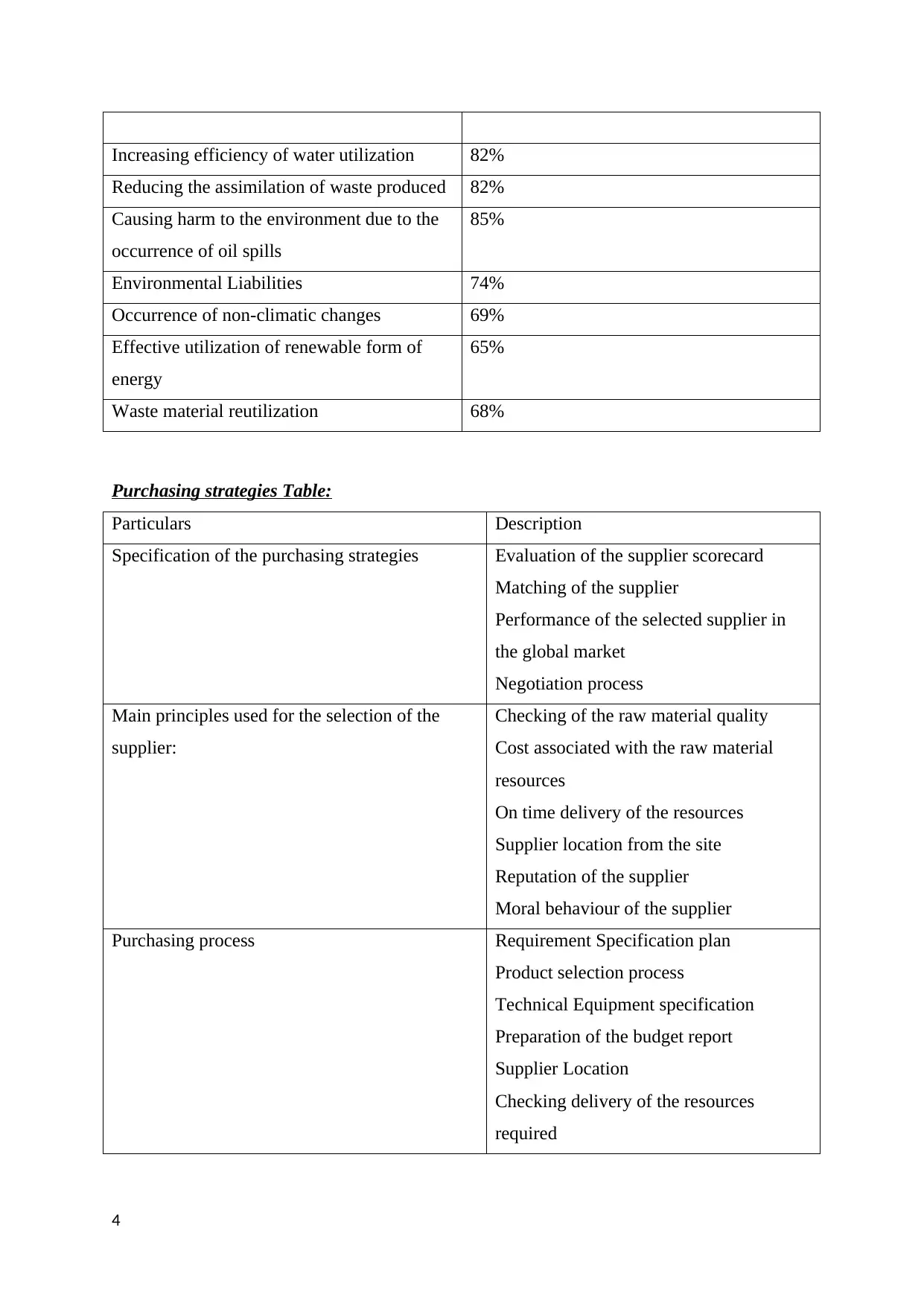
Increasing efficiency of water utilization 82%
Reducing the assimilation of waste produced 82%
Causing harm to the environment due to the
occurrence of oil spills
85%
Environmental Liabilities 74%
Occurrence of non-climatic changes 69%
Effective utilization of renewable form of
energy
65%
Waste material reutilization 68%
Purchasing strategies Table:
Particulars Description
Specification of the purchasing strategies Evaluation of the supplier scorecard
Matching of the supplier
Performance of the selected supplier in
the global market
Negotiation process
Main principles used for the selection of the
supplier:
Checking of the raw material quality
Cost associated with the raw material
resources
On time delivery of the resources
Supplier location from the site
Reputation of the supplier
Moral behaviour of the supplier
Purchasing process Requirement Specification plan
Product selection process
Technical Equipment specification
Preparation of the budget report
Supplier Location
Checking delivery of the resources
required
4
Reducing the assimilation of waste produced 82%
Causing harm to the environment due to the
occurrence of oil spills
85%
Environmental Liabilities 74%
Occurrence of non-climatic changes 69%
Effective utilization of renewable form of
energy
65%
Waste material reutilization 68%
Purchasing strategies Table:
Particulars Description
Specification of the purchasing strategies Evaluation of the supplier scorecard
Matching of the supplier
Performance of the selected supplier in
the global market
Negotiation process
Main principles used for the selection of the
supplier:
Checking of the raw material quality
Cost associated with the raw material
resources
On time delivery of the resources
Supplier location from the site
Reputation of the supplier
Moral behaviour of the supplier
Purchasing process Requirement Specification plan
Product selection process
Technical Equipment specification
Preparation of the budget report
Supplier Location
Checking delivery of the resources
required
4
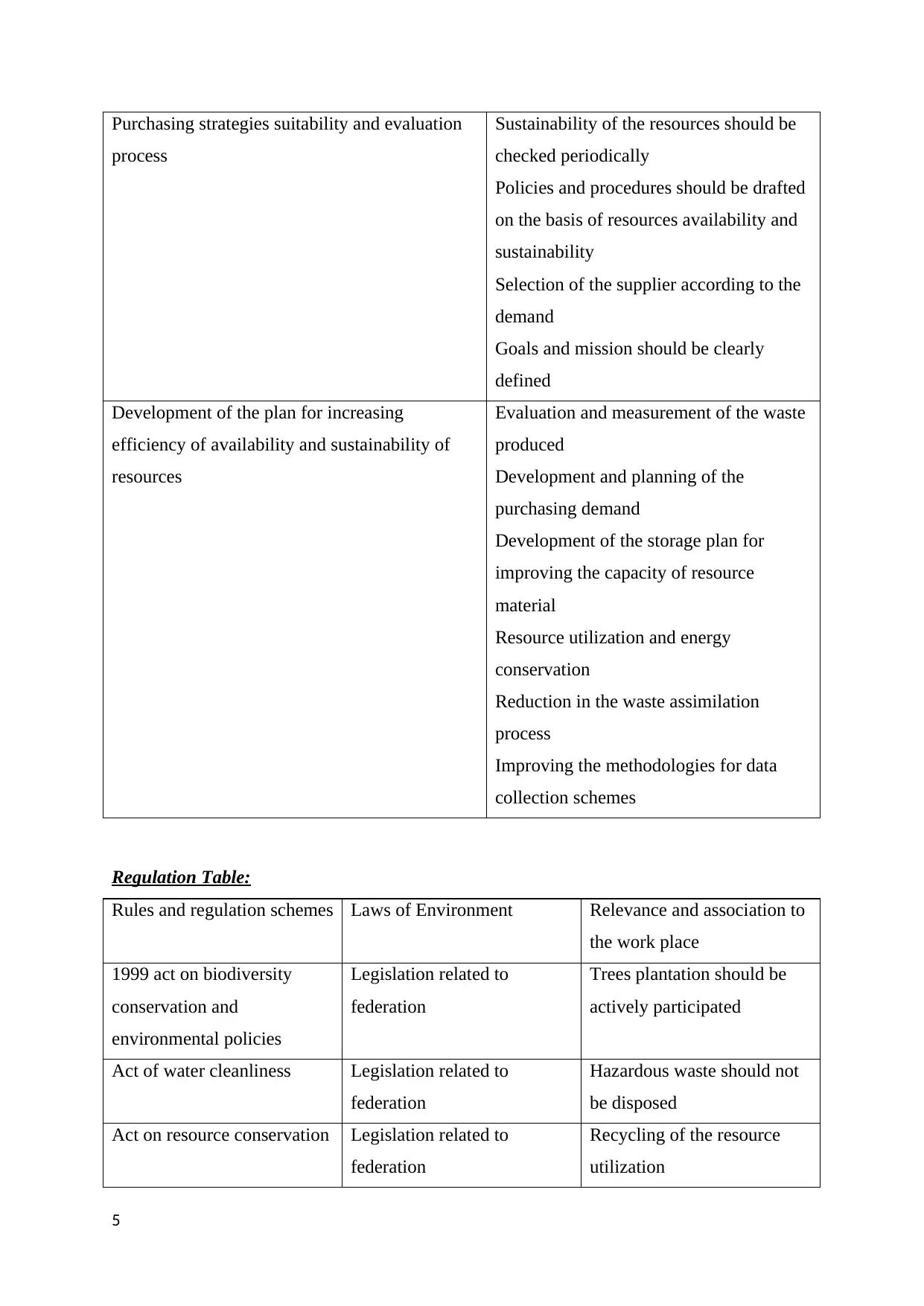
Purchasing strategies suitability and evaluation
process
Sustainability of the resources should be
checked periodically
Policies and procedures should be drafted
on the basis of resources availability and
sustainability
Selection of the supplier according to the
demand
Goals and mission should be clearly
defined
Development of the plan for increasing
efficiency of availability and sustainability of
resources
Evaluation and measurement of the waste
produced
Development and planning of the
purchasing demand
Development of the storage plan for
improving the capacity of resource
material
Resource utilization and energy
conservation
Reduction in the waste assimilation
process
Improving the methodologies for data
collection schemes
Regulation Table:
Rules and regulation schemes Laws of Environment Relevance and association to
the work place
1999 act on biodiversity
conservation and
environmental policies
Legislation related to
federation
Trees plantation should be
actively participated
Act of water cleanliness Legislation related to
federation
Hazardous waste should not
be disposed
Act on resource conservation Legislation related to
federation
Recycling of the resource
utilization
5
process
Sustainability of the resources should be
checked periodically
Policies and procedures should be drafted
on the basis of resources availability and
sustainability
Selection of the supplier according to the
demand
Goals and mission should be clearly
defined
Development of the plan for increasing
efficiency of availability and sustainability of
resources
Evaluation and measurement of the waste
produced
Development and planning of the
purchasing demand
Development of the storage plan for
improving the capacity of resource
material
Resource utilization and energy
conservation
Reduction in the waste assimilation
process
Improving the methodologies for data
collection schemes
Regulation Table:
Rules and regulation schemes Laws of Environment Relevance and association to
the work place
1999 act on biodiversity
conservation and
environmental policies
Legislation related to
federation
Trees plantation should be
actively participated
Act of water cleanliness Legislation related to
federation
Hazardous waste should not
be disposed
Act on resource conservation Legislation related to
federation
Recycling of the resource
utilization
5
⊘ This is a preview!⊘
Do you want full access?
Subscribe today to unlock all pages.
Trusted by 1+ million students worldwide
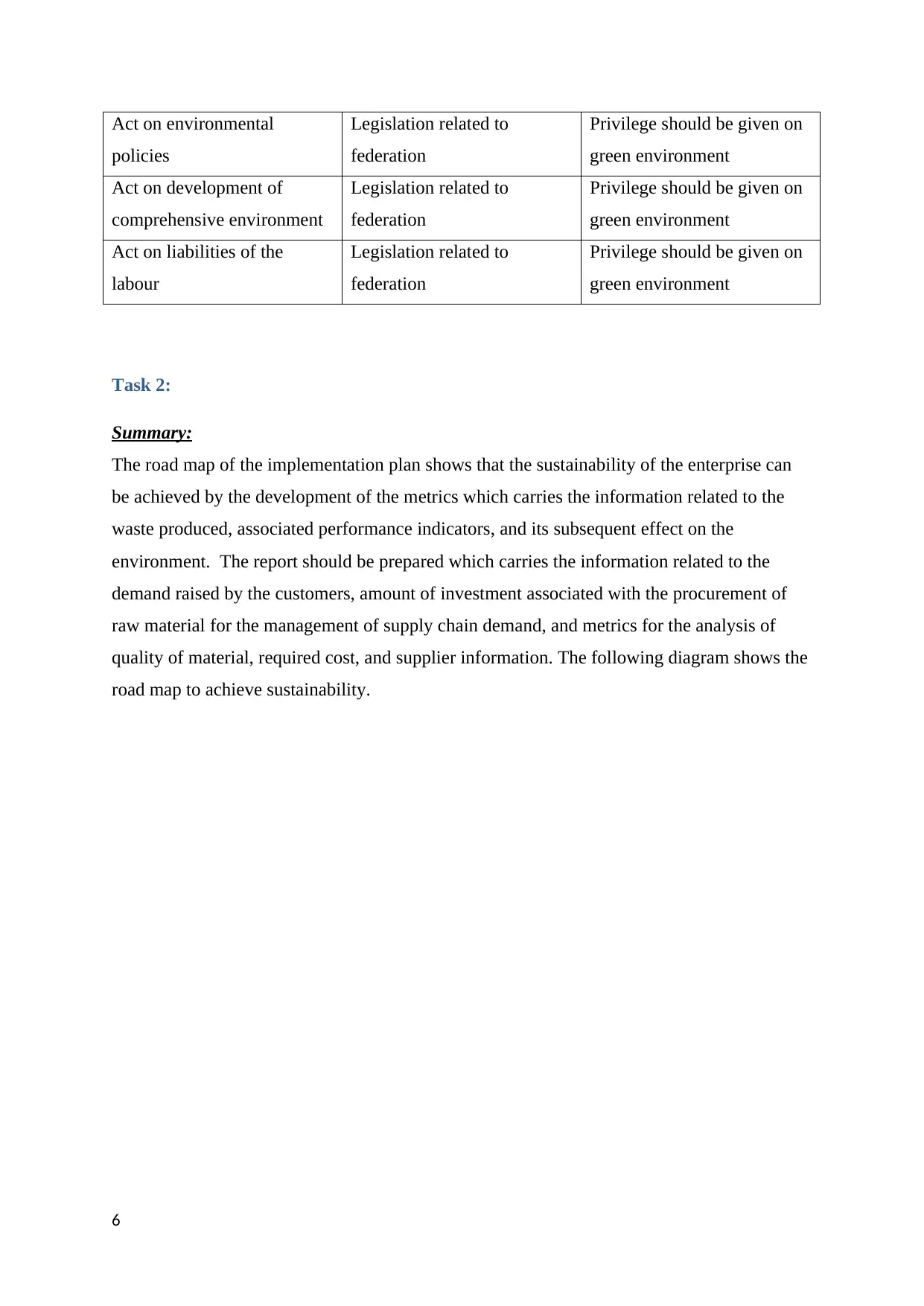
Act on environmental
policies
Legislation related to
federation
Privilege should be given on
green environment
Act on development of
comprehensive environment
Legislation related to
federation
Privilege should be given on
green environment
Act on liabilities of the
labour
Legislation related to
federation
Privilege should be given on
green environment
Task 2:
Summary:
The road map of the implementation plan shows that the sustainability of the enterprise can
be achieved by the development of the metrics which carries the information related to the
waste produced, associated performance indicators, and its subsequent effect on the
environment. The report should be prepared which carries the information related to the
demand raised by the customers, amount of investment associated with the procurement of
raw material for the management of supply chain demand, and metrics for the analysis of
quality of material, required cost, and supplier information. The following diagram shows the
road map to achieve sustainability.
6
policies
Legislation related to
federation
Privilege should be given on
green environment
Act on development of
comprehensive environment
Legislation related to
federation
Privilege should be given on
green environment
Act on liabilities of the
labour
Legislation related to
federation
Privilege should be given on
green environment
Task 2:
Summary:
The road map of the implementation plan shows that the sustainability of the enterprise can
be achieved by the development of the metrics which carries the information related to the
waste produced, associated performance indicators, and its subsequent effect on the
environment. The report should be prepared which carries the information related to the
demand raised by the customers, amount of investment associated with the procurement of
raw material for the management of supply chain demand, and metrics for the analysis of
quality of material, required cost, and supplier information. The following diagram shows the
road map to achieve sustainability.
6
Paraphrase This Document
Need a fresh take? Get an instant paraphrase of this document with our AI Paraphraser
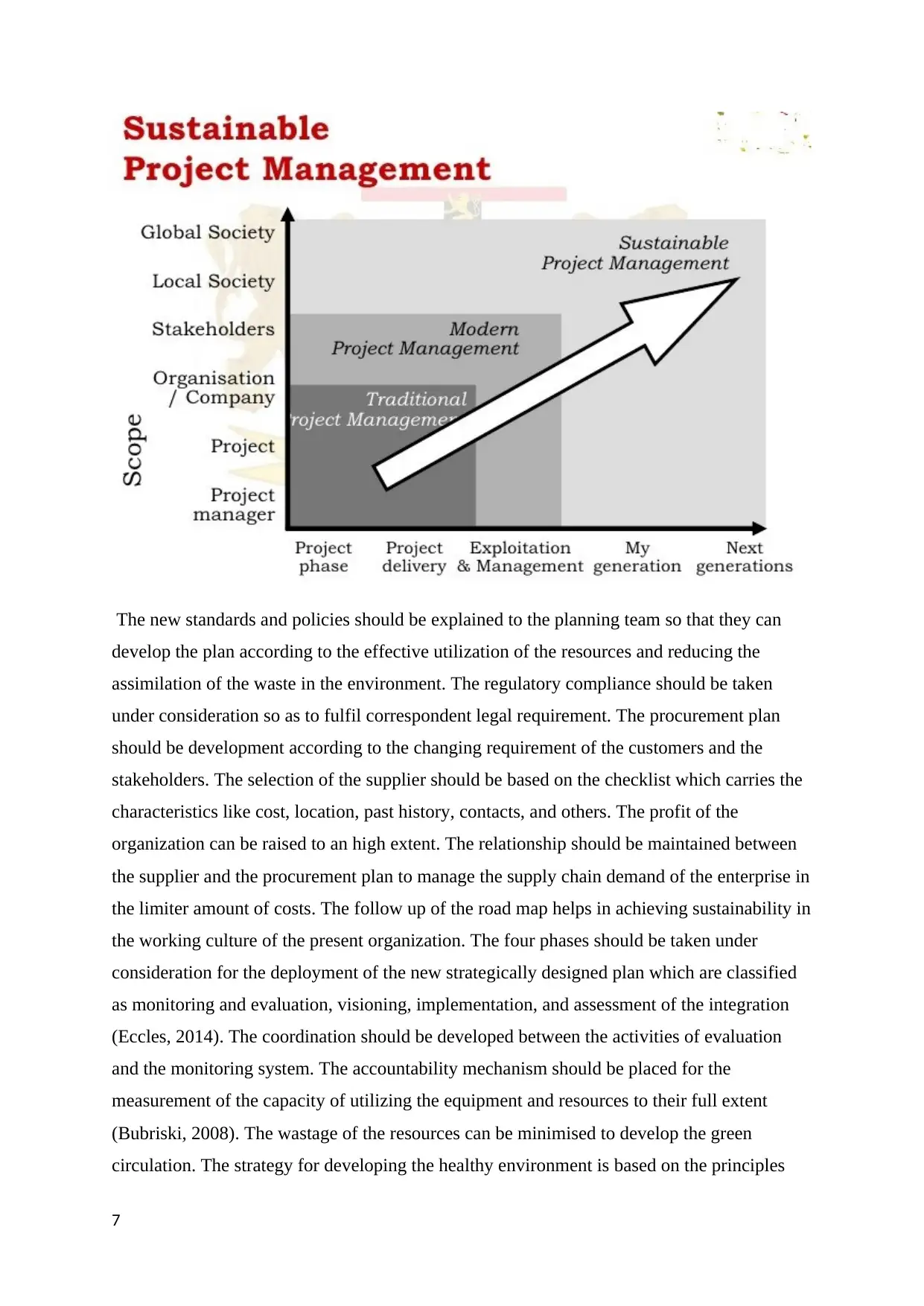
The new standards and policies should be explained to the planning team so that they can
develop the plan according to the effective utilization of the resources and reducing the
assimilation of the waste in the environment. The regulatory compliance should be taken
under consideration so as to fulfil correspondent legal requirement. The procurement plan
should be development according to the changing requirement of the customers and the
stakeholders. The selection of the supplier should be based on the checklist which carries the
characteristics like cost, location, past history, contacts, and others. The profit of the
organization can be raised to an high extent. The relationship should be maintained between
the supplier and the procurement plan to manage the supply chain demand of the enterprise in
the limiter amount of costs. The follow up of the road map helps in achieving sustainability in
the working culture of the present organization. The four phases should be taken under
consideration for the deployment of the new strategically designed plan which are classified
as monitoring and evaluation, visioning, implementation, and assessment of the integration
(Eccles, 2014). The coordination should be developed between the activities of evaluation
and the monitoring system. The accountability mechanism should be placed for the
measurement of the capacity of utilizing the equipment and resources to their full extent
(Bubriski, 2008). The wastage of the resources can be minimised to develop the green
circulation. The strategy for developing the healthy environment is based on the principles
7
develop the plan according to the effective utilization of the resources and reducing the
assimilation of the waste in the environment. The regulatory compliance should be taken
under consideration so as to fulfil correspondent legal requirement. The procurement plan
should be development according to the changing requirement of the customers and the
stakeholders. The selection of the supplier should be based on the checklist which carries the
characteristics like cost, location, past history, contacts, and others. The profit of the
organization can be raised to an high extent. The relationship should be maintained between
the supplier and the procurement plan to manage the supply chain demand of the enterprise in
the limiter amount of costs. The follow up of the road map helps in achieving sustainability in
the working culture of the present organization. The four phases should be taken under
consideration for the deployment of the new strategically designed plan which are classified
as monitoring and evaluation, visioning, implementation, and assessment of the integration
(Eccles, 2014). The coordination should be developed between the activities of evaluation
and the monitoring system. The accountability mechanism should be placed for the
measurement of the capacity of utilizing the equipment and resources to their full extent
(Bubriski, 2008). The wastage of the resources can be minimised to develop the green
circulation. The strategy for developing the healthy environment is based on the principles
7
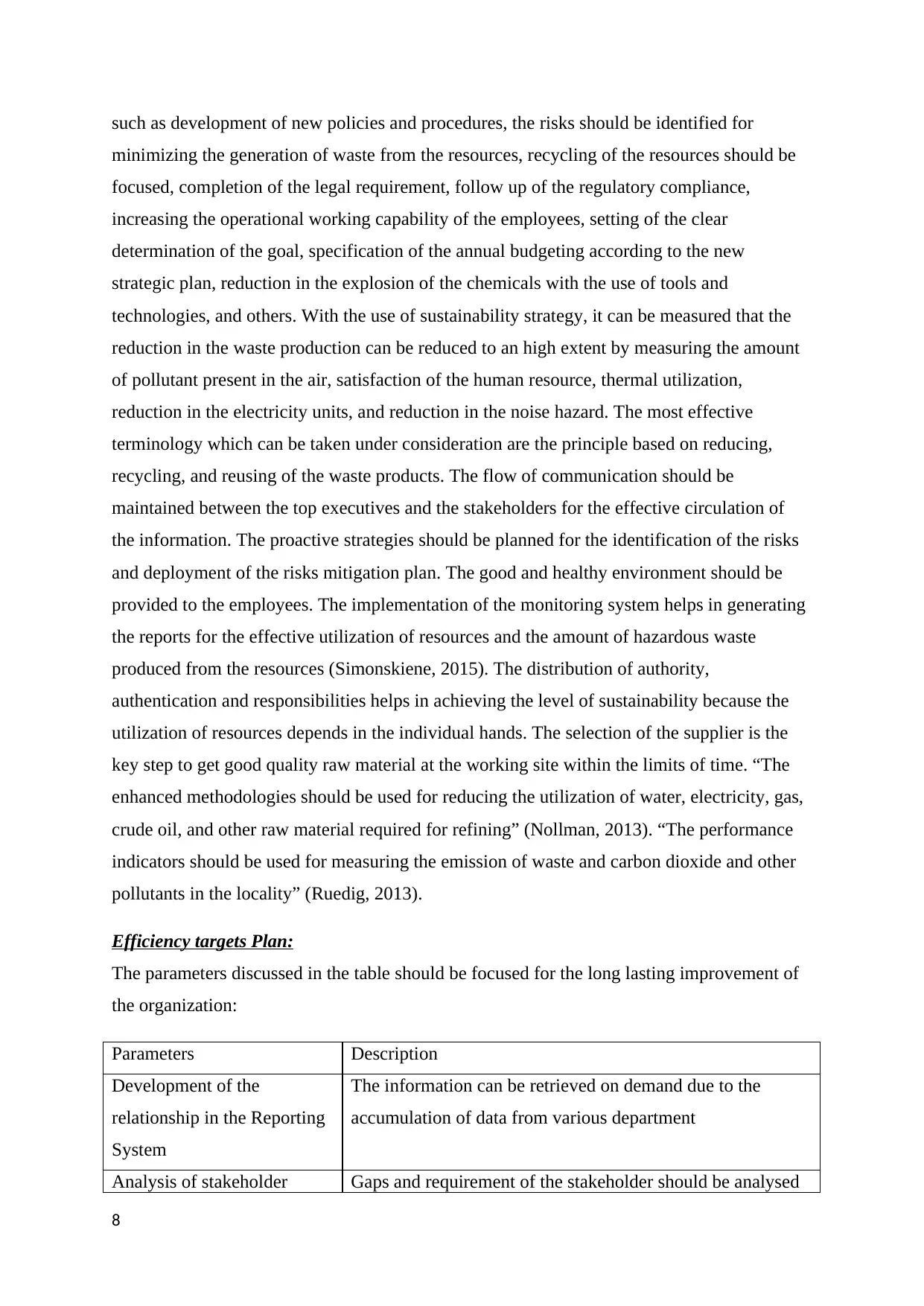
such as development of new policies and procedures, the risks should be identified for
minimizing the generation of waste from the resources, recycling of the resources should be
focused, completion of the legal requirement, follow up of the regulatory compliance,
increasing the operational working capability of the employees, setting of the clear
determination of the goal, specification of the annual budgeting according to the new
strategic plan, reduction in the explosion of the chemicals with the use of tools and
technologies, and others. With the use of sustainability strategy, it can be measured that the
reduction in the waste production can be reduced to an high extent by measuring the amount
of pollutant present in the air, satisfaction of the human resource, thermal utilization,
reduction in the electricity units, and reduction in the noise hazard. The most effective
terminology which can be taken under consideration are the principle based on reducing,
recycling, and reusing of the waste products. The flow of communication should be
maintained between the top executives and the stakeholders for the effective circulation of
the information. The proactive strategies should be planned for the identification of the risks
and deployment of the risks mitigation plan. The good and healthy environment should be
provided to the employees. The implementation of the monitoring system helps in generating
the reports for the effective utilization of resources and the amount of hazardous waste
produced from the resources (Simonskiene, 2015). The distribution of authority,
authentication and responsibilities helps in achieving the level of sustainability because the
utilization of resources depends in the individual hands. The selection of the supplier is the
key step to get good quality raw material at the working site within the limits of time. “The
enhanced methodologies should be used for reducing the utilization of water, electricity, gas,
crude oil, and other raw material required for refining” (Nollman, 2013). “The performance
indicators should be used for measuring the emission of waste and carbon dioxide and other
pollutants in the locality” (Ruedig, 2013).
Efficiency targets Plan:
The parameters discussed in the table should be focused for the long lasting improvement of
the organization:
Parameters Description
Development of the
relationship in the Reporting
System
The information can be retrieved on demand due to the
accumulation of data from various department
Analysis of stakeholder Gaps and requirement of the stakeholder should be analysed
8
minimizing the generation of waste from the resources, recycling of the resources should be
focused, completion of the legal requirement, follow up of the regulatory compliance,
increasing the operational working capability of the employees, setting of the clear
determination of the goal, specification of the annual budgeting according to the new
strategic plan, reduction in the explosion of the chemicals with the use of tools and
technologies, and others. With the use of sustainability strategy, it can be measured that the
reduction in the waste production can be reduced to an high extent by measuring the amount
of pollutant present in the air, satisfaction of the human resource, thermal utilization,
reduction in the electricity units, and reduction in the noise hazard. The most effective
terminology which can be taken under consideration are the principle based on reducing,
recycling, and reusing of the waste products. The flow of communication should be
maintained between the top executives and the stakeholders for the effective circulation of
the information. The proactive strategies should be planned for the identification of the risks
and deployment of the risks mitigation plan. The good and healthy environment should be
provided to the employees. The implementation of the monitoring system helps in generating
the reports for the effective utilization of resources and the amount of hazardous waste
produced from the resources (Simonskiene, 2015). The distribution of authority,
authentication and responsibilities helps in achieving the level of sustainability because the
utilization of resources depends in the individual hands. The selection of the supplier is the
key step to get good quality raw material at the working site within the limits of time. “The
enhanced methodologies should be used for reducing the utilization of water, electricity, gas,
crude oil, and other raw material required for refining” (Nollman, 2013). “The performance
indicators should be used for measuring the emission of waste and carbon dioxide and other
pollutants in the locality” (Ruedig, 2013).
Efficiency targets Plan:
The parameters discussed in the table should be focused for the long lasting improvement of
the organization:
Parameters Description
Development of the
relationship in the Reporting
System
The information can be retrieved on demand due to the
accumulation of data from various department
Analysis of stakeholder Gaps and requirement of the stakeholder should be analysed
8
⊘ This is a preview!⊘
Do you want full access?
Subscribe today to unlock all pages.
Trusted by 1+ million students worldwide
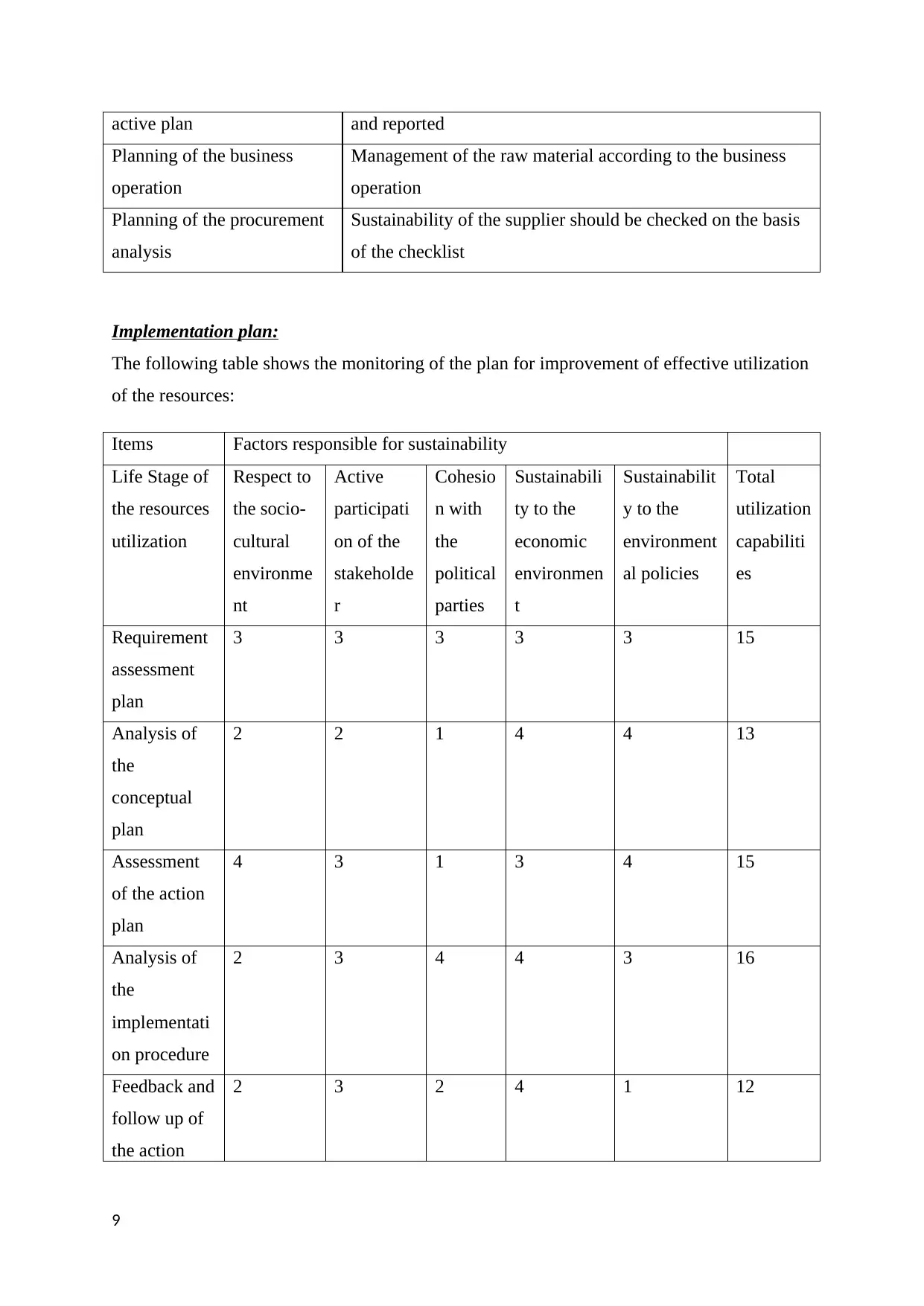
active plan and reported
Planning of the business
operation
Management of the raw material according to the business
operation
Planning of the procurement
analysis
Sustainability of the supplier should be checked on the basis
of the checklist
Implementation plan:
The following table shows the monitoring of the plan for improvement of effective utilization
of the resources:
Items Factors responsible for sustainability
Life Stage of
the resources
utilization
Respect to
the socio-
cultural
environme
nt
Active
participati
on of the
stakeholde
r
Cohesio
n with
the
political
parties
Sustainabili
ty to the
economic
environmen
t
Sustainabilit
y to the
environment
al policies
Total
utilization
capabiliti
es
Requirement
assessment
plan
3 3 3 3 3 15
Analysis of
the
conceptual
plan
2 2 1 4 4 13
Assessment
of the action
plan
4 3 1 3 4 15
Analysis of
the
implementati
on procedure
2 3 4 4 3 16
Feedback and
follow up of
the action
2 3 2 4 1 12
9
Planning of the business
operation
Management of the raw material according to the business
operation
Planning of the procurement
analysis
Sustainability of the supplier should be checked on the basis
of the checklist
Implementation plan:
The following table shows the monitoring of the plan for improvement of effective utilization
of the resources:
Items Factors responsible for sustainability
Life Stage of
the resources
utilization
Respect to
the socio-
cultural
environme
nt
Active
participati
on of the
stakeholde
r
Cohesio
n with
the
political
parties
Sustainabili
ty to the
economic
environmen
t
Sustainabilit
y to the
environment
al policies
Total
utilization
capabiliti
es
Requirement
assessment
plan
3 3 3 3 3 15
Analysis of
the
conceptual
plan
2 2 1 4 4 13
Assessment
of the action
plan
4 3 1 3 4 15
Analysis of
the
implementati
on procedure
2 3 4 4 3 16
Feedback and
follow up of
the action
2 3 2 4 1 12
9
Paraphrase This Document
Need a fresh take? Get an instant paraphrase of this document with our AI Paraphraser
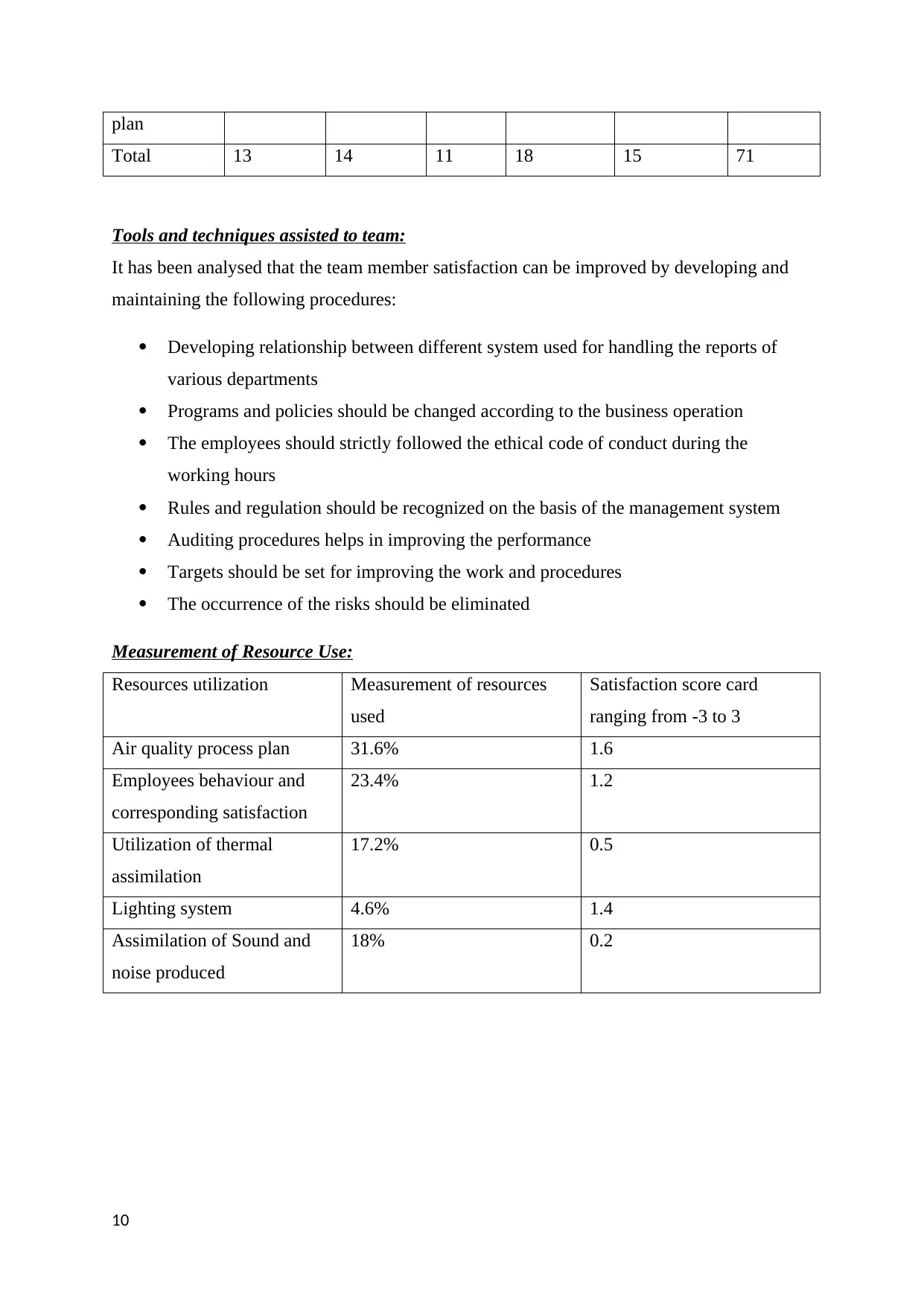
plan
Total 13 14 11 18 15 71
Tools and techniques assisted to team:
It has been analysed that the team member satisfaction can be improved by developing and
maintaining the following procedures:
Developing relationship between different system used for handling the reports of
various departments
Programs and policies should be changed according to the business operation
The employees should strictly followed the ethical code of conduct during the
working hours
Rules and regulation should be recognized on the basis of the management system
Auditing procedures helps in improving the performance
Targets should be set for improving the work and procedures
The occurrence of the risks should be eliminated
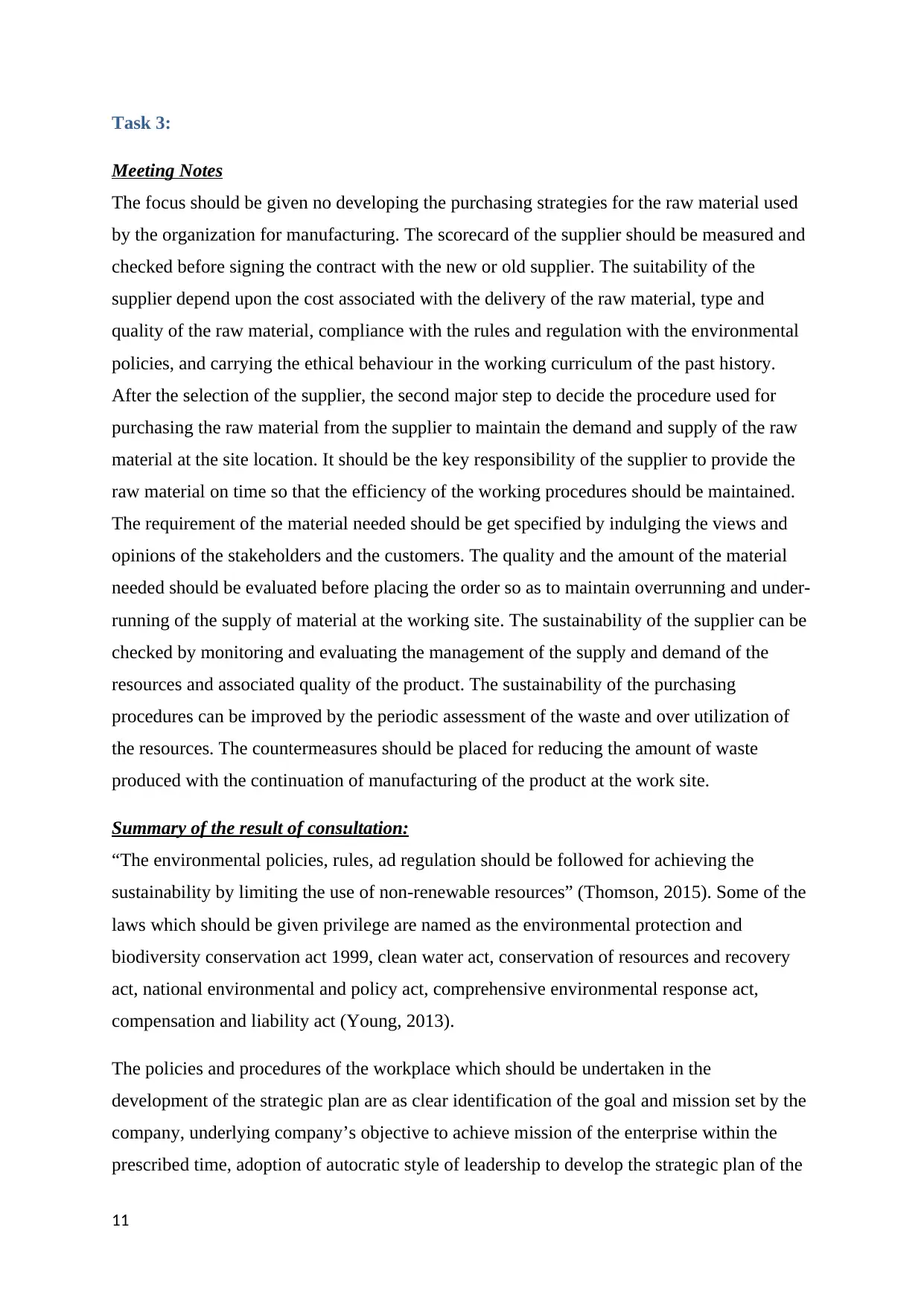
Measurement of Resource Use:
Resources utilization Measurement of resources
used
Satisfaction score card
ranging from -3 to 3
Air quality process plan 31.6% 1.6
Employees behaviour and
corresponding satisfaction
23.4% 1.2
Utilization of thermal
assimilation
17.2% 0.5
Lighting system 4.6% 1.4
Assimilation of Sound and
noise produced
18% 0.2
10
Total 13 14 11 18 15 71
Tools and techniques assisted to team:
It has been analysed that the team member satisfaction can be improved by developing and
maintaining the following procedures:
Developing relationship between different system used for handling the reports of
various departments
Programs and policies should be changed according to the business operation
The employees should strictly followed the ethical code of conduct during the
working hours
Rules and regulation should be recognized on the basis of the management system
Auditing procedures helps in improving the performance
Targets should be set for improving the work and procedures
The occurrence of the risks should be eliminated
Measurement of Resource Use:
Resources utilization Measurement of resources
used
Satisfaction score card
ranging from -3 to 3
Air quality process plan 31.6% 1.6
Employees behaviour and
corresponding satisfaction
23.4% 1.2
Utilization of thermal
assimilation
17.2% 0.5
Lighting system 4.6% 1.4
Assimilation of Sound and
noise produced
18% 0.2
10
Task 3:
Meeting Notes
The focus should be given no developing the purchasing strategies for the raw material used
by the organization for manufacturing. The scorecard of the supplier should be measured and
checked before signing the contract with the new or old supplier. The suitability of the
supplier depend upon the cost associated with the delivery of the raw material, type and
quality of the raw material, compliance with the rules and regulation with the environmental
policies, and carrying the ethical behaviour in the working curriculum of the past history.
After the selection of the supplier, the second major step to decide the procedure used for
purchasing the raw material from the supplier to maintain the demand and supply of the raw
material at the site location. It should be the key responsibility of the supplier to provide the
raw material on time so that the efficiency of the working procedures should be maintained.
The requirement of the material needed should be get specified by indulging the views and
opinions of the stakeholders and the customers. The quality and the amount of the material
needed should be evaluated before placing the order so as to maintain overrunning and under-
running of the supply of material at the working site. The sustainability of the supplier can be
checked by monitoring and evaluating the management of the supply and demand of the
resources and associated quality of the product. The sustainability of the purchasing
procedures can be improved by the periodic assessment of the waste and over utilization of
the resources. The countermeasures should be placed for reducing the amount of waste
produced with the continuation of manufacturing of the product at the work site.
Summary of the result of consultation:
“The environmental policies, rules, ad regulation should be followed for achieving the
sustainability by limiting the use of non-renewable resources” (Thomson, 2015). Some of the
laws which should be given privilege are named as the environmental protection and
biodiversity conservation act 1999, clean water act, conservation of resources and recovery
act, national environmental and policy act, comprehensive environmental response act,
compensation and liability act (Young, 2013).
The policies and procedures of the workplace which should be undertaken in the
development of the strategic plan are as clear identification of the goal and mission set by the
company, underlying company’s objective to achieve mission of the enterprise within the
prescribed time, adoption of autocratic style of leadership to develop the strategic plan of the
11
Meeting Notes
The focus should be given no developing the purchasing strategies for the raw material used
by the organization for manufacturing. The scorecard of the supplier should be measured and
checked before signing the contract with the new or old supplier. The suitability of the
supplier depend upon the cost associated with the delivery of the raw material, type and
quality of the raw material, compliance with the rules and regulation with the environmental
policies, and carrying the ethical behaviour in the working curriculum of the past history.
After the selection of the supplier, the second major step to decide the procedure used for
purchasing the raw material from the supplier to maintain the demand and supply of the raw
material at the site location. It should be the key responsibility of the supplier to provide the
raw material on time so that the efficiency of the working procedures should be maintained.
The requirement of the material needed should be get specified by indulging the views and
opinions of the stakeholders and the customers. The quality and the amount of the material
needed should be evaluated before placing the order so as to maintain overrunning and under-
running of the supply of material at the working site. The sustainability of the supplier can be
checked by monitoring and evaluating the management of the supply and demand of the
resources and associated quality of the product. The sustainability of the purchasing
procedures can be improved by the periodic assessment of the waste and over utilization of
the resources. The countermeasures should be placed for reducing the amount of waste
produced with the continuation of manufacturing of the product at the work site.
Summary of the result of consultation:
“The environmental policies, rules, ad regulation should be followed for achieving the
sustainability by limiting the use of non-renewable resources” (Thomson, 2015). Some of the
laws which should be given privilege are named as the environmental protection and
biodiversity conservation act 1999, clean water act, conservation of resources and recovery
act, national environmental and policy act, comprehensive environmental response act,
compensation and liability act (Young, 2013).
The policies and procedures of the workplace which should be undertaken in the
development of the strategic plan are as clear identification of the goal and mission set by the
company, underlying company’s objective to achieve mission of the enterprise within the
prescribed time, adoption of autocratic style of leadership to develop the strategic plan of the
11
⊘ This is a preview!⊘
Do you want full access?
Subscribe today to unlock all pages.
Trusted by 1+ million students worldwide

1 out of 14


Related Documents


Your All-in-One AI-Powered Toolkit for Academic Success.
+13062052269
info@desklib.com
Available 24*7 on WhatsApp / Email
![[object Object]](/_next/static/media/star-bottom.7253800d.svg)
Unlock your academic potential
Copyright © 2020–2026 A2Z Services. All Rights Reserved. Developed and managed by ZUCOL.