Analysis of Sustainability in Zambia Tourism: A Report
VerifiedAdded on 2020/10/05
|5
|808
|177
Report
AI Summary
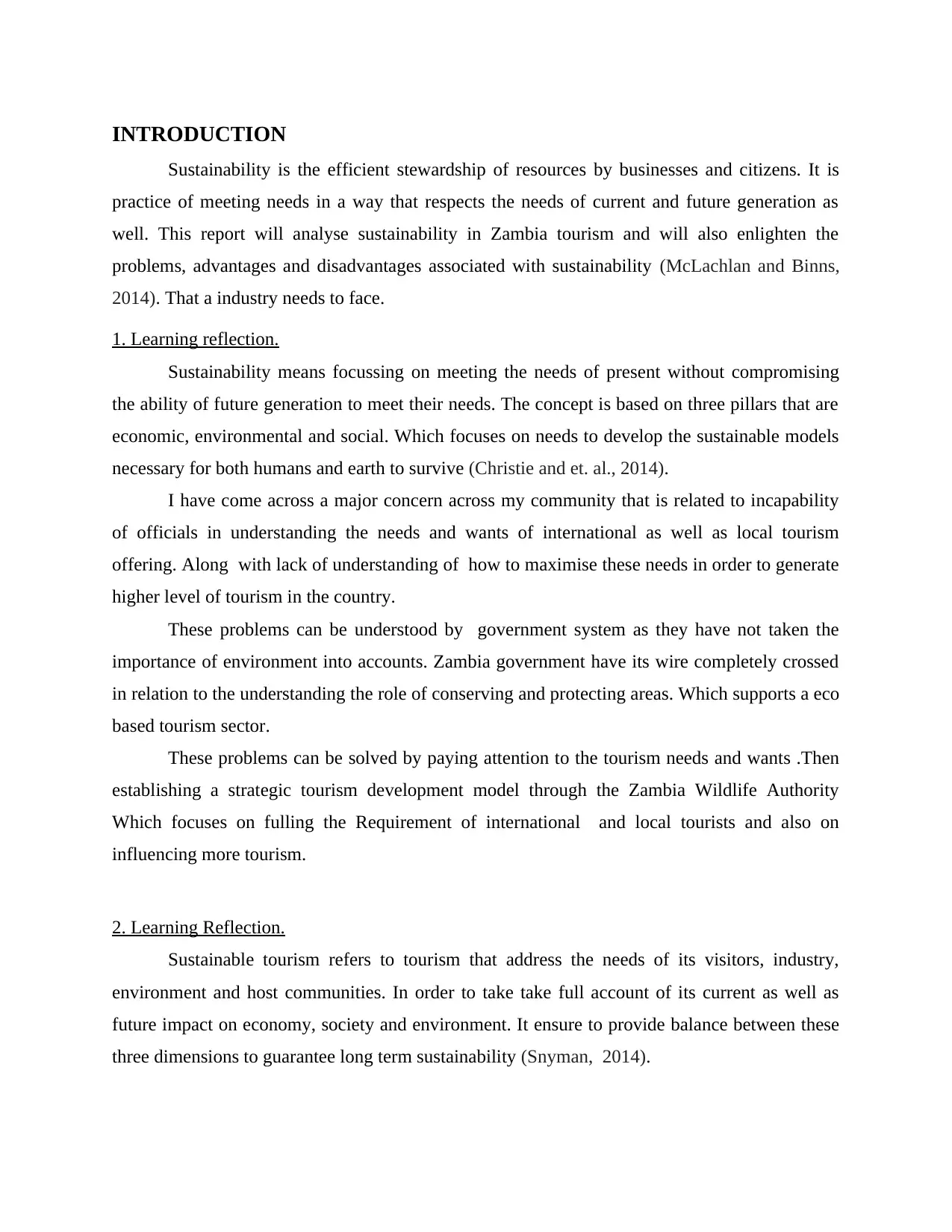
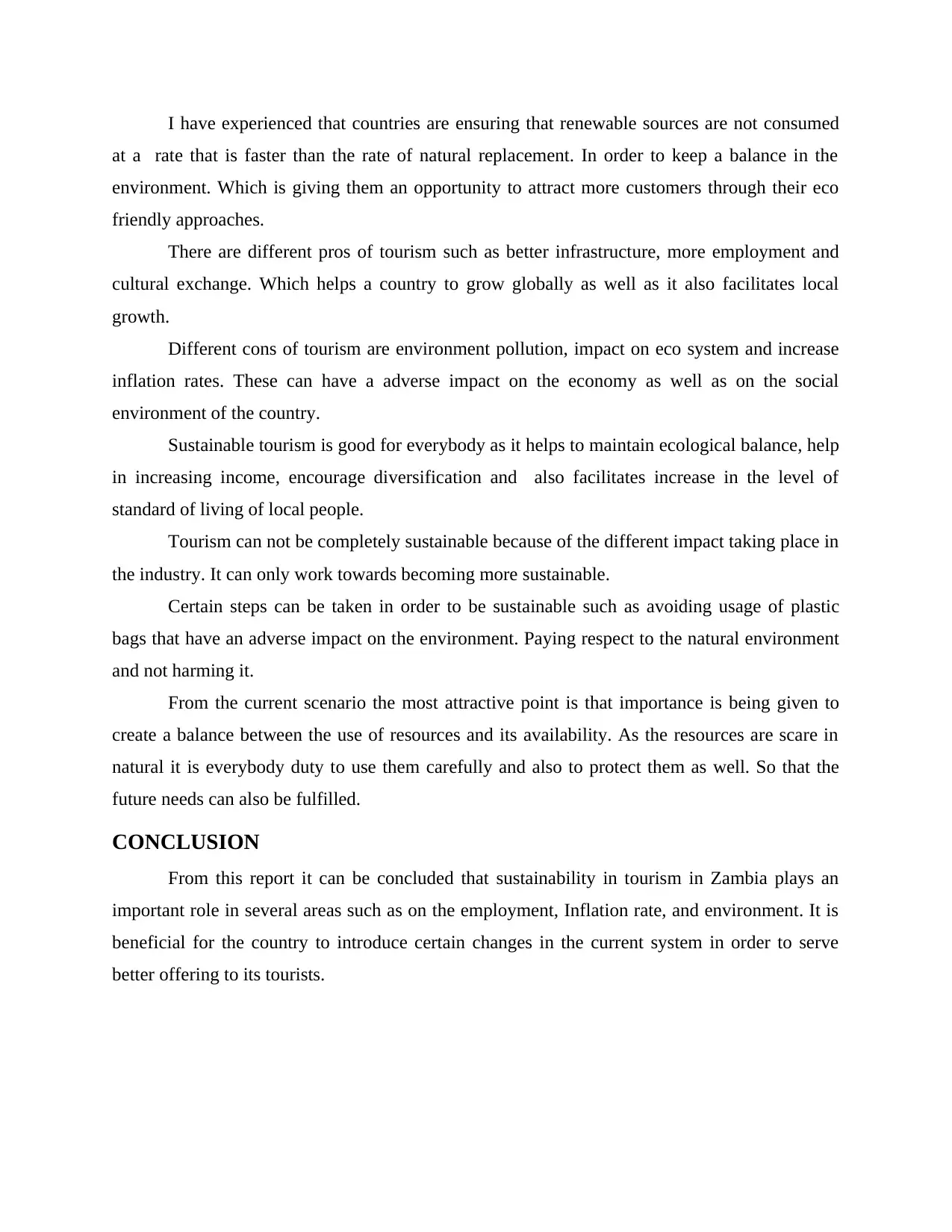
This report delves into the crucial role of sustainability in Zambia's tourism sector. It begins by defining sustainability and its three pillars: economic, environmental, and social, highlighting the need to balance current needs with those of future generations. The report then analyzes the challenges faced by Zambia's tourism industry, including officials' lack of understanding of tourism needs and the importance of environmental conservation. It suggests solutions like strategic tourism development models and emphasizes the significance of renewable resources. The report further explores the advantages and disadvantages of tourism, such as infrastructure development, employment, and cultural exchange, contrasted with environmental pollution and increased inflation. It concludes that while complete sustainability may be unattainable, continuous efforts are vital. The report underscores the importance of sustainable practices, such as minimizing plastic use and respecting the natural environment. Finally, it emphasizes the need to balance resource use and conservation for future needs, and that Zambia can introduce changes to serve better offerings to its tourists.



1 out of 5


Related Documents


Your All-in-One AI-Powered Toolkit for Academic Success.
+13062052269
info@desklib.com
Available 24*7 on WhatsApp / Email
![[object Object]](/_next/static/media/star-bottom.7253800d.svg)
Copyright © 2020–2026 A2Z Services. All Rights Reserved. Developed and managed by ZUCOL.