University Thesis: Sustainable Design and Constructability Integration
VerifiedAdded on 2023/05/28
|28
|7857
|473
Thesis and Dissertation
AI Summary
This thesis examines the critical integration of sustainable design and constructability within major construction projects, focusing on how these two elements can be combined to improve building quality, reduce environmental impact, and enhance economic viability. The study delves into the background of the construction industry, its contributions to economic and social development, and the environmental challenges it faces. It explores the concepts of constructability and sustainable design, outlining their principles, techniques, and common objectives. The thesis further investigates the integration of these concepts, highlighting the benefits of such an approach, including resource efficiency and waste reduction. It also addresses barriers to improving constructability, innovations in the field, and the current connections between constructability and sustainability. The research includes a review of literature, and concludes with decisive conclusions on the integration of sustainable design and constructability, with the aim of enhancing the building quality and lifespan of structures. The thesis also provides a detailed table of contents, executive summary, objectives, findings, and a reference list.
Major Projects in Construction Thesis Submission 1
Major Projects in Construction:
Integration between sustainable design and Constructability in Building Projects
By
Student’s Name
Code + Course Name
Professor’s Name
University Name
City, State
Date
Major Projects in Construction:
Integration between sustainable design and Constructability in Building Projects
By
Student’s Name
Code + Course Name
Professor’s Name
University Name
City, State
Date

Paraphrase This Document
Need a fresh take? Get an instant paraphrase of this document with our AI Paraphraser
Major Projects in Construction Thesis Submission 2
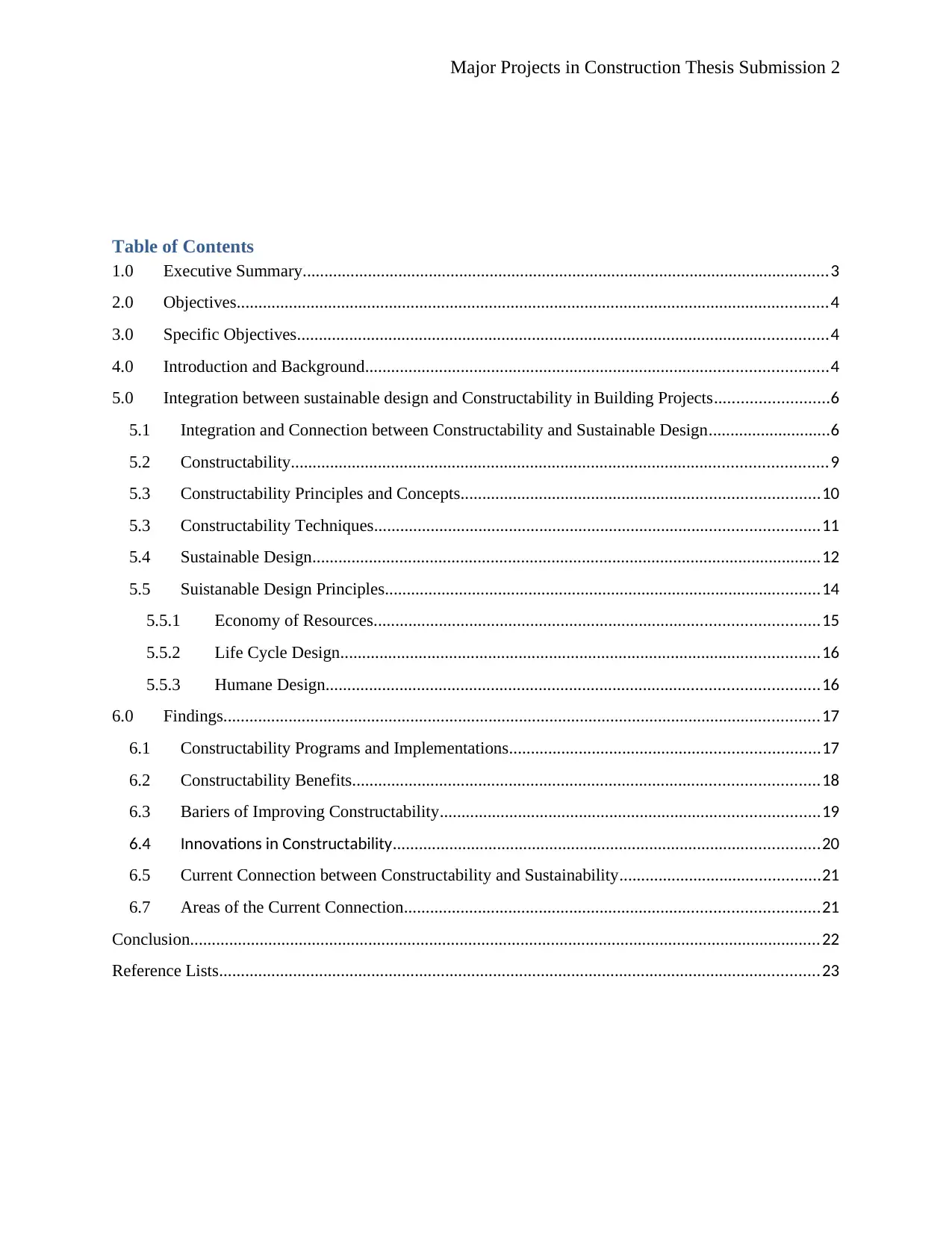
Table of Contents
1.0 Executive Summary.........................................................................................................................3
2.0 Objectives........................................................................................................................................4
3.0 Specific Objectives..........................................................................................................................4
4.0 Introduction and Background..........................................................................................................4
5.0 Integration between sustainable design and Constructability in Building Projects..........................6
5.1 Integration and Connection between Constructability and Sustainable Design............................6
5.2 Constructability...........................................................................................................................9
5.3 Constructability Principles and Concepts..................................................................................10
5.3 Constructability Techniques......................................................................................................11
5.4 Sustainable Design.....................................................................................................................12
5.5 Suistanable Design Principles....................................................................................................14
5.5.1 Economy of Resources......................................................................................................15
5.5.2 Life Cycle Design..............................................................................................................16
5.5.3 Humane Design.................................................................................................................16
6.0 Findings.........................................................................................................................................17
6.1 Constructability Programs and Implementations.......................................................................17
6.2 Constructability Benefits...........................................................................................................18
6.3 Bariers of Improving Constructability.......................................................................................19
6.4 Innovations in Constructability..................................................................................................20
6.5 Current Connection between Constructability and Sustainability..............................................21
6.7 Areas of the Current Connection...............................................................................................21
Conclusion.................................................................................................................................................22
Reference Lists..........................................................................................................................................23
Table of Contents
1.0 Executive Summary.........................................................................................................................3
2.0 Objectives........................................................................................................................................4
3.0 Specific Objectives..........................................................................................................................4
4.0 Introduction and Background..........................................................................................................4
5.0 Integration between sustainable design and Constructability in Building Projects..........................6
5.1 Integration and Connection between Constructability and Sustainable Design............................6
5.2 Constructability...........................................................................................................................9
5.3 Constructability Principles and Concepts..................................................................................10
5.3 Constructability Techniques......................................................................................................11
5.4 Sustainable Design.....................................................................................................................12
5.5 Suistanable Design Principles....................................................................................................14
5.5.1 Economy of Resources......................................................................................................15
5.5.2 Life Cycle Design..............................................................................................................16
5.5.3 Humane Design.................................................................................................................16
6.0 Findings.........................................................................................................................................17
6.1 Constructability Programs and Implementations.......................................................................17
6.2 Constructability Benefits...........................................................................................................18
6.3 Bariers of Improving Constructability.......................................................................................19
6.4 Innovations in Constructability..................................................................................................20
6.5 Current Connection between Constructability and Sustainability..............................................21
6.7 Areas of the Current Connection...............................................................................................21
Conclusion.................................................................................................................................................22
Reference Lists..........................................................................................................................................23
Major Projects in Construction Thesis Submission 3
1.0 Executive Summary
In the recent days, buildings have been demarcated to contribute to the overall 50% of the wealth
of the various nations worldwide. In essence, most of the building owners tend to give priority to
the returns which they are likely to gain from the investments and the overall welfare.
Furthermore, there are different problems as well as urban and environmental impacts which
have sprawl due to the constructions across different countries. Some of the key problems
impacting on environment and urban set up include climate change, global warming and air
pollution. Preferably, the proposal of sustainability not only aims at reducing the environmental
hazards but also helps in integrating the social-economical requirements. This aspects must
conducted in a manner that they protect the current generations while at the same time they do
not compromise the future generations in the long run. Therefore, sustainable design, aims at
considering that both the industrial development and the larger settlement patterns have healthier
environment with least wasteful impacts on the surroundings (O'Donnell and De Vries 2015
p.249). Also, this analysis appraises the concept of constructability in the process; it analyzes the
aspects from the start stage to the late finish phase of the construction project as well as the
overall management process. Furthermore, the concept also identifies the various obstacles as
well as some of the key techniques which one can utilize in curbing the challenges which are
likely to be encountered in the construction process. Therefore, it is important to apply the
integration concept as the aspects ensures that there is the provision of efficient conditions in
terms of resources utilization as well as ensuring that there is reduction in wastages (Jarkas 2015
p.265). This hasten the overall environment by ensuring that there is sustainability in the both the
society and environmental economics in long run. Thus, it is clear that both constructability as
1.0 Executive Summary
In the recent days, buildings have been demarcated to contribute to the overall 50% of the wealth
of the various nations worldwide. In essence, most of the building owners tend to give priority to
the returns which they are likely to gain from the investments and the overall welfare.
Furthermore, there are different problems as well as urban and environmental impacts which
have sprawl due to the constructions across different countries. Some of the key problems
impacting on environment and urban set up include climate change, global warming and air
pollution. Preferably, the proposal of sustainability not only aims at reducing the environmental
hazards but also helps in integrating the social-economical requirements. This aspects must
conducted in a manner that they protect the current generations while at the same time they do
not compromise the future generations in the long run. Therefore, sustainable design, aims at
considering that both the industrial development and the larger settlement patterns have healthier
environment with least wasteful impacts on the surroundings (O'Donnell and De Vries 2015
p.249). Also, this analysis appraises the concept of constructability in the process; it analyzes the
aspects from the start stage to the late finish phase of the construction project as well as the
overall management process. Furthermore, the concept also identifies the various obstacles as
well as some of the key techniques which one can utilize in curbing the challenges which are
likely to be encountered in the construction process. Therefore, it is important to apply the
integration concept as the aspects ensures that there is the provision of efficient conditions in
terms of resources utilization as well as ensuring that there is reduction in wastages (Jarkas 2015
p.265). This hasten the overall environment by ensuring that there is sustainability in the both the
society and environmental economics in long run. Thus, it is clear that both constructability as
⊘ This is a preview!⊘
Do you want full access?
Subscribe today to unlock all pages.

Trusted by 1+ million students worldwide
Major Projects in Construction Thesis Submission 4
well as sustainable design forms part and parcel of the efficient design in the construction.
Hence, this paper evaluates different literature reviews and draws decisive conclusions on both
the sustainable and constructability design. Thus approach mainly aims at enhancing the building
quality as well as the consequently life span of the structures in the long run (Liang et al. 2015,
July p. 87).
2.0 Objectives
The main objective of this paper is to assess to the integration concept between the sustainable
design and the constructability concept in building and construction.
3.0 Specific Objectives
There are three specific objectives of this project and these are discussed as outlined below
i. To assess the impacts of the integration concept between the sustainable design and the
constructability concept in building
ii. To assess the environmental impacts and economic viability in line with the integration
concept between the sustainable design and the constructability concept in building
iii. To assess the quality and the consequently life span of the building in line with the
integration concept between the sustainable design and the constructability concept in
building
4.0 Introduction and Background
In the recent days, construction industry often regarded as one of the largest diligence across the
world. The industry has both the makeable contributions to the overall growth of the industry for
both the economic as well as social development. The growth often recorded at both the national
as well as the international levels. In essence, construction industries enables different
well as sustainable design forms part and parcel of the efficient design in the construction.
Hence, this paper evaluates different literature reviews and draws decisive conclusions on both
the sustainable and constructability design. Thus approach mainly aims at enhancing the building
quality as well as the consequently life span of the structures in the long run (Liang et al. 2015,
July p. 87).
2.0 Objectives
The main objective of this paper is to assess to the integration concept between the sustainable
design and the constructability concept in building and construction.
3.0 Specific Objectives
There are three specific objectives of this project and these are discussed as outlined below
i. To assess the impacts of the integration concept between the sustainable design and the
constructability concept in building
ii. To assess the environmental impacts and economic viability in line with the integration
concept between the sustainable design and the constructability concept in building
iii. To assess the quality and the consequently life span of the building in line with the
integration concept between the sustainable design and the constructability concept in
building
4.0 Introduction and Background
In the recent days, construction industry often regarded as one of the largest diligence across the
world. The industry has both the makeable contributions to the overall growth of the industry for
both the economic as well as social development. The growth often recorded at both the national
as well as the international levels. In essence, construction industries enables different
Paraphrase This Document
Need a fresh take? Get an instant paraphrase of this document with our AI Paraphraser
Major Projects in Construction Thesis Submission 5
communities to have access to places for education, housing, health care , culture, leisure,
business as well as entertainment. The industry also leads to the creation of the infrastructure
projects which often assist in development of enabling facilities to help in performing the
intended functions in the long run. The analogy also assist in increasing the overall gross
domestic product also termed as GDP (Kordestani Ghaleenoe et al. 2017). Subsequently, the
analogy hastens the motivational development of different industries by supported the overall
construction processes. Some of the key elements which one needs to incorporate in the process
include construction equipment as well as building materials. Furthermore, the constructability
aspect and the sustainable design is a critical area which offers different employment
opportunities (BAJURI 2017). Conversely, different research works and peer reviews have
revealed that construction industry is one of the most affected industries as far as the
environmentally damaging as well as resource intensive is concerned. Essentially, this company
contributes at least 40% of the overall total raw materials flowing into the makeable economy
yearly. Furthermore, it is a key and critical contributor to the land dereliction, waste source as
well as pollution. The analysis of Anink et al (2011) noted that the company is sole responsible
for the 50% resources materials drawn from the nature, energy consumption of at least 40% as
well as the generation of the makeable 50% total wastes generated in the meantime. Preferably,
most of the modern buildings and structures tend to have either heating or cooling systems.
Essentially, some of the modern structures tend have both the heating and cooling systems
depending on the prevailing environmental conditions. Thus, there is wastage of large amounts
of energy as far as the cooling and the heating processes in the structure and system is concerned.
The construction industry continues to face different plagued problems. These problems affect
the operations as well as limiting the optimum outputs achievements. One of the vital problems
communities to have access to places for education, housing, health care , culture, leisure,
business as well as entertainment. The industry also leads to the creation of the infrastructure
projects which often assist in development of enabling facilities to help in performing the
intended functions in the long run. The analogy also assist in increasing the overall gross
domestic product also termed as GDP (Kordestani Ghaleenoe et al. 2017). Subsequently, the
analogy hastens the motivational development of different industries by supported the overall
construction processes. Some of the key elements which one needs to incorporate in the process
include construction equipment as well as building materials. Furthermore, the constructability
aspect and the sustainable design is a critical area which offers different employment
opportunities (BAJURI 2017). Conversely, different research works and peer reviews have
revealed that construction industry is one of the most affected industries as far as the
environmentally damaging as well as resource intensive is concerned. Essentially, this company
contributes at least 40% of the overall total raw materials flowing into the makeable economy
yearly. Furthermore, it is a key and critical contributor to the land dereliction, waste source as
well as pollution. The analysis of Anink et al (2011) noted that the company is sole responsible
for the 50% resources materials drawn from the nature, energy consumption of at least 40% as
well as the generation of the makeable 50% total wastes generated in the meantime. Preferably,
most of the modern buildings and structures tend to have either heating or cooling systems.
Essentially, some of the modern structures tend have both the heating and cooling systems
depending on the prevailing environmental conditions. Thus, there is wastage of large amounts
of energy as far as the cooling and the heating processes in the structure and system is concerned.
The construction industry continues to face different plagued problems. These problems affect
the operations as well as limiting the optimum outputs achievements. One of the vital problems
Major Projects in Construction Thesis Submission 6
which affect the sector is the emergence of the division more so between the contractors and the
designers. The norm often depicted when dealing with the separation of the design from the
construction process. There is also pivot focus on the traditional procurement and the overall
approaches are of essential importance in the long run. The norm is applied in large
organizations when dealing with the construction projects (Padala and Maheswari 2017, January
p. 361).
5.0 Integration between sustainable design and Constructability in Building Projects
5.1 Integration and Connection between Constructability and Sustainable Design
The application of constructability improvements and the overall methods is of essential
importance in the building and construction as a whole. The concepts help in providing both the
recognized as well as reliable framework for not only managing the sustainability knowledge but
also for monitoring all the related issues in construction and design procedures in the long run.
Both the sustainable design and constructability are viewed to be complementary on the ground
that both the aspects aims at addressing the mechanisms on how to reduce the waste types in the
building types and the overall projects. While sustainable design focuses on removing all the
unnecessary waste energy as well as water use in the structures, constructability on the other
hand aims at eliminating all the unwanted construction efforts. Preferably, constructability
encompasses on the waste utilization in line with personnel and material use. The concept has to
be undertaken and this has to be carried out by finding a mechanism of conducting it efficiently.
Constructability is a concept which also focuses on ensuring the implementation process in the
construction phase primarily conducted in an ease manner. Conversely, the concept also ensures
that operability as well design influence in line with the facility is also taken into consideration in
the long run. Essentially, all the necessary improvements regarding the quality and the project
which affect the sector is the emergence of the division more so between the contractors and the
designers. The norm often depicted when dealing with the separation of the design from the
construction process. There is also pivot focus on the traditional procurement and the overall
approaches are of essential importance in the long run. The norm is applied in large
organizations when dealing with the construction projects (Padala and Maheswari 2017, January
p. 361).
5.0 Integration between sustainable design and Constructability in Building Projects
5.1 Integration and Connection between Constructability and Sustainable Design
The application of constructability improvements and the overall methods is of essential
importance in the building and construction as a whole. The concepts help in providing both the
recognized as well as reliable framework for not only managing the sustainability knowledge but
also for monitoring all the related issues in construction and design procedures in the long run.
Both the sustainable design and constructability are viewed to be complementary on the ground
that both the aspects aims at addressing the mechanisms on how to reduce the waste types in the
building types and the overall projects. While sustainable design focuses on removing all the
unnecessary waste energy as well as water use in the structures, constructability on the other
hand aims at eliminating all the unwanted construction efforts. Preferably, constructability
encompasses on the waste utilization in line with personnel and material use. The concept has to
be undertaken and this has to be carried out by finding a mechanism of conducting it efficiently.
Constructability is a concept which also focuses on ensuring the implementation process in the
construction phase primarily conducted in an ease manner. Conversely, the concept also ensures
that operability as well design influence in line with the facility is also taken into consideration in
the long run. Essentially, all the necessary improvements regarding the quality and the project
⊘ This is a preview!⊘
Do you want full access?
Subscribe today to unlock all pages.
Trusted by 1+ million students worldwide
Major Projects in Construction Thesis Submission 7
performance mainly performed by pursuing makeable synergies between sustainable design and
constructability.
Furthermore, the connections as well as the collaboration regarding the integration between the
sustainable design and constructability are concept which exists in different aspects. Some of the
area in which the concept is depicted includes conceptual, system design as well as material
areas of the overall project. Both the sustainable design as well as constructability has various
sets regarding the core concepts which help in attaining the set goals as well as stipulating the
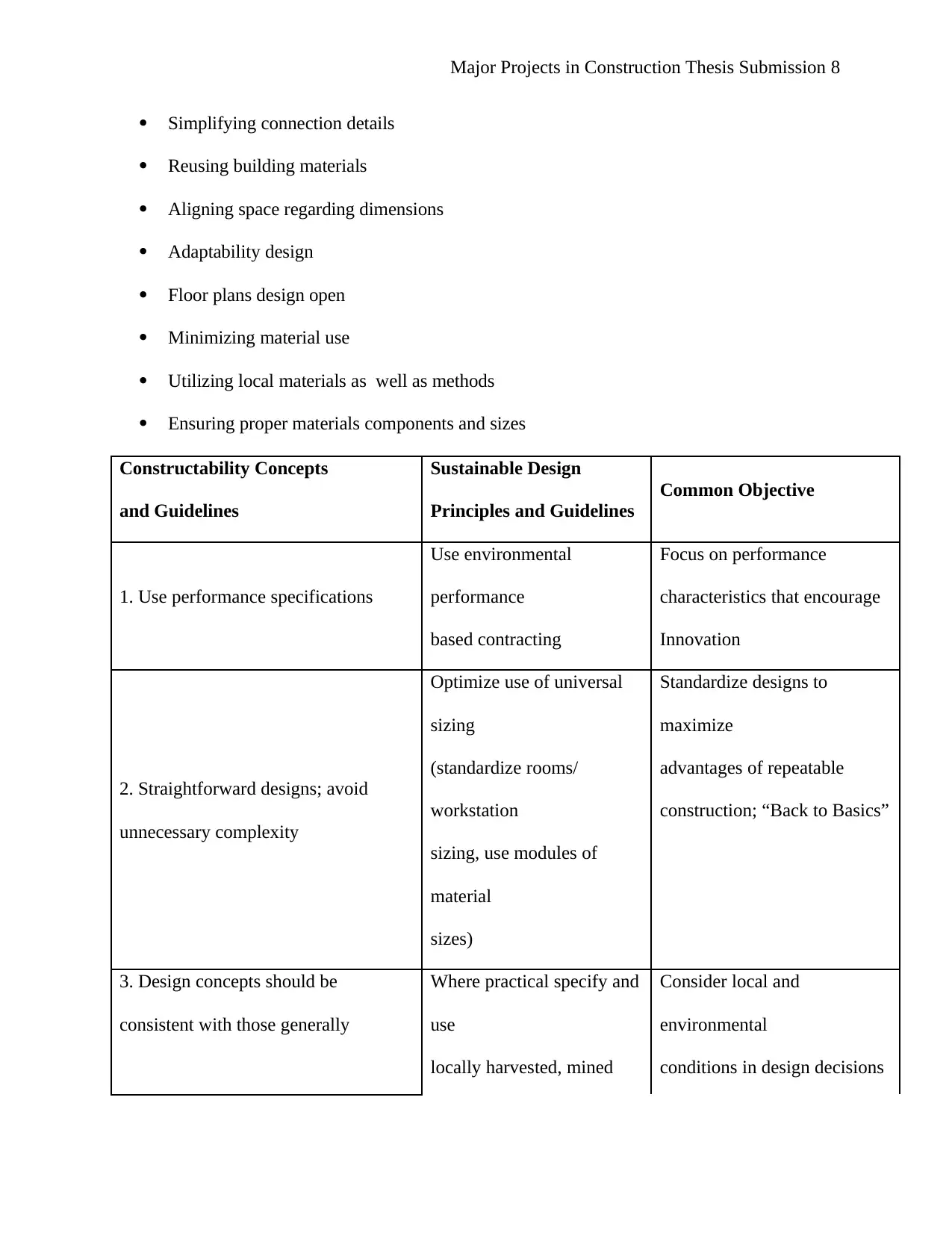
various guidelines in achieving the project goals. The table below outlines the various guidelines
which one can apply in dealing with sustainability and constructability as well as specifying
there various objectives in the meantime. Subsequently, one can utilize the renovation pentagon
of August 2001 in appraising the concept of the integrations for constructability and sustainable
designs in building and structural works a whole. The integration analysis involves the
application of the ISDC team. The ISDC team abbreviation refers to the Integration between
Sustainable Design and Constructability Team. It is used in managing the renovation projects as
well as in achieving the fundamental results regarding the two methods. The methods under
discussions include sustainable design and constructability in the long run. It is important to note
the application of the pentagon initiatives in the operations results in the identification of
makeable 12 principles. Some of the principles captured and appraised in the process include the
following
Streamlining trade interfaces.
Precut items and standard elements design
Modularization and prefabrication design
Ductwork runs and maximizing straight piping
performance mainly performed by pursuing makeable synergies between sustainable design and
constructability.
Furthermore, the connections as well as the collaboration regarding the integration between the
sustainable design and constructability are concept which exists in different aspects. Some of the
area in which the concept is depicted includes conceptual, system design as well as material
areas of the overall project. Both the sustainable design as well as constructability has various
sets regarding the core concepts which help in attaining the set goals as well as stipulating the
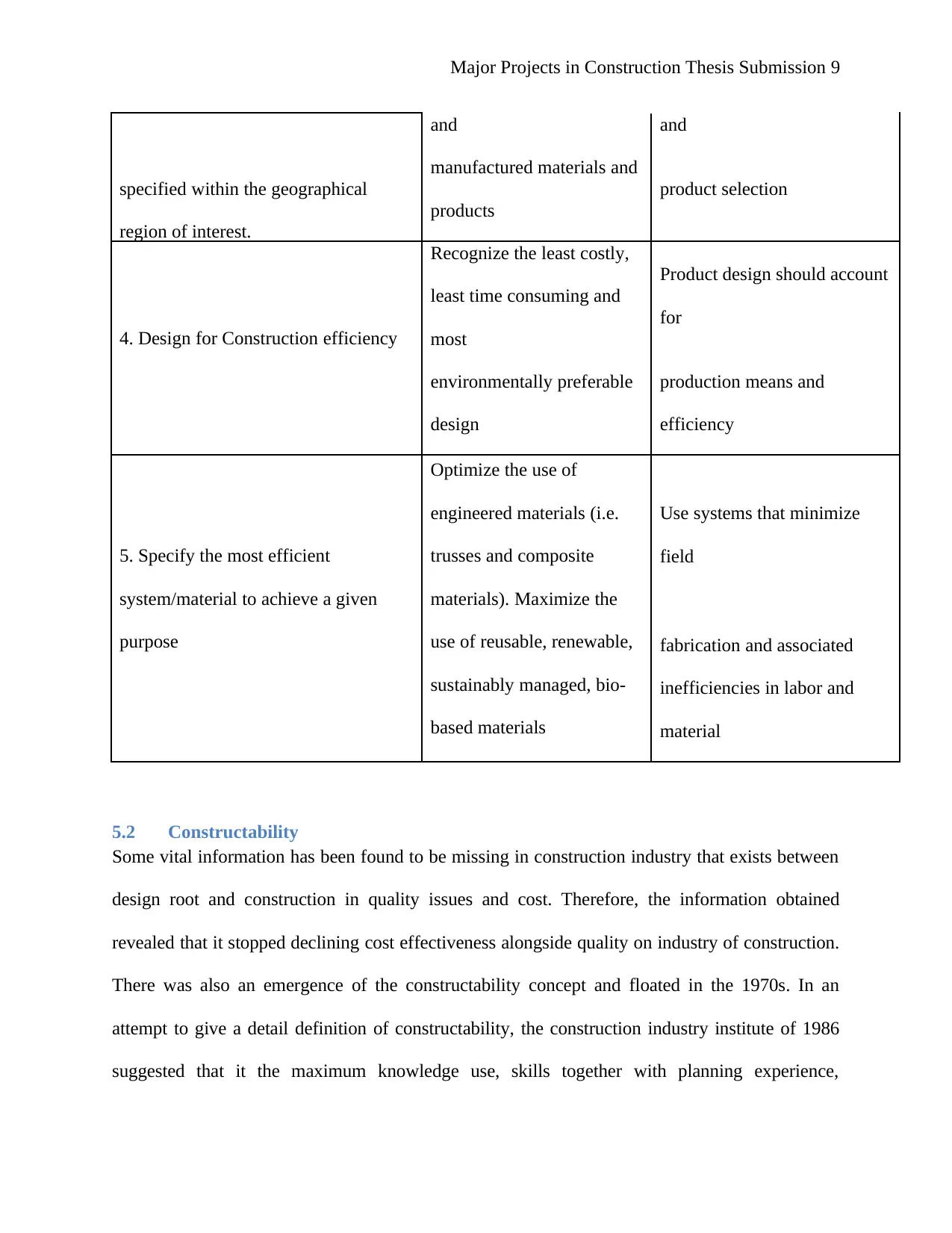
various guidelines in achieving the project goals. The table below outlines the various guidelines
which one can apply in dealing with sustainability and constructability as well as specifying
there various objectives in the meantime. Subsequently, one can utilize the renovation pentagon
of August 2001 in appraising the concept of the integrations for constructability and sustainable
designs in building and structural works a whole. The integration analysis involves the
application of the ISDC team. The ISDC team abbreviation refers to the Integration between
Sustainable Design and Constructability Team. It is used in managing the renovation projects as
well as in achieving the fundamental results regarding the two methods. The methods under
discussions include sustainable design and constructability in the long run. It is important to note
the application of the pentagon initiatives in the operations results in the identification of
makeable 12 principles. Some of the principles captured and appraised in the process include the
following
Streamlining trade interfaces.
Precut items and standard elements design
Modularization and prefabrication design
Ductwork runs and maximizing straight piping
Paraphrase This Document
Need a fresh take? Get an instant paraphrase of this document with our AI Paraphraser
Major Projects in Construction Thesis Submission 8
Simplifying connection details
Reusing building materials
Aligning space regarding dimensions
Adaptability design
Floor plans design open
Minimizing material use
Utilizing local materials as well as methods
Ensuring proper materials components and sizes
Constructability Concepts Sustainable Design
Principles and Guidelines
Common Objective
and Guidelines
1. Use performance specifications
Use environmental
performance
Focus on performance
characteristics that encourage
based contracting Innovation
2. Straightforward designs; avoid
unnecessary complexity
Optimize use of universal
sizing
Standardize designs to
maximize
(standardize rooms/
workstation
advantages of repeatable
construction; “Back to Basics”
sizing, use modules of
material
sizes)
3. Design concepts should be
consistent with those generally
Where practical specify and
use
Consider local and
environmental
locally harvested, mined conditions in design decisions
Simplifying connection details
Reusing building materials
Aligning space regarding dimensions
Adaptability design
Floor plans design open
Minimizing material use
Utilizing local materials as well as methods
Ensuring proper materials components and sizes
Constructability Concepts Sustainable Design
Principles and Guidelines
Common Objective
and Guidelines
1. Use performance specifications
Use environmental
performance
Focus on performance
characteristics that encourage
based contracting Innovation
2. Straightforward designs; avoid
unnecessary complexity
Optimize use of universal
sizing
Standardize designs to
maximize
(standardize rooms/
workstation
advantages of repeatable
construction; “Back to Basics”
sizing, use modules of
material
sizes)
3. Design concepts should be
consistent with those generally
Where practical specify and
use
Consider local and
environmental
locally harvested, mined conditions in design decisions
Major Projects in Construction Thesis Submission 9
specified within the geographical
region of interest.
and and
manufactured materials and
products
product selection
4. Design for Construction efficiency
Recognize the least costly,
least time consuming and
most
Product design should account
for
environmentally preferable
design
production means and
efficiency
5. Specify the most efficient
system/material to achieve a given
purpose
Optimize the use of
engineered materials (i.e.
trusses and composite
materials). Maximize the
use of reusable, renewable,
sustainably managed, bio-
based materials
Use systems that minimize
field
fabrication and associated
inefficiencies in labor and
material
5.2 Constructability
Some vital information has been found to be missing in construction industry that exists between
design root and construction in quality issues and cost. Therefore, the information obtained
revealed that it stopped declining cost effectiveness alongside quality on industry of construction.
There was also an emergence of the constructability concept and floated in the 1970s. In an
attempt to give a detail definition of constructability, the construction industry institute of 1986
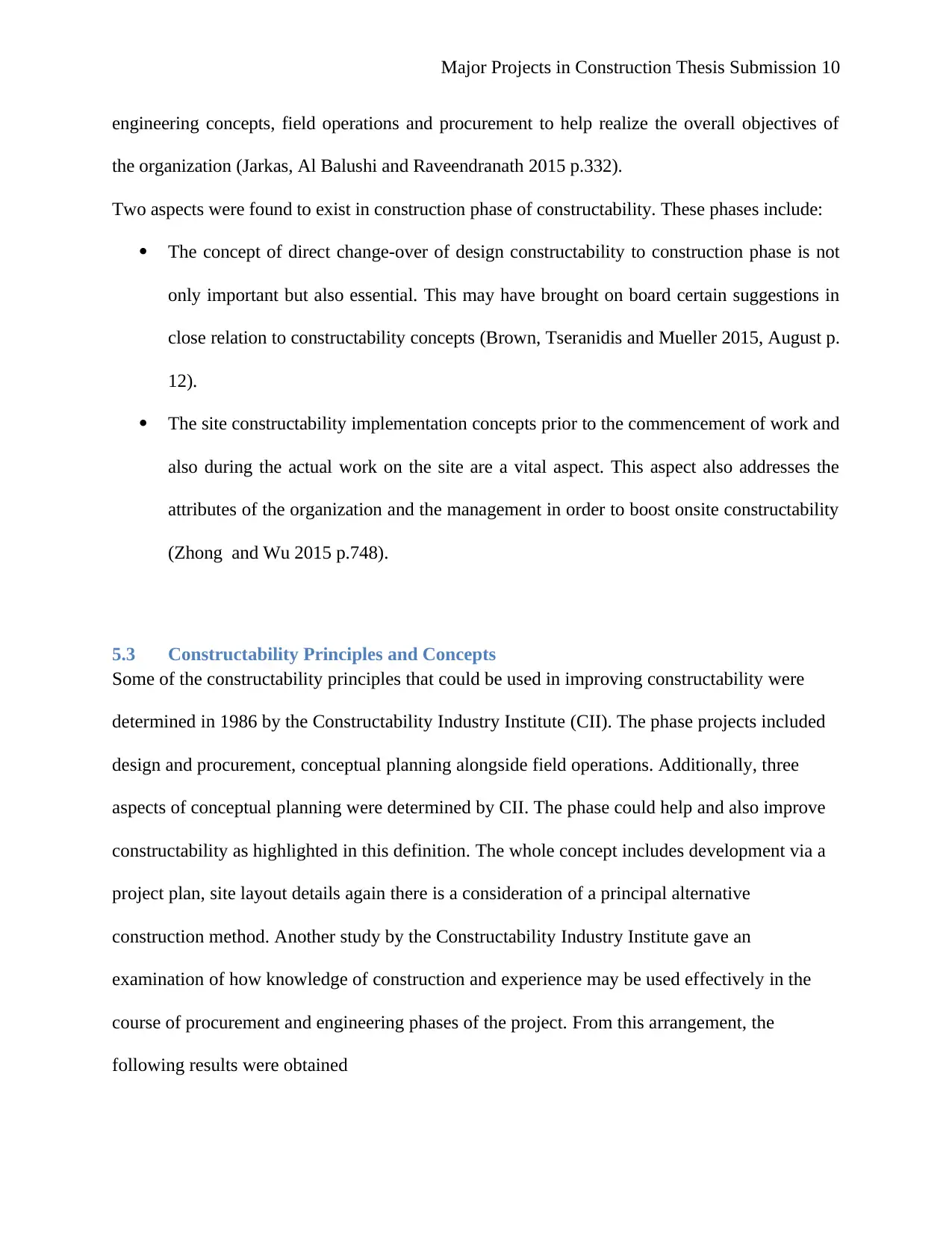
suggested that it the maximum knowledge use, skills together with planning experience,
specified within the geographical
region of interest.
and and
manufactured materials and
products
product selection
4. Design for Construction efficiency
Recognize the least costly,
least time consuming and
most
Product design should account
for
environmentally preferable
design
production means and
efficiency
5. Specify the most efficient
system/material to achieve a given
purpose
Optimize the use of
engineered materials (i.e.
trusses and composite
materials). Maximize the
use of reusable, renewable,
sustainably managed, bio-
based materials
Use systems that minimize
field
fabrication and associated
inefficiencies in labor and
material
5.2 Constructability
Some vital information has been found to be missing in construction industry that exists between
design root and construction in quality issues and cost. Therefore, the information obtained
revealed that it stopped declining cost effectiveness alongside quality on industry of construction.
There was also an emergence of the constructability concept and floated in the 1970s. In an
attempt to give a detail definition of constructability, the construction industry institute of 1986
suggested that it the maximum knowledge use, skills together with planning experience,
⊘ This is a preview!⊘
Do you want full access?
Subscribe today to unlock all pages.
Trusted by 1+ million students worldwide
Major Projects in Construction Thesis Submission 10
engineering concepts, field operations and procurement to help realize the overall objectives of
the organization (Jarkas, Al Balushi and Raveendranath 2015 p.332).
Two aspects were found to exist in construction phase of constructability. These phases include:
The concept of direct change-over of design constructability to construction phase is not
only important but also essential. This may have brought on board certain suggestions in
close relation to constructability concepts (Brown, Tseranidis and Mueller 2015, August p.
12).
The site constructability implementation concepts prior to the commencement of work and
also during the actual work on the site are a vital aspect. This aspect also addresses the
attributes of the organization and the management in order to boost onsite constructability
(Zhong and Wu 2015 p.748).
5.3 Constructability Principles and Concepts
Some of the constructability principles that could be used in improving constructability were
determined in 1986 by the Constructability Industry Institute (CII). The phase projects included
design and procurement, conceptual planning alongside field operations. Additionally, three
aspects of conceptual planning were determined by CII. The phase could help and also improve
constructability as highlighted in this definition. The whole concept includes development via a
project plan, site layout details again there is a consideration of a principal alternative
construction method. Another study by the Constructability Industry Institute gave an
examination of how knowledge of construction and experience may be used effectively in the
course of procurement and engineering phases of the project. From this arrangement, the
following results were obtained
engineering concepts, field operations and procurement to help realize the overall objectives of
the organization (Jarkas, Al Balushi and Raveendranath 2015 p.332).
Two aspects were found to exist in construction phase of constructability. These phases include:
The concept of direct change-over of design constructability to construction phase is not
only important but also essential. This may have brought on board certain suggestions in
close relation to constructability concepts (Brown, Tseranidis and Mueller 2015, August p.
12).
The site constructability implementation concepts prior to the commencement of work and
also during the actual work on the site are a vital aspect. This aspect also addresses the
attributes of the organization and the management in order to boost onsite constructability
(Zhong and Wu 2015 p.748).
5.3 Constructability Principles and Concepts
Some of the constructability principles that could be used in improving constructability were
determined in 1986 by the Constructability Industry Institute (CII). The phase projects included
design and procurement, conceptual planning alongside field operations. Additionally, three
aspects of conceptual planning were determined by CII. The phase could help and also improve
constructability as highlighted in this definition. The whole concept includes development via a
project plan, site layout details again there is a consideration of a principal alternative
construction method. Another study by the Constructability Industry Institute gave an
examination of how knowledge of construction and experience may be used effectively in the
course of procurement and engineering phases of the project. From this arrangement, the
following results were obtained
Paraphrase This Document
Need a fresh take? Get an instant paraphrase of this document with our AI Paraphraser
Major Projects in Construction Thesis Submission 11
Procurement and design should be driven by construction
To enable efficient construction, there is need to configure the design
Scoping of the design should be done to facilitate transport, fabrication and installation
There should be promotion of using of resources by the design
Design should help construction even under conditions of weather
Specifications should be made in order to simplify the operations of the construction
Recent research done by scientists has revealed that there are 12 major accountability principles.
These principles are mapped on the process of procurement which incorporates knowledge of
construction, integration, team skills, corporate objectives, available resources, programmer,
external factors, accessibility, construction methodology, construction innovation, specifications
and feedback (Son and Kim 2015 p.144).
5.3 Constructability Techniques
There are various constructability techniques used in line with the construction and the overall
structural works. Some of the constructability techniques often drew from the reviews as such
the peer journals whereas others are sources from other practices. Some of the practices from
which they are drawn include brainstorming, physical models, computer models as well as
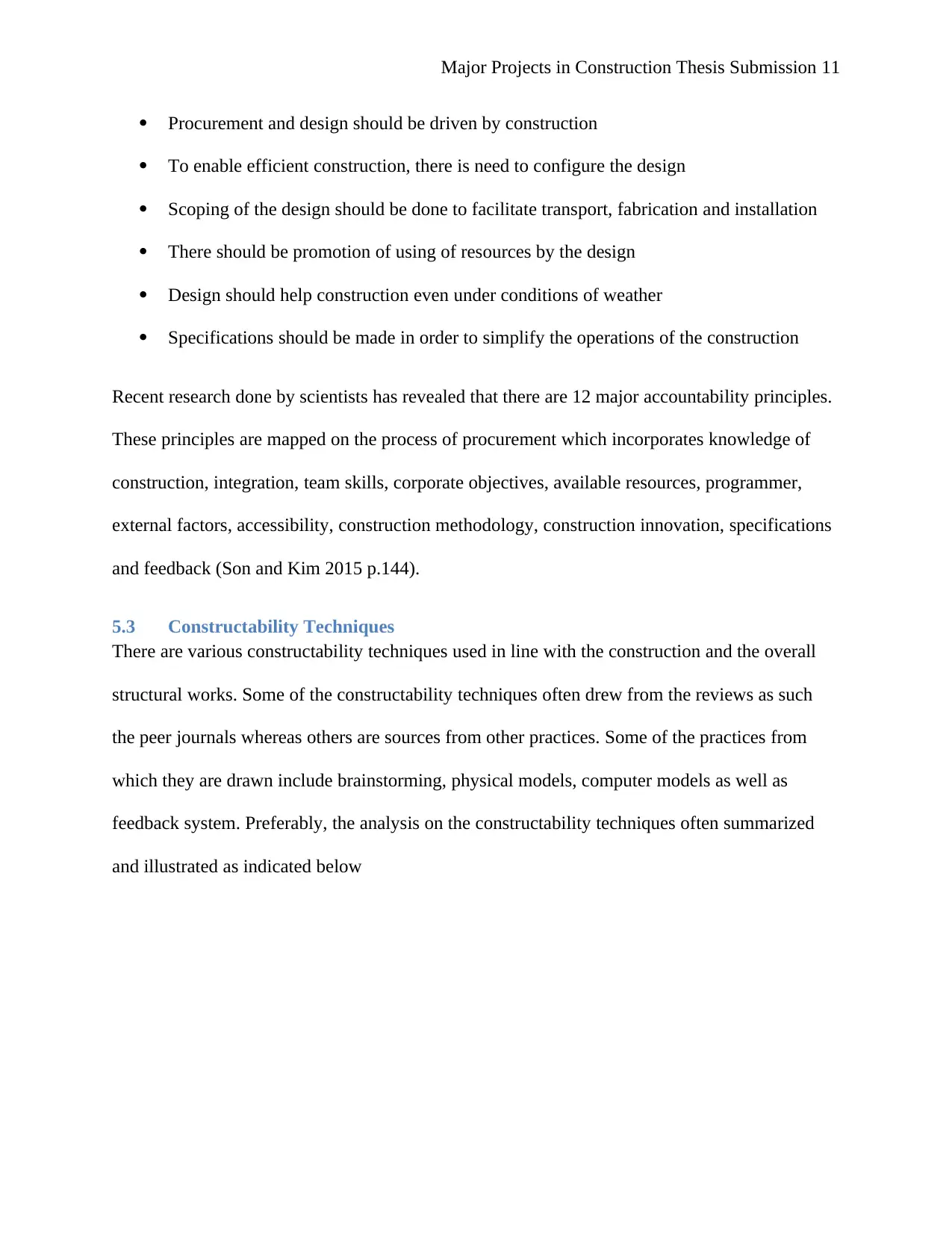
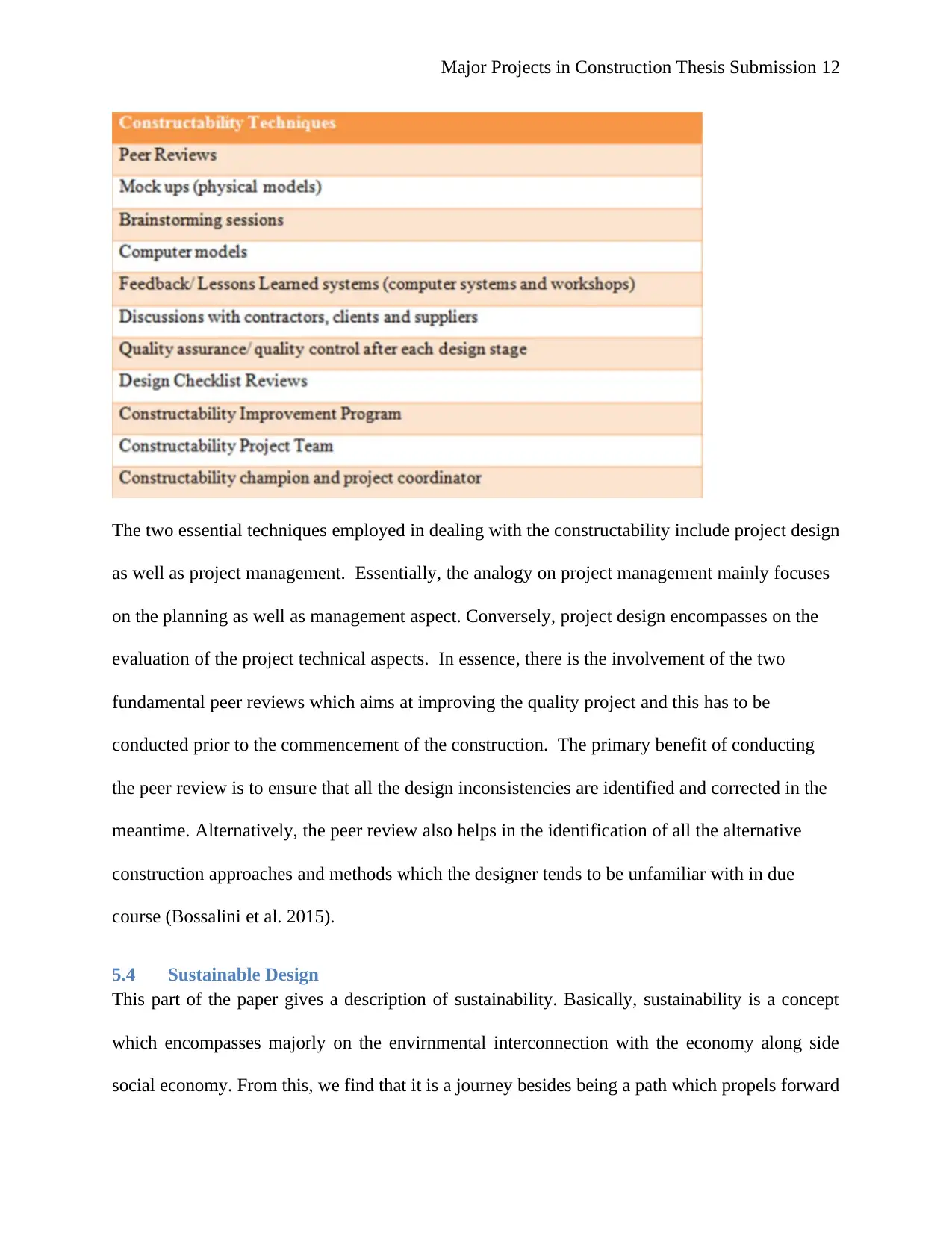
feedback system. Preferably, the analysis on the constructability techniques often summarized
and illustrated as indicated below
Procurement and design should be driven by construction
To enable efficient construction, there is need to configure the design
Scoping of the design should be done to facilitate transport, fabrication and installation
There should be promotion of using of resources by the design
Design should help construction even under conditions of weather
Specifications should be made in order to simplify the operations of the construction
Recent research done by scientists has revealed that there are 12 major accountability principles.
These principles are mapped on the process of procurement which incorporates knowledge of
construction, integration, team skills, corporate objectives, available resources, programmer,
external factors, accessibility, construction methodology, construction innovation, specifications
and feedback (Son and Kim 2015 p.144).
5.3 Constructability Techniques
There are various constructability techniques used in line with the construction and the overall
structural works. Some of the constructability techniques often drew from the reviews as such
the peer journals whereas others are sources from other practices. Some of the practices from
which they are drawn include brainstorming, physical models, computer models as well as
feedback system. Preferably, the analysis on the constructability techniques often summarized
and illustrated as indicated below
Major Projects in Construction Thesis Submission 12
The two essential techniques employed in dealing with the constructability include project design
as well as project management. Essentially, the analogy on project management mainly focuses
on the planning as well as management aspect. Conversely, project design encompasses on the
evaluation of the project technical aspects. In essence, there is the involvement of the two
fundamental peer reviews which aims at improving the quality project and this has to be
conducted prior to the commencement of the construction. The primary benefit of conducting
the peer review is to ensure that all the design inconsistencies are identified and corrected in the
meantime. Alternatively, the peer review also helps in the identification of all the alternative
construction approaches and methods which the designer tends to be unfamiliar with in due
course (Bossalini et al. 2015).
5.4 Sustainable Design
This part of the paper gives a description of sustainability. Basically, sustainability is a concept
which encompasses majorly on the envirnmental interconnection with the economy along side
social economy. From this, we find that it is a journey besides being a path which propels forward
The two essential techniques employed in dealing with the constructability include project design
as well as project management. Essentially, the analogy on project management mainly focuses
on the planning as well as management aspect. Conversely, project design encompasses on the
evaluation of the project technical aspects. In essence, there is the involvement of the two
fundamental peer reviews which aims at improving the quality project and this has to be
conducted prior to the commencement of the construction. The primary benefit of conducting
the peer review is to ensure that all the design inconsistencies are identified and corrected in the
meantime. Alternatively, the peer review also helps in the identification of all the alternative
construction approaches and methods which the designer tends to be unfamiliar with in due
course (Bossalini et al. 2015).
5.4 Sustainable Design
This part of the paper gives a description of sustainability. Basically, sustainability is a concept
which encompasses majorly on the envirnmental interconnection with the economy along side
social economy. From this, we find that it is a journey besides being a path which propels forward
⊘ This is a preview!⊘
Do you want full access?
Subscribe today to unlock all pages.
Trusted by 1+ million students worldwide

1 out of 28


Related Documents


Your All-in-One AI-Powered Toolkit for Academic Success.
+13062052269
info@desklib.com
Available 24*7 on WhatsApp / Email
![[object Object]](/_next/static/media/star-bottom.7253800d.svg)
Unlock your academic potential
Copyright © 2020–2026 A2Z Services. All Rights Reserved. Developed and managed by ZUCOL.