Construction Technology: Climatic Design in Auckland, New Zealand

Verified

Added on  2022/11/13

|26
|1266
|141
Report
AI Summary
This report provides a comprehensive analysis of climatic design considerations for sustainable buildings in Auckland, New Zealand, focusing on the subtropical climate of the region. It begins with an introduction to Auckland's climate, including temperature, precipitation, wind patterns, and sunshine, highlighting the key characteristics that influence building design. The report then delves into specific design considerations, such as balancing solar radiation, providing wind protection, and ensuring proper ventilation. It explores various design strategies, including street layout, building orientation, and form, to maximize natural energy use and minimize environmental impact. The report emphasizes the importance of incorporating sustainable and energy-efficient design strategies early in the planning process and draws on case studies from regions with similar climatic conditions to offer practical building design ideas. The conclusion underscores the critical role of climate in building design and highlights the need for sustainable practices to create comfortable and energy-efficient buildings.
Document Page
CLIMATIC FOR
SUSTAINABLE
DESIGN
tabler-icon-diamond-filled.svg

Paraphrase This Document

Need a fresh take? Get an instant paraphrase of this document with our AI Paraphraser
Document Page
Introduction
Auckland, New Zealand experiences a
subtropical climate with the region lying
about 13⁰ of latitude south of Tropic of
Capricorn. does not experience any
extreme temperatures
Summers are often warm
have high humidity
winters tend to be mild and damp.
Rainfall is received throughout the year
Document Page
Temperatures
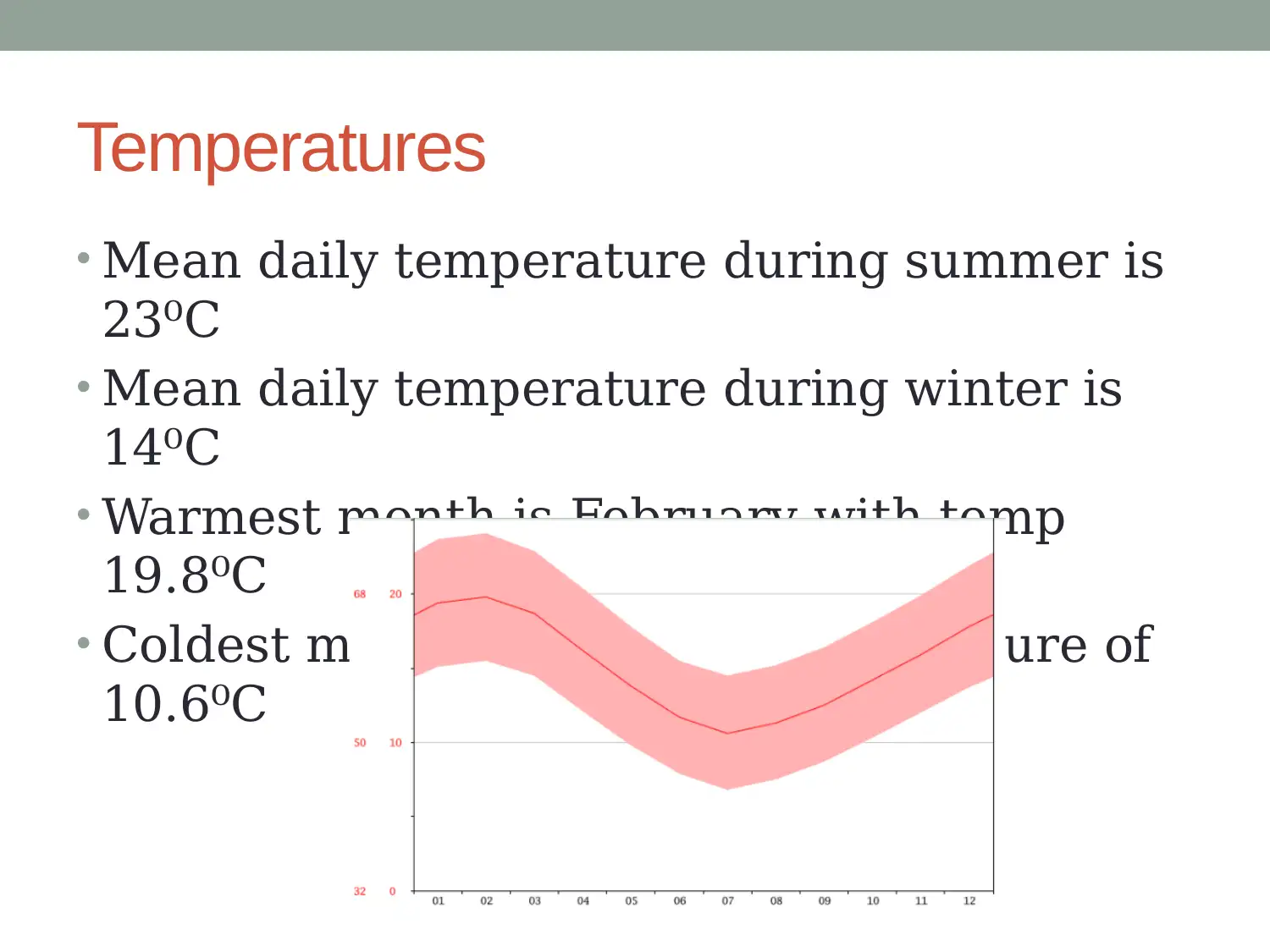
Mean daily temperature during summer is
23⁰C
Mean daily temperature during winter is
14⁰C
Warmest month is February with temp
19.8⁰C
Coldest month is July with temperature of
10.6⁰C
Document Page
Temperatures
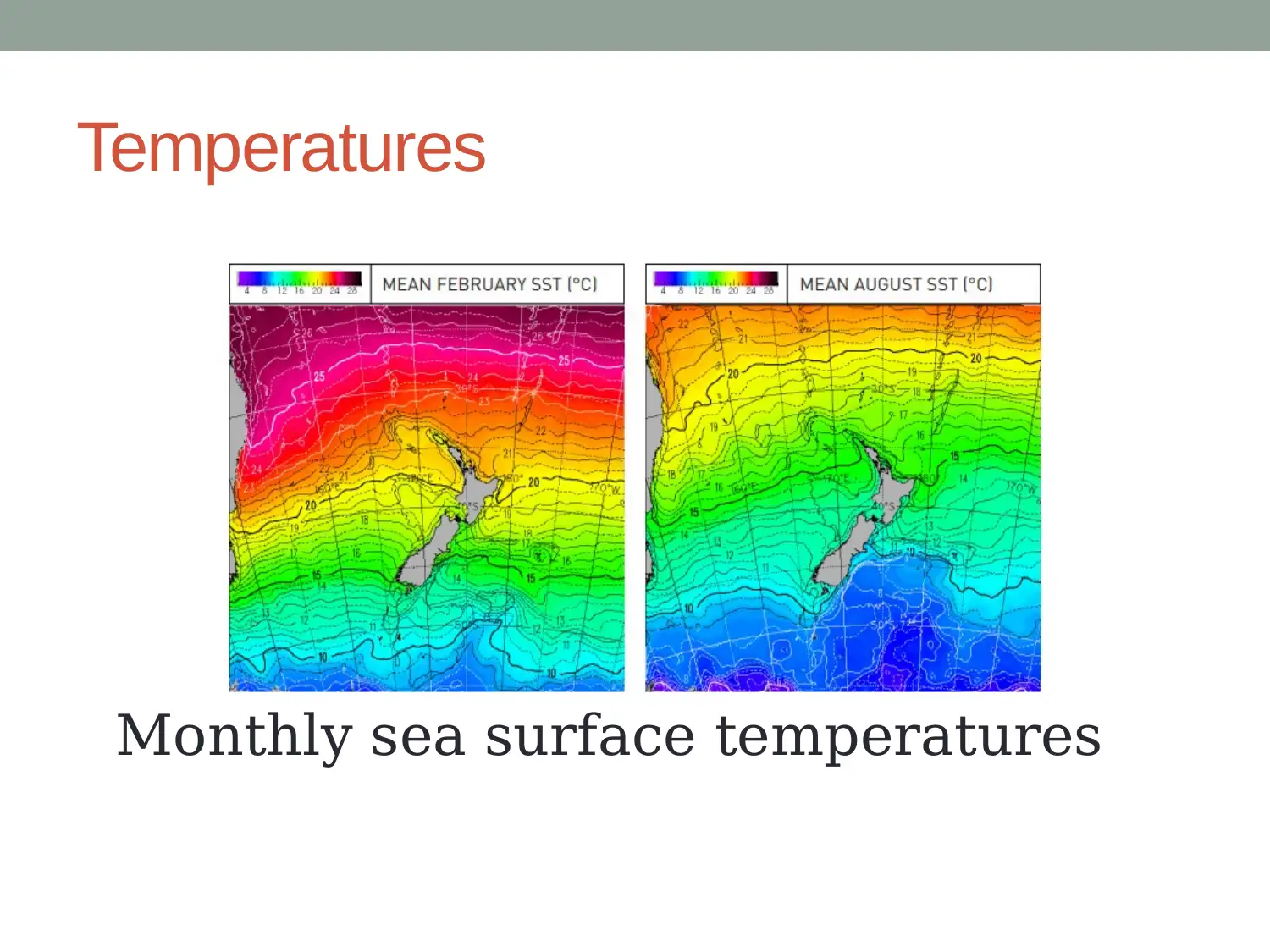
Monthly sea surface temperatures
tabler-icon-diamond-filled.svg

Paraphrase This Document

Need a fresh take? Get an instant paraphrase of this document with our AI Paraphraser
Document Page
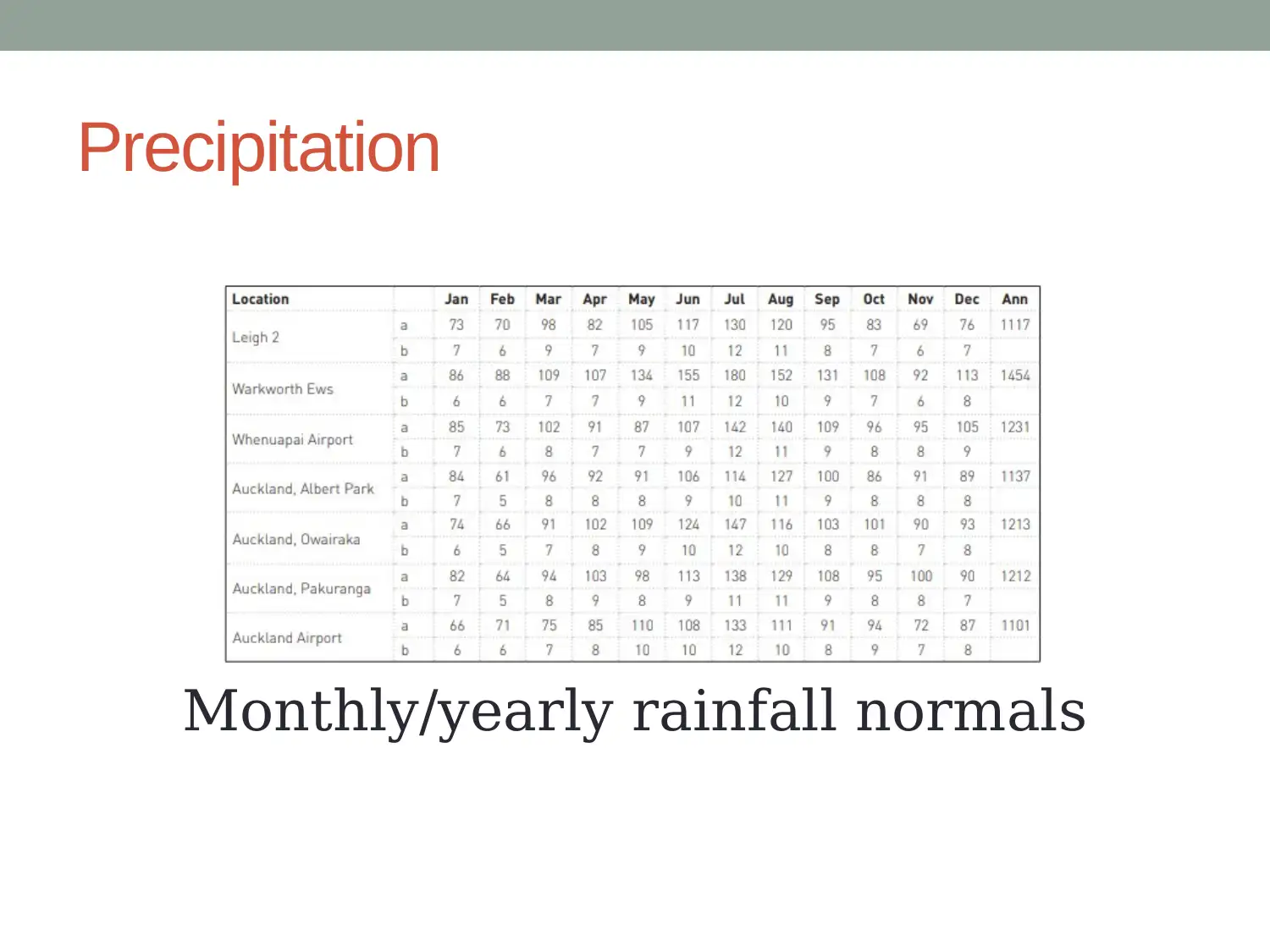
Precipitation
Mean annual rainfall is about 1240 mm.
Heaviest rainfalls are experienced during
depression to the northwest or north
associated with strong winds blowing from
north to northeast over the city.
There be variations in wind direction and
cloud cover as a result if minor causes
however fine weather is predominant in
the region (Tan, Lau and Ng, 2016).
Document Page
Precipitation
Monthly/yearly rainfall normals
Document Page
Frosts
Region Auckland experiences mild and
frosts
mild and frosts are often light and not
frequent
frosts mainly taking place under quite
stable conditions are often accompanied by
shallow inversions
Two frost types are recorded:
air frosts
ground frosts
Ground frosts are frequent in this region
tabler-icon-diamond-filled.svg

Paraphrase This Document

Need a fresh take? Get an instant paraphrase of this document with our AI Paraphraser
Document Page
Winds
The flow of air over Auckland is mostly from
the southwest direction
mostly experienced in winter and summer
the amount of winds are observed to
increase during summer from the northwest
as a result of the variation in the location of
high pressure belt (Tan, Lau and Ng, 2016).
The coastal regions of the city tend to be
more windy that the sheltered inland
regions.
Document Page
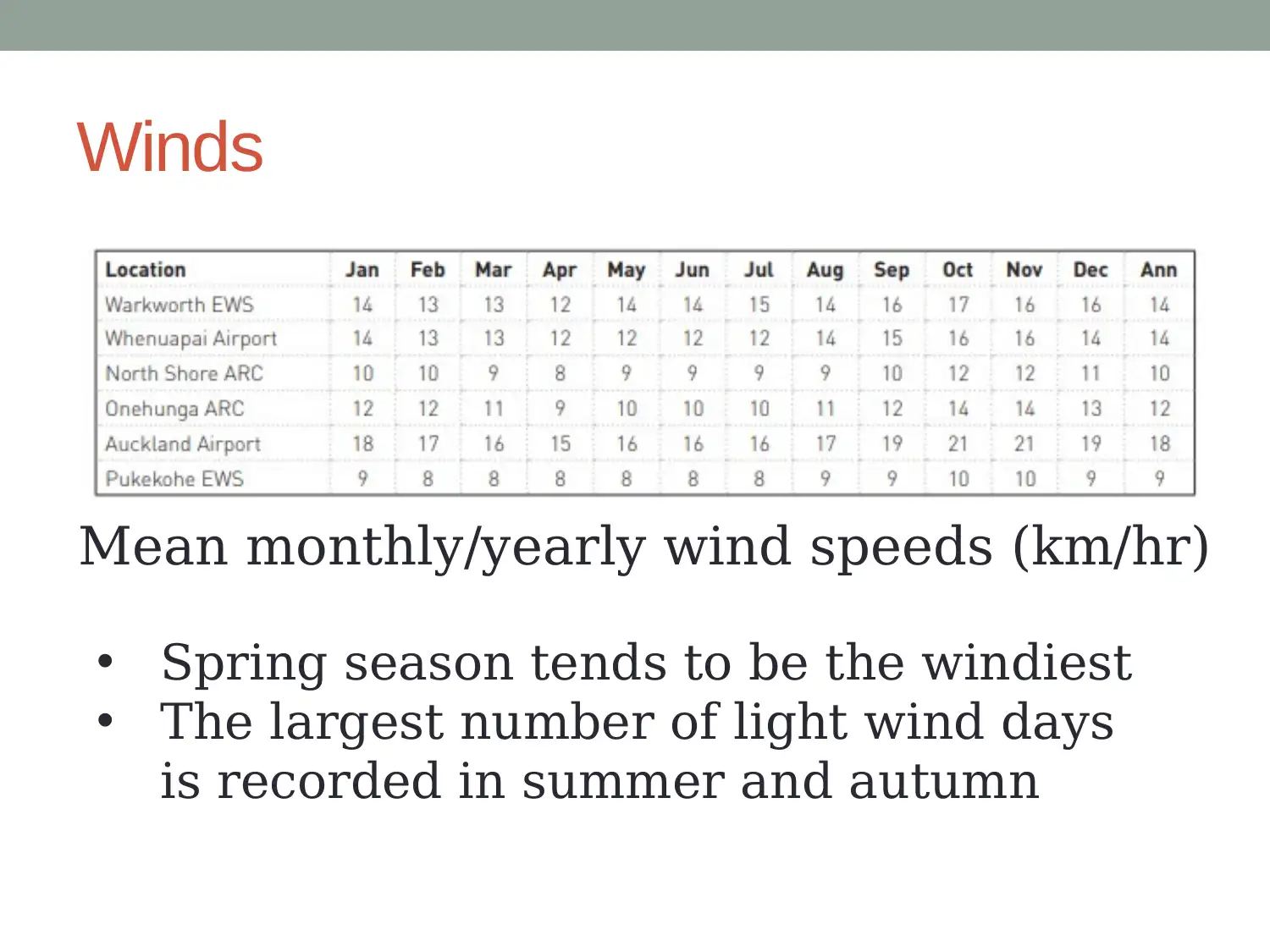
Winds
Mean monthly/yearly wind speeds (km/hr)
Spring season tends to be the windiest
The largest number of light wind days
is recorded in summer and autumn
Document Page
Sunshine & Solar radiation
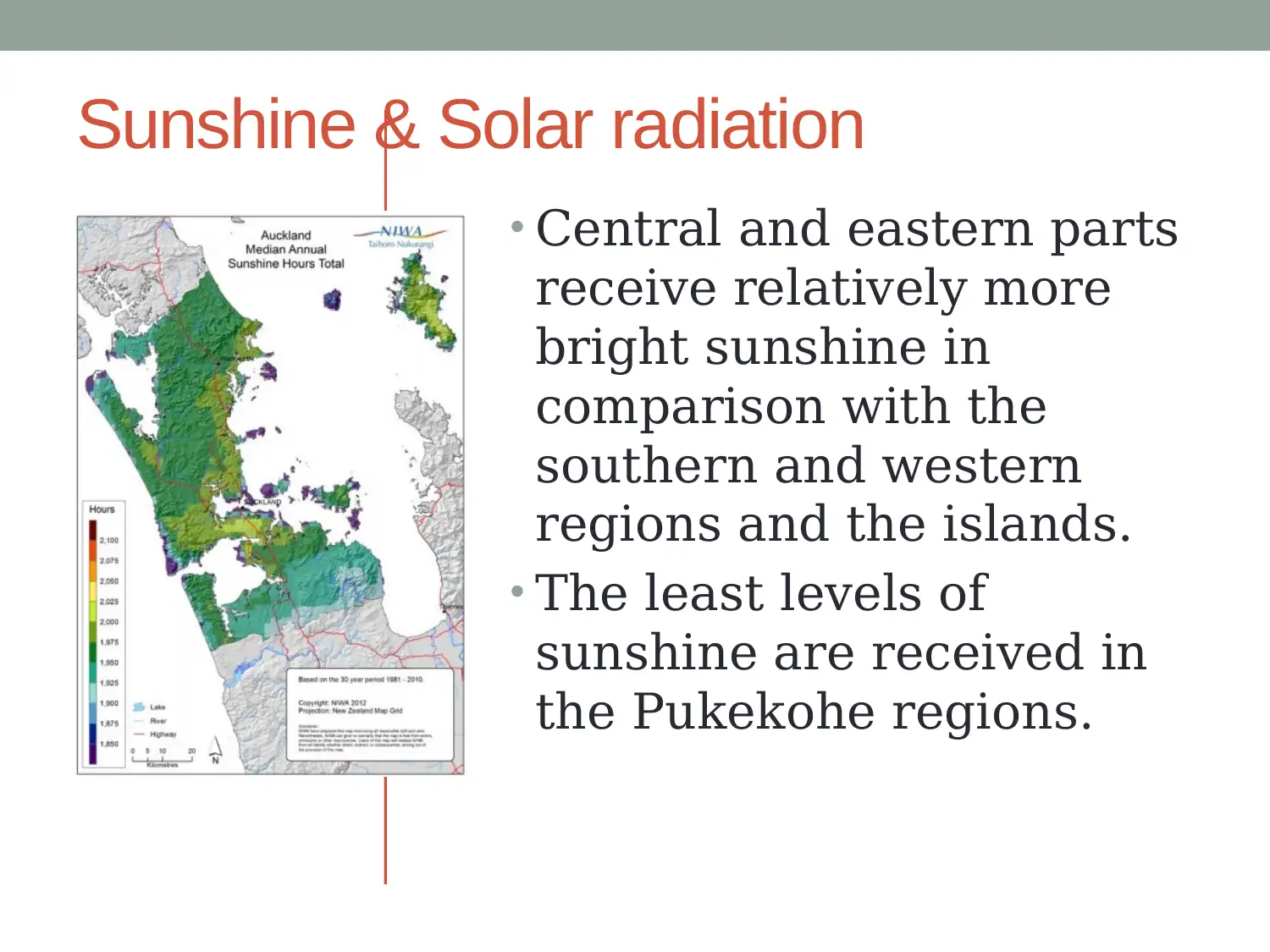
Central and eastern parts
receive relatively more
bright sunshine in
comparison with the
southern and western
regions and the islands.
The least levels of
sunshine are received in
the Pukekohe regions.
tabler-icon-diamond-filled.svg

Paraphrase This Document

Need a fresh take? Get an instant paraphrase of this document with our AI Paraphraser
Document Page
Fog
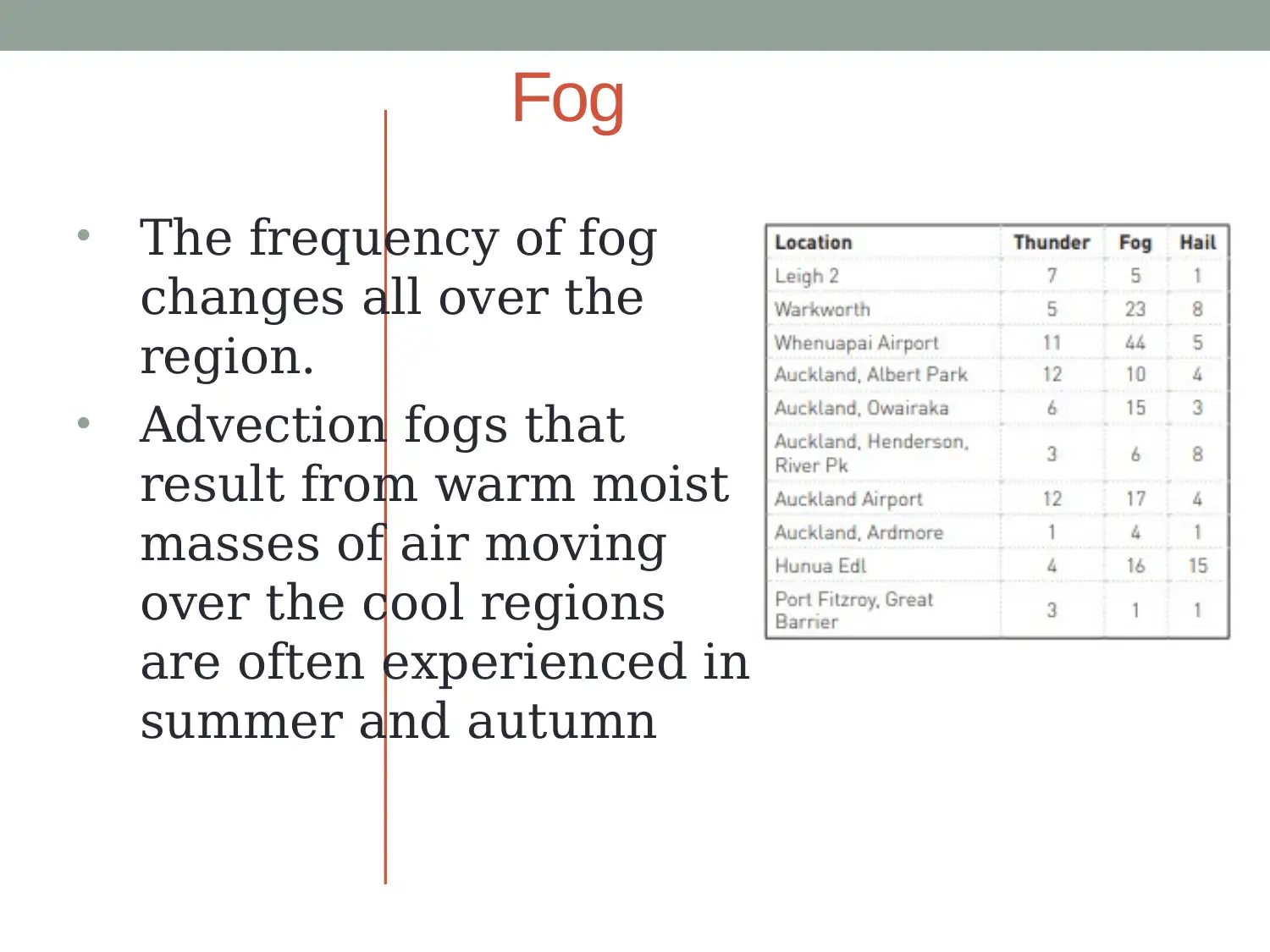
The frequency of fog
changes all over the
region.
Advection fogs that
result from warm moist
masses of air moving
over the cool regions
are often experienced in
summer and autumn
Document Page
Design Consideration for Subtropical
Climate
Ensuring a balance between the various
conflicting needs
Finding solar radiation gain in winter and
offering solar shading in summer
Providing protection of wind during winter
and proper ventilation during summer
(Tan, Lau and Ng, 2016)
Construction of properly natured houses
having moderate heat capacity of storage
Use of windows of medium
chevron_up_icon
1 out of 26
circle_padding
hide_on_mobile
zoom_out_icon
[object Object]